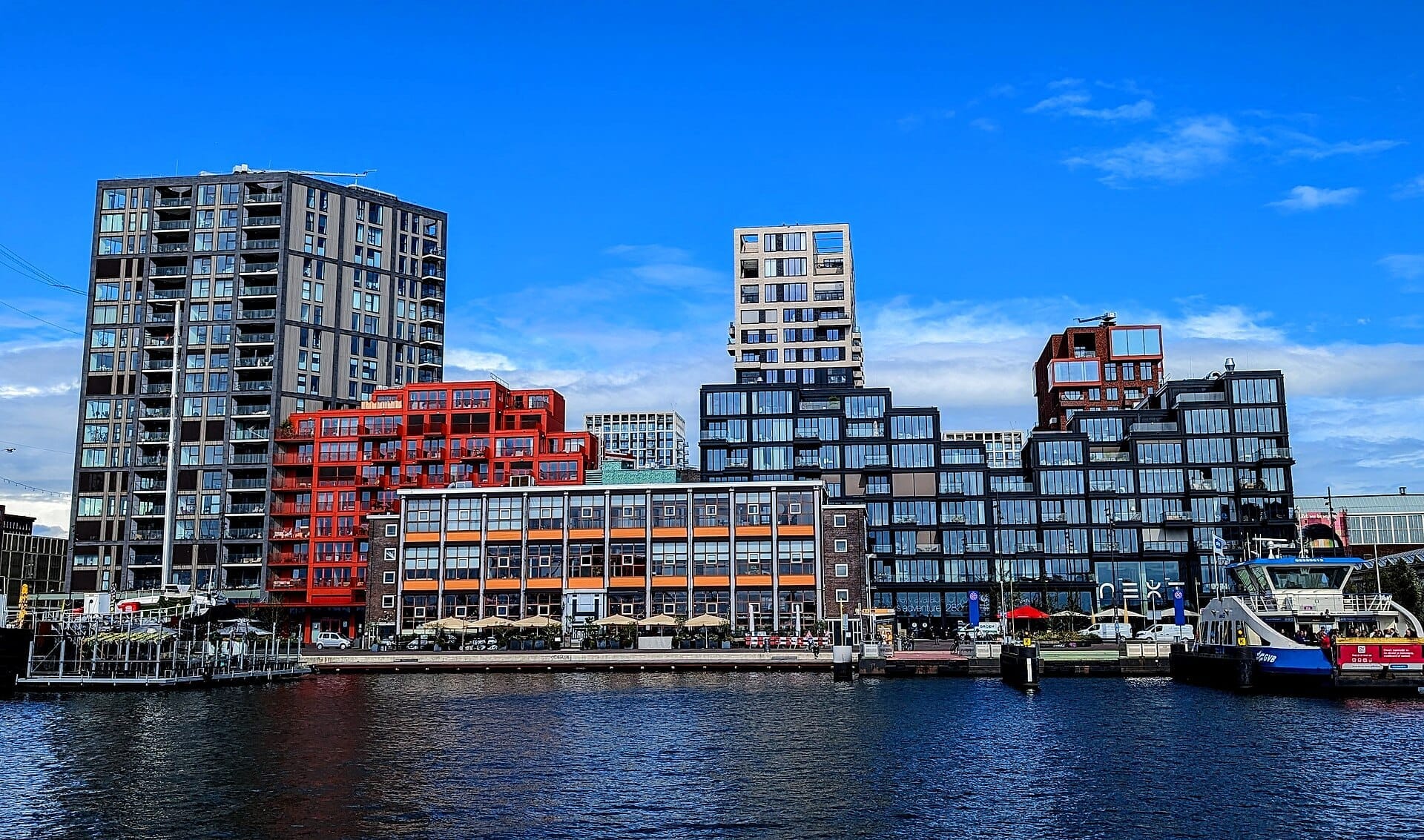
Amsterdam-Noord sits across the IJ waterway from the city centre, a borough shaped by shipbuilding history and reinvented as one of Amsterdam's most creatively charged districts. Free ferries connect it to Amsterdam Centraal in minutes, making it far more accessible than most visitors expect.
Amsterdam-Noord is the city's other side of the water: a sprawling residential borough of former shipyards, early 20th-century garden villages, and waterfront cultural institutions that draw visitors who want something beyond the canal-ring postcard. It is both genuinely local and increasingly destination-worthy, and the free ferry ride across the IJ is one of the better short trips Amsterdam offers.
Orientation
Amsterdam-Noord is the largest borough by land area in Amsterdam, covering roughly 49 square kilometres north of the IJ. That waterway acts as a clear psychological and physical dividing line: south of the IJ is the historic city, the canal ring, the museums, and the crowds. North of it is something different in almost every respect.
The borough stretches from the IJ waterfront northward through residential neighbourhoods, older garden villages like Nieuwendam and Buiksloot, and eventually toward the open countryside bordering Zaanstad, Oostzaan, Landsmeer, and Waterland. To the east, the Markermeer defines the boundary. Most visitors never penetrate further than the IJ waterfront strip, which is where the EYE Filmmuseum, the A'DAM Toren, and the NDSM wharf are concentrated.
For orientation purposes, think of Noord as having two distinct visitor zones. The first is the immediate waterfront, a ten-minute walk or short bike ride from the ferry landings, where most of the cultural venues and bars are clustered. The second is the broader residential interior, where neighbourhood life happens at a pace entirely removed from Amsterdam's tourist circuit.
ℹ️ Good to know
Amsterdam-Noord is an official borough (stadsdeel) of Amsterdam, not a separate city. It shares the city's infrastructure, emergency services, and public transport system, but its character is noticeably different from the Centrum districts across the IJ.
Character and Atmosphere
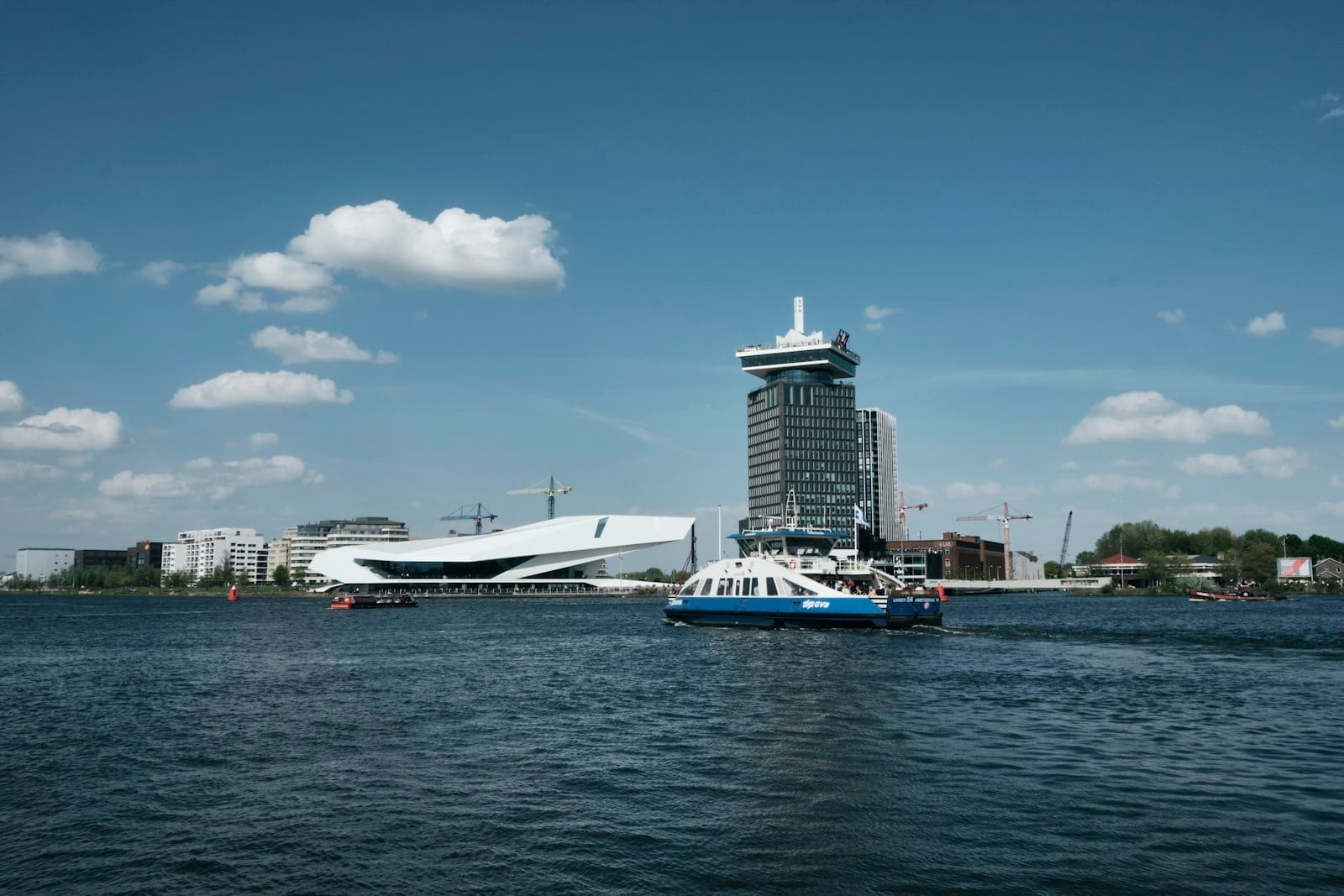
On a weekday morning, the ferry landing at Buiksloterweg tells you a great deal about what Noord is. Cyclists in work gear load their bikes aboard, commuters check phones, and nobody is taking photographs of a canal. The IJ is wide and grey-green, the wind comes off the water, and the EYE Filmmuseum's angular white facade catches the early light across the dock. It feels like a working city, not a theme park.
Walk inland from the Buiksloterweg ferry stop and the streets open up quickly. Noord lacks the compressed density of the Jordaan or De Pijp. There are low-rise apartment blocks from the mid-20th century, stretches of green space, community gardens, and the occasional older building that predates the industrial era entirely. The garden village neighbourhoods of Nieuwendam and Buiksloot, built in the early 1900s as planned housing for working-class families, have a quiet, almost suburban texture that surprises visitors who arrive expecting post-industrial grit.
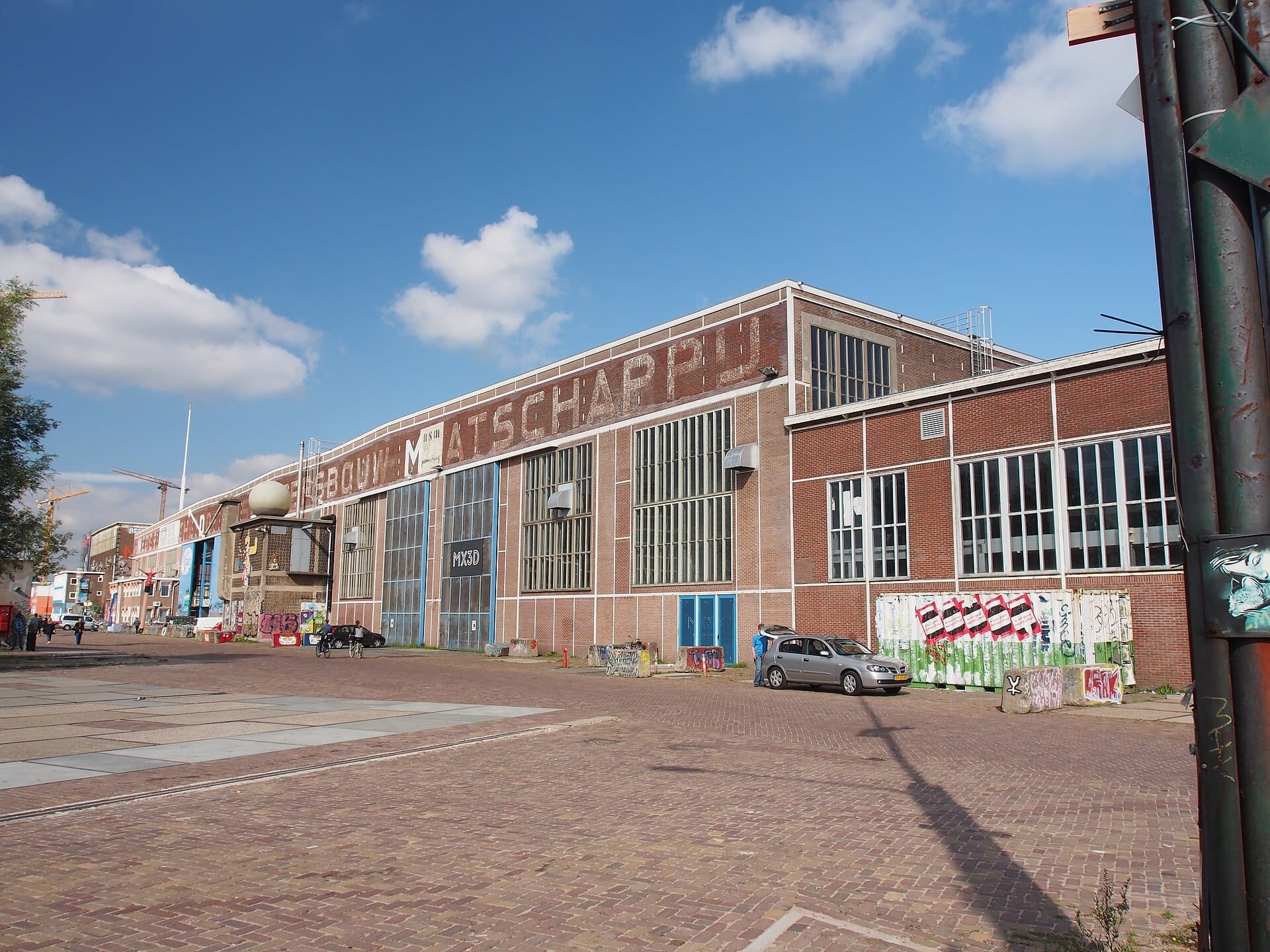
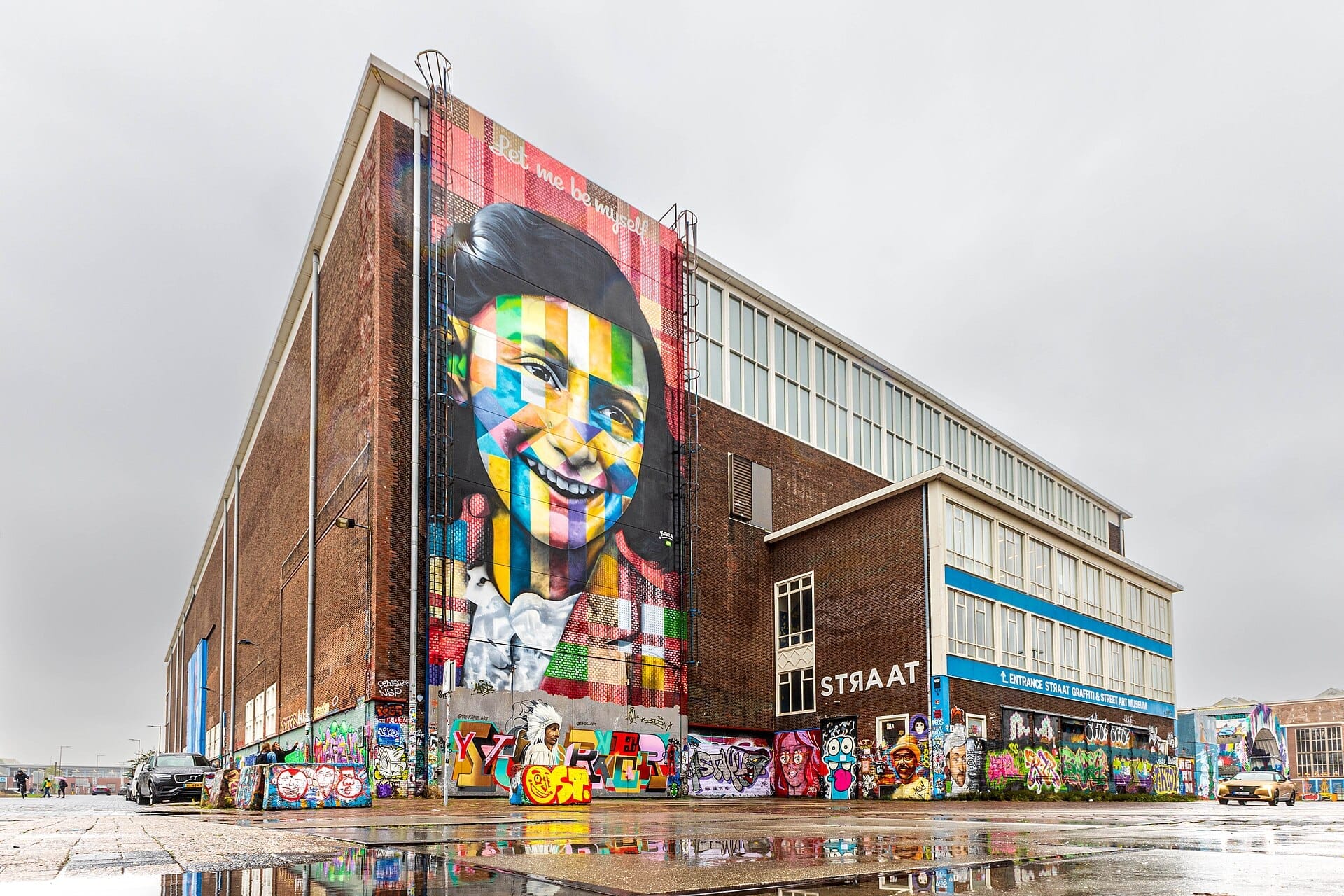
The NDSM wharf, further west along the waterfront, shifts the mood entirely. This former shipyard is Amsterdam's largest creative and event campus, and in the evenings it takes on a particular atmosphere: street art on every surface, repurposed shipping containers turned into studios and bars, and a sense of scale that the centre of Amsterdam simply does not offer. On weekends, especially when one of the many events or markets is running, the NDSM fills with a mix of local creative professionals, families, and visitors drawn by the programming.
After dark, Noord is quieter than the Leidseplein or Rembrandtplein areas, which is largely a selling point rather than a drawback. The waterfront venues draw a late-evening crowd, particularly around the A'DAM Toren and the bars clustered near the ferry landings, but the residential streets turn quiet by 10pm. This is not a nightlife district in the traditional sense.
What to See and Do
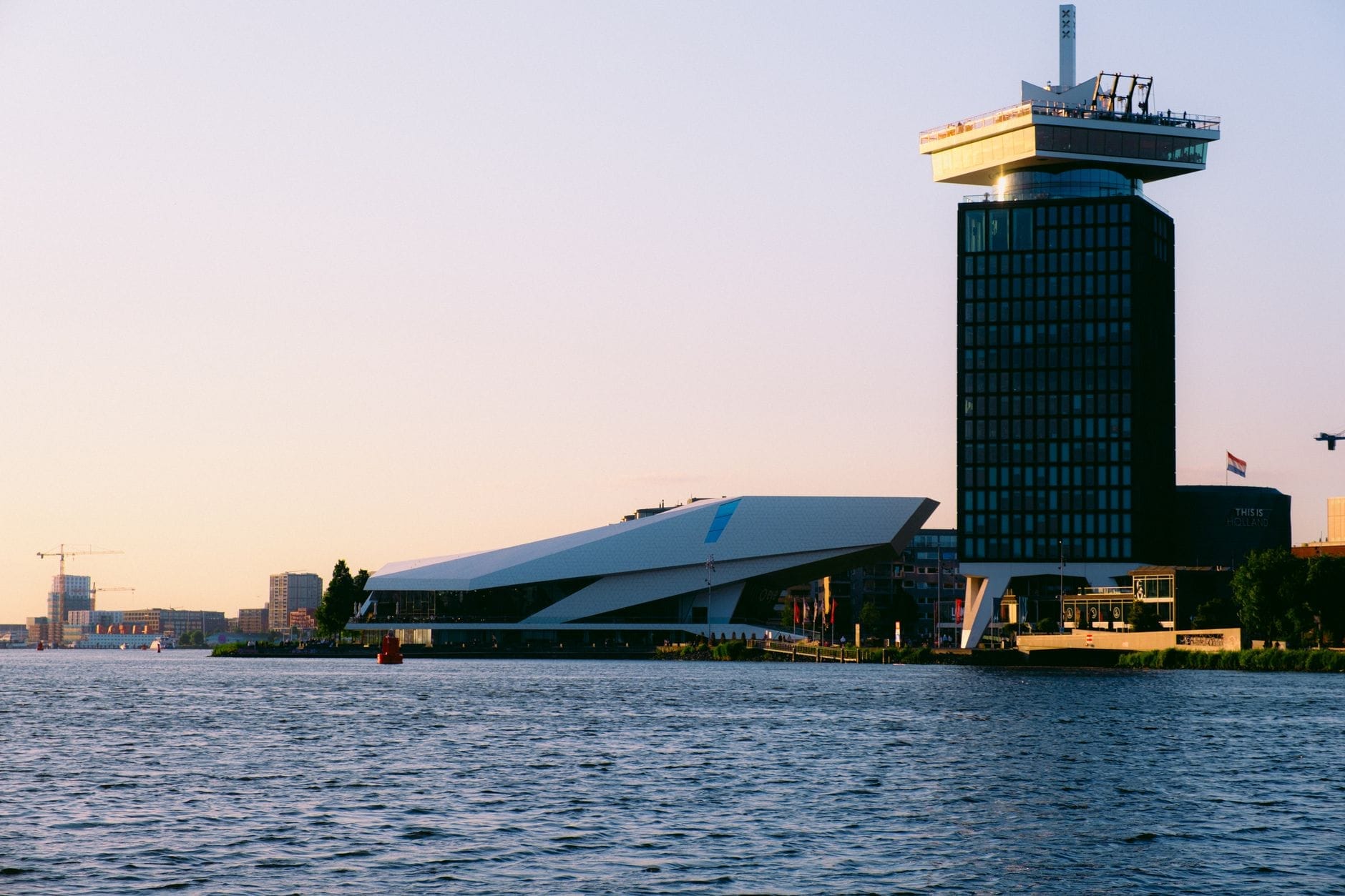
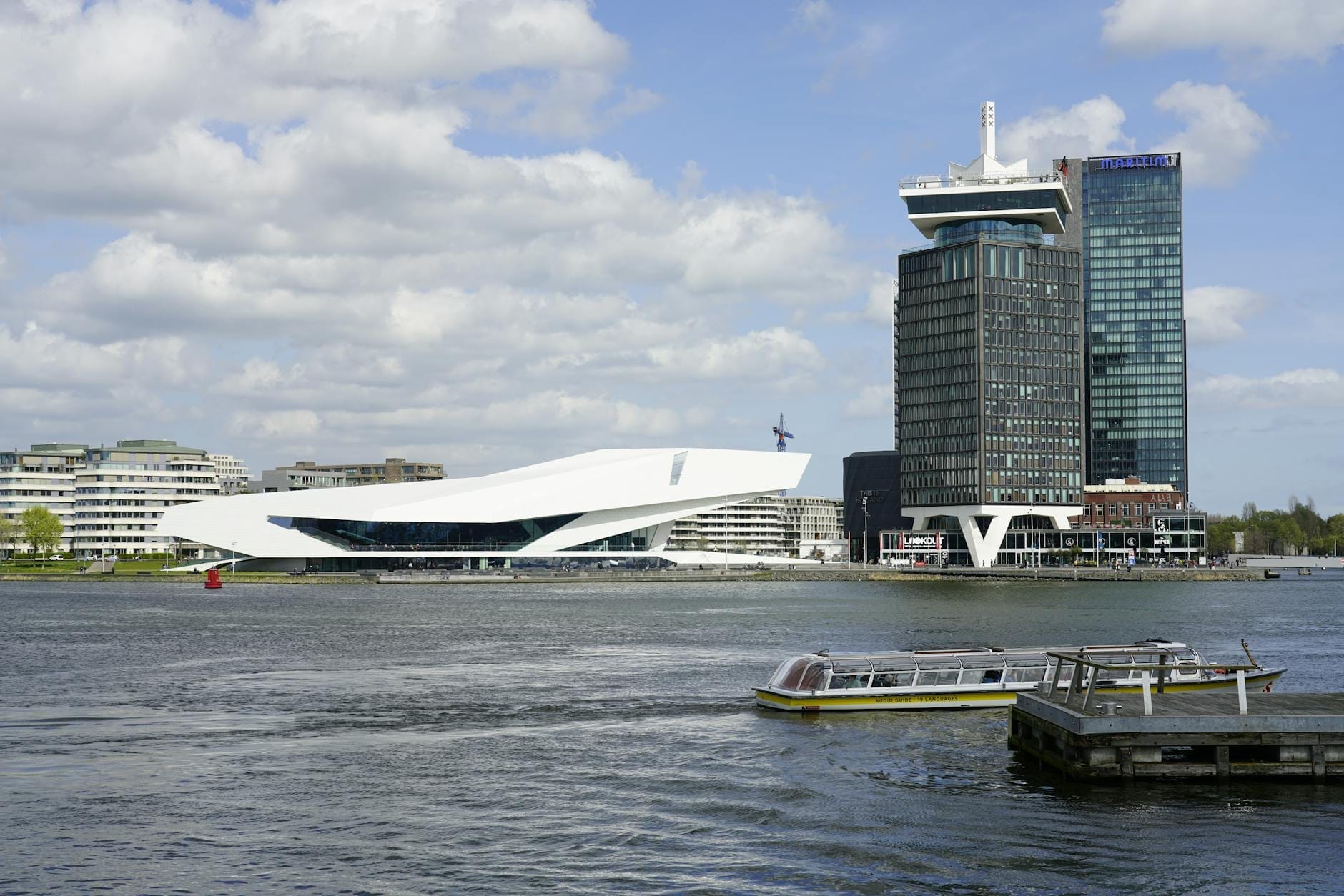
The EYE Filmmuseum is the anchor cultural institution of Amsterdam-Noord and one of the most architecturally distinctive buildings in the entire city. Opened in 2012 on the northern IJ waterfront, it hosts rotating film exhibitions, screenings across multiple cinemas, and a permanent collection display that covers the history of cinema in depth. The building itself, designed by the Vienna-based firm Delugan Meissl, is worth the ferry crossing on its own terms. Entry to the exhibitions requires a ticket, but the ground floor and terrace cafe are open to all.
Adjacent to EYE stands the A'DAM Toren, the former headquarters of Royal Dutch Shell, repurposed into a mixed-use tower with a hotel, offices, bars, and the ADAM Lookout observation deck on the top floor. The lookout includes an outdoor swing that extends over the edge of the building, which draws visitors looking for a high-altitude perspective on the IJ and the city beyond. The views south across the water toward Amsterdam Centraal and the canal ring are among the best in the city.
Further west along the waterfront, the NDSM Wharf is Amsterdam's most significant post-industrial regeneration project. The wharf hosts a regular flea market, the famous IJ-Hallen flea market, large-scale music and arts festivals, and a permanent community of artists and creative businesses working out of the old shipyard halls. The outdoor street art, much of it large-format and maintained by the NDSM foundation, changes regularly and gives the area a visual energy unlike anywhere else in the city.
The STRAAT Museum is located at the NDSM site and focuses entirely on street art and graffiti as fine art forms. The collection fills a former shipbuilding hall and includes large-scale indoor murals by internationally recognized artists. It is one of the few museums in Amsterdam dedicated exclusively to urban contemporary art, and the scale of the space allows for work that would be impossible to show anywhere else in the city.
EYE Filmmuseum: film exhibitions, screenings, and waterfront architecture
ADAM Lookout: panoramic views from the former Shell tower
NDSM Wharf: creative campus, street art, event spaces
STRAAT Museum: indoor street art and mural collection in a shipyard hall
IJ-Hallen Flea Market: one of Europe's largest monthly flea markets
Nieuwendam village: early 20th-century garden village architecture
Waterfront cycling routes along the IJ
💡 Local tip
The IJ-Hallen flea market at NDSM runs on select weekends throughout the year, not every week. Check the schedule before planning your visit around it, as the market draws thousands of people and the area transforms completely on those days.
Eating and Drinking
The eating and drinking scene in Amsterdam-Noord is concentrated around the IJ waterfront, particularly in the area between the Buiksloterweg ferry landing and the NDSM wharf. The further north you go into the residential interior, the more the options reflect everyday neighbourhood life: local bakeries, Indonesian takeaways, a neighbourhood cafe with regulars who have been coming for decades.
At the waterfront, the EYE Filmmuseum cafe deserves mention beyond the museum context. It sits directly on the IJ with a large terrace, and on a clear afternoon it is genuinely one of the better spots in Amsterdam to sit with a coffee or a beer and watch the ferries and freight traffic cross the water. The prices are reasonable and you do not need a museum ticket to use the cafe.
The A'DAM Toren complex contains several bars and a restaurant, with the rooftop offering the obvious draw of the views. The level of pricing reflects the venue's positioning, and it is not the place for a cheap drink, but the experience of sitting on the rooftop terrace with the IJ below and Amsterdam Centraal directly across the water is fairly compelling.
At and around the NDSM site, the food and drink offer is more eclectic and event-dependent. On market days and during festivals, food trucks and pop-up vendors cover a wide range of cuisines. On quieter days, the permanent tenants of the NDSM campus include cafes and creative-industry lunch spots that cater to the people working in the studios and offices on site. The atmosphere is informal and the prices tend to be lower than in the tourist-heavy parts of the centre.
Getting There and Around
The free GVB ferries from Amsterdam Centraal Station are the defining feature of getting to Noord, and they run frequently throughout the day and night. Three ferry routes are relevant to most visitors. The Buiksloterweg ferry departs from the rear of Amsterdam Centraal (the north side, accessible via a walkway through the station building) and takes around three minutes to cross to the EYE and A'DAM Toren area. A second ferry serves NDSM, with a longer crossing of approximately 14 minutes from the same departure point. Ferries run day and night on varying frequencies, with more services during peak hours.
The Noord/Zuidlijn, Amsterdam's metro line 52, opened in 2018 and provides a fast underground connection between Amsterdam Centraal and Noord station, which sits in the residential interior of the borough rather than on the waterfront. This makes it more useful for reaching the further neighbourhoods of Noord than the EYE or NDSM area, which are closer to the ferry landings.
By road, Noord is accessible via the IJtunnel for drivers (cyclists are not permitted in the tunnel), and via the Coentunnel further west. The Schellingwouderbrug road bridge connects the eastern part of Noord with the rest of the city. For most visitors, the free ferry is the most logical, pleasant, and direct way to arrive.
Cycling across on the ferry and exploring Noord by bike is a practical choice. The waterfront paths and the broader residential streets are all navigable and relatively flat, consistent with the rest of Amsterdam's cycling infrastructure. A cycling guide to Amsterdam will give you the full context for renting a bike and navigating the city's infrastructure.
💡 Local tip
The free ferry to Buiksloterweg runs 24 hours a day, every day. The NDSM ferry runs less frequently and does not operate all night. Check the GVB app or posted timetables at the ferry dock if you are planning an evening trip to the NDSM area.
Where to Stay
Amsterdam-Noord has a growing number of accommodation options, particularly around the A'DAM Toren complex and the broader waterfront strip. The appeal of staying here versus the canal ring or De Pijp depends heavily on what you want from the trip. Noord is quieter, the views across the IJ are excellent, and you are removed from the pedestrian congestion of the Centrum. The ferry crossing to Amsterdam Centraal takes under five minutes, which means access to the rest of the city is genuinely quick.
The trade-off is that Noord lacks the walkable density of streets, restaurants, and shops that characterises the Jordaan or De Pijp. You will need to plan more deliberately and rely on the ferry for almost every evening out in the central areas. For travellers who prefer a calmer base and value the waterfront setting, this is a reasonable compromise. For first-time visitors who want Amsterdam's classic canal-district experience immediately outside the front door, the canal ring or Jordaan neighbourhoods will serve better.
For a broader view of accommodation options across the city's neighbourhoods, the Amsterdam accommodation guide covers the full range of choices, price points, and neighbourhood trade-offs.
Noord in Context: What to Know Before You Go
Amsterdam-Noord is best understood as a complement to the central city rather than a replacement for it. A half-day or full-day visit combining the EYE Filmmuseum, the ADAM Lookout, and the NDSM Wharf covers the main cultural highlights and gives a clear sense of what the borough offers. If the IJ-Hallen flea market is running during your visit, it merits building an itinerary around it. See the Amsterdam markets guide for context on what makes this market stand out.
If you are working out a wider Amsterdam itinerary, the free ferry crossing to Noord is an easy addition to a day that also takes in Amsterdam Centraal and the area north of the canal ring. A three-day Amsterdam itinerary can realistically include a Noord afternoon without cutting anything essential from the centre.
On the question of safety: Noord is a standard Amsterdam residential borough, and there are no particular safety considerations that differ from the rest of the city. The waterfront areas are well-lit and active in the evenings. The residential interior is quiet at night by any measure. Standard common-sense precautions apply, as they do throughout Amsterdam.
⚠️ What to skip
Noord is large. The areas beyond the immediate IJ waterfront are primarily residential and have limited visitor infrastructure. If you are venturing north of the main ferry landings without a specific destination in mind, it helps to have a route planned in advance rather than expecting to discover cafes and attractions around every corner.
TL;DR
Amsterdam-Noord is a former industrial and residential borough across the IJ from the city centre, easily reached by free 24-hour ferry from behind Amsterdam Centraal Station.
The main visitor draws are the EYE Filmmuseum, the ADAM Lookout, the NDSM Wharf creative campus, and the STRAAT Museum of street art.
The atmosphere is genuinely local and noticeably less tourist-saturated than the Centrum, canal ring, or De Pijp, which is its main appeal.
Best suited for travellers who want cultural programming beyond the main museum mile, cyclists who enjoy waterfront routes, and anyone with an interest in post-industrial regeneration or contemporary urban art.
Not the right base for first-time visitors who want the classic Amsterdam canal experience within walking distance; the ferry crossing is quick but Noord lacks the walkable neighbourhood density of the central districts.
Two days in Amsterdam is enough to hit the genuine highlights without feeling rushed, if you plan smart. This itinerary covers the Rijksmuseum, Van Gogh Museum, Anne Frank House, canal cruises, and the best neighborhoods, with real pricing, booking warnings, and insider logistics so you don't waste a single hour.
Amsterdam Airport Schiphol (AMS) is one of Europe's largest and busiest international hubs, sitting just 9 km southwest of the city centre. This guide covers the airport layout, how to get into Amsterdam, security rules, facilities, and what to expect at peak times.
Amsterdam's architecture spans four centuries of ambition, from the UNESCO-listed 17th-century canal belt to the expressive social housing of the Amsterdam School and the bold contemporary buildings reshaping the city's waterfront. This guide breaks down what to look for, where to find it, and how to explore it without wasting time.
Amsterdam's 165 canals form a UNESCO World Heritage network stretching over 100 km through the city. This guide cuts through the noise to tell you exactly which type of canal cruise fits your trip, what each operator actually delivers, and when to go to avoid the crowds.
Amsterdam's Canal Ring is one of Europe's most ambitious feats of urban planning, a UNESCO World Heritage Site built during the Dutch Golden Age. This guide covers the history, the three main canals, how to explore by boat or on foot, seasonal conditions, and straightforward advice on what's worth your time.
The I Amsterdam City Card promises access to 70+ museums, unlimited trams and buses, a canal cruise, and a day's bike rental in one timed pass. Whether it actually saves you money depends entirely on how you plan to spend your days. This guide breaks down the real costs, what's excluded, and who should skip it.
Amsterdam's coffeeshops are unlike anything else in Europe, but they come with rules, limits, and legal nuances most visitors don't fully understand. This guide breaks down exactly how they work, what to expect inside, what you can legally do outside, and how to avoid the most common mistakes.
Amsterdam is one of Europe's most naturally romantic cities, with UNESCO-listed canals, world-class museums, and neighbourhoods designed for slow exploration. This guide covers the best experiences for couples, with practical advice on costs, booking, and timing.
Amsterdam rewards those who look beyond the Rijksmuseum and Anne Frank House. From a secret medieval courtyard to a craft brewery inside a working windmill, these off-the-beaten-path experiences reveal a city that most visitors never see.
October is one of Amsterdam's most interesting months to visit, split between a quieter shoulder season and one of the world's biggest electronic music events. This guide covers the Amsterdam Dance Event, what the weather actually looks like, and how to make the most of the city in autumn.
Spring is Amsterdam's most celebrated season, anchored by tulip fields, canal-side festivals, and the city-wide party of King's Day on April 27. This guide covers everything from bloom timing and Keukenhof logistics to what the weather actually looks like and which spring experiences are worth your time.
Amsterdam transforms in winter into one of Europe's most atmospheric cold-weather destinations. From the iconic Amsterdam Light Festival illuminating the canals to Christmas markets and cozy brown cafes, this guide covers everything you need to plan a rewarding winter visit.
Three days is enough time to hit Amsterdam's heavyweight museums, explore its most rewarding neighborhoods, and get out on the canals — if you plan it right. This guide breaks it all down day by day, with practical advice on booking, passes, and what to skip.
King's Day (Koningsdag) is the biggest street party in the Netherlands, and Amsterdam is its epicentre. This guide covers the full schedule, how to navigate crowds, where to find the best vrijmarkt stalls, and practical tips that make the difference between an unforgettable day and a frustrating one.
The Amsterdam Light Festival transforms the city's historic canals into an open-air gallery of illuminated art installations every winter. This guide covers the 2025-2026 edition dates, both routes, ticket prices, crowd patterns, and what first-timers consistently get wrong.
Amsterdam's markets are where the city reveals itself: locals haggling over vintage finds, stroopwafels fresh off the iron, tulip bulbs stacked in canal-side barges. This guide covers the best markets in Amsterdam across every category, from daily street markets to monthly flea market events.
Amsterdam's nightlife runs deeper than the Red Light District. This guide breaks down the best bars, clubs, and late-night experiences by neighborhood, with practical advice on tickets, timing, and where locals actually go.
Amsterdam has a reputation for being expensive, but careful planning cuts costs dramatically. This guide covers real 2026 price benchmarks, the best free experiences, transport passes, and the smartest times to visit — so you can see the city properly without draining your account.
Amsterdam is one of Europe's safest cities, but tourists are regularly caught out by petty theft, clever scams, and bike-related mishaps. This guide covers everything you need to know: how to spot fake police, navigate 400 km of cycle paths, use public transport correctly, and stay sharp across different seasons.
Amsterdam rewards shoppers who go beyond the souvenir shops. From the Albert Cuypmarkt in De Pijp to the boutique-lined streets of the Jordaan, this guide covers the city's best markets, shopping streets, and independent stores — with practical hours, clear assessments, and local context.
Amsterdam is one of Europe's most rewarding solo destinations: compact, English-friendly, and full of world-class culture. This guide covers everything you need to know before you go, from staying safe and getting around to the best activities and how to book them without the stress.
The direct ICE train from Amsterdam Centraal to Berlin Hbf takes about 5 hours 51 minutes and costs as little as €37.90 booked in advance. This guide covers every route option, real price ranges, booking platforms, and what to expect on board.
The Amsterdam to Brussels train is one of Europe's most convenient city-to-city rail connections. This guide covers train types, realistic prices, schedules, booking platforms, and what to expect on the day of travel.
The Eurostar connects Amsterdam Centraal to London St Pancras in around 4 hours 10 minutes, making it one of the most practical city-centre-to-city-centre journeys in Europe. This guide covers fares, booking windows, check-in procedures, and the key differences between direct and indirect routes.
The Amsterdam to Paris train journey takes around 3 hours 20 minutes on the Eurostar high-speed service. This guide covers fares, booking strategy, seat classes, what the route actually looks like, and the practical details that save you money and hassle.
Tulip season near Amsterdam runs from late March to mid-May, with peak bloom in the surrounding fields from roughly April 10 to 25. This guide covers the exact timing, top locations, transport options, common misconceptions, and practical tips to make the most of one of the Netherlands' most spectacular seasonal events.
Amsterdam rewards walkers more than almost any city in Europe. This guide covers the best guided tours, self-guided routes, and on-foot highlights across the city's most rewarding neighborhoods, from the medieval center to the creative enclaves of Amsterdam-Noord.
Amsterdam is a great city for families, with world-class science museums, a historic zoo, free parks, and canal cruises designed for children. This guide covers the best attractions, practical logistics, clear pricing, and seasonal advice to help you plan a smooth trip with kids of any age.
Amsterdam has one of the highest concentrations of world-class museums of any city in Europe. This guide covers the essential art, history, science, and specialist museums, with practical advice on booking, passes, and how to make the most of each visit.
Amsterdam rewards visitors year-round, but when you go shapes everything from hotel rates to what you can actually see. This month-by-month guide breaks down weather patterns, crowd levels, prices, and key events so you can pick the timing that suits your trip.
Amsterdam has around 400 km of dedicated bicycle paths and more bikes than residents. This guide covers exactly how to rent a bike, what it costs, the rules you need to know, where to park safely, and which routes are worth your time — whether you're riding through the canals or heading out to the countryside.
Amsterdam is an extraordinary city, but the Netherlands surrounding it rewards exploration just as much. These are the best day trips from Amsterdam, from the tulip gardens of Keukenhof to the Gothic streets of Haarlem, organized by how you want to spend your time.
Amsterdam rewards travelers who plan smartly. From free ferry rides to Noord and rooftop views from NEMO to world-class street art at NDSM, the city offers a surprising range of genuinely free experiences. This guide covers the best of them.
Amsterdam rewards visitors who understand how it moves. This guide covers every transport option in the city, from GVB trams and the metro to bike rentals and Schiphol airport transfers, with practical advice on costs, passes, and what to skip.
Amsterdam rewards visitors who look beyond the obvious. This guide covers the top things to do in Amsterdam across every interest and budget, from world-class museums and canal cruises to neighborhood markets and cross-IJ adventures, with practical advice on timing, booking, and what is worth your time.
Amsterdam is the capital of the Netherlands and one of Europe's most recognizable cities, famous for its UNESCO-listed canal ring, Rijksmuseum, Anne Frank House, cycling culture, and tolerant social policies. This guide breaks down exactly what makes Amsterdam distinctive, with practical details for planning your visit.
Amsterdam's food scene runs deeper than cheese and fries. This guide covers the essential Dutch dishes to try, where to find them across the city, seasonal specialties, and practical advice on what's worth your appetite and what isn't.
Choosing where to stay in Amsterdam shapes your entire trip. This guide breaks down the best neighborhoods by travel style, covers what each area actually costs, and cuts through the noise so you book the right hotel in the right location.