STRAAT Museum: Amsterdam's Street Art and Graffiti Warehouse
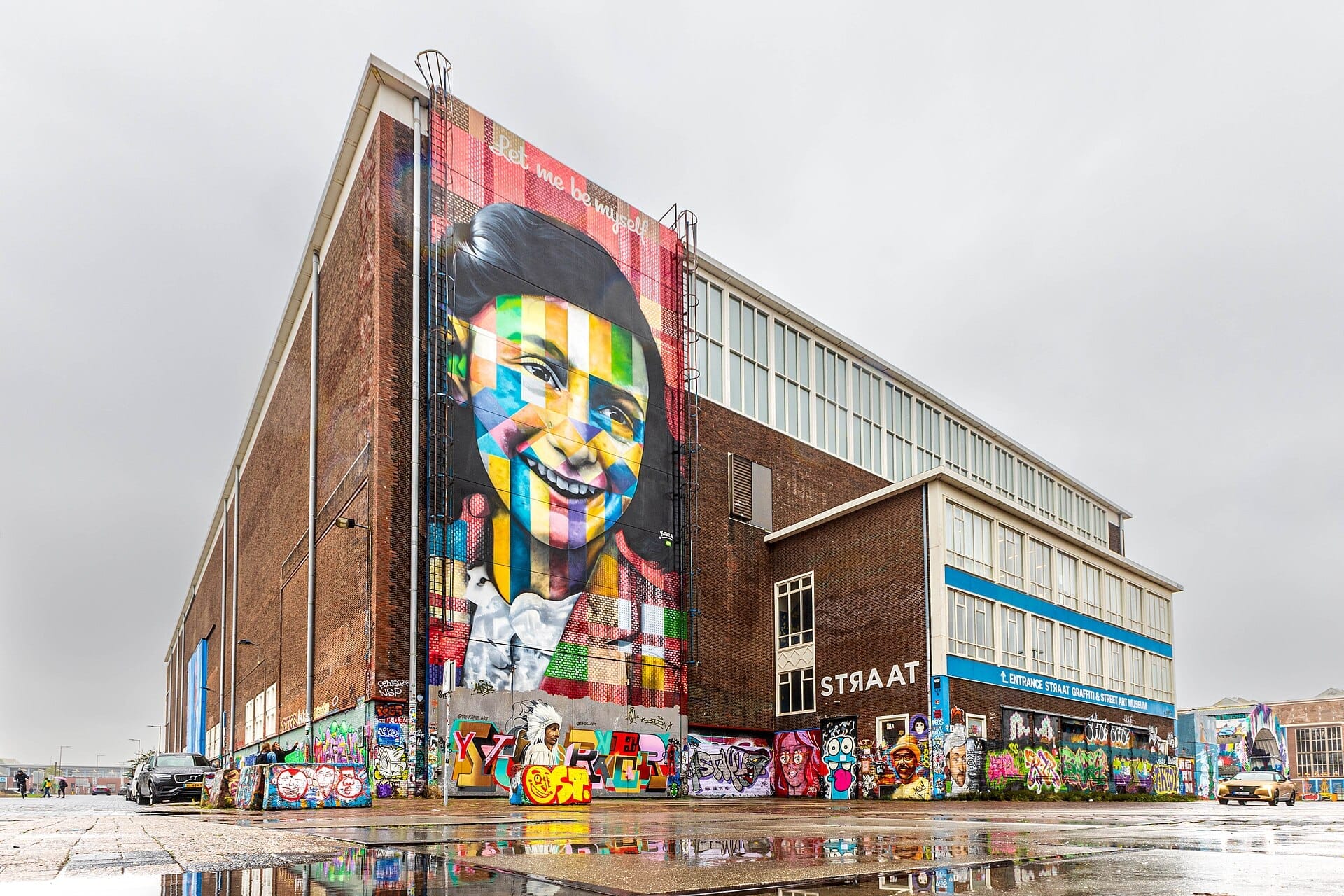
Housed in an 8,000 m² former shipyard hall on the NDSM wharf, STRAAT Museum brings together more than 180 large-scale artworks by over 170 international street artists. It is one of the largest dedicated street art museums in the world, reached by a free ferry from Amsterdam Centraal.
Quick Facts
- Location
- NDSM-Plein 1, Amsterdam-Noord (NDSM wharf)
- Getting There
- Free NDSM ferry from Amsterdam Centraal rear docks (7–15 min crossing, every 15 min)
- Time Needed
- 2–3 hours inside; allow extra time for the NDSM yard outside
- Cost
- Adults €21.50 / Youth 13–18 €11.50 / Students €16.50 / Children 0–12 free / CJP €13.50 / Uitpas €12.90 / Amsterdam City Card: free
- Best for
- Contemporary art lovers, photographers, teens, and anyone curious about urban culture
- Official website
- straatmuseum.com/en
What STRAAT Museum Actually Is
STRAAT Museum opened on 9 October 2020 inside a decommissioned shipyard assembly hall on the NDSM wharf in Amsterdam-Noord. The full name is STRAAT – Museum for Street Art and Graffiti, and the name is accurate: this is not a white-cube gallery with framed canvases. It is a raw industrial space where artists have painted directly onto walls, floors, shipping containers, and custom-built structures. The hall covers roughly 8,000 square metres, and the collection currently holds more than 180 artworks by over 170 artists from across the world.
The scale is genuinely surprising on a first visit. The ceiling sits high enough that some murals rise four or five metres, and the warehouse's original steel framework, concrete floors, and skylights have been left intact. Natural light shifts across the interior throughout the day, changing the appearance of works that were designed for outdoor conditions. There is no climate control in the conventional museum sense: the building is tempered rather than heated or cooled, which means the atmosphere feels more like walking through a covered city block than through a gallery.
💡 Local tip
Dress as you would for a long outdoor walk, especially in autumn and winter. The warehouse can be cold in January and stuffy in July. Layers are the practical choice.
The Collection: Scale, Range, and What to Look For
The artworks at STRAAT span a wide range of styles, from tightly rendered photo-realist portraits to abstract graffiti lettering that fills entire wall sections. Some pieces are meditative and quiet; others are deliberately aggressive in colour and scale. The museum rotates and adds new commissions, so repeat visits within the same year are not pointless.
One characteristic that separates STRAAT from outdoor street art trails is the context it provides. Works are labelled with the artist's name, origin, and a short statement. This matters more than it sounds: street art is often experienced anonymously, and knowing that a piece was made by an artist from São Paulo or Seoul adds a layer of intention that outdoor walls rarely communicate. The museum also commissions artists to create works specifically for the space, which means many pieces could not exist anywhere else.
Graffiti as a discipline occupies a significant portion of the collection, treated with the same seriousness as the larger mural works. If your only experience of graffiti is train tags, the precision and depth of some of the lettering pieces here will be genuinely instructive. This is not an area where the museum condescends to visitors; it assumes a degree of curiosity and rewards it.
Tickets & tours
Live prices and dates from our booking partner. If you book, we may earn a commission at no extra cost to you.
Getting There: The Ferry Is Part of the Experience
The most practical route is the free NDSM ferry, which departs from the rear of Amsterdam Centraal station. Ferries run roughly every 15 to 20 minutes, and the crossing takes between 7 and 15 minutes depending on conditions. The ferry is free for pedestrians and cyclists, and the views of the IJ waterfront during the crossing are worth the journey on their own terms. On clear days you can see the eye-level panorama of the Amsterdam skyline from the water, which most visitors who stick to the canal ring never experience.
From the NDSM ferry landing, the museum is a short walk across the wharf. The NDSM wharf itself is worth pausing on: the surrounding area is a former industrial shipyard that has been repurposed into studios, creative offices, and event spaces over the past two decades. Cranes, dry-dock structures, and shipping containers still mark the landscape. Street art also covers the exterior buildings and yard walls, making the approach to the museum an informal warm-up for what is inside.
If you prefer buses, lines 391 and 394 stop at Klaprozenweg and Klaprozenweg/Atatürk, from which it is a short walk. Alternatively, metro to Noorderpark followed by bus 35 or 36 to the Atatürk stop also works. The ferry, though, is simpler and faster from the city centre for most visitors.
ℹ️ Good to know
The NDSM ferry is free for pedestrians and cyclists. Check GVB for current departure timetables, as frequency can vary by time of day and day of week.
Opening Hours, Tickets, and Passes
STRAAT is open Tuesday through Sunday from 10:00 to 17:00; on Mondays it opens at 12:00 and closes at 17:00. On the first Friday of each month, the museum stays open until 21:00, which is worth targeting if you want smaller crowds and a different light quality inside the hall. The museum is usually open on Dutch public holidays but closes on 1 January and has reduced hours over 25 and 26 December; check the official website before visiting around those dates.
Adult admission is €21.50. Youth tickets (ages 13 to 18) cost €11.50, and children aged 12 and under enter free. Students pay €16.50, CJP cardholders €13.50, and Uitpas holders €12.90. Amsterdam City Card holders, Stadspas holders, and museum members enter free.
If you are planning multiple museum visits across Amsterdam, it is worth calculating whether the Amsterdam City Card covers enough of your itinerary to make financial sense. STRAAT is one of the card's more useful inclusions given its standalone admission price.
How the Visit Changes by Time of Day
Weekday mornings, particularly between 10:00 and noon on Tuesday through Thursday, are the quietest windows. The warehouse is large enough that even moderate crowds do not create congestion, but photography is significantly easier with fewer people in frame. Skylights produce the best natural light from mid-morning through early afternoon on clear days, casting angled shafts across the painted surfaces in a way that evening or overcast conditions do not replicate.
Weekend afternoons from around 13:00 onward are the busiest periods. School groups and family visits concentrate in this window. The first-Friday evening openings run until 21:00 and draw a different crowd, often younger and more familiar with the scene. Artificial lighting at night flattens some of the textural detail that natural light picks out, but it also removes shadows that can obscure certain works. Both visits have their logic; they are genuinely different experiences of the same space.
Photography Practicalities
STRAAT is openly photographer-friendly and does not restrict personal photography. The scale of the works makes wide-angle lenses more useful than telephoto here; anything between 16 mm and 35 mm equivalent will capture full murals without requiring you to press against the opposite wall. The concrete floor and industrial surfaces mean that tripods are stable and permitted, though the morning quiet periods are the better time to use one without blocking other visitors.
The ceiling height and warehouse proportions create strong leading lines in architectural photographs. Some visitors spend as much time photographing the structural context of the building as the artworks themselves, which is entirely reasonable given how well the industrial frame complements the painted surfaces. Flash photography affects the experience for other visitors and is unnecessary given the light levels in most sections.
💡 Local tip
Arrive within the first 30 minutes of opening on a weekday for the clearest shots. The morning side-light through the skylights is the best available lighting condition inside the hall.
Who Should Consider Skipping This
Visitors with very limited time in Amsterdam and a primary interest in Dutch Golden Age painting will find the €21.50 admission harder to justify. The Rijksmuseum and the Van Gogh Museum address that interest more directly, and the ferry journey adds time that a compressed itinerary may not absorb comfortably.
STRAAT is also not the right choice for visitors who want a quiet, contemplative museum experience in climate-controlled comfort. The warehouse is loud when occupied, acoustically reflective, and physically cool in winter. If that combination sounds uncomfortable rather than interesting, the Rijksmuseum or the Foam Photography Museum offer a more conventional gallery environment. That said, visitors who are even mildly curious about urban art tend to find STRAAT more engaging than they expected, which suggests the threshold for enjoyment is lower than it might appear on paper.
Accessibility and Practical Notes
The museum is wheelchair accessible, and the ferry and bus routes serving NDSM are also described as wheelchair accessible. The flat concrete floor of the warehouse is manageable with mobility aids, though the scale of the space means it involves a fair amount of walking. Registered service dogs are permitted; other animals are not. The museum has a café and toilets on site.
Amsterdam-Noord has developed considerably over the past decade and pairs well with other waterfront destinations nearby. The EYE Filmmuseum and the ADAM Lookout sit at the Buiksloterweg ferry pier, on the opposite side of Amsterdam-Noord from NDSM. You can combine them with STRAAT in one half-day, but plan on two separate free ferries (Buiksloterweg and NDSM), not a walk from the NDSM landing.
Insider Tips
- The first Friday of each month offers extended opening until 21:00. Crowds are often smaller than weekend afternoons, and the atmosphere inside the warehouse shifts noticeably under artificial light, giving familiar works a different character.
- Walk the exterior of the NDSM yard before or after entering the museum. The outdoor walls, containers, and industrial structures carry additional street art that is not part of the ticketed collection and can be photographed freely.
- The Amsterdam City Card covers admission, which meaningfully changes the value calculation if you are also visiting two or three other major museums during your stay. Confirm inclusion on the official City Card site before arriving.
- The ferry to NDSM departs from the rear (IJ side) of Amsterdam Centraal, not from the main station entrance. First-time visitors who emerge from the front of the station sometimes lose 10 minutes locating the correct dock. Follow signs for 'NDSM-veer' once you are inside the station.
- Bring a wide-angle lens or use the ultrawide setting on a phone camera. Standard focal lengths cannot capture full murals in a single frame given the proximity of the opposite walls in some sections of the warehouse.
Who Is STRAAT Museum For?
- Contemporary art and urban culture enthusiasts who want to see street art taken seriously at museum scale
- Photographers looking for an unpredictable mix of industrial architecture and large-format painted surfaces
- Teenagers and young adults who find traditional Dutch museum content less engaging
- Visitors with a half-day free who want to combine a Noord excursion with the EYE Filmmuseum or ADAM Lookout
- Families with children aged 12 and under, who enter free, and who respond well to large-format, visually immediate art
Nearby Attractions
Other things to see while in Amsterdam-Noord:
- A'DAM Lookout
Perched atop the 22-storey A'DAM Tower in Amsterdam Noord, A'DAM Lookout delivers a sweeping panorama across the IJ waterfront and city centre. Whether you're riding the Over The Edge swing or simply scanning the rooftops with a coffee, it's one of the most distinctive viewpoints in the Netherlands.
- Eye Filmmuseum
Eye Filmmuseum is the Netherlands' national film institute and cinema museum, housed in a striking angular building on the north bank of the River IJ. Reachable by a free three-minute ferry from Amsterdam Centraal, it combines rotating exhibitions, four cinema screens, a waterfront restaurant, and free public spaces into one of the most architecturally distinctive buildings in the city.
- IJ-Hallen Flea Market
Held once a month at the former NDSM shipyard in Amsterdam-Noord, IJ-Hallen packs around 750 stands across two massive industrial halls and outdoor grounds. It is one of the few Amsterdam experiences that rewards an early alarm clock and a large tote bag in equal measure.
- NDSM Wharf
NDSM Wharf (NDSM-Werf) is a former shipyard site of more than ten football pitches in size on the north bank of the IJ that now functions as Amsterdam's most raw and expansive creative space. Free to enter, open around the clock, and reachable by a free ferry from Centraal, it rewards visitors who want something far removed from canal-side tourism.
Planning a trip? Discover personalized activities with the Nomado app.