IJ-Hallen Flea Market: One of Europe's Largest Flea Markets in Amsterdam-Noord
Held once a month at the former NDSM shipyard in Amsterdam-Noord, IJ-Hallen packs around 750 stands across two massive industrial halls and outdoor grounds. It is one of the few Amsterdam experiences that rewards an early alarm clock and a large tote bag in equal measure.
Quick Facts
- Location
- NDSM-Plein 1, 1033 WC Amsterdam-Noord (NDSM Wharf, Amsterdam-Noord)
- Getting There
- Free ferry 906 from behind Amsterdam Centraal to NDSM-werf, then 5-min walk
- Time Needed
- 2–4 hours depending on how seriously you shop
- Cost
- €6.50 adults / €3 children (4–11) / €11 early entry (verify current rates at official site)
- Best for
- Vintage hunters, families, curious browsers, design enthusiasts
- Official website
- ijhallen.nl/en/agenda.php
What Is IJ-Hallen and Why It Stands Apart
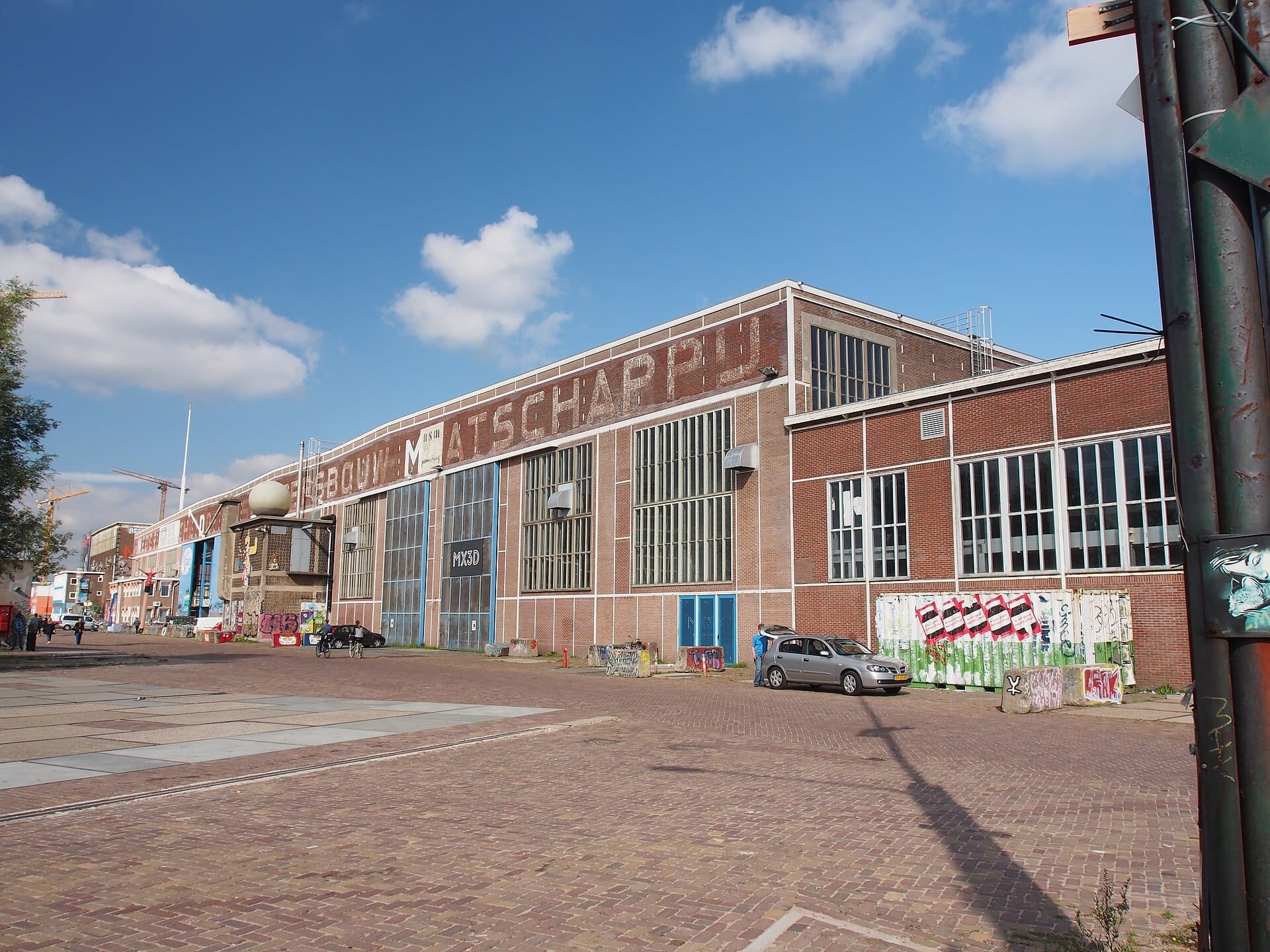
IJ-Hallen is Amsterdam's monthly flea market and promotes itself as the largest flea market in Europe. The market is held at NDSM Wharf, a decommissioned shipbuilding complex on the north bank of the IJ waterway. On market days, the two cavernous former shipbuilding halls and the surrounding outdoor grounds fill with roughly 750 stands selling everything from mid-century Dutch furniture to stacks of vinyl, worn leather jackets, antique glassware, bicycle parts, and a substantial quantity of things that are simply hard to categorize.
The scale is genuinely impressive. Each hall is the size of an aircraft hangar, with high steel-truss ceilings, concrete floors, and the kind of cold industrial light that makes colors look exactly as they are. You will not find a curated boutique atmosphere here. Stands range from serious antique dealers with organized, priced stock to private sellers who have arrived with a car boot of miscellany and no particular plan. That mix is precisely what makes a circuit through the space interesting.
ℹ️ Good to know
IJ-Hallen is held roughly once a month, often across a weekend (Saturday and Sunday), but with occasional additional or special dates, with opening hours from 09:00 to 16:30. Dates change each month. Always check the official agenda at ijhallen.nl before making plans around a visit.
The NDSM Setting: Industrial History as Context
The NDSM shipyard was once one of the largest shipbuilding facilities in the Netherlands, active through much of the 20th century before closing in the 1980s. The vast warehouses were left largely intact, and from the late 1990s onward the site was gradually reclaimed by artists, cultural organizations, and event operators. Today it is one of Amsterdam's most interesting post-industrial spaces, home to creative studios, street art, and several large event venues.
IJ-Hallen fits this context naturally. The market has been running for over two decades and has grown into something of an institution in the Amsterdam calendar. Arriving at the NDSM Wharf by ferry and walking toward the market halls, you pass enormous painted murals, scattered shipping containers repurposed as offices, and occasional tram cars converted into permanent structures. The visual texture of the site is part of the experience, not just a backdrop.
Tickets & tours
Live prices and dates from our booking partner. If you book, we may earn a commission at no extra cost to you.
Escape Tour self-guided, interactive city challenge in Amsterdam
From 0 €Instant confirmationEscape Tour self-guided, interactive city challenge in Amsterdam
From 0 €Instant confirmationGray Line Canal Cruise with snackbox & Heineken Experience
From 48 €Instant confirmationFree cancellationAmsterdam evening canal cruise
From 18 €Instant confirmationFree cancellation
Getting There: The Ferry Is Half the Fun
The most direct route is by ferry from the rear of Amsterdam Centraal Station. Ferry 906 runs to NDSM-werf and the crossing is free. The ride takes roughly 15 to 20 minutes and offers a clean view of the Amsterdam skyline from the water. From the NDSM ferry stop, the market entrance is about a five-minute walk along the waterfront.
On market days, the ferry fills up noticeably. The crowd waiting at the dock tends to give itself away: large bags, a slightly purposeful energy, and the occasional folded trolley. If you want any chance at early entry, take one of the first sailings of the morning. The ferry runs regularly throughout the day, so return trips are straightforward.
💡 Local tip
The €11 early entry ticket lets you in from 06:00, before the official 09:00 opening. Serious vintage and antique buyers use this option. If you're after specific items or simply want to move through the halls before they become crowded, it is worth the extra cost.
Cycling to NDSM is also possible, though the ferry with a bicycle has limited capacity and you will need to check current rules. If you drive, parking in the surrounding Amsterdam-Noord area is generally easier than in central Amsterdam, but the ferry approach is by far the most practical option for most visitors.
What to Expect Inside: Layout, Goods, and Atmosphere
The two main halls are divided loosely by category and seller type, though the organization is more pragmatic than strict. Indoor stands tend to carry smaller objects: books, records, ceramics, jewelry, clothing, cameras, and curiosities. Outdoor stands and the open areas between the halls handle larger furniture, bicycles, and bulkier goods. In practice, you will find surprises in both zones.
The smell inside the halls is a mix of old paper, damp wool, and the faint oil-and-metal scent that never entirely leaves a former industrial building. Morning light comes in at a low angle through the hall openings and skylights, throwing long shadows across the stands. By midday the halls are fuller, noisier, and warmer, with the outdoor sections picking up significantly when the weather cooperates.
Bargaining is accepted and fairly normal, particularly with private sellers. Professional dealers with clearly priced stock are less likely to negotiate on individual small items, but will often offer a discount if you are buying multiple pieces. Cash is the default currency at most stands, though some sellers accept card payments. Bringing a mix of both is practical.
If the sheer scale of IJ-Hallen feels overwhelming, note that Amsterdam has several smaller neighborhood markets that offer a more compact experience. The Waterlooplein Market runs daily in the city centre, and the Noordermarkt in the Jordaan holds an antiques and books market on Mondays. IJ-Hallen is the right choice when you want volume and variety rather than a curated browse.
Timing Your Visit: Morning Versus Afternoon
The market opens at 09:00, and the difference between arriving at opening versus arriving at noon is substantial. Early morning, the halls are cold, the light is clear, and the sellers are still setting up in some sections. This is when the best finds move. Experienced buyers know that anything genuinely underpriced tends to disappear within the first hour.
By late morning, the halls are at full capacity and moving between stands requires patience. The atmosphere shifts from purposeful hunting to leisurely browsing, and the food stalls around the site become more prominent in people's attention. Afternoon is a reasonable time to arrive if you are treating the visit primarily as an outing rather than a buying trip. Sellers may also be more willing to negotiate near closing time to avoid packing things back up.
⚠️ What to skip
The outdoor sections of the market are significantly less enjoyable in heavy rain. The indoor halls remain fully operational regardless of weather, but a wet October or November market day will feel different from a dry April one. Check the forecast before deciding whether to bring a coat that you're happy to get wet.
Practical Details for Your Visit
Standard adult admission is €6.50. Children aged 4–11 pay €3.00. Verify current rates on the official website before visiting, as these figures are subject to change. Tickets can be purchased online in advance or at the entrance on the day.
Wear comfortable, flat shoes. The floors inside the halls are bare concrete, and the outdoor areas include uneven surfaces and loose gravel. The halls can be cold in winter months, as heating in a building of that volume is necessarily limited. In summer, ventilation is provided by the large openings at either end of the halls, but a warm day can still make the interior uncomfortably warm by midday.
For photography, the industrial interiors offer genuinely interesting conditions: strong directional light when sun enters from one side, deep shadows in the middle sections, and a human density that makes candid street-style shots relatively natural. Wide-angle lenses do better justice to the scale of the halls than zooms.
If you are planning a broader day in Amsterdam-Noord, the NDSM area has several other things worth seeing. The STRAAT Museum, a large street art museum, is located on the same wharf and is open on most days. Combining both in a single Noord day trip works well, with the market in the morning and the museum in the afternoon.
Accessibility
The halls are on ground level and largely flat, which is practical for most visitors. However, the ferry crossing, uneven outdoor areas, and density of the market on busy days create challenges for wheelchair users or visitors with significant mobility limitations. The official site and venue do not publish detailed accessibility information, so anyone with specific needs should contact IJ-Hallen directly before visiting.
Who Should Consider Skipping This
IJ-Hallen is not for everyone. If you find crowded indoor spaces in cold, noisy environments draining, a late-morning arrival in peak season will test your patience. If you are traveling with very young children and no particular interest in browsing, the combination of crowd density and the absence of anything specifically child-oriented makes it a poor fit. Similarly, if you have one day in Amsterdam and prioritize landmark museums or canal sightseeing, the hour-plus round trip to Noord and back takes a meaningful bite out of a short itinerary.
Insider Tips
- Buy the €11 early entry ticket if you are serious about finding vintage clothing, vinyl, or antiques. The first 45 minutes before general opening is when the real competition happens among buyers, and some sellers will make deals quickly to clear space.
- Bring cash in small denominations. Many sellers cannot break a €50 note easily, and having coins and small bills speeds up transactions and makes informal bargaining less awkward.
- A wheeled trolley or foldable cart is worth bringing if you plan to buy larger items. There is no delivery service, and negotiating your way back to the ferry with a lamp under one arm and a stack of books under the other is a genuinely common sight.
- Check the official agenda at ijhallen.nl before every visit. The market does not run every weekend, dates shift slightly each month, and some editions are larger than others. There is no standard formula beyond the rough monthly frequency.
- After the market, walk west along the waterfront toward the main NDSM area rather than heading straight back to the ferry. The scale of the shipyard and the street art installations are worth 15 minutes of extra time before returning to the city.
Who Is IJ-Hallen Flea Market For?
- Vintage clothing and furniture hunters who want scale and variety in one location
- Budget travelers looking for a full morning's entertainment for under €10
- Design and photography enthusiasts drawn to industrial architecture and candid crowd scenes
- Families with children old enough to browse independently (roughly 8 and up)
- Anyone curious about Amsterdam-Noord's post-industrial transformation who wants a practical reason to make the ferry crossing
Nearby Attractions
Other things to see while in Amsterdam-Noord:
- A'DAM Lookout
Perched atop the 22-storey A'DAM Tower in Amsterdam Noord, A'DAM Lookout delivers a sweeping panorama across the IJ waterfront and city centre. Whether you're riding the Over The Edge swing or simply scanning the rooftops with a coffee, it's one of the most distinctive viewpoints in the Netherlands.
- Eye Filmmuseum
Eye Filmmuseum is the Netherlands' national film institute and cinema museum, housed in a striking angular building on the north bank of the River IJ. Reachable by a free three-minute ferry from Amsterdam Centraal, it combines rotating exhibitions, four cinema screens, a waterfront restaurant, and free public spaces into one of the most architecturally distinctive buildings in the city.
- NDSM Wharf
NDSM Wharf (NDSM-Werf) is a former shipyard site of more than ten football pitches in size on the north bank of the IJ that now functions as Amsterdam's most raw and expansive creative space. Free to enter, open around the clock, and reachable by a free ferry from Centraal, it rewards visitors who want something far removed from canal-side tourism.
- STRAAT Museum
Housed in an 8,000 m² former shipyard hall on the NDSM wharf, STRAAT Museum brings together more than 180 large-scale artworks by over 170 international street artists. It is one of the largest dedicated street art museums in the world, reached by a free ferry from Amsterdam Centraal.
Planning a trip? Discover personalized activities with the Nomado app.