Waterlooplein Market: Amsterdam's Oldest Flea Market
Waterlooplein Market is Amsterdam's oldest flea market, spread across roughly 300 stalls on a large open square in the Centrum district. Free to enter and open Monday through Saturday, it draws a mix of bargain hunters, vintage lovers, and curious visitors exploring the city's Jewish Quarter heritage.
Quick Facts
- Location
- Waterlooplein 2, 1011 NZ Amsterdam (Centrum district, near Plantage)
- Getting There
- Metro lines 51, 53, 54 to Waterlooplein; Tram 14 to Stadhuis/Waterlooplein
- Time Needed
- 45–90 minutes for a thorough browse
- Cost
- Free entry; stall prices vary
- Best for
- Vintage clothing, second-hand books, antiques, and local atmosphere
- Official website
- waterlooplein.amsterdam/en
What Is Waterlooplein Market?
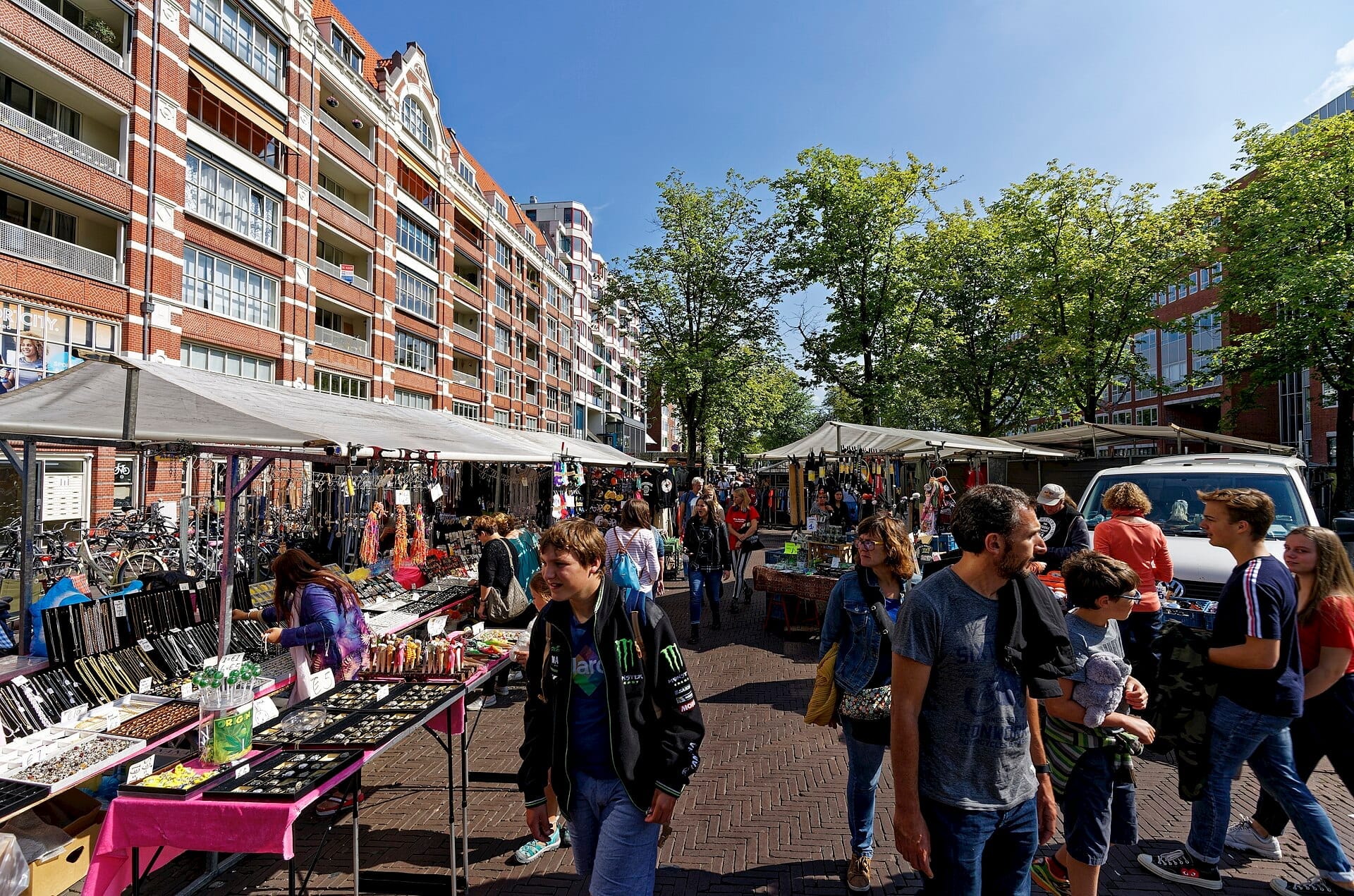
Waterlooplein Market, known locally as the Waterlooplein vlooienmarkt, is the oldest flea market in the Netherlands. Around 300 permanent and semi-permanent stalls cover a broad paved square behind Amsterdam's City Hall and the Dutch National Opera and Ballet, making it one of the most centrally located open-air markets in the city. Entry is free. What you find here ranges from army surplus jackets and cracked vinyl records to silverware, tourist trinkets, second-hand paperbacks, handmade jewelry, and the occasional genuinely old piece of Dutch furniture. The mix is unpredictable in exactly the way good flea markets should be.
ℹ️ Good to know
Opening hours (official): Monday to Saturday, 09:30–18:00. Closed on Sundays. The market operates year-round, though individual stalls may close in very bad weather.
The square sits at the eastern edge of Amsterdam's historic canal district, about 15 minutes on foot from Dam Square heading east along the Amstel. The broader area around it, including the old Jewish Quarter and today’s Plantage neighborhood, was once the heart of Amsterdam's Jewish community, and the market's own history is inseparable from that legacy.
History You Can Feel in the Ground Beneath You
The square was formed between 1880 and 1882 when two canals, the Leprozengracht and the Houtgracht, were filled in to create space for a permanent marketplace. In 1893, a Jewish market was formally established here, and it grew to become the largest Jewish market in Amsterdam, drawing traders and shoppers from across the city until 1941, when Nazi occupation ended it abruptly.
That history is not announced loudly at the market itself. There are no plaques at every stall. But the Portuguese Synagogue stands just to the east, completed in 1675 and still in use, and the Jewish Historical Museum is within easy walking distance. Visitors who treat the market as one piece of a larger cultural picture will leave with a much fuller understanding of this corner of Amsterdam.
The weight of that history also gives context to sites like the Anne Frank House on the other side of the canal ring, and the National Holocaust Museum, which opened recently in the Plantage neighborhood. If you plan to explore this part of Amsterdam seriously, those visits pair naturally with an hour at the market.
Tickets & tours
Live prices and dates from our booking partner. If you book, we may earn a commission at no extra cost to you.
Gray Line Canal Cruise with snackbox & Heineken Experience
From 48 €Instant confirmationFree cancellationAmsterdam evening canal cruise
From 18 €Instant confirmationFree cancellationJewish Museum and Portuguese Synagogue entrance ticket
From 20 €Instant confirmationFree cancellationAdmission ticket for Artis Royal Zoo and Micropia
From 39 €Instant confirmationFree cancellation
What to Expect When You Arrive
The square is large and flat, which makes it easy to navigate regardless of mobility needs. Stalls are arranged in loose rows, with narrow but walkable gaps between them. The overall atmosphere is low-key compared to, say, the Albert Cuyp Market in De Pijp. Vendors are generally unhurried. Haggling is possible and sometimes expected, though a polite tone goes further than aggressive bargaining.
The western edge of the stalls sits directly against the City Hall building, and the rear of the Dutch National Opera and Ballet flanks the southern side. It is an unusual urban backdrop for a flea market: you might be rifling through old magazines with a modernist civic building directly above you.
💡 Local tip
The best finds at Waterlooplein tend to be clothing, accessories, and small collectibles. If you are looking for genuine antiques or high-value vintage items, manage expectations: the market skews more toward general second-hand goods than curated antiques.
On weekday mornings before 11:00, the market is quieter and the light across the square is softer. This is the best time for a relaxed browse and for talking to individual vendors. On Saturdays, foot traffic increases noticeably, especially between 11:00 and 14:00, when visitors from the nearby Jewish Quarter and Plantage attractions pass through.
How It Changes Through the Day
Arrive at opening on a weekday and you will find vendors still arranging their displays. Some stalls smell of old fabric and dust, others of leather goods or machine oil. The sound at this hour is dominated by the rumble of tram 14 rounding the corner and the clatter of metal folding tables being set up. There is a working quality to it that disappears once the tourist wave arrives mid-morning.
By early afternoon, the square fills with a cross-section of people: students looking for cheap clothing, tourists on walking tours who have detoured from nearby attractions, local residents on their lunch break, and a regular contingent of dedicated second-hand shoppers who clearly know specific vendors. The energy is loose and social rather than transactional.
An hour before closing, some vendors begin packing down and discounts become more likely on bulkier items. This can be a useful time to visit if you are primarily interested in clothing or books rather than the social atmosphere of a busy market.
Getting There and Getting Around
Waterlooplein station on Amsterdam Metro lines 51, 53, and 54 exits directly onto the square. Tram 14 stops at Stadhuis/Waterlooplein, also adjacent to the market. Both options are fast from Amsterdam Centraal: the metro takes about four minutes. On foot from Dam Square, the walk east along Rokin and across the Blauwbrug or the Amstelbrug is straightforward and pleasant.
Cycling is practical. Amsterdam's cycling infrastructure makes most of the city easily reachable by bike, and the Plantage neighborhood has well-marked lanes. If you are still figuring out how to get around the city generally, the getting around Amsterdam guide covers all the options in detail.
The square itself is step-free and navigable with a wheelchair or pram along the main routes between stalls, though the gaps between tightly packed stalls can be narrow during busy periods. The metro station at Waterlooplein has elevator access.
What Surrounds the Market
Waterlooplein sits at the center of one of Amsterdam's most historically layered neighborhoods. The Portuguese Synagogue, one of the largest and best-preserved 17th-century synagogues in Europe, is a two-minute walk east. The Jewish Historical Museum is directly adjacent to it. The Hortus Botanicus, Amsterdam's historic botanical garden, is a ten-minute walk north through the Plantage.
Southeast of the market, the Artis Amsterdam Royal Zoo makes a strong follow-up visit, particularly if you have children. The combination of market, synagogue, and Artis fills a full morning comfortably. For a different perspective on Amsterdam's canal network, canal cruises departing from nearby jetties offer a slow loop around the Amstel and the historic canal ring.
ℹ️ Good to know
The Magere Brug (Skinny Bridge), one of Amsterdam's most photographed canal bridges, is about a 10-minute walk south along the Amstel. It makes a good add-on for a short afternoon walk.
Honest Assessment: Who Will Get the Most Out of This
Waterlooplein Market is genuinely enjoyable for visitors who like unscripted exploration and the slight chaos of a working flea market. It does not require deep preparation. You walk in, browse, and either find something or you do not. The atmosphere on a quiet weekday morning is one of the more authentically local things you can do in central Amsterdam without spending money on admission.
It is not the right stop for visitors who want a curated shopping experience, high-end vintage, or Dutch design products. Those visitors will be better served by De Negen Straatjes or the specialist boutiques in the Jordaan. The market is also not particularly photogenic in a postcard sense: it is a flat square with market stalls, not a historic canal setting.
Travelers building a focused itinerary around Amsterdam's Jewish Quarter and WWII history should absolutely include a stop here. Combined with the Portuguese Synagogue and the nearby Dutch Resistance Museum, the market adds texture and a ground-level sense of place to what can otherwise feel like a museum-only route.
Insider Tips
- Weekday mornings before 11:00 give you the quietest experience and the best chance to have a real conversation with vendors. Many have been working this market for years and have good knowledge of what they are selling.
- Bring cash. While some vendors accept card payments, many stalls are cash-only, and there is no ATM on the square itself. The metro station area nearby has bank machines.
- The stalls closest to the City Hall building tend to have more established traders with more organized stock. The outer rows lean more toward general jumble and randomness, which is where unexpected finds are more likely.
- If you are visiting in winter, dress for standing still in an open square. There is no shelter from wind or rain, and browsing slows you down enough that you will feel the cold more than you expect.
- The Dutch National Opera and Ballet building next to the market has a small public café facing the square. It is a useful place to warm up mid-browse and costs no more than any other Amsterdam café.
Who Is Waterlooplein Market For?
- Second-hand clothing and vintage accessories hunters
- Travelers interested in Amsterdam's Jewish Quarter history
- Budget-conscious visitors who want local atmosphere without a museum ticket
- Families with older children who enjoy exploring open markets
- Anyone building a half-day route through the Plantage neighborhood
Nearby Attractions
Other things to see while in Plantage & Jewish Quarter:
- ARTIS Amsterdam Royal Zoo
Founded in 1838, ARTIS Amsterdam Royal Zoo is the oldest zoo in the Netherlands and the fifth oldest zoo in the world still in operation. Set across landscaped grounds in the Plantage neighborhood, it blends wildlife, botanical gardens, and 19th-century heritage architecture into a single half-day destination that works for families, history enthusiasts, and curious solo travelers alike.
- Brouwerij 't IJ
Brouwerij 't IJ is Amsterdam's most distinctive craft brewery, operating inside an early-20th-century bathhouse at the foot of the De Gooyer windmill. The tasting room is free to enter, pours a rotating lineup of house-brewed beers, and offers short brewery tours on weekends. It is one of the few places in the city where industrial heritage, local brewing culture, and canal-side atmosphere converge in a single address.
- De Gooyer Windmill
Standing 26.6 metres tall on the eastern edge of the city, De Gooyer is widely described as the tallest wooden windmill in the Netherlands and one of Amsterdam's most photogenic historic structures. The mill itself is private, but the exterior is free to visit, and the craft brewery in the former bathhouse beside it is reason enough to linger.
- Dutch Resistance Museum
The Dutch Resistance Museum (Verzetsmuseum Amsterdam) tells the story of the Nazi occupation of the Netherlands through the choices ordinary people made: those who resisted, those who complied, and those who stood between. Located in the Plantage district, it is one of the most thoughtfully curated war museums in Europe.
Planning a trip? Discover personalized activities with the Nomado app.