Rijksmuseum Amsterdam: What to See, Know, and Expect Before You Go
The Rijksmuseum is the Netherlands' national museum of art and history, housing Rembrandt's Night Watch and Vermeer's masterworks inside a monumental 19th-century building on Museumplein. With over 8,000 objects on permanent display, it rewards careful planning far more than a rushed walk-through.
Quick Facts
- Location
- Museumstraat 1, 1071 XX Amsterdam (Oud-Zuid)
- Getting There
- Tram 2 and 12 to Rijksmuseum stop; 10–15-min walk from Leidseplein
- Time Needed
- 2.5–4 hours for a focused visit; a full day if going deep
- Cost
- Adults €25; under 18 free. Advance booking of a start time required.
- Best for
- Dutch Golden Age art, history lovers, architecture enthusiasts, families
- Official website
- www.rijksmuseum.nl/en
What the Rijksmuseum Actually Is
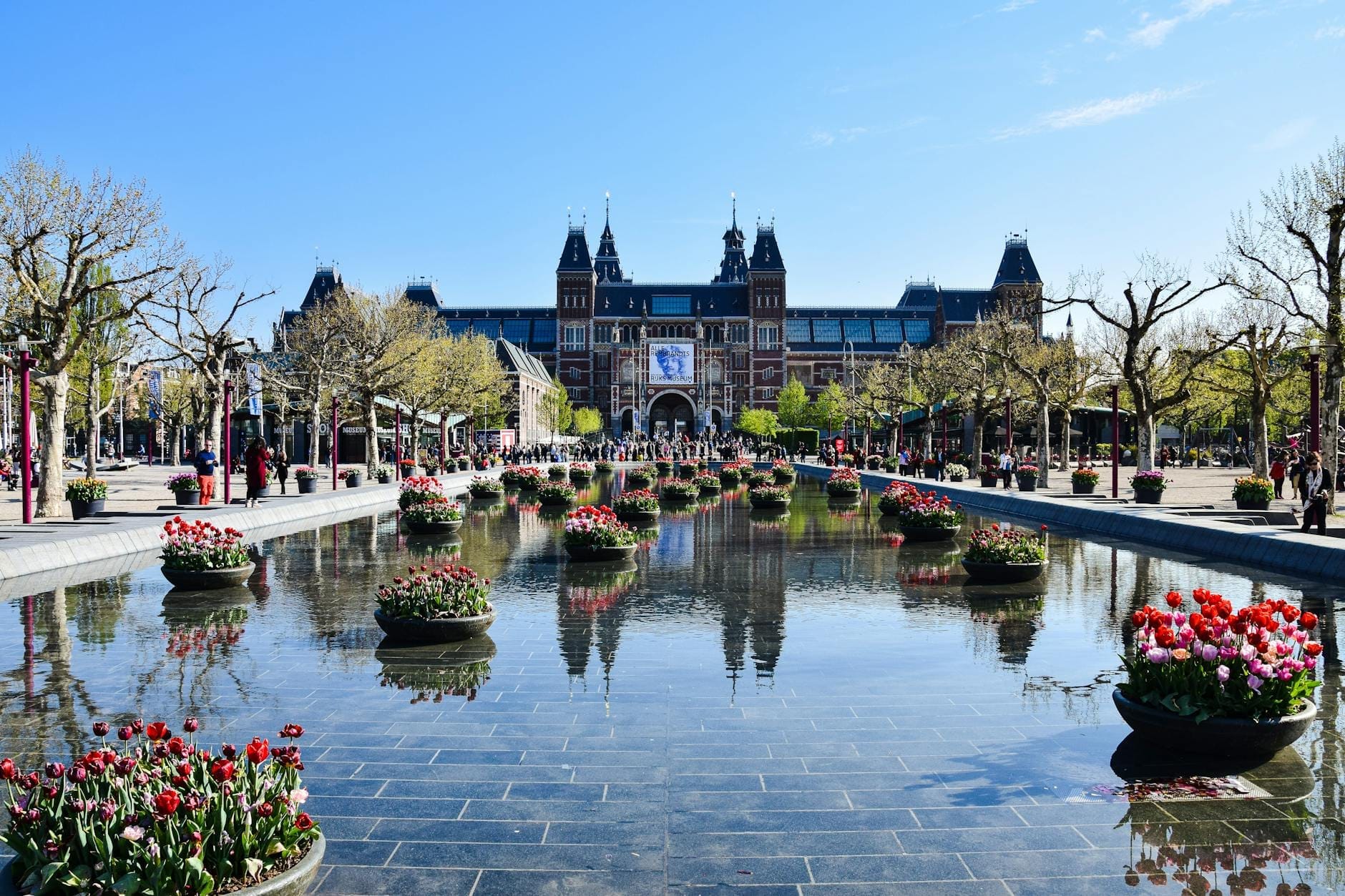
The Rijksmuseum is the Netherlands' national museum of art and history, and by almost any measure one of the great museums of Europe. Its collection spans eight centuries of Dutch and European creative output, from medieval altarpieces and Delft porcelain to Rembrandt's monumental Night Watch and Vermeer's hushed domestic interiors. The building on Museumplein, designed by Pierre Cuypers and completed in 1885, is itself a piece of 19th-century ambition: a Gothic-Renaissance hybrid in red brick and stone, with arched passageways that allow cyclists and pedestrians to pass through the museum's ground floor, one of Amsterdam's more quietly theatrical urban moments.
The museum's origins go back further than most visitors realize. The national collection was established by government decision on 19 November 1798, and first opened to the public on 31 May 1800 in The Hague. After Napoleon made his brother Louis King of Holland, the collection moved to Amsterdam in 1808 and eventually settled in the Trippenhuis, before finding its permanent home in the Cuypers building on Museumplein. That long institutional history gives the Rijksmuseum a weight and seriousness you notice the moment you step inside.
ℹ️ Good to know
All visitors must book a start time in advance, even if you hold a ticket or pass. This applies to everyone, including Museumkaart and other pass holders. Book at rijksmuseum.nl before you arrive.
The Building: What You Notice Before You Enter
Approach from Museumplein and the scale of Pierre Cuypers' design becomes clear. The facade is layered with decorative tilework, stone carvings, and stained glass, all reflecting Cuypers' belief that a national museum should itself function as a monument to Dutch culture. The two main towers are visible from across the open square, which also sometimes contains an outdoor skating rink in winter.
The museum underwent a major renovation between 2003 and 2013, overseen by architects Cruz y Ortiz, who restored the original interior while adding a new glass-roofed atrium, the Atrium, connecting the two main wings. The renovation uncovered Cuypers' original painted decorations on the ceilings and walls, which had been painted over during earlier decades. Walking through the Gallery of Honour, the long central corridor lined with monumental Golden Age paintings, feels closer to a cathedral than a conventional gallery.
The museum sits on Museumplein alongside the Van Gogh Museum and the Stedelijk Museum, making this corner of Oud-Zuid the densest concentration of major museums in Amsterdam. If you are planning a full cultural day, consider the order carefully: the Rijksmuseum works well as a first stop when energy is high.
Tickets & tours
Live prices and dates from our booking partner. If you book, we may earn a commission at no extra cost to you.
Amsterdam guided city bike tour
From 33 €Instant confirmationFree cancellationRijksmuseum and Amsterdam History semi-private tour
From 169 €Instant confirmationFree cancellationRijksmuseum guided tour: old masters and the Golden Age
From 260 €Instant confirmationFree cancellationRijksmuseum and Rembrandt's home semi-private combo tour
From 169 €Instant confirmationFree cancellation
The Collection: What to Prioritize
The permanent collection contains over one million objects, though roughly 8,000 are on display at any given time across 80 galleries spread over four floors. For most visitors, the Dutch Golden Age galleries on the second floor are the core of the visit. This is where Rembrandt van Rijn's Night Watch hangs in its own dedicated hall, the Eregalerij or Gallery of Honour. The painting is enormous (363 x 437 cm) and consistently crowded, but the museum has organized the space thoughtfully: benches allow you to sit and observe, and arriving close to opening time gives you the best chance of a quieter moment in front of it.
Johannes Vermeer's work demands equal attention. The museum holds four Vermeers, including The Milkmaid (De Melkmeid), a small painting that stops most visitors in their tracks. The scale is deceptive: the image is intimate and almost silent, the painted texture of bread and milk conveying a stillness that photographs never quite capture. Allocate time to stand with these works rather than moving through them at gallery pace.
Beyond painting, the decorative arts galleries contain exceptional collections of Delft blue-and-white ceramics, 17th-century silver, and Dutch furniture. The Asian Pavilion, a separate wing accessible from the ground floor, houses Asian art and objects acquired during the Dutch colonial period, a collection that the museum has increasingly contextualized with acknowledgment of its historical origins. The 20th-century galleries are often overlooked by visitors focused on the Golden Age rooms, but they contain interesting Dutch modernist work that rewards the detour.
💡 Local tip
Download the free Rijksmuseum app before your visit. It includes room-by-room audio guides, a searchable collection map, and highlights tours timed at 40 minutes, 1 hour, or 2 hours. It works offline once downloaded.
How Visits Change by Time of Day
The museum opens at 9:00 daily and the first hour is noticeably quieter. The Night Watch hall, which by mid-morning will have several school groups and tour parties moving through it, is comparatively calm at 9:15. If your main priority is the headline paintings, book the earliest available start time.
By 11:00 the atrium fills significantly, particularly on weekends and during school holiday periods in spring and summer. The Gallery of Honour becomes congested at its busiest points. The upper floors and the decorative arts galleries on the ground floor remain less crowded throughout the day and are worth exploring during the peak midday window. Late afternoon, particularly after 15:30, sees crowds thin again as day-trippers move on.
The museum's garden, accessible from the ground floor, opens in summer and offers a genuine change of atmosphere: planted formal beds, sculptures, and benches where you can sit away from the interior crowd. It is free to enter from the street in summer if you only want to see the garden. In winter parts of the garden may be closed or less accessible, but the passageway underneath the building, lit and tiled, becomes its own destination.
⚠️ What to skip
The Rijksmuseum receives well over two million visitors per year. Even with advance booking, expect queues at the coat check and on busy days. Leave extra buffer time if you have a fixed afternoon commitment elsewhere in the city.
Practical Details: Getting There, Tickets, and Accessibility
The museum is located at Museumstraat 1 in Oud-Zuid, directly on Museumplein. Trams 2 and 12 stop at the Rijksmuseum stop, which is a short walk from the main entrance. From Amsterdam Centraal by tram the journey takes approximately 15 minutes. The museum is also about a 10-minute walk from the canal ring and the main shopping streets, and roughly 20 minutes on foot from the Anne Frank House.
Admission is €25 for adults. Children and young people under 18 enter free. CJP (Dutch youth cultural pass) and EYCA cardholders pay a reduced rate of €11.25. The Amsterdam City Card covers entry to the Rijksmuseum and is worth calculating against your overall plans if you intend to visit multiple major museums in the same trip.
If you are visiting multiple major institutions, the Amsterdam City Card can reduce costs significantly. Compare it against individual ticket prices before buying, particularly if the Rijksmuseum, Van Gogh Museum, and the Anne Frank House are all on your list.
Accessibility is well-supported. The building has lifts on every floor, wheelchair-accessible entrances, and guide dogs are permitted. The coat check is free and there are lockers for bags. Strollers are allowed inside. The Café and Museum Shop are open 9:00 to 18:00 daily, an hour longer than the galleries.
Honest Assessment: Who Gets the Most Out of This Museum
The Rijksmuseum rewards visitors who come with a degree of preparation and genuine interest in either Dutch art history or decorative arts. If your visit to Amsterdam is primarily social, culinary, or centered on nightlife, this museum may feel like an obligation rather than an experience. The collection is exceptional but it is not a spectacle. It asks for attention.
Visitors who arrive expecting an experience comparable to the Louvre or the British Museum in terms of total scope may be surprised by how focused the collection is. Its depth in the Dutch and Flemish tradition is unmatched, but it does not try to be a universal encyclopedic museum. That focus is actually a strength: you can build a coherent understanding of a specific cultural moment in a single focused visit.
Families with children will find the museum reasonably well-equipped: there are family audio tours and the free entry for under-18s removes a significant barrier. For a broader introduction to what Amsterdam has to offer culturally, the best museums in Amsterdam guide covers other options worth weighing alongside the Rijksmuseum.
Photography without flash is permitted throughout the permanent collection, and the Gallery of Honour offers genuinely striking shots, particularly the long symmetrical corridor view with the Night Watch at its end. Early morning light through the atrium's glass roof is the best natural light of the day for interior photography.
Insider Tips
- Book the 9:00 opening slot and go directly to the Night Watch before tour groups arrive. By 10:00 the hall is reliably busy, but the first 45 minutes are significantly calmer.
- The museum's online collection database (rijksmuseum.nl/en/collection) lets you search and save works before your visit. Building a short personal shortlist of 10 to 15 pieces focuses the experience and prevents decision fatigue in the galleries.
- The Rijksmuseum Shop sells high-quality prints, reproductions, and books that are priced fairly by museum shop standards. It is open until 18:00, giving you time to browse after the galleries close at 17:00.
- The ground-floor passageway through the building is public space and free to walk through. It is a worthwhile detour even on days you are not visiting the museum, especially to see the tiled walls and Cuypers' decorative program at that level.
- If you hold a Museumkaart (Dutch museum pass), you still need to book a start time in advance. For Dutch residents or those planning to visit multiple museums over several days, the Museumkaart makes logistical sense.
Who Is Rijksmuseum For?
- Art history enthusiasts with a specific interest in Dutch Golden Age painting and Rembrandt or Vermeer
- Travelers on a cultural itinerary who want a single comprehensive institution covering Dutch history and decorative arts
- Families with children aged 8 and above who engage with audio guides and interactive museum formats
- Architecture admirers interested in 19th-century monumental building and restored historic interiors
- Photographers looking for serious interior compositions and access to iconic works
Nearby Attractions
Other things to see while in Oud-Zuid:
- Royal Concertgebouw
Opened in 1888, the Royal Concertgebouw is one of the world's most acoustically celebrated concert halls and a cornerstone of Amsterdam's cultural life. From grand evening symphony performances to intimate Sunday morning concerts, a visit here is an experience that goes well beyond a typical night out.
- Foodhallen Amsterdam
Housed in a converted 1902 tram depot in Amsterdam's Oud-West, Foodhallen Amsterdam brings together 20+ food and drink concepts under one industrial roof. Entry is free, the crowd is local-heavy, and the quality is noticeably higher than a typical food court.
- Moco Museum
Moco Museum occupies a striking 1904 villa steps from the Rijksmuseum, presenting modern and contemporary art including major works by Banksy, Jean-Michel Basquiat, and rotating immersive exhibitions. It is compact, crowd-friendly when timed well, and offers a genuinely different energy from the city's larger institutions.
- PC Hooftstraat
PC Hooftstraat is Amsterdam's most prestigious shopping address, lined with flagship stores from the world's top fashion and lifestyle brands. Located in the leafy Oud-Zuid district, steps from the Rijksmuseum and Vondelpark, it offers a composed, unhurried alternative to the city's crowded shopping corridors.
Planning a trip? Discover personalized activities with the Nomado app.