The Royal Concertgebouw: Amsterdam's Greatest Concert Hall
Opened in 1888, the Royal Concertgebouw is one of the world's most acoustically celebrated concert halls and a cornerstone of Amsterdam's cultural life. From grand evening symphony performances to intimate Sunday morning concerts, a visit here is an experience that goes well beyond a typical night out.
Quick Facts
- Location
- Concertgebouwplein 10, 1071 LN Amsterdam (Oud-Zuid)
- Getting There
- Tram lines 2, 5 and 12 serving Van Baerlestraat / Museumplein stops
- Time Needed
- 2–3 hours for a concert; 30–45 min for a daytime visit
- Cost
- Evening concerts from approx. €46.50; Sunday Morning Concerts from approx. €21 (prices vary by program)
- Best for
- Classical music lovers, architecture admirers, cultural travelers
- Official website
- www.concertgebouw.nl
What the Royal Concertgebouw Actually Is
The Royal Concertgebouw (Koninklijk Concertgebouw in Dutch) is not simply a concert venue. It is a working cultural institution that has shaped the musical identity of Amsterdam since its official opening on 11 April 1888. The idea for the building was first formally proposed in 1881, the foundation stone was laid in 1882, and construction was largely completed by 1886. For well over a century it has been the home of the Royal Concertgebouw Orchestra, widely regarded as one of the finest symphony orchestras on Earth, and it draws leading conductors and soloists from every corner of the classical world.
The building contains multiple performance spaces: the Main Hall (Grote Zaal), the Small Hall (Kleine Zaal), the Choir Hall, and the Mirror Hall (Spiegelzaal). Each has a distinct character. The Main Hall is the star attraction, seating roughly 1,974 people across its stalls, balconies, and gallery, with an acoustic design so successful that engineers and architects still study it today. The Small Hall hosts chamber music, solo recitals, and more intimate programs. Together they offer an almost year-round calendar that ranges from full orchestral evenings to educational concerts and the famous Sunday Morning Concert series.
💡 Local tip
Ticket office hours are reported as Monday to Friday 13:00–18:00 and Saturday to Sunday 11:00–18:00, though these can vary on public holidays. Always confirm directly with the venue before visiting, as hours and programs change seasonally.
The Architecture: Neo-Dutch Renaissance on Museumplein
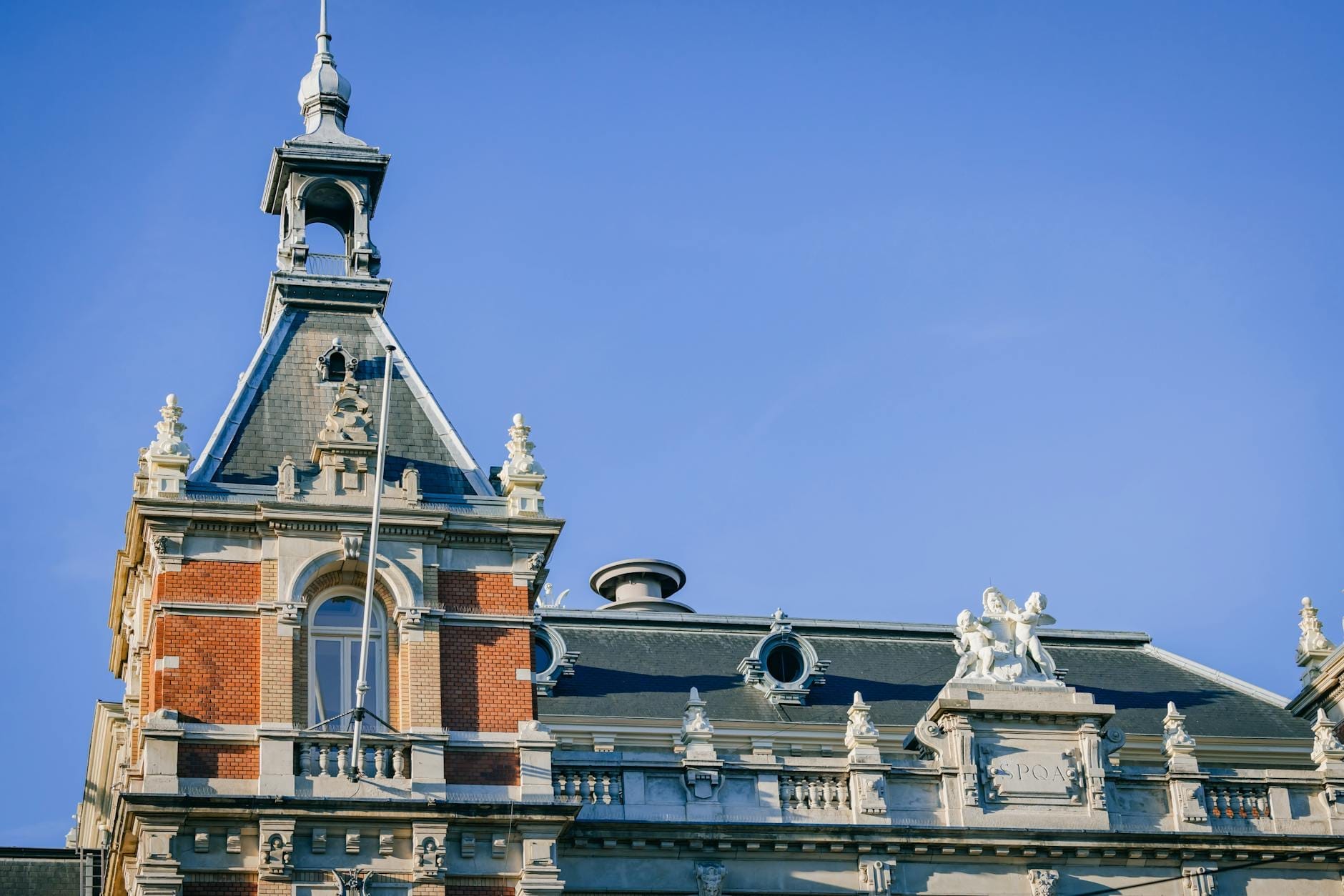
The building was designed by Dutch architect Adolf Leonard van Gendt in the Neo-Dutch Renaissance style. Its facade, with arched windows, decorative stone detailing, and a central pediment crowned with a classical figure, stands as one of the more photogenic institutional buildings in Oud-Zuid. It faces out onto Museumplein, the broad plaza that also anchors the Rijksmuseum and the Van Gogh Museum, meaning the Concertgebouw sits at the center of one of the densest concentrations of world-class cultural institutions in Europe.
In the late morning on a clear day, the facade catches warm light from the south-west, making it easy to photograph from the open grass of Museumplein without buildings blocking the view. The front steps are a gathering point before evening performances, and on concert nights the building takes on a different quality entirely: warm light glows through tall windows, formally dressed concertgoers mill around the entrance, and there is an unhurried, pre-performance atmosphere that feels genuinely different from a stadium or modern arena.
The neighborhood of Oud-Zuid surrounding the Concertgebouw is one of Amsterdam's more quietly elegant districts, with wide tree-lined streets, brownstone apartment buildings from the late 19th and early 20th centuries, and a relaxed pace that sets it apart from the tourist density of the Canal Ring. It is worth arriving early and walking the area.
Tickets & tours
Live prices and dates from our booking partner. If you book, we may earn a commission at no extra cost to you.
Gray Line Canal Cruise with snackbox & Heineken Experience
From 48 €Instant confirmationFree cancellationAmsterdam evening canal cruise
From 18 €Instant confirmationFree cancellationJewish Museum and Portuguese Synagogue entrance ticket
From 20 €Instant confirmationFree cancellationAdmission ticket for Artis Royal Zoo and Micropia
From 39 €Instant confirmationFree cancellation
The Acoustics: Why Musicians and Listeners Keep Coming Back
The Main Hall's acoustic reputation is not marketing. The hall was built before modern acoustic science existed as a discipline, and Van Gendt worked from empirical principles, drawing on proportions of celebrated 19th‑century European concert halls. The result is a room that produces exceptional natural reverberation, clarity, and warmth across the entire frequency range. Many performers and recording engineers consider it among the two or three finest concert acoustics anywhere in the world, alongside venues like Carnegie Hall in New York and the Vienna Musikverein.
What this means for a listener is concrete: the sound does not feel amplified or processed. Strings have body and depth from every seat in the house. The hall is wide enough to feel open, but not so cavernous that details dissolve. Even in the upper gallery, which is the least expensive seating area, the acoustic experience remains genuinely rewarding, though sightlines to the stage can be restricted from certain positions. If you are choosing seats purely for listening, the upper balcony presents good value.
What to Expect Before, During, and After a Concert
Doors typically open 45 minutes before the start of a performance. The foyer fills gradually with a crowd that skews older and well-dressed without being formal by strict dress code standards. Smart casual is the unspoken norm for evening concerts. There is a bar in the foyer serving wine, beer, and non-alcoholic drinks, along with simple snacks. Latecomers are generally not admitted until an appropriate break in the program, which is standard practice at serious concert halls.
During the performance itself, the audience is attentive and quiet. Mobile phones should be fully silenced rather than set to vibrate, as the hall's acoustic sensitivity means even subtle sounds carry. Applause between movements of a symphony is frowned upon in classical tradition, though this can vary by program type. For first-time concert hall visitors, arriving a few minutes early and reading the program notes helps orient the experience.
The Sunday Morning Concerts, held on selected Sundays with start times typically in mid-morning, are a particularly accessible entry point. They are shorter than full evening programs, the ticket prices are lower, and the atmosphere is noticeably more relaxed. Families and younger visitors make up a larger proportion of the audience at these events.
ℹ️ Good to know
Evening concert tickets start from approximately €46.50 and Sunday Morning Concert tickets from approximately €21.00. Prices vary significantly by program, seat category, and demand. Book in advance for popular performances, as the hall regularly sells out.
Getting There and Practical Logistics
The Concertgebouw is located at Concertgebouwplein 10, at the southern end of Museumplein. It is reachable by tram from multiple points in the city center, with stops near Van Baerlestraat and Museumplein serving several lines. Amsterdam's tram network is operated by GVB and is the most convenient public transit option for this part of Oud-Zuid. The venue is not directly on a metro line, though the North–South metro line (M52) stops at nearby De Pijp and Vijzelgracht stations, from which it is a short tram or bike ride.
If you are combining the concert with earlier sightseeing, the Rijksmuseum and the Van Gogh Museum are a short walk away across Museumplein. The broad open space of the plein makes for a pleasant pre-concert walk, particularly in spring and summer when the area stays light into the evening.
Cycling to the Concertgebouw is practical, and there is bicycle parking in the surrounding streets. Driving is not recommended, as parking in Oud-Zuid is limited and expensive. Taxis and ride-hailing apps including Uber and Bolt operate throughout Amsterdam and can drop off and pick up at Concertgebouwplein. After late evening performances, trams continue running but reduce in frequency, so checking GVB schedules before departure is sensible.
For wheelchair users and visitors with mobility considerations, the venue asks that you contact them directly in advance to arrange appropriate assistance and accessible seating. Do not assume standard online ticket purchases will automatically account for specific accessibility requirements.
Who This Experience Suits, and Who Might Give It a Miss
The Royal Concertgebouw is an exceptional experience for anyone with genuine interest in orchestral and chamber music, whether that is deep expertise or straightforward curiosity. It is also worth visiting for architecture and heritage reasons, particularly given its setting on Museumplein. Travelers building a broader cultural itinerary around Amsterdam will find it fits naturally alongside the major art museums nearby.
For those interested in Amsterdam's wider concert and event calendar, or looking to understand how music fits into the city's cultural fabric, the broader things to do in Amsterdam guide covers cultural venues across the city.
Visitors who are not drawn to classical music at all, or who find formal concert environments uncomfortable, will get little from an evening here. The experience is built around attentive listening in a structured setting. It is also not an attraction you can drop into spontaneously on the day: concerts sell out, and the experience is entirely dependent on having a ticket for a specific program. If you arrive without a ticket hoping for a casual look inside, you will generally be limited to the foyer areas.
⚠️ What to skip
The Concertgebouw is a working concert hall, not a museum. You cannot tour the Main Hall freely. Access to the performance spaces is generally via a valid concert ticket or a pre-booked guided tour. Plan ahead and book your tickets well before your travel dates if you have a specific performance in mind.
Insider Tips
- The Sunday Morning Concert series offers the lowest ticket prices and a relaxed audience atmosphere. It is often the best starting point for first-time visitors or those newer to classical music.
- Upper gallery seats (the least expensive category) offer excellent acoustics in the Main Hall. If budget is a concern, this is a legitimate choice for hearing the orchestra at its best, though some sightlines to the stage are restricted.
- Arrive 30 minutes before doors open for evening performances to browse the foyer, pick up a physical program, and find the bar without rushing. The pre-concert foyer atmosphere is part of the experience.
- Museumplein is directly in front of the building and is ideal for a pre-concert walk. In good weather, the open grass area stays pleasant well into the evening during spring and summer, and local food vendors sometimes operate nearby.
- Check the Concertgebouw website directly rather than third-party ticket platforms. The official site lists the full program calendar, and some tickets are only available through the venue itself.
Who Is Royal Concertgebouw For?
- Classical music enthusiasts seeking world-class orchestral performance
- Architecture and heritage travelers interested in late 19th-century Dutch institutional design
- Couples or small groups looking for a memorable evening out beyond dinner and drinks
- Cultural travelers building a full day around Museumplein's art and music institutions
- Budget-conscious visitors willing to book Sunday Morning Concerts for a lower-cost entry point
Nearby Attractions
Other things to see while in Oud-Zuid:
- Foodhallen Amsterdam
Housed in a converted 1902 tram depot in Amsterdam's Oud-West, Foodhallen Amsterdam brings together 20+ food and drink concepts under one industrial roof. Entry is free, the crowd is local-heavy, and the quality is noticeably higher than a typical food court.
- Moco Museum
Moco Museum occupies a striking 1904 villa steps from the Rijksmuseum, presenting modern and contemporary art including major works by Banksy, Jean-Michel Basquiat, and rotating immersive exhibitions. It is compact, crowd-friendly when timed well, and offers a genuinely different energy from the city's larger institutions.
- PC Hooftstraat
PC Hooftstraat is Amsterdam's most prestigious shopping address, lined with flagship stores from the world's top fashion and lifestyle brands. Located in the leafy Oud-Zuid district, steps from the Rijksmuseum and Vondelpark, it offers a composed, unhurried alternative to the city's crowded shopping corridors.
- Rijksmuseum
The Rijksmuseum is the Netherlands' national museum of art and history, housing Rembrandt's Night Watch and Vermeer's masterworks inside a monumental 19th-century building on Museumplein. With over 8,000 objects on permanent display, it rewards careful planning far more than a rushed walk-through.
Planning a trip? Discover personalized activities with the Nomado app.