Moco Museum Amsterdam: Modern Art in a Historic Villa on Museumplein
Moco Museum occupies a striking 1904 villa steps from the Rijksmuseum, presenting modern and contemporary art including major works by Banksy, Jean-Michel Basquiat, and rotating immersive exhibitions. It is compact, crowd-friendly when timed well, and offers a genuinely different energy from the city's larger institutions.
Quick Facts
- Location
- Honthorststraat 20, 1071 DE Amsterdam (Museumplein, Oud-Zuid)
- Getting There
- Tram lines 2, 5, and 12 to Museumplein or Rijksmuseum stop
- Time Needed
- 1 to 1.5 hours for a relaxed visit
- Cost
- Tickets from approximately €17.95–€22.95; book online in advance
- Best for
- Contemporary art fans, photography lovers, Banksy enthusiasts, first-time visitors pairing with the Van Gogh Museum
- Official website
- www.mocomuseum.com
What Is Moco Museum?
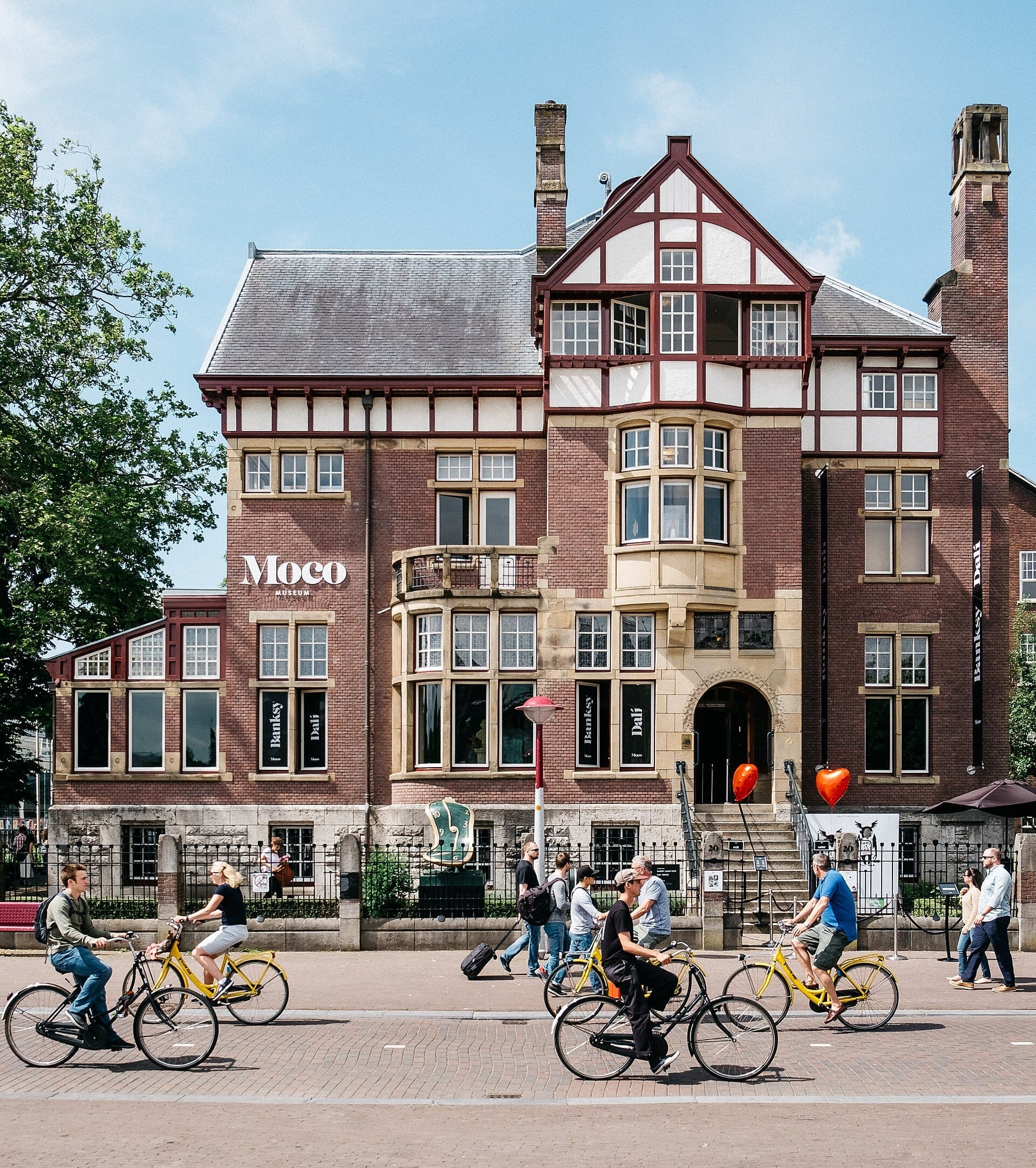
Moco Museum — short for Modern Contemporary Museum — is a privately run art museum on Amsterdam's Museumplein, occupying Villa Alsberg, a townhouse designed in 1904 by architect Eduard Cuypers. It opened in 2016 under the direction of founders Kim Logchies-Prins and Lionel Logchies, and has since become one of the more visited contemporary art spaces in the city, drawing an audience that may not typically gravitate toward traditional museum formats.
The museum's name says a lot about its intent: accessible, present-day, and international. Where the Rijksmuseum a few hundred meters away deals in 17th-century Golden Age masterworks and the Van Gogh Museum focuses on a single artist's biography, Moco occupies a different cultural lane entirely. It is the place you go to see Banksy's political street art translated into a gallery context, works from Jean-Michel Basquiat's raw neo-expressionist canon, and rotating immersive digital or installation-based exhibitions.
💡 Local tip
Book timed-entry tickets online before arrival. Walk-up queues can be long in peak season, and online tickets typically offer a small cost saving. The museum is open daily from 09:00 to 20:00, with extended evening hours in summer; always confirm current hours on the official website before your visit.
The Building: Villa Alsberg and Its Context
Eduard Cuypers designed Villa Alsberg in 1904 — the same period in which much of the surrounding Oud-Zuid district was being built out as a residential expansion for Amsterdam's growing professional class. The building sits on Honthorststraat, a quiet side street that connects Museumplein with the more residential streets behind it. The facade is handsome without being overwhelming: red brick, large windows, and a restrained ornamental vocabulary typical of Dutch architecture at the turn of the 20th century.
That architectural context matters more than it might seem. Walking from the tram stop past the monumental rear facade of the Rijksmuseum and then into this relatively intimate townhouse creates an abrupt and interesting contrast. The Rijksmuseum is a cathedral of national heritage. Moco is a house. Rooms are relatively small by museum standards, ceilings are domestic in scale, and the installation choices respond to that scale. Banksy pieces that might feel lost in a large white-box gallery here feel oddly at home between period windows and timber floors.
One practical note about the building: Villa Alsberg is a historic structure with internal layouts that include stairs between levels. Visitors with mobility limitations should contact the museum directly to understand what is accessible before purchasing tickets, as the official visit page advises confirming specific requirements in advance.
Tickets & tours
Live prices and dates from our booking partner. If you book, we may earn a commission at no extra cost to you.
What You Actually See Inside
The permanent collection anchors the museum's identity around two major names: Banksy and Jean-Michel Basquiat. The Banksy collection is one of the museum's strongest draws, presenting a selection of authenticated works, prints, and installation pieces spanning his career from early Bristol-era stencils to later, more politically charged work. Pieces address surveillance culture, consumerism, and political hypocrisy with the directness the artist is known for. Seeing them gathered in a single sequence, with proper labels and context, is genuinely different from encountering them in reproduction online.
The Basquiat works complement this well. Basquiat's dense, symbol-laden canvases — anchored in New York's street and graffiti culture of the early 1980s — share Banksy's roots in art made outside institutional spaces, even if Basquiat's trajectory took him deep into the commercial gallery world before his death in 1988 at age 27. The visual language is intense: layered text, fractured figures, references to Black American history and anatomy. These are not easy pieces to look at quickly, which is worth knowing before you go.
Beyond the permanent rooms, Moco regularly hosts temporary exhibitions, often built around immersive formats: digital projection rooms, interactive installations, or survey shows focused on a single contemporary artist. The specific exhibitions change, so checking the museum's current programming before your visit is worth a few minutes of planning.
Time of Day and Crowd Patterns
Museumplein is one of Amsterdam's most visited squares, and the cluster of major institutions around it means foot traffic is consistently high from mid-morning onward in warmer months. Moco's timed-entry system helps manage density inside the museum, but the surrounding area feels noticeably calmer in the early morning or on weekday afternoons in the shoulder season.
The 09:00 opening slot is worth considering if you want the rooms to yourself. The light inside the building in the first hour after opening is good for photography, and the pace is less hurried. By 11:00, particularly on weekends and throughout July and August, the museum's compact rooms can feel full. The usual 20:00 closing time means a late afternoon visit is also viable, and the evening light through those large Cuypers windows has a particular quality in the longer days of spring and summer.
ℹ️ Good to know
Photography is generally permitted in the museum for personal use, though policies may vary by exhibition. Tripods and flash are not typically allowed. Check the current rules on the official website or at the entrance.
Fitting Moco Into the Museumplein Area
Museumplein is the natural home for a full cultural day in Amsterdam. The Van Gogh Museum is effectively across the street, the Rijksmuseum is a short walk, and the Stedelijk Museum — Amsterdam's premier institution for modern and contemporary art — is on the same square. On a practical level, combining Moco with one of these institutions on the same day is very manageable; Moco's 60 to 90 minute footprint fits neatly alongside a longer visit to one of the larger museums.
The Vondelpark is a short walk from the museum's entrance, which makes it a logical place to decompress after the intensity of the Banksy and Basquiat rooms. In good weather, the park fills with a mix of locals and visitors through the afternoon.
For eating before or after, the streets of Oud-Zuid directly surrounding Museumplein have a range of cafes and lunch spots at varying price points. The area around Concertgebouwplein and Van Baerlestraat is worth walking rather than committing to any specific spot.
Honest Assessment: Is Moco Worth Your Time?
Moco is not a comprehensive modern art museum. If you arrive expecting the depth and breadth of the Stedelijk's collection, or a rigorous survey of 20th-century movements, you will leave underwhelmed. The museum is curated to be broadly appealing, photographable, and accessible to visitors who may not have a deep background in contemporary art — and it delivers on those terms effectively.
The Banksy collection in particular is well-presented and contextually informative. For visitors whose relationship with contemporary art is mostly through social media, street art, and digital culture, Moco provides a genuine and unpretentious entry point. The immersive temporary exhibitions, when they are strong, add real value to the ticket price.
Visitors who regularly engage with contemporary art institutions and have seen significant Banksy or Basquiat works elsewhere may find the collection covers familiar ground. The ticket price, while reasonable relative to other Amsterdam attractions, is real money, so calibrating your expectations to the museum's actual scale is sensible before purchasing.
⚠️ What to skip
Moco is housed in a compact historic villa. Do not expect the scale or encyclopedic depth of a national museum. The visit is genuinely 60 to 90 minutes, not a half-day commitment.
Getting There and Practical Details
The address is Honthorststraat 20, 1071 DE Amsterdam. Tram lines 2, 5, and 12 serve the Museumplein and Rijksmuseum stops, both within a very short walk of the museum entrance. Amsterdam Centraal is roughly 20 to 25 minutes by tram. Leidseplein is walkable in under 10 minutes.
If you are planning multiple museum visits or using public transport frequently, the Amsterdam City Card covers public transport and entry to a number of attractions, though you should verify whether Moco is currently included or discounted before factoring it into your calculations, as this can change.
The museum is open daily from 09:00 to 20:00, with longer opening hours during some periods such as summer; Ticket prices start from approximately €17.95 to €22.95 per person depending on the time slot and current programming; check the official website for current rates before visiting, as prices are subject to change. Booking online in advance is strongly recommended.
Insider Tips
- The 09:00 opening slot is consistently the least crowded window of the day. Arriving at opening means you can move through the Banksy rooms at your own pace before the mid-morning rush.
- Moco pairs logistically well with the Van Gogh Museum: book Moco for early morning and Van Gogh for late morning or early afternoon, and you can cover both without feeling rushed on either side.
- The temporary exhibitions are sometimes included in the standard ticket and sometimes priced separately. Check the current exhibition lineup on the official website before you buy so you know exactly what your ticket covers.
- The exterior of Villa Alsberg is worth a moment of attention before you go in. The 1904 Eduard Cuypers building is a good example of the residential architecture that defines the surrounding Oud-Zuid streets, and understanding what the building is gives the interior experience an extra layer.
- If you are sensitive to large crowds in small spaces, avoid Saturday and Sunday midday in July and August. These are the peak hours in peak season, and the rooms do feel congested. The museum's own timed-entry system reduces but does not eliminate this.
Who Is Moco Museum For?
- Contemporary art fans who want an accessible, well-curated introduction to Banksy and Basquiat
- Visitors pairing a Museumplein day with the Van Gogh Museum or Rijksmuseum and wanting variety across art periods
- Photography enthusiasts drawn to the strong visual language of street art and immersive installations
- Travelers on a time-limited trip who want a focused 60 to 90 minute cultural experience without committing to a half-day
- Younger visitors or those newer to museum-going who find the street art and contemporary format more engaging than classical collections
Nearby Attractions
Other things to see while in Oud-Zuid:
- Royal Concertgebouw
Opened in 1888, the Royal Concertgebouw is one of the world's most acoustically celebrated concert halls and a cornerstone of Amsterdam's cultural life. From grand evening symphony performances to intimate Sunday morning concerts, a visit here is an experience that goes well beyond a typical night out.
- Foodhallen Amsterdam
Housed in a converted 1902 tram depot in Amsterdam's Oud-West, Foodhallen Amsterdam brings together 20+ food and drink concepts under one industrial roof. Entry is free, the crowd is local-heavy, and the quality is noticeably higher than a typical food court.
- PC Hooftstraat
PC Hooftstraat is Amsterdam's most prestigious shopping address, lined with flagship stores from the world's top fashion and lifestyle brands. Located in the leafy Oud-Zuid district, steps from the Rijksmuseum and Vondelpark, it offers a composed, unhurried alternative to the city's crowded shopping corridors.
- Rijksmuseum
The Rijksmuseum is the Netherlands' national museum of art and history, housing Rembrandt's Night Watch and Vermeer's masterworks inside a monumental 19th-century building on Museumplein. With over 8,000 objects on permanent display, it rewards careful planning far more than a rushed walk-through.
Planning a trip? Discover personalized activities with the Nomado app.