PC Hooftstraat: Amsterdam's Luxury Shopping Street Explained
PC Hooftstraat is Amsterdam's most prestigious shopping address, lined with flagship stores from the world's top fashion and lifestyle brands. Located in the leafy Oud-Zuid district, steps from the Rijksmuseum and Vondelpark, it offers a composed, unhurried alternative to the city's crowded shopping corridors.
Quick Facts
- Location
- P.C. Hooftstraat, 1071 Amsterdam, Oud-Zuid
- Getting There
- Tram lines 2 and 5 to Hobbemastraat or Van Baerlestraat; walk from Museumplein
- Time Needed
- 1 to 2 hours for browsing; longer if you shop seriously
- Cost
- Free to walk; prices inside stores are at full luxury retail level
- Best for
- Fashion lovers, window shoppers, architecture enthusiasts, couples
- Official website
- www.amsterdam.nl/en/places/pc-hooftstraat
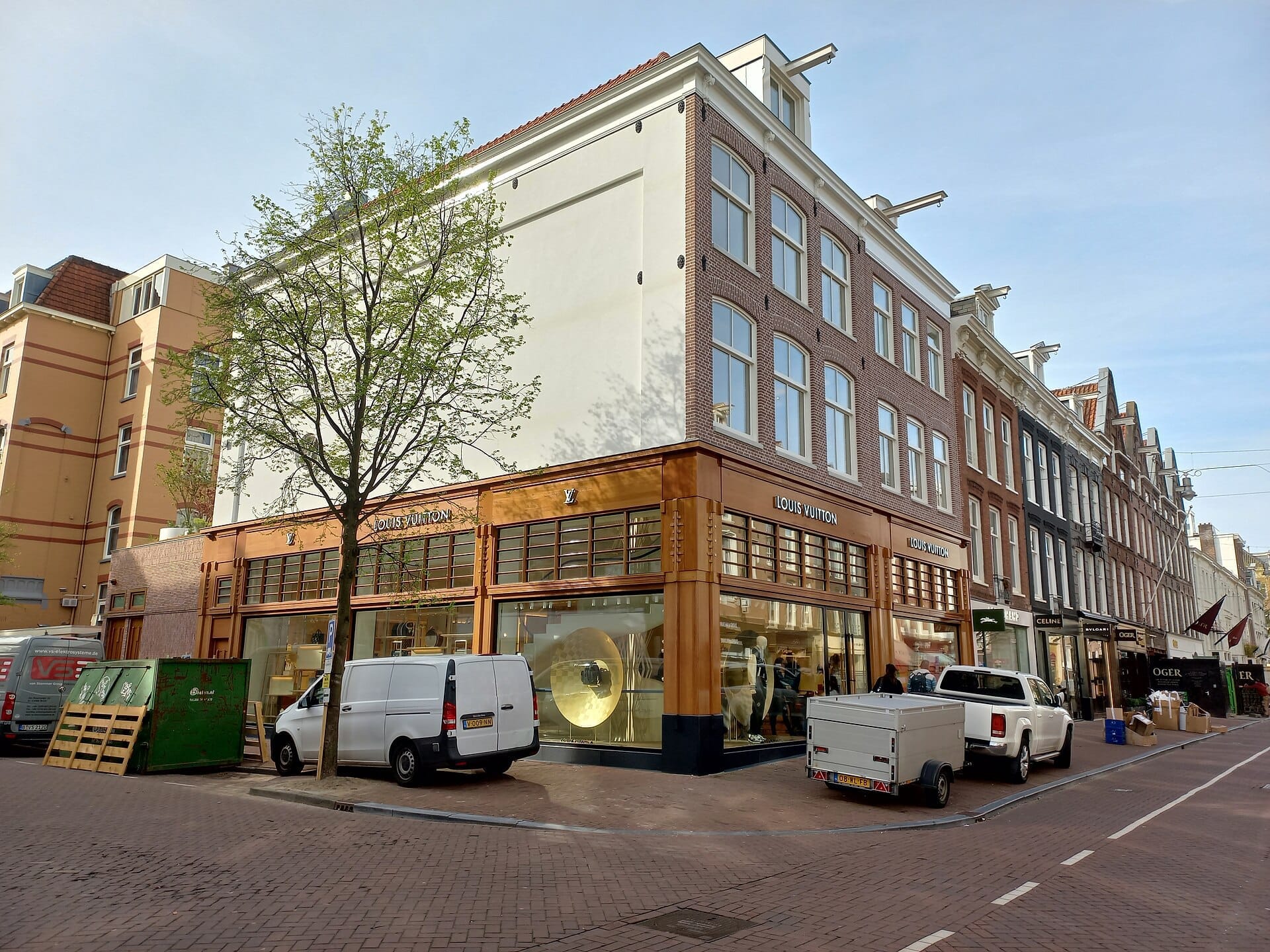
What Is PC Hooftstraat?
P.C. Hooftstraat is a short, elegantly proportioned street in Amsterdam's Oud-Zuid district, widely regarded as the city's answer to Milan's Via Montenapoleone or London's Bond Street. Named after the 17th-century Dutch playwright and poet Pieter Corneliszoon Hooft, the street runs roughly 400 metres from Hobbemastraat toward the edge of the Vondelpark. It is lined on both sides by late 19th-century brick buildings in the Dutch neo-Renaissance style, their ground floors now occupied by flagship boutiques for brands including Louis Vuitton, Hermès, Chanel, Prada, Gucci, and a rotating roster of international names.
The street itself is free to walk. You pay nothing to stroll its length, take in the shopfronts, or sit at one of the terrace cafes that extend onto the pavement on warmer days. For travelers who have no intention of buying anything, PC Hooftstraat still rewards a visit: the architecture is handsome, the crowd-watching is genuinely interesting, and the proximity to the Museumplein and Vondelpark makes it easy to fold into a broader afternoon in Oud-Zuid.
💡 Local tip
Tram 2 and Tram 5 stop at Hobbemastraat, placing you at the eastern end of the street within seconds of stepping off. From the Rijksmuseum, it is a 3-minute walk west.
The Architecture and Setting
The buildings along PC Hooftstraat date primarily from the late 1800s and early 1900s, constructed as Amsterdam expanded southward beyond the historic canal ring. The style is solid Dutch neo-Renaissance: red brick facades with stepped or decorated gables, large arched windows, and ornamental stonework. Unlike many European luxury shopping streets that have been gutted and modernised at ground level, PC Hooftstraat has retained much of the architectural coherence of its upper storeys. Looking above the shopfronts, you get a clear sense of how the street would have appeared when it was a prosperous residential and commercial address.
The street is narrow enough that the buildings feel present on both sides without being oppressive. Trees are planted at intervals along the pavement, and in summer their canopy filters the light in a way that makes the whole street feel cooler and more composed than the shopping areas closer to the city centre. The road itself carries limited vehicle traffic, so the overall atmosphere is quiet by Amsterdam standards.
The surrounding area reinforces the sense of quality. The Rijksmuseum is a five-minute walk east, its rear garden backing almost onto the corner of the street. The Vondelpark begins at the western end. The combination gives PC Hooftstraat a setting that most luxury retail districts cannot match.
Tickets & tours
Live prices and dates from our booking partner. If you book, we may earn a commission at no extra cost to you.
Gray Line Canal Cruise with snackbox & Heineken Experience
From 48 €Instant confirmationFree cancellationAmsterdam evening canal cruise
From 18 €Instant confirmationFree cancellationJewish Museum and Portuguese Synagogue entrance ticket
From 20 €Instant confirmationFree cancellationAdmission ticket for Artis Royal Zoo and Micropia
From 39 €Instant confirmationFree cancellation
What to Expect Inside the Stores
The store density on PC Hooftstraat is high for a short street. International luxury fashion houses occupy the majority of the ground-floor retail space, with some flagship stores occupying multiple connected units. The format is almost entirely mono-brand: you will not find a department store or a multi-brand retailer. Service inside the boutiques is formal but generally polite, and the stores tend to be calm enough that staff can give proper attention to each visitor. Weekend afternoons are the busiest periods; mid-week mornings are noticeably quieter.
Most stores open around 10:00 and close between 18:00 and 19:00, though hours vary by brand and season. Sundays typically see later openings, often around 12:00. It is worth checking individual store websites for current hours, particularly during Dutch public holidays.
ℹ️ Good to know
If you are shopping as a non-EU visitor, ask each store about VAT refund eligibility. The Netherlands participates in VAT refund schemes for qualifying purchases, though the process varies by retailer.
Beyond the fashion houses, there are a handful of high-end homeware and lifestyle stores, upscale florists, and a few cafes and restaurants pitched at the same clientele. Several nearby cafés and terraces offer coffee and light meals without requiring a purchase inside any boutique.
How the Street Changes Through the Day
Early morning, before 10:00, PC Hooftstraat is almost empty. The delivery vans are gone, the staff are inside preparing, and the pavement is clear. This is the best time to photograph the architecture without people or clutter in the frame. The light from the east catches the upper storeys of the buildings on the north side of the street particularly well.
By late morning the street reaches a comfortable level of activity: enough people to feel alive, not so many that movement is restricted. This window, roughly 10:30 to 12:30 on weekdays, is the most pleasant time to browse seriously. The weekend dynamic is different. Saturday afternoons in particular bring a noticeably larger crowd, with more tourists alongside local shoppers. The street handles this well, given its width, but it loses some of the composed quality that makes it distinctive.
In winter, particularly from November through February, the street takes on a different character. The trees are bare, the natural light is lower, and the warm glow from inside the store windows becomes more prominent. Many of the stores dress their windows elaborately for the holiday season, which makes the late afternoon and early evening walk genuinely worthwhile even for those with no intention of shopping.
PC Hooftstraat in the Context of Oud-Zuid
PC Hooftstraat is not the whole story of Oud-Zuid. The surrounding district is one of Amsterdam's more affluent and architecturally coherent neighbourhoods, worth exploring beyond the retail strip. Oud-Zuid was developed primarily in the late 19th and early 20th centuries as a planned expansion of the city, and the residential streets immediately to the south of PC Hooftstraat, particularly around Willemsparkweg and the Van Eeghenstraat, are lined with large merchant villas and well-maintained apartment blocks that see very few tourists.
The cultural infrastructure nearby is exceptional. The Van Gogh Museum and the Stedelijk Museum are both within a ten-minute walk, clustered around Museumplein. The Concertgebouw, one of Europe's most respected concert halls, sits at the southern end of the park. A half-day that combines the Rijksmuseum with a walk along PC Hooftstraat and a coffee at the edge of the Vondelpark is one of the most coherent and unhurried ways to spend time in Amsterdam.
Practical Details and Getting There
P.C. Hooftstraat is in postal district 1071, in the Oud-Zuid neighbourhood of Amsterdam. The street is a public road and is accessible at all hours at no charge. There are no entry requirements, no queues, and no tickets.
By tram, lines 2 and 5 serve the area directly. Alight at Hobbemastraat for the eastern end or Van Baerlestraat for the western end. From Amsterdam Centraal station, the journey by tram takes roughly 20 to 25 minutes. Cycling is also practical: the street connects easily to Amsterdam's cycling network, and there are bike racks on the surrounding streets. Note that cycling along the shopping section itself is not permitted during peak retail hours.
Accessibility is generally good. PC Hooftstraat is a flat, paved street with dropped kerbs at crossings. Individual store accessibility varies: most flagship stores have step-free access, but it is worth checking directly with specific boutiques if this is a concern.
⚠️ What to skip
Parking is very limited in this area and controlled by paid permit zones. Do not plan to arrive by car expecting to park nearby without preparation. Public transport or a bicycle is strongly recommended.
Who might not enjoy PC Hooftstraat? Travelers on tight budgets who find luxury retail environments uncomfortable, or families with young children looking for hands-on activities, are likely to find their time better spent elsewhere nearby. The street is pleasant but it is essentially a shopping street; there is no museum, no performance, and no free attraction at its core. The payoff is atmosphere, architecture, and proximity to Museumplein, not any single destination experience.
Insider Tips
- Walk the full length of the street looking above the shopfronts, not just at the window displays. The upper storeys of the 19th-century buildings are far more interesting than what has been done to the ground floors.
- Weekday mornings between 10:30 and 12:30 offer the most relaxed browsing conditions. Saturday afternoons are the busiest period and the least representative of the street's usual character.
- The side streets immediately to the south of PC Hooftstraat, particularly Willemsparkweg, are excellent for a quiet walk through prosperous Amsterdam without any other tourists. The architecture is comparable quality and completely uncommercialized.
- If you are visiting the Rijksmuseum, exit through the rear garden passage rather than the main entrance on Museumplein. You will emerge directly onto the block adjacent to PC Hooftstraat and can link the two in a single continuous walk.
- Several of the boutiques offer private appointment shopping during quieter hours. If you are a serious buyer, calling ahead to a flagship store often results in a significantly more attentive experience than walking in during weekend hours.
Who Is PC Hooftstraat For?
- Fashion and luxury retail enthusiasts seeking a calmer, more curated alternative to central Amsterdam shopping streets
- Architecture and urban design observers interested in late 19th-century Dutch commercial streetscapes
- Couples combining a museum afternoon at Museumplein with an evening stroll and dinner in Oud-Zuid
- Solo travelers interested in high-quality window shopping and people-watching in a well-maintained neighbourhood setting
- Visitors already spending time at the Rijksmuseum, Van Gogh Museum, or Vondelpark who want to extend their Oud-Zuid afternoon
Nearby Attractions
Other things to see while in Oud-Zuid:
- Royal Concertgebouw
Opened in 1888, the Royal Concertgebouw is one of the world's most acoustically celebrated concert halls and a cornerstone of Amsterdam's cultural life. From grand evening symphony performances to intimate Sunday morning concerts, a visit here is an experience that goes well beyond a typical night out.
- Foodhallen Amsterdam
Housed in a converted 1902 tram depot in Amsterdam's Oud-West, Foodhallen Amsterdam brings together 20+ food and drink concepts under one industrial roof. Entry is free, the crowd is local-heavy, and the quality is noticeably higher than a typical food court.
- Moco Museum
Moco Museum occupies a striking 1904 villa steps from the Rijksmuseum, presenting modern and contemporary art including major works by Banksy, Jean-Michel Basquiat, and rotating immersive exhibitions. It is compact, crowd-friendly when timed well, and offers a genuinely different energy from the city's larger institutions.
- Rijksmuseum
The Rijksmuseum is the Netherlands' national museum of art and history, housing Rembrandt's Night Watch and Vermeer's masterworks inside a monumental 19th-century building on Museumplein. With over 8,000 objects on permanent display, it rewards careful planning far more than a rushed walk-through.
Planning a trip? Discover personalized activities with the Nomado app.