Foodhallen Amsterdam: What to Know Before You Visit
Housed in a converted 1902 tram depot in Amsterdam's Oud-West, Foodhallen Amsterdam brings together 20+ food and drink concepts under one industrial roof. Entry is free, the crowd is local-heavy, and the quality is noticeably higher than a typical food court.
Quick Facts
- Location
- Hannie Dankbaarpassage 16, 1053 RT Amsterdam (De Hallen complex, Oud-West)
- Getting There
- Tram to Eerste Constantijn Huygensstraat or short walk west from Leidseplein; bike parking available at De Hallen
- Time Needed
- 1–2 hours for a proper meal and drink; longer if you graze multiple stalls
- Cost
- Free entry; individual dishes typically €8–€16 per portion
- Best for
- Groups with mixed tastes, solo travelers, casual date nights, rainy-day eating
- Official website
- foodhallen.nl/venues/amsterdam
What Foodhallen Actually Is
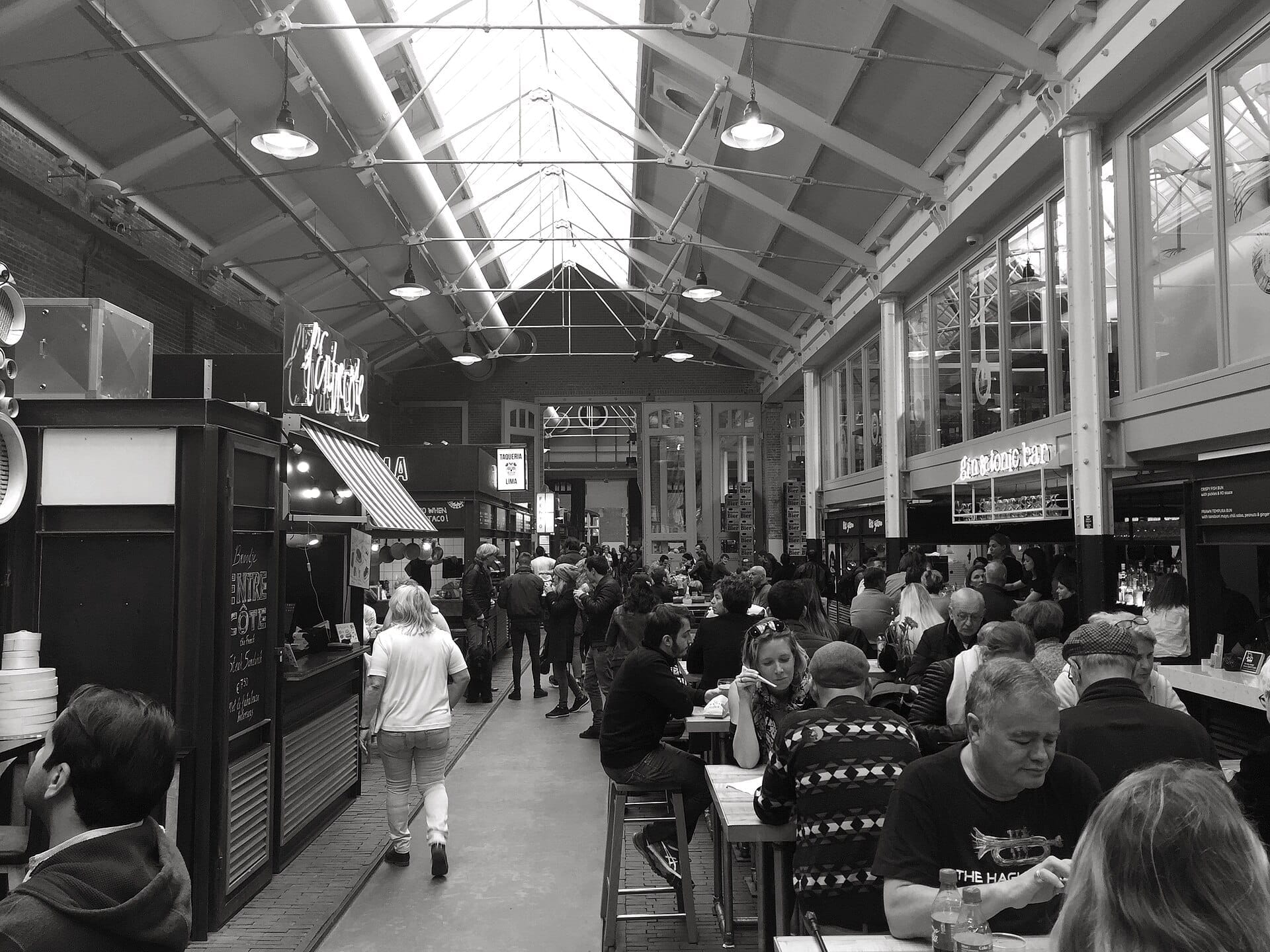
Foodhallen Amsterdam is an indoor food market occupying a former tram depot of a former tram depot on Hannie Dankbaarpassage. It opened in 2014 as part of the wider De Hallen complex, a cultural and retail redevelopment of a depot that dates to 1902, when Amsterdam's electric tram network was in its early years. The depot functioned as a working maintenance facility until 1996, and the bones of that industrial history are still visible: the arched brick ceiling, the steel supports, and the long open hall that once accommodated rows of trams now frames rows of food stalls instead.
More than twenty different cuisines occupy the hall at any given time, covering a range that runs from Dutch bitterballen and fresh oysters to ramen, wood-fired pizza, and Middle Eastern mezze. The format is simple: you order at individual counters, collect your food, and find a spot at the shared seating in the centre of the hall or along the sides. There is no table service, no reservations, and no admission charge. You pay only for what you eat and drink.
💡 Local tip
Come hungry but don't over-order at your first stall. The format rewards grazing — a small dish here, a drink there. Treat it like a progressive dinner across several vendors rather than a single-restaurant meal.
The Space and the Atmosphere
The hall is long, high-ceilinged, and loud in the best way when it fills up. Conversation competes with cooking sounds and a soundtrack that tilts toward low-key electronic or indie depending on the evening. The smell shifts as you walk the length of the room: garlic and char from the grill stations toward one end, miso broth and soy from the ramen counter, sweetness from the dessert vendors. The textures of the space itself are worth noting: worn brick, exposed metalwork, and timber accents that soften the industrial frame without hiding it.
Seating is communal and often crowded on weekend evenings. Expect to share long tables with strangers, which is entirely normal here and contributes to the social energy of the place. During the afternoon, especially on weekdays, the crowd is noticeably thinner and the atmosphere is more relaxed. If you want to actually read the menus at each stall without being jostled, a Tuesday or Wednesday lunch is a different experience from a Saturday at 8pm.
The bar at the centre of the hall serves beer, wine, cocktails, and non-alcoholic options. It anchors the social geography of the space. Groups tend to gather there while one person queues at a food counter, which is a practical approach to the shared-seating logistics.
Tickets & tours
Live prices and dates from our booking partner. If you book, we may earn a commission at no extra cost to you.
Gray Line Canal Cruise with snackbox & Heineken Experience
From 48 €Instant confirmationFree cancellationAmsterdam evening canal cruise
From 18 €Instant confirmationFree cancellationJewish Museum and Portuguese Synagogue entrance ticket
From 20 €Instant confirmationFree cancellationAdmission ticket for Artis Royal Zoo and Micropia
From 39 €Instant confirmationFree cancellation
How It Changes by Time of Day
Foodhallen opens at noon and the early afternoon hours are genuinely calm. Locals sometimes come for a solo lunch, working through a bowl of ramen at a quieter table near the entrance. The light through the high windows is good at this time of day, and the noise level is low enough to hold a conversation easily. This is also when you get the best chance to browse each stall at your own pace and speak with the people working the counters.
By 6pm on a Thursday or Friday, the hall has shifted register entirely. The after-work crowd fills the communal tables and the bar queue grows. On Friday and Saturday evenings, the wait at the most popular stalls, particularly those offering fresh seafood or the busier Asian concepts, can stretch to 10–15 minutes. This is not a venue where you walk in at 8pm on a Saturday expecting to eat immediately without any wait at all.
⚠️ What to skip
Weekend evenings between 7pm and 10pm are consistently the most crowded period. Arrive by 5:30pm to get seated comfortably and browse stalls without queuing at every counter.
The Historical Context: De Hallen Complex
Foodhallen sits within De Hallen Amsterdam, a broader cultural complex that occupies the entire former Kinkerstraat tram depot. The depot was built in 1902 to service the city's expanding electric tram network and remained operational until 1996. After closure, the building stood largely unused for years before a major redevelopment transformed it into a mixed-use cultural destination. Alongside Foodhallen, the complex now includes a cinema, a public library, independent fashion shops, a hotel, and a market hall.
The redevelopment is a useful lens for understanding why Foodhallen feels different from purpose-built food courts. The space was not designed to sell food. It was designed to house heavy vehicles. That tension between the industrial scale of the building and the relatively intimate activity now happening inside it gives Foodhallen a character that newer food halls in Amsterdam have tried to replicate but haven't quite matched.
The Oud-West neighborhood surrounding De Hallen is worth exploring before or after your visit. The streets between the complex Vondelpark are lined with independent cafes, bookshops, and specialty grocers that reflect the neighborhood's character well. It is a residential area first, which keeps the atmosphere grounded even as food tourism has increased.
Practical Walkthrough: How to Approach Your Visit
Walk the full length of the hall before ordering anything. It takes about five minutes and gives you a clear picture of what's available. The stall lineup changes periodically as concepts rotate in and out, so there is no fixed map that stays accurate for long. What tends to remain consistent is the range: there is almost always a seafood option, at least one Asian noodle or rice concept, a wood-fired option, and several Dutch-adjacent snack counters.
Payment is handled at each individual stall. Most accept both card and cash, but contactless card payment is the default for most visitors and is accepted everywhere. Dietary options vary by vendor: several stalls have vegetarian and vegan items clearly marked, but if you have specific allergies, speaking directly with counter staff is the safest approach.
The hall is single-level throughout, which makes circulation straightforward for visitors using wheelchairs or traveling with prams. The main entrance from Hannie Dankbaarpassage is step-free. For confirmed accessibility details, including restroom facilities, the De Hallen website is the most reliable source.
Getting There
De Hallen is located in Amsterdam Oud-West, roughly a 15-minute walk west from Leidseplein. Tram lines serving the GVB journey plannersurrounding streets connect the area to Amsterdam Centraal and the broader city. The GVB journey planner is the most reliable tool for current routing, as tram lines and stop names are subject to change. Cycling is the most practical approach for many visitors: De Hallen has dedicated bike parking within the complex. If you are using the Amsterdam City Card, note that it covers public transport but not food purchases inside Foodhallen.
Photography
The warm overhead lighting and brick interior photograph well in the evening when the hall is full and the atmosphere is at its most photogenic. Afternoon visits offer better natural light from the high windows but less visual energy. The long perspective shot from the entrance down the full length of the hall is the most commonly attempted image here and works best with a wide-angle lens or smartphone in the evening hours.
Who This Is Not For
Foodhallen is a good venue with a specific format. Travelers expecting a quiet, intimate dinner will find the communal setup and noise levels uncomfortable on busy evenings. Anyone with serious food allergies who needs guaranteed cross-contamination control should approach with caution, as the open kitchen format and shared environment make allergen management difficult. If you are looking for a place where you can linger over a meal for two hours with attentive service and a carefully curated wine list, this is not that place.
It is also worth noting that Foodhallen is not the only food-focused destination worth considering in this part of the city. The Albert Cuyp Market in nearby De Pijp offers a very different kind of street-food experience, outdoors and during daytime hours, which suits different travelers and different weather conditions.
ℹ️ Good to know
Foodhallen is open daily from 12:00 to 23:00. Entry is free. Individual dishes are priced in euros at each stall. Official address: Hannie Dankbaarpassage 16, 1053 RT Amsterdam.
Insider Tips
- Do the full walkthrough before you order. The stall at the far end of the hall is often the least crowded and sometimes serves the most interesting food. Many visitors never reach it because they stop at the first thing that looks good near the entrance.
- If you are a group of four or more, split up to queue at different stalls simultaneously. One person holds a table while others collect food. Trying to keep a group together through every queue adds unnecessary time.
- The bar in the centre of the hall sells takeaway drinks that you can carry while you queue at food counters. Getting a drink first before joining any food queue makes the whole process feel less transactional.
- Weekday lunches between noon and 2pm are the calmest window in the entire week. You get the full hall to yourself, essentially, and stall staff have time to talk through their menus.
- The De Hallen complex around Foodhallen is worth a short detour after eating. The independent shops, particularly those in the corridor sections adjacent to the food hall, stock items you will not find in the main shopping districts.
Who Is Foodhallen Amsterdam For?
- Groups where everyone wants something different: the multi-vendor format solves the problem of competing dinner preferences
- Solo travelers who want a social atmosphere without the awkwardness of sitting alone in a restaurant
- Couples looking for a casual evening that does not require advance booking
- Visitors on rainy or cold days who want to explore food options without committing to a single cuisine
- Anyone interested in Amsterdam's architectural reuse of industrial heritage spaces
Nearby Attractions
Other things to see while in Oud-Zuid:
- Royal Concertgebouw
Opened in 1888, the Royal Concertgebouw is one of the world's most acoustically celebrated concert halls and a cornerstone of Amsterdam's cultural life. From grand evening symphony performances to intimate Sunday morning concerts, a visit here is an experience that goes well beyond a typical night out.
- Moco Museum
Moco Museum occupies a striking 1904 villa steps from the Rijksmuseum, presenting modern and contemporary art including major works by Banksy, Jean-Michel Basquiat, and rotating immersive exhibitions. It is compact, crowd-friendly when timed well, and offers a genuinely different energy from the city's larger institutions.
- PC Hooftstraat
PC Hooftstraat is Amsterdam's most prestigious shopping address, lined with flagship stores from the world's top fashion and lifestyle brands. Located in the leafy Oud-Zuid district, steps from the Rijksmuseum and Vondelpark, it offers a composed, unhurried alternative to the city's crowded shopping corridors.
- Rijksmuseum
The Rijksmuseum is the Netherlands' national museum of art and history, housing Rembrandt's Night Watch and Vermeer's masterworks inside a monumental 19th-century building on Museumplein. With over 8,000 objects on permanent display, it rewards careful planning far more than a rushed walk-through.
Planning a trip? Discover personalized activities with the Nomado app.