Leidseplein: Amsterdam's After-Dark Square (And What to Do There by Day)
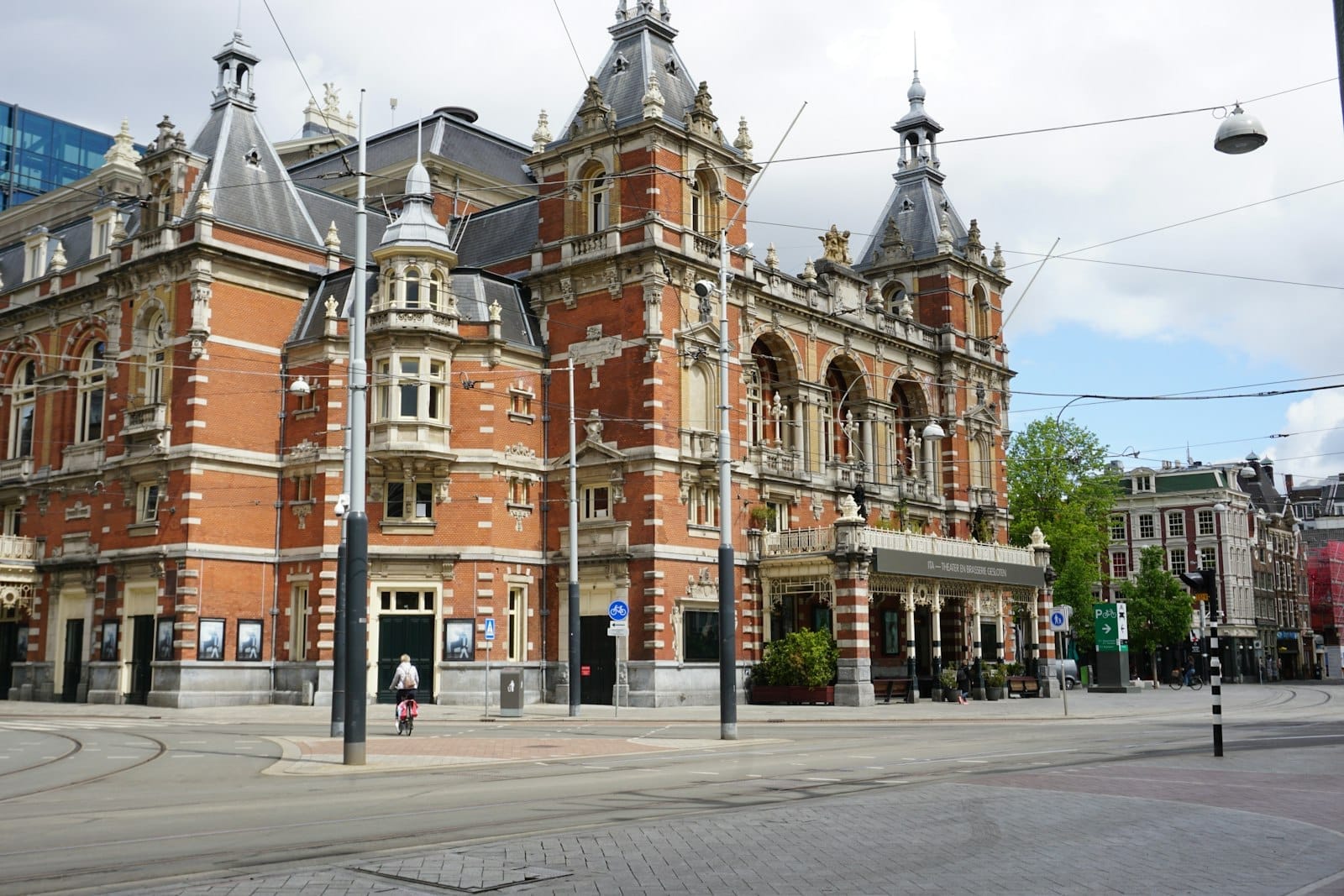
Leidseplein is a large public square at the southern edge of Amsterdam's Canal Ring, historically the end point of the road from Leiden. Today it anchors the city's entertainment district, with the 1894 Stadsschouwburg theatre, street performers, dozens of café terraces, and tram connections in every direction. Entry is free and the square never closes.
Quick Facts
- Location
- Leidseplein, 1017 PT Amsterdam (southern edge of the Canal Ring, at the end of Leidsestraat)
- Getting There
- Trams 1, 2, 5, 7, 12, and 19 all stop at Leidseplein. From Amsterdam Centraal, take tram 1, 2, 5, or 17 directly.
- Time Needed
- 30 minutes to browse the square; 2–4 hours if combining with dinner, theatre, or nearby nightlife
- Cost
- Free to enter the square. Individual venues (theatres, Holland Casino, bars) charge separately.
- Best for
- Evening entertainment, people-watching, live street performance, architecture fans, and night owls
- Official website
- www.amsterdam.info/leidseplein
What Leidseplein Actually Is
Leidseplein is not a quiet canal-side courtyard. It is a wide, slightly irregular paved square that functions as one of Amsterdam's most active social and transport intersections, with tram tracks cutting through it in multiple directions, café terraces spilling outward from every building, and a constant low-level noise that rarely dips below a hum. The square sits at the southern end of Leidsestraat, the pedestrianized shopping street that connects it to the Canal Ring, and it marks the point where several of Amsterdam's older exit routes converged.
The name and location are directly linked: Leidseplein was historically the end of the road from Amsterdam to Leiden. Before the age of rail, horse-drawn carriages would stop here, leaving passengers to continue into the city centre on foot. The carriages were parked and stabled in the area, which is why the square developed its hospitality character early. That function, hosting arrivals and departures, shaped everything that followed.
ℹ️ Good to know
The square is a public space open 24 hours a day, every day of the year. There is no admission fee and no gate. What changes is the crowd, the noise level, and the energy depending on what time you arrive.
The Architecture You Should Actually Look At
The dominant building on the square is the Stadsschouwburg, Amsterdam's Municipal Theatre, whose current building was completed in 1894. It is a substantial Neo-Renaissance structure with a red-brick facade, arched windows, and a classical pediment, built at a scale that gives the square a defined edge it would otherwise lack. The theatre still operates as an active venue for drama, opera, and large-scale productions, so its facade is often lit at night and surrounded by ticket-holders gathering before performances.
On the other side of the square, the American Hotel has occupied its corner since around 1900. The building is Art Nouveau in style and is considered one of Amsterdam's architecturally significant early twentieth-century hotels. Even if you are not staying there, it is worth walking around its exterior. The Café Americain inside the hotel is a listed interior landmark, though entry depends on whether you are dining or drinking.
For travelers with a wider interest in Amsterdam's architectural heritage, the Amsterdam architecture guide covers the Canal Ring's broader 17th-century urban plan, which provides the formal context for why a square like Leidseplein grew at this particular location.
Tickets & tours
Live prices and dates from our booking partner. If you book, we may earn a commission at no extra cost to you.
Ultimate Leidseplein party pub crawl in Amsterdam
From 25 €Instant confirmationFree cancellationGray Line Canal Cruise with snackbox & Heineken Experience
From 48 €Instant confirmationFree cancellationAmsterdam evening canal cruise
From 18 €Instant confirmationFree cancellationJewish Museum and Portuguese Synagogue entrance ticket
From 20 €Instant confirmationFree cancellation
How the Square Changes Through the Day
In the morning, Leidseplein is one of the calmer versions of itself. Trams run through from early, café staff set out furniture, and the square is mostly occupied by commuters and people connecting to other parts of the city. The terrace chairs are rarely full before 11am, and the absence of evening noise makes it easier to appreciate the Stadsschouwburg facade without distraction.
By mid-afternoon, street performers begin to claim their spots. Depending on the season, you might find musicians, living statues, or small theatrical acts. Audiences gather in loose rings around them, and the café terraces start filling. On warm days in late spring and summer, the entire outdoor seating area can reach capacity by 4pm, making this one of the harder spots in Amsterdam to find a table without waiting.
After 8pm, the character shifts again. The theatres begin their evening performances, taxi traffic increases, and the bars that line the surrounding streets draw a younger crowd. Leidseplein itself becomes a kind of transit node between different entertainment options rather than a destination in its own right. Late at night, particularly on weekends, the square is loud and crowded until well past midnight.
💡 Local tip
If you want to see the square without the crowd density, aim for a weekday morning between 9am and 11am. You will have a clearer view of the Stadsschouwburg, quieter tram connections, and available terrace seating.
What to Do Here Beyond Standing Around
The square itself is a waypoint more than a standalone attraction. The real value is in how it connects to what surrounds it. The Stadsschouwburg schedules productions throughout the season, and booking a performance here is a genuinely good evening. Check the venue's programme directly, as the mix of Dutch-language drama and international productions changes frequently.
Holland Casino Amsterdam operates near the square and is open to adults with valid ID. It is one of the largest legal casinos in the Netherlands. Whether that interests you or not, it is worth knowing it is there, since it draws its own substantial foot traffic and affects the crowd around the square from mid-evening onward.
Leidseplein also serves as the natural starting point for exploring the nightlife corridor that runs south toward Rembrandtplein, another of Amsterdam's major entertainment squares. The two squares are about 15 minutes apart on foot and together define most of Amsterdam's concentrated bar and club geography.
If you are combining an evening here with a full day in the area, the Amsterdam canal cruise guide is useful: several canal boat departure points sit within walking distance of Leidseplein, and an afternoon cruise is a reasonable way to see the Canal Ring before settling in for dinner near the square.
Getting There and Moving On
Several tram lines converge at Leidseplein, making it one of the best-connected points in the city for onward travel. Trams 1, 2, 5, and 17 run to Amsterdam Centraal, the main rail hub. Trams 7, 12, and 19 connect to other parts of the city. If you are arriving from the city center, the ride from Centraal takes roughly 10 to 15 minutes depending on tram speed and stops.
If you are driving, the nearest large parking facility is Q-Park Marnixstraat 50, though parking near central Amsterdam is consistently expensive and the tram connection is both cheaper and faster for most visitors. Cyclists will find the square itself difficult to navigate due to tram tracks, so locking a bike in the surrounding streets and walking in is the standard approach.
For a broader overview of getting around Amsterdam, including OV-chipkaart setup and tram network basics, the getting around Amsterdam guide covers what you need before your first tram ride.
⚠️ What to skip
Tram tracks through Leidseplein are a genuine hazard for cyclists and pedestrians who aren't paying attention. The tracks run at angles that can catch bicycle wheels. Cross tram lines at right angles and look both ways before stepping off the pavement.
Honest Assessment: When Leidseplein Disappoints
Leidseplein appears on most Amsterdam itineraries, and that in itself is part of the problem. The square is crowded, the café prices reflect tourist demand rather than quality, and the entertainment on the square itself is street performance that ranges from excellent to mediocre with no way to predict which you will get. If you are expecting a photogenic, quiet Dutch square with canal views and local atmosphere, you will be disappointed. This is a commercial entertainment district, not a heritage experience.
Visitors who specifically dislike crowds, high-decibel environments, or tourist-facing hospitality will find more satisfaction in the Canal Ring's quieter streets nearby, or in neighborhoods like the Jordaan, which is a ten-minute walk north. Leidseplein is best understood as a transport and entertainment hub, and appreciated on those terms.
If a quieter, more neighborhood-focused Amsterdam experience is what you are looking for, the Amsterdam hidden gems guide is a more useful starting point than planning an evening around Leidseplein.
Insider Tips
- The café terraces on the north side of the square get afternoon sun from around 2pm in summer. The south-facing terraces are better for morning sun but fill with evening crowds first.
- If you are buying tram tickets at or near Leidseplein, the GVB ticket machines at the tram stops accept bank cards. Avoid the ticket-selling services occasionally offered by individuals near the square, which are not official.
- The Stadsschouwburg occasionally hosts free or low-cost events in its foyer and on its steps, particularly during Amsterdam cultural festivals. Checking the programme before your visit can turn a square visit into an unexpected free performance.
- Leidsestraat, the pedestrian street leading northeast from the square, connects you to the Canal Ring in about five minutes of walking and passes several of Amsterdam's independent specialty shops before reaching the main canals.
- Menus at cafés directly on the square carry a significant markup compared to the same type of bar or café two streets back. If you want a beer or coffee at a fair price, walk one block in any direction.
Who Is Leidseplein For?
- Travelers planning an evening out who want a central, well-connected starting point with multiple options (theatre, casino, bars, restaurants) within 200 meters
- Architecture enthusiasts wanting to see the Stadsschouwburg facade and the American Hotel's Art Nouveau exterior in the same visit
- First-time visitors to Amsterdam who want to understand the city's social geography and entertainment geography before exploring further
- Night owls and late-evening travelers who want activity and open venues well past midnight
- Tram network users who benefit from the square's status as one of Amsterdam's most connected transit points
Nearby Attractions
Other things to see while in Canal Ring (Grachtengordel):
- Anne Frank House
The Anne Frank House on Prinsengracht 263 preserves the hidden rooms where Anne Frank and seven others lived in concealment from 1942 to 1944. One of the most significant memorial sites in Europe, it requires advance planning but rewards visitors with an experience that stays with them long after they leave Amsterdam.
- Bloemenmarkt (Floating Flower Market)
The Bloemenmarkt sits on a row of fixed barges along the Singel canal, operating since 1862 as the world's only floating flower market. Free to enter and open daily, it sells tulip bulbs, cut flowers, and souvenirs in the heart of Amsterdam's Canal Ring. Here is what you will actually find there.
- Amsterdam Canal Cruises
A canal cruise is one of the most efficient ways to understand Amsterdam's layout and its 17th-century heritage. This guide covers the main operators, departure points, what you'll actually see, and how to pick the right cruise for your trip.
- FOAM Photography Museum
Housed in a 17th-century canal house on Keizersgracht, FOAM Photography Museum (Fotografiemuseum Amsterdam) has been one of Europe's leading photography institutions since it opened in December 2001. Four floors of rotating exhibitions cover documentary work, fine art photography, fashion, and emerging talent, making it a serious cultural stop that rewards repeat visits.
Planning a trip? Discover personalized activities with the Nomado app.