Amsterdam to Brussels by Train: Everything You Need to Know
The Amsterdam to Brussels train is one of Europe's most convenient city-to-city rail connections. This guide covers train types, realistic prices, schedules, booking platforms, and what to expect on the day of travel.
Tickets & tours
Live prices and dates from our booking partner. If you book, we may earn a commission at no extra cost to you.
TL;DR
- Direct trains run hourly between Amsterdam and Brussels, with journey times from around 1 hour 52 minutes (Eurostar) to 2 hours 08 minutes (Eurocity Direct).
- Advance fares start around €25 on both Eurostar and Eurocity Direct services. Book early for the cheapest tickets.
- There are two main service types: Eurostar (fully reserved, faster) and the Eurocity Direct operated by NS International (more flexible, slightly slower).
- No passport control between the Netherlands and Belgium — both countries are in the Schengen Area — but carry valid ID.
- Rail is genuinely faster door-to-door than flying on this route. See also our guide to the Amsterdam to London train if you're planning a broader European rail trip.
Which Train Should You Take?
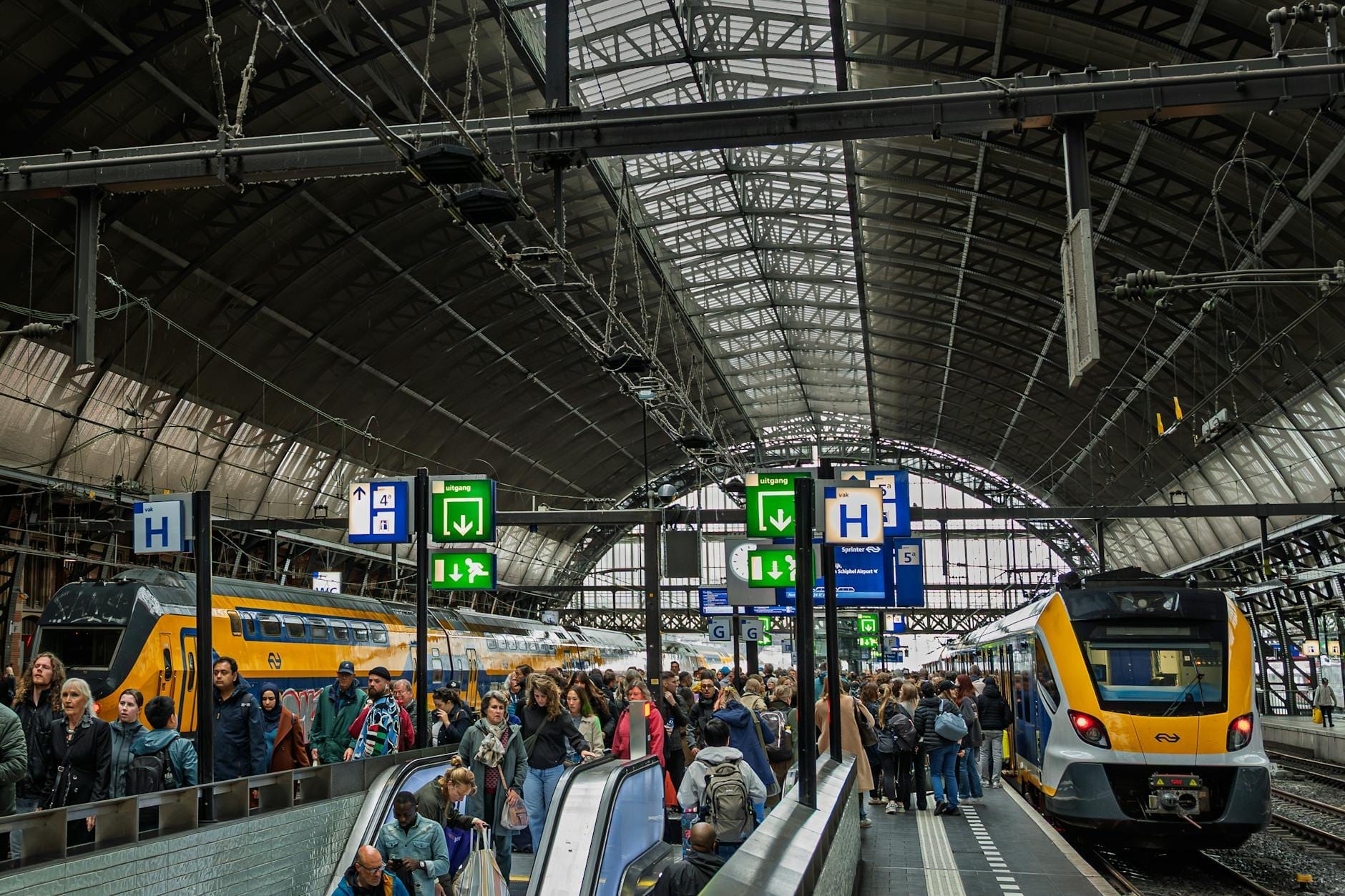
Three realistic options exist for the Amsterdam to Brussels train, and the right choice depends on your priorities: speed, flexibility, or price.
- Eurostar (formerly Thalys) The fastest and most well-known service. High-speed trains (up to 300 km/h) link Amsterdam Centraal and Brussels-Midi in around 1 hour 50–52 minutes. Fully reserved: every ticket is tied to a specific departure. Best if you want the quickest journey and don't mind committing to a time.
- Eurocity Direct (ECD) Introduced in December 2024, this hourly service runs Amsterdam Zuid – Schiphol – Rotterdam – Antwerp – Brussels-Midi in about 2 hours 08 minutes. Only 18 minutes slower than Eurostar, but tickets are generally more flexible. Operated by NS International and SNCB. The most practical option for most travelers.
- IC/Eurocity via Breda (slower route) A two-leg option: take a standard Dutch Intercity train to Rotterdam, then connect to a Eurocity service via Breda to Brussels. Slower and less predictable, but sometimes the cheapest option if booked right. Worth checking if flexible on time.
ℹ️ Good to know
The 'Thalys' brand no longer exists. Those high-speed trains are now operated under the Eurostar brand following the 2023 merger. Tickets are booked at eurostar.com.
Prices: What to Actually Expect
Pricing on this route is dynamic, meaning fares rise as trains fill up. The figures below are indicative starting points, not guarantees. You'll find the lowest prices 4–8 weeks before travel on off-peak weekday departures.
- Eurostar Standard Advance fares from around €25. Standard is the equivalent of a basic economy seat — comfortable but with restrictions on changes and refunds.
- Eurostar Standard Plus From around €45. More legroom and easier ticket flexibility. Worth it for business travel or longer advance purchases where plans might change.
- Eurostar Premier (Business Class) From around €92. Includes at-seat meal service and lounge access at major stations. A genuine upgrade, but rarely worth it for a sub-2-hour journey.
- Eurocity Direct (NS International) Advertised from €25 one way. Ticket flexibility varies by fare type, so check conditions before booking, especially if your plans are uncertain.
⚠️ What to skip
Third-party booking platforms like Trainline and Rail Europe are legitimate, but they often add a booking fee of €2–5 per ticket. Always compare with booking directly through eurostar.com or nsinternational.com before purchasing.
Schedules and Frequency
Combined across Eurostar and the Eurocity Direct, there are trains leaving Amsterdam for Brussels roughly every hour throughout the day. The Eurocity Direct runs on a reliable clock-face schedule, departing Amsterdam Zuid at approximately xx:04 on weekdays (xx:03 on weekends), from roughly 06:00 to 21:00. From Brussels-Midi, departures run around xx:49 on weekdays and around xx:57 on weekends. Always verify exact times on the day of booking, as timetables are updated seasonally.
Note that Eurocity Direct trains depart from Amsterdam Zuid and Schiphol Airport, not Amsterdam Centraal. This is actually convenient if you're flying into Schiphol: you can board the Brussels train directly at the airport station without first traveling into the city center.
✨ Pro tip
If you're connecting from Schiphol Airport, the Eurocity Direct is the smarter choice over Eurostar. You board at Schiphol station, avoid the trip into Amsterdam Centraal, and still arrive in Brussels in around 2 hours. It's genuinely one of the most seamless airport-to-city-center rail connections in Europe.
Where to Book: Official Platforms First
Book directly with the operators to avoid unnecessary fees. For Eurostar services, use the Eurostar website (eurostar.com). For Eurocity Direct and other NS International services, book at nsinternational.com. Belgian rail's international booking site is b-europe.com and covers routes originating in Brussels.
Aggregators like Rail Europe and Trainline are useful for comparing options across multiple operators in one search, but confirm whether fees are included in the displayed price before checkout. For this specific route, direct booking is almost always cheaper or equal in price.
Border Formalities and Documents
The Netherlands and Belgium are both Schengen Area members, so there is no routine passport control on Amsterdam to Brussels trains. You will not go through border checks or customs in the way you would on the Eurostar to London. That said, you are legally required to carry a valid passport or national ID card. EU and EEA citizens can use their national ID. Non-EU travelers should carry their passport and ensure their Schengen visa (if required) is valid.
This is a significant advantage over the London route. The Amsterdam to London train requires full UK border control and check-in at least 45 minutes before departure. Brussels requires none of that — you can turn up 10 minutes before a Eurocity Direct and board without any formalities.
Practical Tips for the Journey
Luggage is effectively unrestricted on both Eurostar and Eurocity Direct services — there are no weight limits or baggage fees within generous piece limits. Overhead racks and end-of-carriage storage are available. Wi-Fi quality varies and is not always reliable enough for video calls, so download anything you need before boarding.
Brussels-Midi (also called Brussel-Zuid in Dutch and Bruxelles-Midi in French) is the main arrival station and is well-connected to Brussels city center by metro, tram, and taxi. It is also the station for Eurostar connections onward to London and high-speed TGV and Eurostar services to Paris. If you're planning to extend your trip toward Paris, see our guide to the Amsterdam to Paris train for a detailed comparison of options.
Peak fares apply during summer (July–August), school holiday periods, and major event weekends. Brussels hosts several large EU summits, FOSDEM, and other international events that can push hotel and rail prices up simultaneously. If your trip to Brussels is tied to Amsterdam's own event calendar, check our overview of the best time to visit Amsterdam for seasonal context.
- Book at least 3–4 weeks ahead for the best Eurostar fares; Eurocity Direct tickets are sometimes cheaper last-minute but still benefit from advance booking.
- Check whether your credit card offers travel insurance covering train delays — EU rail passenger rights are governed by Regulation (EU) 2021/782, but having additional coverage helps.
- Food and drink are available on Eurostar in Standard class via an at-seat trolley service; Eurocity Direct has less consistent catering, so bring snacks if needed.
- Brussels station neighborhoods can feel gritty. The area immediately outside Brussels-Midi is not the city's best face — head toward Grand-Place or Ixelles for a better first impression.
- Currency is the same: both the Netherlands and Belgium use the Euro (EUR), so no exchange needed.
If this Brussels trip is part of a wider Amsterdam visit, the city rewards time before or after your journey. The 2-day Amsterdam itinerary is a useful starting point if you're only passing through before heading south.
FAQ
How long does the Amsterdam to Brussels train take?
The Eurostar takes around 1 hour 50–52 minutes between Amsterdam Centraal and Brussels-Midi. The Eurocity Direct (ECD) takes approximately 2 hours 08 minutes from Amsterdam Zuid. Both are significantly faster door-to-door than flying when you account for airport check-in, security, and transit time.
How much does a train ticket from Amsterdam to Brussels cost?
Advance fares start around €25 on both Eurostar (Standard class) and the Eurocity Direct. Prices rise with demand and proximity to the travel date. Summer weekends and holiday periods regularly see fares of €60–100+. Book 4–8 weeks ahead for the best prices.
Do I need a passport for the Amsterdam to Brussels train?
Both countries are in the Schengen Area, so there is no passport control on board. However, you are legally required to carry valid identification: a national ID card works for EU/EEA citizens, while non-EU travelers should have their passport. No visa is required if you're already in the Schengen Zone.
What is the difference between Eurostar and Eurocity Direct on this route?
Eurostar is faster (1h50 vs 2h08), fully reserved, and departs from Amsterdam Centraal. The Eurocity Direct is slightly slower, runs hourly, departs from Amsterdam Zuid and Schiphol Airport, and tends to offer more flexible fare conditions. For most travelers, the Eurocity Direct is the more practical choice — especially if arriving via Schiphol.
Is there a night train from Amsterdam to Brussels?
No. There is no overnight or sleeper train on this route. Given the short journey time (under 2h10 on the fastest services), a night train would not be practical anyway. All services are daytime trains, with the last departures from Amsterdam around 21:00.
Tickets & tours
Live prices and dates from our booking partner. If you book, we may earn a commission at no extra cost to you.
Planning a trip? Discover personalized activities with the Nomado app.