Amsterdamse Bos (Amsterdam Forest): The Complete Visitor's Guide
Covering nearly 1,000 hectares on Amsterdam's southwestern edge, Amsterdamse Bos is a man-made forest park three times the size of New York's Central Park. Free to enter and open year-round, it offers cycling paths, a rowing lake, wildlife meadows, and genuine breathing room that the city centre simply cannot provide.
Quick Facts
- Location
- Bosbaanweg 5, 1182 DA Amsterdam (southwestern Amsterdam)
- Getting There
- Bus 170 or 172 from Amsterdam Centraal; bus 66 or 199 from RAI station; ~20 min by bike from Museumplein via Amstelveenseweg
- Time Needed
- 2–5 hours depending on activity; a full day for cyclists or families
- Cost
- Free to enter; activity rentals (bikes, rowing boats) charged separately
- Best for
- Cyclists, families, nature lovers, anyone wanting to escape the city crowds
- Official website
- www.amsterdamsebos.nl/english
What Amsterdamse Bos Actually Is
Amsterdamse Bos is not a preserved wilderness that happened to end up inside a city. It is an entirely constructed landscape, planned and planted by human hands, which makes it quietly remarkable. The first section opened to the public in 1937, built partly as a public works project during the economic depression of the 1930s. The majority of the original plan was completed by the early 1960s. What began as a government employment scheme became, over decades, a genuinely mature forest: tall poplars and oaks, dense undergrowth, reed-fringed ponds, and meadows that attract skylarks in summer.
The park covers close to 1,000 hectares, roughly three times the area of Central Park in New York. Most of it sits within the municipality of Amstelveen rather than Amsterdam proper, though the city's name is firmly attached to it. That geographic detail matters practically: the park feels removed from Amsterdam's density even though it is reachable in about 20 minutes by bicycle from Museumplein.
ℹ️ Good to know
The park is free to enter and open year-round. The visitor centre (Bezoekerscentrum/Boswinkel) has seasonal hours; check the official site before visiting as hours vary between sources, with some listing Tuesday–Sunday 10:00–17:00 and others listing daily 12:00–17:00.
How the Park Feels at Different Times of Day
Arrive early on a weekday morning, and the forest is nearly yours. By 8:00, joggers and dog walkers trace the inner paths, but the cycling lanes through the deeper woodland are quiet enough that you can hear woodpeckers working on the birch trunks. The air carries the cold-earth smell of leaf litter that Amsterdam's canal streets never offer. Light filters through the canopy in long horizontal shafts on clear mornings, especially in autumn when the poplars turn pale yellow.
By midday on weekends, particularly from late spring through August, the dynamic shifts. Families arrive with hired bikes and pannier bags of food. The Bosbaan rowing lake fills with competitive scullers and recreational paddle boats. The open meadow areas near the main entrance become informal picnic grounds. The atmosphere is relaxed rather than chaotic, but solitude becomes harder to find.
Late afternoon in summer is arguably the most photogenic window. The light drops low over the lake, cormorants stand on the wooden posts at the water's edge, and the cycling paths take on that particular amber glow that Dutch landscape painters would recognize immediately. Winter visits are underrated: frost on the boardwalk paths, bare branches showing the structure of the forest more clearly, and almost no crowds except on bright weekend afternoons.
💡 Local tip
Weekday mornings from September to November offer the best combination of autumn color and genuine quiet. This is when the park rewards slow exploration on foot rather than a fast cycling circuit.
Tickets & tours
Live prices and dates from our booking partner. If you book, we may earn a commission at no extra cost to you.
Oudenbosch: walk through historical places with self-guided audio tour
From 11 €Instant confirmationGray Line Canal Cruise with snackbox & Heineken Experience
From 48 €Instant confirmationFree cancellationAmsterdam evening canal cruise
From 18 €Instant confirmationFree cancellationJewish Museum and Portuguese Synagogue entrance ticket
From 20 €Instant confirmationFree cancellation
What to Do: Cycling, Water, and Wildlife
Cycling is the default way to experience Amsterdamse Bos, and for good reason. The park has around 50 km of cycling paths, well-marked and separated from pedestrian routes. Riding the outer loop at an easy pace takes roughly 60 to 90 minutes and covers enough terrain to understand the scale of the place. Bikes can be rented at the park itself near the visitor centre, which matters if you are arriving by bus rather than cycling in from the city.
The Bosbaan is a 2,000-metre artificial rowing course, built to international competition standards and used for Dutch national rowing events. Non-rowers can rent small paddle boats and canoes at the boathouse. The lake is wide and calm, framed by low willows on the far bank, and paddling its length gives a perspective of the forest that the cycling paths do not.
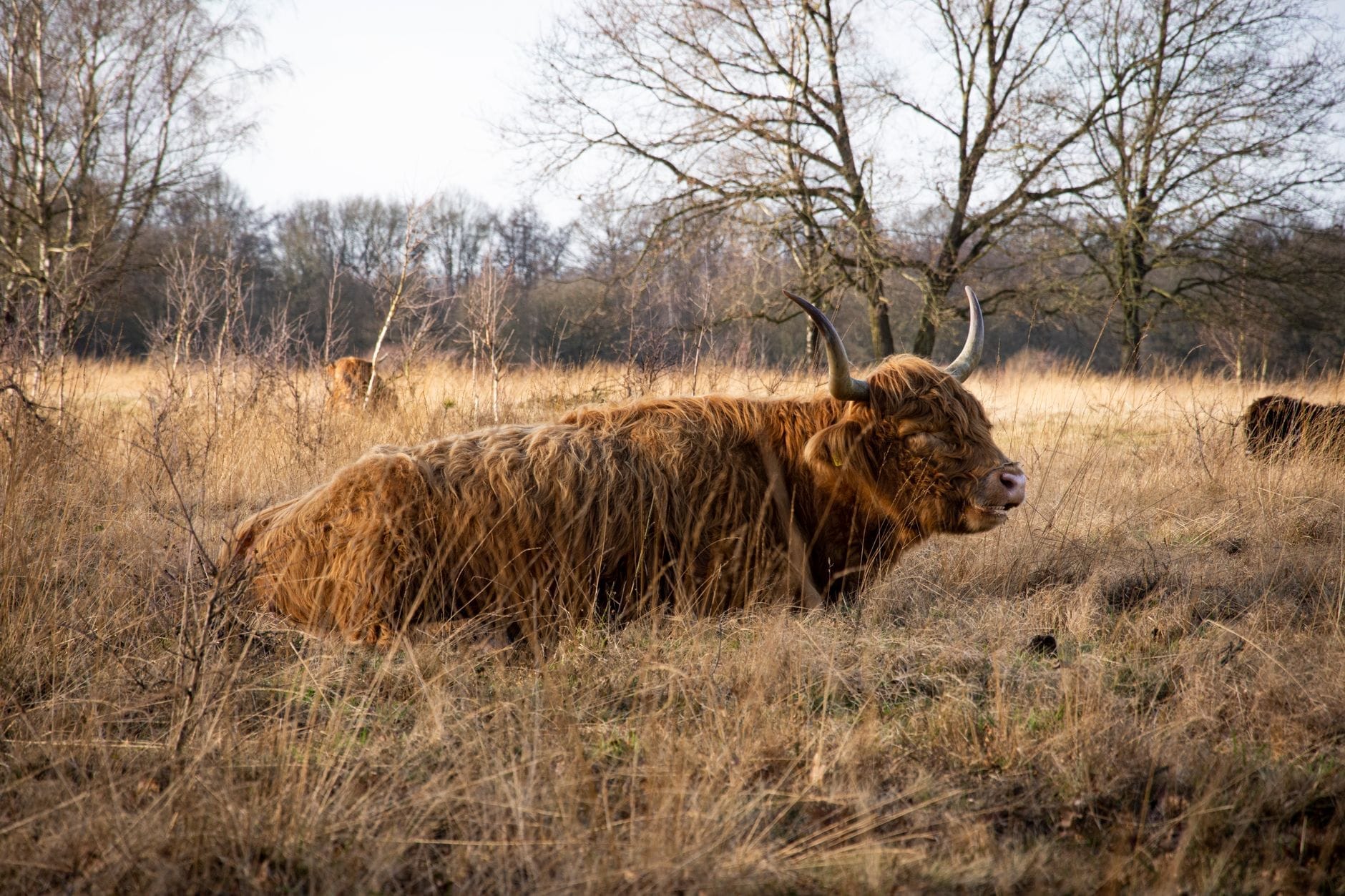
Wildlife is more present than the word 'park' implies. The meadow areas hold Highland cattle, managed as natural grazers to maintain the grassland habitat. Fallow deer are present in sections of the woodland. The wetland areas attract grey herons year-round, and in spring the reed beds along the smaller ponds hold warblers. Children are reliably fascinated by the goat farm (Geitenboerderij) near the visitor centre, which allows close contact with the animals and sells goat cheese produced on site.
For families planning a full day, Amsterdamse Bos pairs naturally with a visit to Vondelpark on the way out of the city, or can anchor a half-day in an itinerary built around Amsterdam's southwestern neighborhoods. See our Amsterdam with kids guide for practical suggestions.
Getting There and Moving Around
The most satisfying approach is by bicycle, following Amstelveenseweg south from the museum district. The road is well-cycled by locals, has dedicated lanes for most of its length, and deposits you at the park's northern edge in around 20 minutes from Museumplein. This approach also gives you the freedom to explore the park's interior at your own pace without worrying about bus return times.
If you are not cycling your own bike in, buses serve the park from Amsterdam Centraal (lines 170 and 172) and from RAI station (lines 66 and 199). RAI is also accessible by metro, making it a practical interchange point. By car, the park is accessed via the A10 ring road and the S103 toward Amstelveenseweg, with parking available near the main entrance, though weekend parking fills quickly in summer.
💡 Local tip
If you plan to rent a bike at the park, arrive before 11:00 on summer weekends to guarantee availability. The rental operation near the visitor centre is popular with families and stock is finite.
If this is your first time navigating Amsterdam's cycling infrastructure, our guide to cycling in Amsterdam covers lane etiquette, rental options, and route navigation in practical detail.
When to Visit: Seasons and Honest Expectations
Amsterdam has an oceanic climate, which means the forest is green for a long season but also wet for much of the year. Spring brings rapid change: the meadows green up fast from March, cherry and hawthorn blossom appears in April, and migrant birds arrive in the reed beds through May. This is a genuinely appealing time to visit, particularly if you are also planning to see tulip season in the wider region.
Summer from June through August is the most popular window, with long daylight hours and temperatures typically in the low-to-mid 20s °C. The forest canopy provides shade that open parks cannot, which matters on the warmest days. Autumn from September to November brings excellent color and cool, clear days between rain spells. Winter is quiet, occasionally frosted, and genuinely atmospheric if you dress for temperatures that hover near freezing. For more on timing, see our guide on the best time to visit Amsterdam.
Rain is a real consideration in all seasons. Amsterdam receives rainfall throughout the year with no reliable dry window. The forest is walkable in light rain, and the tree canopy provides some cover, but muddy paths after sustained wet weather make proper footwear worth thinking about. A waterproof layer is worth packing regardless of the forecast.
Honest Assessment: Who Will Love This, and Who Might Not
Amsterdamse Bos is excellent for what it is: a large, well-managed green space that offers genuine nature within reach of a dense European capital. Cyclists will find enough terrain to feel like they have gone somewhere. Families with children have a full day's worth of activities without spending much beyond food and any bike or boat rentals. Wildlife observers will find more to look at than in almost any other accessible urban park in the Netherlands.
Travelers with limited time in Amsterdam, particularly those on a 2 or 3-day schedule focused on the city's historic centre, museums, and canals, may find the park a lower priority than the concentration of world-class attractions closer to the centre. The Rijksmuseum, Van Gogh Museum, and the canal ring will likely rank higher on a short visit. Amsterdamse Bos rewards those who have a day to spare or who specifically want an outdoor counterweight to the city's urban density.
Visitors hoping for dramatic scenery should calibrate expectations: the Netherlands is flat, and the forest reflects that geography. It is a landscape of horizontal light, wide water, and quiet paths rather than hills, viewpoints, or dramatic topography. That quality is its own kind of appeal, but it is not for everyone.
Insider Tips
- The goat farm (Geitenboerderij) near the visitor centre sells fresh goat cheese and yogurt on site. It is worth a stop even if you are not visiting with children, and it is free to enter the farm yard.
- The Bosbaan rowing course hosts official regattas on several weekends from spring through early autumn. Watching competitive rowing from the grassy bank is free, unhurried, and surprisingly absorbing.
- The forest has a dedicated open-air theatre (Openluchttheater) that hosts summer performances, typically from June through August, some of which are free. Programming ranges from children's shows to music. Check the park's official site for the current season schedule.
- If you want near-solitude, the southern sections of the park near the Kleine Poel pond see a fraction of the foot traffic of the main entrance area. They require more deliberate navigation but reward it.
- Bring cash or a card for the boat rental and bike hire operations. Not all of the smaller concession stands accept card payments reliably, particularly early in the season.
Who Is Amsterdamse Bos (Amsterdam Forest) For?
- Cyclists looking for a long, low-stress route away from city traffic
- Families needing a full-day outdoor activity with varied options at low cost
- Nature and wildlife observers, especially birdwatchers in spring and autumn
- Travelers staying multiple days in Amsterdam who want a slower, outdoor half-day
- Visitors in autumn seeking fall color without leaving the city's reach
Nearby Attractions
Combine your visit with:
- Amsterdam Dance Event (ADE)
Every October, Amsterdam transforms into the global capital of electronic music for five days. Amsterdam Dance Event brings together more than 1,000 shows across nearly 200 venues, from intimate club nights to warehouse raves, alongside a major industry conference that shapes the direction of dance music worldwide.
- Dappermarkt
Running along Dapperstraat in Amsterdam-East since 1910, Dappermarkt is a street market with around 200 stalls selling everything from fresh produce and spices to fabrics and secondhand clothing. Free to enter, open Monday through Saturday, and drawing locals from across the city, it offers a sharply different experience from the tourist-facing markets in the centre.
- Haarlem
Just under 20 km west of Amsterdam, Haarlem is the capital of North Holland and one of the Netherlands' oldest cities, granted city rights in 1245. A compact historic centre, the landmark Grote Kerk, the Frans Hals Museum, and a lively market square make it one of the most rewarding half-day escapes from the capital.
- Keukenhof Gardens
Keukenhof Gardens in Lisse, South Holland, is one of the world's largest flower parks, open for just eight weeks each spring. Planted with around 7 million bulbs across 32 hectares, it draws visitors from around the world for its tulip displays, historic landscape design, and glasshouse collections. Plan carefully: timing, transport, and ticket booking all matter more here than at most attractions.
Planning a trip? Discover personalized activities with the Nomado app.