Amsterdam Tulip Museum: The Full Story of the Flower That Shaped a Nation
Tucked into a canal house on Prinsengracht, directly across from the Anne Frank House, the Amsterdam Tulip Museum traces 400 years of tulip history, from Ottoman origins to the chaos of Tulip Mania and the flower's enduring grip on Dutch identity. Small in scale but precise in focus, it rewards curious visitors who want context beyond the postcard.
Quick Facts
- Location
- Prinsengracht 116, 1015 EA Amsterdam (Jordaan)
- Getting There
- Tram/bus stop Westermarkt (tram lines 13 and 17) — a short walk along the canal
- Time Needed
- 45 minutes to 1.5 hours
- Cost
- Approx. €7 adults; free with I amsterdam City Card. Verify current price with the museum before visiting.
- Best for
- History lovers, garden enthusiasts, families looking for a quiet indoor stop near the Anne Frank House
- Official website
- amsterdamtulipmuseum.com
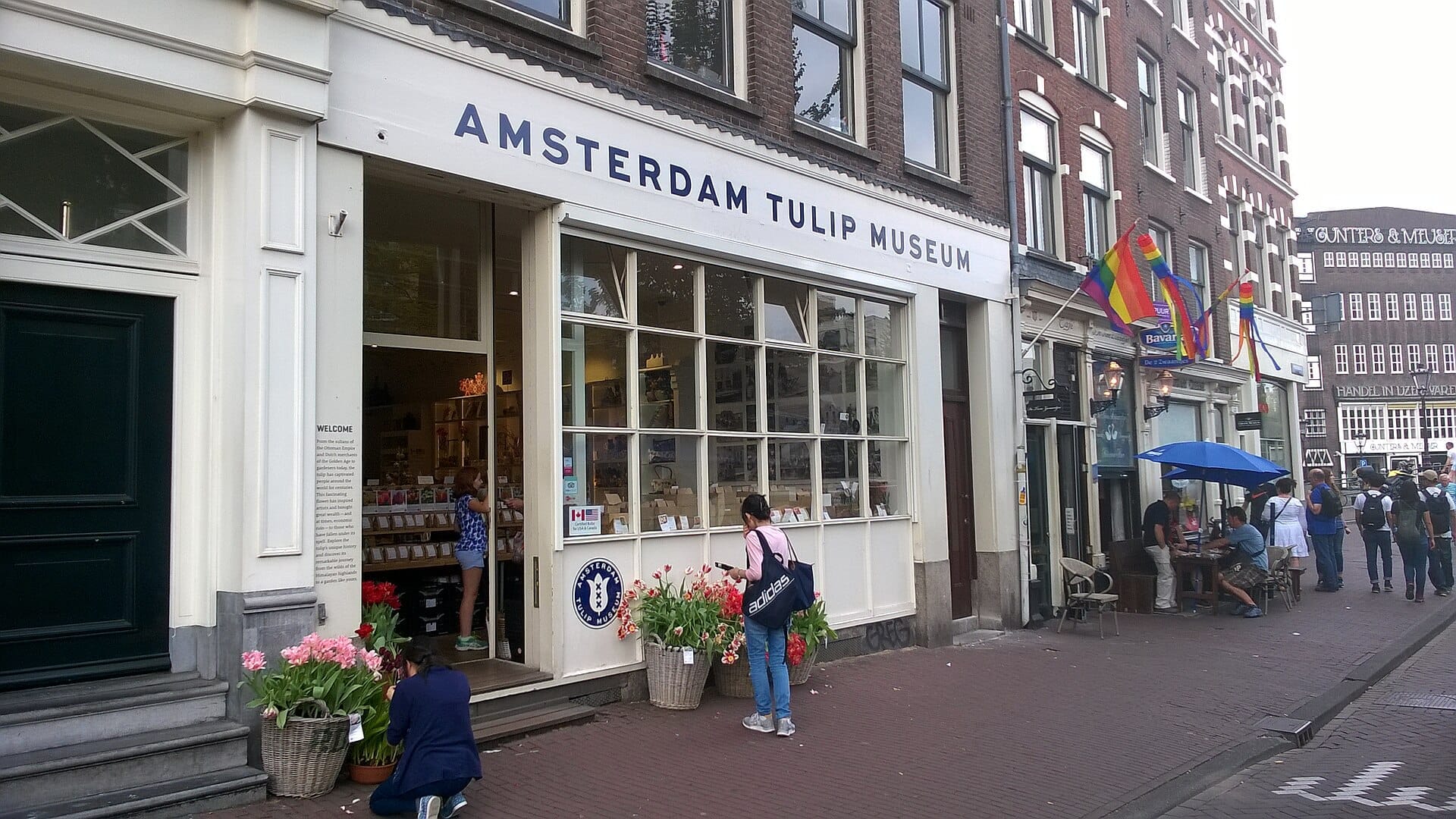
What the Amsterdam Tulip Museum Actually Is
The Amsterdam Tulip Museum is a small, specialist museum occupying a converted canal house at Prinsengracht 116 in the Jordaan. Its entire focus is one subject: the tulip, its origins, its extraordinary role in Dutch economic history, and its continued cultural significance. That narrow focus is both its greatest strength and its clearest limitation. You will not find rotating temporary exhibitions here, nor vast gallery halls. What you will find is a well-curated, visually driven narrative that covers roughly 400 years in a compact and digestible format, designed for international visitors who may arrive knowing very little about tulips and leave with genuine curiosity.
The museum was founded by a Dutch flower-bulb trading company based in the Netherlands, and that origin gives it a certain authenticity. This is not a commercial concept built around souvenir sales, though there is a shop attached. The exhibition material is seriously put together, with models, artifacts, and informational panels that trace the tulip from its origins in Central Asia and the Ottoman Empire through its introduction to the Low Countries in the sixteenth century, the speculative frenzy of Tulip Mania in the 1630s, and into the modern Dutch flower industry that still dominates global supply.
ℹ️ Good to know
Open daily 10:00–18:00. Closed on King's Day (27 April) and Christmas Day (25 December). Admission is approximately €5–€7 for adults (recent listings show €7 as the standard adult ticket); check directly with the museum for current pricing before your visit.
The Setting: Prinsengracht and Its Neighbors
Location matters here more than at many attractions. The museum sits directly across the Prinsengracht canal from the Anne Frank House and just south of the Westerkerk, whose tower is one of Amsterdam's most recognizable landmarks. In the morning, before the tour groups gather at the Anne Frank House queue, this stretch of canal is genuinely peaceful. The light on the water is soft, the houseboats moored along the opposite bank creak gently, and the Westerkerk bells mark the quarter hours with that particular hollow resonance that carries across Jordaan.
If you are already planning a visit to the Anne Frank House or the Westerkerk, the Tulip Museum is a natural add-on: it is a two-minute walk from both and makes logical sense as either a warm-up or a wind-down for the heavier emotional experience next door.
The Jordaan itself is one of Amsterdam's most pleasant neighborhoods to walk through, with narrow streets, independent cafes, and a residential calm that sits in contrast to the tourist-heavy areas a few minutes east. After the museum, walking south along the Prinsengracht or cutting through the side streets toward the Noordermarkt area gives you a genuinely good slice of the city.
Tickets & tours
Live prices and dates from our booking partner. If you book, we may earn a commission at no extra cost to you.
Keukenhof Gardens and Tulip Experience From Amsterdam
From 79 €Instant confirmationFree cancellationTulip and Keukenhof Private Experience from Amsterdam
From 288 €Instant confirmationFree cancellationTulip Experience, Keukenhof and Giethoorn Private Tour from Amsterdam
From 445 €Instant confirmationFree cancellationTulip experience self-guided half-day tour in Amsterdam
From 35 €Instant confirmationFree cancellation
Inside the Exhibition: What You Will Actually See
The exhibition is arranged chronologically and thematically across multiple rooms on the ground floor and upper levels of the canal house. The building itself is narrow and tall in the classic Amsterdam style, so be prepared for steep internal staircases. Detailed physical accessibility information is limited on the museum's official website, so visitors with specific mobility needs should call ahead; partner sites list the phone number as +31 (0)20 421 00 95.
The early sections deal with the tulip's botanical history and its journey from the mountains of Central Asia and the Ottoman court gardens of Istanbul to Europe. This context is often overlooked in popular accounts of Dutch tulip culture, and the museum handles it well. The name 'tulip' itself derives from the Turkish word for turban, a reference to the flower's shape, and the Ottoman court's obsession with the flower predates the Dutch craze by decades. Seeing this framed visually helps visitors understand that Tulip Mania did not emerge from nowhere.
The Tulip Mania section is the most dramatic part of the exhibition. During the winter of 1636 to 1637, contracts for certain rare bulb varieties changed hands at prices equivalent to skilled craftsmen's annual wages, only for the market to collapse spectacularly in February 1637. The museum presents this episode with enough economic and social detail to make it feel genuinely strange rather than simply amusing. Scale models of bulb auctions, period prints, and explanatory panels do the heavy lifting here. There is also a sensory element in parts of the exhibition where real bulbs and growing plants are displayed, giving the space a faint earthy, green scent during spring months especially.
The later sections cover the industrialization of tulip growing in the twentieth century, the Keukenhof gardens as a national showpiece, and the mechanics of the modern Dutch cut-flower trade. If you have visited or plan to visit the Keukenhof, this section adds useful context.
💡 Local tip
The museum shop carries a well-edited selection of tulip bulbs, Dutch ceramics, and botanical prints. If you want to bring home bulbs, this is a more considered option than most airport or market stalls. Check import rules for bulbs if you are travelling outside the EU.
Best Time to Visit and What Changes By Season
The museum is open year-round, which is genuinely useful. The content inside does not change seasonally, but your experience of visiting does. In spring, roughly March through May, the tulip plants displayed in the museum are in active growth or bloom, the smell is different, and the surrounding city is alive with the flower everywhere you look. Visiting during this period connects the indoor exhibition to the outdoor world in a way that is hard to replicate in other months.
If you are visiting Amsterdam specifically for tulip season, pairing the museum with a trip to the Keukenhof gardens creates a very complete picture of tulip culture, from historical narrative to living spectacle. The full guide to Amsterdam's tulip season covers the timing and logistics in detail.
Outside spring, the museum is quieter and faster to move through. Autumn and winter visitors tend to be locals or travelers with genuine interest rather than people filling time between canal cruise queues. That can make the experience feel more considered. The museum's proximity to the Anne Frank House means it catches overflow visitors on rainy afternoons year-round, so mid-morning on weekdays is consistently the calmest window.
Honest Assessment: Who Gets the Most From This Museum
The Amsterdam Tulip Museum is not the kind of attraction that will anchor your entire Amsterdam trip. It is compact, the exhibition covers its subject thoroughly rather than broadly, and the experience is closer to a focused gallery visit than a full museum day. At roughly €7, the price is proportionate to the scale.
Visitors who come with some curiosity about Dutch history, particularly economic history and the culture of speculation that produced Tulip Mania, will find the exhibition genuinely rewarding. Families with children who have already visited the Keukenhof or the flower fields will find good explanatory material that puts what they saw outdoors into historical context. Garden enthusiasts will appreciate the botanical detail in the early sections.
Visitors who are primarily looking for visual spectacle, large-scale immersive experiences, or broad Dutch cultural history will likely find the museum underwhelming. It does not have the scale of the Rijksmuseum, the emotional weight of the Anne Frank House, or the sensory impact of the Keukenhof. It is a specialist institution, and it is best understood as one.
For travelers building a full day in the Jordaan area, combining the Tulip Museum with the Anne Frank House, a walk through the Jordaan neighborhood, and a browse of the Noordermarkt on a Saturday morning makes for a well-balanced and manageable day.
Getting There and Practical Notes
The museum is at Prinsengracht 116, a short walk from the Westermarkt tram stop served by tram lines 13 and 17. From Amsterdam Centraal station, the walk takes around 15 to 20 minutes along pleasant canal streets, or trams get you there in under 10 minutes. There is no dedicated parking nearby, and cycling is the most practical option if you are arriving independently by bike.
If you hold the I amsterdam City Card, admission is free, which makes the museum an easy addition to any day in the western canal ring. For a broader sense of how to structure your time in Amsterdam, the I amsterdam City Card guide covers which attractions make the best use of it.
Photography inside the museum is generally permitted for personal use; check with staff on arrival for any current restrictions around specific displays. The narrow canal house layout means heavy bags and large backpacks are cumbersome on the stairs. The entrance area is small, so arriving early on busy spring weekends will avoid any queuing.
Insider Tips
- Visit first thing when the museum opens at 10:00, especially if you are also planning to queue for the Anne Frank House that day. The crowds along Prinsengracht build quickly by mid-morning, and an early start at the Tulip Museum lets you absorb it quietly before the street fills up.
- The museum shop stocks tulip bulbs, including some less-common varieties. If you are traveling within the EU, these are straightforward to bring home. If you are flying outside the EU, check customs rules for bulbs before you buy.
- Look at the ceiling details and window frames inside the canal house as you move through the rooms. The building itself is a good example of the proportions and construction style typical of Amsterdam's canal house architecture, and noticing it adds a layer to the visit that is easy to miss when you are focused on the exhibition panels.
- The museum is included in the I amsterdam City Card at no extra cost. If you have the card and are already in the neighborhood, there is no reason not to stop in even for 45 minutes.
- On rainy days in spring, the line for the Anne Frank House across the canal can stretch for over an hour. The Tulip Museum makes a sensible covered stop while you wait for your pre-booked Anne Frank House time slot to arrive, and the thematic connection between the two institutions is natural.
Who Is Amsterdam Tulip Museum For?
- History enthusiasts curious about Tulip Mania and Dutch Golden Age economics
- Garden and botany lovers wanting context for a Keukenhof or tulip field visit
- Families with older children who want a short, engaging, and affordable indoor attraction
- I amsterdam City Card holders looking to add a low-effort stop to a Jordaan afternoon
- Travelers combining a visit to the Anne Frank House with a lighter second stop nearby
Nearby Attractions
Other things to see while in Jordaan:
- Amsterdam Cheese Museum
Tucked into a building on Prinsengracht, often described as dating from around 1600, the Amsterdam Cheese Museum offers a free, compact introduction to Dutch cheese culture, complete with tastings and exhibits. It sits two minutes from the Anne Frank House, making it a natural addition to a Jordaan afternoon.
- De Negen Straatjes (The Nine Streets)
De Negen Straatjes, or The Nine Streets, is a grid of nine historic cross-streets threading through Amsterdam's Canal Ring between the Singel and Prinsengracht. Free to explore at any hour, the area blends 17th-century canal architecture with independent boutiques, specialist food shops, and unhurried café culture. It rewards slow walkers and curious browsers far more than shoppers with a checklist.
- Het Schip Museum
Museum Het Schip occupies a landmark 1919 public housing complex designed by Michel de Klerk, the defining genius of the Amsterdam School movement. Part architecture museum, part social history, it offers one of Amsterdam's most distinctive and undervisited cultural experiences.
- Lindengracht Market
Every Saturday, Lindengracht transforms into one of Amsterdam's most genuine street markets, stretching over more than 900 metres through the heart of the Jordaan. With 232 stalls selling everything from farm-fresh cheese to vintage clothing, it draws locals far more than tourists. Free to enter and easy to reach, it rewards an early morning visit.
Planning a trip? Discover personalized activities with the Nomado app.