Museum Het Schip: Amsterdam's Finest Amsterdam School Landmark
Museum Het Schip occupies a landmark 1919 public housing complex designed by Michel de Klerk, the defining genius of the Amsterdam School movement. Part architecture museum, part social history, it offers one of Amsterdam's most distinctive and undervisited cultural experiences.
Quick Facts
- Location
- Spaarndammerbuurt, Amsterdam (near Jordaan)
- Getting There
- Tram or bus to Spaarndammerbuurt; check GVB for current routes
- Time Needed
- 1.5 to 2.5 hours
- Cost
- Paid admission (from €17.50); Museumkaart accepted; guided interior tour +€2 (€7.50 with ICOM/Rembrandt Card)
- Best for
- Architecture enthusiasts, design lovers, social history buffs
- Official website
- www.hetschip.nl/en
What Is Museum Het Schip?
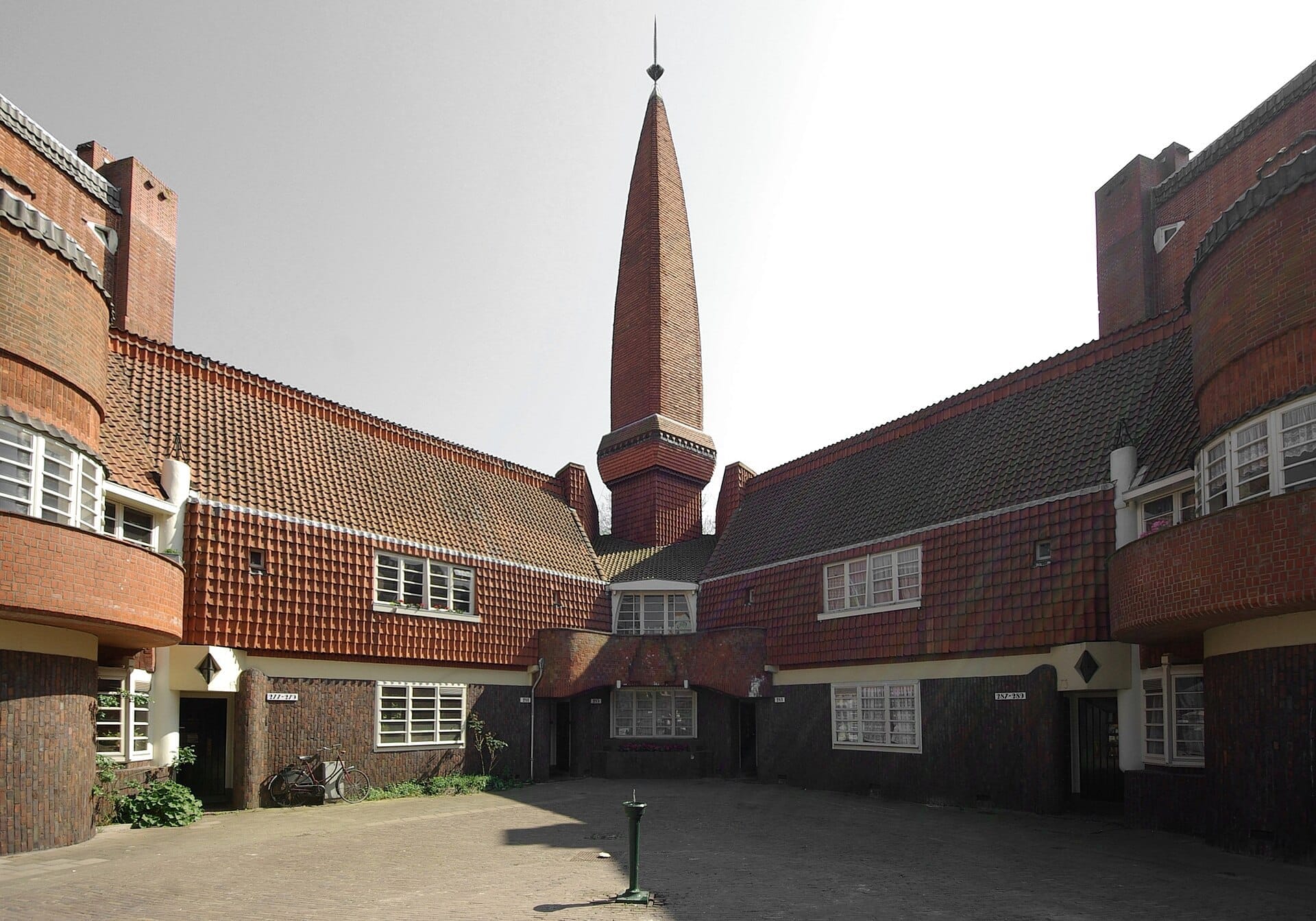
Museum Het Schip takes its name from the building that houses it, a monumental public housing block completed in 1919 and designed by Michel de Klerk, one of the leading architects of the Amsterdam School. The name translates simply as 'The Ship', and once you see the building's curved prow-like corner jutting over the street, the nautical metaphor makes immediate sense. The complex was commissioned by housing corporation Eigen Haard (meaning 'Own Hearth') during Amsterdam's post-World War One social housing push, and it remains one of the most accomplished pieces of expressionist architecture in the Netherlands.
The museum occupies part of the complex and is dedicated to explaining the Amsterdam School movement, the social housing revolution it emerged from, and the extraordinary craft that went into buildings most Dutch people simply walked past every day. It is not a conventional art museum. There are no paintings on white walls. Instead, you move through spaces that are themselves the exhibit: brick patterns that ripple and curve, ironwork that looks hand-forged, tiled hallways with the texture of a ceramic studio.
💡 Local tip
Book the guided interior apartment tour in advance if you want to see the reconstructed worker's home. It adds €2.00 to the standard admission (€7.50 with ICOM/Rembrandt Card) and is the most revealing part of the visit. Without it, you miss the human scale of what social housing actually looked like in 1919.
The Architecture: Why This Building Matters
The Amsterdam School movement emerged in the early twentieth century as a reaction against the mechanical rationalism of industrial construction. Architects like Michel de Klerk, Piet Kramer, and Johan van der Mey brought expressionism into brick, designing buildings with organic forms, elaborate sculptural detailing, and an almost theatrical sense of surface. Where most housing blocks of the era were plain and repetitive, De Klerk's Het Schip block is layered with invention: brickwork that fans outward like feathers, windows set at unexpected angles, a roofline that rises and dips without obvious structural logic.
Completed in 1919, the block forms one side of Spaarndammerplantsoen square in the Spaarndammerbuurt district, just northwest of the Jordaan. The area was developed rapidly in the early twentieth century to house Amsterdam's growing working-class population, and the Amsterdam School architects saw it as an opportunity to prove that workers deserved beautiful spaces. The scale of ambition is striking: this is not a single prestige building but an entire housing block designed as a unified artwork, complete with a post office integrated into the ground floor.
The Amsterdam School's influence extended across the city. For a broader sense of how architecture shaped Amsterdam's neighborhoods across different eras, the Amsterdam architecture guide traces the full arc from the Golden Age canal houses to twentieth-century modernism.
Tickets & tours
Live prices and dates from our booking partner. If you book, we may earn a commission at no extra cost to you.
Gray Line Canal Cruise with snackbox & Heineken Experience
From 48 €Instant confirmationFree cancellationAmsterdam evening canal cruise
From 18 €Instant confirmationFree cancellationJewish Museum and Portuguese Synagogue entrance ticket
From 20 €Instant confirmationFree cancellationAdmission ticket for Artis Royal Zoo and Micropia
From 39 €Instant confirmationFree cancellation
What the Visit Actually Feels Like
Arriving at Museum Het Schip, the building itself delivers the first impact before you've paid for a ticket. The corner tower rises with a slightly surreal confidence, its brickwork shifting in color from pale orange to deep red depending on the light. On a grey Amsterdam morning, the building looks almost Gothic. In afternoon sun, the glazed tiles on the window surrounds catch the light and the surfaces seem to warm up.
Inside, the museum is genuinely intimate. This is not a vast institution with kilometers of corridor. The permanent collection focuses on Amsterdam School furniture, decorative arts, and architectural drawings, and the space is compact enough that you can read every label without exhaustion. The reconstructed post office space, preserved from the building's original function, is particularly effective: the counters, tilework, and ironwork grilles feel like a time capsule rather than a reconstruction.
The guided apartment tour, available with a surcharge, takes small groups through a period-furnished worker's apartment within the complex. Seeing the actual floor plans, the low ceilings, the narrow but carefully designed kitchen layout, gives the social history a physical reality that text panels alone cannot deliver. These were not luxury flats. They were calculated attempts to give working families more dignity than the overcrowded tenements they replaced.
ℹ️ Good to know
Museum Het Schip is open Tuesday through Sunday, 11:00 to 17:00. It is closed on Mondays. The Museumkaart covers standard admission; the guided interior tour costs an additional €2.00 (€7.50 with ICOM/Rembrandt Card) and should be confirmed directly with the museum.
Time of Day and Crowd Patterns
Het Schip receives a fraction of the visitor numbers of Amsterdam's major museums, which is precisely what makes it worth the trip for travelers who have seen the inside of the Rijksmuseum and want something quieter and more specific. Weekday mornings are reliably calm. Weekend afternoons can bring architecture tour groups and school parties, which changes the atmosphere considerably in the smaller rooms.
The exterior of the building is worth photographing at multiple times of day. Early morning light from the east catches the east-facing facade cleanly. By midday the quality becomes flatter. On overcast days, the building's sculptural quality actually reads more clearly because harsh shadows don't fragment the brickwork patterns. Rain doesn't prevent a good exterior visit, and the covered entrance areas offer some shelter.
💡 Local tip
If you visit on a clear morning, walk around the full perimeter of the block before entering. The north and west facades each present different aspects of De Klerk's design, and the small square in front of the block gives the best sense of the building's overall scale and massing.
Getting There and the Surrounding Neighborhood
The museum is located in the Spaarndammerbuurt, a working-class district northwest of the Jordaan that sees relatively few tourists. Getting there from Amsterdam Centraal takes roughly fifteen to twenty minutes by tram or bus; check GVB's journey planner for current routes and stops, as Amsterdam's tram network is subject to periodic changes.
The neighborhood itself is worth a short wander. The streets around the museum contain additional Amsterdam School housing blocks by Piet Kramer and other architects of the period, and the Spaarndammerplantsoen square provides a clear view of De Klerk's three housing blocks built for Eigen Haard in sequence. If you're combining this with a day in the Jordaan, the walk between the two areas takes about fifteen minutes and passes through genuinely local residential streets with minimal tourist infrastructure.
The Spaarndammerbuurt has a handful of neighborhood cafes near the museum where you can get coffee and lunch, but it is not a restaurant district. Plan to eat before or after in the Jordaan or Centrum if you want more choice. The area is safe and walkable but does not have the concentrated cafe culture of more central neighborhoods.
Accessibility and Practical Notes
The museum states that the building is wheelchair accessible, but the museum apartment within the complex is only partially accessible due to the original construction of the building. If accessibility is a concern, it is worth contacting the museum directly before visiting to confirm which sections can be reached comfortably. The original corridors and stairways were built to 1919 housing standards, which were not designed with modern accessibility requirements in mind.
Photography inside the museum is generally permitted for personal use; flash photography may be restricted in some rooms. The museum shop stocks books on Amsterdam School architecture that are harder to find elsewhere in the city, and are worth browsing even if you don't buy.
If you're building a broader cultural itinerary, the museum pairs well with a visit to the Westerpark area nearby, or you can combine it with Amsterdam's canal district heritage by joining one of the guided canal cruises that trace the architecture of the seventeenth-century ring.
Who Should Skip This Museum
Museum Het Schip is specific. If you have only two days in Amsterdam and your priority is the major art collections, this is not the place to spend a morning. It will not satisfy travelers looking for blockbuster collections, interactive children's exhibits, or a broad survey of Dutch culture. The focus is narrow: one architectural movement, one building, one period. That specificity is the point, but it does mean the museum is genuinely most rewarding for visitors with some background interest in architecture, design, or social history.
Travelers with children may find the museum atmosphere too quiet and the subject matter too abstract to hold attention for long. For family-oriented Amsterdam museum options, NEMO Science Museum or Artis Amsterdam Royal Zoo are likely to be more engaging for younger visitors.
Insider Tips
- The post office space on the ground floor of the building is one of the best-preserved original interiors in the entire Amsterdam School canon. Spend time in it before moving on to the main exhibition rooms.
- The Museumkaart covers standard admission, but the guided apartment tour costs an additional €2.00 (€7.50 with ICOM/Rembrandt Card) and runs at set hourly times—confirm availability before your visit, especially on weekends when group tours fill up.
- De Klerk designed three successive housing blocks for Eigen Haard in the Spaarndammerbuurt. Het Schip is the third and most elaborate. Walk south along Oostzaanstraat to see the earlier, more restrained blocks and understand how De Klerk's ambition escalated across the project.
- The museum occasionally hosts temporary exhibitions, some of which have included Amsterdam School furniture on loan from private collections. Check the museum website before visiting, as these can significantly enrich the standard permanent collection.
- If the weather is poor, the interior of Het Schip actually benefits: the lighting inside the museum is warm and the sculptural brickwork of the corridor spaces looks best without competing glare from windows.
Who Is Het Schip Museum For?
- Architecture and design enthusiasts wanting a deep dive into a single movement
- Travelers who have covered Amsterdam's main museums and want something genuinely different
- Social history and urban planning researchers
- Photographers interested in expressionist brick architecture
- Visitors who prefer quiet, focused museums over large crowded institutions
Nearby Attractions
Other things to see while in Jordaan:
- Amsterdam Cheese Museum
Tucked into a building on Prinsengracht, often described as dating from around 1600, the Amsterdam Cheese Museum offers a free, compact introduction to Dutch cheese culture, complete with tastings and exhibits. It sits two minutes from the Anne Frank House, making it a natural addition to a Jordaan afternoon.
- Amsterdam Tulip Museum
Tucked into a canal house on Prinsengracht, directly across from the Anne Frank House, the Amsterdam Tulip Museum traces 400 years of tulip history, from Ottoman origins to the chaos of Tulip Mania and the flower's enduring grip on Dutch identity. Small in scale but precise in focus, it rewards curious visitors who want context beyond the postcard.
- De Negen Straatjes (The Nine Streets)
De Negen Straatjes, or The Nine Streets, is a grid of nine historic cross-streets threading through Amsterdam's Canal Ring between the Singel and Prinsengracht. Free to explore at any hour, the area blends 17th-century canal architecture with independent boutiques, specialist food shops, and unhurried café culture. It rewards slow walkers and curious browsers far more than shoppers with a checklist.
- Lindengracht Market
Every Saturday, Lindengracht transforms into one of Amsterdam's most genuine street markets, stretching over more than 900 metres through the heart of the Jordaan. With 232 stalls selling everything from farm-fresh cheese to vintage clothing, it draws locals far more than tourists. Free to enter and easy to reach, it rewards an early morning visit.
Planning a trip? Discover personalized activities with the Nomado app.