Amsterdam Cheese Museum: What to Expect at This Free Jordaan Stop
Tucked into a building on Prinsengracht, often described as dating from around 1600, the Amsterdam Cheese Museum offers a free, compact introduction to Dutch cheese culture, complete with tastings and exhibits. It sits two minutes from the Anne Frank House, making it a natural addition to a Jordaan afternoon.
Quick Facts
- Location
- Prinsengracht 112, Jordaan, Amsterdam
- Getting There
- Tram 13 or 17 / Bus 21, 170, 171 to Westermarkt
- Time Needed
- 30–60 minutes
- Cost
- Free entrance
- Best for
- Foodies, families, curious first-time visitors to Amsterdam
- Official website
- cheesemuseumamsterdam.com
What Is the Amsterdam Cheese Museum?
The Amsterdam Cheese Museum on Prinsengracht 112 is a small, free-entry attraction dedicated to Dutch cheese culture. It occupies a compact building often described as dating from around 1600; the museum has been operating here for several decades, though the exact opening year is not stated on the official site. The setup is part exhibition, part retail shop, part tasting experience: you can learn about the history and production of Dutch cheese, try samples, and buy wheels, wedges, or vacuum-packed portions to take home.
This is not a grand museum in the style of the Rijksmuseum. The educational content is concise and accessible rather than scholarly, which makes it well-suited for travelers who want context about Dutch food culture without spending an afternoon on it. For anyone with a genuine interest in cheese, the range of products and the opportunity to taste before buying adds genuine value.
ℹ️ Good to know
Entrance is free. The museum is open daily from 09:00 (Sun until 21:00; Mon–Sat until 22:00), making it one of the most flexible stops in the Jordaan. No booking required.
The Setting: A Canal-Side Building in the Jordaan
The building sits on Prinsengracht, one of Amsterdam's principal historic canals and part of the UNESCO-listed Canal Ring. The street-level facade is narrow, as is typical of Jordaan architecture, and the interior extends down into a basement exhibition space. Third-party accounts note that the main museum content is located downstairs, which is worth knowing before you visit if mobility or stairs are a concern. The official site does not provide specific accessibility information.
The surrounding block is one of the most visited in Amsterdam. The Anne Frank House is a short walk north along the same canal. Westerkerk, the 17th-century Protestant church whose tower is visible from much of the Jordaan, is directly across the square. If you are planning a half-day around this part of the neighborhood, the cheese museum fits naturally into that route without demanding extra travel.
The Jordaan itself is one of Amsterdam's most walkable inner-city districts, a grid of narrow streets and small canals that developed from a working-class quarter in the 17th century into one of the city's most characterful residential areas. The streets around Prinsengracht between Westermarkt and Leidsegracht carry significant foot traffic from tourists, but also retain a genuine local feel in the side streets and along the smaller canals.
Tickets & tours
Live prices and dates from our booking partner. If you book, we may earn a commission at no extra cost to you.
Amsterdam wine and cheese cruise
From 35 €Instant confirmationFree cancellationAmsterdam Canal cruise With Wine and Cheese Box From Dock Hard Rock Cafe
From 34 €Instant confirmationFree cancellationAmsterdam Evening Cruise with Wine and Cheese box
From 39 €Instant confirmationFree cancellationAmsterdam's canals tour with cheese and drinks tasting
From 29 €Instant confirmationFree cancellation
What You Actually See Inside
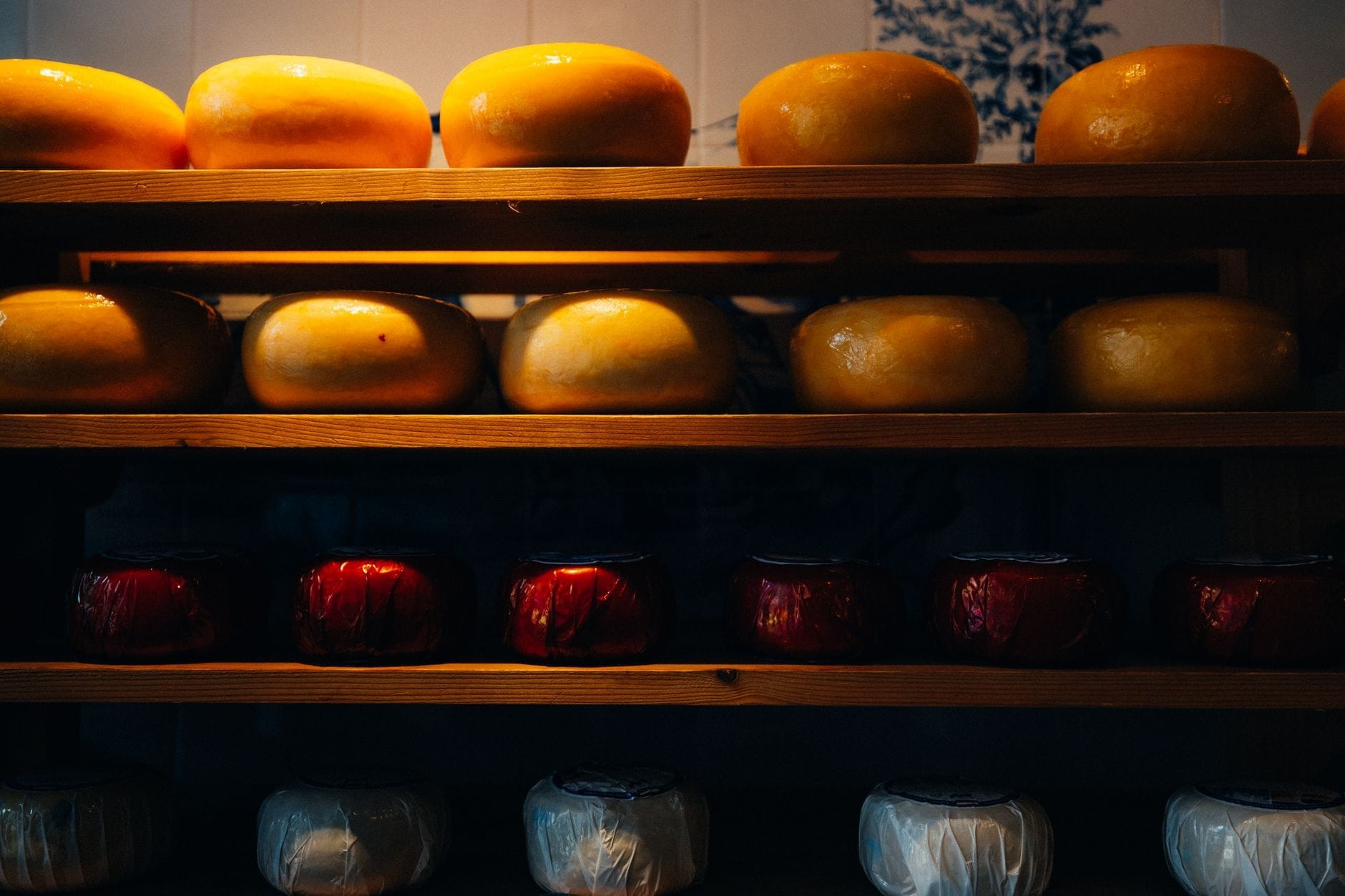
The ground floor operates primarily as a cheese shop. Wheels and rounds of Dutch cheese are stacked on shelves and displayed in traditional style, many coated in distinctive colored wax: red for Edam, yellow for Gouda variants, black for aged types. Staff regularly offer small tasting portions, typically cut from wedges at the counter. The atmosphere is warm and slightly aromatic, with the dry, slightly tangy scent of aged cheese noticeable as soon as you step inside.
Downstairs, the museum section covers the history and production methods of Dutch cheese. Displays explain the difference between young and aged Gouda, the role of cheesemaking in Dutch rural life, and how the Netherlands became one of the world's major cheese-exporting nations. The content is presented clearly and in English, with visual aids and physical exhibits including traditional cheesemaking equipment. The space is small and you can move through it in about 10 to 20 minutes, though lingering to read everything and ask questions could extend that.
💡 Local tip
Ask staff for a tasting of the aged Gouda varieties, particularly those matured over 12 or 24 months. These have a firm, crystalline texture and a concentrated, slightly caramel flavor quite different from the young Gouda most visitors have encountered elsewhere.
How the Experience Changes by Time of Day
Mornings, particularly between 09:00 and 11:00, tend to be quieter. The shop is fully stocked, staff are attentive, and the basement exhibition is easy to move through without crowding. This is the best window if you want to take your time with the exhibits or ask questions about production methods and aging.
Midday through mid-afternoon is when foot traffic peaks, driven by visitors walking the Anne Frank House queue nearby and tourists moving along Prinsengracht between sights. The shop floor becomes noticeably more crowded, and the tasting counter attracts groups. The experience is still enjoyable but more rushed.
Late afternoon and early evening, between 17:00 and 20:00, sees a second wave as day-trippers wind down. The 21:00 closing time provides genuine evening access, which is useful if your daytime schedule is already committed to larger museums or canal cruises.
Dutch Cheese Culture: Some Context
The Netherlands is one of the world's leading cheese producers and exporters. Gouda and Edam are the internationally recognized names, but within those categories there is significant variation driven by aging time, milk type, and regional traditions. Gouda can range from mild and pliable when young to hard and intensely flavored when aged two years or more. The Amsterdam Cheese Museum presents this range accessibly, giving visitors a framework that makes subsequent cheese shopping, whether at the Bloemenmarkt-adjacent shops or at markets around the city, considerably more informed.
Traditional Dutch cheese markets, where farmers brought wheels to be weighed and traded in public squares, were a fixture of Dutch life for centuries. The most famous surviving example is in Alkmaar, about 35 to 40 minutes north of Amsterdam by train and covered in guides to day trips from Amsterdam. The museum provides context that makes a visit to Alkmaar considerably richer, if you are planning to go.
Practical Walkthrough: Getting There and Getting the Most from It
From Amsterdam Centraal, tram 13 or 17 runs directly to Westermarkt, a short walk from the museum. Bus lines 21, 170, and 171 also stop at Westermarkt. The journey takes around 10 minutes depending on traffic and exact service. If you are already in the Jordaan, the museum is walkable from most points in the neighborhood within 10 minutes.
There is no queue management or timed entry because admission is free and the space is self-guided. During peak hours the basement can feel crowded, but the turnover is fast given the compact size. You do not need to budget more than an hour here, and 30 to 45 minutes is realistic for most visitors.
Photography inside is generally straightforward, and the shop makes for appealing shots of stacked cheese wheels and colorful wax coatings. Natural light is limited indoors, particularly in the basement, so a phone camera will benefit from the slightly warmer artificial lighting rather than fighting it.
⚠️ What to skip
The basement exhibition space is accessed via stairs. If you have mobility limitations, access to the main museum content downstairs may be difficult. Contact the museum directly before visiting to confirm current accessibility arrangements.
Honest Assessment: Is It Worth Your Time?
The Amsterdam Cheese Museum will not anchor a day the way the Rijksmuseum or the Anne Frank House does. It is small, it is free, and it takes under an hour. But those qualities are features, not limitations, for many travelers. For anyone curious about Dutch food culture, traveling with children who appreciate interactive or sensory experiences, or simply looking for a short, low-pressure stop in the Jordaan, it delivers clearly and without fuss.
Travelers with deep prior knowledge of Dutch cheese, or those who have already visited specialist cheese shops in Amsterdam or toured a working dairy elsewhere in the Netherlands, may find the educational content somewhat surface-level. If you want a more thorough food-focused experience, pairing this visit with a walk through the Noordermarkt on a Saturday (when the organic farmers market runs alongside the flea market) gives considerably more depth to the Dutch food picture.
The retail element is genuine and well-stocked. Vacuum-packed aged Gouda travels well and represents better value than airport shops. If you are planning to bring Dutch cheese home as gifts or for personal use, buying here after tasting is a reasonable decision.
Insider Tips
- Visit before 10:30 on a weekday morning to catch the shop fully stocked and avoid the midday crowd surge that follows Anne Frank House tour groups.
- The aged Gouda varieties (12-month and older) are the most distinctive for tasting. Ask specifically for these at the counter rather than waiting for whatever is being offered that moment.
- If you are buying cheese to travel with, ask staff about vacuum-packed options. Aged hard cheeses in sealed packaging typically have no issue with airport security, but confirm for your specific route.
- Combine this stop with a walk along Prinsengracht toward Leidsegracht for some of the best canal architecture in Amsterdam, with fewer tour groups than the stretch immediately in front of the Anne Frank House.
- The museum closes at 21:00, which is unusually late for Amsterdam attractions. If your daytime is packed with larger sights, this works well as an early-evening addition before dinner in the Jordaan.
Who Is Amsterdam Cheese Museum For?
- Food-curious travelers wanting a quick, free introduction to Dutch cheese culture
- Families with children who enjoy tasting and tactile exhibits
- Visitors already in the area for the Anne Frank House looking to extend a Jordaan half-day
- Anyone wanting to buy quality Dutch cheese with the benefit of tasting first
- Travelers with limited time who want a flexible, no-booking-required stop
Nearby Attractions
Other things to see while in Jordaan:
- Amsterdam Tulip Museum
Tucked into a canal house on Prinsengracht, directly across from the Anne Frank House, the Amsterdam Tulip Museum traces 400 years of tulip history, from Ottoman origins to the chaos of Tulip Mania and the flower's enduring grip on Dutch identity. Small in scale but precise in focus, it rewards curious visitors who want context beyond the postcard.
- De Negen Straatjes (The Nine Streets)
De Negen Straatjes, or The Nine Streets, is a grid of nine historic cross-streets threading through Amsterdam's Canal Ring between the Singel and Prinsengracht. Free to explore at any hour, the area blends 17th-century canal architecture with independent boutiques, specialist food shops, and unhurried café culture. It rewards slow walkers and curious browsers far more than shoppers with a checklist.
- Het Schip Museum
Museum Het Schip occupies a landmark 1919 public housing complex designed by Michel de Klerk, the defining genius of the Amsterdam School movement. Part architecture museum, part social history, it offers one of Amsterdam's most distinctive and undervisited cultural experiences.
- Lindengracht Market
Every Saturday, Lindengracht transforms into one of Amsterdam's most genuine street markets, stretching over more than 900 metres through the heart of the Jordaan. With 232 stalls selling everything from farm-fresh cheese to vintage clothing, it draws locals far more than tourists. Free to enter and easy to reach, it rewards an early morning visit.
Planning a trip? Discover personalized activities with the Nomado app.