Willet-Holthuysen Museum: Inside Amsterdam's Most Complete Canal House
Huis Willet-Holthuysen on Herengracht 605 is one of the few Amsterdam canal houses you can actually walk through, room by furnished room. This guide covers what to see, how long to spend, who it suits, and how to visit without wasting a trip.
Quick Facts
- Location
- Herengracht 605, Canal Ring, Amsterdam
- Getting There
- Tram 4 to Rembrandtplein; Metro 51/53/54 to Waterlooplein
- Time Needed
- 1 to 1.5 hours
- Cost
- €15 adult | €7.50 student/CJP | Free under 18
- Best for
- History lovers, interior design enthusiasts, quiet museum seekers
What Is the Willet-Holthuysen Museum?
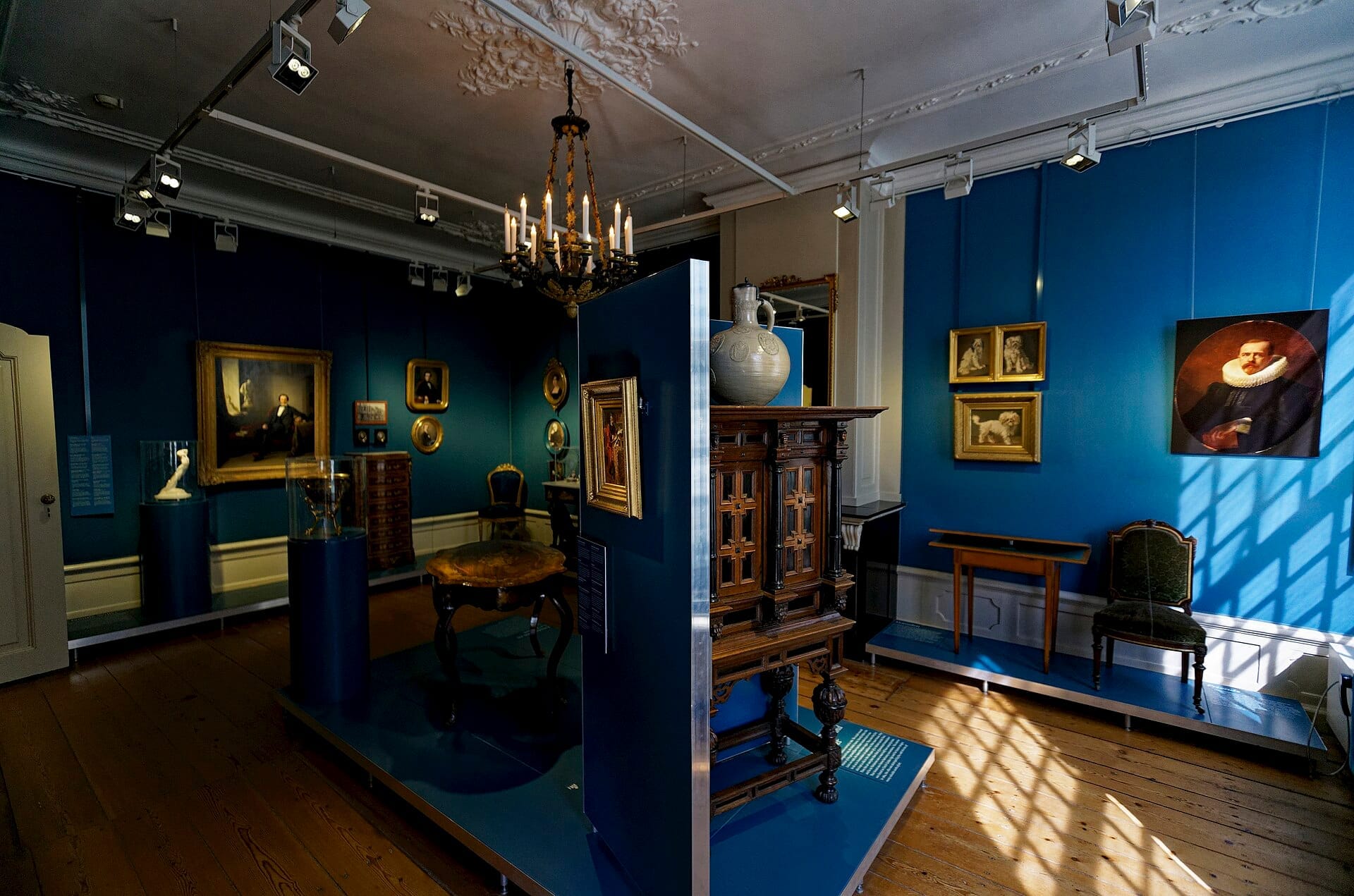
Huis Willet-Holthuysen is a preserved 17th-century Amsterdam canal house that functions as a house museum, meaning the rooms are set up to reflect how a wealthy Amsterdam family actually lived, with original furniture, silverware, porcelain, and art still in place. The building sits on Herengracht, one of the three principal canals of Amsterdam's historic Canal Ring, at number 605.
The house was bequeathed to the city of Amsterdam in 1895 by Sandrina Louisa Willet-Holthuysen, the last private owner, along with its entire contents. The museum opened the following year, in 1896, making it one of the oldest public house museums in the Netherlands. It is now managed by the Amsterdam Museum and sits in the heart of the Canal Ring, a UNESCO World Heritage Site.
💡 Local tip
Book tickets online through the Amsterdam Museum website before your visit. The entrance is a narrow canal-house door and there is no large ticket hall, so even a short queue can feel congested on busy weekend mornings.
The Building and Its History
The house was built in the late 17th century, during the period when Amsterdam's merchant class was constructing grand residences along the newly dug Herengracht. The canal's name translates roughly to 'Gentlemen's Canal', and the properties here were among the most prestigious addresses in the city. The facade is a classic Amsterdam step-gable design in brick, four storeys tall, narrow by modern standards but considered generous for its era.
Over the centuries the house passed through several wealthy owners before Abraham Willet, an art collector and glass engraver, acquired it in the 19th century. He and his wife Sandrina Holthuysen filled it with an eclectic collection: Dutch Golden Age paintings, French furniture, Delft ceramics, and a substantial library. When Sandrina died without heirs in 1895, her will left the property and its contents to the city on the condition that it be preserved as a museum.
The condition of the bequest is part of what makes the Willet-Holthuysen Museum unusual. Unlike many house museums where rooms are reconstructed or furnished with period-appropriate pieces from different sources, a significant portion of what you see here was actually owned by the Willet-Holthuysen household. That distinction is easy to overlook but worth keeping in mind as you move through the rooms.
Tickets & tours
Live prices and dates from our booking partner. If you book, we may earn a commission at no extra cost to you.
What You Actually See Inside
The Ground Floor and Service Areas
The visit begins at street level and moves upward through the house. The lower floor gives access to the kitchen and service areas, which have been preserved to show the working infrastructure behind the elegant rooms above. The kitchen is fitted with period equipment and is one of the more tangible, less romanticized spaces in the building. It grounds the tour in the reality that this was a functioning household, not just a showpiece.
The Formal Rooms and the Garden
The upper floors contain the formal reception and dining rooms where the Willet-Holthuysens would have entertained guests. The room proportions are tall and narrow as typical of canal houses, with large sash windows overlooking the canal on the front side and a formal garden at the rear. The garden has been restored to an 18th-century French formal style, with clipped hedges, gravel paths, and symmetrical planting. It is small by any modern measure, but it is one of the few private canal-house gardens in Amsterdam that visitors can see from above and, occasionally, enter.
The dining room is probably the most visually complete space in the house. The table is laid for a formal meal with the family's own silver and glassware. The light in this room in the late morning, when it comes through the rear windows across the canal-house garden, is notably different from the cool north-facing light in the front rooms. If you are visiting specifically to observe how light moves through a canal house, arriving before noon makes that contrast apparent.
The Art and Object Collection
Abraham Willet's collecting was wide-ranging rather than focused. The house contains Dutch Golden Age paintings, 18th-century French decorative arts, Chinese porcelain, and glass engraving, which was one of Willet's personal skills. The collection is not at the level of the Rijksmuseum, and it should not be compared to one. The value here is context: seeing objects in the rooms they were chosen for, surrounded by the wallpapers, textiles, and furniture they were meant to complement.
Visitors who come to the Willet-Holthuysen Museum after spending time at the Rijksmuseum or the Rembrandthuis often find that this museum fills in a gap those larger institutions leave: what did it look like to actually live with these objects?
How the Experience Changes by Time of Day
The museum is open daily from 10:00 to 17:00. Weekday mornings are the quietest period, and the narrow rooms, some of which hold only four or five people comfortably, feel genuinely intimate rather than crowded. Weekend afternoons in summer bring significantly more visitors, and the canal-house proportions mean that congestion becomes noticeable quickly in the smaller rooms.
The rear garden is best observed from the upper-floor windows in the late morning, when the light falls across it evenly. By early afternoon in summer the garden is often in partial shadow depending on adjacent buildings. The front canal facade, by contrast, is most photogenic in the late afternoon when low western light catches the brick and water.
⚠️ What to skip
Accessibility is a real limitation here. The building is a historic canal house with multiple floors connected by steep, narrow staircases, which is typical of Amsterdam's 17th-century architecture. Third-party booking platforms note that the experience is not accessible to wheelchair users or mobility scooters. Contact the Amsterdam Museum directly at +31 20 523 1822 before visiting if you have mobility questions.
Getting There and Getting In
The museum is at Herengracht 605, which is on the southeastern bend of the Herengracht, close to Rembrandtplein. The most straightforward transit route is Tram 4 to Rembrandtplein, from which the museum is a short walk along the canal. Metro lines 51, 53, and 54 stop at Waterlooplein, also walkable from there. The surrounding streets are narrow and largely pedestrian-friendly, though cycling is common along the canal.
The address puts you within easy walking distance of several other significant sites, including Magere Brug to the south and Rembrandtplein to the west. Building a half-day itinerary around this stretch of the canal ring is straightforward.
Tickets cost €15 for adults and €7.50 for students and CJP card holders. Visitors under 18 enter free. The I amsterdam City Card covers admission, so if you are planning multiple museum visits in a day it is worth checking whether the card represents a saving for your itinerary.
For a broader picture of how the Willet-Holthuysen fits into Amsterdam's museum landscape, see our guide to the best museums in Amsterdam.
Photography, Atmosphere, and What to Bring
Photography is generally permitted inside the museum without flash, though individual room restrictions can apply. The interiors are relatively dark, as you would expect in a 17th-century building with tall but narrow windows. A phone camera will manage in the brighter rooms; a camera with good low-light capability will do better in the deeper interior spaces. The garden, when accessible, photographs well from the first-floor rear windows looking down.
There is no large cafe or restaurant on site, so plan to eat before or after. The Rembrandtplein area has a wide range of options within a few minutes' walk. The museum has a small gift shop. Bags larger than carry-on size may need to be left in a cloakroom.
The museum is not a place to spend more than 90 minutes unless you are a specialist in Dutch decorative arts or 19th-century collecting history. It rewards slow, attentive visitors more than those moving quickly through. If you treat it as a two-hour experience, you will likely feel you have run out of things to look at before the time is up.
Who This Museum Is Not For
If your primary interest is major Dutch Golden Age paintings, the Rijksmuseum is the destination, not this one. If you are traveling with young children who need hands-on engagement or significant space, the narrow staircase rooms and fragile objects make this a poor fit. Those with mobility impairments should contact the museum before visiting given the multi-level historic structure. And if you are looking for a broad overview of Amsterdam's history rather than an intimate window into a single household, the Amsterdam Museum offers a wider narrative scope.
Visitors who enjoy architectural walks through the canal district often combine this with a broader exploration of the area. Our Amsterdam canal cruise guide is useful for understanding the Herengracht from the water, which gives a different perspective on the building's facade and setting.
Insider Tips
- The rear garden is one of the few formally restored 18th-century canal-house gardens accessible to visitors in Amsterdam. Take time at the upper-floor windows overlooking it rather than rushing past.
- Weekday mornings before 11:30 are the quietest windows. Some rooms are small enough that five simultaneous visitors create a noticeable crowd, so timing genuinely changes the experience.
- The dining room table is set with original Willet-Holthuysen silver and glassware. Look at the monograms on the silverware rather than just the table as a whole composition.
- If you have the Amsterdam City Card, admission is included. Run the numbers against your planned itinerary before paying individual entry fees.
- The kitchen on the lower floor is often skipped by visitors moving quickly upward. It is worth a few minutes: the contrast between the service spaces and the formal rooms above is one of the more honest parts of the museum's storytelling.
Who Is Willet-Holthuysen Museum For?
- Travelers interested in Dutch Golden Age domestic life and interior design
- Visitors who want a quieter, smaller-scale museum after the large crowds at the Rijksmuseum or Van Gogh Museum
- Architecture and canal-ring enthusiasts who want to see the inside of a Herengracht property
- History travelers building a thematic itinerary around Amsterdam's merchant-class heritage
- Slow travelers who prefer depth over volume and enjoy spending time in a single space
Nearby Attractions
Other things to see while in Canal Ring (Grachtengordel):
- Anne Frank House
The Anne Frank House on Prinsengracht 263 preserves the hidden rooms where Anne Frank and seven others lived in concealment from 1942 to 1944. One of the most significant memorial sites in Europe, it requires advance planning but rewards visitors with an experience that stays with them long after they leave Amsterdam.
- Bloemenmarkt (Floating Flower Market)
The Bloemenmarkt sits on a row of fixed barges along the Singel canal, operating since 1862 as the world's only floating flower market. Free to enter and open daily, it sells tulip bulbs, cut flowers, and souvenirs in the heart of Amsterdam's Canal Ring. Here is what you will actually find there.
- Amsterdam Canal Cruises
A canal cruise is one of the most efficient ways to understand Amsterdam's layout and its 17th-century heritage. This guide covers the main operators, departure points, what you'll actually see, and how to pick the right cruise for your trip.
- FOAM Photography Museum
Housed in a 17th-century canal house on Keizersgracht, FOAM Photography Museum (Fotografiemuseum Amsterdam) has been one of Europe's leading photography institutions since it opened in December 2001. Four floors of rotating exhibitions cover documentary work, fine art photography, fashion, and emerging talent, making it a serious cultural stop that rewards repeat visits.
Planning a trip? Discover personalized activities with the Nomado app.