Museum Het Rembrandthuis: Inside Rembrandt's Amsterdam Home
Museum Het Rembrandthuis sits on Jodenbreestraat in the heart of Amsterdam, occupying the house where Rembrandt van Rijn lived and worked from 1639 to 1658. Reconstructed from a detailed 1656 bankruptcy inventory, it offers one of the most intimate encounters with a Golden Age master anywhere in the Netherlands. This guide covers what to see, when to visit, and how to make the most of your time here.
Quick Facts
- Location
- Jodenbreestraat 4, 1011 NK Amsterdam (De Wallen / Waterlooplein area)
- Getting There
- Metro to Waterlooplein or Nieuwmarkt; Tram 14 to Waterlooplein; ~15 min walk from Centraal Station
- Time Needed
- 1 to 1.5 hours
- Cost
- Adults from approx. €22; Museumkaart and I amsterdam City Card accepted — verify current prices at the official site
- Best for
- Art history lovers, Dutch Golden Age enthusiasts, curious general visitors
- Official website
- www.rembrandthuis.nl
What Is Museum Het Rembrandthuis?
Museum Het Rembrandthuis is not a gallery in the conventional sense. It is the actual house at Jodenbreestraat 4 where Rembrandt van Rijn lived and ran his studio for nearly two decades. He bought the property in 1639 at the height of his fame, and it was here that he produced some of his most celebrated etchings, trained apprentices, and built an extraordinary collection of curiosities. By 1658, mounting debts forced him to sell, and an inventory drawn up in 1656 to satisfy his creditors ended up becoming the museum's founding document.
The Municipality of Amsterdam purchased the deteriorating building in the early 20th century and transferred it to the Rembrandt House Foundation. The museum opened in 1911 on 10 June and has since been meticulously refurnished based on that 1656 bankruptcy inventory, which catalogued every room and listed hundreds of objects: paintings, prints, weapons, ancient busts, shells, and more. The result is not a recreation in the theatrical sense but a careful, evidence-based reconstruction of a working artist's domestic world.
ℹ️ Good to know
The museum holds the largest collection of Rembrandt's etchings in the world, with around 250 etchings and drypoints. Paintings by Rembrandt are not the main draw here — the Rijksmuseum handles that. This is about process, place, and daily life.
The Building and What You Actually See
The house is a substantial canal-side property built in the Dutch Renaissance style in 1606. From the outside, the dark brick facade and stepped gable sit quietly on a street that, despite being central Amsterdam, never draws the same tourist density as the canals further west. Inside, the rooms are compact and low-ceilinged by modern standards, and the floors creak with age. Light enters through tall windows in ways that immediately explain why Rembrandt was so obsessed with it.
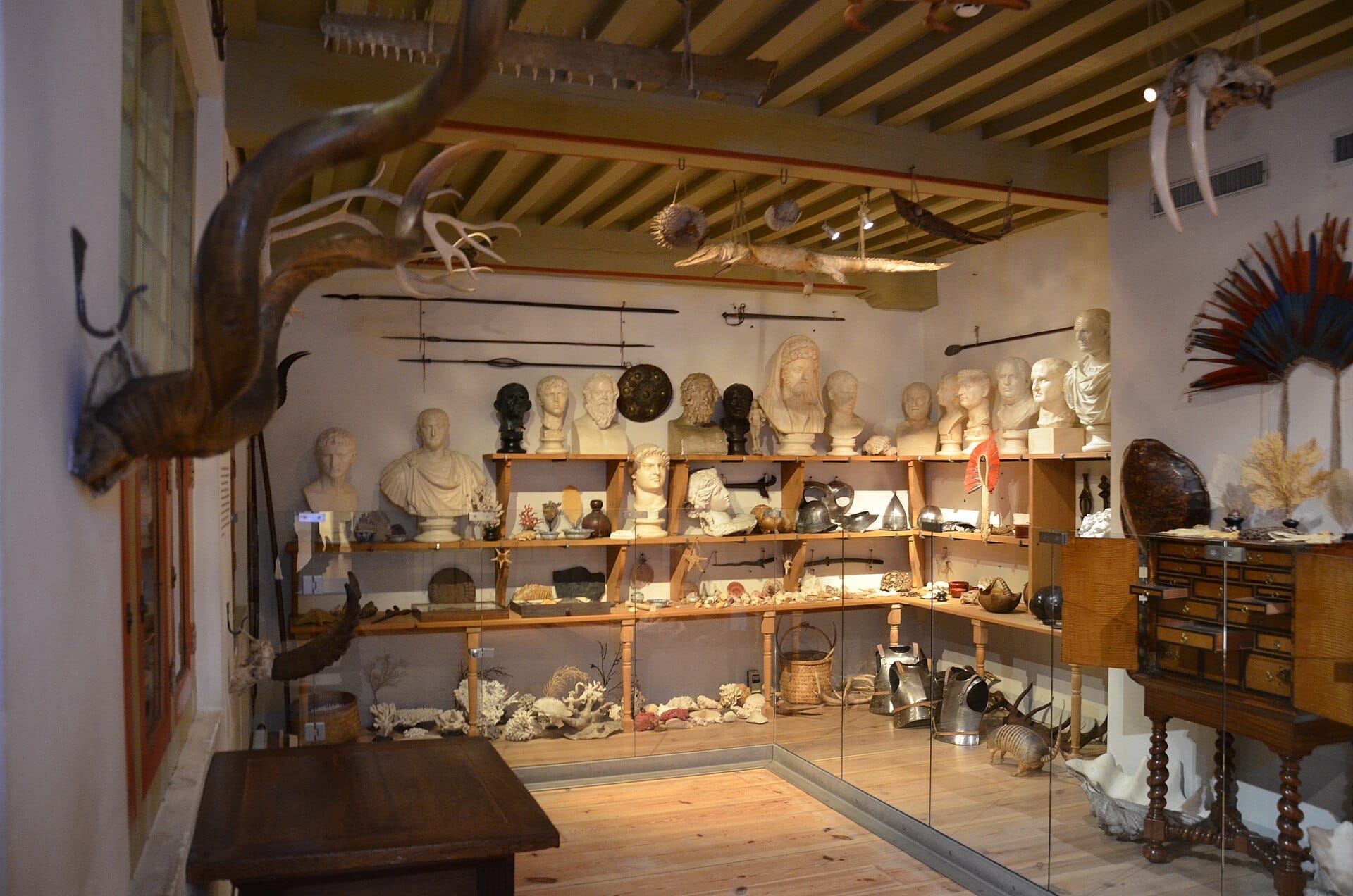
The ground floor contains the reception room and a front office furnished as it would have looked during Rembrandt's residency. Moving upstairs, you reach the large studio where the light from north-facing windows falls in a cool, diffuse way that painters prize. The furniture, objects, and art-making materials throughout the house have been sourced from the period to match the inventory descriptions as closely as possible. There are also rooms dedicated to Rembrandt's print collection, his cabinet of curiosities, and the spaces used by his household.
A modern wing connects to the historic building and houses the museum's core display of etchings and drawings. This is where the real depth of the collection becomes clear. Prints are displayed in rotating selections with good contextual labelling in Dutch and English. If you have any interest in printmaking technique, the demonstrations held in the studio showing the etching process are genuinely illuminating, not just tourist theatre.
The museum sits just a short walk from Waterlooplein Market, and is within easy reach of the Portuguese Synagogue and the Jewish Historical Museum, making this corner of the city one of the most historically layered in Amsterdam.
Tickets & tours
Live prices and dates from our booking partner. If you book, we may earn a commission at no extra cost to you.
How the Experience Changes by Time of Day
The museum opens at 10:00 daily and closes at 19:00 daily. Arriving at opening time means you will have the ground floor rooms largely to yourself, and the sensation of standing alone in Rembrandt's studio, with morning light cutting across the floorboards, is a genuinely affecting one. Group tours tend to arrive mid-morning and cluster in the studio and etching rooms between about 10:30 and 12:30.
Afternoons are noticeably busier, particularly from 13:00 to 16:00, when cruise passengers and school groups pass through. The building is not large, and the rooms do feel crowded when more than a dozen people are in them simultaneously. If you cannot visit early, the late afternoon slot around 17:00 to 18:30 is significantly quieter as casual visitors leave and the light in the studio takes on a warmer tone that feels appropriate to the work made here.
💡 Local tip
Book tickets online in advance. The museum operates timed entry, and walk-up availability on busy days can be limited, especially during summer weekends and Dutch school holidays.
Historical Context: Why This Address Matters
Jodenbreestraat in the 17th century was not on the periphery — it was a prosperous address in a neighbourhood populated by Jewish merchants, intellectuals, and craftspeople. Rembrandt's proximity to this community was not incidental. He drew models from the neighbourhood for his biblical paintings, and the relationships he formed here shaped his work in ways that art historians continue to analyse. The area around the museum still carries traces of this history: the Portuguese Synagogue, completed in 1675, stands a few minutes away, and the Jewish Historical Museum occupies the adjacent complex of synagogues.
Rembrandt's bankruptcy in 1656—and his forced departure from the house in 1658—was a defining event. He had overspent heavily on the house, on his art collection, and on fine objects — many of which appear in his paintings as props. The 1656 inventory that saved the building for history also reveals a man of enormous visual appetite: the list includes helmets, maps, plaster casts of classical figures, Javanese weapons, natural specimens, and works by Raphael and Michelangelo. Walking through the reconstructed rooms with that inventory in mind gives the visit a different dimension than simply looking at furnished period rooms.
For broader context on Amsterdam's 17th-century architecture and the urban grid that shaped this neighbourhood, the Amsterdam architecture guide covers the canal ring's development in useful detail.
The Etching Collection and Demonstrations
The museum holds around 250 of Rembrandt's etchings and drypoints, which is the largest such collection in the world. These are displayed in the modern wing in rotating selections, since the works on paper require low light and cannot all be shown simultaneously. The prints range from small, almost playful character studies to large, complex biblical compositions. Up close, the quality of line and the variety of tone he achieved through cross-hatching and drypoint burr is remarkable in a way that reproductions simply do not convey.
The etching demonstrations in the reconstructed studio are scheduled throughout the day and run for roughly 15 minutes. A museum educator demonstrates how copper plates are prepared, how the etching needle works, and how ink is applied and wiped before printing. These sessions are particularly valuable for visitors without a background in printmaking, since much of Rembrandt's genius in this medium is technical before it is expressive. Check the museum's website or ask at the entrance for the day's demonstration schedule.
💡 Local tip
Photography is generally permitted in the house rooms but may be restricted around certain displayed works. Check with staff at the start of your visit rather than assuming. Flash is never appropriate given the age and fragility of the materials.
Getting There and Practical Notes
The museum is well connected by public transit. Tram 14 stops at Waterlooplein, which is about a three-minute walk from the entrance. The metro also serves Waterlooplein and Nieuwmarkt, both within easy walking distance. From Amsterdam Centraal Station, the walk takes around 15 minutes through the old city centre, passing Nieuwmarkt along the way, which is a pleasant route.
The museum is partially wheelchair accessible. The historic building has narrow staircases that are characteristic of 17th-century Dutch construction, and some areas cannot be reached without climbing stairs. The modern wing is more accessible. Visitors with specific mobility requirements should check the accessibility section on the official website before visiting, as facilities can change.
If you are planning a broader day in this part of the city, the neighbourhood of De Wallen contains the Oude Kerk and the Nieuwmarkt square nearby. Combining these with a visit to the Rembrandt House makes for a coherent half-day of city history without needing to cross town.
The Museumkaart and the I amsterdam City Card both grant access, making this an easy addition to a multi-museum day. If you are visiting multiple major Amsterdam museums, check whether a pass offers better value than buying individual tickets. The museum's own website lists current admission prices, discounts for children, and any promotional offers.
For planning a full day of Amsterdam's major collections, the best museums in Amsterdam guide provides a practical comparison of what each venue offers and how to sequence visits efficiently.
Honest Assessment: Who Should Visit and Who Might Not
Museum Het Rembrandthuis rewards visitors who come with some curiosity about how Rembrandt actually worked, what kind of man he was, and what the material world of a 17th-century Amsterdam master looked like. The reconstructed rooms are evocative rather than spectacular, and the etching collection is genuinely world-class for those who take time with it.
If you are expecting a gallery experience with major oil paintings, you will be disappointed. The Rijksmuseum is the place for that. This museum is quieter, more intimate, and more intellectually focused. Children who are engaged by hands-on craft or who have seen Rembrandt's work in school can find the etching demonstrations genuinely interesting, but younger children with no particular interest in art history may find the house rooms slow.
The building is also genuinely old and physically compact. Visitors who find uneven floors, low ceilings, or steep staircases difficult should review accessibility information before booking. The experience is worth understanding in advance, not to discourage anyone, but because the 17th-century domestic scale is part of what makes it work as a place.
Insider Tips
- The etching demonstration schedule is posted on the museum's website and at the entrance desk. Timing your arrival to catch one of the first demonstrations of the day means you will have a smaller audience and can ask questions more easily.
- Museumkaart holders can skip the online booking queue at some smaller museums, but at Rembrandthuis it is still worth reserving a timed entry slot online, especially on weekends, to avoid being turned away at the door.
- The museum shop stocks high-quality facsimile prints and scholarly catalogues that are harder to find elsewhere. If you have an interest in Dutch Golden Age printmaking, browse before you leave.
- Combine this visit with the Portuguese Synagogue and Jewish Historical Museum, which are both within a five-minute walk. Together the three sites form a coherent picture of 17th-century Jewish Amsterdam that the individual museums only partially tell.
- The street outside, Jodenbreestraat, was significantly altered in the 20th century. Stand at the museum entrance and look toward Waterlooplein to get a sense of how much the urban fabric has changed since Rembrandt's time, which gives the reconstructed interior even more weight.
Who Is Museum Het Rembrandthuis For?
- Art history enthusiasts and anyone with a serious interest in Rembrandt or the Dutch Golden Age
- Visitors who want an intimate, house-museum experience rather than a large gallery
- Printmaking and drawing enthusiasts who want to understand Rembrandt's technique beyond oil painting
- Travelers combining a day of historical sites in the Waterlooplein and Jewish Quarter area
- Museumkaart or I amsterdam City Card holders looking to maximise their pass across a culturally rich neighbourhood
Nearby Attractions
Other things to see while in De Wallen (Red Light District):
- The Amsterdam Dungeon
The Amsterdam Dungeon puts 500 years of the Netherlands' darkest history on stage inside a historic former church on Rokin. With live actors, special effects, and ride elements, it is one of the few attractions in Amsterdam that genuinely aims to unsettle you. Here is what the experience is actually like, and whether it belongs in your itinerary.
- Amsterdam Museum
Historically housed in the former Burgerweeshuis, a centuries-old civilian orphanage on Kalverstraat, the Amsterdam Museum explores how this canal city grew from a modest fishing settlement into one of Europe's most recognizable capitals. The building itself is as much the exhibit as the collection inside.
- Begijnhof
Tucked behind an unmarked gate in the heart of Amsterdam, the Begijnhof is a walled courtyard of historic houses, two chapels, and a garden that has existed for more than 600 years. Entry is free, the setting is genuinely quiet, and few places in the city offer this much history in such a compact space.
- Beurs van Berlage
Completed in 1903 and designed by Hendrik Petrus Berlage, the Beurs van Berlage is a national monument that helped define Dutch modern architecture. Today it operates as a conference and events venue, but the building itself remains one of the most rewarding architectural stops in Amsterdam's historic centre.
Planning a trip? Discover personalized activities with the Nomado app.