Oude Kerk (Old Church): Amsterdam's Oldest Building in Its Most Unexpected Setting
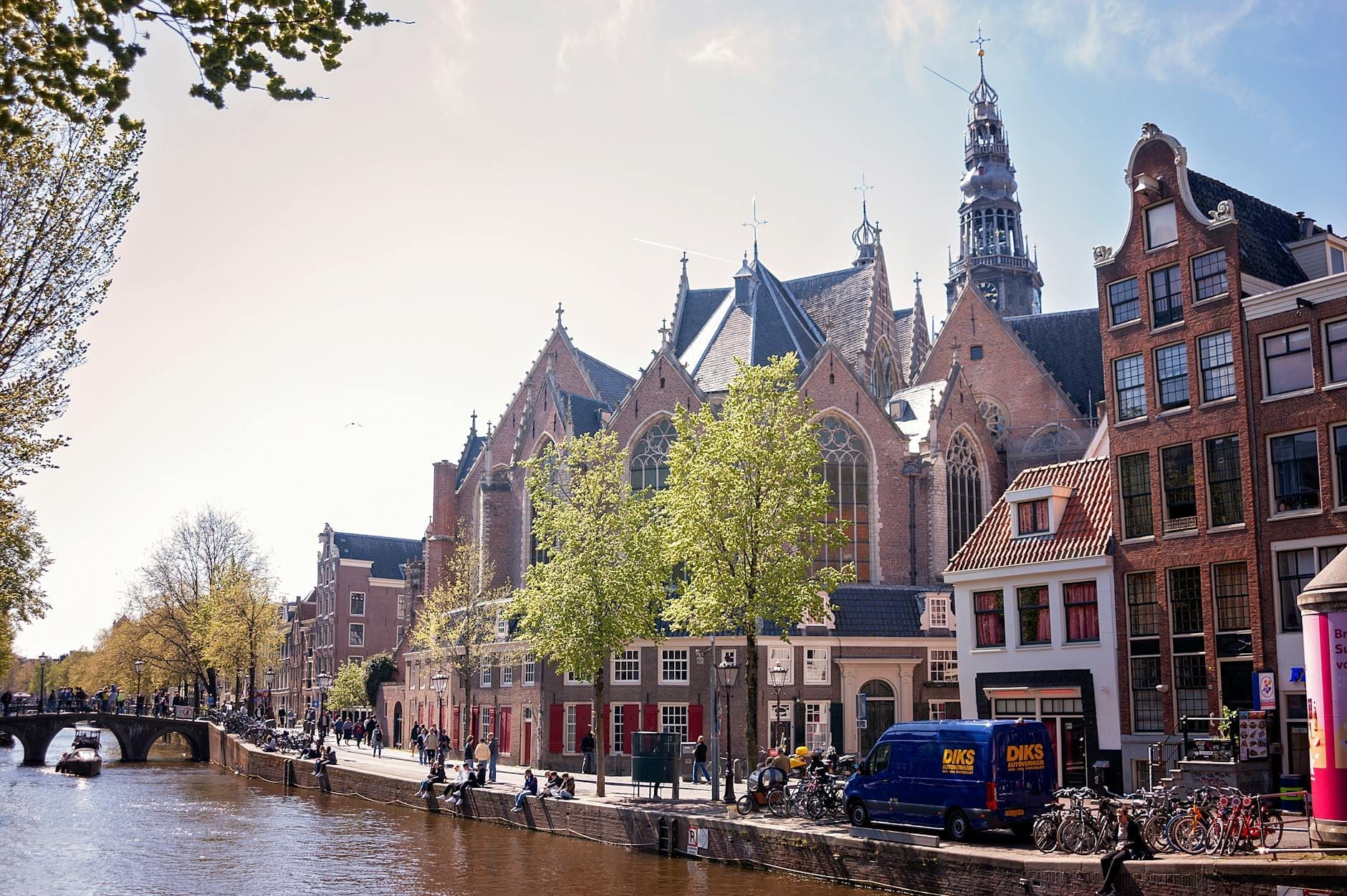
Founded around 1213 and consecrated in 1306, the Oude Kerk is the oldest surviving building in Amsterdam. It stands at the center of De Wallen, the city's red-light district, operating today as a contemporary art venue inside a medieval Gothic shell. That contrast is precisely what makes it worth your time.
Quick Facts
- Location
- Oudekerksplein 23, 1012 GX Amsterdam (De Wallen)
- Getting There
- About 10 minutes on foot from Amsterdam Centraal Station; no tram stop required
- Time Needed
- 45–90 minutes depending on current exhibition
- Cost
- Paid admission; around €13.50 adult (verify current price at oudekerk.nl before visiting)
- Best for
- Architecture lovers, contemporary art visitors, and travelers curious about the layered history of Amsterdam's oldest neighborhood
- Official website
- www.oudekerk.nl
What the Oude Kerk Actually Is
The Oude Kerk, or Old Church, is the oldest building in Amsterdam and one of the few structures in the city that predates the golden age canal network. It was founded around 1213 as a small wooden chapel dedicated to Saint Nicholas, expanded in stone over the following centuries, and formally consecrated in 1306. By the time Amsterdam grew into a major trading city, the Oude Kerk had already been standing for over a hundred years.
After the Reformation came to Amsterdam in 1578, the church was stripped of its Catholic ornamentation during the Alteration and handed to the Reformed congregation. Statues were removed, side chapels were converted, and the interior was whitewashed. What remains today is a Gothic structure largely emptied of its original religious furnishings, which gives the interior an unusual austerity that the church now turns to its advantage as a space for contemporary art exhibitions.
Unlike most major European churches that function primarily as museums of their own past, the Oude Kerk operates as a genuine cultural institution with a rotating exhibition program. The space is used to display work by living artists, and the programming tends to be more rigorous than tourist-oriented. Think less souvenir shop and more serious venue. If you want a broader sense of how Amsterdam's art institutions compare, the guide to the best museums in Amsterdam is a useful reference for planning your time.
The Setting: A Gothic Church Surrounded by the Red-Light District
The Oude Kerk sits on Oudekerksplein, a square directly inside De Wallen, Amsterdam's red-light district. The juxtaposition is one of the most genuinely strange and fascinating things about the church. Windows with red lights face the church walls from three sides. Street noise, the smell of canal water, and the particular low hum of a neighborhood that operates around the clock form the backdrop for a 700-year-old Gothic building.
This is not a quiet, contemplative approach like approaching many European cathedrals through a cathedral close. The square itself is active during the day and considerably more intense at night. Visitors arriving in the early morning, around opening time at 10:00, will find the neighborhood significantly calmer than it becomes by early afternoon. If you want to understand the wider neighborhood before or after your visit, the De Wallen neighborhood guide covers what to expect, how to navigate it, and how the area relates to the broader historic center.
💡 Local tip
Go early. The Oude Kerk opens at 10:00 (13:00 on Sundays). Arriving within the first hour gives you a quieter square, better natural light through the church's stained glass windows, and fewer tour groups inside.
Tickets & tours
Live prices and dates from our booking partner. If you book, we may earn a commission at no extra cost to you.
Amsterdam historical bike tour
From 27 €Instant confirmationFree cancellationAmsterdam's art and culture tour with a local
From 74 €Instant confirmationFree cancellationOudenbosch: walk through historical places with self-guided audio tour
From 11 €Instant confirmationGray Line Canal Cruise with snackbox & Heineken Experience
From 48 €Instant confirmationFree cancellation
Inside the Building: Architecture and Atmosphere
The interior of the Oude Kerk is large, unexpectedly so. The nave is broad, the ceiling vaults draw the eye upward, and the late Gothic proportions feel generous even by European standards. Light enters through three sets of stained glass windows: the oldest surviving examples date to the 16th century and survived the Reformation intact, which makes them genuinely rare objects. The colors are deep greens, reds, and golds, and in morning light they cast long colored bars across the stone floor.
That stone floor is itself a significant historical document. The church contains approximately 2,500 grave markers embedded in the floor, covering the ground almost entirely with engraved slabs. Many are worn smooth by centuries of foot traffic, but enough text and imagery remains on others to make them worth stopping over. Rembrandt's wife Saskia van Uylenburgh was buried here in 1642. The weight of that is real: you are walking on the graves of Amsterdam's residents going back to the medieval period.
The church has a long organ tradition. The large Vater-Müller organ at the west end, built in the 18th century, is one of the finest historic organs in the Netherlands and is still used for concerts. If you happen to be inside during an organ rehearsal, the acoustic quality of the space becomes immediately apparent: the stone walls and high vaults create a reverberation that can last several seconds.
ℹ️ Good to know
Opening hours are daily 10:00–18:00, with Sunday hours running 13:00–17:30. Hours may vary during specific exhibitions or seasonal programs, so check the official site at oudekerk.nl before your visit.
The Contemporary Art Program
Since the 1990s, the Oude Kerk has positioned itself as a venue for contemporary art rather than a conventional church museum. Major exhibitions have featured internationally recognized artists, and the scale of the building lends itself to large installations that smaller galleries cannot accommodate. The stone floor, the vaulted ceilings, the stained glass, and the organ pipes all become part of the visual context for whatever is currently on display.
The result is that no two visits to the Oude Kerk are quite the same. If the current exhibition is strong, the combination of ancient architecture and contemporary work can be genuinely affecting. If the exhibition is weak or overly conceptual without much visual substance, the architecture alone still justifies the ticket. It is worth checking the current exhibition on the official website before going, not to decide whether to go, but to calibrate expectations and know what you are walking into.
⚠️ What to skip
If you are visiting purely for religious or devotional reasons, be aware that the Oude Kerk functions as a contemporary art institution, not an active place of worship in the conventional sense. Services are occasionally held, but the primary function is cultural programming.
How the Experience Changes by Time of Day
Morning visits, from opening until around noon, offer the calmest conditions. The square outside is quieter, natural light through the stained glass is at its strongest, and tour groups are sparse. The church interior has a particular stillness in the morning that later hours disrupt.
Afternoon visits bring more visitors, more noise from the square, and a different quality of light inside, dimmer and more diffuse as the day progresses. The experience is still worthwhile but is noticeably busier. Visiting on a weekday afternoon in summer means competing with tour groups, school visits, and general tourist traffic from Amsterdam Centraal, which is about ten minutes away on foot.
The exterior of the church is worth seeing at dusk or after dark, when the square changes character entirely and the Gothic silhouette reads differently against the lit windows of the surrounding streets. You do not need to go inside for this; the exterior alone at this hour is visually striking. Photography of the exterior at night requires steady hands or a small tripod, as the light levels are low despite the surrounding street activity.
Getting There and Practical Notes
The Oude Kerk is approximately a ten-minute walk from Amsterdam Centraal Station. Exit the station onto Stationsplein, cross toward the old city, walk south through the Nieuwebrugsteeg or Warmoesstraat, and you will reach Oudekerksplein without needing a map beyond the first intersection. No tram, metro, or bus is necessary from the station. If you are arriving from elsewhere in the city, trams running to Centraal or Dam Square put you within easy walking distance. For a broader overview of getting around the city efficiently, the guide to getting around Amsterdam covers tram lines, cycling, and the GVB network in detail.
Admission is paid. The commonly cited adult price is around €13.50, but ticket prices for exhibitions can change, so verify the current rate at oudekerk.nl before arriving. No verified accessibility information is available from official sources for wheelchair access or step-free entry; if this is a requirement, contact the venue directly before visiting.
The church is located in a neighborhood that has a strong smell of cannabis, especially in the evenings. This is worth knowing if you are sensitive to it. Modest clothing is not strictly required given the contemporary art context, but the building is still a consecrated church, and basic decorum is appropriate inside.
Visitors combining the Oude Kerk with other nearby sites can walk to the Amsterdam Museum or the Begijnhof in under fifteen minutes. The historic center is compact enough that a well-planned half-day can take in several significant buildings without rushing.
Who Should Skip It
Travelers with very limited time who are prioritizing the Rijksmuseum, Van Gogh Museum, or Anne Frank House should consider whether a second major indoor stop fits their schedule. The Oude Kerk is substantial enough to deserve genuine attention, not a fifteen-minute pass-through. If the current exhibition does not interest you and Gothic architecture is not a draw, the ticket price may feel steep for what is, at its core, a large empty church with grave markers on the floor.
Travelers visiting Amsterdam on a short trip might find the itinerary guides useful for prioritizing: the Amsterdam 2-day itinerary and the 3-day Amsterdam itinerary both help structure choices when time is tight.
Insider Tips
- Check the current exhibition on oudekerk.nl before visiting, not to decide whether to go, but to understand what you are entering. The art program changes regularly and ranges from immersive installations to austere conceptual work. Knowing in advance shapes how you move through the space.
- Look down consistently. The 2,500 grave slabs covering the floor are one of the most significant things in the building, and many visitors walk over them without stopping. Some are badly worn, but others retain clear text and imagery from the 16th and 17th centuries.
- If you hear organ music during your visit, stop and stay still for a few minutes. The acoustics of the vaulted nave are exceptional, and the reverberation of the historic instruments in the stone space is something you will not find replicated easily elsewhere in the city.
- The exterior of the church is best photographed from the narrow alley to the northeast, which gives a clean diagonal view of the tower and apse without the surrounding modern context crowding the frame. Early morning, before street activity picks up, is ideal.
- Sunday entry begins at 13:00, not 10:00 like other days. This is a commonly missed detail that catches visitors arriving in the morning and finding the doors closed.
Who Is Oude Kerk (Old Church) For?
- Architecture and medieval history enthusiasts who want to see Amsterdam's oldest surviving building with genuine depth
- Contemporary art visitors looking for an unusual venue where significant exhibitions are staged in a genuinely extraordinary physical context
- Travelers curious about the intersection of Amsterdam's religious history and its present-day urban identity
- Photographers interested in Gothic interior light, historic grave markers, and the visual contrast of the surrounding neighborhood
- Visitors who want to cover De Wallen thoughtfully rather than just passing through
Nearby Attractions
Other things to see while in De Wallen (Red Light District):
- The Amsterdam Dungeon
The Amsterdam Dungeon puts 500 years of the Netherlands' darkest history on stage inside a historic former church on Rokin. With live actors, special effects, and ride elements, it is one of the few attractions in Amsterdam that genuinely aims to unsettle you. Here is what the experience is actually like, and whether it belongs in your itinerary.
- Amsterdam Museum
Historically housed in the former Burgerweeshuis, a centuries-old civilian orphanage on Kalverstraat, the Amsterdam Museum explores how this canal city grew from a modest fishing settlement into one of Europe's most recognizable capitals. The building itself is as much the exhibit as the collection inside.
- Begijnhof
Tucked behind an unmarked gate in the heart of Amsterdam, the Begijnhof is a walled courtyard of historic houses, two chapels, and a garden that has existed for more than 600 years. Entry is free, the setting is genuinely quiet, and few places in the city offer this much history in such a compact space.
- Beurs van Berlage
Completed in 1903 and designed by Hendrik Petrus Berlage, the Beurs van Berlage is a national monument that helped define Dutch modern architecture. Today it operates as a conference and events venue, but the building itself remains one of the most rewarding architectural stops in Amsterdam's historic centre.
Planning a trip? Discover personalized activities with the Nomado app.