Amsterdam Museum: The City's Story, Told in Its Own Building
Historically housed in the former Burgerweeshuis, a centuries-old civilian orphanage on Kalverstraat, the Amsterdam Museum explores how this canal city grew from a modest fishing settlement into one of Europe's most recognizable capitals. The building itself is as much the exhibit as the collection inside.
Quick Facts
- Location
- Kalverstraat, Amsterdam Centrum (former Burgerweeshuis building; main location currently under renovation)
- Getting There
- Tram lines serving the city centre; Amsterdam Centraal is within walking distance
- Time Needed
- 1.5 to 2.5 hours
- Cost
- Verify current ticket prices at the official website before visiting
- Best for
- History enthusiasts, architecture lovers, first-time visitors wanting city context
- Official website
- www.amsterdammuseum.nl/en
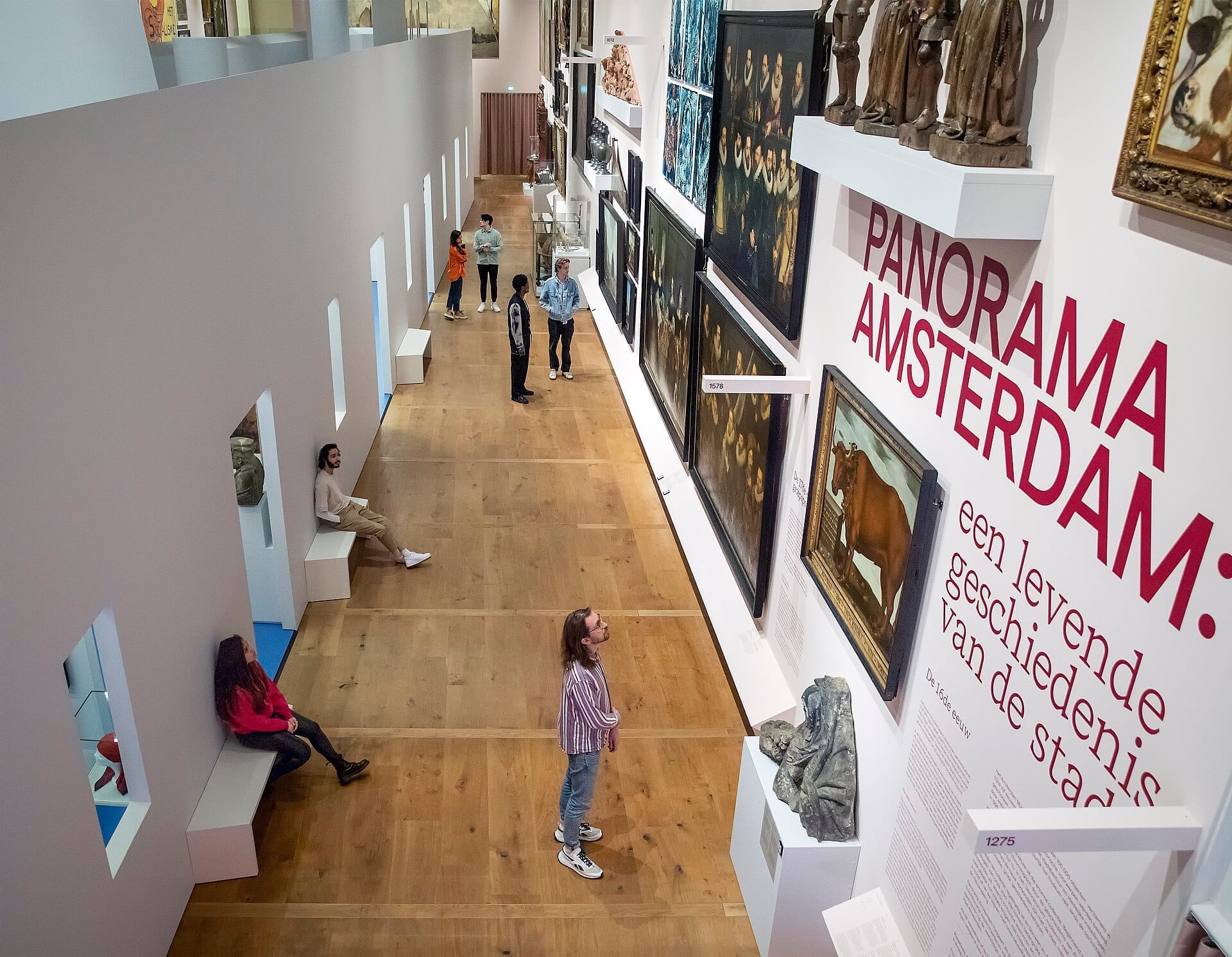
What the Amsterdam Museum Actually Is
The Amsterdam Museum is the city history museum of the Dutch capital, dedicated to tracing Amsterdam's development across roughly eight centuries. It is not a single-subject institution. The collection moves through Golden Age trade, urban expansion, immigration waves, and social transformation, tying each thread back to the physical city you walk through outside. That grounding in the present makes it more useful than a typical historical archive.
The museum's historic and permanent home is the former Burgerweeshuis, a civic orphanage that occupied this Kalverstraat site from the late 16th century onward. The building's courtyard, galleries, and stairwells carry the weight of that history quietly. For visitors already exploring De Wallen and the historic centre, the museum sits at the intersection of the city's commercial and civic core, close to the Begijnhof and just off the main shopping artery.
⚠️ What to skip
Important: The Amsterdam Museum's temporary location at Amstel 51 closed on 1 December 2025. The museum’s main building on Kalverstraat is undergoing renovation, so verify the current operational status, locations of exhibitions, and opening hours at amsterdammuseum.nl/en before making a trip specifically for this museum.
The Building: A Reason to Visit in Itself
The former Burgerweeshuis is one of Amsterdam's more underappreciated pieces of civic architecture. The complex developed over several centuries, and its layered construction reflects the city's changing fortunes, from a relatively modest medieval foundation to the more ordered, classical expansions of the 17th century. The central courtyard, when accessible, offers the kind of quietude that is genuinely rare in this part of the city.
From the street, the entrance does not announce itself loudly. Kalverstraat is one of Amsterdam's busiest pedestrian shopping streets, and the transition from that retail corridor into the museum's interior passages is itself a small piece of city history compressed into a single threshold. The contrast between the noise outside and the still proportions of the courtyard is one of the more memorable sensory moments in central Amsterdam.
For travelers already interested in the relationship between Amsterdam's architecture and its social history, the Amsterdam architecture guide provides useful context for understanding how civic buildings like the Burgerweeshuis fit into the broader urban design tradition of the Dutch Golden Age.
Tickets & tours
Live prices and dates from our booking partner. If you book, we may earn a commission at no extra cost to you.
Gray Line Canal Cruise with snackbox & Heineken Experience
From 48 €Instant confirmationFree cancellationAmsterdam evening canal cruise
From 18 €Instant confirmationFree cancellationRipley's Believe It or Not! Amsterdam ticket and one-hour canal cruise
From 35 €Instant confirmationFree cancellationAmsterdam City Canal Cruise and Moco Museum Entrance Ticket
From 38 €Instant confirmationFree cancellation
What the Collection Covers
The museum's scope is ambitious by design. Amsterdam's history is not a simple narrative: it involves medieval land reclamation, the catastrophic growth of a 17th-century trade empire, cycles of immigration and displacement, German occupation during World War II, and the social upheavals of the late 20th century. The collection addresses all of these, using objects, paintings, photographs, maps, and multimedia installations to build a picture of a city in continuous reinvention.
Paintings from the Dutch Golden Age appear alongside documentary photographs from the mid-20th century. Interactive city maps allow visitors to trace how Amsterdam's footprint changed across specific decades. The approach favors narrative over object reverence, which makes it accessible to visitors without deep prior knowledge of Dutch history. Children find the interactive elements engaging, though the subject matter in some sections (occupation, poverty, social exclusion) is presented with a seriousness that younger visitors may need adult framing for.
Visitors who want to deepen their understanding of Amsterdam's wartime history after leaving the museum will find the Dutch Resistance Museum and the Anne Frank House nearby, each covering the occupation period from a more focused angle.
Timing Your Visit and What to Expect on Arrival
Kalverstraat draws substantial foot traffic throughout the day, particularly between late morning and early evening when the retail stores on either side of the museum entrance are at their busiest. The street itself can feel genuinely crowded on weekends and during peak summer months. Arriving before 10:30 in the morning, when the shopping crowd has not yet built, gives you a calmer entry experience and more space in the early galleries.
Midweek mornings are consistently the quietest window. Saturday afternoons are the most congested. If you are visiting Amsterdam during school holiday periods, particularly Dutch school breaks in late October or February, expect more families and higher overall visitor numbers.
💡 Local tip
The Amsterdam City Card includes free or discounted entry to many city museums. If you are planning three or more museum visits in a day or two, verify whether the Amsterdam Museum is included in the card's current benefits before purchasing tickets separately.
For a broader strategy on managing Amsterdam's museum circuit without overspending, the Amsterdam City Card guide breaks down which pass combinations offer the best value depending on your itinerary.
Practical Details for Your Visit
The museum’s main location sits on Kalverstraat in the city centre, making it walkable from Amsterdam Centraal station in roughly 15 minutes through the historic core. Multiple GVB tram lines stop in the surrounding streets. The area is flat and the route from the main station is entirely on level pavement, which makes it straightforward for visitors with limited mobility, though you should verify specific accessibility features inside the building directly with the museum, particularly given the historic nature of parts of the structure.
Ticket prices were not verifiable at the time of writing and should be confirmed at amsterdammuseum.nl/en before your visit. The museum also hosts temporary exhibitions alongside its permanent collection, and these sometimes carry a separate admission fee or require advance booking. Checking the website a few days before your visit will tell you what is currently on display and whether any pre-booking is necessary.
ℹ️ Good to know
The museum's main Kalverstraat location is the historic Burgerweeshuis, which is currently under renovation. The temporary Amstel 51 site closed in December 2025. Confirm which spaces are open, at which locations, and what is on display before making a dedicated journey.
Who This Museum Is For, and Who Might Want to Skip It
The Amsterdam Museum rewards visitors who want to understand the city they are walking through, not just observe it. If you have already spent two or three days in Amsterdam and still feel like you are seeing surfaces rather than understanding layers, this is the institution that helps you reframe what you have seen. The combination of urban history, social context, and architectural setting makes it particularly strong for repeat visitors or those spending a week or more in the city.
First-time visitors on a very short trip, say one or two days, may feel the pull of more iconic institutions more strongly. The Rijksmuseum and the Van Gogh Museum both address Dutch history and art at a scale and with collections that have broader international recognition. For those short on time, the Amsterdam Museum is more likely to become a second or third visit than a first.
Visitors looking primarily for visual spectacle, world-class art holdings, or interactive family entertainment aimed at young children will find other Amsterdam institutions better suited to their expectations. The Amsterdam Museum's strength is its specificity and depth, not blockbuster scale.
Insider Tips
- The courtyard of the former Burgerweeshuis is architecturally distinct from anything visible from Kalverstraat. Take time to slow down there rather than moving directly through it toward the galleries.
- The museum's temporary exhibitions frequently address contemporary Amsterdam issues, immigration, housing, identity, which can be more thought-provoking than the permanent collection for visitors with some prior knowledge of Dutch Golden Age history.
- Kalverstraat itself is loud and commercial. If the street crowds feel overwhelming on arrival, the museum's interior offers a genuine shift in atmosphere within a few steps of the entrance.
- Check the museum website for evening events and lectures. The Burgerweeshuis building takes on a different character after normal visiting hours, and some programming is aimed at adults rather than general audiences.
- Combine this visit with the nearby Begijnhof, a medieval enclosed courtyard just a short walk away, for a morning that covers two very different expressions of Amsterdam's civic and religious history without requiring a tram.
Who Is Amsterdam Museum For?
- History enthusiasts who want city context beyond the Golden Age highlights
- Repeat visitors to Amsterdam looking to understand the city more deeply
- Travelers with a genuine interest in Dutch social and urban history
- Architecture lovers drawn to adaptive reuse of historic civic buildings
- Visitors who prefer narrative-driven museums over object-focused collections
Nearby Attractions
Other things to see while in De Wallen (Red Light District):
- The Amsterdam Dungeon
The Amsterdam Dungeon puts 500 years of the Netherlands' darkest history on stage inside a historic former church on Rokin. With live actors, special effects, and ride elements, it is one of the few attractions in Amsterdam that genuinely aims to unsettle you. Here is what the experience is actually like, and whether it belongs in your itinerary.
- Begijnhof
Tucked behind an unmarked gate in the heart of Amsterdam, the Begijnhof is a walled courtyard of historic houses, two chapels, and a garden that has existed for more than 600 years. Entry is free, the setting is genuinely quiet, and few places in the city offer this much history in such a compact space.
- Beurs van Berlage
Completed in 1903 and designed by Hendrik Petrus Berlage, the Beurs van Berlage is a national monument that helped define Dutch modern architecture. Today it operates as a conference and events venue, but the building itself remains one of the most rewarding architectural stops in Amsterdam's historic centre.
- Dam Square
Dam Square sits at the geographic and symbolic center of Amsterdam, tracing its origins to a 13th-century dam across the Amstel river. Free to enter and open around the clock, it anchors the city's oldest neighborhood and gives visitors an immediate sense of Amsterdam's scale, history, and daily rhythm.
Planning a trip? Discover personalized activities with the Nomado app.