Beurs van Berlage: Amsterdam's Architectural Landmark on Damrak
Completed in 1903 and designed by Hendrik Petrus Berlage, the Beurs van Berlage is a national monument that helped define Dutch modern architecture. Today it operates as a conference and events venue, but the building itself remains one of the most rewarding architectural stops in Amsterdam's historic centre.
Quick Facts
- Location
- Damrak 243, 1012 ZJ Amsterdam (De Wallen / Centrum)
- Getting There
- Amsterdam Centraal Station, approx. 5-minute walk south along Damrak
- Time Needed
- 30–60 minutes for the exterior and any accessible interior areas; longer for events or exhibitions
- Cost
- No general admission ticket; entry tied to specific events, exhibitions, or activities — prices vary by event
- Best for
- Architecture enthusiasts, history buffs, photography, and anyone curious about Amsterdam's urban design heritage
- Official website
- beursvanberlage.com
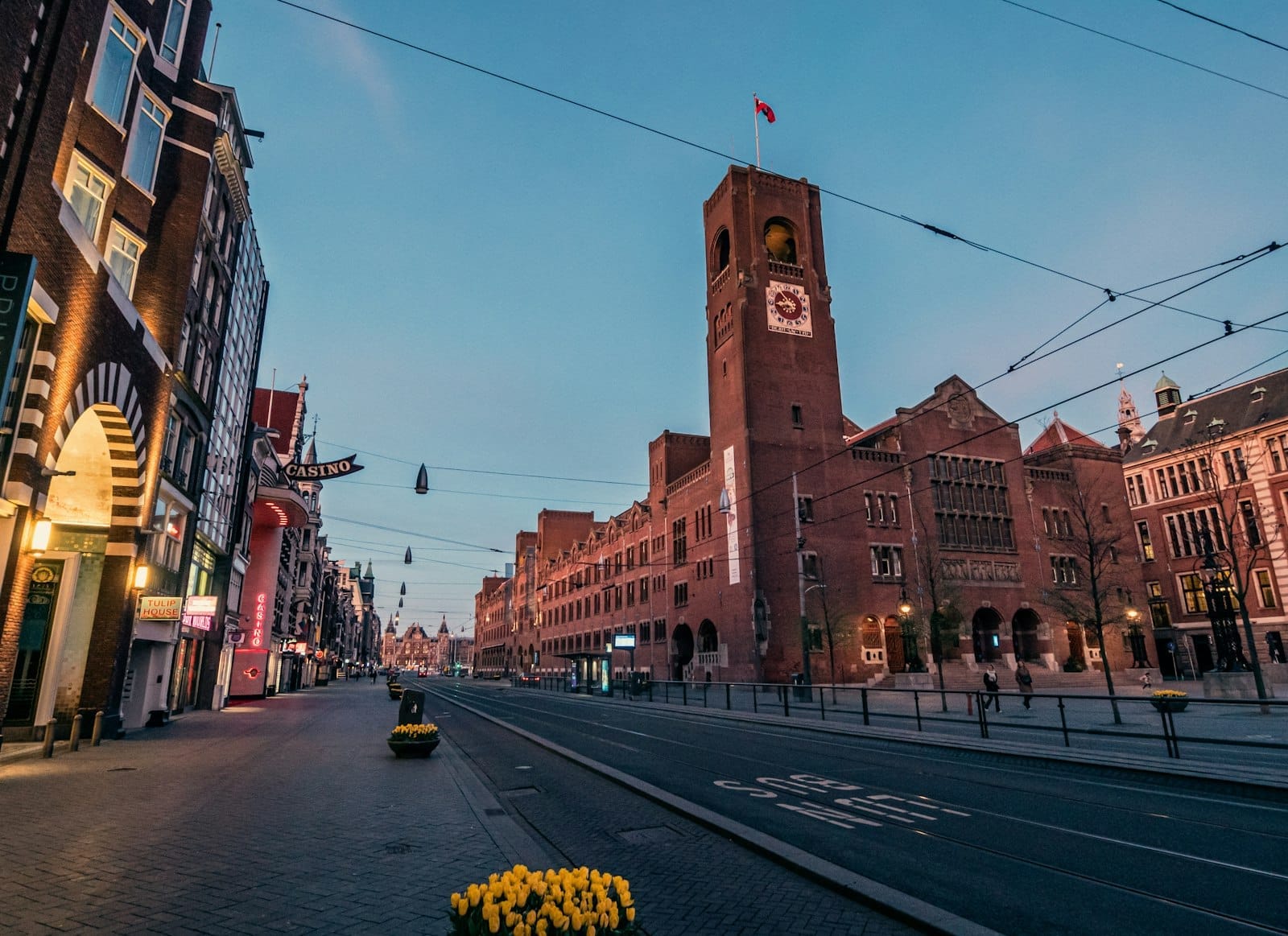
What Is the Beurs van Berlage?
The Beurs van Berlage is a monumental brick building on Damrak, the main artery running south from Amsterdam Centraal Station toward Dam Square. Built between 1898 and 1903 as Amsterdam's third stock and commodities exchange, it was designed by Hendrik Petrus Berlage and stands today as a registered national monument. The building is widely considered the turning point between 19th-century historicism and 20th-century Dutch architecture, directly influencing the Amsterdam School movement that shaped so much of the city's residential design in the following decades.
The exchange was never just a functional building. Berlage treated it as a philosophical statement: rational structure exposed honestly, ornament restrained but meaningful, materials left to speak for themselves. The result is a building that feels serious and deliberate rather than decorative. That quality is still immediately apparent when you stand in front of it today, even amid the noise and crowds of Damrak.
ℹ️ Good to know
Access to the interior is not guaranteed on every visit. The building operates primarily as a conference and events venue. According to some visitor guides, there are daily opening hours (often cited as roughly 09:00–17:00), but access is tied to venue operations rather than guaranteed public visiting times, so parts of the building may or may not be accessible during the day. On weekends and during private events, the interior is often closed to casual visitors. Check the official website for current events before your visit.
The Architecture: What to Look For
The exterior is built primarily from yellow-brown brick, with minimal applied ornament compared to the elaborate stone facades common to Dutch buildings of the same era. Berlage rejected the eclectic historicism fashionable at the time, drawing instead on Romanesque forms stripped to their structural essentials. The result reads as austere at first glance, but spend a few minutes and the detail reveals itself: carved friezes running along the facade, wrought iron work in the gates, and a series of sculptural panels depicting allegorical scenes related to trade and labour.
The main entrance is anchored by the clock tower, which rises to roughly 66 metres (about 217 feet). It is the most visible feature from Damrak and worth examining carefully: the transition from the flat brick body of the building to the tower's upper stonework shows Berlage's layered approach to materials. The tower clock faces are a practical reminder that this was a working exchange where time was money.
Inside, if you gain access, the building is organized around three large multi-storey halls, with offices and communal spaces arranged around them. The main hall's interior is notable for its exposed ironwork and brick arches, natural light filtered through high windows, and a sense of spatial generosity unusual in buildings of this period. The decorative programme inside includes murals and tilework by artists working in close collaboration with Berlage, making the interior a coherent artistic statement rather than an afterthought.
Tickets & tours
Live prices and dates from our booking partner. If you book, we may earn a commission at no extra cost to you.
Van Gogh Museum self-guided audio tour with ticket
From 69 €Instant confirmationVan Gogh Museum Semi-Private Guided Tour with Reserved Entry
From 94 €Instant confirmationFree cancellationBlue Boat Company City Canal Cruise With Van Gogh museum
From 0 €Instant confirmationVan Gogh & Rembrandt in Amsterdam entrance ticket
From 0 €Instant confirmation
Historical Context: From Exchange to Cultural Venue
When the Beurs van Berlage opened in 1903, Amsterdam was still a major trading centre with deep ties to commodity markets. The building replaced two earlier exchanges and was intended to consolidate Amsterdam's financial and commercial activity in a single, modern facility. It served as a stock and commodities exchange until trading functions moved to newer facilities in the 20th century, after which economic and spatial changes made it redundant as a trading floor.
After its original function ended, the building passed through various phases of use, including a period housing the Dutch Philharmonic Orchestra and other cultural tenants. Today it operates as the Amsterdam Conference Centre Beurs van Berlage, hosting corporate events, conferences, trade fairs, exhibitions, and occasional public cultural programmes. The conversion has preserved the spatial integrity of the building while giving it a new commercial purpose. Whether that purpose allows for meaningful public engagement depends heavily on what events are scheduled during your visit.
Berlage's influence on Dutch architecture extends well beyond this single building. If you want to understand how his ideas shaped the city at a residential scale, the Het Schip museum in the Spaarndammerbuurt offers the clearest illustration of the Amsterdam School tradition that grew directly from his principles — a worthwhile half-day trip if architecture is your primary interest in Amsterdam.
Visiting the Exterior: The Damrak Experience
For many visitors, the most reliable way to experience the Beurs van Berlage is from the street. The building occupies a prominent position on Damrak, and the facade is fully visible without entering. Early morning on a weekday, before the tourist flow thickens around 09:30–10:00, is the best time for an uninterrupted look at the exterior. The low morning light hits the brickwork at an angle that emphasizes texture and shadow, making it significantly more rewarding for photography than the flat midday light.
By mid-morning, Damrak becomes one of the noisier corridors in central Amsterdam: canal cruise boats depart from the nearby landing stages, trams pass on the adjacent street, and the smell of stroopwafels and coffee drifts from nearby stalls. The building holds its own against all this activity — its scale and solidity make it readable even in a crowd. Still, if you want to study it properly, arrive early or return on an overcast afternoon when the crowds thin slightly.
💡 Local tip
Photography tip: Position yourself on the opposite side of Damrak, slightly north of the building, to get the clock tower and main facade in a single frame without significant distortion. Early morning between 07:30 and 09:00 gives you the best light and the fewest pedestrians blocking the shot.
The building sits roughly halfway between Amsterdam Centraal Station and Dam Square, making it a natural stop on any walk along Damrak. If you are planning a broader architectural walk through the city centre, pairing it with the Royal Palace on Dam Square gives you a useful contrast: the Palace represents 17th-century Dutch classicism at civic scale, while the Beurs represents the moment that tradition was consciously broken.
Events, Exhibitions, and Getting Inside
The most straightforward way to see the interior is to attend one of the public events or exhibitions held at the venue. These range from trade fairs and design markets to cultural exhibitions and escape room experiences. Ticket prices and formats vary by event; there is no standing general-admission ticket for the building itself. The official website lists upcoming events, and it is worth checking a few weeks before your trip if interior access matters to you.
On standard weekday office hours, the building may be partially accessible to visitors who enter respectfully and are not interrupting a conference setup. This is not guaranteed and depends entirely on what is scheduled. If you arrive and find the public areas accessible, the main hall is the priority: the spatial proportions, the iron gallery structure, and the way light moves through the upper windows give a sense of what Berlage intended that no photograph quite captures.
⚠️ What to skip
The Beurs van Berlage is not a museum with regular public hours. Visiting with the expectation of a guided tour or open interior access on any given day is likely to lead to disappointment. The building is primarily a working events venue, and interior access is event-dependent.
Practical Information: Getting There and Getting In
The building is at Damrak 243, approximately a five-minute walk south from Amsterdam Centraal Station. From the station's main exit, simply walk straight ahead along Damrak; the clock tower becomes visible within the first minute of walking. Trams, buses, and the metro all serve Centraal Station, making this one of the most accessible locations in the city regardless of where you are staying.
Despite being a historic building with multiple staircases, the venue states that facilities are in place to accommodate visitors with disabilities. Anyone with specific accessibility requirements is advised to contact the venue directly before visiting, as the configuration of accessible areas may depend on the event or area being used that day.
If you are traveling on a tight schedule and want to make the most of your time in the city centre, consider building the Beurs van Berlage into a broader walk. A focused Amsterdam architecture itinerary can take you from Centraal Station along Damrak, past the Beurs, through the canal ring, and into the Jordaan within a half-day, covering several centuries of Dutch urban design without needing to enter a single paid attraction.
Honest Assessment: Is It Worth Your Time?
For anyone with a serious interest in architecture or urban history, the Beurs van Berlage is one of the most significant buildings in the Netherlands and worth at least thirty minutes of your time on the exterior alone. The building earns its national monument status. It is not overrated in an architectural context.
For general tourists who are primarily interested in interiors, experiences, or atmosphere, the picture is less clear. Without an event or exhibition to attend, interior access is unreliable and the building functions as a closed conference centre rather than a public attraction. Visitors who make a special trip expecting to explore freely may leave underwhelmed. If that describes you, treat it as an exterior stop on the way to Dam Square rather than a destination in its own right.
If you want an architecturally rich experience that guarantees interior access nearby, the Oude Kerk in De Wallen is a short walk away and operates as a functioning cultural centre with reliable public hours. For those specifically interested in Amsterdam's trading history, the National Maritime Museum offers a more complete narrative of the commercial Amsterdam that the Beurs was built to serve.
Insider Tips
- Check the official events calendar at beursvanberlage.com two to three weeks before your visit. Public events like design fairs and cultural exhibitions are sometimes scheduled with little advance publicity, and attending one is genuinely the best way to see the interior properly.
- The clock tower is most photogenic from the east side of Damrak in the morning, when the sun catches the brickwork from an angle. Cross the street and look back rather than photographing from directly in front.
- The stretch of Damrak in front of the building is one of the busiest pedestrian and tram corridors in Amsterdam. If you want to read the facade carefully, step slightly north or south to get out of the main pedestrian flow before looking up.
- Combine this stop with a walk through De Wallen (the surrounding neighbourhood) in the late morning, when the area is quieter than it becomes by early afternoon. The architectural contrast between Berlage's rationalism and the narrow medieval street pattern immediately behind the building is striking.
- If you are visiting Amsterdam with a particular interest in Dutch architecture, the building's history is most meaningfully understood alongside its successors. The Amsterdam School housing blocks in the western and eastern parts of the city represent what happened when Berlage's ideas were applied at neighbourhood scale.
Who Is Beurs van Berlage For?
- Architecture and design enthusiasts who want to understand the roots of modern Dutch building
- History-focused travelers interested in Amsterdam's commercial and civic past
- Photographers working on a street-level study of Amsterdam's city centre
- Travelers attending a conference, trade fair, or public exhibition at the venue
- Anyone walking between Centraal Station and Dam Square who wants context for what they are passing
Nearby Attractions
Other things to see while in De Wallen (Red Light District):
- The Amsterdam Dungeon
The Amsterdam Dungeon puts 500 years of the Netherlands' darkest history on stage inside a historic former church on Rokin. With live actors, special effects, and ride elements, it is one of the few attractions in Amsterdam that genuinely aims to unsettle you. Here is what the experience is actually like, and whether it belongs in your itinerary.
- Amsterdam Museum
Historically housed in the former Burgerweeshuis, a centuries-old civilian orphanage on Kalverstraat, the Amsterdam Museum explores how this canal city grew from a modest fishing settlement into one of Europe's most recognizable capitals. The building itself is as much the exhibit as the collection inside.
- Begijnhof
Tucked behind an unmarked gate in the heart of Amsterdam, the Begijnhof is a walled courtyard of historic houses, two chapels, and a garden that has existed for more than 600 years. Entry is free, the setting is genuinely quiet, and few places in the city offer this much history in such a compact space.
- Dam Square
Dam Square sits at the geographic and symbolic center of Amsterdam, tracing its origins to a 13th-century dam across the Amstel river. Free to enter and open around the clock, it anchors the city's oldest neighborhood and gives visitors an immediate sense of Amsterdam's scale, history, and daily rhythm.
Planning a trip? Discover personalized activities with the Nomado app.