Royal Palace Amsterdam: What to See, Know, and Expect Before You Go
Built as Amsterdam's city hall in 1648 and converted into a royal palace in 1808, the Koninklijk Paleis Amsterdam is one of the finest surviving examples of Dutch Golden Age civic architecture. It sits at the center of Dam Square and is open to the public most of the year, offering an interior that is more theatrical than most visitors expect.
Quick Facts
- Location
- Dam Square (Nieuwezijds Voorburgwal 147), Amsterdam Centrum
- Getting There
- 10-minute walk from Amsterdam Centraal Station; tram stop 'Dam' is directly in front
- Time Needed
- 1 to 1.5 hours for a thorough visit
- Cost
- Adults approx. €12.50; under 18 free; Museumkaart accepted. Verify current prices at paleisamsterdam.nl
- Best for
- Architecture enthusiasts, history lovers, first-time Amsterdam visitors
- Official website
- www.paleisamsterdam.nl/en
What Is the Royal Palace Amsterdam?
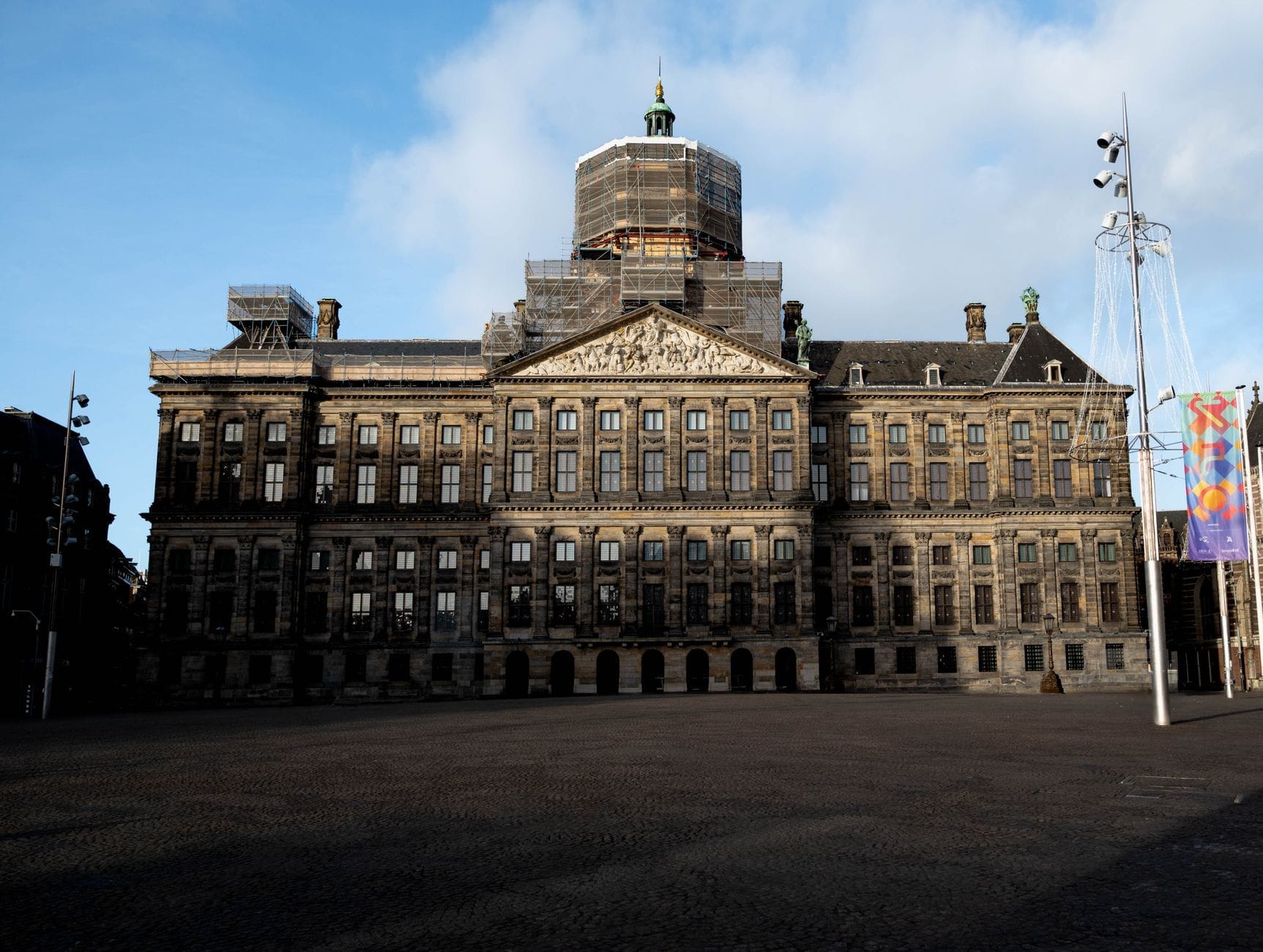
The Royal Palace Amsterdam, officially the Koninklijk Paleis Amsterdam and sometimes called the Paleis op de Dam, is one of three palaces in the Netherlands available to the Dutch Royal House. It sits on the western end of Dam Square, the geographic and symbolic heart of the city. What looks like a palace was not built as one. Construction began in 1648 as Amsterdam's new city hall, a statement of civic ambition at the height of the Dutch Golden Age. It was only converted into a royal residence in 1808, when Louis Napoleon, brother of Napoleon Bonaparte, briefly ruled the Netherlands and needed somewhere befitting a king.
Today the building serves as the official reception palace for the Dutch Royal House, used for state visits and formal ceremonies. When royal events are not scheduled, it opens to the public as a museum. This dual function means closure dates are announced on relatively short notice, so checking the official website before visiting is more than routine caution — it is genuinely necessary.
⚠️ What to skip
The palace closes for royal receptions and state events without long advance notice. Always check paleisamsterdam.nl for current opening days before planning your visit.
The Architecture: Why This Building Still Matters
Designed by Jacob van Campen, the palace is widely regarded as the most important secular building of the Dutch Golden Age. Van Campen drew on classical Italian influences, particularly the work of Palladio, but adapted them for a northern European civic context. The result is a structure of unusual restraint and proportion for its era. The exterior is built almost entirely of Bentheimer sandstone, a warm cream-grey that shows the passing of time in its surface texture. Standing in Dam Square and looking at the facade, the building reads as calm and confident rather than showy.
The structure rests on approximately 13,659 wooden piles driven into the soft Amsterdam soil below the water table, a construction feat that became so emblematic it entered Dutch folklore. The building weighs roughly 22 million kilograms, making the precision of that foundation all the more remarkable by 17th-century standards.
For visitors already interested in Dutch architectural history, pairing this with a visit to the Westerkerk nearby adds useful context: both were constructed in the same era and reflect the same civic ambition that defined Amsterdam's Golden Age expansion.
Tickets & tours
Live prices and dates from our booking partner. If you book, we may earn a commission at no extra cost to you.
Inside the Palace: What You Actually See
The interior is the real reason to buy a ticket. The Citizen's Hall, or Burgerzaal, at the building's core is one of the most striking rooms in the Netherlands. It runs the full height of the central block and is floored with marble inlaid with maps of the Eastern and Western hemispheres, a deliberate statement of Amsterdam's position at the center of global trade in the 1650s. The scale surprises most visitors — photographs do not convey how large the room actually feels, or how the light falls differently across the marble depending on the time of day.
Beyond the Citizen's Hall, the rooms divide between those that reflect the original city hall function and those redecorated during the Napoleonic period when Louis Napoleon moved in and furnished the building as a royal palace. The Empire-style interiors from that period include original furniture, much of it commissioned specifically for the palace and still in place. The contrast between the austere Dutch civic design of 1648 and the ornate French imperial taste of 1808 is visible throughout, and makes the building more interesting than a single-period palace would be.
The building also houses an important collection of 17th-century paintings and sculptures, many created for specific locations within the original city hall. Ferdinand Bol and Govert Flinck, both students of Rembrandt, contributed works that remain in situ. Audio guides are available and worth taking: the room-by-room commentary explains iconographic details in the sculpture and painting that are easy to miss without context.
Visiting by Time of Day: How the Experience Changes
Morning visits, particularly on weekdays, are noticeably quieter. The Citizen's Hall in the first hour after opening has a composed, almost serious atmosphere that suits the building's original purpose. The light entering from the upper windows is softer and more directional early in the day, which changes how the marble floor reads. By midday, especially in summer, tour groups and independent visitors fill the main rooms and the audio experience becomes more crowded.
Dam Square itself is worth observing from the palace steps at different hours. In early morning it is relatively empty and the scale of the square is easier to read. By afternoon the square fills with visitors, street performers, and the continuous movement of trams and bikes. If you plan to photograph the exterior, overcast days produce more even light on the sandstone facade than direct summer sun, which creates harsh shadows across the relief details.
💡 Local tip
Arrive when the palace opens on a weekday morning for the quietest experience in the Citizen's Hall. The room is genuinely different without crowds — the acoustic quality and the unobstructed view of the marble floor both improve significantly.
Getting There and Practical Logistics
The palace is on Dam Square in Amsterdam's Centrum district, roughly a ten-minute walk southwest from Amsterdam Centraal Station. Several tram lines stop at or near the Dam stop, directly in front of the building. If you are arriving by public transport from elsewhere in the city, the tram network provides the most direct connections. Bicycles can be left at the parking facilities around the square, though the area is congested at peak times and maneuvering through the square itself requires patience.
The palace accepts the Museumkaart, which provides free entry and is worth considering if you plan to visit multiple museums in Amsterdam. For an overview of how to structure a multi-museum day, see the guide to the best museums in Amsterdam.
Accessibility information should be confirmed directly on the official website before visiting, as the building's historic structure creates some constraints that vary by area of the palace. The official site lists current access details.
ℹ️ Good to know
Ticket prices reported from secondary sources: adults approx. €12.50, under 18 free, Museumkaart holders free, students and cardholders approx. €9. Confirm current pricing at paleisamsterdam.nl before visiting, as these figures may have changed.
How the Palace Fits Into a Dam Square Visit
Dam Square is the starting point for understanding Amsterdam's urban layout. The square sits where the Amstel River was dammed in the 13th century, giving the city its name. The Dam Square itself is surrounded by institutions that span different periods of Dutch history: the palace from the 17th century, the National Monument commemorating World War II, and the nearby Nieuwe Kerk, which hosts royal ceremonies and public exhibitions. Combining a palace visit with a walk around the square and into the adjacent streets gives a more complete picture than the palace alone.
The area around the palace connects quickly to the canal ring to the west, where the architecture changes scale and character almost immediately. If you have more time, the Amsterdam canals are within a few minutes' walk and offer a very different pace from the open plaza of Dam Square.
Who Should Skip This — and Who Should Prioritize It
Visitors who primarily want outdoor experiences or are traveling with young children who have limited patience for interior spaces may find the palace less rewarding than other Centrum options. The building is substantial and detailed, but it requires a degree of engagement with architectural and historical context to get full value from the visit. If you are not interested in either the Dutch Golden Age or the Napoleonic period in Europe, the rooms may feel opaque without the audio guide.
For visitors with a serious interest in 17th-century European architecture, Dutch civic history, or the decorative arts of the Napoleonic era, this is among the most significant buildings in the country that you can actually enter. It is less famous internationally than it deserves to be, which means it remains less crowded than comparable royal buildings in other European capitals. That relative anonymity is, at this point, one of its practical advantages.
Insider Tips
- Check the official calendar at paleisamsterdam.nl at least a day before visiting. Royal events can close the palace with little public advance notice, and there is no way to tell from outside whether it is open on a given day.
- The audio guide is not optional if you want to understand the iconography. The sculptural program throughout the building is deliberately symbolic, and without explanation the figures and reliefs read as generic decoration. With the guide they become a coherent argument about Amsterdam's place in the world.
- The Citizen's Hall marble floor maps reward close attention. Find the point near the center of the room where you stand on the North Pole inlay and look outward at the hemispheres — the perspective gives a sense of how the original designers conceived Amsterdam's position in the world.
- Photography is generally permitted in the public areas without flash. The upper windows in the Citizen's Hall provide the best natural light for interior shots, and this is strongest in morning hours on clear days.
- If the palace is closed during your visit, the exterior facade and the view across Dam Square toward the Nieuwe Kerk and the National Monument are still worth the stop. The square itself is an important site, not just a forecourt to the palace.
Who Is Royal Palace of Amsterdam For?
- Architecture and design enthusiasts with an interest in Dutch Golden Age or neoclassical European styles
- History travelers focused on the Dutch Republic, the Napoleonic period, or European royal history
- First-time Amsterdam visitors who want to understand the city's historic core beyond the canal photographs
- Art history visitors interested in 17th-century Dutch painting and sculpture in their original civic setting
- Travelers with the Museumkaart who want to maximize value with a high-quality, lower-crowd institution
Nearby Attractions
Other things to see while in De Wallen (Red Light District):
- The Amsterdam Dungeon
The Amsterdam Dungeon puts 500 years of the Netherlands' darkest history on stage inside a historic former church on Rokin. With live actors, special effects, and ride elements, it is one of the few attractions in Amsterdam that genuinely aims to unsettle you. Here is what the experience is actually like, and whether it belongs in your itinerary.
- Amsterdam Museum
Historically housed in the former Burgerweeshuis, a centuries-old civilian orphanage on Kalverstraat, the Amsterdam Museum explores how this canal city grew from a modest fishing settlement into one of Europe's most recognizable capitals. The building itself is as much the exhibit as the collection inside.
- Begijnhof
Tucked behind an unmarked gate in the heart of Amsterdam, the Begijnhof is a walled courtyard of historic houses, two chapels, and a garden that has existed for more than 600 years. Entry is free, the setting is genuinely quiet, and few places in the city offer this much history in such a compact space.
- Beurs van Berlage
Completed in 1903 and designed by Hendrik Petrus Berlage, the Beurs van Berlage is a national monument that helped define Dutch modern architecture. Today it operates as a conference and events venue, but the building itself remains one of the most rewarding architectural stops in Amsterdam's historic centre.
Planning a trip? Discover personalized activities with the Nomado app.