The Amsterdam Dungeon: Theatrical Horror in a Former Church
The Amsterdam Dungeon puts 500 years of the Netherlands' darkest history on stage inside a historic former church on Rokin. With live actors, special effects, and ride elements, it is one of the few attractions in Amsterdam that genuinely aims to unsettle you. Here is what the experience is actually like, and whether it belongs in your itinerary.
Quick Facts
- Location
- Rokin 78, 1012 KW Amsterdam (De Wallen / Centrum)
- Getting There
- Trams 4 and 24 to Rokin stop; around a 10–15 minute walk from Amsterdam Centraal
- Time Needed
- 75–90 minutes for the full show
- Cost
- Adults approx. €26.50 / Children (2–15) approx. €22.50; prices vary by date and booking method — verify on the official site
- Best for
- Teens, adults who enjoy horror theatre, rainy-day entertainment, groups
- Official website
- www.thedungeons.com/amsterdam/en
What Is the Amsterdam Dungeon?
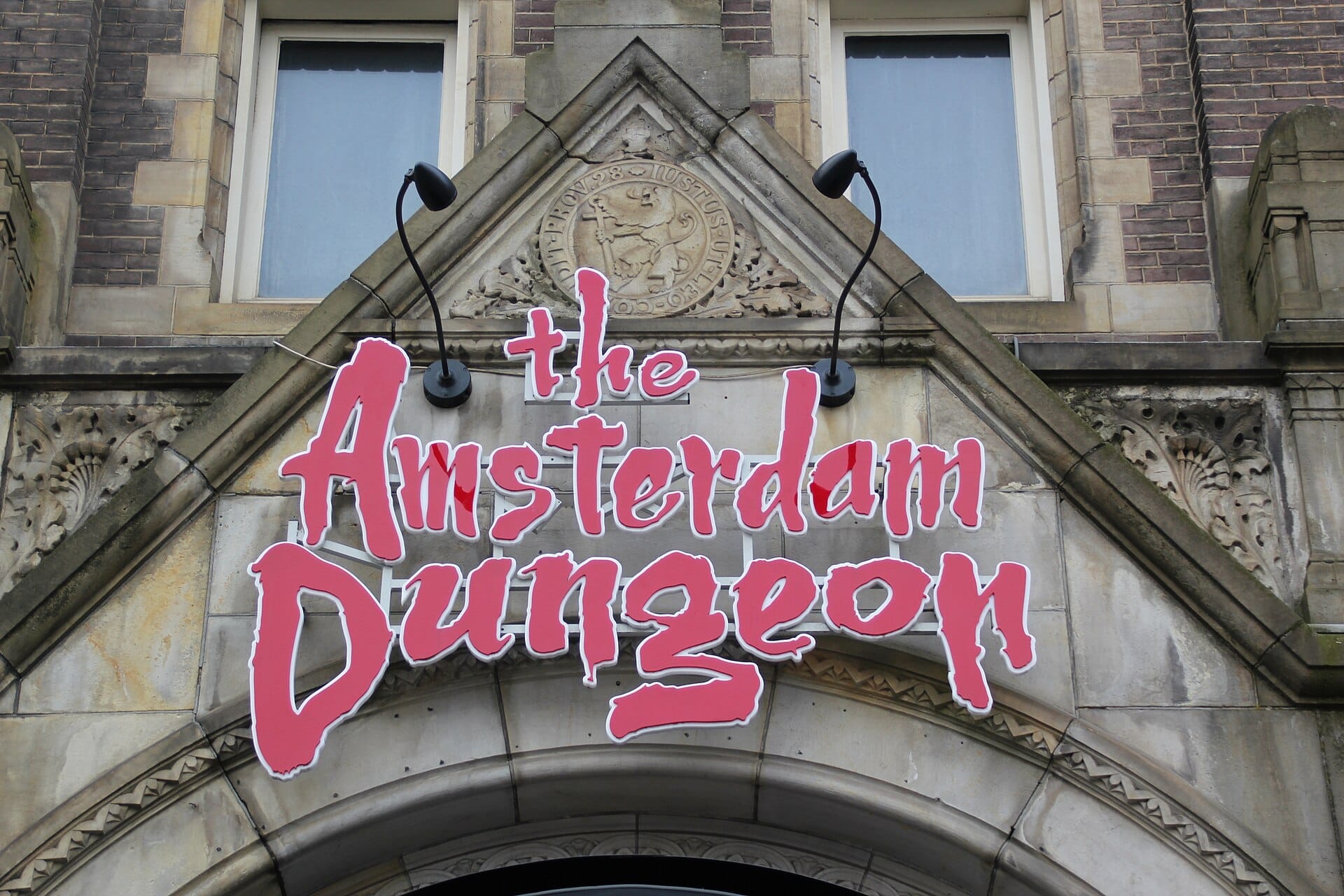
The Amsterdam Dungeon is a live-actor theatrical horror attraction at Rokin 78, a short walk south of Dam Square in the heart of the city. Operated by Merlin Entertainments, the attraction opened in 2006 and sits inside a historic former Dutch Reformed Church building, which Merlin leases. The fit-out reportedly cost around €7.5 million and transformed the interior into a sequence of theatrical sets covering approximately 500 years of Dutch history, focusing squarely on its grimmer chapters.
The format is part guided tour, part immersive theatre, part theme-park ride. Visitors are walked through a series of scenes by costumed actors playing roles such as an inquisitor, a plague doctor, and the legendary figure of the Amsterdamsche Poort. Scenes cover episodes including the Dutch Inquisition, the witch trials, the Golden Age's less glorious underside, and the canals' history as a dumping ground for things best left unmentioned. A ride element and several theatrical effects are included. The whole experience runs roughly 75 to 90 minutes.
ℹ️ Good to know
Opening hours are commonly listed as daily 11:00–19:00, with Friday and Saturday often extending to 21:00. Hours vary by season and date. Always check the official website for exact times before you visit, as they change frequently and booking a timed slot is strongly recommended.
The Building: A Church With a Dark New Life
One of the more quietly interesting aspects of the Amsterdam Dungeon is the building itself. From the outside on Rokin, you see a narrow Amsterdam canal-house facade that gives little away. Inside, the original church structure has been completely enclosed by the attraction's set design, which means the building's ecclesiastical bones are hidden behind dungeon stonework, low corridors, and theatrical lighting. If you are interested in Amsterdam's architectural history, that tension between the space's origins and its current use is worth keeping in mind.
Rokin itself is one of Amsterdam's central arteries, running south from Dam Square toward Muntplein, and the street has been significantly reshaped in recent years by the construction of the North-South metro line. The area sits in the wider Centrum district, close to Dam Square and within easy walking distance of the old city core known as De Wallen, Amsterdam's oldest neighbourhood.
Tickets & tours
Live prices and dates from our booking partner. If you book, we may earn a commission at no extra cost to you.
What the Experience Actually Feels Like
Entering the dungeon, the first thing you notice is the smell: a deliberate mix of damp stone, smoke effects, and something vaguely medicinal that the production team uses to set the tone before the first actor appears. The lighting drops immediately and stays low throughout, which is effective but also means the space feels genuinely claustrophobic in parts. Groups move together from scene to scene, so you are never exploring independently.
The actors are the centrepiece. The quality varies across different sessions and performers, but the best scenes work well as short pieces of confrontational theatre rather than simple jump-scares. The plague sequence and the inquisition scene tend to get the most reaction from groups. Sound design is strong throughout, with low-frequency effects in some rooms adding a physical quality to the atmosphere. The ride element is brief but effective as a scene transition.
For adults who have seen this format at other Dungeons attractions in London or Edinburgh, the Amsterdam version will feel familiar. It covers roughly the same ground in terms of production values and pacing. That is not a criticism, but it is worth knowing before you pay the entrance fee.
⚠️ What to skip
The Amsterdam Dungeon contains strobe lighting, loud sudden sounds, dark confined spaces, and content depicting historical violence. It is not suitable for children under about 10, and people with anxiety, photosensitive epilepsy, or severe claustrophobia should consider carefully before booking.
Crowds, Timing, and How to Manage Both
The dungeon runs timed entry slots, which means the experience does not feel overcrowded inside. However, the queue area and entrance can become congested during peak Amsterdam tourist season, particularly in July and August and during school holiday periods. Arriving without a pre-booked ticket during these times is a gamble. Saturday evenings, when the attraction extends its hours, tend to draw older groups and a more boisterous crowd, which changes the atmosphere compared to a quieter weekday afternoon slot.
Weekday mornings, particularly from Tuesday to Thursday, offer the most relaxed experience. The 11:00 or 12:00 slots typically have smaller groups, which means actors have more room to interact, and the pacing feels less rushed. Rainy days in autumn and winter consistently bring higher walk-in demand, so booking ahead matters even outside peak season. The attraction is fully indoors and climate-controlled, which makes it an unusually sensible choice for Amsterdam's unpredictable weather.
💡 Local tip
Book online in advance through the official website. Online prices are often lower than walk-up prices, and you secure a specific entry time, which removes the risk of a sold-out slot during peak periods.
Getting There: Transit and Walking Routes
From Amsterdam Centraal, tram 4 and tram 24 stop at Rokin, which is directly adjacent to the attraction. The tram ride takes under ten minutes and costs a standard GVB fare. Walking from Centraal along Damrak and through Dam Square takes around 10 to 12 minutes and passes some of the city's most recognisable streets. If you are arriving from the south of the city, tram 24 from De Pijp connects efficiently to Rokin.
Driving to the dungeon is possible via the A10 ring road, exiting at S110 toward Centrum, but parking in this part of Amsterdam is expensive and limited. The Bijenkorf car park near Dam Square is roughly 8–10 minutes on foot and is the most practical option if you must drive. If you are spending a full day in central Amsterdam, the Amsterdam City Card covers GVB public transport and makes transit straightforward.
Accessibility
The Amsterdam Dungeon is accessible to visitors using manual wheelchairs, with the limitation that only one wheelchair user is permitted per tour group. Electric wheelchairs are not allowed inside the attraction for safety reasons. The sets involve some uneven surfaces and low lighting, which can make navigation challenging. Visitors with specific mobility requirements are advised to contact the attraction directly before booking to confirm current arrangements.
Honest Assessment: Who This Is For and Who Should Pass
The Amsterdam Dungeon is not a museum. It does not aim to present Dutch history with scholarly rigour, and it should not be treated as a substitute for the city's serious historical institutions. The dark episodes it covers, from the Inquisition to plague epidemics, are real historical events, but the treatment is theatrical and designed for entertainment, not education.
If your priority is understanding Amsterdam's actual history, institutions like the Amsterdam Museum or the Dutch Resistance Museum offer considerably more depth. The dungeon works best as entertainment for groups, teenagers, or adults who enjoy theatrical horror and want something genuinely different from Amsterdam's canal cruises and art museums.
Solo travellers who are not drawn to group-format experiences, visitors with young children, and anyone sensitive to loud sounds, darkness, or content depicting violence should consider whether the format suits them. At roughly €26.50 per adult, it is not a throwaway ticket price, so calibrating expectations before booking is worthwhile.
For travellers with a limited number of days in the city, the dungeon competes directly for time against attractions of significantly greater cultural weight. If you are following a structured itinerary, check whether it already fits before committing. A well-planned 3-day Amsterdam itinerary can help you decide where this sits in relation to higher-priority visits.
Insider Tips
- Book the first slot of the day, typically 11:00. Groups are smaller, actors are fresher, and the experience tends to run closer to the advertised 75-minute length without the abbreviated pacing that can affect busier later slots.
- Online tickets through the official site are almost always cheaper than walk-up prices. There are occasional promotional discounts for booking more than a week in advance.
- If you are visiting Amsterdam with a group of adults in the evening, the Saturday extended hours offer a noticeably different atmosphere, with more banter between actors and audiences and less pressure to keep things child-appropriate.
- Photography is not permitted inside the attraction during the show, but there is a photo opportunity at the end. Agree in advance with your group whether you want the official photos, as the upsell happens quickly and the price is easy to miss.
- The entrance on Rokin can be easy to walk past. Look for the dungeon signage rather than the building architecture, as the facade does not stand out from street level the way you might expect.
Who Is The Amsterdam Dungeon For?
- Teens and young adults looking for a theatrical thrill rather than a traditional museum experience
- Groups and families with children aged 10 and above who enjoy immersive entertainment
- Rainy-day visitors wanting a fully indoor, climate-controlled activity in central Amsterdam
- Horror enthusiasts and fans of the Dungeons format who want the Amsterdam-specific historical content
- Visitors with a full week in Amsterdam who have already covered the major cultural institutions
Nearby Attractions
Other things to see while in De Wallen (Red Light District):
- Amsterdam Museum
Historically housed in the former Burgerweeshuis, a centuries-old civilian orphanage on Kalverstraat, the Amsterdam Museum explores how this canal city grew from a modest fishing settlement into one of Europe's most recognizable capitals. The building itself is as much the exhibit as the collection inside.
- Begijnhof
Tucked behind an unmarked gate in the heart of Amsterdam, the Begijnhof is a walled courtyard of historic houses, two chapels, and a garden that has existed for more than 600 years. Entry is free, the setting is genuinely quiet, and few places in the city offer this much history in such a compact space.
- Beurs van Berlage
Completed in 1903 and designed by Hendrik Petrus Berlage, the Beurs van Berlage is a national monument that helped define Dutch modern architecture. Today it operates as a conference and events venue, but the building itself remains one of the most rewarding architectural stops in Amsterdam's historic centre.
- Dam Square
Dam Square sits at the geographic and symbolic center of Amsterdam, tracing its origins to a 13th-century dam across the Amstel river. Free to enter and open around the clock, it anchors the city's oldest neighborhood and gives visitors an immediate sense of Amsterdam's scale, history, and daily rhythm.
Planning a trip? Discover personalized activities with the Nomado app.