Kalverstraat: Amsterdam's Main Shopping Street, Honestly Assessed
Kalverstraat is Amsterdam's busiest pedestrian shopping street, stretching roughly 750 meters from Dam Square to Muntplein through the historic city center. It draws a dense mix of international chain stores, Dutch retailers, and street food vendors. Useful for practical errands, but visitors expecting local character will want to look elsewhere.
Quick Facts
- Location
- Dam Square to Muntplein, Centrum, Amsterdam
- Getting There
- Tram lines 4, 14, 24 (Rokin or Muntplein stops); about a 10-minute walk from Amsterdam Centraal
- Time Needed
- 30–90 minutes depending on your shopping agenda
- Cost
- Free to walk; individual shops vary
- Best for
- Practical shopping, people-watching, connecting city center landmarks
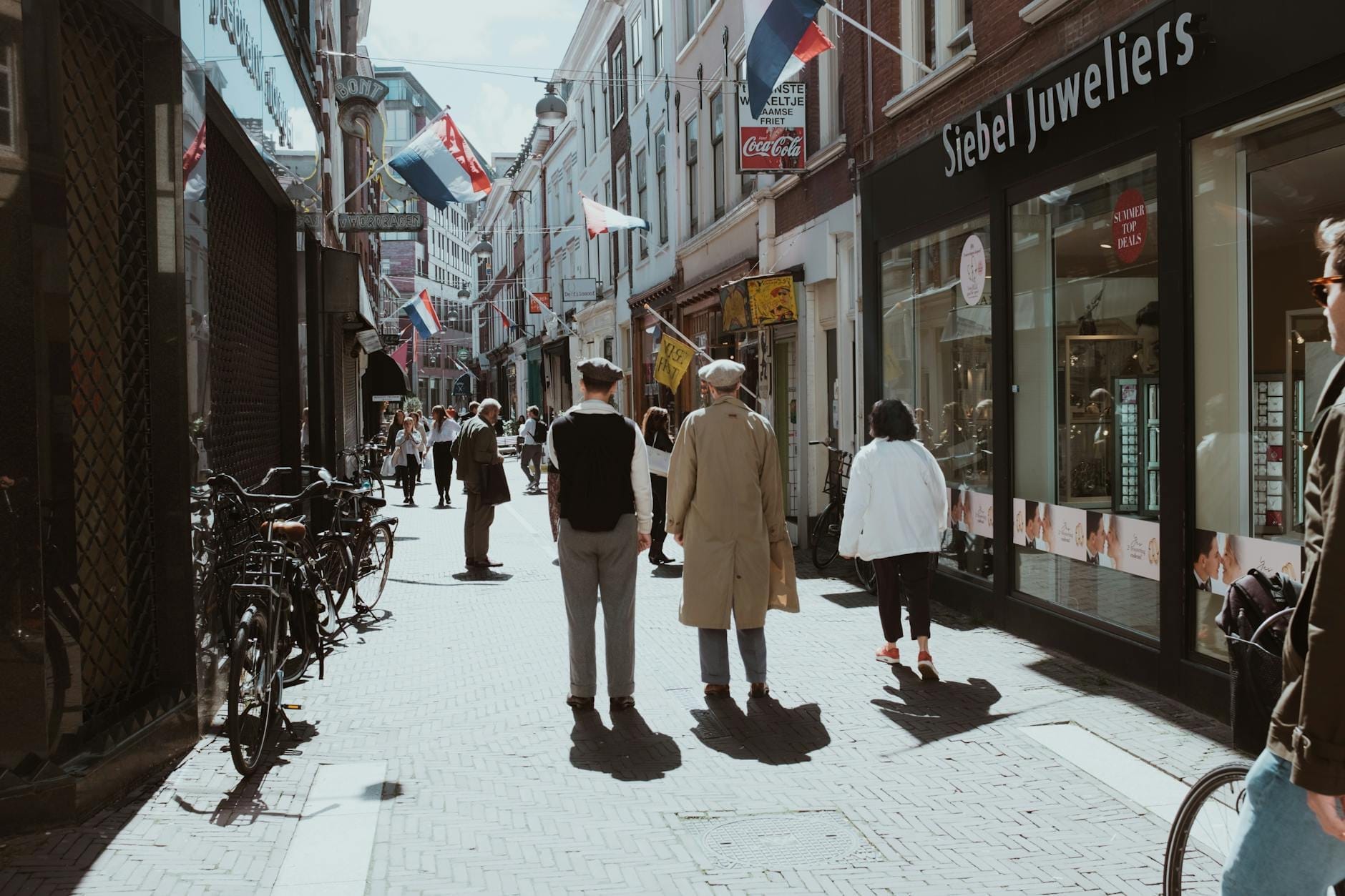
What Kalverstraat Actually Is
Kalverstraat is Amsterdam's central pedestrian shopping street, running approximately 750 meters through the oldest part of the city. The name translates to 'Calf Street,' a reference to the medieval cattle market once held here. Today it is a fully pedestrianized corridor lined almost entirely with international retail chains: H&M, Zara, Primark, Levi's, and a rotating cast of fast-fashion brands that would look equally at home in Rotterdam, Brussels, or Manchester.
That's an honest starting point. Kalverstraat is not where you go to discover Amsterdam's independent retail scene or pick up Dutch-made goods. It is, however, genuinely useful if you need something practical, want to see the city in motion at maximum intensity, or are navigating between Dam Square and the Flower Market. The street is the connective tissue of central Amsterdam, and it is nearly impossible to spend a full day in the city center without walking part of it.
ℹ️ Good to know
Kalverstraat is a public street with no admission fee. Most shops open around 10:00 and close around 18:00–19:00, with extended hours on Thursdays until about 21:00. Hours vary by store and season, so check ahead if you're targeting a specific retailer.
Walking the Street: What You'll See from End to End
The northern entrance begins just off Dam Square, flanked by the Royal Palace and the Nieuwe Kerk. This is where tourist density peaks in the morning. The first stretch of Kalverstraat is wide and relatively airy, with large retail footprints and prominent signage. Crowds thicken quickly after 11:00 on weekends.
As you walk south, the street narrows slightly and the character shifts almost imperceptibly. A few spots break the chain-store rhythm: a stroopwafel vendor near the middle section sells freshly pressed waffles that release a wave of caramel and butter into the street air on cooler days, making the source easy to identify before you see it. Street-level architecture still carries traces of 17th and 18th century Amsterdam, though most facades have been modernized behind the gables.
The southern end opens onto Muntplein and the Munttoren, a medieval tower at the junction of two canals. This transition is one of the more satisfying moments of the walk: the compression of the shopping corridor gives way to open water, bridges, and sky. From Muntplein, the Bloemenmarkt floating flower market is immediately accessible along the Singel canal.
Muntplein also puts you within easy reach of the Bloemenmarkt, one of Amsterdam's more photogenic stops, and just a few minutes' walk from the southern edge of the Canal Ring.
Tickets & tours
Live prices and dates from our booking partner. If you book, we may earn a commission at no extra cost to you.
Gray Line Canal Cruise with snackbox & Heineken Experience
From 48 €Instant confirmationFree cancellationAmsterdam evening canal cruise
From 18 €Instant confirmationFree cancellationJewish Museum and Portuguese Synagogue entrance ticket
From 20 €Instant confirmationFree cancellationAdmission ticket for Artis Royal Zoo and Micropia
From 39 €Instant confirmationFree cancellation
How the Street Changes by Time of Day
Before 10:00, Kalverstraat is almost eerily quiet. Delivery vehicles make their rounds, shop staff remove window grates, and the occasional runner uses the empty pedestrian zone as a cut-through. The cobblestones are visible at this hour, and the scale of the buildings is easier to read without a crowd in front of them.
Peak hours run from roughly 12:00 to 17:00 on weekdays, and from 11:00 onward on Saturdays. At these times, the street becomes one of the most densely crowded corridors in the Netherlands. Moving at your own pace requires navigating around slow-moving groups, double-wide strollers, and people stopping without warning to photograph the facades. Saturdays in July and August push this to its most intense level.
Weekday mornings, particularly Tuesday through Thursday before noon, offer the most comfortable walking conditions. Thursdays often have extended shop hours into the evening, making a late afternoon visit on a Thursday a reasonable option for anyone who wants to browse without the weekend density.
💡 Local tip
If you're visiting Amsterdam in summer and plan to use Kalverstraat as a route between Dam Square and Muntplein, consider doing it early in the morning or after 18:00 when shops close and foot traffic drops sharply.
Historical Context: More Than a Shopping Strip
The street's medieval origins as a cattle market route give it an unusually long commercial history for a European shopping street. By the 17th century, during Amsterdam's Golden Age, Kalverstraat was already established as a retail and commercial artery, and the buildings lining it reflected the prosperity of the period. The characteristic stepped and bell gables visible on upper floors date from this era, even if the ground floors have been renovated beyond recognition.
Halfway along the street, behind an unassuming gateway, sits the Amsterdam Museum complex (currently undergoing renovation and transition). The gateway itself, known as the Civic Orphanage entrance, is a Renaissance courtyard from 1580 that most visitors walk past without noticing. Looking up from the street-level retail noise, the contrast between the architecture above and the commerce below is a compressed version of Amsterdam's broader story: a medieval and Golden Age city that has accommodated centuries of economic transformation without demolishing its own skeleton.
For deeper context on Amsterdam's architectural heritage, the Amsterdam architecture guide covers the Canal Ring's 17th-century design logic in detail.
Practical Navigation and Getting There
Kalverstraat is pedestrian-only for its full length, which makes it straightforward to walk without vehicle traffic. The surface is primarily cobblestone with some paved sections, manageable for most mobility needs but potentially challenging for wheelchair users or those with rolling luggage on the older sections. Individual shop accessibility varies.
From Amsterdam Centraal, the most direct walking route takes about 10 minutes south through Damrak to Dam Square. Tram lines 4, 14, and 24 stop at Rokin, which feeds directly onto the lower half of the street near Muntplein. There is no need to plan a dedicated transit trip to reach Kalverstraat; it sits at the geographic and logistical center of the city, and most visitors will pass through it naturally.
If you're planning your time in the city center, the getting around Amsterdam guide has current tram and transit details.
Photography and What's Actually Worth Capturing
Street-level photography on Kalverstraat during peak hours produces images dominated by crowds, signage, and retail frontages. The more interesting photographic opportunities are overhead: the gabled rooflines, especially on the blocks closest to Dam Square, create strong geometric lines against the sky. Early morning, with low light and an empty street, produces the most architecturally readable images.
The Muntplein end of the street, where Kalverstraat opens to the canal junction and the Munttoren tower, is consistently photogenic in both morning and late afternoon light. The tower's clock face and the canal reflections below it are well worth a few minutes.
⚠️ What to skip
Kalverstraat is a pickpocket hotspot, particularly during peak hours. Keep bags zipped and worn in front. The concentration and movement of crowds creates ideal conditions for distraction theft.
Who Should Skip It (Or Adjust Expectations)
Travelers specifically looking for Dutch independent retail, artisan goods, or design-led shopping will find Kalverstraat underwhelming. The street is almost entirely international chains. For a more characterful shopping experience, De Negen Straatjes (the Nine Streets), a network of canals and smaller streets just west of Kalverstraat, offers independent boutiques, bookshops, and specialty stores in a setting that actually feels like Amsterdam.
The De Negen Straatjes district is a short walk west and provides a noticeably different retail atmosphere for those who want local character over convenience.
Visitors who prioritize quiet, calm, or architectural immersion should also temper expectations. The street during core hours is loud, crowded, and visually noisy. It is a functional urban corridor at peak capacity, not a place for lingering contemplation.
Insider Tips
- The Renaissance courtyard of the former Civic Orphanage, accessible through a gateway mid-street, is almost always uncrowded and provides a complete contrast to the shopping street outside. Look for the arched entrance and step through.
- Thursday evenings are the most underrated time to visit: shops stay open later, the lunch crowds have dispersed, and the street takes on a slightly less frenetic rhythm than weekends.
- The stroopwafel carts along the middle section sell freshly made waffles that are significantly better warm than the packaged versions sold in tourist shops. Wait until you see the vendor pressing them to order.
- Muntplein at the south end of the street is a good orientation point for the rest of the city center. From there you can reach the Bloemenmarkt, the Rembrandtplein area, or the Canal Ring within 5 to 10 minutes on foot.
- If you need to move between Dam Square and the Flower Market quickly and don't mind crowds, Kalverstraat is the most direct pedestrian route. If you have extra time, the parallel street Rokin runs alongside it with more open space and canal views.
Who Is Kalverstraat For?
- Practical shoppers who need mainstream retail brands in a central location
- First-time visitors using it as a navigation corridor between Dam Square and Muntplein
- People-watchers who want to observe Amsterdam at its most populated and international
- Architecture enthusiasts willing to look above the shopfronts at the surviving Golden Age gables
- Travelers combining it with the Bloemenmarkt, Dam Square, or the Nine Streets on a single city-center loop
Nearby Attractions
Other things to see while in De Wallen (Red Light District):
- The Amsterdam Dungeon
The Amsterdam Dungeon puts 500 years of the Netherlands' darkest history on stage inside a historic former church on Rokin. With live actors, special effects, and ride elements, it is one of the few attractions in Amsterdam that genuinely aims to unsettle you. Here is what the experience is actually like, and whether it belongs in your itinerary.
- Amsterdam Museum
Historically housed in the former Burgerweeshuis, a centuries-old civilian orphanage on Kalverstraat, the Amsterdam Museum explores how this canal city grew from a modest fishing settlement into one of Europe's most recognizable capitals. The building itself is as much the exhibit as the collection inside.
- Begijnhof
Tucked behind an unmarked gate in the heart of Amsterdam, the Begijnhof is a walled courtyard of historic houses, two chapels, and a garden that has existed for more than 600 years. Entry is free, the setting is genuinely quiet, and few places in the city offer this much history in such a compact space.
- Beurs van Berlage
Completed in 1903 and designed by Hendrik Petrus Berlage, the Beurs van Berlage is a national monument that helped define Dutch modern architecture. Today it operates as a conference and events venue, but the building itself remains one of the most rewarding architectural stops in Amsterdam's historic centre.
Planning a trip? Discover personalized activities with the Nomado app.