Madame Tussauds Amsterdam: What to Expect Before You Go
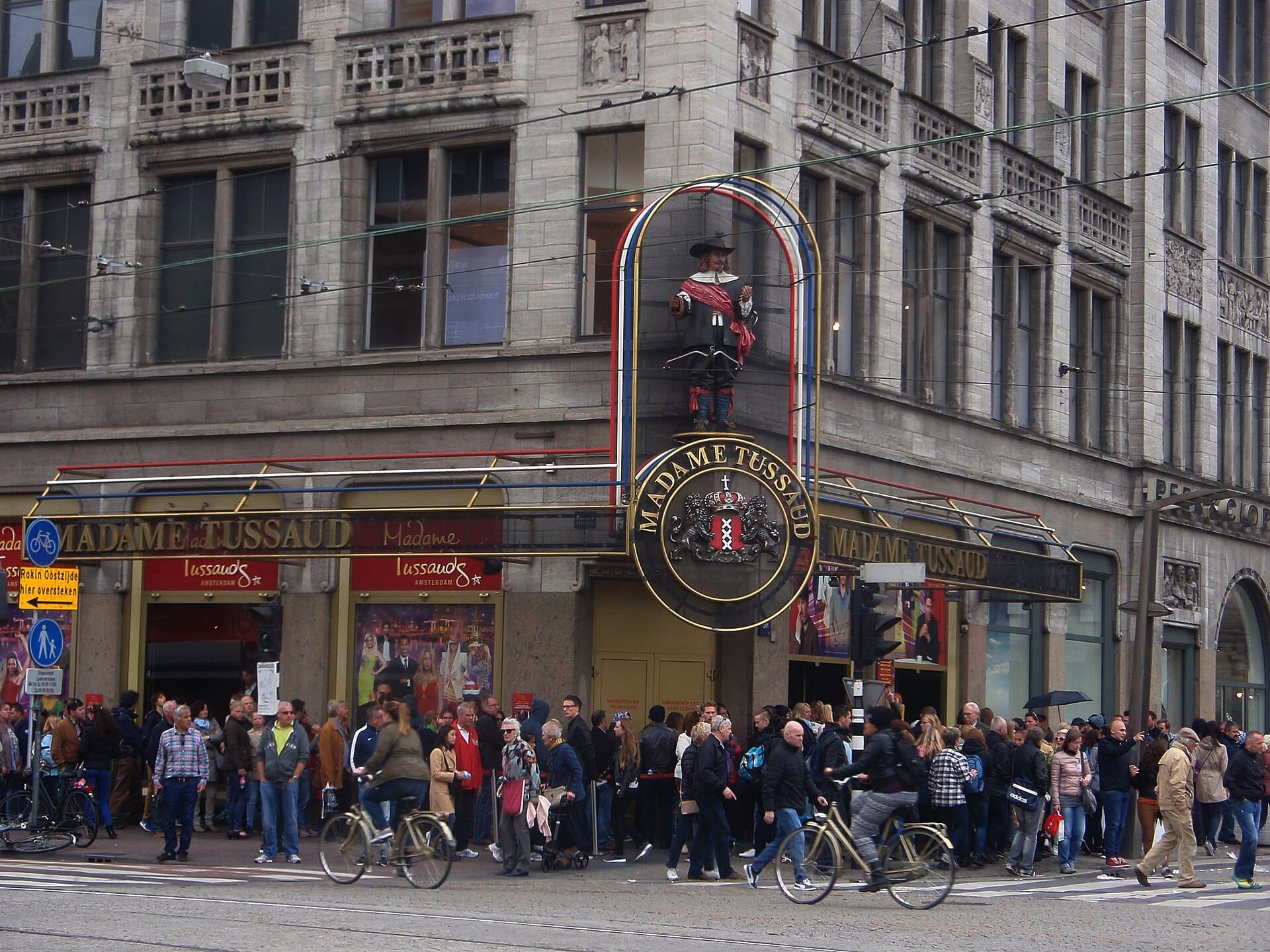
Madame Tussauds Amsterdam sits on Dam Square in the heart of the city, offering interactive wax figure exhibits across multiple themed zones. It opened in 1970 as the first Madame Tussauds branch on mainland Europe, and it remains one of the most visited, and most debated, attractions in the Dutch capital.
Quick Facts
- Location
- Dam 20, 1012 NP Amsterdam (Dam Square, De Wallen / Centrum)
- Getting There
- 10-min walk from Amsterdam Centraal; Trams 2, 4, 11, 12, 13, 14, 17, 24 to Dam stop
- Time Needed
- 1.5 to 2.5 hours
- Cost
- Adults approx. €26; Children (5–15) approx. €22; Under 5 free (0–4). Online prices vary by date — always book in advance.
- Best for
- Families with children, pop culture fans, rainy-day activities
- Official website
- www.madametussauds.com/amsterdam/en
What Is Madame Tussauds Amsterdam?
Madame Tussauds Amsterdam is a wax figure attraction spread across multiple themed zones inside a building on the south side of Dam Square. When it opened in 1970, it became the first Madame Tussauds branch on mainland Europe and the first international outpost of the original London museum. Over fifty years later, it draws hundreds of thousands of visitors annually and remains one of the most commercially prominent attractions in the Dutch capital.
The exhibit covers Dutch and global figures: royalty, footballers, musicians, film stars, and historical icons. The Amsterdam edition includes figures with specific local relevance, such as Dutch royals and footballers, alongside the globally recognisable faces you'd find in any Tussauds branch. If you're building a broader Amsterdam itinerary, note that it sits directly beside the Royal Palace Amsterdam and within a short walk of the Dam Square monuments — both of which are free to view from outside.
💡 Local tip
Book online in advance. Walk-up prices at the door can run significantly higher than online rates, and queues on busy weekends stretch out onto the square. Booking a timed entry slot also reduces waiting time considerably.
The Experience: Zone by Zone
The layout guides visitors through a sequence of themed rooms rather than a single open gallery. Zones typically cover Dutch heritage figures, global music and film stars, sports, and interactive experiences. Figures in the Dutch royals and history section tend to be among the more carefully crafted, with visible attention to costume and facial detail. In the pop culture and sports zones, quality is more variable — some figures are strikingly accurate, others noticeably less so, which is common across all Tussauds branches worldwide.
Photography is actively encouraged throughout. Staff occasionally position visitors for shots, and many figures are placed with props and backdrops designed for social media. The lighting in certain zones is set for dramatic effect rather than natural visibility, which means phone cameras perform better in some rooms than others. Bring a wide-angle lens or use portrait mode if photographing in the darker themed sections.
Toward the end of the circuit, most visitors encounter interactive elements including a 4D cinema experience and virtual reality or simulator rides, though the exact offerings are updated periodically. These add time to the visit but also tend to cause the most congestion during peak periods.
Tickets & tours
Live prices and dates from our booking partner. If you book, we may earn a commission at no extra cost to you.
Crowds and Timing: When to Go
Dam Square is one of the busiest points in Amsterdam at almost any hour of the day. The Tussauds entrance reflects this. Saturday and Sunday afternoons between 12:00 and 16:00 are the peak congestion windows, when school groups, tourist parties, and independent visitors converge. Mid-morning arrivals on weekdays, particularly Tuesday through Thursday, offer a noticeably calmer experience with shorter internal queues at the most popular figures.
School holidays, including Dutch school breaks and the major European summer holiday window from mid-July through August, push crowds to their highest levels. If you're visiting Amsterdam in summer with children, booking the earliest available entry slot on a weekday morning is the most reliable way to avoid the worst of it.
⚠️ What to skip
Opening hours are listed as typically 10:00–20:00 daily, but these can change on specific dates. Always check the official website before visiting, especially around Dutch public holidays such as King's Day in April.
Getting There and Practical Logistics
The address is Dam 20, 1012 NP Amsterdam. From Amsterdam Centraal Station, the walk takes roughly ten minutes along Damrak, one of the city's main pedestrian and tram corridors. It's a straightforward route with no navigational challenges.
Multiple tram lines serve the Dam stop directly: lines 2, 4, 11, 12, 13, 14, 17, and 24 all stop within metres of the entrance. If you're arriving by car, Q-Park de Bijenkorf is the nearest parking structure, though driving into central Amsterdam is generally not recommended given the cost and limited availability of city-centre parking.
The official site notes step-free access is available for wheelchair users, including lift access to the various floors. Visitors with specific mobility requirements should verify current accessibility details directly with the venue before arrival. For broader orientation around the area, see the De Wallen neighbourhood guide for what surrounds you on arrival.
Is It Actually Worth Your Time?
This depends entirely on what you're looking for. For families travelling with children between roughly 6 and 14 years old, Madame Tussauds Amsterdam delivers a reliable two-hour block of entertainment with enough interactivity to hold attention. The photo opportunities are the primary draw for most adult visitors, and the Dutch-specific figures add a layer of local relevance that generic tourist attractions often lack.
For travellers primarily interested in Dutch history, art, or culture, Amsterdam offers considerably more substantial options nearby. The walk from Dam Square to the Rijksmuseum (about 20 minutes) or the Anne Frank House (about 15 minutes) is manageable, and both offer experiences that are harder to replicate elsewhere. Madame Tussauds is not that kind of attraction, and it doesn't try to be.
Visitors on tight budgets should weigh the ticket price carefully. Amsterdam has genuine depth in free and low-cost experiences. The free things to do in Amsterdam guide covers a range of alternatives, and the Amsterdam City Card may offer better overall value if you're planning to visit multiple museums in a single trip.
ℹ️ Good to know
Solo travellers and couples without children often find the experience underwhelming relative to its price. If wax figures and photo opportunities aren't your specific interest, the time is likely better spent elsewhere in the city.
Surrounding the Attraction: Making the Most of Your Visit
Dam Square itself is worth time before or after your visit. The National Monument at the centre of the square was erected in 1956 to commemorate Dutch casualties of World War II, and the square has been a site of public gathering and protest for centuries. The Royal Palace on the western edge of the square was built in the 1650s as Amsterdam's City Hall, one of the largest secular buildings constructed in Europe at the time.
The surrounding streets, part of the historic city core near De Wallen, connect quickly to the Nieuwendijk and Kalverstraat shopping corridors, the Oude Kerk, and the canal network. Amsterdam Centraal and its adjoining waterfront are a ten-minute walk north. A broader exploration of the city's historic centre fits naturally into either a two-day Amsterdam itinerary or a longer visit.
Insider Tips
- Timed entry slots booked online often cost less than walk-up prices and allow you to skip the outdoor queue entirely. Check for dynamic pricing: tickets bought weeks in advance are sometimes significantly cheaper than last-minute purchases.
- The first hour after opening (10:00–11:00) on weekday mornings is consistently the quietest window. Many tour groups arrive mid-morning, so getting there at opening gives you the most space around popular figures.
- The Dutch royals and Dutch sports figures sections tend to have better craftsmanship than the generic global celebrity zones. If you're selective about where to spend time, these are usually the photographic highlights.
- Dam Square gets very loud with street performers and tour group assembly points in the afternoon. If you want a quieter experience of the square itself, arrive early in the morning when the light is also better for photography of the surrounding architecture.
- The 4D cinema and simulator experiences inside can create bottlenecks. If these are a priority for your group, move through the wax figure zones first and save them for last, or do them immediately on entry before crowds build.
Who Is Madame Tussauds Amsterdam For?
- Families with children aged 6 to 14 looking for a structured, indoor activity
- Pop culture enthusiasts who want photo opportunities with global music, film, and sports figures
- Visitors with a rainy afternoon to fill in the city centre
- Travellers interested in Dutch royals and national sporting figures in a local context
- Groups where members have varying interests and a shared, low-stakes activity is needed
Nearby Attractions
Other things to see while in De Wallen (Red Light District):
- The Amsterdam Dungeon
The Amsterdam Dungeon puts 500 years of the Netherlands' darkest history on stage inside a historic former church on Rokin. With live actors, special effects, and ride elements, it is one of the few attractions in Amsterdam that genuinely aims to unsettle you. Here is what the experience is actually like, and whether it belongs in your itinerary.
- Amsterdam Museum
Historically housed in the former Burgerweeshuis, a centuries-old civilian orphanage on Kalverstraat, the Amsterdam Museum explores how this canal city grew from a modest fishing settlement into one of Europe's most recognizable capitals. The building itself is as much the exhibit as the collection inside.
- Begijnhof
Tucked behind an unmarked gate in the heart of Amsterdam, the Begijnhof is a walled courtyard of historic houses, two chapels, and a garden that has existed for more than 600 years. Entry is free, the setting is genuinely quiet, and few places in the city offer this much history in such a compact space.
- Beurs van Berlage
Completed in 1903 and designed by Hendrik Petrus Berlage, the Beurs van Berlage is a national monument that helped define Dutch modern architecture. Today it operates as a conference and events venue, but the building itself remains one of the most rewarding architectural stops in Amsterdam's historic centre.
Planning a trip? Discover personalized activities with the Nomado app.