Palma Old Town
Palma Old Town, known locally as El Casco Antiguo, is the historic core of Mallorca's capital. Spread across roughly one square kilometre behind the Cathedral, it layers Roman foundations, Moorish street patterns, medieval palaces, and Baroque squares into a walkable district unlike anywhere else on the island.
Located in Mallorca
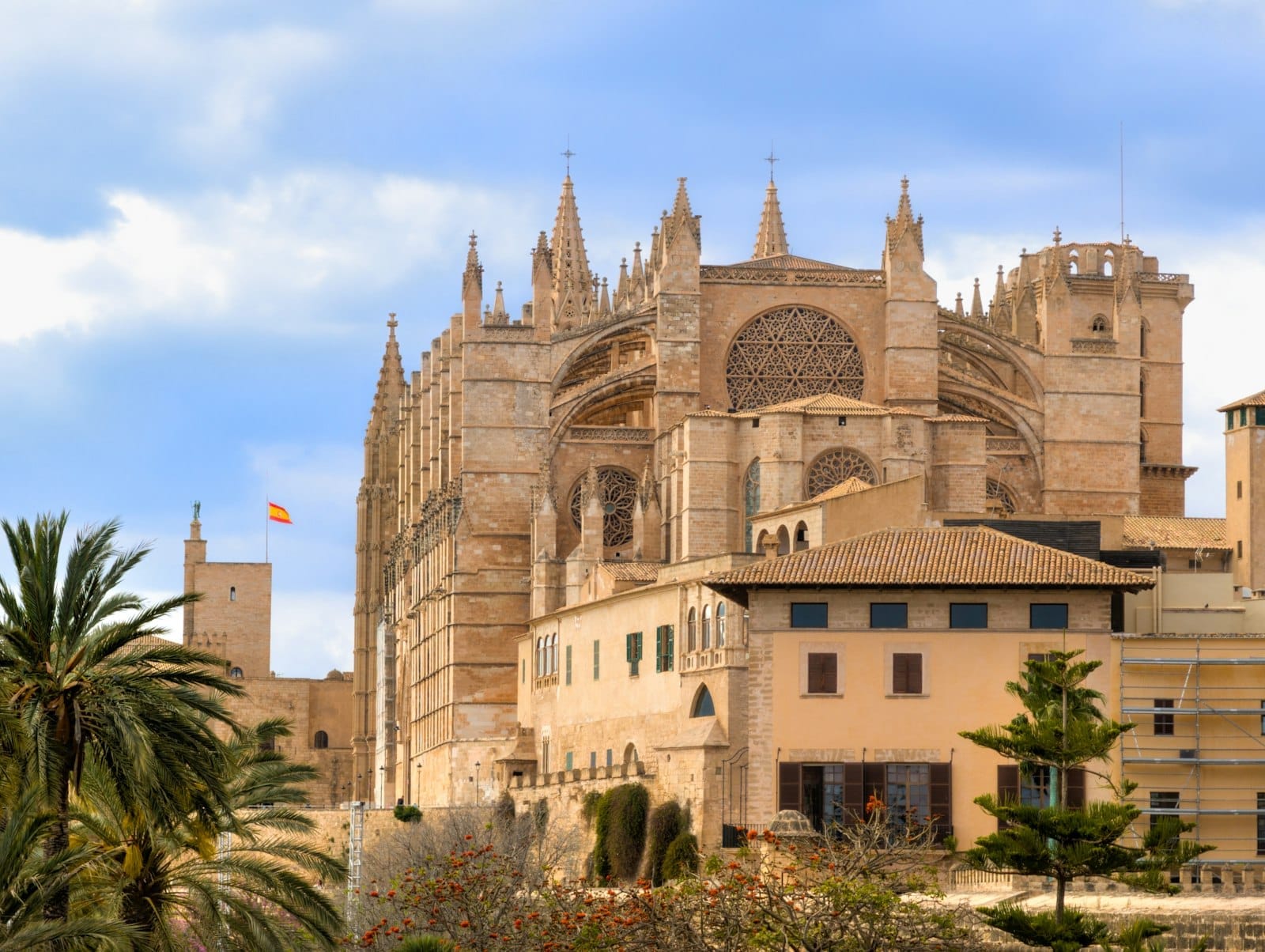
Overview
El Casco Antiguo is where Palma de Mallorca keeps its oldest self: Roman foundations beneath Gothic churches, Moorish alleyways opening onto Baroque squares, and noble courtyards hidden behind unmarked wooden doors. It is the single most historically dense kilometre on the entire island, and it rewards slow, aimless walking more than any itinerary can.
Orientation: Building a Mental Map
Palma Old Town sits at the southern edge of the city, pressed against the seafront. The Cathedral anchors the southeastern corner, rising above the old city walls with its buttresses almost hanging over the Bay of Palma. From there, the neighbourhood extends roughly one kilometre northwest to Plaça d'Espanya, and a similar distance north toward the ring road that now traces the line of the old medieval walls.
The spine of the area is Passeig des Born, a wide, tree-lined boulevard that runs from Plaça de la Reina, just beside the Cathedral, northward to the neighbourhood of Sant Jaume. To the east of Born lie the waterfront gardens of Parc de la Mar and the old merchant quarter around La Llotja. To the west, the lanes tighten into the former Arab quarter, the old Jewish Call, and eventually the streets around the Mercat de l'Olivar. Plaça Major sits almost at the geometric centre, connected to Born by the pedestrianized Carrer Sant Miquel and to Plaça de Cort by Carrer Colom.
The neighbourhood connects directly to the broader Palma de Mallorca city through Plaça d'Espanya in the northwest, which is the island's main transport interchange. Ferries to the Spanish mainland depart from the port just south of the Cathedral, visible from the seafront promenade.
ℹ️ Good to know
El Casco Antiguo is almost entirely pedestrianized. The old town covers around 1 square kilometre and most major landmarks sit within a 15-minute walk of each other. Comfortable shoes with grip are essential: the sandstone cobbles are uneven and can be slippery after rain.
Character and Atmosphere Through the Day
The old town moves through distinct rhythms. By 8am, the streets around the Mercat de l'Olivar are already alive with locals carrying canvas shopping bags, the smell of fresh fish and cut herbs drifting through the narrow Carrer de la Mar. The light in early morning hits the Cathedral's southern facade at a low angle that turns the sandstone almost copper. Plaça de Cort is quiet at this hour, the 600-year-old olive tree casting a long shadow across the empty square.
By mid-morning, tourist groups begin to move in from the waterfront, and the main pedestrian axes, Carrer Sant Miquel, Carrer Jaume II, and Passeig des Born fill steadily. Plaça Major becomes the most photographed spot, its yellow neoclassical arcade and street stalls acting like a natural funnel for anyone walking north from the Cathedral. In high summer (July and August), the heat in these narrow lanes reaches uncomfortable levels between noon and 4pm. The smart move is to duck into one of the old noble houses, many of which function as museums or courtyard bars, where temperatures drop noticeably.
Late afternoon brings a second wind. Locals re-emerge for the early evening passeig, the slow promenade along Born that Mallorquins take seriously as a social institution. The cafe terraces fill, the light softens, and the neighbourhood takes on the quality it is most often photographed for. After dark, the area around La Llotja and the waterfront bars picks up, while the lanes of the Call and the Arab quarter go almost silent, which is when they feel most atmospheric.
It is honest to say that in peak season the tourist footprint in the central lanes is heavy. Carrer Jaume II and the blocks immediately around Plaça Major can feel like a pedestrian traffic jam on a July afternoon. But move two streets in any direction and the crowds thin immediately. The old town is large enough and labyrinthine enough that solitude is always findable.
What to See and Do
The Palma Cathedral, La Seu is the starting point for almost everyone. It is one of the largest Gothic cathedrals in Europe, and the interior is more surprising than the exterior suggests: Antoni Gaudí worked on the interior between 1903 and 1914, adding a baldachin above the high altar that nobody else would have imagined in a 14th-century building. Entry requires a ticket; the rooftop tour, when available, gives a completely different reading of the building's scale.
Immediately beside the Cathedral stands the Palace of La Almudaina, the former residence of the Mallorcan kings and now a Royal Palace of Spain. It was built on the site of a Moorish fortress and the Arabic structural logic is still visible in parts of the courtyard and tower. The palace contains a genuine collection of Flemish tapestries and medieval arms that most visitors walk past too quickly.
The Arab Baths on Carrer Serra are a small but genuinely atmospheric survival from the Moorish city. The domed caldarium, supported by columns that were themselves recycled from earlier Roman structures, is one of the best-preserved examples of Moorish domestic architecture in the Balearics. The garden surrounding it is quiet and shaded, a good place to pause. Entry costs a few euros.
For contemporary art, Es Baluard Museum occupies a section of the 16th-century city walls at the western end of the seafront. The permanent collection covers 20th and 21st century work with a strong Catalan and Mallorcan focus, and the rooftop terrace delivers one of the best unobstructed views over the bay and the Cathedral together.
La Llotja, the 15th-century Gothic commodities exchange on the seafront, is another architectural landmark worth seeking out. The building is only intermittently open for temporary exhibitions, but the exterior, particularly the twisted spiral columns visible through the ground-floor windows, is worth walking around. Across the road, Parc de la Mar offers a landscaped viewpoint below the Cathedral walls with a large reflecting pool and outdoor seating.
- Plaça de Cort: the Baroque city hall (Ajuntament) and the ancient olive tree at its centre
- Passeig des Born: the elegant 19th-century boulevard, best walked in the early evening
- Convent of Santa Clara: Gothic convent founded in 1256, one of the oldest buildings in the city
- Can Vivot: a 14th-century noble palace with a courtyard open during cultural events
- The Call (Jewish Quarter): the tight lanes between Carrer del Sol and Carrer de la Calatrava, the most medieval-feeling corner of the district
💡 Local tip
The noble palaces of the old town often hide extraordinary courtyards (patios) behind street-level doors that look entirely unmarked. During the Nit de l'Art in September or the Nit de Patrimoni, many of these private courtyards open to the public for free.
Eating and Drinking
The food scene in the old town spans the full range from tourist traps to genuinely excellent local cooking. The distinction usually comes down to geography: restaurants immediately fronting Plaça Major and the main pedestrian arteries tend to serve overpriced, underwhelming versions of Mallorcan standards. Move a block or two off these routes and the quality and value change significantly.
The Mercat de l'Olivar on Plaça de l'Olivar is the best place to understand what Mallorcan food actually looks like before it reaches a restaurant plate. The covered market runs weekday mornings and Saturday mornings, with stalls selling sobrasada (the paprika-spiced cured sausage that is the island's most distinctive product), local cheeses, ensaïmades (the spiral pastry unique to Mallorca), and seasonal produce from the island's interior plains.
For sit-down meals, the lanes around La Llotja and the Carrer de la Mar corridor offer a concentration of mid-range restaurants with reliable local menus. Mallorcan cooking at its most traditional means dishes like tumbet (a layered vegetable gratin not unlike ratatouille), arròs brut (a thick rice dish with game meat and vegetables), and frito mallorquí (offal and vegetables fried together). These dishes are rarely glamorous but they are rooted in the island's agricultural history.
The cafe culture on Passeig des Born is worth engaging with on its own terms. The terrace cafes here are not cheap, but a coffee or a vermouth at one of the established bars in the late afternoon buys you a front-row seat to the passeig in one of the most architecturally handsome settings on the island. The bar scene after 9pm concentrates around La Llotja and the narrow streets of the waterfront end of the old town.
⚠️ What to skip
Plaça Major is surrounded by cafe terraces that charge a significant premium for the location. A coffee here can cost two to three times what you would pay two streets away. Treat it as a sightseeing expense if you sit down, or grab a pastry from one of the ground-floor bakeries and eat it on the move.
Getting There and Around
Palma Airport (PMI) sits about 9 kilometres east of the old town. The airport bus (line 1) runs frequently and terminates at Plaça d'Espanya, which is the western gateway to the old town. Journey time from the airport is roughly 20 to 30 minutes depending on traffic, and the fare is a fraction of taxi cost. Taxis from the airport to the old town are metered; expect a fixed daytime rate that varies by zone, and check the official rate board at the taxi rank before boarding.
Plaça d'Espanya functions as the island's central transport hub. The Serveis Ferroviaris de Mallorca (SFM) trains depart from here to Inca, Sa Pobla, and Manacor, connecting the old town to inland Mallorca. The historic Sóller train also departs from here, a narrow-gauge line that crosses the mountains to Sóller and Port de Sóller and is one of the most scenic rail journeys in Spain.
Within the old town, the only practical transport is on foot. The streets are pedestrianized and far too narrow for bikes in most sections. City buses serve the ring roads that border the old town, but they do not penetrate the interior. If you are arriving by car, park in one of the paid underground car parks near the waterfront or at Plaça d'Espanya and walk in. Do not attempt to drive into the lanes of the Call or the Arab quarter.
For exploring beyond the old town and across the island, getting around Mallorca is significantly easier with a rental car. Most old town accommodation has a designated drop-off arrangement with nearby car parks, as street parking within the district is essentially nonexistent for visitors.
Where to Stay
Staying in Palma Old Town puts you within walking distance of the Cathedral, the waterfront, and the best restaurant streets in the city. The trade-off is noise and price. The streets around La Llotja and the waterfront end of Born are liveliest after midnight in summer, and stone walls do not absorb much sound. Rooms on upper floors or interior courtyards will be significantly quieter.
Accommodation options range from luxury boutique hotels occupying converted noble palaces to small apartment rentals in the lanes of the Call. The palace hotels in particular are a distinct product: buildings with 14th-century stonework and contemporary interiors, typically with interior courtyard pools and rooftop terraces. These sit at the top of the price range. Mid-range options cluster around Plaça Major and Carrer Sant Miquel.
The old town is the right base for travellers who want to walk everywhere in Palma and who prioritize architecture and food over beach proximity. For beach-focused trips or families with young children, where to stay in Mallorca covers options closer to the island's major beaches. The old town suits city walkers, architecture enthusiasts, and anyone visiting for three days or fewer who wants maximum concentration of things to see.
💡 Local tip
If noise is a concern, ask specifically for a room facing an interior courtyard (patio interior). The difference between a street-facing room on a lane near La Llotja on a Friday night and an interior room in the same building can be dramatic.
Day Trips and Wider Context
One of the overlooked advantages of basing yourself in Palma Old Town is how well connected it is to the rest of the island. The Sóller train from Plaça d'Espanya crosses the Tramuntana mountains in about an hour, delivering you to one of the most scenically dramatic valleys in the Balearics without a rental car. The market town of Sineu, the Tramuntana villages of Valldemossa and Deià, and the eastern caves at Drach are all reachable as day trips.
The Serra de Tramuntana region, a UNESCO World Heritage Site, begins effectively where the Palma ring road ends to the northwest. Within 30 minutes by car you can be on the mountain road toward Valldemossa or following the coast toward Son Marroig. For those who want to see more of the island from a single base, the old town's transport connections make it a genuinely practical anchor point.
TL;DR
- Palma Old Town (El Casco Antiguo) is the most historically layered neighbourhood in Mallorca, covering roughly 1 square kilometre behind the Cathedral with Roman, Moorish, and medieval architecture at close quarters.
- Best for: architecture enthusiasts, city walkers, first-time visitors to Mallorca, travellers who want to be central to Palma's food and cultural scene.
- Honest drawback: peak-season crowds on the main pedestrian streets (Carrer Sant Miquel, Plaça Major) are heavy from mid-morning onward; street noise in the La Llotja area runs late at night in summer.
- Transport hub: Plaça d'Espanya connects the old town to the airport bus, island-wide SFM trains, and the historic Sóller train, making it the best-connected base for island day trips without a car.
- Not ideal for: beach-first travellers, families seeking resort amenities, or anyone on a tight budget who wants to eat on the main tourist squares.
Related Travel Guides
- Best Beaches in Mallorca: 15 Top Picks for Sun, Sand & Sea
Mallorca has over 200 beaches, ranging from long sandy family bays to dramatic limestone coves that feel almost impossibly beautiful. This guide covers the best beaches across the island, with practical advice on access, crowds, and what makes each one worth the trip.
- Best Time to Visit Mallorca: A Month-by-Month Guide
Mallorca works in every season, but the right time depends on what you want. This guide breaks down the weather, crowds, prices, and events by month so you can plan a trip that actually suits you.
- Best Views & Viewpoints in Mallorca: 18 Spectacular Spots You Need to See
Mallorca rewards those who look up, out, and across. From the Tramuntana's limestone ridges to the bay of Palma at dusk, these are the viewpoints that make the island unforgettable. This guide covers the best panoramas, how to reach them, and when to go.
- Cycling in Mallorca: Routes, Tips & Best Roads
Mallorca is one of Europe's premier road cycling destinations, drawing professionals and enthusiasts from across the continent every spring. This guide covers the island's best routes from brutal mountain climbs to flat coastal loops, plus practical tips on when to go, where to base yourself, and what to expect on the road.
- Free Things to Do in Mallorca: 20 Ways to Enjoy the Island Without Spending a Euro
Mallorca rewards budget travellers generously. From UNESCO mountain trails and wild coves to free museum days and medieval old towns, the island has more cost-free experiences than most visitors realise. This guide covers the best free things to do in Mallorca, organised by theme.
- Getting Around Mallorca: The Complete Transport Guide
From the urban buses of Palma to the scenic train to Sóller and the open roads of the Serra de Tramuntana, Mallorca has more transport options than most visitors expect. This guide breaks down every mode of transport, with real prices, route details, and honest advice on what actually works.
- Hidden Gems in Mallorca: Beyond the Tourist Trail
Mallorca rewards those willing to look beyond the resort strips and postcard beaches. This guide uncovers the island's quieter side: Bronze Age settlements, uninhabited nature reserves, atmospheric mountain villages, and coves that still feel genuinely undiscovered.
- Hiking in Mallorca: Best Trails in the Tramuntana Mountains
The Serra de Tramuntana is one of Europe's finest hiking destinations, a UNESCO World Heritage limestone range stretching across Mallorca's northwest. This guide covers the best trails, villages, and natural landmarks for walkers of every level.
- How Many Days Do You Need in Mallorca? An Honest Breakdown
Mallorca is larger and more varied than most visitors expect. This guide breaks down exactly how many days you need depending on your pace, priorities, and which parts of the island you want to explore — from a long weekend in Palma to a full two-week circuit.
- Is Mallorca Worth Visiting? Here's What You Actually Need to Know
Mallorca gets dismissed as a cheap package-holiday island. That reputation is decades out of date. From UNESCO mountain landscapes to Gothic architecture, world-class cycling, and some of the Mediterranean's best beaches, the island has far more range than most visitors expect. This guide lays out exactly what Mallorca delivers, where it falls short, and who it suits best.
- Luxury Mallorca: The Definitive Guide to High-End Hotels, Villas & Experiences
Mallorca's luxury scene stretches far beyond beach resorts. This guide breaks down the island's finest hotels, private villas, Michelin-starred dining, and exclusive experiences — with honest advice on where to stay, when to go, and what's genuinely worth the premium.
- Mallorca Almond Blossom: When and Where to See It
Every January and February, Mallorca's countryside transforms into a landscape of white and pale-pink blossom as around four million almond trees come into flower. This guide covers peak timing, the best villages and routes to visit, local festivals, and practical tips for making the most of the season.
- Mallorca Boat Trips & Sailing: The Complete Guide
With 554 kilometres of coastline and over 250 beaches and coves, Mallorca rewards exploration by sea like nowhere else in the Mediterranean. This guide covers every boat trip option on the island: shared tours, private charters, bareboat sailing, departure points by region, and exactly when to go.
- Mallorcan Food: The Complete Guide to What to Eat in Mallorca
Mallorcan food is rooted in peasant traditions, pork, olive oil, and seasonal produce. This guide covers the island's essential dishes, local specialties worth seeking out, and practical advice for eating well without falling into tourist-trap traps.
- Mallorca in October: Weather, Crowds & What to Do
October is one of the most underrated months to visit Mallorca. Daytime temperatures hover around 22-24°C, the sea stays swimmable at 21-23°C, and the summer crowds have thinned dramatically. This guide covers the real weather picture, what closes, what opens, and the best things to do across the island in autumn.
- Mallorca in Spring: Your Complete Guide to March, April & May
Spring transforms Mallorca into one of the Mediterranean's most rewarding destinations. This guide covers the weather month by month, what to do, when crowds arrive, and how to make the most of the shoulder season before summer prices kick in.
- Mallorca in Summer: What to Expect in July & August
July and August are Mallorca's peak season for a reason: warm sea temperatures, near-constant sunshine, and a full calendar of activities. But peak season also means peak crowds and peak prices. This guide breaks down exactly what summer looks like on the island so you can decide if it's right for you.
- Mallorca Nightlife: Best Bars, Clubs & Beach Parties
Mallorca's nightlife spans centuries-old cocktail palaces in Palma, Germany-flavoured beach parties in Arenal, and full-scale club nights in Magaluf. This guide cuts through the noise to tell you exactly where to go, when to arrive, and what to skip.
- Mallorca on a Budget: How to Visit Without Overspending
Mallorca has a reputation for luxury resorts and big-spending tourists, but the island is far more affordable than most people expect. This guide breaks down real daily costs, the best free activities, cheap transport options, and the smartest ways to stretch your euros across one of Europe's most spectacular islands.
- Most Instagrammable Places in Mallorca: 20 Stunning Photo Spots
Mallorca delivers extraordinary photography at every turn, from impossible turquoise coves and medieval hilltop villages to soaring Gothic architecture and dramatic sea cliffs. This guide covers the island's most photogenic locations, with practical advice on the best times to shoot and what to look for at each spot.
- Mallorca Road Trip: Best Scenic Drives & Routes
Mallorca rewards drivers more than almost any island in the Mediterranean. From the UNESCO-listed Serra de Tramuntana to the wild cape at Formentor, this guide covers the best scenic routes, practical driving advice, and the stops worth pulling over for.
- Shopping in Mallorca: Markets, Boutiques & What to Buy
From Palma's covered food halls to village weekly markets and artisan workshops, shopping in Mallorca goes well beyond tourist trinkets. This guide covers the best markets, the products worth buying, and the ones to leave on the shelf.
- Mallorca Wine Guide: Wineries, Wine Tasting & Local Varieties
Mallorca produces some of Spain's most distinctive wines, built on native grape varieties you won't find anywhere else. This guide covers the island's two DO regions, the best wineries to visit, what to expect on a tasting tour, and how to plan your visit from Palma.
- Mallorca with Kids: The Practical Family Guide
Mallorca has a well-earned reputation as one of the Mediterranean's top family destinations, but knowing which beaches, attractions, and activities actually work for children makes the difference between a great holiday and a stressful one. This guide cuts through the noise with specific recommendations, honest assessments, and practical logistics.
- The Most Beautiful Villages in Mallorca: A Complete Guide
Mallorca's villages are its soul. Beyond the beaches and resorts, stone-built hilltop towns, flower-draped lanes, and centuries of history await. This guide covers the most beautiful villages in Mallorca, from the Tramuntana's famous trio to the northeast's medieval strongholds.
- One Week in Mallorca: The Perfect 7-Day Itinerary
Seven days is enough time to experience the full range of Mallorca: Gothic cathedrals, UNESCO mountain roads, turquoise calas, medieval villages, and local wine. This day-by-day itinerary cuts through the noise and tells you exactly where to go, when to go, and what to skip.
- How to Rent a Car in Mallorca: Tips, Costs & Best Companies
Renting a car in Mallorca is the single best decision you can make for your trip. This guide covers everything: seasonal pricing, insurance traps, the best booking platforms, parking realities, and which companies consistently deliver. No fluff, just practical advice.
- Best Things to Do in Mallorca: The Definitive Guide
Mallorca is far more than beach resorts and package holidays. This guide covers the best things to do across the island — from free hikes in the UNESCO-listed Tramuntana mountains to boat trips along the rugged north coast — with real prices, seasonal advice, and honest opinions on what's worth your time.
- Where to Stay in Mallorca: The Best Areas and Hotels for Every Type of Trip
Mallorca is a 3,640 km² island with wildly different characters depending on where you base yourself. This guide cuts through the noise and maps out the best areas to stay, who each one suits, and what to watch out for before you book.