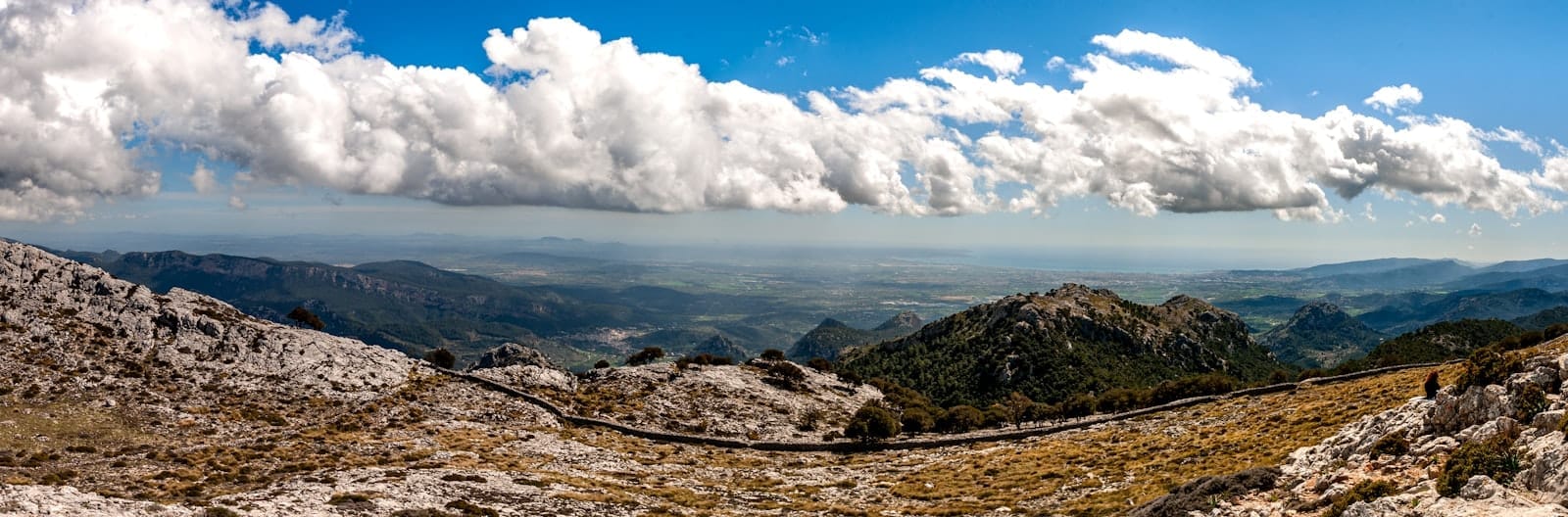
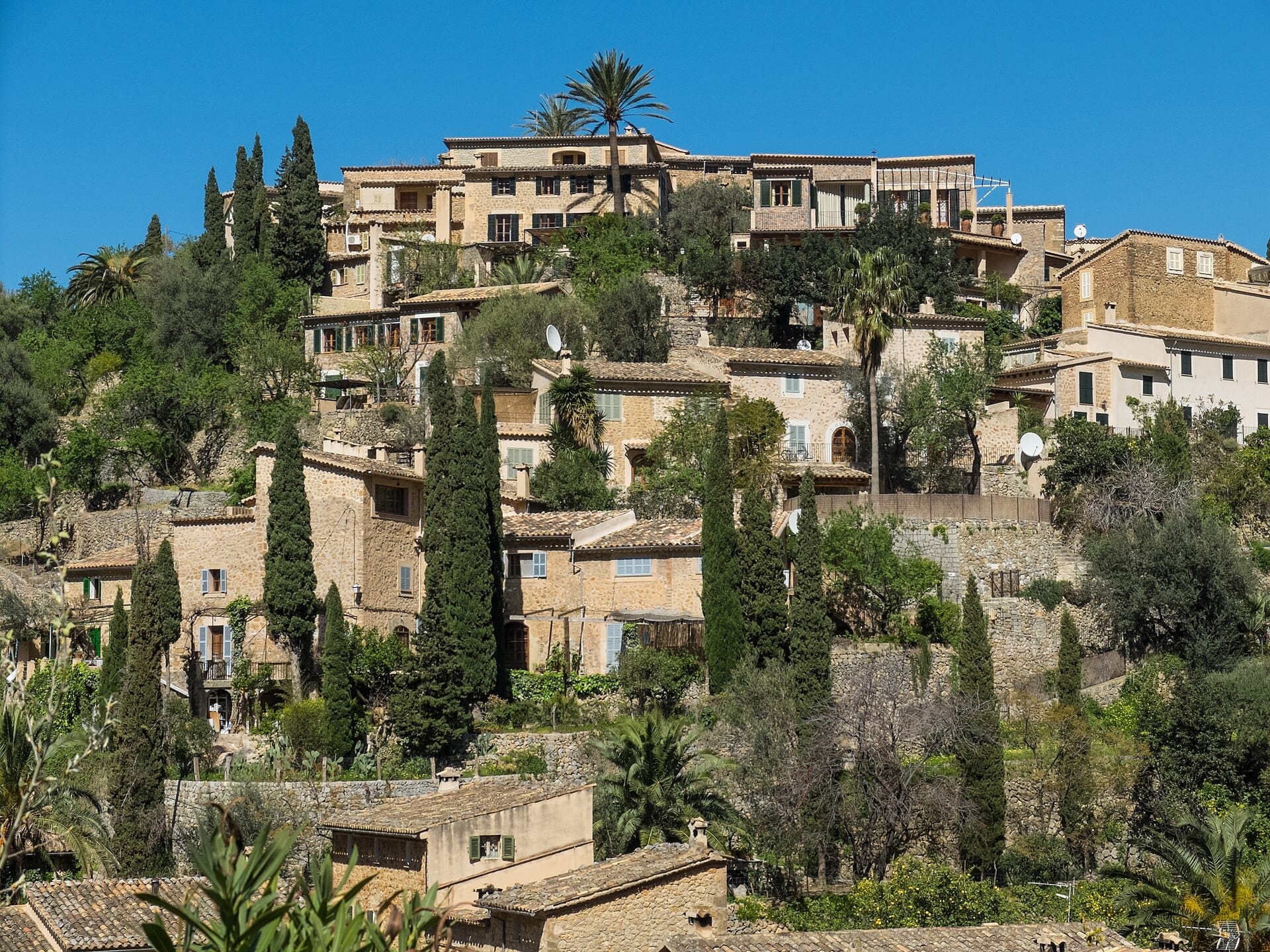
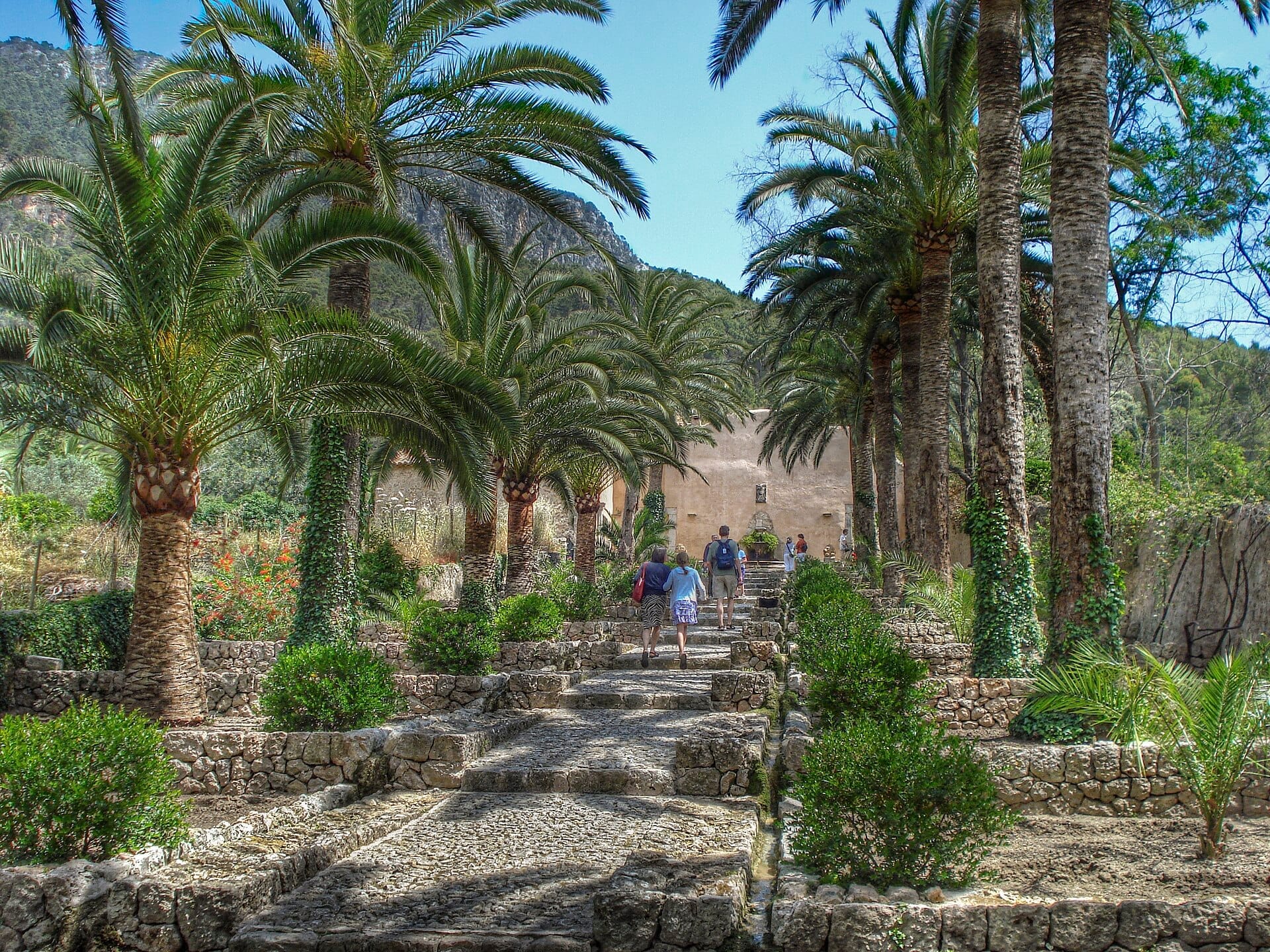
The Serra de Tramuntana stretches 90 km across northwestern Mallorca, from Andratx to Pollença, forming a dramatic spine of limestone peaks, ancient terraces, and stone villages. Designated a UNESCO World Heritage Site in 2011, this is Mallorca beyond the beach, a place where the island's oldest culture, most demanding trails, and most cinematic roads all converge.
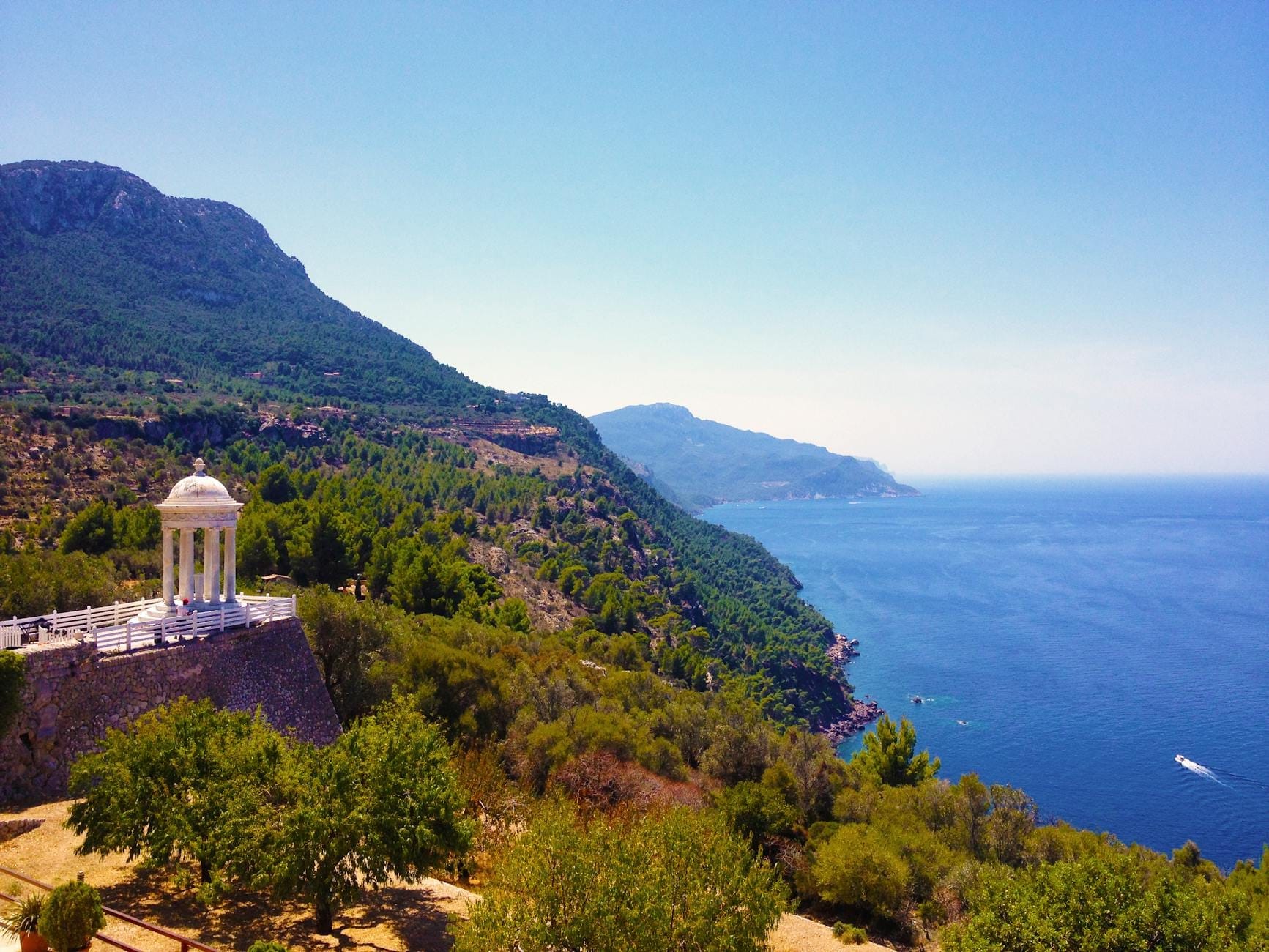
The Serra de Tramuntana is Mallorca's mountainous northwest, a UNESCO World Heritage landscape of jagged limestone ridges, centuries-old olive terraces, and cliff-edge villages that drop almost vertically into the sea. It is the counterpoint to the island's beach culture: wilder, quieter, and far more layered. Whether you come to hike, cycle, drive, or simply sit in a village square, this is where Mallorca reveals its most compelling character.
Orientation
The Serra de Tramuntana occupies the entire northwestern edge of Mallorca, running approximately 90 km from the town of Andratx in the southwest to Pollença in the northeast. At its widest, the range spans around 15 km from the coastal cliffs to the interior foothills. This single mountain chain accounts for roughly 30 percent of Mallorca's total land area, covering more than 1,000 square kilometres across 20 municipalities.
The largest municipalities within the range are Calvià in the south, Escorca in the remote central core, and Pollença at the northeastern edge. The principal villages that most visitors encounter, from southwest to northeast, are Andratx, Banyalbufar, Estellencs, Valldemossa, Deià, Sóller, Fornalutx, and Pollença. Each sits at a different elevation and has a noticeably distinct character, connected by the Ma-10 mountain road, which is considered one of the most scenic drives in the Mediterranean.
From Palma, the range is visible from almost anywhere in the city, the grey limestone ridgeline forming a permanent backdrop to the north. The capital sits roughly 25 km southeast of the range's lower slopes. Sóller, the de facto hub for the central Tramuntana, is about 30 km from Palma by road but feels a world apart. For a broader understanding of where the Tramuntana fits within the island, see the Palma de Mallorca area guide and the overview of inland Mallorca.
Character & Atmosphere
The name Tramuntana derives from the Catalan word for the cold north wind — the tramuntana — that batters this coast in winter. That wind has shaped everything here: the stocky, thick-walled stone houses, the terraced hillsides built to catch rainfall, the olive and almond trees bent into permanent angles. This is not a decorative landscape. It was built by centuries of labour, and the UNESCO designation in 2011 recognized specifically the agricultural terracing, dry stone construction, and water management systems that humans have layered onto these mountains over millennia.
In the early morning, the Tramuntana is at its most atmospheric. Mist collects in the valleys below Sóller and around the Puig Major massif, and the light comes in low and golden over the eastern ridgelines. Hikers starting the GR221 at dawn have the stone paths almost entirely to themselves. Villages like Fornalutx are completely silent at 7am except for the sound of swallows and the occasional creak of wooden shutters opening.
By midday in summer, the heat presses down hard into the lower valleys, though the higher trails remain cooler. The tourist traffic on the Ma-10 peaks between 10am and 2pm, with coaches and rental cars queuing at the Coll de Sóller and the viewpoints around Deià. By late afternoon, the crowds thin and the light on the western-facing cliffs turns extraordinary, a deep amber that makes the stone seem to glow from inside.
After dark, the villages revert to their residents. Dinner is eaten late. Bars in Sóller's Plaça de la Constitució stay open past midnight on weekends. In smaller villages, the streets are quiet by 10pm. There is no nightlife infrastructure here in the resort sense. What there is instead is a particular stillness that draws artists, writers, and cyclists who want nothing from a destination except the place itself.
ℹ️ Good to know
The Serra de Tramuntana was designated a UNESCO World Heritage Cultural Landscape on 27 June 2011, recognized for its agricultural terraces, water mills, dry stone constructions, and millennia of human interaction with a challenging mountain environment.
What to See & Do
The range's highest peak, Puig Major, reaches 1,445 metres and is technically the summit of Mallorca. However, it is occupied by military radar installations and is closed to the public. The second and third highest peaks, Penyal de Migdia at 1,398 m and Puig de Massanella at 1,364 m, are accessible to experienced hikers and offer unobstructed views across the entire island on clear days. The Massanella ascent, approached from the Lluc area, is the most popular serious summit hike on the island.
For most visitors, the defining experience of the Tramuntana is the GR221, the long-distance Dry Stone Walk (Ruta de Pedra en Sec). This eight-stage trail runs nearly 90 km from Port d'Andratx in the southwest to Pollença in the northeast, following ancient paths through terraced hillsides, past mountain refuges, and through villages largely untouched by resort development. The full route takes around eight days, but individual stages work well as day hikes. For full trail information, see the hiking in Mallorca guide.
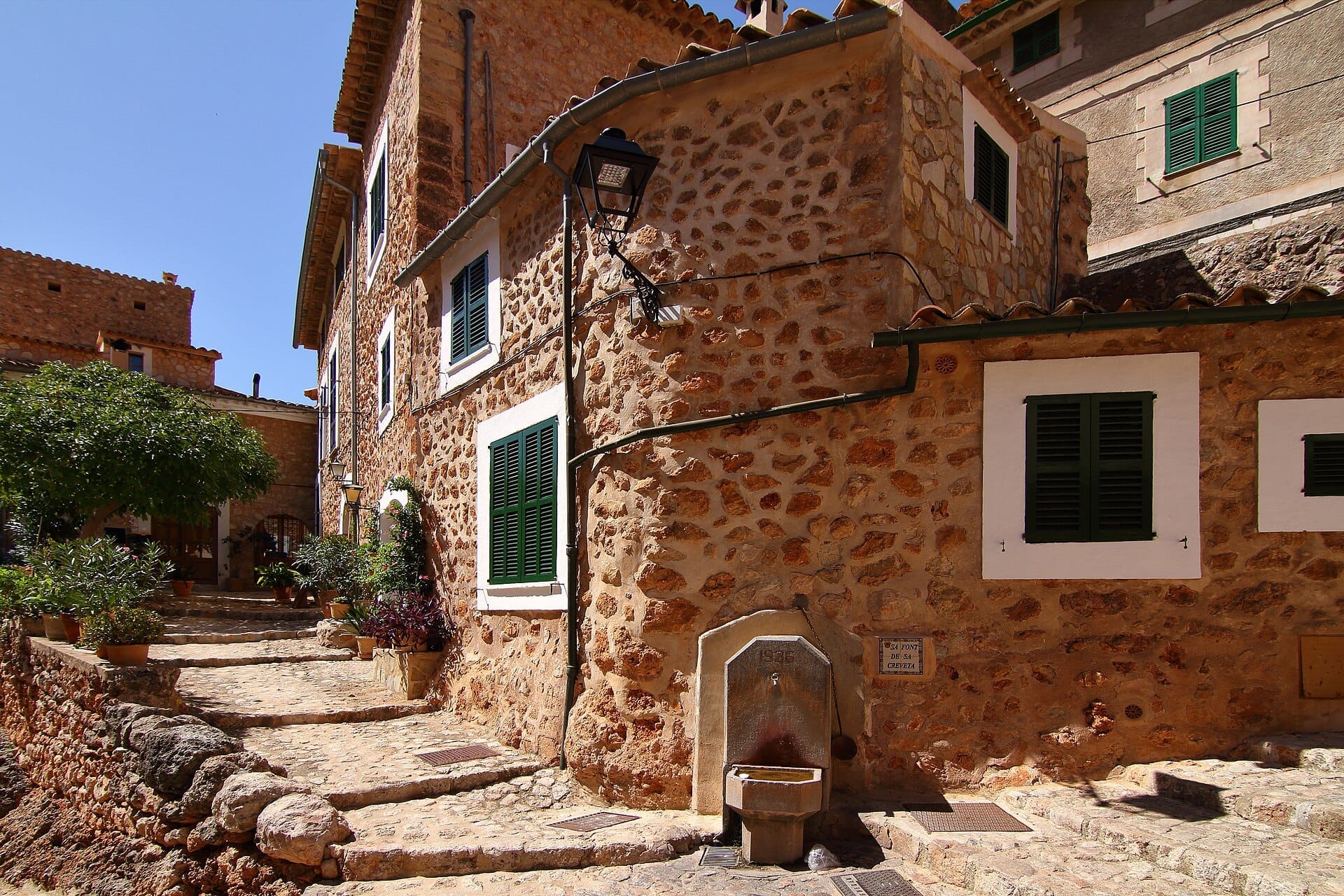
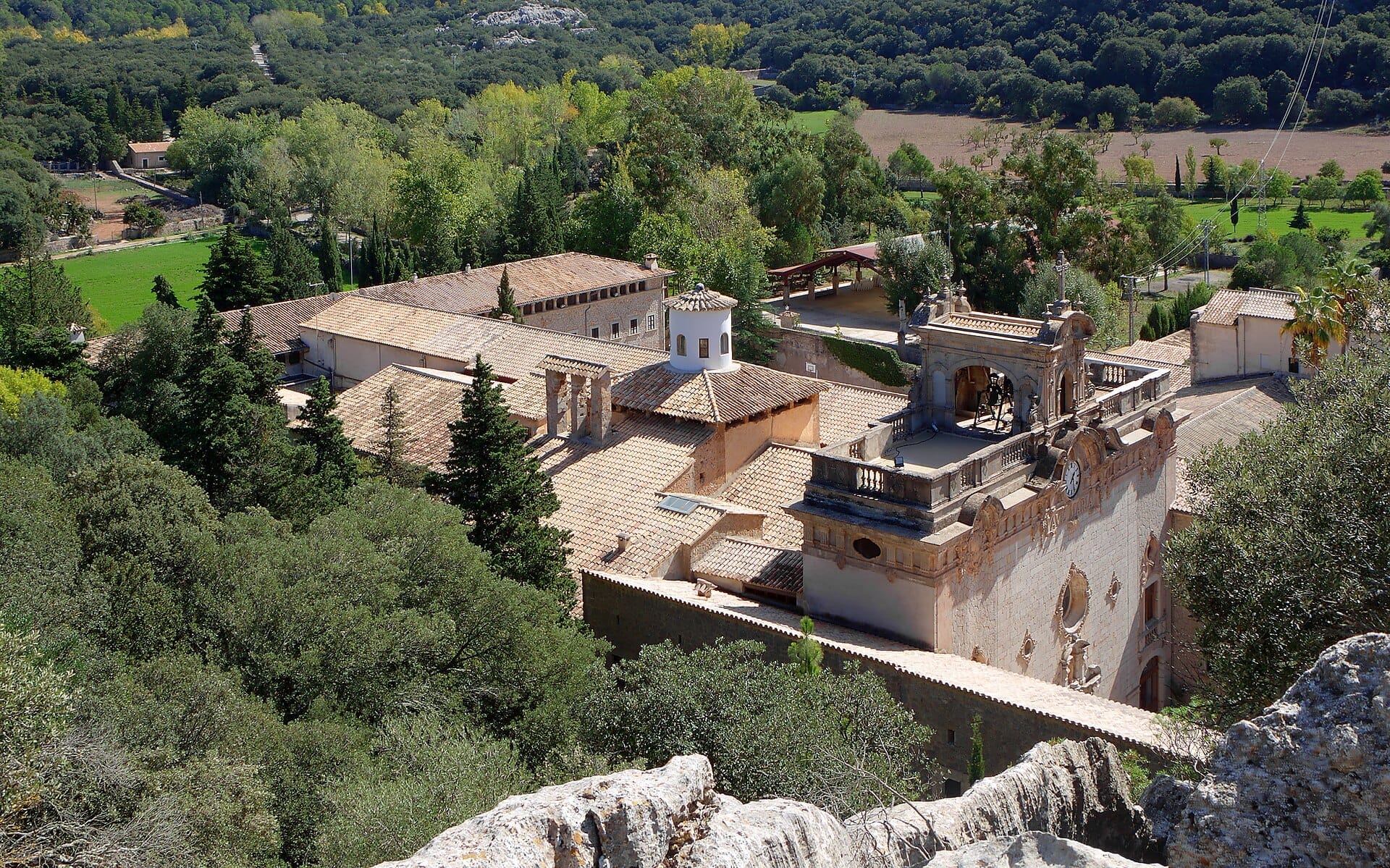
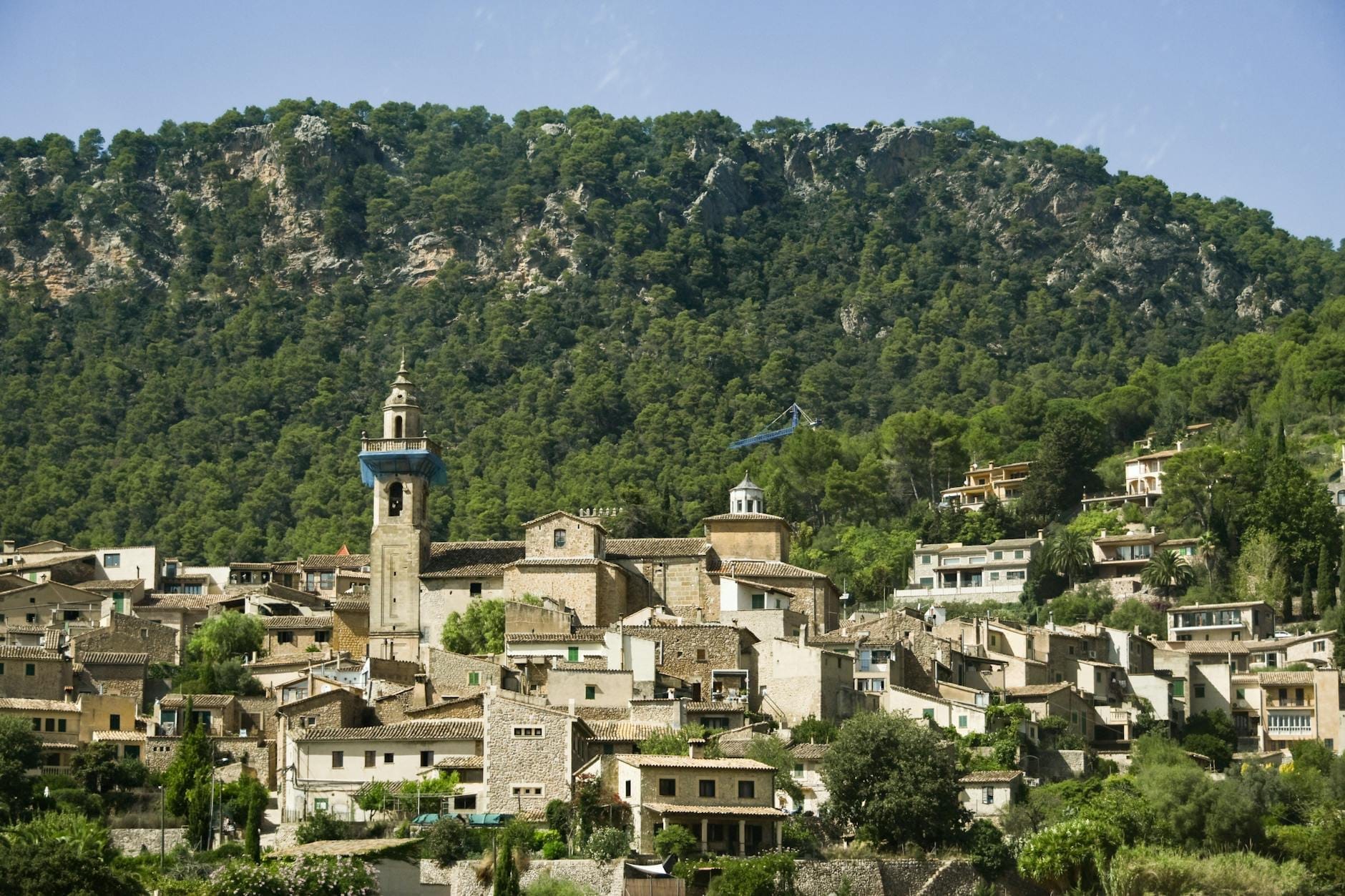
The villages themselves are the other major draw. Valldemossa is the most visited, famous for the Reial Cartoixa monastery where Frédéric Chopin and George Sand spent the winter of 1838-39. The village sits at around 400 metres elevation, noticeably cooler than the coast, and its cobbled streets and honey-coloured stone buildings are genuinely beautiful even accounting for the tour groups that arrive daily. Deià, further north, attracts a more literary and artistic crowd: the poet Robert Graves lived and died here, and his house, Can Alluny, is open as a museum. Fornalutx, southeast of Sóller, is regularly cited as one of the most beautiful villages in Spain and receives far fewer visitors than Valldemossa, which makes it a considerably more satisfying stop.
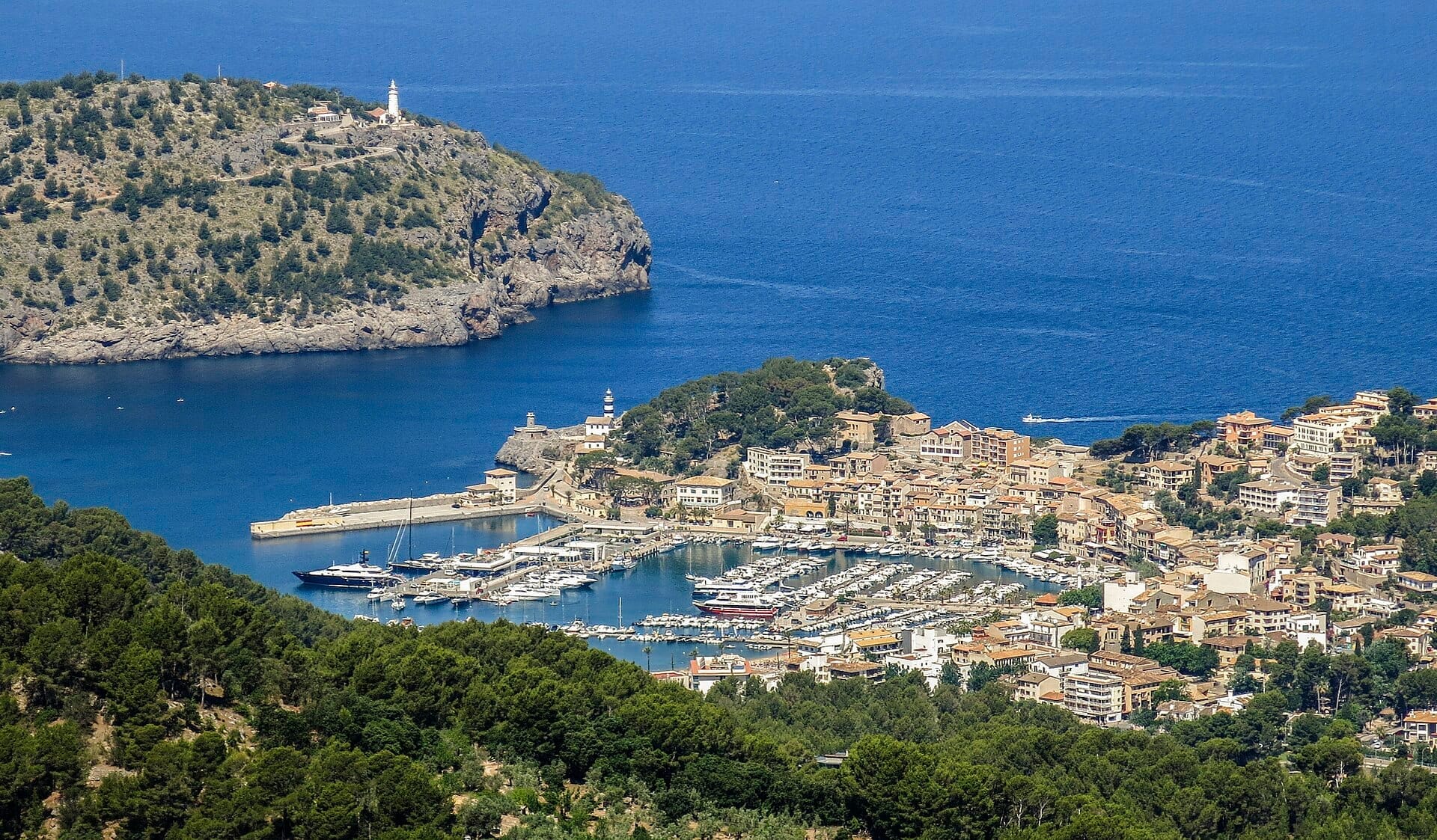
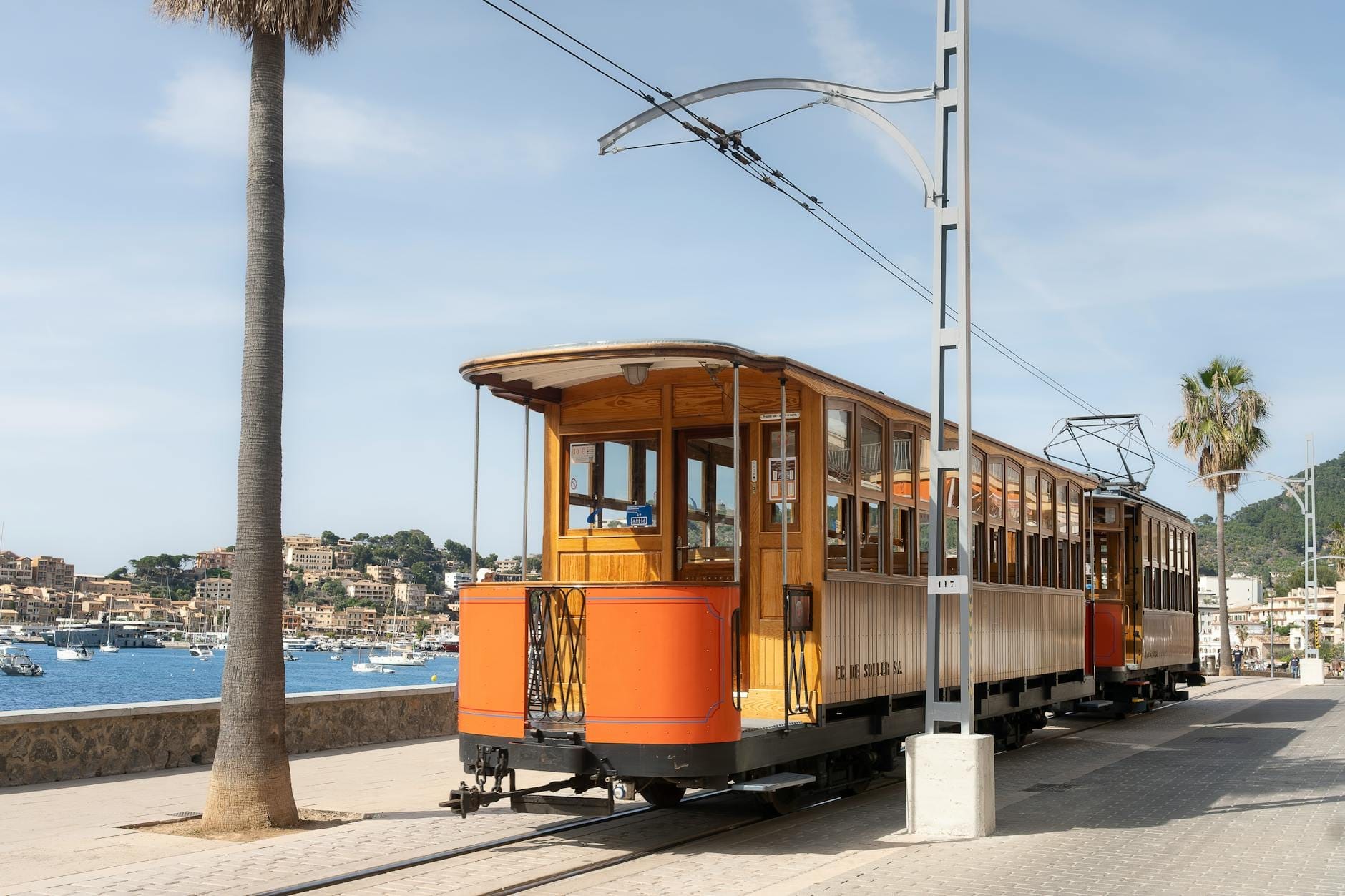
The village of Sóller and its port are the commercial and transport heart of the central Tramuntana. The town sits in a wide valley floor surrounded by orange and lemon groves and is architecturally impressive, with a modernista church facade and a broad central square. From Sóller, the narrow-gauge Sóller Train runs to Palma through a mountain tunnel and over a series of viaducts — the journey itself is a reason to ride it. The full experience of both the town and its port is covered in the Sóller and Port de Sóller guide.
At the northeastern tip of the range, the Formentor peninsula is one of Mallorca's most dramatic landscapes: a narrow finger of land with 200-metre cliffs dropping directly into deep blue water. The lighthouse at its tip, Cap de Formentor, is a 20 km drive from Puerto Pollença along a road that is spectacular and genuinely vertiginous in equal measure. Access is restricted by shuttle bus during peak summer months to reduce congestion.
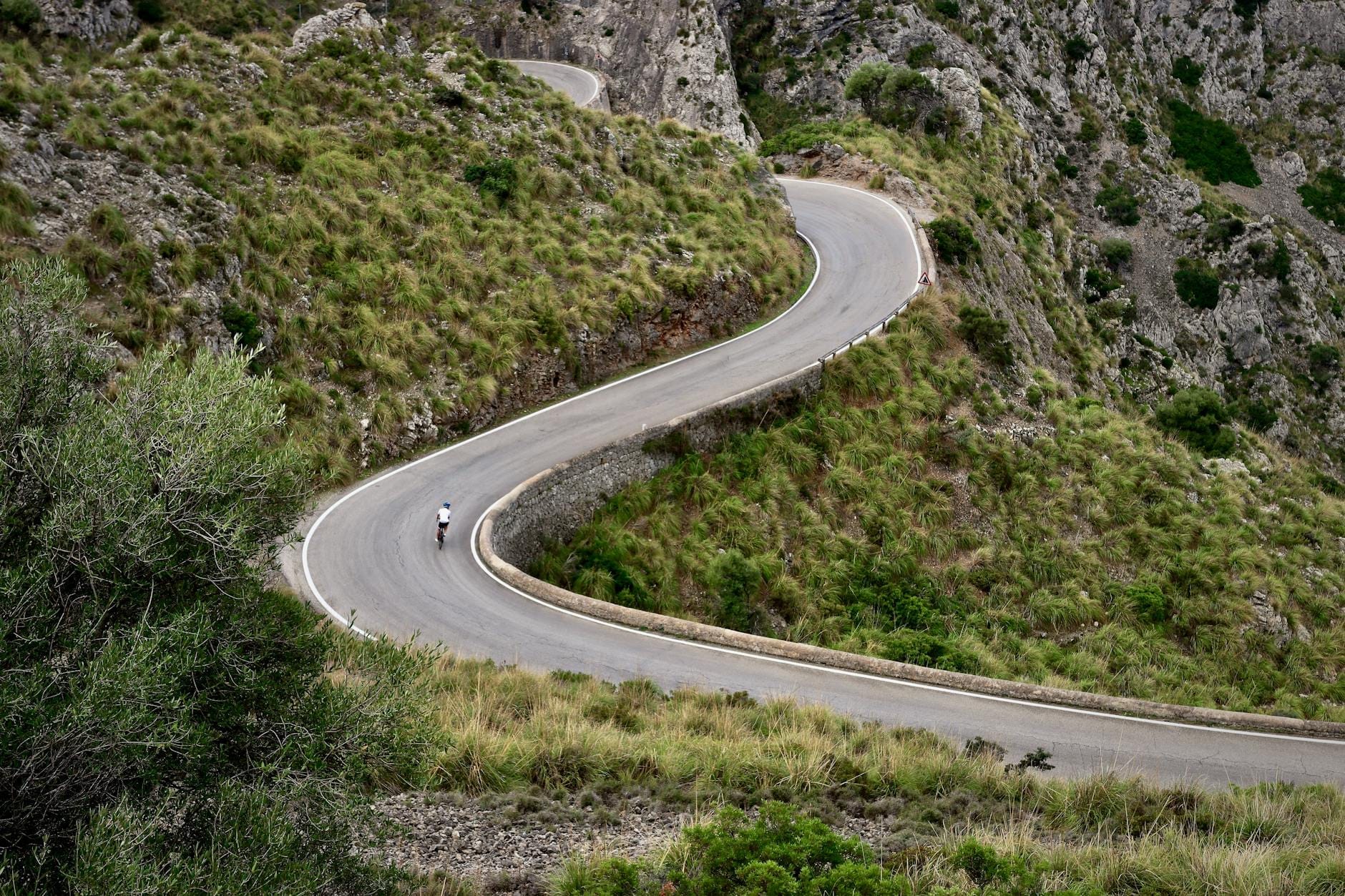
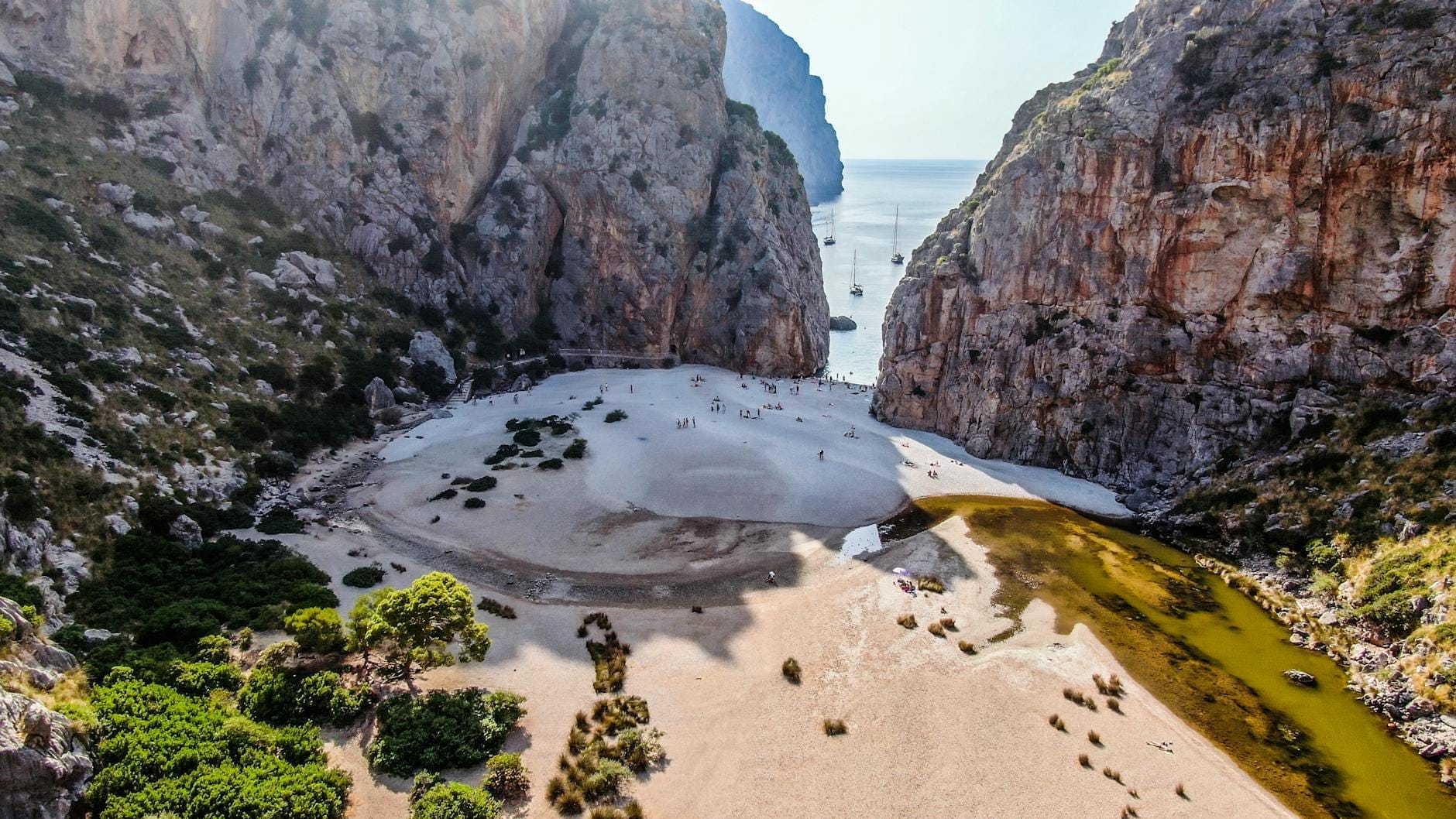
The Tramuntana is also Mallorca's premier cycling destination. The same steep gradients and well-maintained mountain roads that make driving dramatic are what draw professional cycling teams here for winter training. Cycling in Mallorca covers the key routes including the iconic Sa Calobra climb, which descends more than 900 metres over 9 km of switchbacks to a cove where the torrent meets the sea.
Hike all or part of the GR221 Dry Stone Walk, from Port d'Andratx to Pollença
Ascend Puig de Massanella, Mallorca's highest accessible summit
Walk the streets of Valldemossa and visit the Reial Cartoixa monastery
Explore Deià and the Robert Graves museum, Can Alluny
Take the historic Sóller Train from Palma to Sóller
Drive the Ma-10 from Andratx to Pollença, stopping at coastal viewpoints
Cycle the Sa Calobra descent and the mountain road circuit around the Puig Major reservoir
Visit the Formentor lighthouse at dawn before the day-trip crowds arrive
⚠️ What to skip
Puig Major, Mallorca's highest peak at 1,445 metres, is closed to the public due to military radar installations on the summit. Do not attempt to access it. Puig de Massanella (1,364 m) is the highest peak open to hikers and requires a half-day commitment with solid footwear.
Eating & Drinking
Food in the Tramuntana follows the rhythms of the villages. This is not a region of destination restaurants, though it has a few. It is a region of family-run tavernes, market squares with a single café serving coffee and pa amb oli (bread rubbed with tomato and olive oil), and weekly markets where local produce defines what ends up on the menu that week.
Sóller has the most concentrated dining scene in the range: the Plaça de la Constitució and the streets radiating off it have cafés, tapas bars, and restaurants covering everything from simple Mallorcan cooking to slightly more creative contemporary menus. The orange groves of the Sóller valley produce a distinctive sweet orange that appears in everything from marmalade sold at roadside stalls to the locally produced Túnel orange liqueur, made in the town since 1947.
Valldemossa has several restaurants targeting the tourist flow, and quality varies widely. The local specialty worth trying here is coca de patata, a soft potato-based pastry made by the village bakeries and eaten plain or with sugar and cinnamon. Deià has developed a quietly upscale dining scene over the past two decades, with a handful of restaurants offering serious food in stone-walled rooms with mountain views, though prices reflect the village's reputation.
For the Tramuntana's food culture in wider context, including local olive oil, almond products, and the seasonal almond blossom markets in January and February, the Mallorca food guide covers the island's culinary landscape in detail. Wine from the interior Pla region pairs well with mountain cooking; see the Mallorca wine guide for more.
Getting There & Around
There is no single entry point to the Tramuntana. How you arrive depends entirely on which part of the range you are targeting. From Palma, the two main road approaches are the Ma-1110 northwest to Valldemossa and then the Ma-10 along the ridge, or the Ma-11 north through the Coll de Sóller tunnel (toll applies) directly to Sóller. The scenic alternative to the tunnel is the old road over the Coll de Sóller pass itself, a steep series of hairpin bends that adds 20 minutes but offers panoramic views.
Public transport serves the main corridor. Buses from Palma's Estació Intermodal run regularly to Sóller, Valldemossa, Deià, and Pollença, though services reduce significantly outside summer months. The iconic narrow-gauge train operated by Ferrocarril de Sóller connects Palma's Plaça d'Espanya station to Sóller, with a tram continuing from Sóller town to Port de Sóller. It is not the fastest option, but the 27 km journey through mountain scenery earns its reputation. For full logistics on getting between areas, see the getting around Mallorca guide.
For exploring the range in depth, a rental car is close to essential. The Ma-10 mountain road is well-maintained despite its gradients and tight corners, but it demands attention and drivers should expect to slow to a crawl behind coaches on the tightest sections between Banyalbufar and Estellencs. The 120 km driving circuit from Palma through the mountains to Sóller and back represents one of the best road routes in the Balearics. Details on navigating it are in the rent a car in Mallorca guide and the Mallorca road trip guide.
💡 Local tip
The Sa Calobra road (Ma-2141) is closed to large vehicles at certain times and gets extremely congested in July and August. Leave before 9am or after 5pm to avoid sitting in traffic on its famous 360-degree spiral curve, the Nus de sa Corbata.
Where to Stay
Accommodation in the Tramuntana falls into two categories: small agrotourism properties (called agroturismes in Catalan) converted from old farmhouses, and a handful of boutique hotels inside the village buildings themselves. Neither category is cheap. The Tramuntana targets the upper end of the market, and budget accommodation is genuinely scarce throughout the range.
Deià and Sóller are the most popular bases for visitors wanting to stay in the mountains. Deià has long attracted a wealthier international clientele and its accommodation prices reflect that: even modest guesthouses charge significantly more here than equivalent properties elsewhere on the island. Sóller offers better value with a wider range of options, from small family-run hotels on side streets to the grand Modernista-era Gran Hotel on the main square, and it has the practical advantage of being a functioning town with supermarkets, pharmacies, and regular bus connections.
For hikers planning to walk the GR221, the network of mountain refuges (refugis) operated by the Consell de Mallorca provides basic dormitory accommodation along the route. These must be booked in advance through the official Consell website, especially between April and October. Staying in the refugis is a genuinely different experience from hotel tourism: you eat communal dinners, start walking at dawn, and the landscape is the only entertainment.
For a wider view of where to base yourself on the island and how the Tramuntana fits into a broader Mallorca itinerary, the where to stay in Mallorca guide covers all the major zones. Those combining beach and mountain stays often pair Tramuntana accommodation with a few days on the southwest Mallorca coast.
Practical Notes & Honest Assessment
The Tramuntana is genuinely special, but it is not the easiest part of Mallorca to visit well. The mountain roads are narrow and demand confident driving. The best hiking requires fitness, good footwear, and some navigation ability. Accommodation is expensive relative to the rest of the island, and the most photogenic villages attract significant tourist traffic in high summer.
The optimal windows are late March through May, when the almond blossom has passed but the spring wildflowers are out and the air is cool, and September through early November, when the light is exceptional, the trails are drier after summer, and the villages function at a calmer pace. July and August are peak season: the roads are busy, the Formentor road requires a shuttle bus, and Valldemossa can feel overwhelmed by coach parties by mid-morning.
Winter (December through February) is another matter entirely. The tramuntana wind lives up to its name, storms come in hard from the northwest, and some mountain restaurants close for weeks at a time. But on clear winter days, the light on the limestone is extraordinary, the almond blossom covers the lower slopes in white and pink in late January, and you can walk the GR221 stages in complete solitude. For timing your visit across the full year, see the best time to visit Mallorca guide.
⚠️ What to skip
Mobile coverage is patchy across much of the Tramuntana, particularly on the higher trails and in the narrower valleys. Download offline maps before hiking, carry physical trail maps for multi-day routes, and always tell someone your planned route if venturing above 800 metres.
TL;DR
The Serra de Tramuntana is Mallorca's UNESCO-listed mountain range: 90 km of limestone peaks, cliff-edge villages, and ancient terracing running across the island's northwest from Andratx to Formentor.
Best for: hikers tackling the GR221, cyclists training on mountain roads, and travelers seeking stone villages and slow food rather than beach resorts.
Key villages include Sóller (the best practical base), Deià (upscale, artistic), Valldemossa (famous, crowded), and Fornalutx (beautiful, quieter).
A rental car is effectively essential for exploring the range; public buses serve the main corridor but frequency drops sharply outside summer.
Avoid July and August if you dislike crowds; the range is at its best in April, May, and October, when the trails are quiet and the light is exceptional.
Mallorca has over 200 beaches, ranging from long sandy family bays to dramatic limestone coves that feel almost impossibly beautiful. This guide covers the best beaches across the island, with practical advice on access, crowds, and what makes each one worth the trip.
Mallorca works in every season, but the right time depends on what you want. This guide breaks down the weather, crowds, prices, and events by month so you can plan a trip that actually suits you.
Mallorca rewards those who look up, out, and across. From the Tramuntana's limestone ridges to the bay of Palma at dusk, these are the viewpoints that make the island unforgettable. This guide covers the best panoramas, how to reach them, and when to go.
Mallorca is one of Europe's premier road cycling destinations, drawing professionals and enthusiasts from across the continent every spring. This guide covers the island's best routes from brutal mountain climbs to flat coastal loops, plus practical tips on when to go, where to base yourself, and what to expect on the road.
Mallorca rewards budget travellers generously. From UNESCO mountain trails and wild coves to free museum days and medieval old towns, the island has more cost-free experiences than most visitors realise. This guide covers the best free things to do in Mallorca, organised by theme.
From the urban buses of Palma to the scenic train to Sóller and the open roads of the Serra de Tramuntana, Mallorca has more transport options than most visitors expect. This guide breaks down every mode of transport, with real prices, route details, and honest advice on what actually works.
Mallorca rewards those willing to look beyond the resort strips and postcard beaches. This guide uncovers the island's quieter side: Bronze Age settlements, uninhabited nature reserves, atmospheric mountain villages, and coves that still feel genuinely undiscovered.
The Serra de Tramuntana is one of Europe's finest hiking destinations, a UNESCO World Heritage limestone range stretching across Mallorca's northwest. This guide covers the best trails, villages, and natural landmarks for walkers of every level.
Mallorca is larger and more varied than most visitors expect. This guide breaks down exactly how many days you need depending on your pace, priorities, and which parts of the island you want to explore — from a long weekend in Palma to a full two-week circuit.
Mallorca gets dismissed as a cheap package-holiday island. That reputation is decades out of date. From UNESCO mountain landscapes to Gothic architecture, world-class cycling, and some of the Mediterranean's best beaches, the island has far more range than most visitors expect. This guide lays out exactly what Mallorca delivers, where it falls short, and who it suits best.
Mallorca's luxury scene stretches far beyond beach resorts. This guide breaks down the island's finest hotels, private villas, Michelin-starred dining, and exclusive experiences — with honest advice on where to stay, when to go, and what's genuinely worth the premium.
Every January and February, Mallorca's countryside transforms into a landscape of white and pale-pink blossom as around four million almond trees come into flower. This guide covers peak timing, the best villages and routes to visit, local festivals, and practical tips for making the most of the season.
With 554 kilometres of coastline and over 250 beaches and coves, Mallorca rewards exploration by sea like nowhere else in the Mediterranean. This guide covers every boat trip option on the island: shared tours, private charters, bareboat sailing, departure points by region, and exactly when to go.
Mallorcan food is rooted in peasant traditions, pork, olive oil, and seasonal produce. This guide covers the island's essential dishes, local specialties worth seeking out, and practical advice for eating well without falling into tourist-trap traps.
October is one of the most underrated months to visit Mallorca. Daytime temperatures hover around 22-24°C, the sea stays swimmable at 21-23°C, and the summer crowds have thinned dramatically. This guide covers the real weather picture, what closes, what opens, and the best things to do across the island in autumn.
Spring transforms Mallorca into one of the Mediterranean's most rewarding destinations. This guide covers the weather month by month, what to do, when crowds arrive, and how to make the most of the shoulder season before summer prices kick in.
July and August are Mallorca's peak season for a reason: warm sea temperatures, near-constant sunshine, and a full calendar of activities. But peak season also means peak crowds and peak prices. This guide breaks down exactly what summer looks like on the island so you can decide if it's right for you.
Mallorca's nightlife spans centuries-old cocktail palaces in Palma, Germany-flavoured beach parties in Arenal, and full-scale club nights in Magaluf. This guide cuts through the noise to tell you exactly where to go, when to arrive, and what to skip.
Mallorca has a reputation for luxury resorts and big-spending tourists, but the island is far more affordable than most people expect. This guide breaks down real daily costs, the best free activities, cheap transport options, and the smartest ways to stretch your euros across one of Europe's most spectacular islands.
Mallorca delivers extraordinary photography at every turn, from impossible turquoise coves and medieval hilltop villages to soaring Gothic architecture and dramatic sea cliffs. This guide covers the island's most photogenic locations, with practical advice on the best times to shoot and what to look for at each spot.
Mallorca rewards drivers more than almost any island in the Mediterranean. From the UNESCO-listed Serra de Tramuntana to the wild cape at Formentor, this guide covers the best scenic routes, practical driving advice, and the stops worth pulling over for.
From Palma's covered food halls to village weekly markets and artisan workshops, shopping in Mallorca goes well beyond tourist trinkets. This guide covers the best markets, the products worth buying, and the ones to leave on the shelf.
Mallorca produces some of Spain's most distinctive wines, built on native grape varieties you won't find anywhere else. This guide covers the island's two DO regions, the best wineries to visit, what to expect on a tasting tour, and how to plan your visit from Palma.
Mallorca has a well-earned reputation as one of the Mediterranean's top family destinations, but knowing which beaches, attractions, and activities actually work for children makes the difference between a great holiday and a stressful one. This guide cuts through the noise with specific recommendations, honest assessments, and practical logistics.
Mallorca's villages are its soul. Beyond the beaches and resorts, stone-built hilltop towns, flower-draped lanes, and centuries of history await. This guide covers the most beautiful villages in Mallorca, from the Tramuntana's famous trio to the northeast's medieval strongholds.
Seven days is enough time to experience the full range of Mallorca: Gothic cathedrals, UNESCO mountain roads, turquoise calas, medieval villages, and local wine. This day-by-day itinerary cuts through the noise and tells you exactly where to go, when to go, and what to skip.
Renting a car in Mallorca is the single best decision you can make for your trip. This guide covers everything: seasonal pricing, insurance traps, the best booking platforms, parking realities, and which companies consistently deliver. No fluff, just practical advice.
Mallorca is far more than beach resorts and package holidays. This guide covers the best things to do across the island — from free hikes in the UNESCO-listed Tramuntana mountains to boat trips along the rugged north coast — with real prices, seasonal advice, and honest opinions on what's worth your time.
Mallorca is a 3,640 km² island with wildly different characters depending on where you base yourself. This guide cuts through the noise and maps out the best areas to stay, who each one suits, and what to watch out for before you book.