How to Rent a Car in Mallorca: Tips, Costs & Best Companies
Renting a car in Mallorca is the single best decision you can make for your trip. This guide covers everything: seasonal pricing, insurance traps, the best booking platforms, parking realities, and which companies consistently deliver. No fluff, just practical advice.
Plan and book this trip
Tools from our partner Travelpayouts help you compare flights and hotels. If you book through them, we may earn a commission at no extra cost to you.
Flights
Hotels map
TL;DR
- Book at least 3 weeks ahead and aim for May or early June for the cheapest rates. Economy cars start around €40/day in low season.
- Basic third-party liability (TPL) insurance is legally required and included in all quoted prices. Collision damage waiver (CDW) is often separate — read the fine print.
- Sixt, Vanrell, and Terrys are the most consistently recommended companies. Goldcar and OK Mobility are widely available but attract frequent complaints about hidden charges.
- A rental car is essential for reaching the Serra de Tramuntana, the southeast coast, and most of Mallorca's best beaches. Public transport covers the basics but misses most of the good stuff.
- Manual transmission cars are notably cheaper than automatics. If you can drive a stick, it will save you money every day.
Do You Actually Need to Rent a Car in Mallorca?
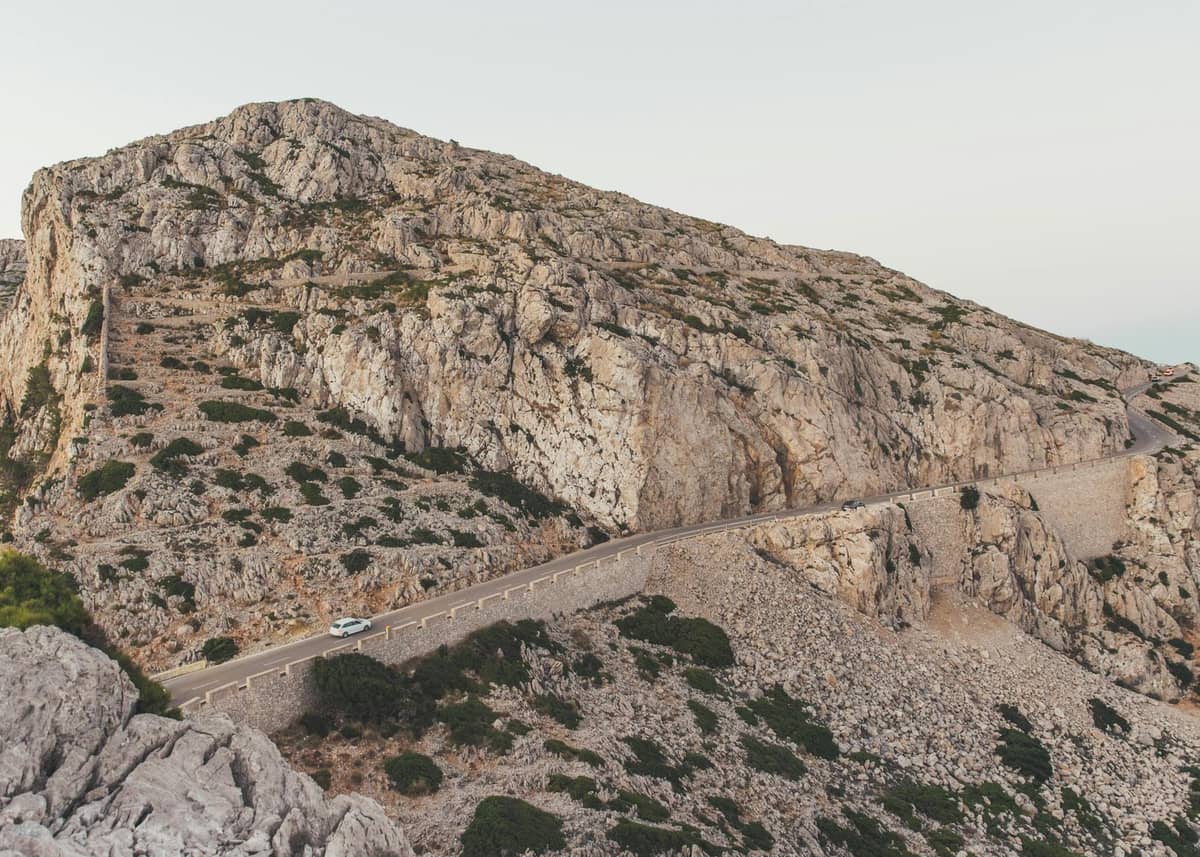
The short answer: almost certainly yes. Mallorca covers 3,640 km² and the public transport network, run by Serveis Ferroviaris de Mallorca, connects Palma to a handful of towns reasonably well. But it leaves out the majority of what makes the island worth visiting. The Sa Calobra gorge, the southeast's hidden coves, the mountain villages of the Tramuntana — most of these are either inaccessible or deeply inconvenient without wheels.
If your plan is to base yourself in Palma and take day trips on the historic Sóller Train, you can get by without a car. But if you want real freedom — arriving at Caló des Moro before the crowds pile in, or stopping at a roadside winery in the Pla — a rental car makes the island a completely different experience. For most visitors, it's the best money they'll spend.
ℹ️ Good to know
Mallorca's road network is excellent by Mediterranean island standards. Most routes are well-maintained and signposted in both Catalan and Spanish. Even the mountain roads through the Tramuntana, while dramatic, are paved and manageable for a competent driver.
Car Rental Costs in Mallorca: What to Actually Expect
Pricing varies enormously depending on when you book, what you book, and where you pick up. The following figures reflect current market rates from Palma de Mallorca Airport (PMI), which is where the vast majority of visitors collect their cars.
- Economy car (e.g., Fiat 500, VW Polo) From around €40/day in shoulder season. Rates can drop below this with advance booking and price comparison tools.
- Standard/mid-size car (e.g., SEAT León, Ford Focus) Around €50/day. Good for couples or small families who want more comfort without paying SUV prices.
- SUV or larger vehicle From €70/day upwards. Useful for groups or if you're carrying bikes and gear, but the narrow Tramuntana roads will make you regret choosing anything too wide.
- Automatic transmission Expect to pay a meaningful premium over manual, sometimes €10-20/day more. Manual cars are significantly cheaper and more available.
January is statistically the cheapest month to rent from Palma Airport, with average rates around €30-40/day across categories; May offers good shoulder-season value. Once June arrives and peak tourist season begins, prices jump by 15-25% or more. July and August are the most expensive months. The annual average across all vehicle types sits closer to €30-50/day when you factor in peak season surges — which is a useful reminder of how much money booking at the right time can save you.
💡 Local tip
Book at least 3 weeks before your trip for the best rates. Booking on the same day or even a few days out can cost double what you'd pay with advance planning. Midweek pickups (Tuesday, Wednesday) also tend to be cheaper than weekend starts.
Insurance: The Part Most People Get Wrong
Spanish law requires every rental to include basic third-party liability (TPL) insurance, and reputable companies include this in the advertised price. What catches people off guard is everything beyond that basic coverage.
Collision damage waiver (CDW) reduces your financial liability if the car is damaged, but the devil is in the details. Some companies include CDW with a high excess, meaning you're still liable for the first €500-€2,000 of any damage. Others offer 'full coverage' add-ons at the desk that sound reassuring but duplicate protection you may already have through your credit card or travel insurance.
- Check whether your credit card offers automatic CDW coverage when you pay with it — many Visa Signature and Mastercard World cards do.
- Travel insurance policies sometimes include car rental excess cover — check your policy before the trip, not at the rental counter.
- Avoid buying insurance at the counter under time pressure. Agents are incentivised to upsell and it's the most expensive way to get covered.
- If you do need CDW, buying it through a third-party provider (like Insurance4CarHire or MoneyMaxim) before you travel is almost always cheaper than the rental company's own product.
- Photograph the entire car thoroughly before driving away, including the windscreen, roof, and undercarriage. Make sure any existing damage is recorded on the contract.
⚠️ What to skip
Some budget companies, particularly those with reputations for complaints, will quote very low daily rates and then apply heavy pressure at pick-up to purchase additional coverage. The advertised price can look very different from the final bill. Read reviews specifically about the pick-up process before booking with any unfamiliar company.
Best Car Rental Companies in Mallorca
The choice of company matters more than many travellers realise. Mallorca has dozens of operators ranging from international chains to well-regarded local specialists. Here's an honest breakdown.
- Sixt Consistently rated highly for vehicle quality and transparent pricing. Pick-up at Palma Airport is smooth. Prices are mid-to-upper range but you're paying for reliability.
- Vanrell A Mallorcan-based company with a strong local reputation. Particularly recommended for straightforward service and honest dealing. Good choice if you want to support a local business.
- Terrys Another locally-run operator that frequently appears in positive traveller recommendations. Good for those who want personal service and clear contracts.
- Goldcar Widely available and often appears cheap on comparison sites. However, consistently attracts complaints about aggressive upselling at pick-up and disputed charges. Proceed with caution and read recent reviews.
- OK Mobility A Spanish chain with a large presence at PMI. Mixed reviews — some visitors report fine experiences, others flag the same upselling issues as Goldcar. Clear photo documentation at pick-up is essential.
For context on the island's geography and why your vehicle choice matters, see our Mallorca road trip guide — it covers the best driving routes including the dramatic Tramuntana coastal road and the inland Pla region.
How to Book: Platforms and Strategies
The platform you use to book matters almost as much as the company you choose. Never book directly through an unfamiliar rental company's own website without cross-referencing prices elsewhere first.
LocalRent and DoYouSpain are both price comparison platforms that aggregate live rates from multiple suppliers, including local operators who don't appear on the big international aggregators. Skyscanner's car rental tool is also worth running alongside these, as it occasionally surfaces deals the others miss. Use at least two platforms and compare the total price including insurance and fees, not just the headline daily rate.
- Book with a credit card, not a debit card. Most rental companies require a credit card for the security deposit anyway, and a credit card gives you stronger consumer protection if there's a dispute.
- Same pick-up and drop-off location is almost always cheaper than a one-way rental. The exception is when companies need to reposition vehicles — occasional one-way deals can undercut standard rates.
- A weekly rental rate is often more economical than seven separate daily rates. If your trip is 5-7 days, always request the weekly quote.
- If you're arriving late at night, confirm the rental desk hours in advance. Some desks at PMI have restricted late-night hours and you may need to use an unmanned key locker system.
✨ Pro tip
One-way rentals between different pickup and drop-off points can occasionally be cheaper than round-trips because companies use them to rebalance their fleet. If your itinerary allows flexibility, check one-way pricing alongside the standard return rate — the savings can be significant in off-peak months.
Parking in Mallorca: Costs and Practicalities
Parking is manageable outside peak season and in rural areas, but Palma city centre and popular beach destinations in July and August require real planning. The Palma old town has underground car parks near the waterfront at around €2-3/hour, but spaces fill early in summer. Street parking in metered zones costs €1-2/hour and has strict time limits.
Beach parking varies significantly. Popular spots like Es Trenc have paid car parks charging around €10/day in high season. Some beaches and rural viewpoints in the north and east still have free parking, but these fill by 9am on summer weekends. If you're targeting a specific popular beach, arriving before 9am is genuinely the best strategy — not just for parking but for the experience itself. Many smaller village car parks are free and make good bases for short walks to coastal areas.
For beach-focused itineraries, our guide to the best beaches in Mallorca notes which ones have the most accessible parking and which require an early start or a short walk from a nearby village.
Driving in Mallorca: Practical Notes
Mallorca drives on the right, and the speed limits follow standard Spanish rules: 120 km/h on the autopista (the main motorway connecting Palma to the north and east), 90 km/h on single carriageways, and 50 km/h in built-up areas. Speed cameras are present and active, particularly on the Palma ring road.
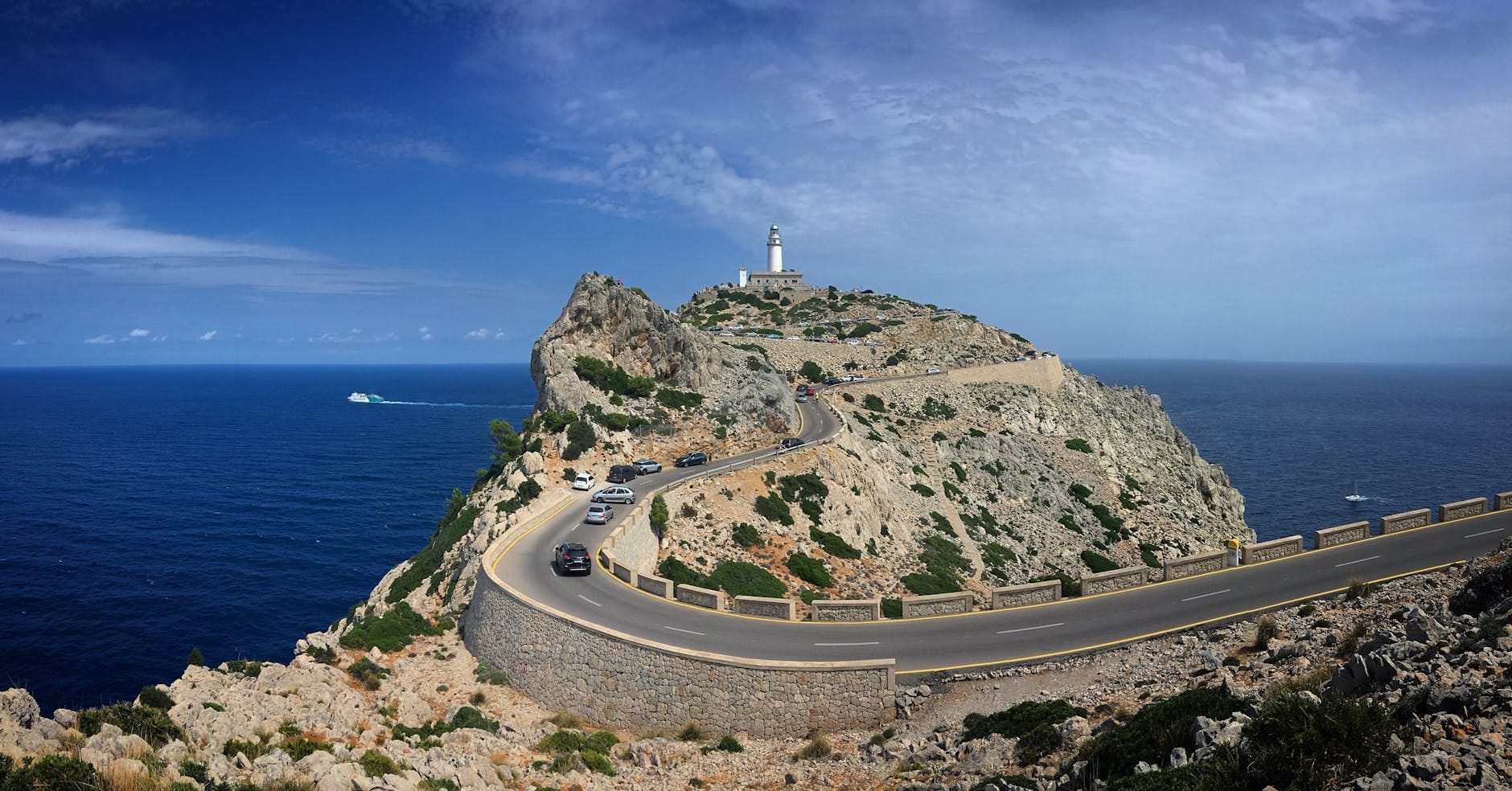
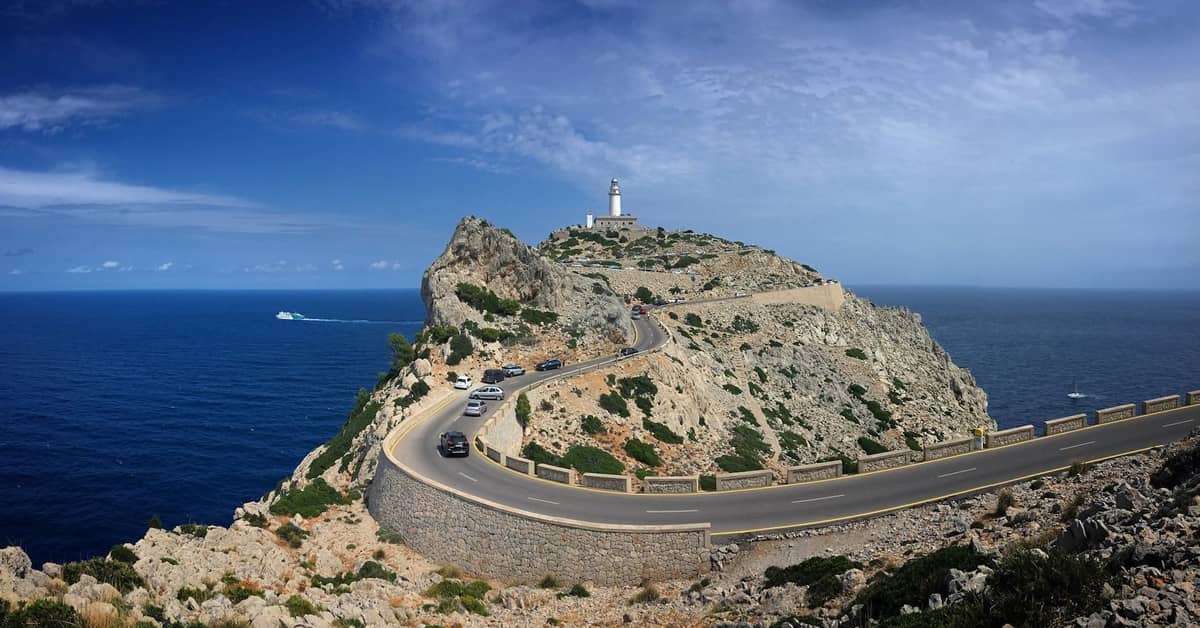
The mountain roads through the Serra de Tramuntana deserve specific mention. Routes like the MA-10 between Andratx and Pollença are genuinely spectacular but include tight hairpin bends, narrow passes, and sheer drops. They are not dangerous if you drive carefully and at reduced speed, but they are not motorway driving. Choose a smaller car if you plan to spend time in the mountains. An economy-class car handles these roads better than a wide SUV, and you'll thank yourself when passing oncoming coaches. For ideas on where these roads lead, see the Serra de Tramuntana section of this site.
Fuel is widely available across the island. The main towns — Palma, Inca, Manacor, Alcúdia — all have multiple stations. Rural areas are less well-served, so fill up before heading into the mountains or the remote southeast. If you're planning a longer route around the island, a half-full tank should always be your minimum before leaving a town.
FAQ
What documents do I need to rent a car in Mallorca?
You'll need a valid driving licence from your home country, your passport or national ID card, and a credit card in the main driver's name for the security deposit. UK licence holders do not need an International Driving Permit for Spain. Drivers from outside the EU should verify whether their licence is accepted — US, Canadian, and Australian licences are generally fine, but confirm with your chosen company beforehand.
What is the minimum age to rent a car in Mallorca?
Most rental companies require drivers to be at least 21 years old and to have held a full licence for at least one year. Drivers under 25 often face a 'young driver surcharge' of around €5-15/day. A small number of premium or specialist vehicle categories may require drivers to be 25 or older.
Is it safe to drive in Mallorca as a tourist?
Yes, the road network is modern and well-maintained. The main challenge for first-time visitors is the mountain roads in the Tramuntana, which are narrow and winding. Drive at reduced speed, use passing places where marked, and avoid the school-run hours (around 8-9am and 3-4pm) in small villages if possible. Overall, driving in Mallorca is much less stressful than driving in a major European city.
When is the cheapest time to rent a car in Mallorca?
May is consistently the cheapest month to rent from Palma Airport, with rates significantly lower than peak summer. April and October are also good value. July and August are the most expensive by a wide margin. Booking 3 weeks or more in advance, regardless of season, is the single most effective way to lower your cost.
Can I pick up a rental car at Palma Airport?
Yes. Palma de Mallorca Airport (PMI) has car rental desks from all major and most local operators, located in the arrivals area. It's the most convenient pickup point for most visitors. Be aware that peak arrival times in summer can mean queues at the rental desks — having your booking pre-confirmed with all documentation ready significantly speeds up the process.