Mallorca Road Trip: Best Scenic Drives & Routes
Mallorca rewards drivers more than almost any island in the Mediterranean. From the UNESCO-listed Serra de Tramuntana to the wild cape at Formentor, this guide covers the best scenic routes, practical driving advice, and the stops worth pulling over for.
Plan and book this trip
Tools from our partner Travelpayouts help you compare flights and hotels. If you book through them, we may earn a commission at no extra cost to you.
Flights
Hotels map
TL;DR
- The Serra de Tramuntana mountain roads, particularly the MA-10 and the descent to Sa Calobra, are the standout drives on the island and rank among the most dramatic in Europe.
- A rental car is by far the most practical way to explore beyond Palma. See our guide to renting a car in Mallorca before you book.
- Spring (April to May) and autumn (September to October) offer the best driving conditions: mild temperatures, fewer tour buses on the mountain roads, and better light for photography.
- The road to Cap de Formentor is restricted to private vehicles in peak summer months. Plan around this or go very early.
- The island's five main scenic routes can each be driven as standalone day trips from Palma, or combined into a one-week itinerary.
Why Mallorca is Built for a Road Trip
At 3,640 km², Mallorca is compact enough to cover significant ground in a single day, yet varied enough to feel like a different island depending on which direction you head. The northwest is dominated by the Serra de Tramuntana, a mountain range that runs parallel to the coast and holds some of the most technically demanding and visually rewarding roads in Spain. The south and east open into flat agricultural plains, quiet coves, and medieval market towns. A road trip here is not just a way to get between places: the driving itself is frequently the destination.
Public transport covers the main towns, but the scenic routes that make Mallorca worth exploring by car are almost entirely inaccessible by bus. The historic Sóller train from Palma is a beautiful exception, but for the mountain roads, coastal miradors, and villages like Estellencs or Fornalutx, you need your own wheels. Bear in mind that Mallorca drives on the right, road signs are in Catalan and Spanish, and fuel stations thin out quickly once you leave the main towns.
💡 Local tip
Book your rental car before arriving at Palma Airport (PMI). Summer demand is intense and last-minute hires are significantly more expensive. A small hatchback handles every route on this list, though a slightly larger wheelbase helps on the tightest hairpins.
Route 1: The Sa Calobra Loop (MA-10 and MA-2141)
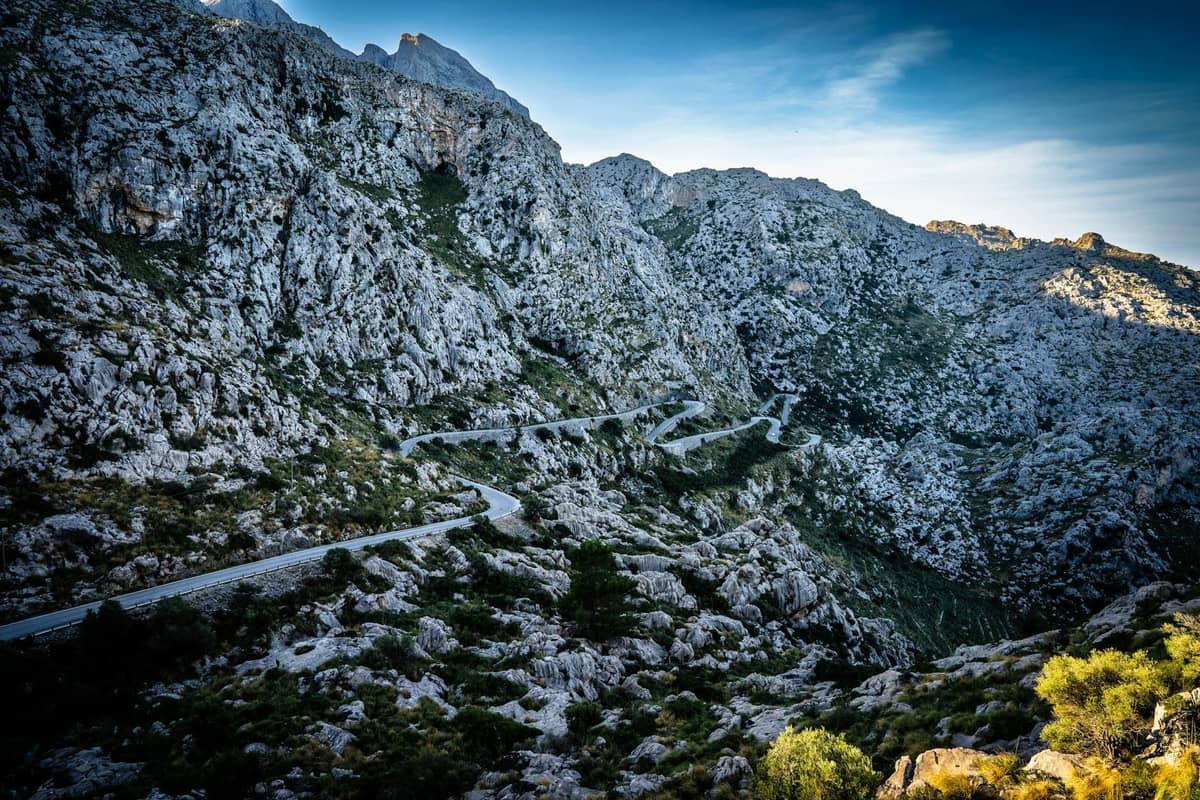
This is the route that appears on every photographer's shortlist and defeats the average tourist. The MA-10 runs along the spine of the Serra de Tramuntana from Andratx in the southwest to Pollença in the northeast, passing reservoirs, stone villages, and cliff-edge viewpoints the entire way. The detour down the MA-2141 to Sa Calobra is where it gets serious.
The Sa Calobra descent drops roughly 720 metres over 13 kilometres of continuous hairpin bends, including the famous 'nudo de corbata' (literally 'tie knot'), where the road doubles back completely under itself. The Balearic Government declared this road a Natural Monument in 2003, which tells you something about how it's regarded. At the bottom, the Torrent de Pareis gorge empties into a tiny shingle beach surrounded by limestone cliffs. The road passes the Cuber and Gorg Blau reservoirs on the way up, both worth a stop. Allow a full day and go before 9am or after 4pm in summer to avoid the coach convoys.
⚠️ What to skip
Sa Calobra is a dead end. You drive down and back up on the same road. In peak July and August, the return trip can queue badly. If you arrive by mid-morning on a summer weekend, budget an extra 45 minutes for the exit.
Route 2: Cap de Formentor
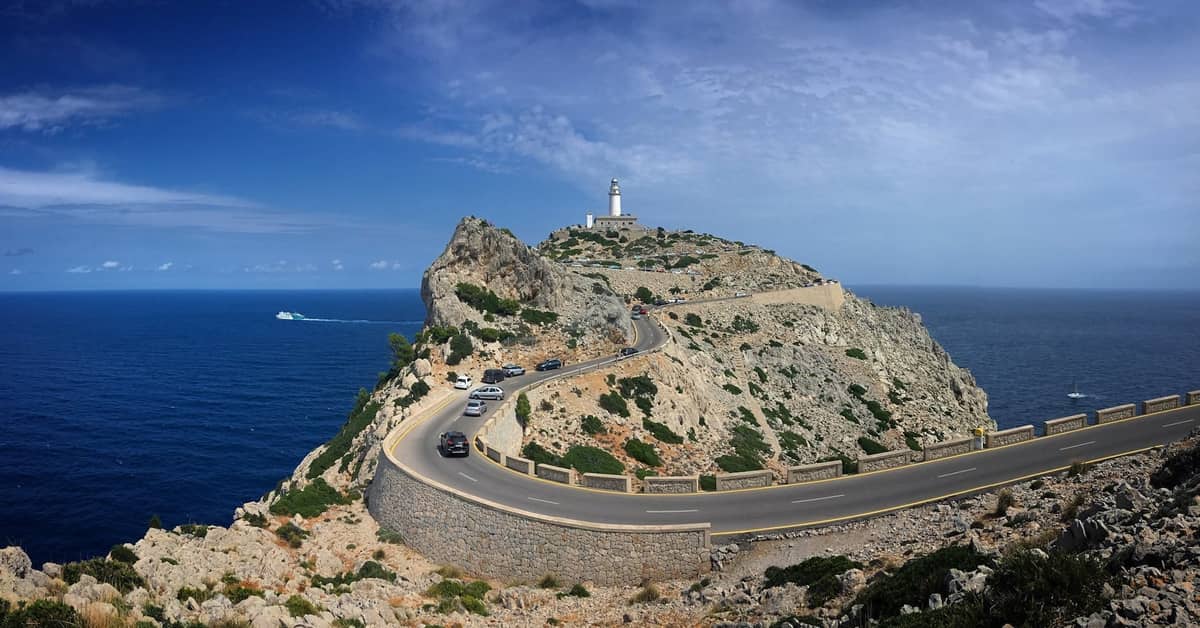
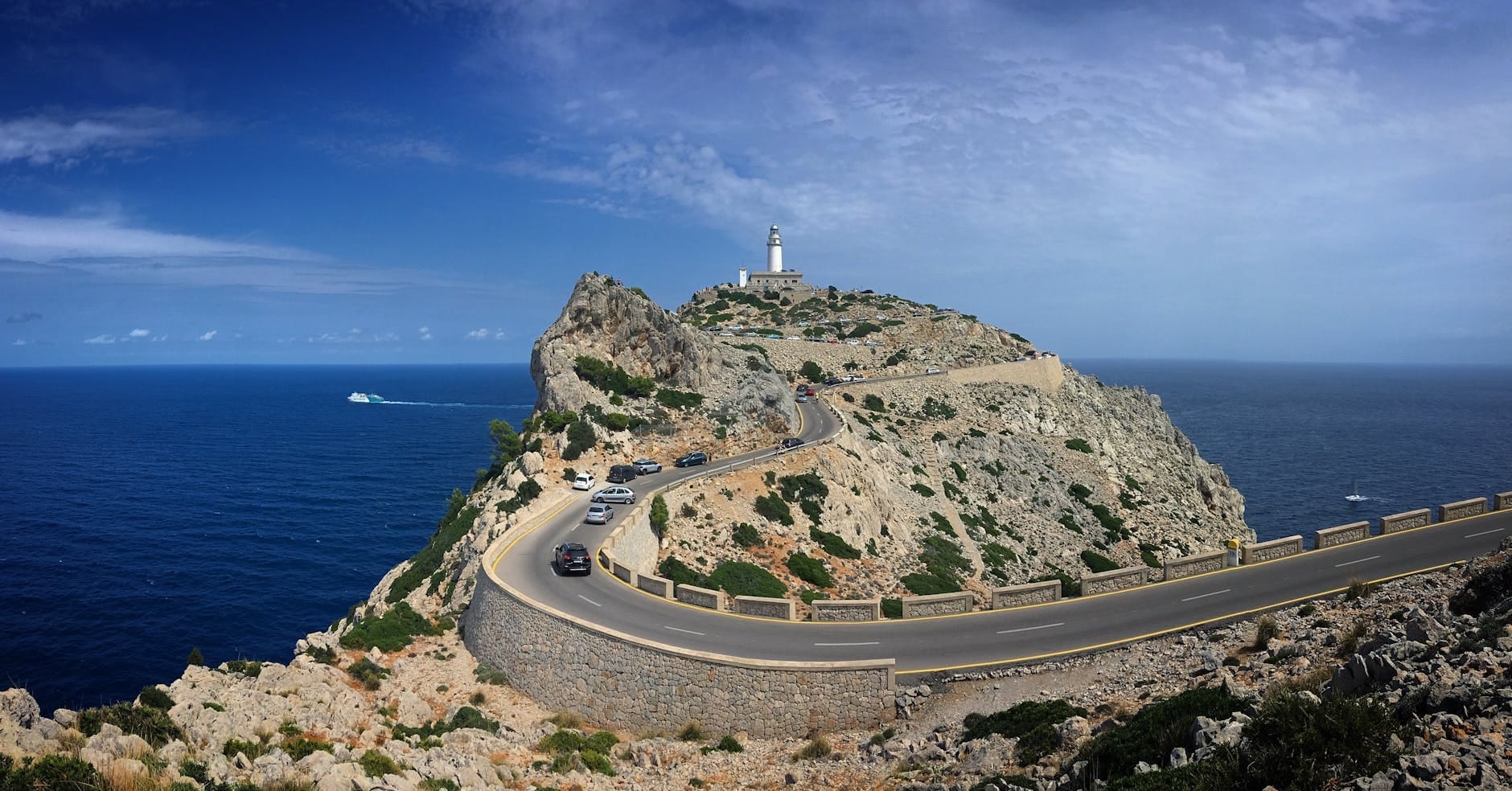
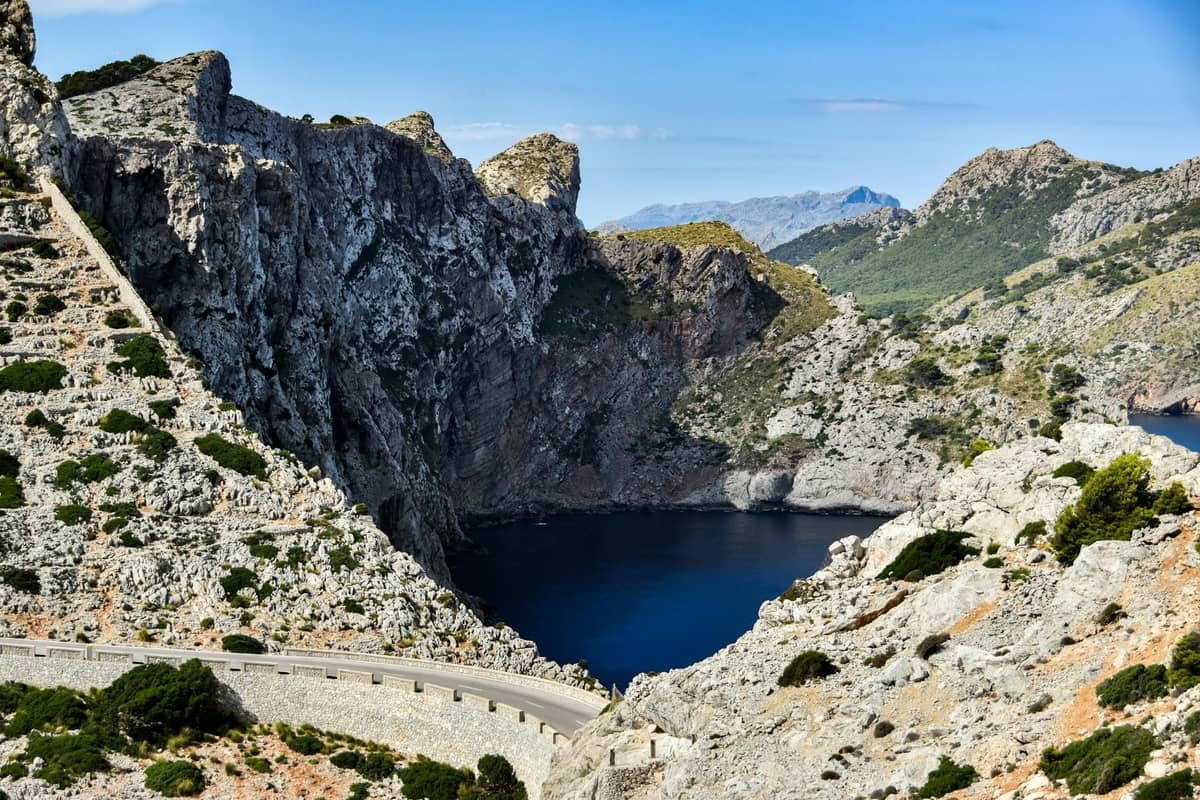
Starting from the ancient town of Pollença, the road to Cap de Formentor stretches roughly 15 kilometres to the island's northernmost lighthouse. The first stretch passes the Formentor Peninsula's pine forests and the celebrated Platja de Formentor beach before the road narrows and climbs towards the cape through a series of hairpin bends. At the Mirador des Colomer, a short path leads to a clifftop platform overlooking Es Colomer islet: arguably the best viewpoint on the island.
The stretch from the Formentor Beach junction to the lighthouse is considered one of the most scenic drives in the world. That reputation means crowds. From mid-June to mid-September, the Consell de Mallorca restricts private vehicles on parts of the Formentor road during peak hours. Check the current restrictions before you go, as the rules change each season. Arriving before 9am or after 6pm in summer largely sidesteps the problem and gives you the kind of light that makes the drive worth the early alarm.
Route 3: Valldemossa to Sóller Through the Tramuntana
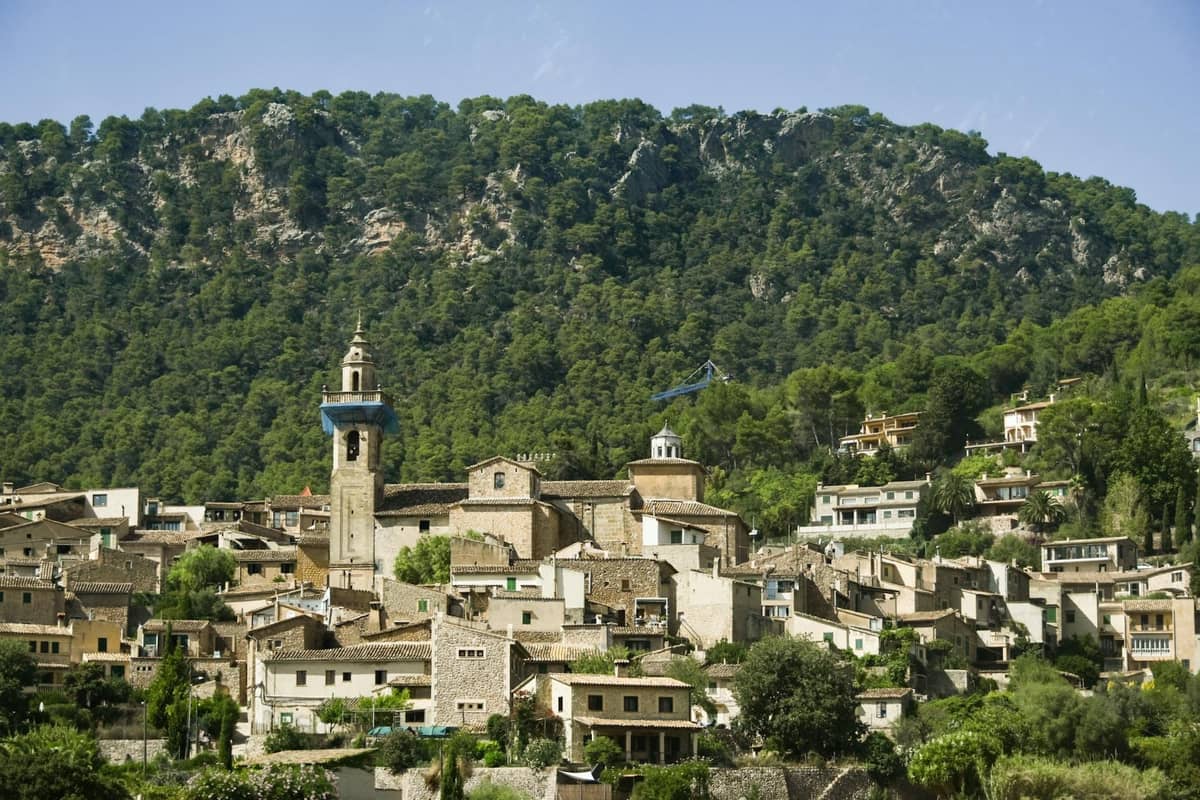
This roughly 30-kilometre stretch of the MA-10 connects two of Mallorca's most photographed towns through the heart of the UNESCO World Heritage-listed Serra de Tramuntana. The route passes through Valldemossa, one of the prettiest stone villages on the island, before climbing into the mountains and descending toward the coast via Deià, a small village of terracotta rooftops clinging to a steep hillside above the sea. From there, the road continues to Son Marroig and then drops into the valley that leads to Sóller.
Sóller itself is worth at least a few hours: the old town square is lined with Art Nouveau buildings, and the ancient electric tram runs down to Port de Sóller through orange and lemon groves for €6 each way (journey time roughly 15 minutes). If you want to skip the mountain descent into Sóller altogether, the MA-11 road tunnel costs around €5 and cuts the drive time considerably, though you lose the scenery. On a first visit, take the mountain road.
✨ Pro tip
Stop at Son Marroig, the 17th-century estate between Deià and Sóller, for views of the Sa Foradada peninsula. The distinctive rock arch jutting into the sea below is one of Mallorca's most recognisable landmarks and is easily missed if you don't know to look for it.
Route 4: The West Coast from Andratx to Estellencs
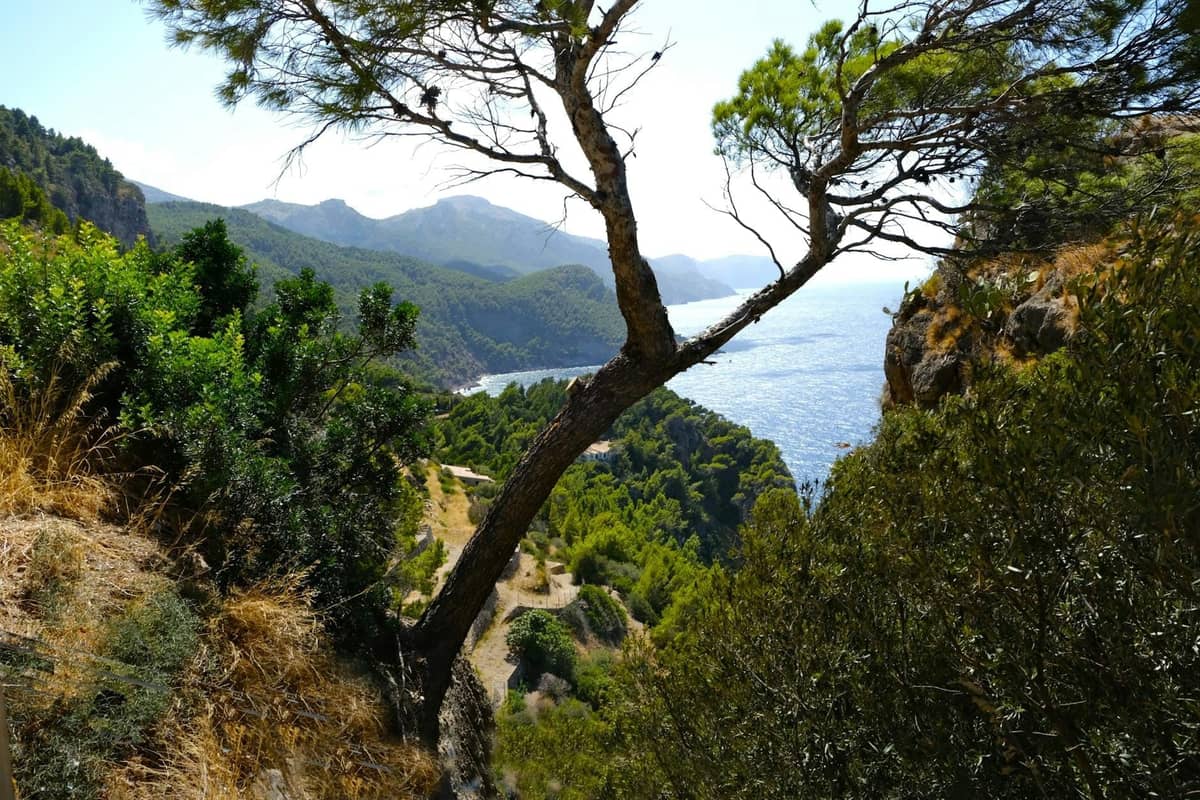
This shorter drive, running north along the MA-10 and older C-710 alignment from Port d'Andratx, is the quietest of the major scenic routes and often overlooked by visitors who head straight for the Tramuntana. That's a mistake. The road climbs almost immediately from the coast, delivering sea views within the first kilometre, and passes through Estellencs, one of Mallorca's most genuinely attractive villages: narrow cobbled streets, stone houses with bougainvillea, and a population of just a few hundred people.
The Mirador de Ses Animes, a few kilometres north of Estellencs, features a 16th-century watchtower perched above a sheer cliff. The short walk up from the road takes under five minutes and the view is disproportionately good. This drive works well as a morning loop from Palma, returning via the MA-1 motorway, and takes around three hours including stops.
Route 5: The East and Southeast Coast
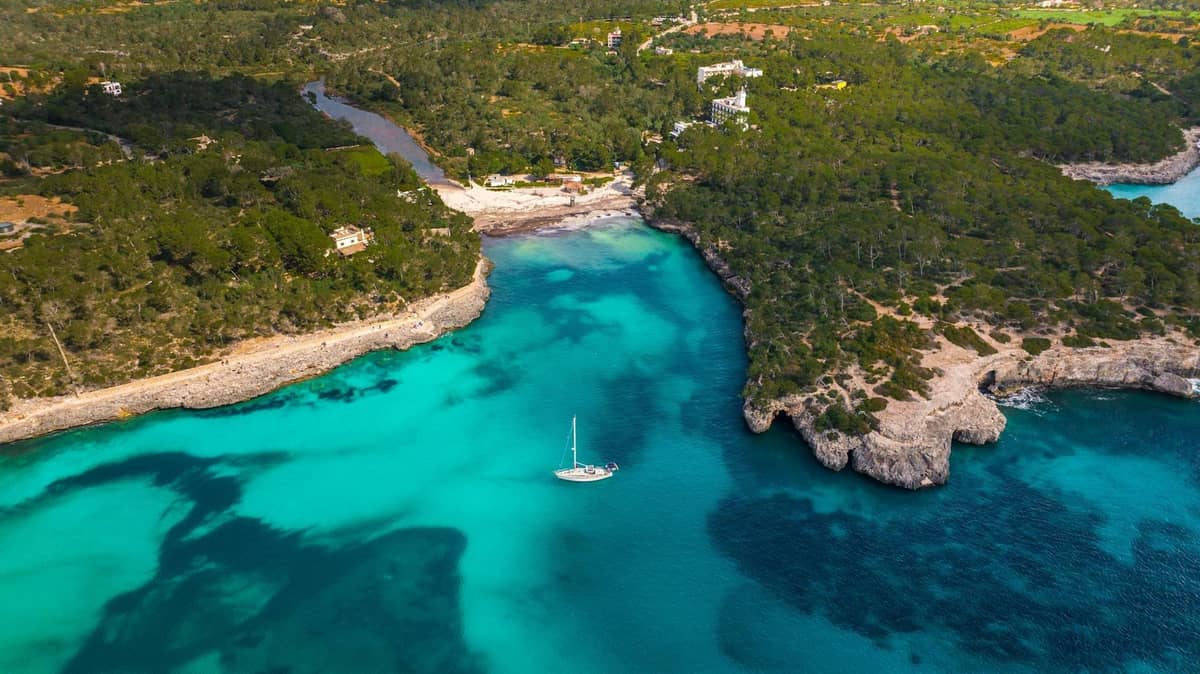
The east coast offers a completely different road trip experience: flatter roads, quieter traffic, and a sequence of natural coves that reward anyone willing to park and walk. The drive from Artà south through Capdepera to Cala Ratjada, then continuing along the coast through Porto Cristo to Santanyí, covers some of the least-developed coastline on the island. Stop at the Mondragó Natural Park south of Portopetro for a walk to the beach, and at Cala Figuera, a working fishing village built into a narrow inlet where the morning fish market still runs as it has for decades.
Further south, Es Trenc beach breaks the cliff-and-cove pattern with a long stretch of white sand backed by dunes and pine trees. It's the closest thing to a Caribbean beach on the island, and the access roads through the salt flats are worth the drive even if you don't stop. End the day in Santanyí, a well-preserved old town with a weekly market, before heading back to Palma on the fast MA-19.
- Best for drama and elevation Sa Calobra loop via the MA-10. Full day, plan for at least 200km including detours.
- Best for viewpoints Cap de Formentor. Start before 9am in summer. Allow 3-4 hours from Pollença.
- Best for village stops Valldemossa to Sóller via the MA-10. Combine with the Sóller tram for a full day.
- Best short drive Andratx to Estellencs. Under 2 hours driving, pairs well with a Palma morning or afternoon.
- Best for beaches and coves The east coast loop from Artà to Santanyí. Relaxed pace, excellent swimming stops.
Practical Driving Advice for Mallorca
Most of the scenic mountain roads are single-lane or barely double-lane, and the etiquette is informal but clear: the driver going uphill has right of way on the narrowest sections, because reversing downhill is considerably harder. Take it slowly and use passing places generously. Locals know these roads well and will often overtake on straights where it looks alarming but is actually fine. Don't feel pressure to keep up.
- Fuel up in Palma or a larger town before heading into the Tramuntana. Petrol stations in mountain villages are rare.
- Google Maps works well across the island but offline maps (Maps.me or downloaded Google Maps) are worth having in the mountains where signal drops.
- Parking in Valldemossa, Deià, and Sóller is limited. Arrive before 10am in summer or use the paid car parks on the village outskirts.
- The MA-10 between Andratx and Pollença is narrow enough that caravans and large motorhomes are effectively prohibited on some sections. Stick to a standard car.
- Mallorca enforces speed cameras consistently on the main arterial roads. The mountain roads have lower speed limits (often 40 km/h) and they are appropriate, not suggestions.
- Cyclists use the Tramuntana roads heavily, especially on spring weekday mornings. Overtake only on straights with clear sightlines.
ℹ️ Good to know
The Serra de Tramuntana was designated a UNESCO World Heritage Cultural Landscape in 2011, recognised for its traditional land management systems and historic terraced agriculture. Many of the roads you'll drive were carved through this landscape over centuries.
For a wider view of what to combine with your drives, the full Mallorca activities guide covers everything from hiking trails that run alongside the scenic road routes to boat trips that show the coastline from the water. If you're planning the trip around the best weather, the best time to visit Mallorca breaks down each month in detail.
Key Towns Worth Stopping In
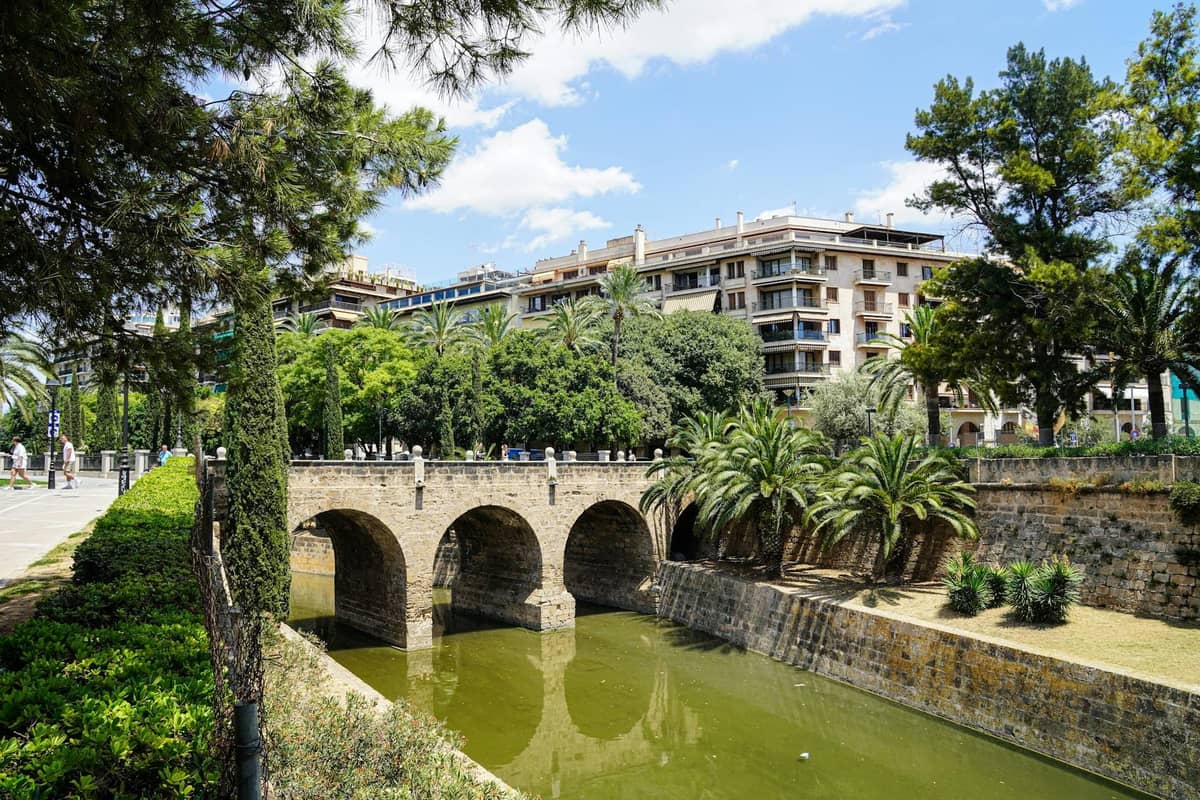
The scenic routes are more than their roads. Several towns along the way justify a longer stop. Pollença old town has a Roman bridge, a hilltop via crucis staircase of 365 steps, and a Sunday market that fills the main square with local produce and crafts. Fornalutx, a short detour from Sóller, is frequently cited as one of the most beautiful villages in Spain. Its stone terraces and mountain backdrop are particularly good in the soft light of late afternoon.
In the north, Alcudia old town is ringed by intact medieval walls and sits just inland from one of the island's best beaches. It's worth a couple of hours. Santuari de Lluc, a monastery in the mountains between Sa Calobra and Pollença, functions as a stopping point on the main mountain road and provides basic accommodation if you want to base yourself in the Tramuntana rather than Palma.
FAQ
Do I need a car to do a road trip in Mallorca?
Yes, essentially. Public buses connect the main towns but the scenic mountain routes, coastal viewpoints, and smaller villages are inaccessible without a private vehicle. Rental cars are widely available at Palma Airport (PMI) and in Palma city. Book in advance, especially for summer travel.
Is driving in Mallorca difficult for tourists?
The main roads and motorways are straightforward. The mountain roads, particularly the MA-10 and the Sa Calobra descent, are narrow and winding but manageable at low speed with a standard car. The main challenges are width on the hairpin sections and cyclist traffic. Avoid large vehicles like motorhomes on Tramuntana roads.
When is the best time to drive the Mallorca scenic routes?
April to June and September to October offer the best combination of good weather, manageable crowds, and reasonable road traffic. July and August are peak season: the roads are busier, parking at viewpoints fills quickly, and the Formentor road has vehicle restrictions. Early mornings (before 9am) largely solve the crowd problem even in high summer.
How long does it take to drive from Palma to Sa Calobra?
The drive from Palma to Sa Calobra via the MA-10 is around 65-70 kilometres and takes approximately 1.5 to 2 hours without stops, depending on traffic on the mountain roads. The return is the same distance. Allow a full day if you want to stop at the reservoirs, walk to the Torrent de Pareis beach, and take the return at a comfortable pace.
Can I drive to Cap de Formentor in summer?
During peak summer months (typically mid-June to mid-September), the Consell de Mallorca restricts private vehicles on the Formentor road during certain hours of the day. The exact hours and rules change each season, so check the current restrictions before you visit. Arriving before 9am or after 6pm usually avoids restrictions and gives far better driving conditions regardless.