Sóller & Port de Sóller: Mallorca's Mountain Valley and Its Secret Harbour
Sóller is a sun-warmed citrus town tucked into the Serra de Tramuntana, connected to its own harbour by a century-old tram. Together, the inland town and coastal Port de Sóller offer architecture, history, mountain scenery, and a calmer pace than most of Mallorca's coastline.
Quick Facts
- Location
- Serra de Tramuntana, northwest Mallorca — approx. 30 km from Palma
- Getting There
- Vintage train from Palma (Ferrocarril de Sóller); by car via Ma-11 through the Túnel de Sóller
- Time Needed
- Half day minimum; full day if combining town, tram, and port
- Cost
- Free to explore both towns; train and tram tickets charged separately — check trendesoller.com for current prices
- Best for
- Slow travel, photography, history, walking, and escaping resort crowds
- Official website
- trendesoller.com
What Sóller and Port de Sóller Actually Are
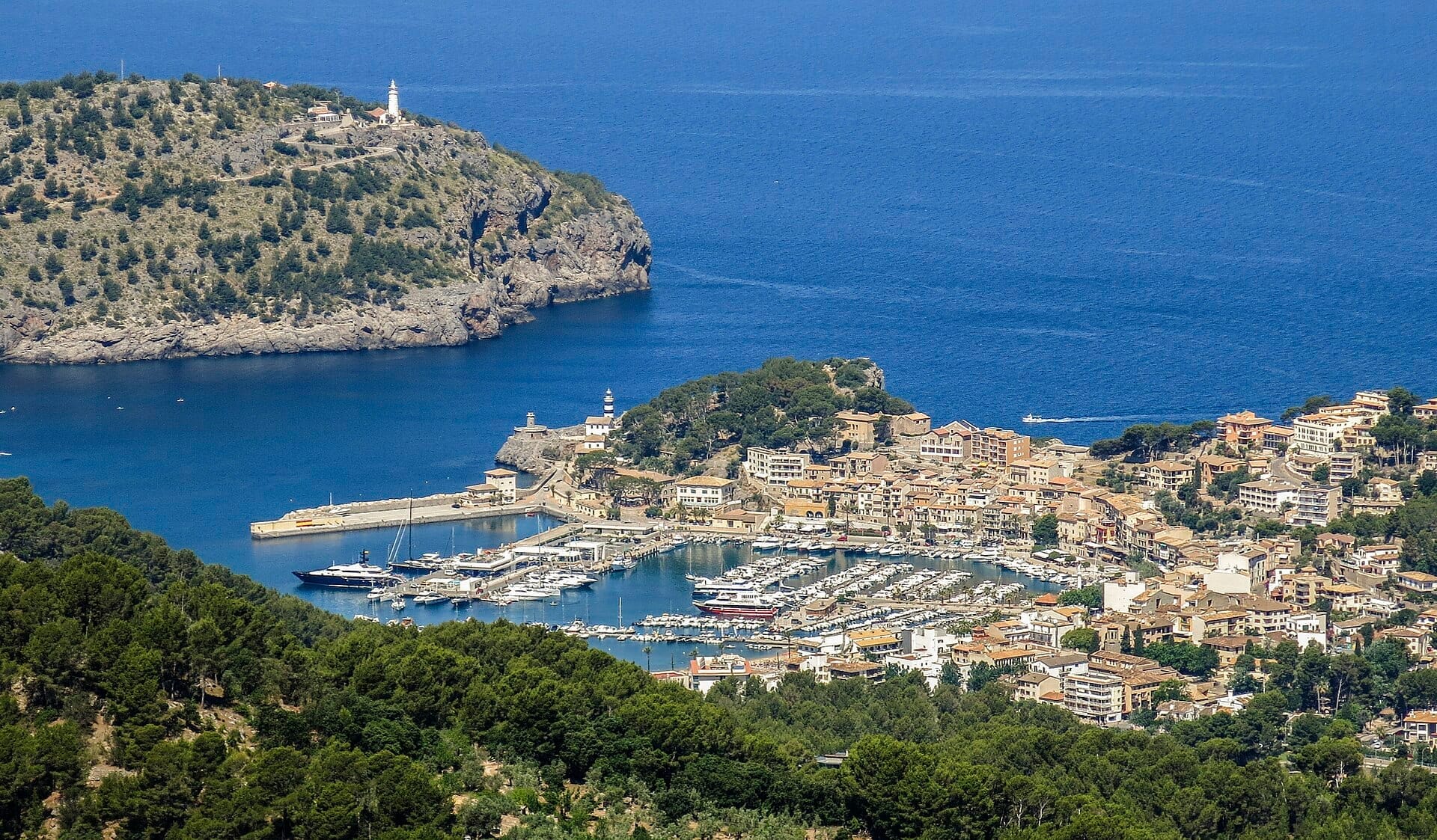
Sóller is an inland market town of around 14,000 people, sitting in a broad valley of orange and lemon groves between the peaks of the Serra de Tramuntana. Three kilometres downhill, Port de Sóller occupies one of the most sheltered bays on the island: a near-perfect horseshoe of water ringed by pine-covered mountains, with a modest promenade that feels genuinely local rather than purpose-built for tourists.
Most visitors combine both in a single day, travelling between them by the Tranvía de Sóller, a narrow-gauge tram built in 1912 that still rattles along the same coastal road at the same unhurried pace. The route takes roughly 20 minutes and passes through small tunnels and orchards. It is not the fastest way to travel 3 kilometres, but that is entirely the point.
💡 Local tip
Arrive in Sóller town before 10:00 to see the Plaça de la Constitució before the tour groups arrive. The train from Palma has a morning departure timed for this — check the current timetable at trendesoller.com before you go.
Getting There: The Journey Is Part of the Experience
The most atmospheric way to arrive is on the Ferrocarril de Sóller, a vintage narrow-gauge train that has been running between Palma and Sóller since 1912. The wooden carriages, brass fittings, and ceiling fans are not a heritage recreation — they are simply unchanged. The train climbs out of Palma's flatlands and into the Tramuntana foothills through citrus groves and tunnels, delivering passengers directly to Sóller's central station. Journey time is approximately one hour.
By car, Sóller is 30–35 km from Palma via the Ma-11 highway, which passes through the Túnel de Sóller, a toll tunnel opened in 1997 that cuts through the mountain range. Cyclists and committed drivers can instead take the old hairpin road over the Coll de Sóller, which is steep, narrow, and genuinely dramatic — see the cycling in Mallorca guide for route details if you are arriving on two wheels. Street parking in the town centre is severely limited; the main car parks sit at the edge of town.
From Sóller town to Port de Sóller, the tram is the obvious choice. It departs from in front of the main train station and runs along a road that passes through the lower valley before descending to the port. The tram is tourist-priced, not a local commuter fare, but the experience of riding open-windowed through the orange groves justifies the cost for most visitors.
Tickets & tours
Hand-picked options from our booking partner. Prices are indicative; availability and final rates are confirmed when you complete your booking.
Mallorca Eastern Coast Roundtrip Boat Trip from Porto Cristo
From 25 €Instant confirmationFree cancellationShuttle Boat from Porto Cristo to Cala Millor
From 29 €Instant confirmationFree cancellationGuided kayak excursion at Port Calanova
From 45 €Instant confirmationFree cancellationEntrance ticket to Caves of Hams in Porto Cristo
From 18 €Instant confirmationFree cancellation
Sóller Town: Architecture, Oranges, and a Particular Quietness
The heart of Sóller is the Plaça de la Constitució, a broad, café-lined square dominated by the Church of Sant Bartomeu. The church's Modernista façade was redesigned in the early 20th century by Joan Rubió i Bellver, a student of Antoni Gaudí, which explains the unusual blend of Gothic proportions and organic Catalan Modernisme detailing. The adjacent neogothic bank building, also by Rubió, gives the square a coherent architectural tone rare in Mallorcan towns of this size.
The surrounding streets are worth slow exploration. Buildings from Sóller's citrus export heyday in the late 19th and early 20th centuries give the town an understated prosperity — wrought-iron balconies, ochre and cream facades, and shuttered windows that stay closed through the midday heat. By mid-morning, the square fills steadily; by midday in summer it is crowded. The streets behind the church, quieter and largely unshaded, are better for unhurried walking once the tour groups have claimed the main square.
Sóller sits within the Serra de Tramuntana, a UNESCO World Heritage landscape recognised for its centuries-old system of terraced agriculture. The valley around town is the clearest example of that system in use: the orange groves covering the valley floor are irrigated by channels that trace their origins to Moorish settlement. The Arabic name for the valley, Sûlyâr, became the modern Sóller.
ℹ️ Good to know
Every May, Sóller hosts Es Firó, a festival reenacting the 1561 repulsion of a Saracen pirate raid. The event involves costumed battles in the streets and is one of the most theatrical local festivals on the island. If your dates overlap, it significantly changes the feel of the town.
Port de Sóller: The Bay in Different Lights
Port de Sóller rewards visitors who stay past the standard lunch-and-leave rhythm. The bay changes character across the day in ways that photographs do not fully capture. In early morning, the water is glassy and the mountains behind the port cast long shadows across the promenade. By noon, the light is flat and the beach is at its most crowded. Late afternoon brings an orange warmth to the limestone walls of the hillside buildings, and the terrace restaurants along the seafront fill with a mix of Spanish families and long-term visitors rather than day-trippers.
The beach itself is a sandy crescent that is decent but not among Mallorca's finest. The real draw is the geometry of the bay: standing at the promenade, you are surrounded on three sides by mountain ridges, with only a narrow channel opening to the sea. It is a notably protected harbour, which is why it served as a Spanish Navy base and why the water is almost always calm.
For a better sense of the port's history, the Museu de la Mar at Carrer de Santa Caterina d'Alexandria 54 covers maritime traditions and local fishing heritage. It is small, thoughtfully curated, and free. Opening hours: Tuesday to Saturday 10:00–15:00, Sunday 10:00–14:00. The hilltop lighthouse above the port is reachable on foot in about 30 minutes from the promenade and offers views across the bay that justify the climb. For broader panoramic options across the region, the best viewpoints in Mallorca guide includes several spots within driving distance.
Photography: What to Shoot and When
The tram is the single most photogenic element of the area, and the best shots are taken from outside it rather than inside. The stretch where the tram passes through the lower orange groves, particularly where it crosses a small bridge before entering the port area, is worth positioning yourself in advance. Early morning light hits the western mountain wall above the port from around 08:00 in summer. For a fuller guide to shooting across the island, see photography in Mallorca.
In Sóller town, the Plaça de la Constitució looks best before 09:30 or after 17:00 when the light is low and the square is quieter. The church's Modernista facade is north-facing, which means it receives diffused light throughout the day and photographs cleanly without harsh shadows. The side streets running east from the square, lined with older stone houses and wooden shutters, offer the most authentically Mallorcan street photography opportunities.
Practical Walkthrough: How to Structure Your Day
A full day structured around both towns works well starting with the morning train from Palma, arriving in Sóller around 10:00. Spend two hours in the town: walk the Plaça, look inside Sant Bartomeu, and explore the quieter streets east of the square. Coffee from one of the bakeries on the plaza is better value than the main terrace cafés. Then take the tram to Port de Sóller for midday, walk the promenade, visit the Museu de la Mar, and swim if the beach appeals. Take the tram back to Sóller for a late lunch — the restaurants on the side streets near the market area are consistently better value than the port-front options. Return to Palma by the afternoon train. If you are driving, consider the route onward through the Tramuntana toward Valldemossa or Deià, both under 20 minutes south along the mountain road.
Accessibility note: the tram and main promenade at Port de Sóller are manageable for most mobility levels, though the tram has a step entry and no ramp. Sóller town's streets involve some gentle gradients, and the approach to the lighthouse and most mountain paths in the area require reasonable fitness. The tunnel road into town by car is the most accessible arrival option.
⚠️ What to skip
The train and tram are popular and can sell out during summer peak days, particularly in July and August. Book train tickets online at trendesoller.com in advance if you are visiting between June and September. Tram tickets can usually be bought on the day, but morning slots fill quickly.
Honest Assessment: Is It Worth Your Time?
For many visitors, Sóller and Port de Sóller represent exactly what they hoped Mallorca would be: a place with genuine character, a working relationship with its landscape, and architecture that reflects actual history rather than resort-era construction. The train journey alone is worth it for anyone arriving by public transport. The port's beach is pleasant but secondary to the setting. If you have already visited the Sóller train as a standalone experience, plan to spend real time in both towns rather than treating them as photo stops.
Who might find this less rewarding: travellers primarily seeking beach time will find the port's beach small and the water crowded by midday in summer. Anyone with limited mobility should know that the wider landscape around both towns, including most of the hiking trails, involves significant elevation change. And visitors expecting a quiet discovery will find that Sóller town, while not overrun, is firmly on the tour-group circuit by late morning in peak season.
Insider Tips
- The return train from Sóller to Palma in late afternoon fills up fast in summer. Book a round-trip ticket in the morning if you want a guaranteed seat on the way back.
- The market in Sóller's Plaça de la Constitució runs on Saturday mornings and is the best time to buy local citrus products, olive oil, and ensaïmades directly from producers.
- For the lighthouse view without the climb, take the road that runs above the port's western headland by car or taxi — the elevated perspective across the bay is cleaner than anything you get at sea level.
- The restaurants immediately adjacent to Port de Sóller's beach promenade charge significantly more than equivalent places two streets back. Walk inland from the front for better food at lower prices.
- Winter visits to Sóller, particularly in January and February, coincide with almond blossom season in the valley. The combination of pink and white flowers against the mountain backdrop is one of Mallorca's more underrated visual experiences.
Who Is Sóller & Port de Sóller For?
- Travellers wanting Mallorcan architecture and town life without driving deep into the mountains
- Families with older children who enjoy scenic train journeys and calm bay swimming
- Photographers targeting golden-hour mountain and harbour compositions
- Day-trippers from Palma wanting a structured, public-transport-friendly excursion
- History-minded visitors interested in Moorish agricultural heritage and Catalan Modernista architecture
Nearby Attractions
Other things to see while in Serra de Tramuntana:
- Deià
Perched above olive groves on the northwestern cliffs of Mallorca's Serra de Tramuntana, Deià has drawn artists, writers, and travelers for decades. The honey-colored stone houses, the smell of wild rosemary on the lane up to the church, and the long views over the Mediterranean make it genuinely special. But it rewards slow visitors, not quick stop-and-snap day-trippers.
- Fornalutx
Perched in the Serra de Tramuntana above Sóller, Fornalutx is a compact stone village of about 700 people that has won national recognition for how well it has been preserved. The streets are steep, the buildings are honey-coloured, and the orange groves press in close on every side. Entry is free, the walk takes one to two hours, and it pairs naturally with a day in Sóller.
- Jardines de Alfabia
Set against the Serra de Tramuntana mountains, Jardines de Alfabia is a layered estate with roots in 13th-century Moorish Mallorca. Its terraced gardens, vaulted cistern, famous water pergola, and Baroque manor house make it one of the island's most rewarding half-day visits for anyone interested in history, botany, or architecture.
- Mallorca Cycling (Sa Calobra & Tramuntana Routes)
The Sa Calobra climb is the centerpiece of road cycling in Mallorca, winding 9.5 km through 26 hairpin bends into the heart of the UNESCO-listed Serra de Tramuntana. Whether you're a seasoned climber chasing Strava times or a touring cyclist exploring one of Europe's most dramatic mountain landscapes, these routes deliver scenery and challenge in equal measure.