Fornalutx: Mallorca's Most Photogenic Mountain Village
Perched in the Serra de Tramuntana above Sóller, Fornalutx is a compact stone village of about 700 people that has won national recognition for how well it has been preserved. The streets are steep, the buildings are honey-coloured, and the orange groves press in close on every side. Entry is free, the walk takes one to two hours, and it pairs naturally with a day in Sóller.
Quick Facts
- Location
- Serra de Tramuntana, northwest Mallorca. Approx. 30 km from Palma.
- Getting There
- Drive via Ma-11 to Sóller, then follow signs (10 min). No direct public bus to the village centre; the closest regular service stops in Sóller.
- Time Needed
- 1 to 2 hours to explore the village; half a day if combining with Sóller or a walk.
- Cost
- Free. No admission fee for the village, streets, or main square.
- Best for
- Architecture lovers, photographers, walkers, slow-travel couples, families with older children.
- Official website
- ajfornalutx.net
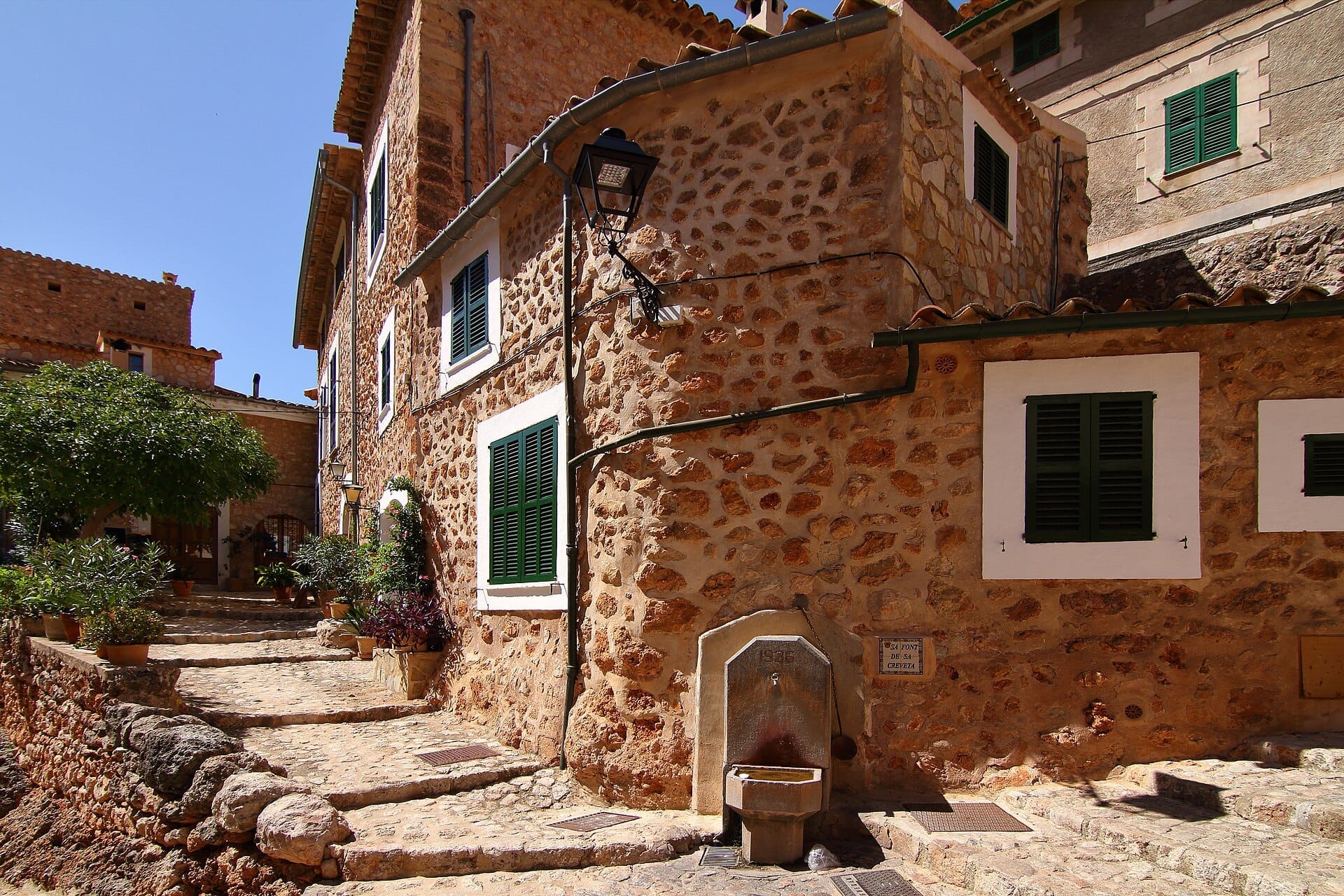
What Fornalutx Actually Is
Fornalutx is a small municipality in the Serra de Tramuntana with a population of around 700, spread across 19.5 square kilometres of terraced mountain slopes. The village itself is compact enough to walk in under two hours, but it earns its reputation not through size but through consistency: almost every surface is original stone, the proportions of the buildings are unchanged, and the backdrop of orange and lemon groves pressing against the lower walls feels genuinely agricultural rather than decorative.
The area has been settled for over a thousand years, beginning as an Arab farmstead before passing into Catalan hands after the 13th-century conquest of Mallorca. The village became an independent municipality in 1837, having previously been administered from Sóller. Its parish church dates from 1639 and anchors the upper part of the village. In 1983, Fornalutx received both a Mallorcan Tourism Silver Plaque and a national prize for the maintenance of its townscape. That combination of awards is a useful signal: this is a place taken seriously by people who know Spanish village architecture.
ℹ️ Good to know
Fornalutx is an open village with no ticket booth or timed entry. You can arrive and leave at any point during daylight hours. Parking is limited at peak times (late morning to mid-afternoon in summer), so arriving before 10:00 or after 16:00 is significantly easier.
How It Feels to Walk Through
The first thing you notice entering Fornalutx is the texture of the streets. The lanes are paved with irregular sandstone slabs worn smooth by centuries of foot traffic, edged with low terracotta pots and the occasional cat occupying a doorstep with complete indifference to visitors. The buildings are the same warm ochre-gold that you find elsewhere in the Tramuntana, but here the density and consistency of the stonework is unusually high. Almost nothing looks renovated into blandness.
The incline is real. The village climbs the hillside in a series of steps and short ramps, and by the time you reach the church square at the top, you have earned the view. From Plaça d'Espanya, the land drops away across citrus terraces toward the Sóller valley, with the ridgeline of the Tramuntana forming the horizon. In morning light, the groves catch the sun from a low angle and the whole valley floor seems to glow faintly yellow-green. In the afternoon, the light hardens and the mountains go blue-grey. Both versions are worth seeing.
The sounds are part of it too. Water channels run alongside several lanes, producing a consistent low murmur that is easy to miss until you stop and listen. In spring, the smell of orange blossom is almost overwhelming near the lower terraces. In summer, it is heat and stone and the faint sweetness of overripe fruit. The village does not try to amplify any of this for tourists; it simply continues at its own pace, which is what makes it feel worth the trip.
Tickets & tours
Hand-picked options from our booking partner. Prices are indicative; availability and final rates are confirmed when you complete your booking.
Dinosaurland and Caves of Hams combined ticket
From 25 €Instant confirmationFree cancellationShuttle Boat from Cala Millor to Cala Ratjada
From 26 €Instant confirmationFree cancellation3-hour Es Trenc Boat Tour in Mallorca
From 39 €Instant confirmationFree cancellationShuttle Boat Roundtrip from Cala Bona to Cala Ratjada
From 29 €Instant confirmationFree cancellation
The Best Time to Visit
Late morning in midsummer is the busiest window, when tour groups from Sóller and day-trippers from Palma converge on the main square. The lanes are narrow, and even moderate crowd numbers make the upper streets feel congested. Arriving before 10:00 gives you the village largely to yourself: the light is still directional and soft, the cafes are just opening, and you can hear the water channels clearly.
Spring is the strongest overall season. Between February and April, the almond and citrus trees are in various stages of bloom, the air temperature is comfortable for walking, and the tourist pressure is light. Autumn runs a close second. July and August are perfectly viable but require the early-morning strategy.
Winter visits are underrated. The village empties almost entirely, a few local bars remain open, and the Tramuntana mountains above often carry snow on the upper ridges. If you are building a broader winter itinerary, see the notes in our guide to the best time to visit Mallorca for seasonal trade-offs across the island.
Getting There and Logistics
The most practical approach is to drive from Palma via the Ma-11, passing through the tunnel or the old mountain road to Sóller, then following signs to Fornalutx for a further 10 to 15 minutes. The total journey from Palma takes around 40 minutes under normal conditions. From Palma Airport, allow 40 to 60 minutes depending on traffic around the city.
There is no direct public bus service to Fornalutx village. The closest option is taking a bus or the historic Sóller train from Palma to Sóller, then either walking (around 1.5 hours on a signposted path through the orange groves) or taking a taxi from Sóller's main square, which costs a few euros and takes under 10 minutes.
Parking in the village is limited to a small area below the main square. In summer, this fills before 11:00 on most days. Parking back in Sóller and walking up is a reasonable alternative, and the path through the terraces is genuinely pleasant. The walk is well-marked and mostly shaded in the lower sections.
⚠️ What to skip
The stone streets are uneven and often steep. Flat-soled shoes or trainers are fine; sandals with poor grip are not. The village is not accessible for wheelchairs or pushchairs due to the steps and gradient throughout most of the route.
The Architecture and History in Detail
The parish church of Sant Bartomeu, rebuilt in its current form in 1639, dominates the upper village. Its facade is plain by Baroque standards, which is typical of Mallorcan religious architecture in this period. The interior is modest but the building functions as a genuine anchor for the surrounding square, which has a terrace cafe on one side and uninterrupted valley views on the other.
Below the church, the residential lanes contain vernacular architecture that dates from several centuries of continuous occupation. Many houses have exterior stone staircases leading to upper floors, wrought-iron window grilles, and the characteristic Mallorcan wooden shutters in faded green or dark blue. Window boxes are common but not uniform. None of this has been standardised for tourist appeal, which is precisely why it works.
Fornalutx sits within the Serra de Tramuntana, which was designated a UNESCO World Heritage Cultural Landscape in 2011 in recognition of its terraced agricultural system and dry-stone architecture. The water channels visible throughout the village are part of that same legacy, an Arab-origin irrigation system that has been maintained and adapted for a thousand years. The surrounding landscape is explored further in our Serra de Tramuntana guide.
Combining Fornalutx with the Rest of Your Day
Most visitors pair Fornalutx with Sóller and Port de Sóller. This works well: arrive in Sóller in the morning, take the historic tram down to the port for lunch, then drive up to Fornalutx in the mid-afternoon when the light is good and some of the midday crowds have thinned. The two villages have a different character. Sóller is a working town with a market, restaurants, and noise. Fornalutx is quieter and slower, better suited to wandering without a plan.
For those interested in the broader mountain landscape, the road northwest toward Sa Calobra continues through some of the most dramatic scenery in the Tramuntana. Walkers with more time can explore the marked trails above the village, which connect to longer routes through the mountain range. A practical overview of the options is in our hiking in Mallorca guide.
There are a couple of small cafes and bars in the village, and at least one restaurant near the main square. Options are limited, so if you have dietary requirements or are visiting with children who need specific food, eating in Sóller before or after is the safer choice.
Photography Notes
Fornalutx photographs extremely well but rewards patience over speed. The standard shots from the main square are good but predictable. The more interesting frames come from the lower lanes, where the combination of stone walls, hanging plants, and the valley below creates natural layering. Early morning gives warm directional light falling across the stonework. Overcast days are underrated here because they reduce the harsh shadows between buildings and allow the textures of the stone to read more clearly.
If photography is a significant part of your trip, the Tramuntana region as a whole offers an exceptional range of subjects within short driving distances. The Mallorca photography guide covers specific locations, light conditions, and timing across the island.
Who Should Consider Skipping It
Fornalutx is not for everyone. If your priorities are beach time, nightlife, or major museums, the 40-minute drive from Palma is hard to justify for what is essentially a short walk through a small village. The experience is one of atmosphere and architecture rather than activities. Travellers who need a packed itinerary to feel satisfied may find the pace frustrating.
Visitors with limited mobility should be aware that the entire historic centre involves steps and steep gradients. The main square is reachable by car and has a flat terrace area, but the lanes below and above are not manageable in a wheelchair. This is an honest structural limitation of the village, not something that is likely to change.
Insider Tips
- The walk from Sóller to Fornalutx through the orange grove terraces is well-marked, takes about 90 minutes at a relaxed pace, and is one of the most pleasant short walks in the Tramuntana. It also solves the parking problem entirely.
- The terrace cafe on Plaça d'Espanya opens early and serves coffee with a direct view down the valley. Sitting there for 20 minutes before the tour groups arrive from Sóller is one of the better free experiences in this part of Mallorca.
- The lower lanes below the main square get less foot traffic and have some of the most photogenic doorways and staircases in the village. Most visitors head straight up to the church square and miss them entirely.
- If you are driving the Ma-10 scenic road through the Tramuntana, Fornalutx is a natural stopping point roughly midway. Plan the stop as a leg-stretch of 60 to 90 minutes rather than a dedicated destination and you will not feel rushed.
- The village celebrates local festivals in summer, including Sant Bartomeu in late August. On those dates the square fills with locals and the atmosphere is noticeably different from a regular tourist visit. Dates change slightly year to year, so check the municipal website before travelling.
Who Is Fornalutx For?
- Architecture and heritage travellers who want to see genuine, unrestored vernacular building in context
- Photographers looking for textured stone streets, layered valley views, and warm Mediterranean light
- Couples on slow-travel itineraries who prefer atmosphere over activities
- Hikers using the village as a start or end point for Tramuntana walking routes
- Families with older children who are comfortable with uneven, steep terrain and a leisurely pace
Nearby Attractions
Other things to see while in Serra de Tramuntana:
- Deià
Perched above olive groves on the northwestern cliffs of Mallorca's Serra de Tramuntana, Deià has drawn artists, writers, and travelers for decades. The honey-colored stone houses, the smell of wild rosemary on the lane up to the church, and the long views over the Mediterranean make it genuinely special. But it rewards slow visitors, not quick stop-and-snap day-trippers.
- Jardines de Alfabia
Set against the Serra de Tramuntana mountains, Jardines de Alfabia is a layered estate with roots in 13th-century Moorish Mallorca. Its terraced gardens, vaulted cistern, famous water pergola, and Baroque manor house make it one of the island's most rewarding half-day visits for anyone interested in history, botany, or architecture.
- Mallorca Cycling (Sa Calobra & Tramuntana Routes)
The Sa Calobra climb is the centerpiece of road cycling in Mallorca, winding 9.5 km through 26 hairpin bends into the heart of the UNESCO-listed Serra de Tramuntana. Whether you're a seasoned climber chasing Strava times or a touring cyclist exploring one of Europe's most dramatic mountain landscapes, these routes deliver scenery and challenge in equal measure.
- Sa Calobra & Torrent de Pareis
Sa Calobra and the Torrent de Pareis form one of the most striking natural landscapes in the western Mediterranean: a 300-metre-deep limestone gorge that opens onto a sheltered pebble beach. The journey to reach it, whether by the legendary corkscrew road or by boat from Sóller, is half the experience.