Alcúdia Old Town: Walking Inside Mallorca's Best-Preserved Medieval Walls
Alcúdia Old Town is the most historically layered settlement in Mallorca, with Talaiotic origins, Roman ruins, and intact 14th-century walls enclosing narrow cobbled streets, a neo-Gothic church, and a twice-weekly market. Entry is free, and the atmosphere shifts dramatically between early morning calm and midday tour-group activity.
Quick Facts
- Location
- Old Town, Alcúdia, 07400 Mallorca — northern coast, approx. 60 km from Palma
- Getting There
- Bus line 322 from Palma Airport; by car approx. 45 min from Palma via MA-13. Walkable from Port d'Alcúdia (3 km)
- Time Needed
- 2–3 hours for walls circuit, old town, and church; half-day on market days (Tue & Sun)
- Cost
- Free — open public pedestrian zone with no admission charge
- Best for
- History lovers, photographers, families, slow-travel visitors
- Official website
- www.alcudia.net/en
What Alcúdia Old Town Actually Is
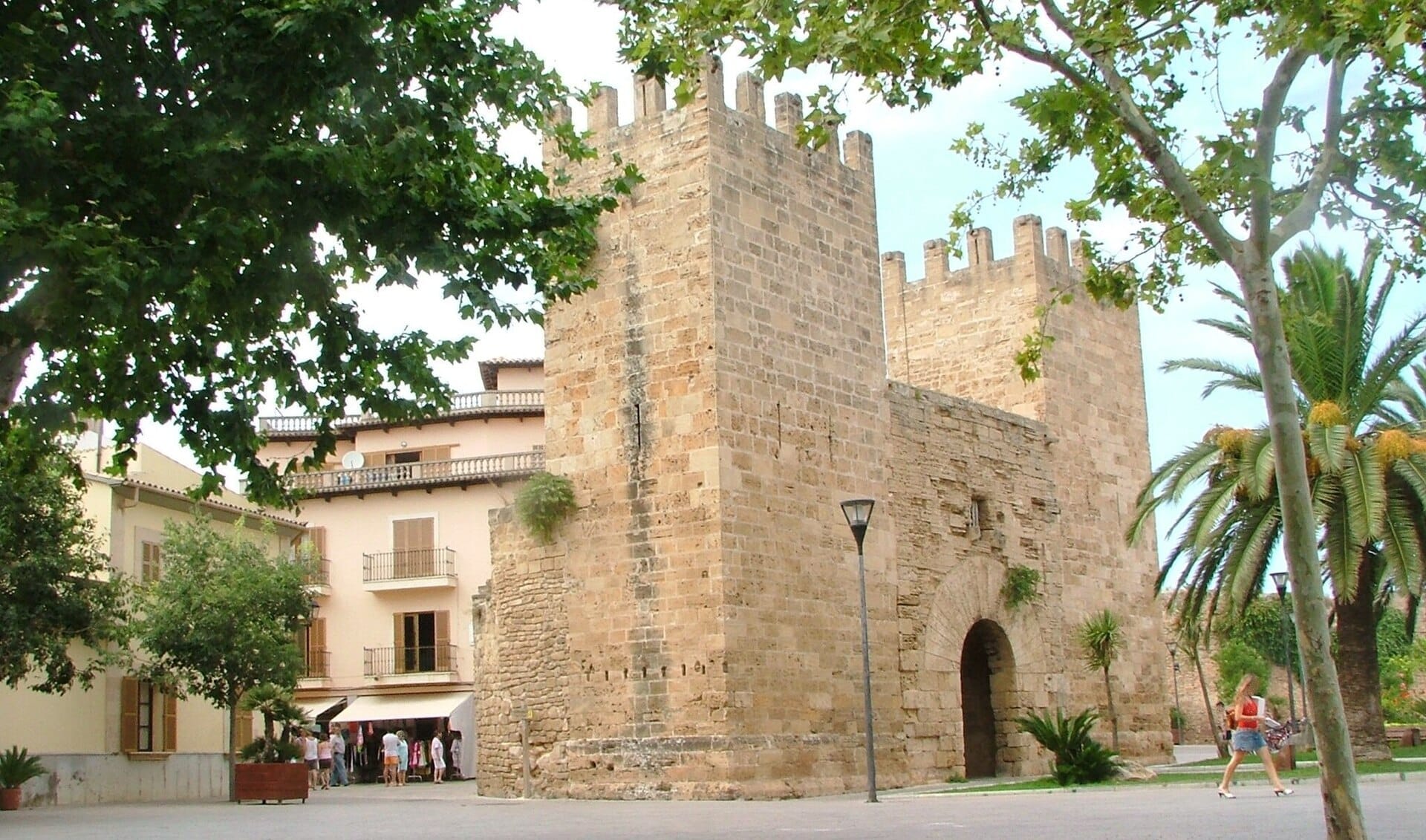
Alcúdia Old Town (Catalan: Ciutat Vella d'Alcúdia) is widely regarded as Mallorca's oldest continuously inhabited settlement, with evidence of human presence stretching back over 4,000 years to the Talaiotic period. The Romans founded their city of Pollentia here in 123 BC, and the ruins of that settlement sit immediately adjacent to the walled town today. What visitors walk through now is a compact medieval core enclosed by restored 14th-century walls, with two main gates, a circuit of walkable ramparts, a striking neo-Gothic church, and streets narrow enough that the shade arrives early.
This is not a theme park reconstruction. The walls are genuinely medieval, reinforced over centuries against pirate raids and invasion. The cobblestones are original enough to make you pay attention to your footing. The houses are lived in. That combination of authentic layering, from Roman foundations to Moorish occupation to Aragonese fortification, is what separates Alcúdia from prettier but shallower villages elsewhere on the island.
💡 Local tip
Arrive before 10am on any day, or after 5pm in summer. The old town handles crowds poorly due to its narrow street grid, and tour groups from Port d'Alcúdia and Port de Pollença begin arriving mid-morning.
The Walls: A 2 km Circuit Worth Every Minute
The defensive walls of Alcúdia are the defining feature of the old town and the first thing to understand before going anywhere else. Built primarily in the 14th century and later expanded, they encircle the historic core almost completely, punctuated by circular towers and two main gates. The Porta de Sant Sebastià, also called Puerta de Mallorca, is the main entry point from the south and functions as both a photo stop and a literal threshold into a different era. The Xara Gate (Porta del Moll) opens toward the port side.
The walkway along the top of the walls is accessible from multiple points and offers elevated views over the terracotta rooftops and, on clear days, across to the bay. The surface is uneven in places, and sections require careful footing. The full circuit takes 30 to 45 minutes at a relaxed pace. In the morning light, the ochre stone catches a warm tone that makes this one of the more rewarding photography walks in northern Mallorca.
Photographers should note that the walls face west at their best-lit section, making late afternoon the optimal time for wall exteriors, while the interior streets are best shot in the soft morning light. For broader context on where this fits into the island's photography opportunities, see our Mallorca photography guide.
⚠️ What to skip
The walls walkway has sections with low or missing handrails and uneven stone surfaces. Wheelchair access to the ramparts is very limited. The cobbled streets below are also difficult for pushchairs and mobility aids.
Tickets & tours
Hand-picked options from our booking partner. Prices are indicative; availability and final rates are confirmed when you complete your booking.
Alcudia guided sea kayaking tour with snorkeling
From 46 €Instant confirmationFree cancellationLighthouse Island 60-minutes tour from Alcudia
From 159 €Instant confirmationFree cancellation60-minute sunset tour from Alcudia
From 169 €Instant confirmationFree cancellationSmall group guided snorkelling tour in the Bay of Pollenca
From 55 €Instant confirmationFree cancellation
Roman Pollentia and the Archaeological Layer
Immediately outside the medieval walls, on the south side of the old town, lie the excavated remains of Pollentia, the Roman city founded in 123 BC following Rome's conquest of the Balearic Islands. This is one of the most significant Roman archaeological sites in Spain, and it sits so close to the medieval gate that you can walk between two entirely different civilizations in under three minutes.
The ruins include the forum, residential streets, and a theatre that was in active use for centuries. The adjacent Museu Monogràfic de Pollentia houses artifacts recovered from the site, including ceramics, coins, and sculptural fragments, giving context to what otherwise appears as low stone walls and foundation outlines. Check current opening hours and admission locally before visiting, as the museum operates on a seasonal schedule.
The archaeological depth of Alcúdia connects it to a broader tradition of ancient Mallorcan sites. If you are interested in prehistoric Mallorca specifically, the Bronze Age settlement at Ses Païsses near Artà represents the Talaiotic period that predates even Pollentia.
The Church of Sant Jaume and the Town Center
The Church of Sant Jaume dominates the interior of the old town from its elevated position near the center. The current structure is neo-Gothic, consecrated in 1893, though a church has stood on this site since the Christian reconquest of Mallorca in the 13th century. The facade is relatively austere by Mallorcan standards, but the interior rewards a brief visit: the light filtering through the nave in the morning gives the stone a particular warmth, and the scale of the space relative to the surrounding streets is striking.
The square in front of the church, Plaça de la Constitució, is the social heart of the old town. Café tables occupy the edges most of the day. On weekday mornings it is quiet enough to hear the fountain. By midday in summer it fills with foot traffic and the ambient noise of a town fully in tourist season. If you want to sit here with a coffee and feel the town rather than observe it from behind a camera, arrive before 9:30am.
Tuesday and Sunday Markets
Twice a week, the old town and its immediate surroundings host one of the most popular markets in northern Mallorca. Tuesday and Sunday mornings see the streets fill with stalls selling produce, leather goods, ceramics, clothing, and the kind of tourist souvenirs you will find at every Mallorcan market. The atmosphere is genuinely lively from around 9am until early afternoon, and the old town's contained street plan concentrates the activity in a way that feels immersive rather than sprawling.
Be realistic about what you will find: this is not an artisan-only market. Quality varies considerably, and the most photogenic stalls (fresh fruit, dried herbs, local cheese) are mixed in with generic imports. The best reason to come on a market day is the energy it brings to the old town as a whole, not necessarily the shopping itself.
If you are building a market-focused day, the Wednesday market in Sineu is widely considered the most authentic on the island for local produce and livestock, and worth comparing to Alcúdia's larger but more tourist-oriented version.
Getting There and Getting Around
Alcúdia Old Town sits in the northern part of the island, roughly 54 km from Palma by road. The drive takes approximately 45 minutes via the MA-13 motorway, and there is paid parking available outside the walls. Bus line 322 connects Palma Airport to Alcúdia, making it technically accessible without a car, though journey times and frequency vary by season. Verify current schedules directly with the operator before planning a day trip on public transport.
If you are basing yourself nearby, Port de Pollença is about 10 km to the northwest and makes a logical combination. The Port de Pollença area has a different character entirely, calmer and more residential, and pairs well with an early morning Alcúdia visit before the crowds build.
For visitors without a car, understanding bus connections and routes across the island is essential. Our guide to getting around Mallorca covers current bus networks, the Sóller train, and when renting a car is genuinely worth it.
Within the old town itself, all movement is on foot. The pedestrianized zone is compact enough that you will cover the main circuit naturally without a map, though having one helps for finding the wall access points. Comfortable shoes with grip are recommended. The cobblestones become particularly uneven near the older residential streets away from the main square.
Who Will Enjoy This and Who Should Reconsider
Alcúdia Old Town is one of the few places in Mallorca where the depth of history is genuinely accessible and free. You do not need to book anything in advance, pay for entry, or follow a tour guide to understand what you are looking at. The combination of walkable walls, Roman ruins next door, a working market, and a lived-in medieval streetscape is difficult to find elsewhere on the island at zero cost.
That said, visitors looking for polished visitor infrastructure may be disappointed. The signage inside the old town is limited, the museum operates seasonally, and the experience is largely self-guided. If you are traveling with very young children or anyone with limited mobility, the cobblestones and wall steps make this a tiring rather than relaxing visit. In peak July and August, the old town between 11am and 4pm is genuinely uncomfortable due to heat and crowd density.
ℹ️ Good to know
Alcúdia Old Town is entirely free to enter and explore. The adjacent Museu Monogràfic de Pollentia and the Roman ruins of Pollentia may charge a separate admission and operate on seasonal hours — confirm locally before visiting.
Insider Tips
- The best wall photography happens in the 45 minutes before sunset when the western-facing towers go amber. Come back in the evening even if you visited in the morning.
- On non-market days, the old town is genuinely quiet between 8am and 9:30am. The café on Plaça de la Constitució opens early and is almost always empty before the first tour groups arrive.
- The Roman theatre at Pollentia hosts outdoor concerts and performances during summer, usually in July and August. Check the Alcúdia municipality website for the schedule before your visit.
- The narrow street of Carrer de l'Oms, running parallel to the main square, has the oldest-looking residential facades in the old town and is consistently overlooked by visitors following the main tourist route.
- If you are driving, arrive before 9am to use the free street parking on the approach roads outside the walls. The paid car parks fill quickly on market days, and the overflow situation in summer is significant.
Who Is Alcúdia Old Town For?
- History and archaeology enthusiasts who want more than a beach itinerary
- Photographers working in early morning light
- Families with older children who can manage cobblestones and walking
- Slow travelers basing themselves in northern Mallorca for several days
- Budget-conscious visitors: the entire old town experience costs nothing beyond food and drink
Nearby Attractions
Other things to see while in Alcúdia:
- Cala Molins
Cala Molins is one of four sandy coves that make up the Cala Sant Vicenç resort, 7 km from Pollença in northern Mallorca. Backed by pine-covered cliffs and residential houses, it offers fine sand, unusually clear water, and a calmer atmosphere than the island's more famous southern beaches. Entry is free.
- Formentor Peninsula
The Formentor Peninsula stretches 20 kilometres into the Mediterranean from northern Mallorca, combining sheer limestone cliffs, a pine-fringed beach, and a historic lighthouse at its northernmost tip. Access is by mandatory shuttle bus during peak summer hours, so planning matters. Here is what you need to know before you go.
- Playa de Muro
Stretching 6 kilometres along the Bay of Alcúdia, Playa de Muro combines Blue Flag facilities with untouched dune corridors and pine-backed shore. It is one of the longest and most ecologically significant beaches in Mallorca, sitting directly beside S'Albufera Natural Park.
- Pollença Old Town
Pollença Old Town sits inland from the Bay of Pollença, a compact medieval settlement of limestone streets, a 13th-century parish church, and a staircase of 365 cypress-lined steps. It rewards slow walkers, early risers, and anyone who prefers genuine Mallorcan life over resort noise.