Port de Pollença: Mallorca's Most Relaxed Northern Resort
Port de Pollença sits at the quieter end of Mallorca's northern coastline, wrapping around a calm bay with a long pine-lined promenade, traditional fishing boats, and the dramatic Formentor peninsula just up the road. It rewards those who prefer atmosphere over spectacle.
Quick Facts
- Location
- Bay of Pollença, northern Mallorca, ~60 km northeast of Palma
- Getting There
- Drive Ma-13 from Palma (~55 min); TIB bus line 340 from Palma or Alcúdia
- Time Needed
- Half day minimum; full day if combining beach, port, and Boquer Valley
- Cost
- Free to explore; restaurants and watersports vary
- Best for
- Couples, slow travellers, photographers, walkers
- Official website
- www.pollensa.com/en
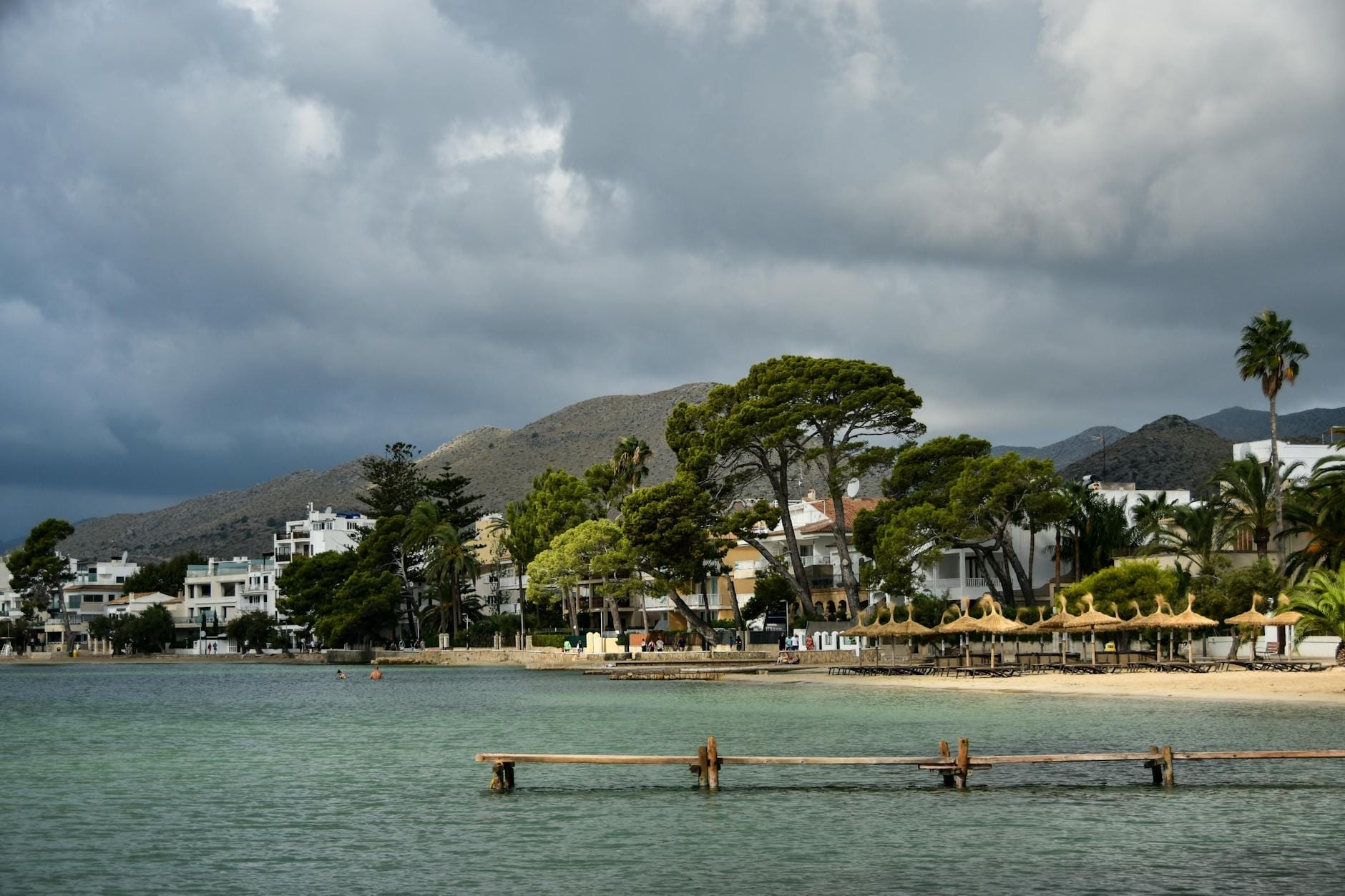
What Port de Pollença Actually Is
Port de Pollença is a small coastal town on the Bay of Pollença in the far north of Mallorca, sitting roughly 60 kilometres northeast of Palma and about 6 kilometres from its inland parent town of Pollença. It is, by any measure, one of the most composed resort towns on the island: low-rise, unhurried, and oriented around a sweeping bay rather than a strip of bars. The residential fabric is genuine — people actually live here year-round — which gives it a texture that purpose-built resorts lack.
The town splits loosely into areas: the central port and its old fishing quay (Moll Vell), the seafront promenade known locally as the Pine Walk, and quieter residential zones like Llenaire and Gotmar that stretch north and south along the bay. Behind them, the Serra de Tramuntana mountains and the Formentor peninsula frame the horizon in a way that makes almost any photograph from the waterfront look composed.
ℹ️ Good to know
Port de Pollença has no gates or admission fees — it is a living town, not a managed attraction. The beach, promenade, and port area are all publicly accessible year-round.
The Pine Walk: Mallorca's Most Civilised Promenade
The centrepiece of any visit is the Passeig Saralegui, universally called the Pine Walk — a seafront promenade lined with old pine trees that runs the length of the bay. At roughly 1.5 kilometres, it is long enough to feel like a genuine stroll rather than a token strip, and wide enough that the restaurants, cafes, and souvenir shops along one side never feel like they are pressing in on you.
Early morning is the most revealing time to be here. Before 9am, the light comes low across the bay from the east, the water is flat, and the only people you share it with are local dog-walkers and the occasional cyclist. By 10am the first terrace coffees are being served; by noon the walk is lively with families and the smell of sunscreen mixing with the faint salt of the bay. In July and August, the afternoon heat drives most people off the promenade entirely, which is when the beach and its shade become more appealing.
At sunset, the dynamic reverses. The light turns the Tramuntana foothills to the west a deep amber, and the promenade fills again for the pre-dinner paseo. This is the most photogenic hour, and it costs nothing except patience.
For a broader look at where Port de Pollença fits on the island's northern coast, the Alcúdia area guide covers the surrounding region well, including transport connections and seasonal patterns.
Tickets & tours
Hand-picked options from our booking partner. Prices are indicative; availability and final rates are confirmed when you complete your booking.
Mallorca Eastern Coast Roundtrip Boat Trip from Porto Cristo
From 25 €Instant confirmationFree cancellationSmall group guided snorkelling tour in the Bay of Pollenca
From 55 €Instant confirmationFree cancellationScuba programme first-time diving experience in the Bay of Pollenca
From 110 €Instant confirmationFree cancellationShuttle Boat from Porto Cristo to Cala Millor
From 29 €Instant confirmationFree cancellation
The Fishing Port and Moll Vell
At the southern end of the Pine Walk, where the promenade curves inland, you reach the Moll Vell — the old port. Traditional wooden fishing boats called llaüts still tie up here alongside more modern vessels, and La Llonja fish market operates in the mornings when the catch comes in. The smell is salt, diesel, and occasionally fresh fish, and the contrast with the manicured promenade fifty metres away is sharp enough to feel honest.
The Club Nàutic Port de Pollença, founded in 1961 and awarded Royal status in 1993, operates from the modern marina beside the old quay. The two sit in proximity but belong to different eras: recreational sailing and motor yachts on one side, working boats on the other. If you want to understand why Port de Pollença holds its character while many Mallorcan resorts have lost theirs, this corner is the best single illustration.
💡 Local tip
Arrive at the Moll Vell between 8am and 10am on weekdays to catch the fish market at its most active. The catch is modest by commercial standards, but watching the sorting and pricing of the morning haul is genuinely interesting.
The Beach and the Bay
The beach at Port de Pollença — Platja de Llenaire — runs along the bay to the north of the Pine Walk and extends for around 1,500 metres of pale sand. The water in the Bay of Pollença is notably calm; the bay is enclosed enough to block Atlantic swells, making it a reliable choice for families and anyone who prefers swimming in flat water. The sea floor is sandy and the gradient gentle, which also makes it popular for paddleboarders and kayakers.
The beach itself is not especially dramatic. There are no cliffs, no coves, no particularly remarkable geology. What it offers instead is usability: clean water, manageable crowds outside peak summer, and the backdrop of the Formentor peninsula to the north. In July and August the beach fills up by mid-morning; in May, June, September, and October it is spacious and the water temperature still comfortable. If you are visiting in the height of summer and want a beach with more character or fewer people, you will find better options elsewhere on the island.
For beaches with more dramatic settings, the guide to the Formentor Peninsula covers the beaches and viewpoints accessible by road just 13.5 kilometres to the north.
Boquer Valley: The Walk Worth Taking
The Boquer Valley trail begins near the northeastern edge of town, passing through a gate beside a farmhouse and climbing gently into a narrow valley between limestone ridges. The walk to the coast at Cala Boquer and back takes roughly two hours at a moderate pace, and the terrain is rocky rather than technical. Wear proper shoes; the path is loose and uneven in places.
The valley is one of the best birdwatching sites in Mallorca, particularly during spring and autumn migration. Eleanor's falcons, Audouin's gulls, and Eurasian hoopoes have all been recorded here. Near the trailhead, there are traces of the pre-Roman settlement of Bocchoris, though they require knowing what to look for. The walk ends at a small cove with clear water and no facilities. Take water, because there are none on the route.
⚠️ What to skip
The Boquer Valley path can be hot and exposed in summer. Start before 8am or after 5pm in July and August. The cove at the end has no shade and no services — bring more water than you think you need.
If walking is a priority during your visit, the hiking guide for Mallorca covers longer routes through the Tramuntana range and how to combine day walks from Port de Pollença with the wider region.
Historical Context and How the Town Got Here
Port de Pollença spent most of its history as a minor fishing harbour, overshadowed by the inland town of Pollença, which itself traces its name to the Roman city of Pollentia further south near present-day Alcúdia. The coastal location was periodically dangerous during periods when piracy and raids made waterfront settlement risky, which explains why the region's population historically gravitated inland.
Small-scale tourism began in the 1920s, when artists and early travellers discovered the quality of the light and the calm of the bay. The English watercolourist Charles Tunnecliffe was among those who worked here. Mass tourism arrived in the 1960s, as it did across most of the Balearics, but Port de Pollença absorbed it more gently than many other towns, partly because of its physical geography and partly because the local character had already been set by an earlier, quieter kind of visitor.
Getting There and Getting Around
By car, Port de Pollença is reached via the Ma-13 highway from Palma, branching onto the Ma-2200 near Sa Pobla. From Palma airport, use the Ma-30 ring road to bypass the city centre and pick up the Ma-13 north. The drive takes around 55 minutes under normal traffic conditions, longer in peak summer.
By bus, TIB (Transport de les Illes Balears) operates line 340 connecting Palma and Port de Pollença, with stops at Alcúdia and Pollença town along the route. Journey times are longer than driving but the service is reliable and runs in both directions throughout the day. Check current timetables at tib.org before travelling, as seasonal schedules apply.
Within the town itself, the Pine Walk and beach are walkable from any accommodation in the central area. A bicycle is genuinely useful here: the flat bay road and the cycle path connections to Alcúdia make two-wheeled travel practical. Bike hire is available from several outlets near the promenade.
For planning broader transport across the island, the guide to getting around Mallorca covers bus routes, car hire, and the island's rail connections in detail.
Photography and Practical Notes
The best photography light in Port de Pollença is in the hour after sunrise, when the Tramuntana foothills glow behind the bay and the water is still. The fishing port at this hour offers texture that the promenade cannot: weathered wood, coiled rope, the blue and white of the llaüts against the green of the mountains. A standard wide lens covers most of what you will want to capture; a short telephoto is useful for the falcons if you walk into the Boquer Valley.
Accessibility along the Pine Walk and main beach area is generally good: the promenade is flat and wide, the beach has a gentle gradient, and most of the central cafes and restaurants have level or near-level entry. The Boquer Valley trail is not accessible for wheelchairs or pushchairs. If mobility is a consideration, the promenade and port area alone provide a full and rewarding visit.
Port de Pollença is quieter than Alcúdia to the south and far quieter than the resort towns on the island's southwest coast. In October and November the town slows considerably, some restaurants close, and the beach is almost empty. For those who prefer that, it is one of the more agreeable places on the island in the shoulder season.
The guide to Mallorca in October has more detail on what remains open and what the northern towns look like once the summer crowds leave.
Insider Tips
- The Sunday market in Pollença town (6 km inland) runs year-round and is one of the most authentic on the island. Combine it with an afternoon at the port for a full day without touching the main tourist circuit.
- The stretch of bay road north of the Pine Walk, toward the Llenaire area, is significantly less crowded than the main beach at peak times. The water quality is the same; the noise level is not.
- If you want to reach Formentor Beach in summer, the access road from Port de Pollença is restricted to a shuttle bus service during peak months. The bus departs from near the port and saves the frustration of road closures.
- The restaurant terraces on the Pine Walk are decent but priced for tourists. Walk one block back into the residential streets behind the promenade and the quality-to-price ratio improves noticeably.
- Birdwatchers should enter the Boquer Valley in the first two hours after dawn, when the birds are most active and the light is sharp enough for identification without binoculars.
Who Is Port de Pollença For?
- Couples looking for a relaxed base with good walking nearby
- Families with young children who want calm, shallow water
- Birdwatchers and nature walkers using the Boquer Valley trail
- Photographers who want golden-hour bay light without urban clutter
- Travellers wanting a quieter northern base with easy access to Formentor and Alcúdia
Nearby Attractions
Other things to see while in Alcúdia:
- Alcúdia Old Town
Alcúdia Old Town is the most historically layered settlement in Mallorca, with Talaiotic origins, Roman ruins, and intact 14th-century walls enclosing narrow cobbled streets, a neo-Gothic church, and a twice-weekly market. Entry is free, and the atmosphere shifts dramatically between early morning calm and midday tour-group activity.
- Cala Molins
Cala Molins is one of four sandy coves that make up the Cala Sant Vicenç resort, 7 km from Pollença in northern Mallorca. Backed by pine-covered cliffs and residential houses, it offers fine sand, unusually clear water, and a calmer atmosphere than the island's more famous southern beaches. Entry is free.
- Formentor Peninsula
The Formentor Peninsula stretches 20 kilometres into the Mediterranean from northern Mallorca, combining sheer limestone cliffs, a pine-fringed beach, and a historic lighthouse at its northernmost tip. Access is by mandatory shuttle bus during peak summer hours, so planning matters. Here is what you need to know before you go.
- Playa de Muro
Stretching 6 kilometres along the Bay of Alcúdia, Playa de Muro combines Blue Flag facilities with untouched dune corridors and pine-backed shore. It is one of the longest and most ecologically significant beaches in Mallorca, sitting directly beside S'Albufera Natural Park.