Formentor Peninsula: Mallorca's Wild Northern Edge
The Formentor Peninsula stretches 20 kilometres into the Mediterranean from northern Mallorca, combining sheer limestone cliffs, a pine-fringed beach, and a historic lighthouse at its northernmost tip. Access is by mandatory shuttle bus during peak summer hours, so planning matters. Here is what you need to know before you go.
Quick Facts
- Location
- Northern Mallorca; 13.5 km from Port de Pollença via road Ma-2210
- Getting There
- Shuttle buses from Port de Pollença and Port d'Alcúdia (June–Oct); own vehicle outside restricted hours
- Time Needed
- Half day (3–5 hours) for beach + lighthouse; full day if hiking
- Cost
- Free entry; shuttle bus fare applies in peak season
- Best for
- Scenic drives, dramatic viewpoints, swimming in calm water, photography
- Official website
- formentor.conselldemallorca.cat/en/inici
What the Formentor Peninsula Actually Is
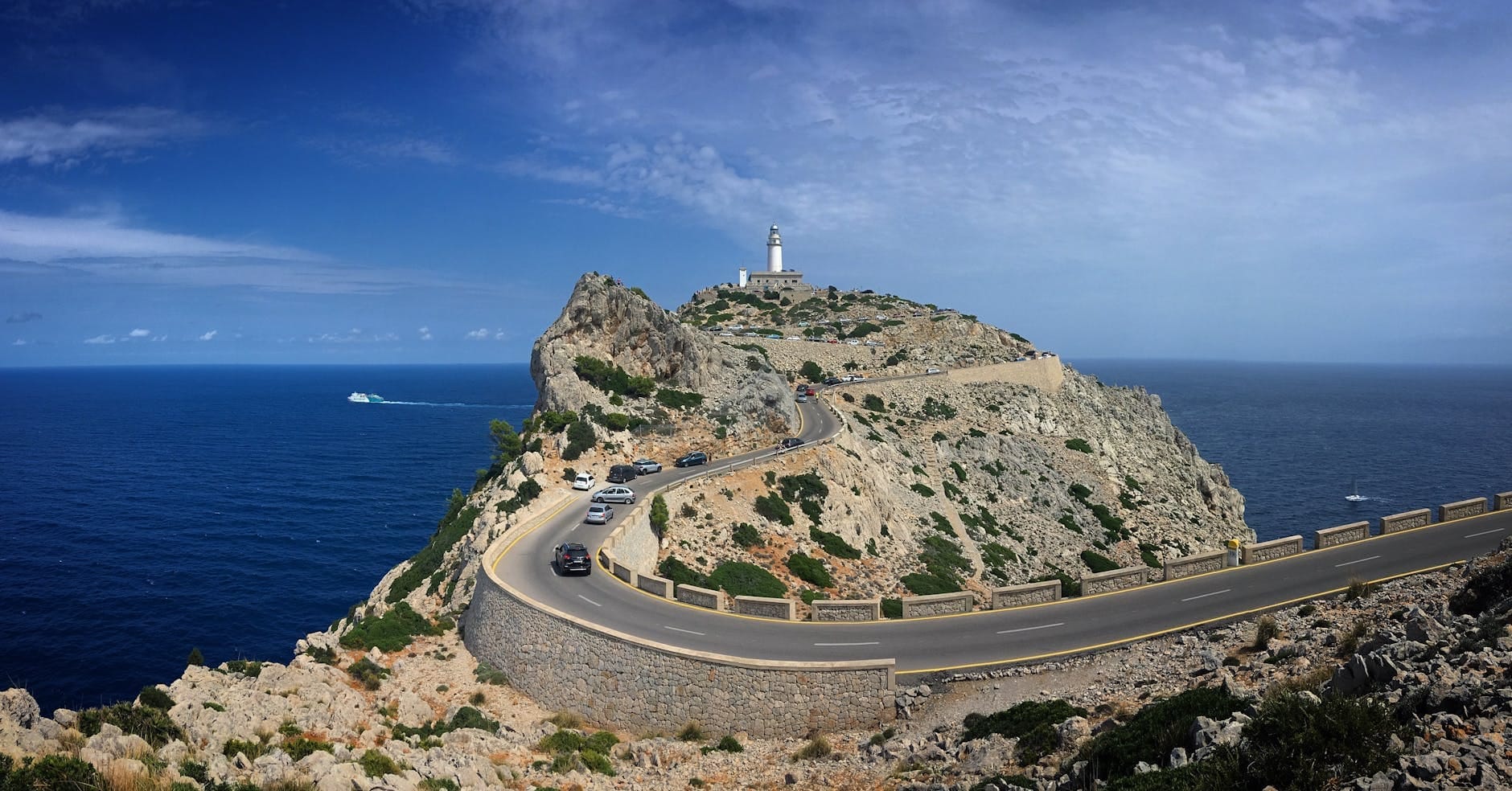
The Península de Formentor is a narrow limestone spine that juts northward from the Serra de Tramuntana mountain range into the Mediterranean. It runs roughly 20 kilometres long and between 3 and 12 kilometres wide, with its highest point, Puig Fumat, reaching 384 metres above sea level. The road ends at Cap de Formentor, where a lighthouse built in 1863 stands on a cliff 219 metres above the sea. This is the northernmost point of Mallorca.
The peninsula has been called the "meeting point of the winds" for good reason. On calmer days the colours along the coast shift between pale turquoise shallows and deep cobalt further out. On windier afternoons, the cliffs amplify the gusts and the sea turns choppy and white-capped. Both versions are worth seeing, just for different reasons.
For broader context on how this area fits into the island's geography, the guide to the Serra de Tramuntana region covers the mountain backbone that feeds directly into the peninsula.
The Road In: Ma-2210 and What to Expect
Road Ma-2210 from Port de Pollença is the only way in or out. It is roughly 13 km from Port de Pollença to Playa de Formentor, and another stretch takes you further to the lighthouse at Cap de Formentor. The road is narrow, single-lane in places, and carved into cliffs with almost no barrier between the tarmac and a vertical drop. Confident drivers who have navigated mountain roads elsewhere will manage, but the combination of sharp bends, oncoming coaches, and distracted tourists stopping to photograph the views makes it demanding.
⚠️ What to skip
Seasonal road restriction: From 1 June to 31 October, private vehicles are prohibited on the final section of the peninsula road (past Playa de Formentor) roughly 10:00–13:00 and 16:00–22:00. During these hours, access is by shuttle bus only. The restriction was introduced in 2018 due to severe overcrowding and has been extended each subsequent year. Check the official Consell de Mallorca Formentor page before you travel, as details are updated annually.
Outside the restricted hours, or if you visit before June or after October, private cars can use the road freely. Parking at Playa de Formentor is limited and fills quickly. If you arrive before 09:00 in summer, you will usually find a space. After that, expect to queue or turn back.
If you are basing yourself in the north of the island, the guide to Alcúdia and Port d'Alcúdia covers accommodation and shuttle pickup points about 50 minutes from the cape.
Tickets & tours
Hand-picked options from our booking partner. Prices are indicative; availability and final rates are confirmed when you complete your booking.
Cabo de Formentor boat trip with dolphin watching
From 65 €Instant confirmationFree cancellationFormentor panoramic view quad tour
From 99 €Instant confirmationFree cancellationFormentor Beach boat trip from Can Picafort with swim stops
From 49 €Instant confirmationFree cancellationAlcudia Peninsula hiking tour
From 74 €Instant confirmationFree cancellation
Mirador des Colomer: The Viewpoint That Justifies the Drive Alone
About 5 kilometres along the Ma-2210 from Port de Pollença, a signed turn-off leads to Mirador del Mal Pas (also called Mirador d'es Colomer). This is the peninsula's most photographed viewpoint, and its reputation is entirely deserved. A short walk from the parking area brings you to a railed lookout above a sheer cliff, with a panorama across the Bay of Pollença on one side and the open Mediterranean on the other. The small rocky island below, Es Colomer, is a wildlife refuge.
Early morning produces the best photographic conditions here. The light comes in at a low angle, the shadows are long, and the sea is usually calmer. By midday the glare from the limestone and water flattens everything. If you are making the drive specifically to photograph the cliffs, being at the mirador by 08:00 is worth the early start.
💡 Local tip
Photography tip: A polarising filter dramatically cuts the glare off the water at this viewpoint. Shooting from the far left edge of the platform gives a cleaner composition with fewer tourists in frame.
Vertigo is a genuine concern at Mirador des Colomer. The railing exists, but the sense of exposure is acute, particularly when wind is present. People who are sensitive to heights sometimes find the experience more stressful than enjoyable. If that applies to you, the viewpoint from the lighthouse road further along is less vertiginous and still offers dramatic sea views.
Playa de Formentor: The Beach Under the Pines
Platja de Formentor (also written Playa de Formentor) is a 1-kilometre stretch of fine white sand backed by mature Aleppo pines. The water here is shallow and calm, sheltered by the bay's geography, which makes it one of the better swimming beaches in northern Mallorca for families with young children. The pine canopy provides real shade during the hottest part of the day, which most Mallorcan beaches cannot offer.
The beach has sun lounger rental, a beach bar, and basic facilities. In July and August it becomes very crowded by 11:00. The shuttle buses from Port de Pollença and Port d'Alcúdia deposit most visitors here, and the queues to board the return service in the late afternoon can be long. Arriving early or staying past 18:00 when day-trippers leave gives you a calmer experience.
Adjacent to the beach access road is the Hotel Formentor, originally opened in 1922 and one of Mallorca's oldest luxury hotels. Its private jetty and gardens extend along the bay. You do not need to be a guest to appreciate the historic building from the road, though the terraces and bar are reserved for guests and diners.
If Playa de Formentor feels too busy when you arrive, the guide to Mallorca's best beaches covers quieter alternatives in the north and east of the island.
Cap de Formentor Lighthouse: The End of the Road
Continuing past the beach, the road narrows further and climbs toward Cap de Formentor. The lighthouse itself, constructed in 1863, is a working maritime navigation aid and is not open to the public. The value of the drive is the journey and the final viewpoint: standing at the cap, you are looking out at open sea on three sides, with the Menorca channel to the east. On clear days, Menorca is faintly visible on the horizon.
The car park at the lighthouse is small. There is a kiosk selling drinks and snacks, which is welcome after the drive. The wind at the cape can be strong enough to make standing difficult, and temperatures here are noticeably cooler than at the beach below. Bring a layer even in summer.
The cliff edges near the lighthouse are unguarded in places. Exercise caution, particularly with children, and do not approach edges for photographs. The rock surface is uneven and can be slippery when damp.
Hiking the Peninsula: Beyond the Road
The peninsula has marked hiking trails that access areas the road does not reach: Cala Murta and Cala Pi de la Posada are small coves accessible only on foot, with clear water and almost no visitors in shoulder season. The trails vary in difficulty, with some routes involving significant elevation gain on loose rock paths. Proper footwear is non-negotiable; sandals are not suitable.
In spring, the peninsula hillsides carry flowering rosemary, cistus, and wild asparagus. The scent on a warm morning, particularly in April and May, is one of those sensory details that does not appear in photographs but makes the walk distinctly Mallorcan. Spring is also when migrating birds pass through, making the cape an interesting spot for birdwatchers.
The peninsula can be combined with a broader north Mallorca itinerary. The old town of Pollença is 20 minutes away and worth an afternoon before or after the peninsula.
💡 Local tip
Hiking tip: Start trail walks by 08:00 in summer. The sun on the exposed limestone ridges becomes brutal by 11:00, there is no shade on the high sections, and water sources do not exist along the routes. Carry at least 1.5 litres per person.
When to Go and Who Should Reconsider
May, June (before the shuttle restriction begins to cause queues), September, and October are the best months to visit. The road is driveable, the heat is manageable, and the beach is not packed. July and August deliver the warmest sea temperatures and longest days, but also the densest crowds. The shuttle buses do their job and are reasonably efficient, but the overall experience at peak summer feels congested.
November through April offers a quieter, cooler version of the peninsula. The beach is empty, the lighthouse viewpoint sometimes has mist or low cloud that makes it dramatic in a different way, and the hiking trails are at their most pleasant. The downside is that the beach bar and sun lounger services will be closed, and some days the wind makes extended time at the cape uncomfortable.
For detailed seasonal guidance across the whole island, the best time to visit Mallorca guide breaks down each month with practical advice.
Travellers who do not enjoy winding mountain roads with exposure should reconsider the drive entirely and instead take the shuttle, which follows the same road but with a professional driver. Those looking for a beach day with full services, cafes, and calm water will find the peninsula adequate but not exceptional compared to the south coast. Wheelchair users will find the terrain largely inaccessible: the road itself is fine, but the viewpoints, hiking trails, and beach access all involve uneven surfaces.
For photography planning across the whole island, the Mallorca photography guide includes timing advice for the peninsula alongside other top viewpoints.
Insider Tips
- The shuttle bus from Port de Pollença runs to both Playa de Formentor and Cap de Formentor. Take the first bus of the day to the lighthouse, then walk back part of the route toward the beach before the heat builds. This reverses the typical tourist flow and gives you the cape nearly to yourself.
- Cala Pi de la Posada, accessible only by foot from the peninsula trail network, has clearer water than Playa de Formentor and usually fewer than a dozen people even in August. The walk in takes roughly 45 minutes from the road.
- If you drive yourself outside the restricted hours, the best window in summer is before 09:30. You get golden light at Mirador des Colomer, parking at the beach, and you are back on the road before the shuttle traffic peaks.
- The Hotel Formentor's outdoor terrace restaurant accepts non-guest reservations for lunch. The setting overlooking the bay is exceptional, and it is one of the more civilised ways to spend a midday break when the beach is at its most crowded.
- Bring water shoes for the beach. The entry into the water is sandy and gentle, but the rocky sections around the edges of the bay have sharp limestone that catches bare feet.
Who Is Formentor Peninsula For?
- Drivers who enjoy scenic mountain roads and want a complete north Mallorca circuit
- Photographers targeting dramatic coastal viewpoints, especially at golden hour or early morning
- Families with young children who want calm, sheltered sea water in a natural pine setting
- Hikers looking for trails that access isolated coves unreachable by road
- Visitors in spring who want to combine coastal scenery with wildflower walking and birdwatching
Nearby Attractions
Other things to see while in Alcúdia:
- Alcúdia Old Town
Alcúdia Old Town is the most historically layered settlement in Mallorca, with Talaiotic origins, Roman ruins, and intact 14th-century walls enclosing narrow cobbled streets, a neo-Gothic church, and a twice-weekly market. Entry is free, and the atmosphere shifts dramatically between early morning calm and midday tour-group activity.
- Cala Molins
Cala Molins is one of four sandy coves that make up the Cala Sant Vicenç resort, 7 km from Pollença in northern Mallorca. Backed by pine-covered cliffs and residential houses, it offers fine sand, unusually clear water, and a calmer atmosphere than the island's more famous southern beaches. Entry is free.
- Playa de Muro
Stretching 6 kilometres along the Bay of Alcúdia, Playa de Muro combines Blue Flag facilities with untouched dune corridors and pine-backed shore. It is one of the longest and most ecologically significant beaches in Mallorca, sitting directly beside S'Albufera Natural Park.
- Pollença Old Town
Pollença Old Town sits inland from the Bay of Pollença, a compact medieval settlement of limestone streets, a 13th-century parish church, and a staircase of 365 cypress-lined steps. It rewards slow walkers, early risers, and anyone who prefers genuine Mallorcan life over resort noise.