Cala Molins: The Cliff-Framed Beach at Cala Sant Vicenç
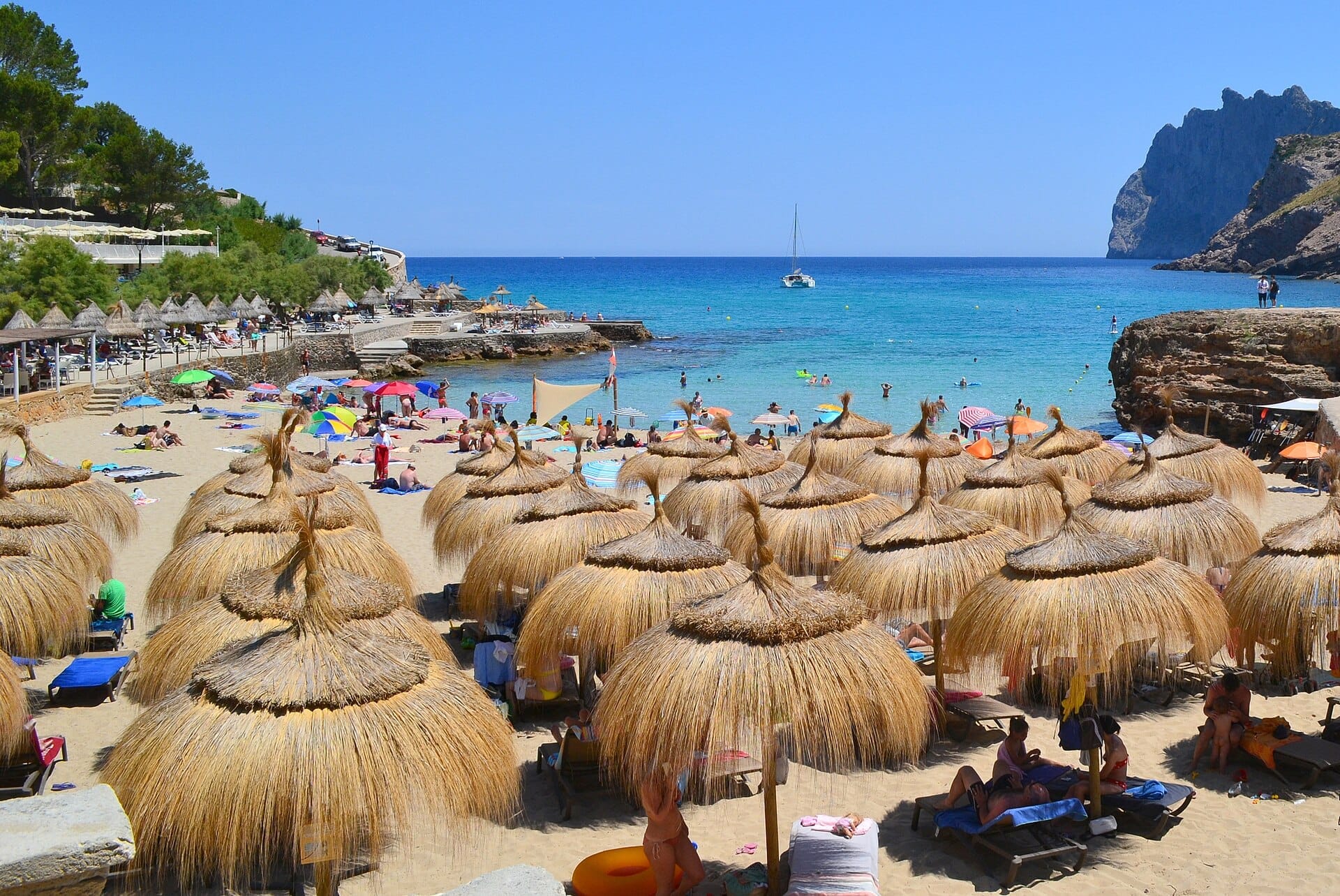
Cala Molins is one of four sandy coves that make up the Cala Sant Vicenç resort, 7 km from Pollença in northern Mallorca. Backed by pine-covered cliffs and residential houses, it offers fine sand, unusually clear water, and a calmer atmosphere than the island's more famous southern beaches. Entry is free.
Quick Facts
- Location
- Cala Sant Vicenç, 7 km from Pollença, northern Mallorca
- Getting There
- Car (free parking at rear of beach or village streets); public bus stop nearby; 7 km from Pollença, around 10–15 minutes by car
- Time Needed
- 2–4 hours for a half-day beach visit; longer if combining with other coves
- Cost
- Free entry; sun lounger hire available in summer (seasonal)
- Best for
- Families, snorkellers, travellers wanting a quieter northern cove
What Cala Molins Is (and Where It Fits In)
Cala Molins is one of the four coves that together form Cala Sant Vicenç, a small resort community in Mallorca's north. The other three, Cala Barques, Cala Clara, and Cala Varques, are all within easy walking distance, but Cala Molins draws the most visitors thanks to its wider strip of fine sand and slightly better facilities. The name translates loosely as Mill Bay in English, though nothing about the beach today hints at that industrial past.
The cove sits roughly 7 km from Pollença and around 16 km from Port de Pollença. It is part of the broader northern Mallorca coastal strip, which tends to be greener, windier, and less developed than the resort-heavy south and east of the island. That distinction matters for setting expectations: this is not a beach with a party atmosphere or a long promenade of bars. It is a genuine cove with cliffs, clear water, and a relatively local crowd, especially outside July and August.
ℹ️ Good to know
Cala Molins has a lift service (Lift service for people with reduced mobility) for visitors with reduced mobility, which is uncommon for a small Mallorcan cove. The beach itself has a gentle slope, but the surrounding village involves steep uphill and downhill walking.
The Beach Itself: Sand, Water, and Surroundings
The sand at Cala Molins is fine and pale, a quality that is not guaranteed on the north coast of Mallorca, where some coves are pebbly or rocky. The water is shallow for a reasonable distance before dropping off, which suits families with small children. Underwater visibility is notably good: the sea bed is visible well beyond the point where you would lose your footing, and the absence of heavy boat traffic in the immediate cove means the water stays clear through most of the summer.
The beach is framed on both sides by rocky cliffs covered in scrub pine. Behind the sand, residential houses and two hotels sit at close range, which gives the back of the beach a slightly enclosed feeling compared to wilder coves. In summer, a row of sun loungers and parasols is available for hire, taking up roughly the centre of the beach. If you arrive before 9am you can claim a spot on the free sand before the paid section fills up.
At a depth of around 3 metres and 300 metres offshore, the seabed is noted to be somewhat exposed to northwest winds, which limits its appeal for anchoring boats. Visiting sailors should be aware of this; the cove is better reached on foot or by road than by sea.
Tickets & tours
Hand-picked options from our booking partner. Prices are indicative; availability and final rates are confirmed when you complete your booking.
Shuttle Boat from Cala Millor to Cala Ratjada
From 26 €Instant confirmationFree cancellationShuttle Boat Roundtrip from Cala Bona to Cala Ratjada
From 29 €Instant confirmationFree cancellationBoat Trip on a Glassbottom Catamaran from Font de Sa Cala
From 35 €Instant confirmationFree cancellationShuttle Boat Roundtrip from Font de Sa Cala to Cala Millor
From 29 €Instant confirmationFree cancellation
How the Beach Changes Through the Day
Early morning is the most rewarding time to visit Cala Molins. Between 7am and 9am, the cliffs to the east still shade part of the beach, the water is glassy, and the only other people present are typically locals walking dogs along the nearby paths or hotel guests taking an early swim. The light at this hour is soft and angled, picking out the turquoise gradients in the water clearly.
By mid-morning in July and August, the beach fills steadily. Families dominate the shallows, and the sun lounger section reaches capacity by around 11am. At full heat in the early afternoon, the surrounding cliffs trap warmth and the beach can feel genuinely hot, with limited shade. This is the period to either be in the water or take a break in the village. Small children and anyone sensitive to heat should plan around this.
Late afternoon, from around 5pm onward, is arguably the second-best window. The angle of the sun shifts, the crowd thins, and the rock faces catch warm golden light. The water temperature by this point in summer is at its highest for the day. The walk back up through the village to the car park is more tolerable in the cooler evening air.
💡 Local tip
Visiting in June or September rather than July and August cuts crowd density significantly without sacrificing water temperature. The sea is still above 20°C in both shoulder months on this part of the coast.
Historical and Cultural Context
The area around Cala Sant Vicenç has been inhabited for much longer than its appearance as a modern resort might suggest. A prehistoric hypogeum, an underground burial chamber carved from rock, is located near the coves. The site reflects the long human presence on this stretch of Mallorcan coastline, predating the Roman and Moorish periods that shaped so much of the island's character further south and inland.
Cala Sant Vicenç developed as a low-key resort in the twentieth century, attracting a quieter type of visitor than the mass tourism that came to define places like the southern and western coast. It has retained that character. The village has a handful of restaurants, a few small hotels, and little else in the way of commercial infrastructure. Travellers looking for nightlife or a wide choice of restaurants should look toward Port de Pollença, which is roughly 16 km south and offers a more complete resort town experience.
The Four Coves: How Cala Molins Compares
Cala Molins is one of the most visited of the four coves at Cala Sant Vicenç. Cala Barques is smaller and more enclosed, with a slightly more intimate feel. Cala Clara is rocky and better for snorkelling than swimming. Cala Varques rounds out the four. Most visitors based in the village end up trying all four across a multi-day stay, spending the most time at Cala Molins or Cala Barques.
If you are day-tripping specifically to swim or sunbathe, Cala Molins is the right choice among the four. If snorkelling is a priority, it is worth walking over to Cala Clara for its rockier underwater topography. The walk between all four coves can be done in under an hour.
Getting There and Practical Details
The most straightforward way to reach Cala Molins is by car. From Pollença, the drive takes around 10 to 15 minutes on a road that is signed. Free parking is available at the rear of the beach or on the village streets, though in high summer both fill by mid-morning. If you are staying in Alcúdia or Port de Pollença, the drive is under 25 minutes. A public bus stop serves the village, though services are less frequent than on the main coastal routes, and schedules should be checked in advance through the Mallorca public transport authority.
There are no admission fees. Cala Molins is a public beach, open at all hours year-round. A lifeguard service operates in summer, though exact dates vary by season and are not posted well in advance. Sun lounger hire is available from seasonal vendors. Bring cash if you plan to use these services, as card facilities at small beach operators are not guaranteed.
The beach has a gentle slope, making it easier to access than many Mallorcan coves where you descend steep steps. The lift service for reduced mobility is a rare facility for a cove of this size and makes it meaningfully more accessible than most comparable beaches on the island. The village itself is less accommodating for those with limited mobility, as the streets slope steeply in several directions.
⚠️ What to skip
Northwest winds can arrive quickly on this stretch of coast. On days when the tramuntana wind picks up, the sea at Cala Molins can become choppy with little warning. Check local forecasts before bringing young children into the water on breezy days.
Photography and What to Bring
The cliffs framing Cala Molins photograph well from the waterline, particularly in the first two hours after sunrise and the final hour before sunset. For wider shots that show all four coves in context, the elevated paths above the village offer viewpoints that standard travel photos rarely show. Photographers planning a focused trip to the north coast should read the Mallorca photography guide for additional location ideas within easy reach.
In terms of what to bring: sunscreen is essential from May through October, and the intensity of midday light is stronger than most northern European visitors expect. The rocks around the cove's edges are sharp, so water shoes are worth considering if you plan to snorkel or explore beyond the sandy section. The beach has limited freshwater facilities, so rinsing off salt water usually means using the facilities at one of the nearby hotels or heading back to accommodation.
Insider Tips
- Arrive before 9am in July or August to get free sand before the sun lounger area fills the centre of the beach. Once that section is occupied, the remaining free space is at the edges near the rocks.
- The walk from Cala Molins to Cala Barques takes around 8 minutes along a well-marked coastal path. Doing both in one morning is straightforward and avoids moving the car.
- The small restaurants in Cala Sant Vicenç village serve lunch and dinner to a largely local and hotel-based crowd. They are quieter and slightly better value than comparable spots in Port de Pollença, particularly for fresh fish.
- The prehistoric hypogeum near the coves is easy to miss on a quick visit. If history interests you, ask locally for directions; it sits close to the beach area and adds context to how long people have been drawn to this particular stretch of coast.
- For the clearest underwater visibility, swim in the morning before any boat activity stirs up sediment. The cove is not heavily trafficked by motorised vessels, but calmer water in the morning hours is consistently cleaner.
Who Is Cala Molins For?
- Families with young children seeking calm, shallow water and an accessible beach
- Snorkellers who want clear water without the crowds of busier southern coves
- Travellers based in Pollença or Port de Pollença looking for a half-day beach excursion
- Visitors interested in combining a beach day with a walk across all four coves at Cala Sant Vicenç
- Anyone wanting a north Mallorca beach experience without organised resort infrastructure
Nearby Attractions
Other things to see while in Alcúdia:
- Alcúdia Old Town
Alcúdia Old Town is the most historically layered settlement in Mallorca, with Talaiotic origins, Roman ruins, and intact 14th-century walls enclosing narrow cobbled streets, a neo-Gothic church, and a twice-weekly market. Entry is free, and the atmosphere shifts dramatically between early morning calm and midday tour-group activity.
- Formentor Peninsula
The Formentor Peninsula stretches 20 kilometres into the Mediterranean from northern Mallorca, combining sheer limestone cliffs, a pine-fringed beach, and a historic lighthouse at its northernmost tip. Access is by mandatory shuttle bus during peak summer hours, so planning matters. Here is what you need to know before you go.
- Playa de Muro
Stretching 6 kilometres along the Bay of Alcúdia, Playa de Muro combines Blue Flag facilities with untouched dune corridors and pine-backed shore. It is one of the longest and most ecologically significant beaches in Mallorca, sitting directly beside S'Albufera Natural Park.
- Pollença Old Town
Pollença Old Town sits inland from the Bay of Pollença, a compact medieval settlement of limestone streets, a 13th-century parish church, and a staircase of 365 cypress-lined steps. It rewards slow walkers, early risers, and anyone who prefers genuine Mallorcan life over resort noise.