Sineu Wednesday Market: Mallorca's Oldest and Most Authentic Weekly Market
The Mercat de Sineu has been held every Wednesday in the heart of inland Mallorca since 1306, making it the island's oldest surviving weekly market. From live chickens and goats to local cheeses, ceramics, and seasonal produce, it offers a genuine window into rural Mallorcan life that no coastal resort can replicate.
Quick Facts
- Location
- Plaça des Fossar and surrounding streets, Sineu, central Mallorca (Raiguer comarca)
- Getting There
- Train from Palma (SFM line) to Sineu station, then a short walk to the town centre
- Time Needed
- 2–3 hours for the market; add 30–60 min to explore Sineu town
- Cost
- Free entry; bring cash for purchases
- Best for
- Food lovers, culture seekers, photography, families with older children
What the Mercat de Sineu Actually Is
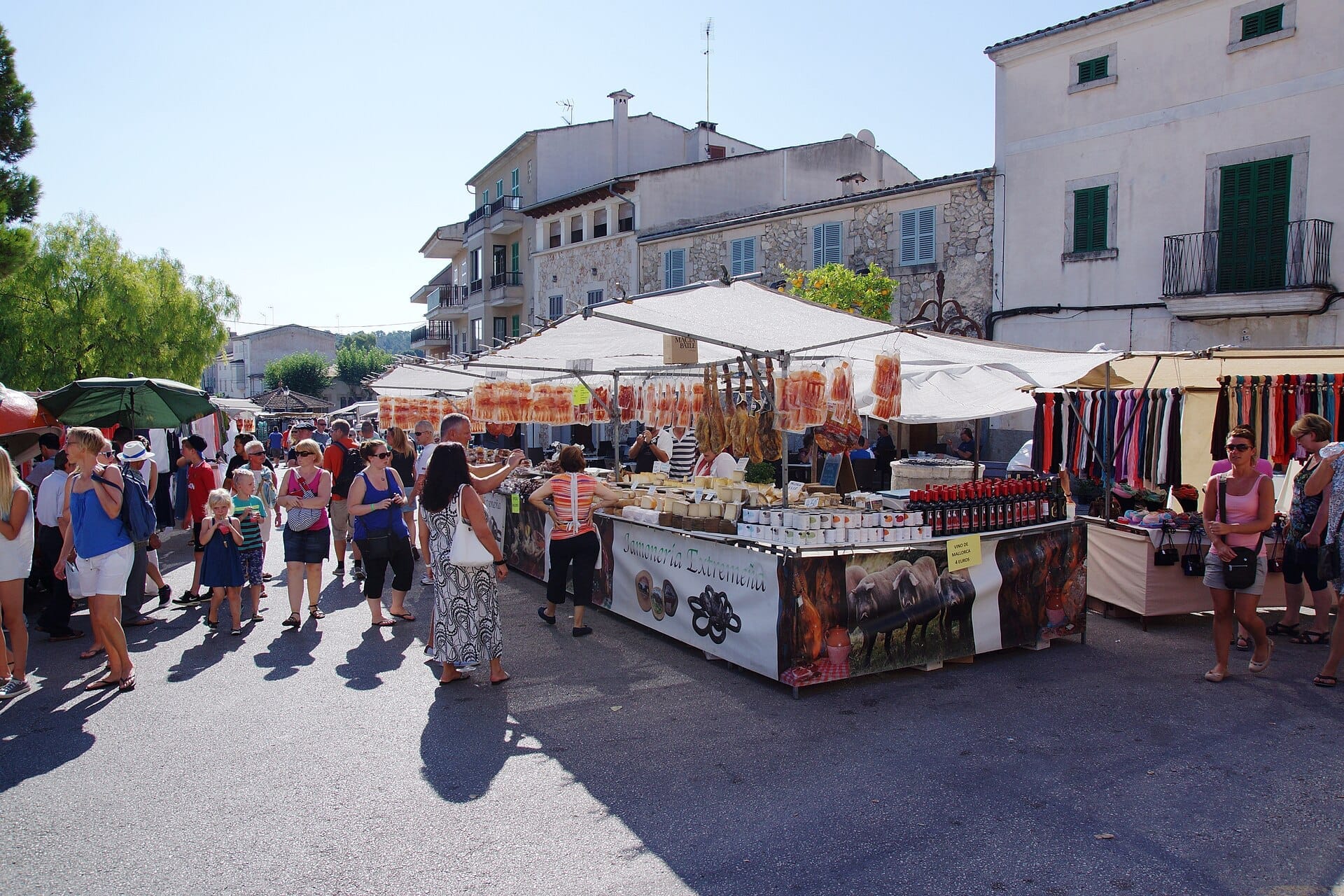
The Mercat de Sineu is not a tourist market with handmade trinkets arranged for photos. It is a working weekly market that has served the agricultural communities of central Mallorca for over 700 years. Established by royal decree of King Jaume II in 1306 and reconfirmed by King Peter the Ceremonious in 1366, it holds the distinction of being the oldest continuously operating market on the island. Every Wednesday morning, Sineu's central squares and surrounding streets fill with a mix of local farmers, produce vendors, clothing stalls, antique dealers, and craftspeople.
What sets it apart from Mallorca's other weekly markets is the livestock section. Sineu is the only market on the island where farm animals are still sold weekly: chickens, rabbits, pigs, sheep, and goats change hands in the lower square (Plaça des Fossar) from early morning. This section draws local farmers more than tourists, and the atmosphere in those early hours is entirely its own.
💡 Local tip
Arrive before 9:00 a.m. if you want to see the livestock section at its most active. By 10:30 a.m. some sellers begin packing up, and by 11:00 a.m. the animal trade is largely done for the day.
How the Market Is Laid Out
The market spreads across several connected squares and the lanes between them. Plaça des Fossar is the focal point for the livestock trade and sits in the lower part of the old town. Moving uphill through narrow cobblestone streets, the stalls transition into fresh produce: tomatoes, aubergines, figs, almonds, local honey, olives, and cheeses including the soft local fresh cheese made from sheep or goat milk. The smell changes noticeably as you move from the animal pens upward toward the produce and food sections.
Further into the town centre around Plaça d'Es Mercadal, the market broadens into clothing, household goods, flowers, plants, ceramics, and secondhand items. This section attracts a more mixed crowd: residents from surrounding villages doing weekly shopping alongside visitors who came in on the train from Palma. The variety is broad enough that it never feels like a single-purpose market.
If you are interested in Mallorcan ceramics, handmade pottery, or local foodstuffs to take home, this market is worth comparing against Mercat de l'Olivar in Palma. Sineu carries more agricultural character; Palma's market is more polished and permanent. Neither is superior — they serve different purposes.
Tickets & tours
Hand-picked options from our booking partner. Prices are indicative; availability and final rates are confirmed when you complete your booking.
Dinosaurland and Caves of Hams combined ticket
From 25 €Instant confirmationFree cancellationShuttle Boat from Cala Millor to Cala Ratjada
From 26 €Instant confirmationFree cancellation3-hour Es Trenc Boat Tour in Mallorca
From 39 €Instant confirmationFree cancellationShuttle Boat Roundtrip from Cala Bona to Cala Ratjada
From 29 €Instant confirmationFree cancellation
The Experience at Different Times of Morning
The market opens at 8:00 a.m. and runs until approximately 1:30 p.m., but the experience changes considerably across those hours. The first hour belongs to the farmers. The livestock pens in Plaça des Fossar are loud and smell exactly as you would expect: straw, animals, and the particular sharp air of an outdoor farmyard on a warm morning. Older men in work clothes negotiate in Mallorquí — the local variant of Catalan — and there is almost no self-consciousness about being observed. This is where the market's 700-year history feels most tangible.
By 9:30 a.m., the produce stalls are at full capacity and the cafes around the squares have filled up with locals having coffee and pa amb oli (bread rubbed with tomato and drizzled with olive oil). The light at this hour, cutting between the stone buildings, makes for strong photography without the harsh shadows of midday.
From 11:00 a.m. onward, the tourist contingent grows, day-trippers arrive by car, and the market begins to feel more crowded in the produce and craft sections. The livestock area quiets. If you prefer a calmer experience, late morning is actually quite pleasant for browsing the non-food stalls. By 1:00 p.m. vendors start dismantling, and the squares return to their ordinary quiet.
ℹ️ Good to know
The market runs every Wednesday year-round, 8:00 a.m. to 1:30 p.m. Entry is free. Note that once a year, on the first Wednesday after the first Sunday in May, the much larger Sa Fira de Sineu fair takes place — established in 1318, it draws significantly larger crowds and expands well beyond the normal market footprint.
Getting There: Train Is the Better Option
Sineu sits at the geographical centre of Mallorca, about 30 kilometres east of Palma. The most straightforward approach is the train operated by Serveis Ferroviaris de Mallorca (SFM), which stops directly at Sineu station. The journey from Palma takes roughly 40–50 minutes and runs on Wednesday mornings in time to reach the market by 8:30 a.m. Check current SFM timetables before you go, as specific departure times change seasonally.
Driving is also possible and gives flexibility, particularly if you plan to continue to other inland villages afterward. Parking near the market on Wednesday mornings is limited and the streets around the old town are narrow. If you are planning a wider loop through the interior, the Mallorca road trip guide covers practical routes that include Sineu as a logical midpoint stop.
⚠️ What to skip
The cobblestone streets throughout Sineu's old town are uneven and sometimes steep. Wheelchair access to the livestock section in Plaça des Fossar is particularly limited. The produce and upper stalls are somewhat more navigable, but the market is not fully accessible for mobility-impaired visitors.
What to Buy and What to Eat
Serious food purchases start with local produce: almonds from central Mallorca, sobrassada (the soft, paprika-cured sausage spread native to the island), fresh goat cheese, honey, and seasonal vegetables. Prices for these items at Sineu tend to be lower than at markets in coastal towns, and the quality is high because many sellers are the producers themselves.
For context on what you are tasting and buying, it helps to have some background on Mallorcan food culture before you arrive. The Mallorca food guide covers the island's key dishes, local ingredients, and the distinction between tourist-oriented and locally sourced products.
The cafes and bars ringing the squares do brisk business on Wednesday mornings. Most offer simple breakfast menus: coffee, ensaïmada (the flaky, lard-based pastry that is Mallorca's most iconic baked good), and toasted bread with tomato. Prices are reasonable and the quality is consistent. This is not a food market in the contemporary artisan sense — there are no fusion tapas or craft coffee stalls — but it feeds people well at honest prices.
Photography and Practical Considerations
The market photographs well in the early morning when the light is soft and the livestock section is active. The stone architecture of Sineu's old town — warm ochre walls, iron window grilles, the tower of the Sant Joan Baptista church rising above the rooftops — provides a strong visual backdrop. A standard zoom lens handles most situations; the tight lanes between stalls make anything longer than a portrait focal length awkward.
Be observant about photographing the farmers and animal vendors. These are working people at a working market, not a performance. A visible camera pointed at someone without acknowledgement will not always be welcomed. A nod and a smile goes a long way, and many vendors are entirely comfortable being photographed once they know you are not being intrusive.
For broader guidance on the best locations and techniques for photography across the island, the Mallorca photography guide includes timing recommendations for outdoor markets and old town settings.
Sineu Beyond the Market
The town of Sineu merits at least thirty minutes of exploration after the market winds down. The Church of Our Lady of the Angels (Sa Minyona), with its Baroque facade and commanding hilltop position, is the most prominent landmark. The streets around the old centre contain a handful of independent restaurants serving traditional Mallorcan cooking — caldereta de peix (fish stew), roast lamb, frito mallorquí — that tend to fill up with post-market locals around midday.
Sineu also makes a practical base for exploring the surrounding interior. The villages of Pollença to the north and the wine-producing areas around Binissalem are within easy driving distance. The inland Mallorca region as a whole rewards slow exploration, and Sineu on a Wednesday morning is one of the most effective entry points into that world.
Who Should Skip This
Travellers who are uncomfortable around live animals in market conditions — noise, smells, the reality of agricultural commerce — will find the livestock section confronting rather than charming. The market does not sanitise that aspect. Similarly, visitors who are only available on days other than Wednesday will find Sineu a quiet, pleasant but unremarkable small town without the market as its anchor. If your priority is beach time or Palma sightseeing, Sineu requires a deliberate half-day commitment that not every itinerary can support.
Insider Tips
- Bring a soft-sided bag or small backpack for purchases. The streets between stalls are narrow and hard luggage or rigid shopping bags become obstructions quickly.
- The cafe directly on the corner of Plaça d'Es Mercadal tends to have faster service than those directly beside the livestock square, which fill up earliest with farmers finishing their trading.
- If you plan to buy sobrassada or fresh cheese, bring a small cooler bag or ice pack — the train back to Palma takes nearly an hour and summer temperatures in central Mallorca climb quickly after 10:00 a.m.
- Sa Fira de Sineu, the annual fair held on the first Wednesday after the first Sunday in May, is dramatically larger than a normal market Wednesday. If you visit then, expect significantly larger crowds, a broader range of crafts and agricultural displays, and limited parking. It is worth seeing, but plan accordingly.
- The church tower of Sant Joan Baptista is visible from most of the market area and makes a useful landmark for reorienting yourself when the narrow lanes between stalls start to blur together.
Who Is Sineu Wednesday Market For?
- Food lovers wanting to buy directly from Mallorcan producers at fair prices
- Travellers interested in rural and agricultural culture rather than resort tourism
- Photographers looking for authentic early-morning market scenes in a well-preserved stone town
- Day-trippers from Palma seeking a car-free inland excursion by train
- Families with older children curious about livestock and traditional market customs
Nearby Attractions
Other things to see while in Inland Mallorca (Es Pla):
- Hot Air Balloon Rides over Mallorca
A hot air balloon ride over Mallorca lifts you above almond groves, medieval watchtowers, and turquoise coastline at first light. Flights depart from inland launch zones near Manacor, lasting roughly 60 minutes in the air with a total experience of three to four hours. Here is everything you need to know before booking.
- Mallorca Pearls (Manacor)
Manacor is the undisputed capital of Mallorcan pearl production, home to seven pearl companies including Majorica, founded in 1890. Visitors can tour factory showrooms, watch craftspeople at work, and browse thousands of jewelry designs at outlet prices. It's a niche but genuinely interesting stop if you're passing through inland Mallorca.
- Rafa Nadal Museum Xperience
Located within the Rafa Nadal Academy complex on the outskirts of Manacor, this interactive museum holds the only permanent exhibition dedicated to Rafael Nadal's career. From Grand Slam trophies to VR tennis simulators, it bridges sport history with hands-on experience in a way few sports museums manage.