Mercat de l'Olivar: Inside Palma's Most Complete Food Market
Open since 1951, Mercat de l'Olivar is Palma's largest covered market, with around 115 stalls spread across a bright mid-century building near Plaça d'Espanya. It's where locals buy their fish, cheese, and sobrassada — and where curious visitors can eat and shop alongside them, for free.
Quick Facts
- Location
- Plaça de l'Olivar 4, 07002 Palma de Mallorca — 2-minute walk from Plaça d'Espanya
- Getting There
- Walk from Plaça d'Espanya (main bus and train hub); central Palma, near Carrer de Sant Miquel
- Time Needed
- 45 minutes to browse; 1.5–2 hours if you eat or linger at the bar stalls
- Cost
- Free entry. Budget €5–12 for snacks or a light meal at the market bars
- Best for
- Food lovers, early risers, and anyone wanting a genuine local shopping experience
- Official website
- www.mercatolivar.com/en
What Mercat de l'Olivar Actually Is
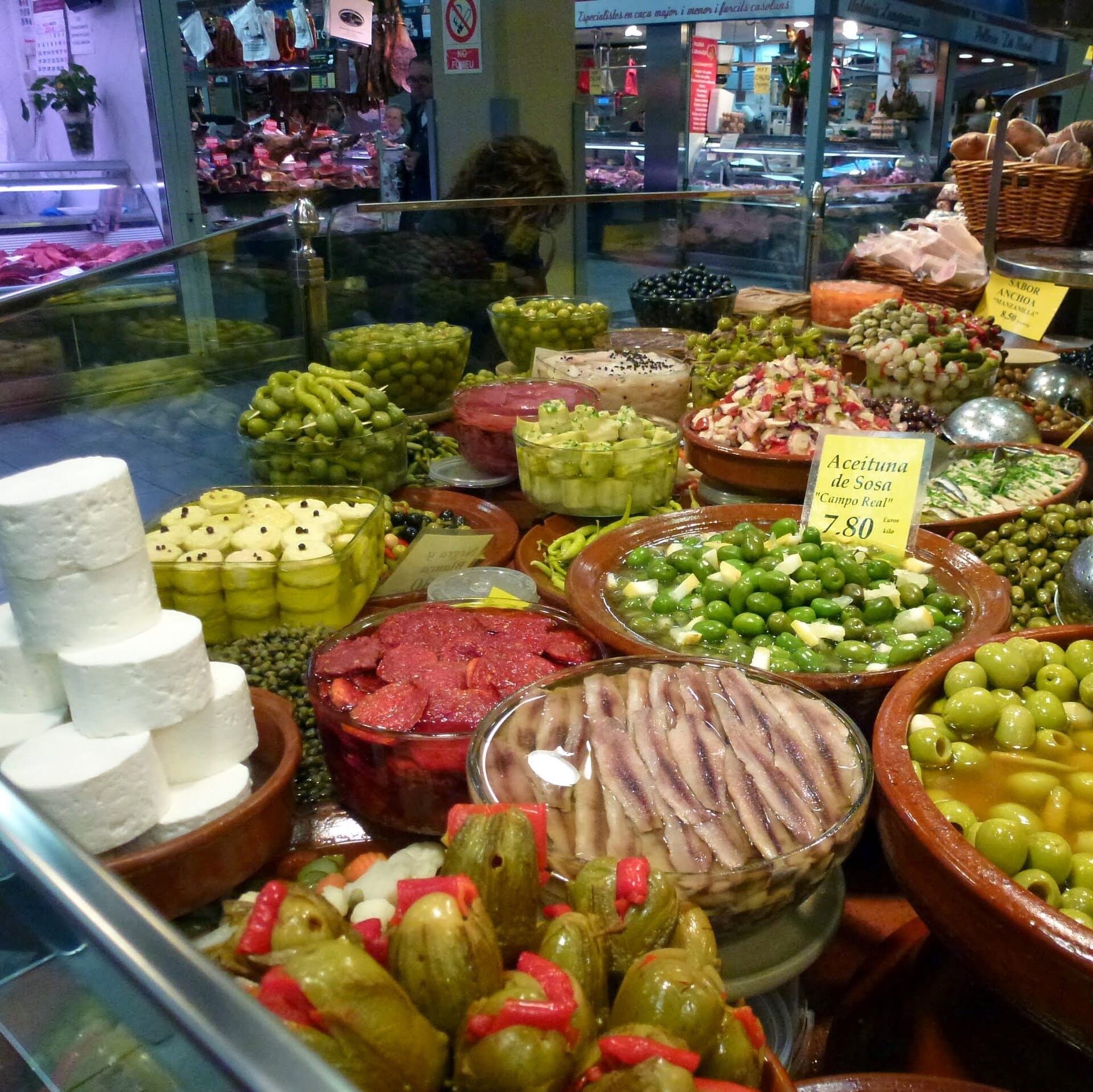
Mercat de l'Olivar is the largest covered market in Palma, and arguably the most functional food market on the island. With around 115 stalls spread across two floors, it stocks a full range of fresh produce: whole fish laid over crushed ice, mountains of local tomatoes and peppers, hanging loops of sobrassada (the island's signature cured pork sausage), aged cheeses, live shellfish, cuts of lamb and pork, olives sold by weight, and dried spices measured in paper bags. It is not a tourist market. There are no trinkets, no art prints, no fridge magnets. The clientele on a Tuesday morning is mostly Palma residents.
The building itself was inaugurated in 1951, designed by architect Antonio García Ruiz Rosselló to replace the food stalls that had operated out of Plaça Major. It replaced a centuries-old tradition of open-air selling with a covered, organised municipal structure. A renovation between 1998 and 2003 refreshed the interior without altering its essential character: a bright, high-ceilinged space with wide aisles, natural light through large windows, and the kind of organised chaos that comes from dozens of small businesses operating side by side.
💡 Local tip
Come between 8:00 and 10:00 a.m. on a weekday for the fullest stalls, the most active vendors, and the best selection of fresh fish. By noon, some stalls begin packing away their perishables.
What You'll Find Inside: Floor by Floor
The ground floor is where the serious buying happens. Fish stalls line one wing, with vendors calling out prices and hosing down their counters between customers. The smell here is sharp and oceanic — not unpleasant, but impossible to ignore. You'll see whole red mullet, sea bream, squid, cuttlefish, and clams in quantities that make it clear this is a wholesale-adjacent operation, not a curated deli experience. Meat counters occupy another section, with whole rabbits and lamb cuts that reflect Mallorcan culinary tradition rather than international tastes.
Produce stalls fill the remaining ground floor space. Local varieties of tomato (including the wrinkled tomàtiga de ramellet, a variety native to the Balearics) sit alongside citrus, herbs, almonds, and seasonal fruit. In late winter and early spring, you might see stalls heavy with the island's almonds — Mallorca's almond blossom season runs from late January into February, and the harvest carries into the shops by spring.
The upper floor houses a supermarket, several small shops, bars, and event spaces. This is also where you'll find prepared food stalls and counters where you can sit on a stool and eat. If you're combining a market visit with a broader exploration of Palma's food scene, the guide to eating in Mallorca gives useful context on what to look for and where these ingredients end up on restaurant menus.
Tickets & tours
Hand-picked options from our booking partner. Prices are indicative; availability and final rates are confirmed when you complete your booking.
Dinosaurland and Caves of Hams combined ticket
From 25 €Instant confirmationFree cancellationShuttle Boat from Cala Millor to Cala Ratjada
From 26 €Instant confirmationFree cancellation3-hour Es Trenc Boat Tour in Mallorca
From 39 €Instant confirmationFree cancellationShuttle Boat Roundtrip from Cala Bona to Cala Ratjada
From 29 €Instant confirmationFree cancellation
How the Atmosphere Shifts Through the Day
Arrive at 7:00 a.m. and the market feels industrial: deliveries still arriving, vendors arranging stock, the lights barely warmed up. By 8:30, it's fully operational and genuinely lively. Older residents with wheeled shopping bags move purposefully between stalls they've clearly used for years. Children are dropped off at school, and their parents stop for a coffee at the upstairs bar before heading back through the market to pick up something for dinner.
Around 11:00 a.m. the pace slows, and this is when tourists tend to arrive — which is fine, but it's a different experience. Vendors are less rushed, you can examine things more carefully, and the bar stools are easier to claim. By 1:00 p.m. on a weekday, certain fresh stalls have sold through their best stock and begun closing down. The market officially stays open until 2:30 p.m. on weekdays (with partial hours in the afternoon), and until 3:00 p.m. on Saturday, with some food stalls available during those hours
Saturday mornings are the busiest and most social — more families, more noise, more energy. If your goal is atmosphere and people-watching, Saturday between 9:00 and 11:00 a.m. is the sweet spot. If your goal is buying produce without crowds, any weekday morning works better.
Eating at the Market
Several stalls inside Mercat de l'Olivar serve food and drink to eat on the spot. This is straightforward market food: fresh-cut jamón, fried fish, cured meats with bread, tortilla de patatas, and glasses of local wine or vermouth. Prices are fair by Palma standards and significantly cheaper than the restaurant terraces a few blocks away on Carrer de Sant Miquel.
This is not a food-hall experience in the modern sense — there's no unified aesthetic, no craft cocktail bar, no social media-optimised plating. The appeal is precisely the opposite: a stool at a counter, a small plate of something local, and the background noise of a working market. It's worth noting that if you're looking for that more polished, sit-down food market experience, Palma has alternatives — but Mercat de l'Olivar is the more authentic choice.
ℹ️ Good to know
The market is closed on Sundays. If you're visiting Palma on a Sunday and want a market experience, check local weekly markets in surrounding towns — the Sineu market runs on Wednesdays and is one of the island's best traditional markets.
Getting There and Practical Logistics
Mercat de l'Olivar sits in the heart of Palma, about a two-minute walk from Plaça d'Espanya, which is the main transit hub for both local buses and the scenic train line to Sóller. If you're arriving from the airport or another part of the island, Plaça d'Espanya is a natural starting point. The market itself has parking available on-site, and it can be accessed from four sides — a practical detail if you're navigating with a loaded shopping bag. For more on moving around the island generally, the getting around Mallorca guide covers all transport options clearly.
Entry is free. There is no ticket, no queuing system, and no guided tour necessary. You walk in, you look around, you buy what appeals to you. The aisles are wide enough to navigate comfortably with a pram or wheelchair, and the building is well-lit and flat on the ground floor. Accessibility on the upper floor depends on lift availability — worth confirming in advance if this is a concern.
Mercat de l'Olivar is well-positioned for combining with a broader walk through Palma's old town. Carrer de Sant Miquel, Palma's main pedestrian shopping street, runs directly alongside the market and leads south toward Plaça Major and eventually the waterfront. Budget another hour or two and you can cover significant ground.
Photography Notes and What to Observe
The market photographs well in the morning hours when the light comes through the windows at an angle and the stalls are at full capacity. The fish counters are visually compelling — vivid colour contrasts between the orange of prawns, silver of sardines, and white of crushed ice. Vendors are generally tolerant of photography but it's polite to make eye contact and nod before pointing a camera at someone's work.
For those building a broader visual record of the island, the Mallorca photography guide has useful guidance on timing, locations, and permissions for shooting in public spaces.
⚠️ What to skip
If you're visiting in summer (July–August), the market interior can become quite warm by mid-morning. Arrive early or wear light clothing. There is no air conditioning in the main hall.
Honest Assessment: Who Should and Shouldn't Bother
Mercat de l'Olivar works best for people who are genuinely interested in food, local produce, or the everyday texture of Palma life. If you're spending time in Mallorca and want to understand what locals actually eat and buy, an hour here is more instructive than most cultural sites.
That said, if you're visiting Palma primarily to see architecture, historic sites, or waterfront scenery, this market is not essential. The cathedral, the Arab Baths, the Passeig del Born, and the old town walls would all rank higher on a short itinerary focused on heritage. Mercat de l'Olivar is genuinely useful — but it's a market, and markets reward people who care about markets.
Visitors who are vegetarian or vegan will find the produce section interesting but may feel the fish and meat halls take up disproportionate space. Children generally find the sensory experience engaging in short doses, but the crowds and smells can become overwhelming quickly for very young kids.
Insider Tips
- Ask for a taste before buying cheese or cured meat — vendors at established stalls will almost always offer a sample to serious buyers, and it's the best way to find the quality you're looking for.
- Bring a reusable bag. The market sells produce in large quantities, and carrying loose tomatoes or fish in your day bag is not practical. A small tote takes up no space in a suitcase.
- The upper-floor bar stalls serve coffee to market workers from around 7:30 a.m. — an earlier and cheaper option than the tourist cafes along Carrer de Sant Miquel.
- If you want to buy sobrassada to take home, ask about vacuum-sealed versions. Many vendors will wrap cured meats for travel, and the flavour keeps well for weeks. Check current airline and customs regulations for bringing cured meats into your home country.
- On Saturdays, some vendors sell out of popular items (especially local shellfish and the best cuts of fish) before 11:00 a.m. If Saturday is your only option, arrive by 9:00 a.m.
Who Is Mercat de l'Olivar For?
- Food-focused travellers who want to shop or eat alongside Palma residents rather than in tourist-facing venues
- Self-catering visitors staying in apartments who need fresh produce, meat, or fish
- Early risers looking for somewhere to start the day before the city's main sites open
- Photographers interested in market scenes, colour, and documentary-style people photography
- Anyone curious about Mallorcan culinary culture — sobrassada, local tomato varieties, Balearic cheese, and seasonal produce
Nearby Attractions
Other things to see while in Palma de Mallorca:
- Arab Baths (Banys Àrabs)
The Banys Àrabs are the only intact remnant of Palma's Islamic past, dating to the 10th or 11th century. Compact but genuinely atmospheric, this ancient hammam in the heart of the old city takes less than an hour to visit and rewards anyone with even a passing interest in history.
- Bellver Castle
Perched on a pine-covered hill 3 km west of Palma's city centre, Bellver Castle is one of Europe's rare circular Gothic fortresses. Built under King Jaume II and completed around 1311, it has served as a royal residence, a prison, and now houses the Palma Municipal History Museum. The views over Palma Bay alone justify the climb.
- Bishop's Garden (Jardí del Bisbe)
Tucked behind the towering walls of Palma Cathedral, the Jardí del Bisbe is a small formal garden on the grounds of the Episcopal Palace. Free to enter and often overlooked by visitors rushing between La Seu and the seafront, it offers citrus groves, herb beds, an ornamental pond, and a rare ground-level view of the cathedral's famous rose window.
- Es Baluard Museum of Modern & Contemporary Art
Es Baluard Museu d'Art Contemporani de Palma occupies a Renaissance bastion on the old city walls, combining 800-plus works of modern and contemporary art with sweeping views over Palma Bay. It is one of the most architecturally striking museum settings in the Balearic Islands, and far less crowded than the cathedral a few minutes' walk away.