One Week in Mallorca: The Perfect 7-Day Itinerary
Seven days is enough time to experience the full range of Mallorca: Gothic cathedrals, UNESCO mountain roads, turquoise calas, medieval villages, and local wine. This day-by-day itinerary cuts through the noise and tells you exactly where to go, when to go, and what to skip.
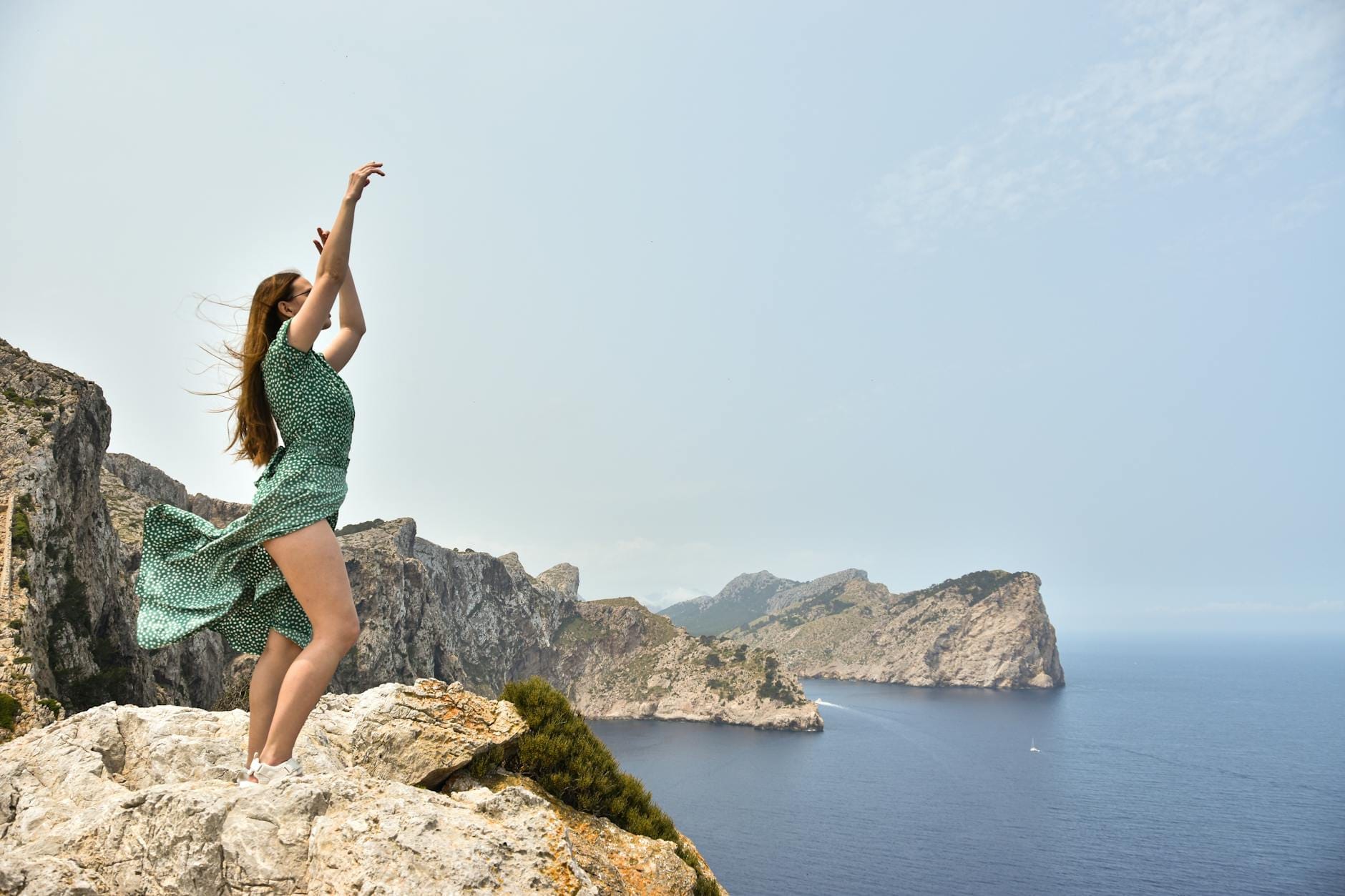
Plan and book this trip
Tools from our partner Travelpayouts help you compare flights and hotels. If you book through them, we may earn a commission at no extra cost to you.
Flights
Hotels map
TL;DR
- Seven days is the sweet spot for Mallorca: enough to cover Palma, the Serra de Tramuntana, the north coast, and the southeast without feeling rushed.
- Base yourself in Palma for the first two nights, then move around — or rent a car for flexibility. See renting a car in Mallorca for what to expect.
- Avoid the interior and mountain roads in July and August if you dislike heat — spring and October are far better for hiking and cycling.
- The island has 200+ beaches, a UNESCO mountain range, and a capital with serious architectural weight. See the full list of things to do in Mallorca if you want to build your own itinerary.
- Book key attractions (Palma Cathedral, Drach Caves) in advance, especially June through September.
Before You Go: Logistics That Actually Matter
Mallorca (officially part of Spain's Balearic Islands autonomous community, population around 970,000) is a well-connected destination. Palma de Mallorca Airport (PMI) handles roughly 30 million passengers annually and receives direct flights from most major European cities. Flight time from the UK is around 2 to 2.5 hours. From mainland Spain, Barcelona or Madrid to Palma takes under an hour. The best time to visit Mallorca for a week-long trip is April to June or September to October — mild temperatures, lower prices, and genuinely manageable crowds.
The island covers 3,640 km² with over 500 km of coastline. You can technically drive from one end to the other in under two hours on the motorway, but that misses the point entirely. The mountain roads, coastal detours, and village stops are where the time goes. Renting a car from day three or four is the most practical approach if you want to reach the north coast, the Tramuntana villages, and the southeast calas without being dependent on bus schedules.
💡 Local tip
Book your car rental and the Palma Cathedral (La Seu) entry well ahead for summer travel. The cathedral sells timed entry tickets and does sell out. The Drach Caves near Porto Cristo also have limited daily capacity — reserve online before you arrive.
Days 1 and 2: Palma de Mallorca
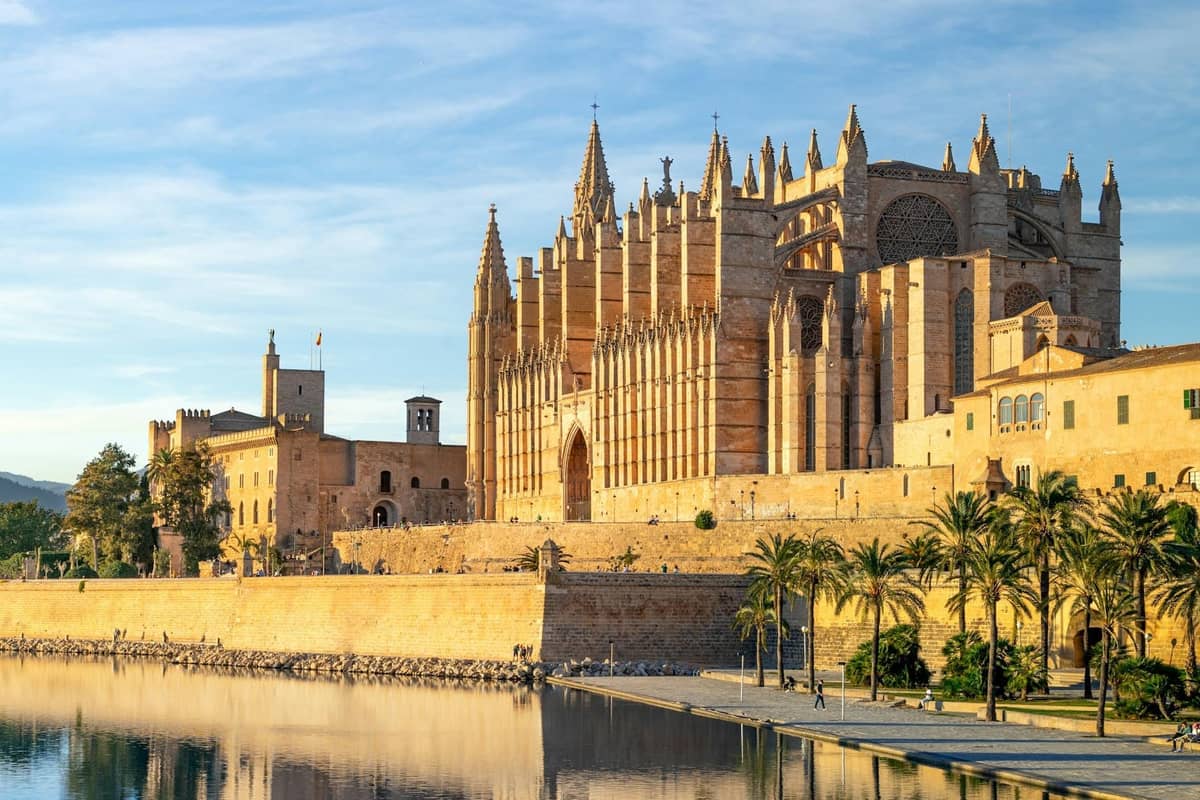
Start in Palma de Mallorca, the capital and home to nearly half the island's population. Two full days here is the minimum to do it justice — most itineraries rush through and regret it. The old town alone deserves most of a day.
On day one, anchor your morning at Palma Cathedral (La Seu), one of the largest Gothic cathedrals in Europe. The interior was partially redesigned by Antoni Gaudí between 1904 and 1914, and the contrast between medieval stonework and his modernist interventions is genuinely striking. Tickets cost around €11 for adults. Walk five minutes north to the Palace of La Almudaina, a Moorish-origin royal palace still used by the Spanish royal family. The afternoon works well for the Palma Old Town backstreets, the Arab Baths, and the Passeig del Born.
On day two, spend the morning at Mercat de l'Olivar, Palma's main covered market, which opens early and is at its best before 10am. The produce, cheese, and charcuterie stalls give you a clear picture of what the island actually eats. In the afternoon, Bellver Castle is worth the uphill walk — the circular Gothic structure and panoramic views over the bay of Palma are the reward. If contemporary art interests you, the Es Baluard Museum sits inside a 16th-century sea bastion and holds a strong permanent collection including Miró and Picasso works.
⚠️ What to skip
Palma's waterfront restaurants directly below the cathedral are notoriously overpriced and average. Walk two streets inland and the quality-to-price ratio improves significantly. The Santa Catalina neighbourhood, about 15 minutes west of the old town on foot, has far better eating options.
Days 3 and 4: The Serra de Tramuntana
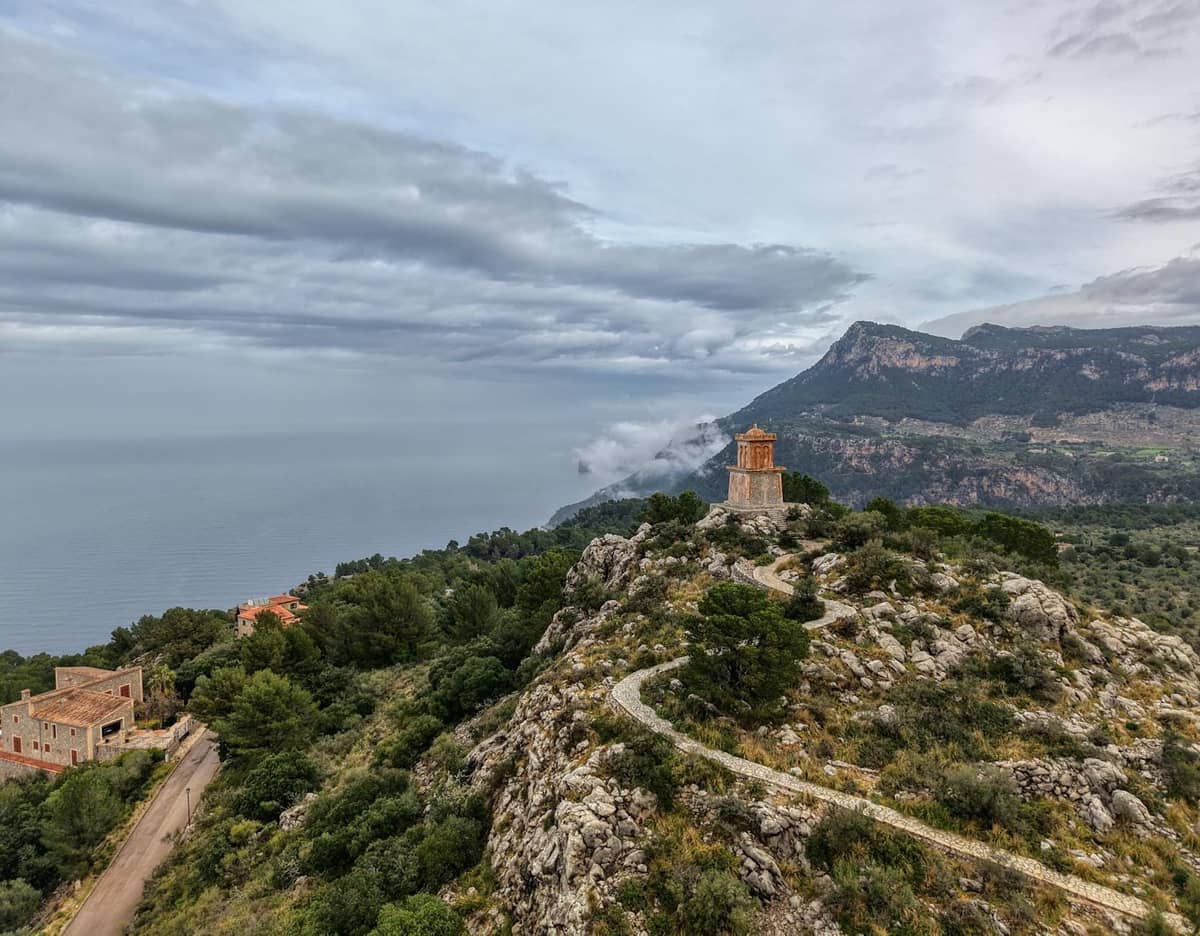
The Serra de Tramuntana is Mallorca's mountainous northwest, a UNESCO World Heritage Cultural Landscape since 2011. The range runs 90 km along the northwest coast and reaches 1,445 meters at Puig Major, the island's highest point. This is a completely different Mallorca from the beach resorts: terraced olive groves, medieval stone villages, sea cliffs, and hairpin roads.
Day three is best spent on the classic Tramuntana loop. Drive the MA-10 from Palma toward Valldemossa, a well-preserved hilltop village where Frédéric Chopin spent the winter of 1838-39. The village is popular but manageable before 10am. Continue north to Deià, one of the most photographed villages in Spain, perched above the sea with a small artists' community. Stop at Son Marroig for views of the Sa Foradada rock formation jutting into the sea below, then push on to Sóller and Port de Sóller for the night.
On day four, tackle Sa Calobra. This is Mallorca's most dramatic coastal road: 10 km of descent with 26 hairpins (including a full 360-degree loop), a 7.1% average gradient, and a finish at a narrow beach wedged between towering limestone cliffs. It is spectacular, but the return climb is arduous in a car and genuinely punishing in summer heat. Go early — the road gets congested by late morning in peak season. From Sóller, it's about a 45-minute drive to the Sa Calobra junction.
- Valldemossa Best before 10am. The Royal Charterhouse (Real Cartuja) where Chopin stayed is the main draw. Expect coach tour crowds by mid-morning in summer.
- Deià Small, no parking — use the official car park at the village entrance. The walk down to the rocky cove (Cala Deià) takes about 20 minutes.
- Sóller Connected to Palma by the vintage wooden train (the Ferrocarril de Sóller, running since 1912). If you've left your car in Palma, this is a scenic way in.
- Fornalutx Ten minutes by car above Sóller, consistently ranked among Spain's most beautiful villages. Worth 30 minutes on foot.
Day 5: The North — Formentor and Alcúdia
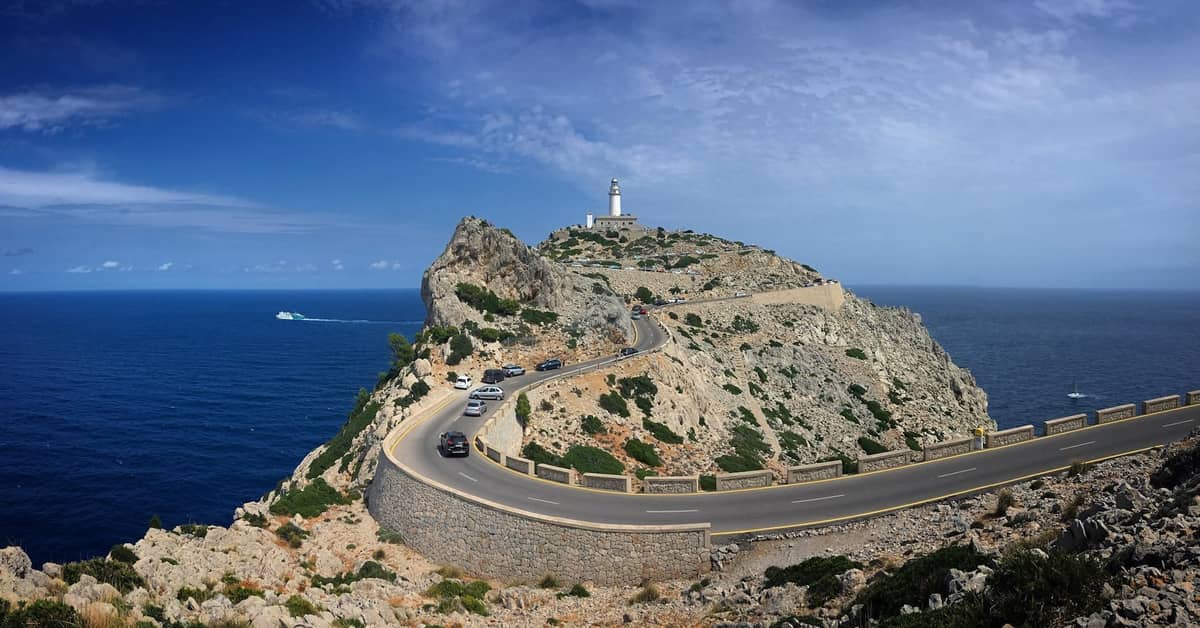
The Formentor Peninsula is Mallorca's northernmost point and arguably its most cinematic stretch of road. The drive from Port de Pollença to the lighthouse at Cap de Formentor is 20 km of cliff-hugging tarmac, with pine forests on one side and vertiginous drops to the sea on the other. The beach at Platja de Formentor, about halfway along, is one of the finest on the island: a long arc of white sand in a sheltered bay, usually with cleaner water than the more accessible southern beaches.
Important logistical note: during high season (June to September), the road to Cap de Formentor may have restrictions on private vehicles; check current access rules on the official Consell de Mallorca site. Check current restrictions before you go — the policy has evolved year to year. In shoulder season, you can drive the full route freely. After Formentor, head to Alcúdia Old Town, which sits inside remarkably intact 14th-century walls. The Roman ruins of Pollentia are adjacent to the old town and free to walk around. The nearby S'Albufera Nature Reserve is the largest wetland in the Balearics and a serious birdwatching site — 200+ species have been recorded here.
Day 6: The Southeast — Calas and Caves
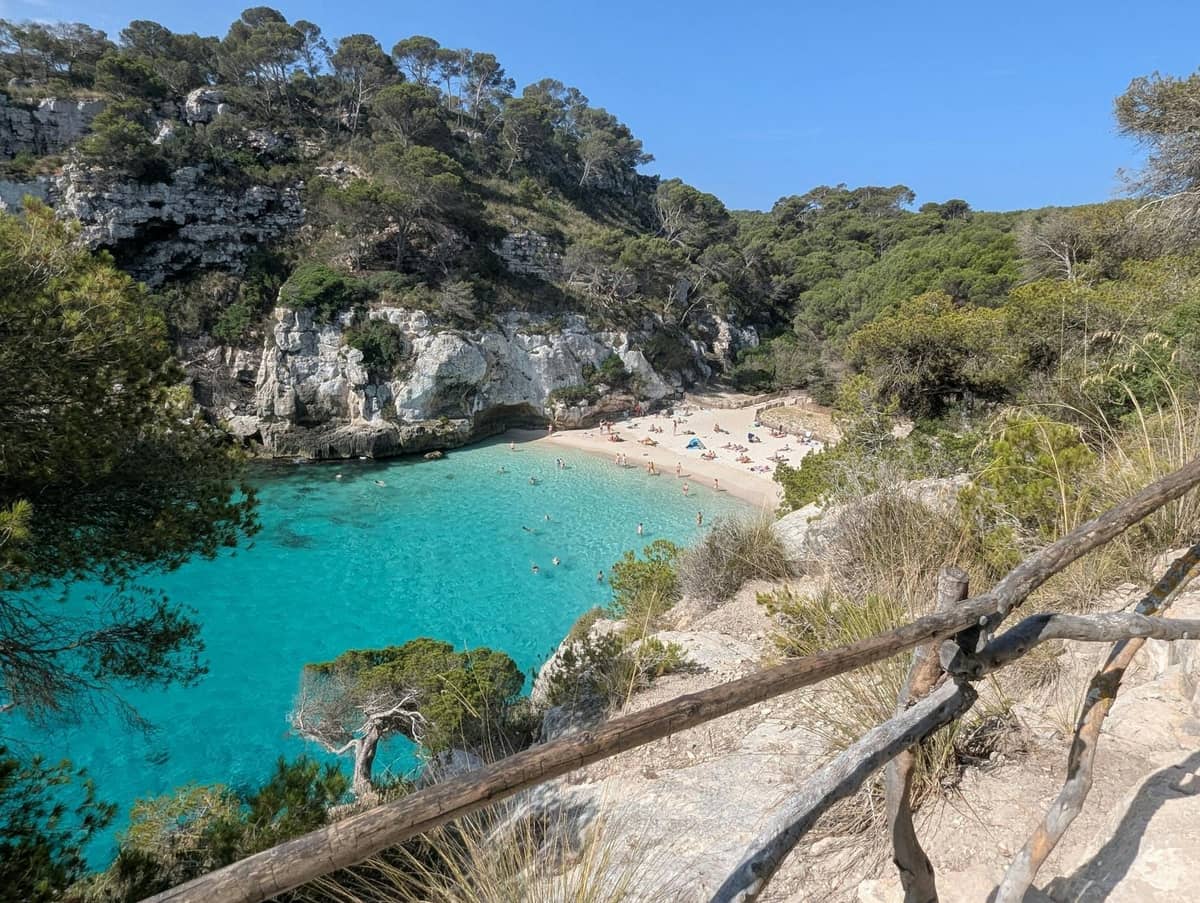
The southeast coastline between Portocolom and Cala Llombards is where Mallorca's beach credentials are genuinely earned. The calas here — small, rocky-edged inlets with turquoise water — are far more beautiful than the sandy resort beaches of the south and west. The tradeoff is access: most require a walk of 5 to 20 minutes from a car park, which naturally filters out the crowds.
Start at Caló des Moro, a tiny, intensely blue cala near Santanyí that has become Mallorca's most photographed beach. Arrive by 9am or expect a long wait for the car park (capacity is very limited). Continue to Cala Llombards and Cala Figuera — the latter is a working fishing village with a harbour of traditional llaut fishing boats, one of the few on the island that has kept its original character. In the afternoon, the Drach Caves near Porto Cristo are worth the detour. The cave system contains Lake Martel, one of the largest underground lakes in the world at 177 meters long. Entry includes a classical music concert performed on floating boats — theatrical and genuinely memorable.
✨ Pro tip
For the southeast calas, the window between 8am and 10am is the difference between a peaceful, photogenic morning and a car park queue stretching back 2 km. The same beaches at midday in July are a different experience entirely.
Day 7: Inland Mallorca and the Return to Palma
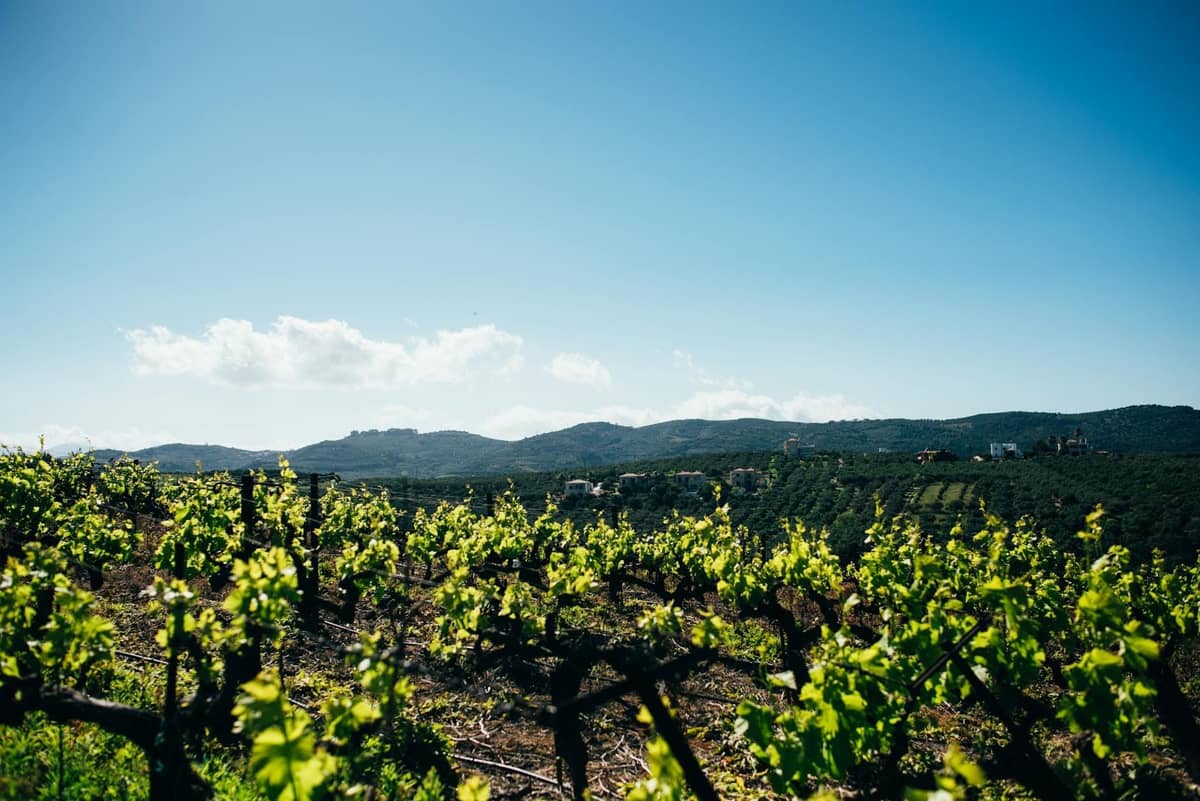
Most visitors skip the interior completely. That's a mistake, but it does mean the inland towns are refreshingly free of tourist infrastructure. The Pla (central plain) is wine and almond country, with the Binissalem DO producing reds from the native Manto Negro grape. The Mallorca wine scene has developed significantly in the last two decades and merits at least half a day if it interests you.
The market town of Sineu holds its weekly Wednesday market — one of the oldest on the island — with a livestock section that still operates much as it has for centuries. Sineu market is worth timing your final day around if you're leaving on a Thursday. On the way back to Palma, the Jardines de Alfabia near Bunyola are Moorish-influenced gardens with water features and a remarkable pergola-lined path — a low-key stop that almost no one bothers with, which makes it rather pleasant.
- If you fly home from Palma in the evening, leave the southeast beaches by 2pm to allow 1.5 hours for the drive back and 90 minutes at the airport minimum.
- The AP-7 motorway from Manacor to Palma is the fastest route but involves a toll (around €4-7 depending on entry and exit points).
- Palma Airport has good food options airside — you do not need to rush through security to find something decent to eat.
- Store luggage at your Palma hotel on day seven even after checkout — most hotels hold bags until the evening without charge.
Practical Notes for a Week in Mallorca
A week in Mallorca works best as a mobile itinerary rather than a single-base trip. Staying in Palma for the full seven nights and day-tripping everywhere is possible but adds driving time you could spend doing other things. The alternative is to stay two nights in Palma, two nights in or near Sóller for the Tramuntana section, and two nights in the southeast (Santanyí, Porto Cristo, or Cala d'Or) before returning to Palma for the final night. For accommodation guidance, see where to stay in Mallorca.
Budget roughly €50-80 per person per day for mid-range travel: this covers a car rental share, a sit-down lunch, a good dinner, and entry fees. Mallorca is not cheap by Spanish mainland standards, particularly in the summer peak. If you are travelling on a tighter budget, the Mallorca on a budget guide covers where to cut costs without losing quality. Currency is Euro (EUR). The island operates on Central European Time (UTC+1, or UTC+2 in summer). Spanish and Catalan are the official languages; the local dialect is Mallorquí. English is widely spoken in tourist areas.
FAQ
Is one week enough time for Mallorca?
One week is enough to cover the main regions well without feeling rushed — Palma, the Tramuntana mountains, the north coast, and the southeast calas. You will not see everything (the island has 200+ beaches and dozens of villages), but you will get a genuinely well-rounded picture of what makes Mallorca different from a standard beach holiday.
Do I need a car for a week in Mallorca?
Not for every day, but for the Tramuntana, the north coast, and the southeast calas, public transport is either infrequent or does not reach the key spots at all. Renting a car for at least four of your seven days significantly expands what you can see. Palma itself is better explored on foot.
When is the best time of year to do this itinerary?
April to June and September to October are the strongest windows. The weather is warm (low to mid 20s°C), the roads and beaches are not at capacity, and prices are lower than peak summer. July and August work for beach-focused trips but the mountain roads are hot and congested, and Caló des Moro and similar spots become genuinely difficult to access early.
Can I do this itinerary without staying in Palma?
Yes, though you lose some convenience. If your priority is beaches and the Tramuntana, basing yourself in Sóller or Port de Pollença and doing a day trip into Palma is a reasonable alternative. Palma is worth at least one full day regardless of where you base yourself.
What should I book in advance for a week in Mallorca?
At minimum: Palma Cathedral (La Seu) timed entry tickets, the Drach Caves (limited daily capacity), and your car rental. If you plan to take the vintage Sóller train, pre-booking is advisable in summer. Accommodation in Deià and the Tramuntana villages sells out months ahead in peak season.