Where to Stay in Mallorca: The Best Areas and Hotels for Every Type of Trip
Mallorca is a 3,640 km² island with wildly different characters depending on where you base yourself. This guide cuts through the noise and maps out the best areas to stay, who each one suits, and what to watch out for before you book.
Plan and book this trip
Tools from our partner Travelpayouts help you compare flights and hotels. If you book through them, we may earn a commission at no extra cost to you.
Flights
Hotels map
TL;DR
- Stay in Palma if you want walkable city life, restaurants, and sightseeing without a car.
- The northwest (Deià, Valldemossa, Sóller) suits couples and slow travellers, but you'll need a hire car.
- The north (Port de Pollença, Alcúdia) is the top choice for families: long sandy beaches and calm water.
- The southeast (Santanyí, Ses Salines) has the best beaches and most stylish boutique hotels. See the best beaches in Mallorca for context.
- Avoid booking beachfront in July and August without reading cancellation policies carefully — prices spike 40-80% and availability disappears fast.
Understanding Mallorca's Regions Before You Book
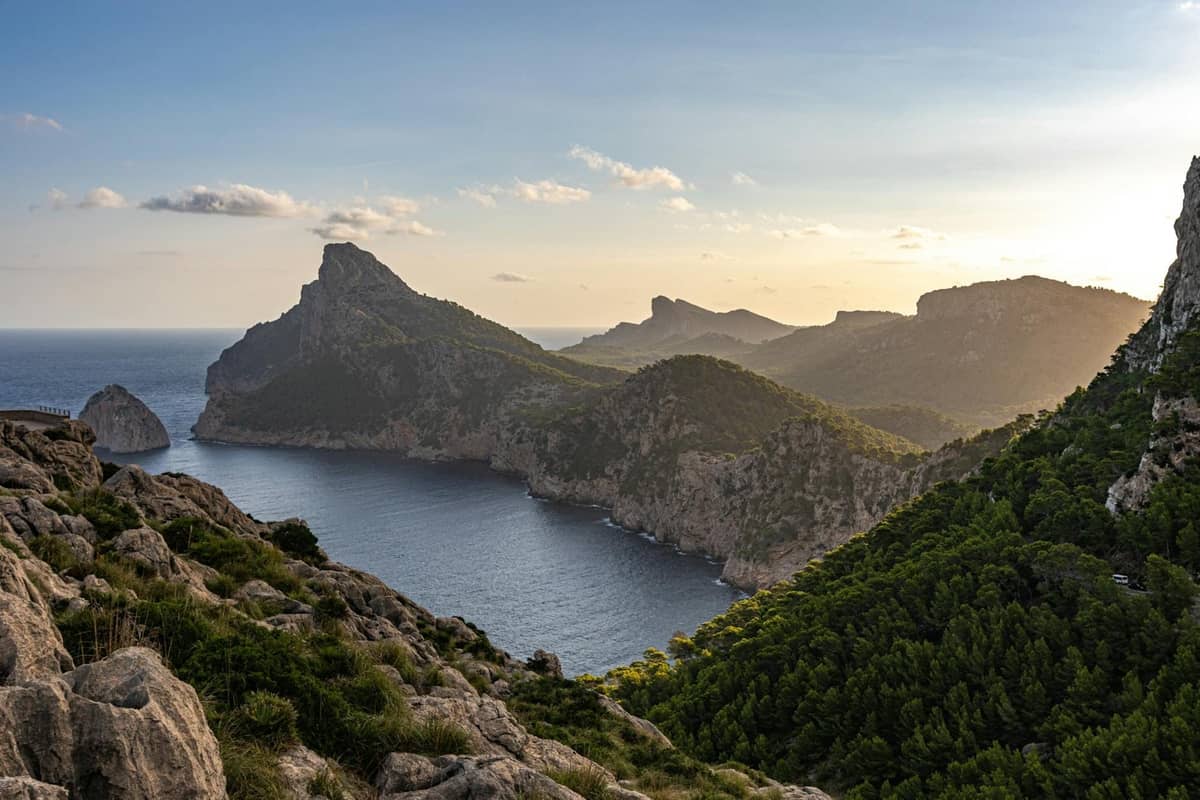
Mallorca is often reduced to a single postcard: package resorts on a white beach. The reality is an island with five completely distinct personalities. The northwest is mountainous, green, and culturally rich. The north is beach-resort territory with a more relaxed, family-oriented feel. The east coast is craggy and relatively undiscovered. The south is flat, warm, and home to both the island's most beautiful natural beaches and its least appealing resort sprawl. And then there's Palma, the capital, which functions more like a proper European city than a holiday destination.
Where you stay determines what kind of trip you have. The island is 3,640 km² — much larger than Mallorca's nearest rival in the Balearics, Menorca, which is tiny by comparison — but it takes around 90 minutes to drive from Palma to the northeast corner. Getting around Mallorca without a car is possible from Palma and Sóller, but it severely limits your options elsewhere. Factor in whether you're renting a car before choosing a base.
ℹ️ Good to know
Mallorca's official languages are Catalan and Spanish. The local dialect is Mallorquí, a variant of Catalan. Most hotel and tourism staff speak English and often German. Prices are in euros (EUR). The timezone is CET (UTC+1), switching to CEST (UTC+2) in summer.
Palma de Mallorca: Best for City-Focused Stays
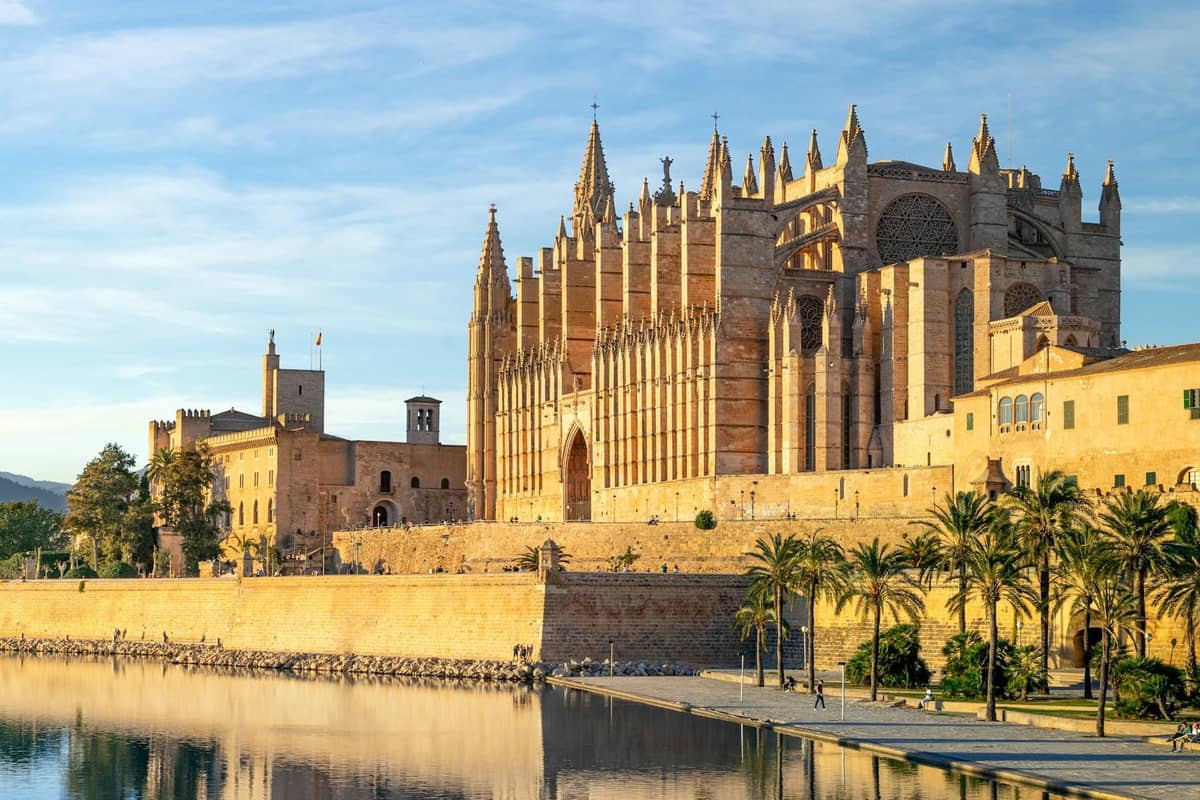
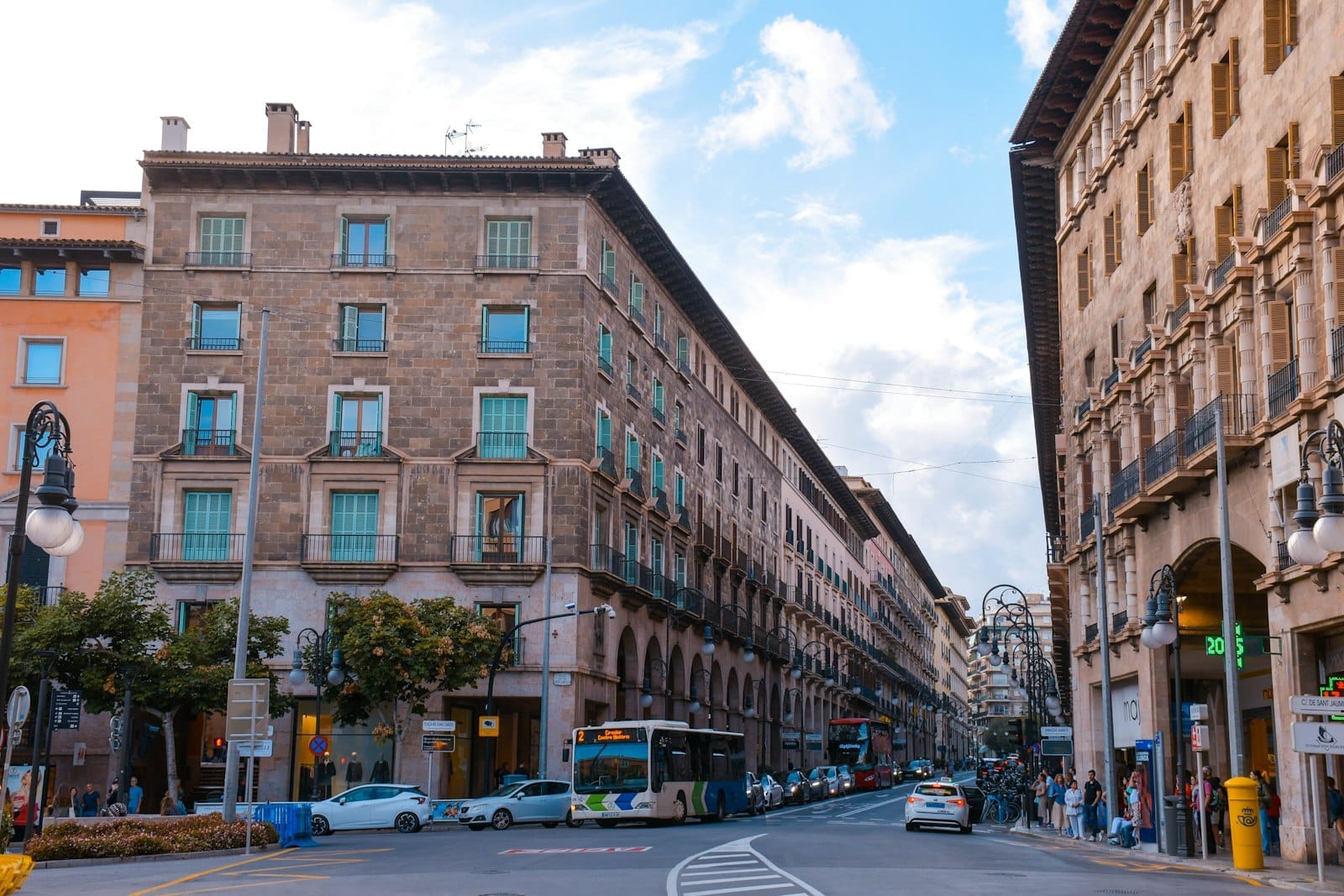
Palma is home to almost half the island's 950,000 residents and it punches well above its weight as a city destination. The old town has a Gothic cathedral, Arab baths, a medieval palace, and a waterfront boulevard — all within walking distance of each other. Staying here means you can skip the hire car entirely for at least the first few days.
The best hotel neighbourhoods in Palma cluster around the old town and the Santa Catalina district, where the market and the island's most interesting restaurant scene sit side by side. Expect to pay around €120-200 per night for a mid-range hotel in these areas during shoulder season, rising sharply in July and August. Boutique hotels converted from 15th and 16th century palaces (called 'palacetes') offer some of the most atmospheric stays in Spain, full stop.
Palma is not perfect for beach lovers. The closest urban beaches are fine but unremarkable. If swimming is your priority, Palma works better as a one or two-night city stop alongside a second base elsewhere on the island.
- Best for Solo travellers, couples, cultural tourism, foodies, first-time visitors to the island
- Not ideal for Families wanting beach-door-to-hotel access, anyone who wants total quiet
- Car needed? No — for a Palma-only stay, the city is walkable and taxis are reliable
- Price range Budget hostels from €40/night; mid-range hotels €100-200; luxury palacete hotels €250-600+
The Northwest (Tramuntana, Deià, Valldemossa, Sóller): Best for Slow Travel and Scenery
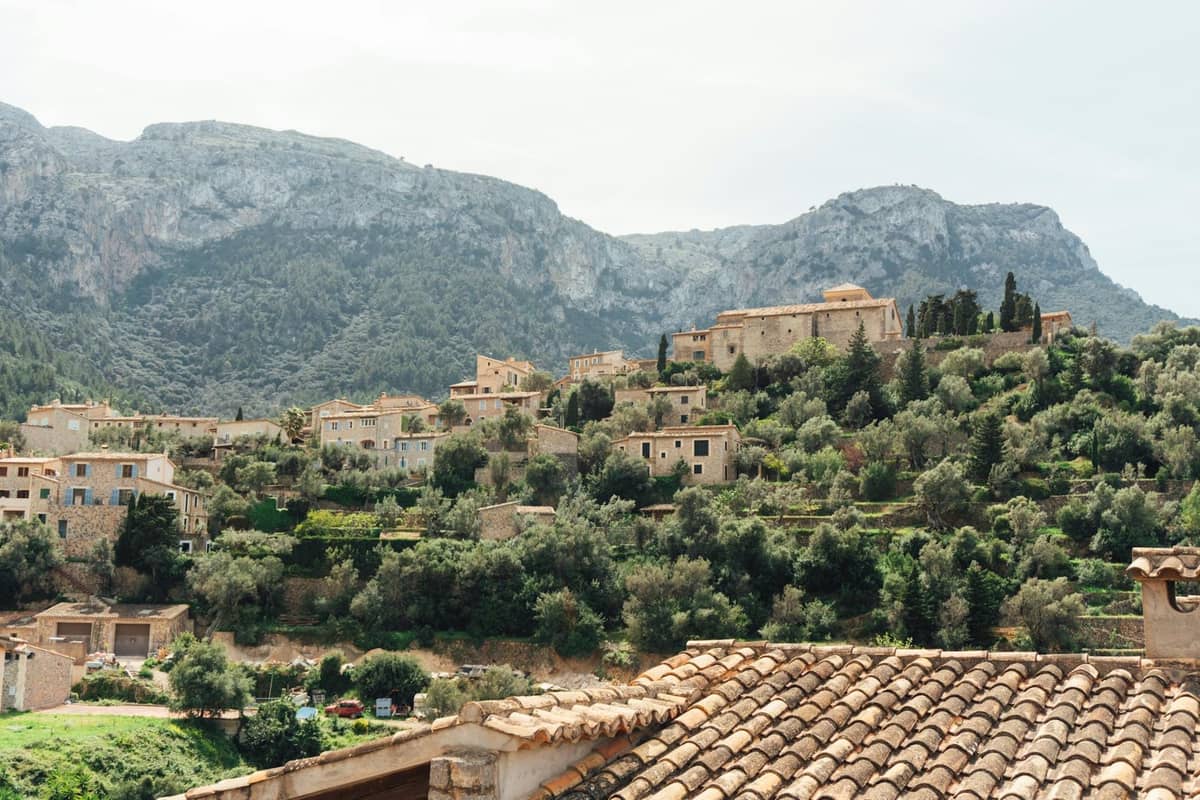
The Serra de Tramuntana, a UNESCO World Heritage mountain range running along the northwest coast, is where Mallorca's most atmospheric villages sit. Deià is the most celebrated: a steep, stone-built village clinging to the hillside above a rocky cove, with Belmond La Residencia as its anchor property. Rates at La Residencia start well above €500/night in high season, but it sets the tone for the entire area — unhurried, tasteful, and visually dramatic.
Valldemossa is 17 km north of Palma and more accessible, making it a popular day trip. Staying here rather than visiting as a day trip is a genuinely different experience: the village empties out after 5pm and the silence is remarkable. For the Sóller valley, the famous vintage train from Palma means you can technically arrive without a car, though exploring the wider Tramuntana area becomes difficult without one.
⚠️ What to skip
The roads through the Tramuntana are narrow, winding, and sometimes shared with large groups of road cyclists. If you're not comfortable driving mountain roads — and some stretches have sheer drops — stick to Palma or the north. These are not roads to underestimate after dark or in poor weather.
Northwest Mallorca suits travellers who want scenery, hiking, and quality over convenience. Restaurants are fewer and more expensive than elsewhere. Many properties are small boutique hotels or rural fincas (converted farmhouses). Two to four nights is the sweet spot — enough to hike, visit Sóller, and absorb the landscape without needing to manufacture activities.
The North (Port de Pollença and Alcúdia): Best for Families and Beach Holidays
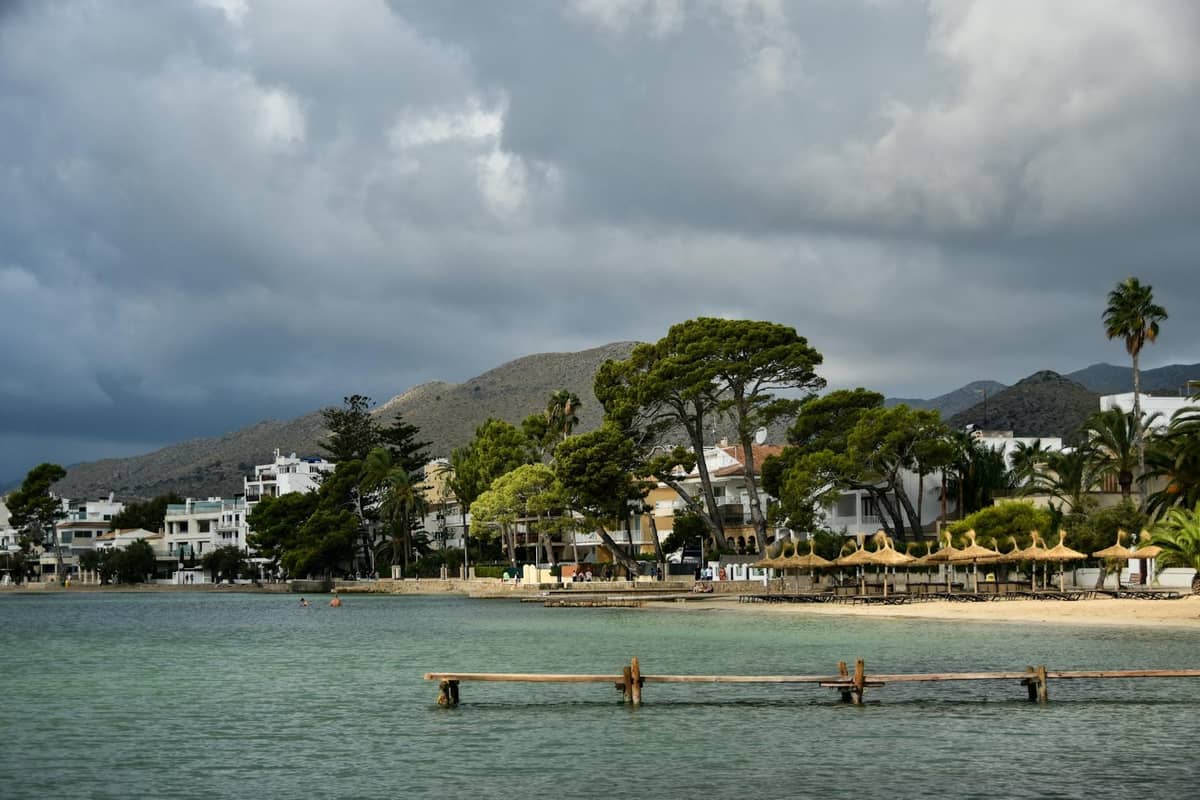
The north coast offers the most straightforward beach holiday on the island. Port de Pollença has a long sandy promenade, calm shallow water, and a range of hotels from simple apartments to good mid-range options. It's popular with British and German families and has enough restaurants, bars, and boat trips to fill a week without any pressure to sightsee.
Alcúdia gives you both a medieval walled old town — genuinely worth a wander — and access to Playa de Muro, one of the longest stretches of sand on the island. The beach runs for several kilometres and stays shallow for a long way out, which makes it ideal for young children. Hotels here range from all-inclusive complexes to smaller family-run places. High season rates for a decent family hotel sit around €150-280 per night.
💡 Local tip
Book north Mallorca accommodation at least 3-4 months ahead for July and August, especially if you want something with a pool. Family-oriented hotels here sell out faster than the equivalent properties in Palma or the southeast.
The Southeast (Santanyí, Ses Salines, Cala Figuera): Best for Boutique Hotels and Beautiful Beaches
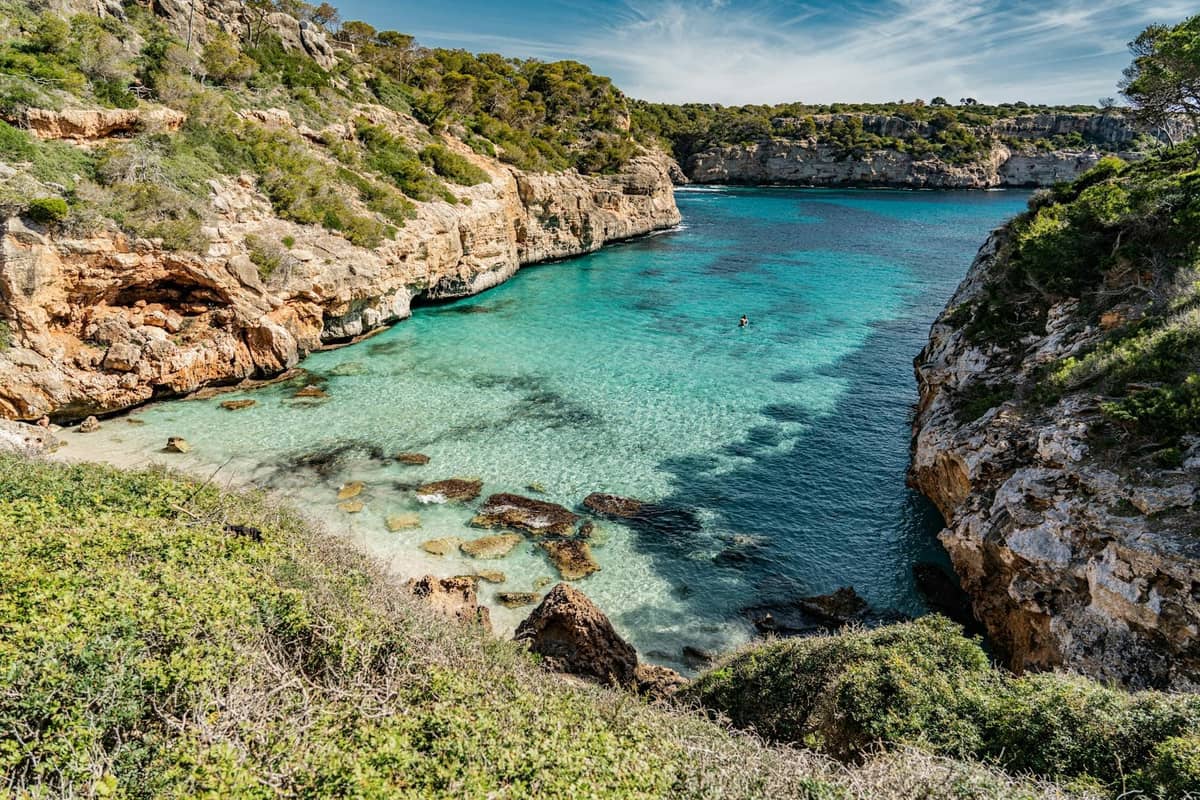
The southeast is where Mallorca's best beaches and most considered accommodation intersect. The area around Santanyí and Ses Salines contains some of the island's most photographed coves, including Caló des Moro and the vast natural beach at Es Trenc, which is protected from development. Neither has a hotel on the sand — you'll need to drive in and walk.
The town of Santanyí itself is one of the most pleasant places to base yourself in the south. The weekly market draws locals as much as tourists, the food scene has improved significantly, and the surrounding area includes the fishing village of Cala Figuera, which still has working fishing boats coming in daily. Boutique properties like Can Ferrereta have put Santanyí on the luxury travel map.
This area is better suited to adults and couples than families with young children — the beaches are stunning but often require a short walk or drive, and the nightlife is minimal. That's a feature, not a bug, for the right kind of traveller. Expect to pay €180-350 per night for quality boutique accommodation in high season.
- Es Trenc beach: 3 km of undeveloped sand backed by dunes — no hotels, no sunbed rental companies, bring everything you need
- Caló des Moro: reached by a 10-minute walk down a rocky path — famous for its turquoise water but gets crowded by 10am in July-August
- Cala Llombards: smaller, calmer, and slightly less visited than Caló des Moro — good alternative on busy days
- Mondragó Natural Park: protected coves with marked walking trails — better infrastructure than Es Trenc for families
Practical Considerations: Timing, Transport, and What to Avoid
Mallorca has over 300 sunny days a year and an average annual temperature of 21°C, which makes almost every month viable. The practical reality is that June through August sees the island at near-capacity, with prices to match. The best time to visit Mallorca for a balance of good weather and manageable crowds is late April through May or September through mid-October. Mountain accommodation and rural fincas sometimes close between November and February.
A hire car transforms what's possible. Without one, you're largely limited to Palma, the Sóller valley, and the north coast. With one, the entire southeast, the interior villages, and the remote coves open up. Renting a car in Mallorca is straightforward via Palma Airport (PMI) — prices vary significantly by season, so booking 4-6 weeks in advance for summer is strongly advised.
One common mistake: booking a hotel in the resort strip between Magaluf and El Arenal because it looks affordable and central. Unless you're specifically looking for the British-package-holiday experience, these areas have little to recommend them. The beaches are crowded, the restaurants are generic, and the nightlife is louder than most travellers expect. They're cheap in the off-season but represent poor value compared to the southeast or north during peak weeks.
✨ Pro tip
If you want to split your stay between areas, the most efficient combination is 2 nights in Palma (arriving/departing) plus 4-5 nights in either the northwest or southeast. This lets you use the city as a landing pad for food and sightseeing before heading to a quieter base. Trying to cover all regions in one trip results in too much driving and not enough settling in.
FAQ
Where is the best area to stay in Mallorca for first-time visitors?
Palma is the most logical first base — it's walkable, culturally rich, and gives you a real sense of the island before heading out. If you want to combine city and beach, spend 2 nights in Palma then move to Port de Pollença or the Santanyí area for the rest of your stay.
Is Mallorca worth visiting outside of summer?
Yes, and arguably more so. May and October offer temperatures of 20-25°C, far fewer crowds, and lower hotel prices. The Tramuntana villages are particularly good in spring. Some beach bars and resort-focused hotels close from November to March, but Palma operates year-round.
Do I need a car to stay in Mallorca?
It depends entirely on your base. Palma and Sóller are manageable without a car. Everywhere else — the northwest mountains, the southeast coves, the east coast — requires a car or you'll be stuck relying on infrequent bus services. If you want flexibility, book a hire car from Palma Airport from day one.
What's the difference between staying in Port de Pollença versus Alcúdia?
Port de Pollença is calmer, more upmarket, and better for couples or older families. Alcúdia has a wider beach (Playa de Muro) and more all-inclusive hotel options, making it better suited to families with young children. Both are in the north and are only about 10 km apart, so you can easily visit either from the other.
How far in advance should I book hotels in Mallorca?
For July and August, 3-4 months in advance is the minimum for decent choice — popular boutique hotels and well-located family hotels sell out faster than that. For May, June, September, and October, 4-8 weeks is usually sufficient. Off-season (November to March), you can often book a week or two ahead.