Mallorca with Kids: The Practical Family Guide
Mallorca has a well-earned reputation as one of the Mediterranean's top family destinations, but knowing which beaches, attractions, and activities actually work for children makes the difference between a great holiday and a stressful one. This guide cuts through the noise with specific recommendations, honest assessments, and practical logistics.
Plan and book this trip
Tools from our partner Travelpayouts help you compare flights and hotels. If you book through them, we may earn a commission at no extra cost to you.
Flights
Hotels map
TL;DR
- Mallorca with kids works best from late May to mid-June or September, when the water is warm but crowds and heat are manageable. See our best time to visit Mallorca guide for a full seasonal breakdown.
- Playa de Muro and Alcudia Bay are the standout family beaches: shallow, sandy, and well-serviced. Avoid Magaluf unless your teenagers specifically want a water park.
- Palma Aquarium, the Soller train, and the Drach Caves are three anchor experiences that hold up across a wide age range from roughly 4 and up.
- Rent a car. Public transport covers the main routes, but reaching the best family beaches and coves with young children requires the flexibility of your own vehicle.
- Book boat trips and aquarium tickets in advance during July and August. Check things to do in Mallorca for broader activity planning.
The Best Family Beaches in Mallorca
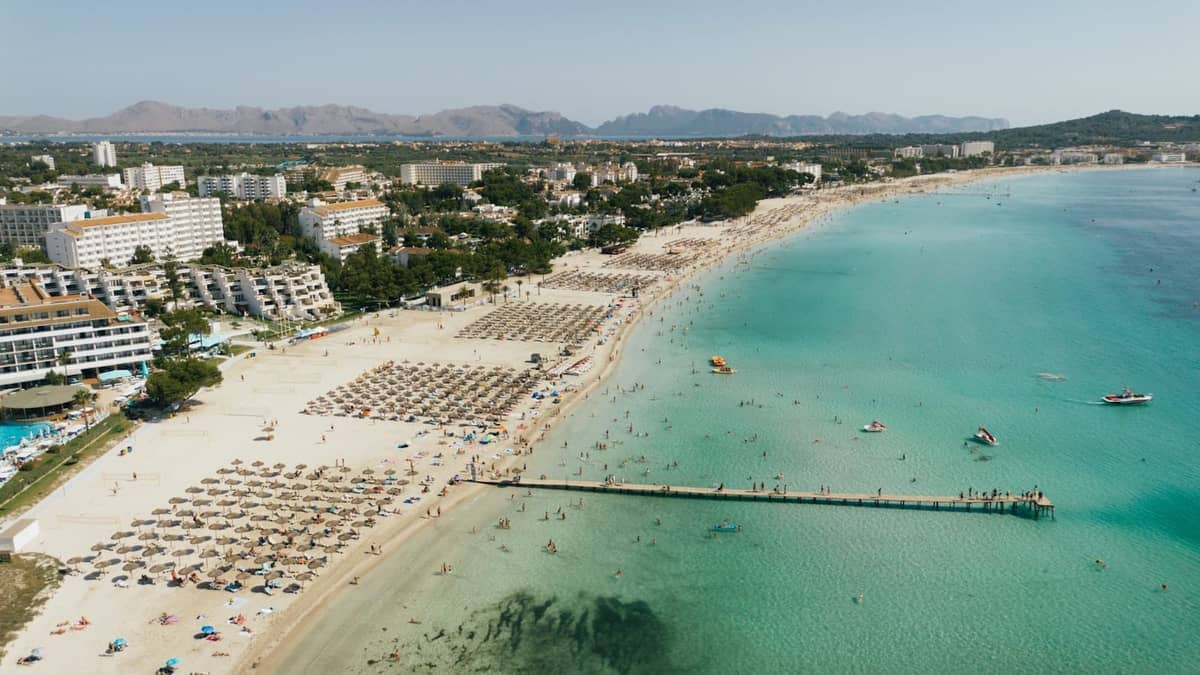
Not all beaches in Mallorca are created equal for families. The north coast, particularly the stretch around Alcudia and Playa de Muro, offers the combination that matters most when travelling with children: shallow entry, fine sand, calm water, and services within walking distance. Playa de Muro sits within the protected S'Albufera marshland area, which keeps the water clean and the waves negligible. The beach runs for several kilometres, so even in peak season there is room to spread out. Sun loungers and parasols are available for hire, and the beach bars serve proper food rather than just snacks.
Further east, Alcudia Bay shares similar geography and adds the bonus of being within easy reach of the walled old town, giving families an easy mix of beach days and culture. For something slightly more adventurous, the coves of the southeast coast offer striking turquoise water and natural scenery that older children tend to find more interesting than a flat sandy beach. Cala Llombards and Cala Figuera both have calm, clear water that is excellent for snorkelling.
⚠️ What to skip
Magaluf and the S'Arenal strip are dominated by adult entertainment venues. The beaches themselves are fine during daytime, but the surrounding atmosphere is not particularly family-friendly, especially in the evenings. Families with young children should base themselves elsewhere.
- Playa de Muro Best overall: shallow, long, clean, with full services. Ideal for toddlers and primary school-age children.
- Port de Pollenca A gentler resort atmosphere with a calm bay and a promenade. Good for families who want to walk to restaurants.
- Cala Llombards Small southeast cove with crystal-clear water and calm conditions. No sun lounger hire, so bring your own shade.
- Cala Agulla North coast beach with pine trees for natural shade and relatively uncrowded conditions outside August.
- Es Trenc Stunning natural beach in the south, but parking is limited and the walk from the car park is around 15-20 minutes. Better suited to families with older children.
Top Kid-Friendly Attractions
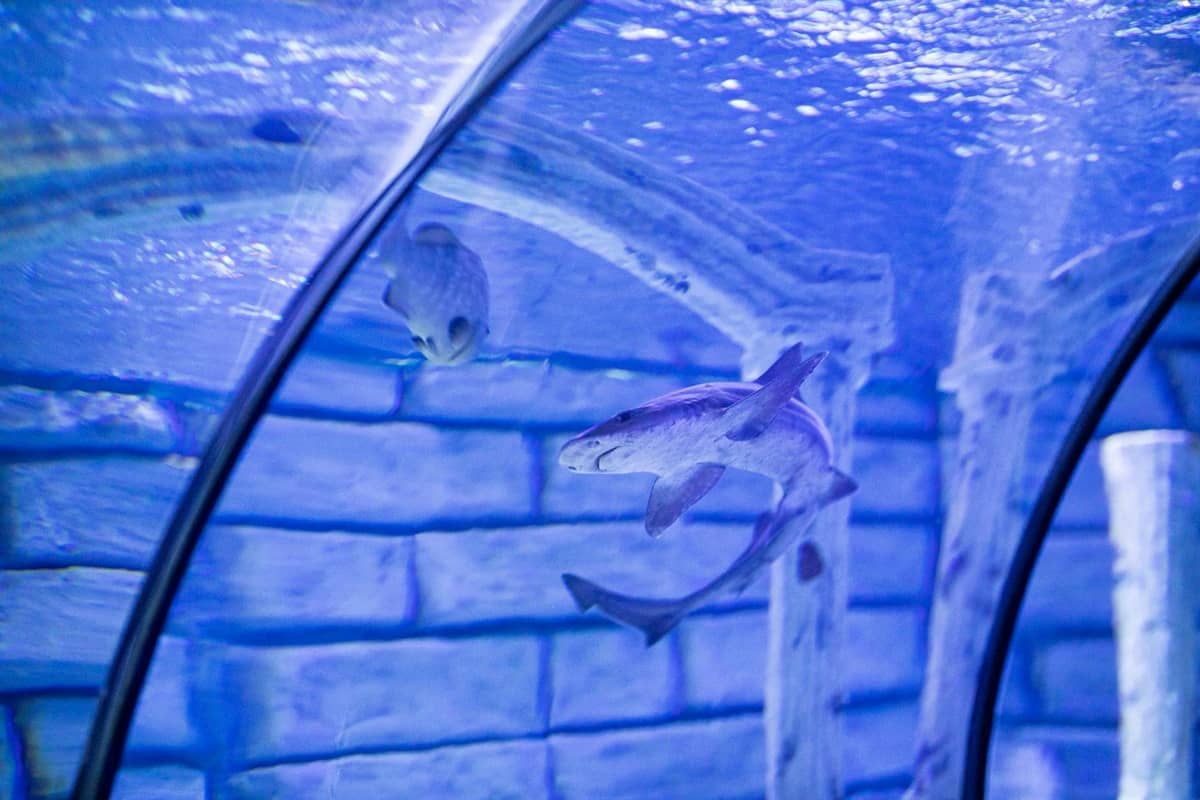
Palma Aquarium is consistently one of the highest-rated family attractions on the island, and for good reason. The complex houses over 8,000 marine creatures across 55 tanks, including a walk-through shark tunnel that tends to be the headline act for younger visitors. There are touch pools, feeding demonstrations, and a rooftop jungle area that provides a change of pace. Plan for around three to four hours and buy tickets online to avoid the queues, which can be significant in July and August. The aquarium is located east of Palma city centre, accessible by car or taxi.
The Drach Caves near Porto Cristo on the east coast are one of Mallorca's most distinctive experiences. The cave system contains one of the largest underground lakes in the world, and the visit includes a short classical music performance by musicians on illuminated boats. Children from about age 5 upward tend to find this genuinely awe-inspiring rather than just educational. The tour takes around an hour and runs on a fixed schedule throughout the day, so check timings before you go and arrive 20 minutes early to secure good seats.
For something more active, the Soller train is one of the most enjoyable family experiences on the island. The vintage wooden train departs from Palma's central station and winds through the Serra de Tramuntana to the town of Soller, passing through mountain tunnels and offering dramatic valley views. The journey takes about an hour each way. You can return by the same train or connect to the old tram that runs down to Port de Soller and the seafront. This works as a full day out without needing a car.
💡 Local tip
Combine the Soller train with a lunch stop in Port de Soller. The port has calm, swimmable water and several restaurants with children's menus. Return on the afternoon train to avoid the busiest departure times.
Boat Trips and Water Activities
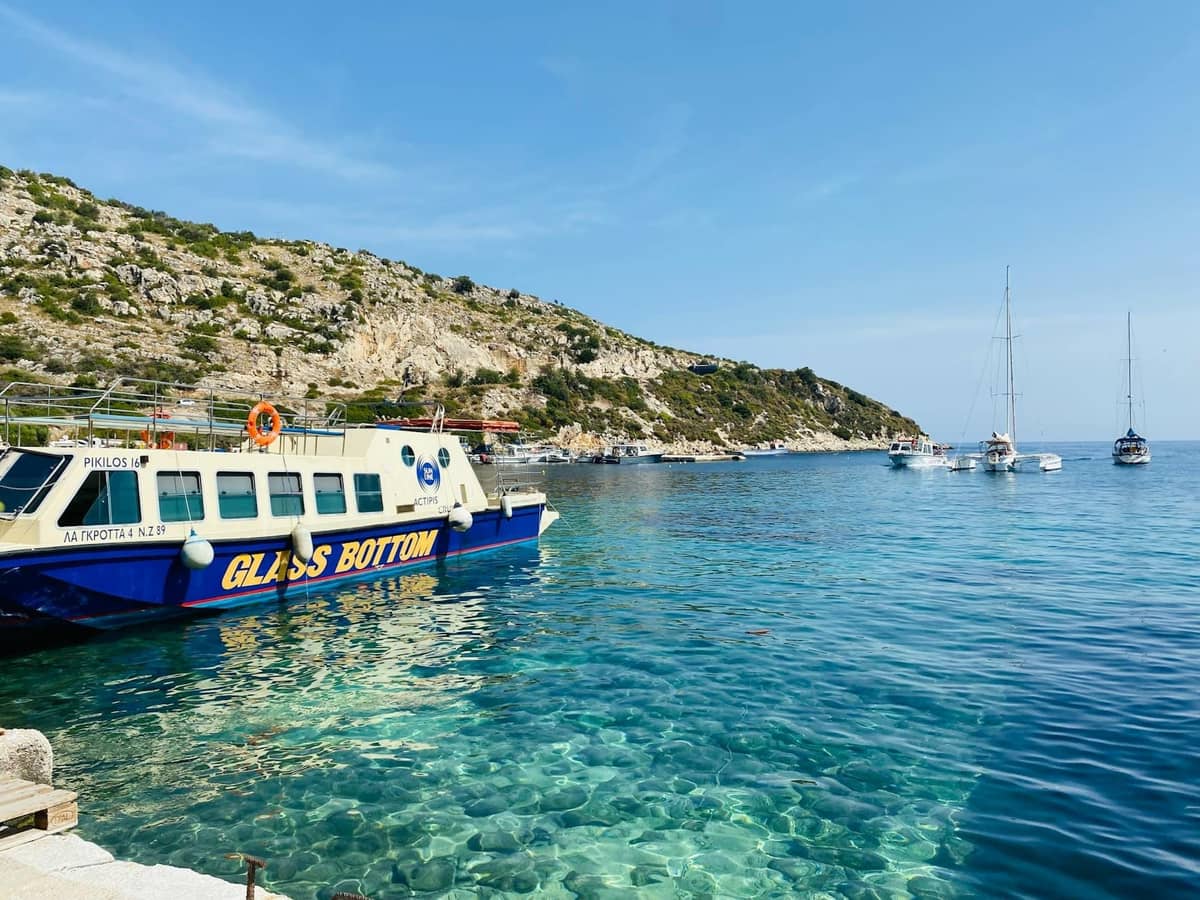
Water-based activities are where Mallorca really delivers for families. The range of options runs from gentle glass-bottom boat tours that let young children see marine life without getting wet, all the way to longer sailing excursions with snorkelling stops for confident swimmers. The key is matching the activity to the age and temperament of your children rather than booking the most dramatic-sounding option.
Glass-bottom boat tours depart from several resort areas including Paguera, Sa Coma, Santa Ponsa, and Port d'Alcudia. Most tours last around 45 to 90 minutes and are calm enough for very young children. The Alcudia pirate cave tour is a step up: a three-hour excursion that takes families to sea caves, a snorkelling bay, and includes enough theatrical pirate storytelling to keep children under 10 entertained throughout. This one books out weeks in advance in high season.
- Glass-bottom boats: appropriate from age 2 upward, no swimming required
- Pirate cave tours from Alcudia: best from age 4-5, includes snorkelling stop
- Kayak hire at most beaches: suitable from around age 7-8 with adult supervision
- Paddleboard hire: works well for children from roughly age 8 with calm conditions
- Sailing day trips: better for families with children who are comfortable on open water
Water Parks and Theme Attractions
Mallorca has two main water parks catering to different audiences. Aqualand El Arenal, located near S'Arenal south of Palma, tends to work better for younger children: the ride selection includes gentler slides, splash zones, and wave pools that suit families with children aged 3 to 10. Western Water Park in Magaluf skews older, with more intense rides that genuinely require a minimum height of around 1.2 metres. Teenagers tend to prefer this one. Both parks get very crowded from mid-July through August, so arrive when gates open if you want to ride the popular slides without long waits.
On days when the weather doesn't cooperate, or when you need a break from the sun, Palma has a trampoline park (Palma Jump, near the city centre) that provides a reliable couple of hours of energy expenditure for children aged 4 and up. The Palma Aquarium also works as a rainy-day option, since it is largely indoors. For older children interested in sport, the Rafa Nadal Museum Xperience in Manacor is worth the drive for tennis fans.
Culture and History That Actually Works with Children
Many families skip the cultural side of Mallorca entirely, which is understandable but a mistake if your children are old enough to engage with it. Alcudia old town is one of the best introductions to Mallorcan history for families. The medieval walls are walkable and give children an immediate sense of scale and history, while the town itself is compact enough that you can explore it in 90 minutes without exhausting shorter legs. There is a Roman amphitheatre on the edge of town (the Pollentia archaeological site) that children with even a passing interest in history tend to find interesting.
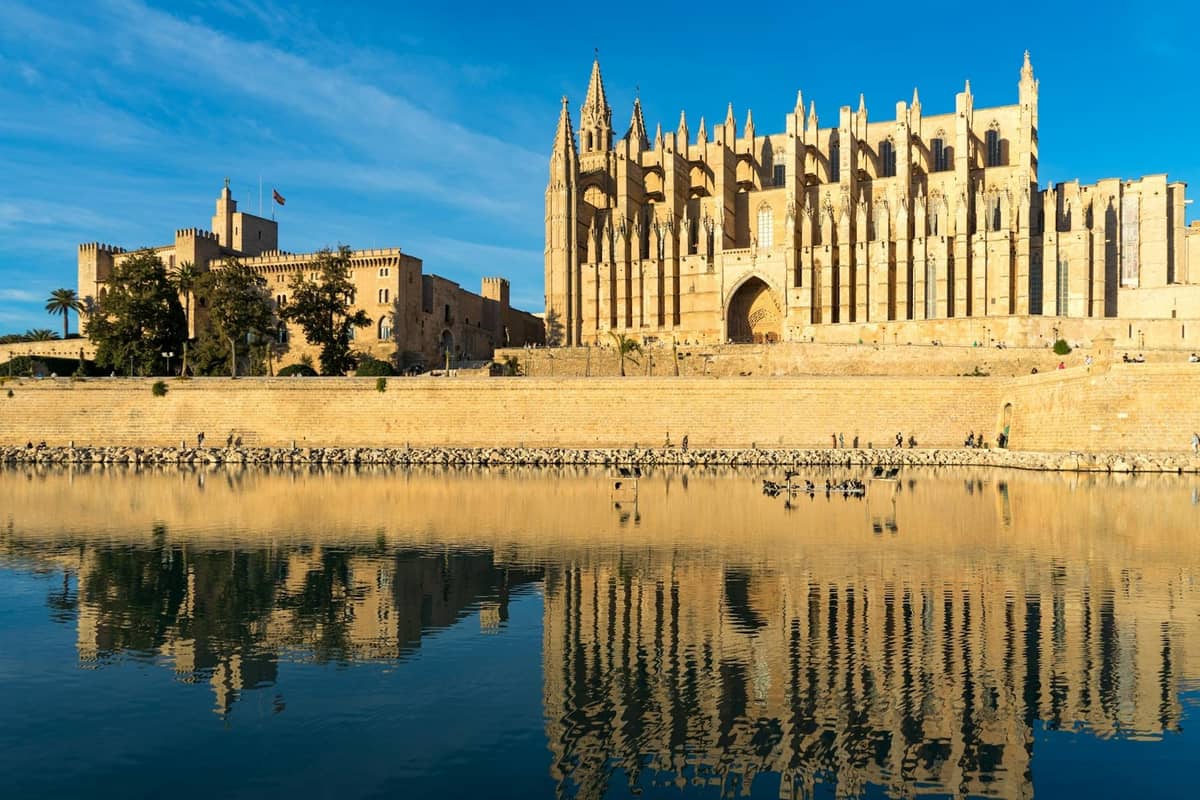
In Palma itself, Bellver Castle is a more engaging visit for children than the cathedral, partly because of its circular design (unusual in European castle architecture) and partly because the hilltop position gives panoramic views that reward the short uphill walk. The grounds are free to enter even if you skip the paid museum section inside. For families combining culture with a walk, the route from the castle down to the Parc de la Mar and the cathedral waterfront area can be done entirely on foot and covers some of the most photogenic parts of the city.
✨ Pro tip
The royal family connection to Mallorca is genuine and visible: the Spanish royal family uses the Marivent Palace near Cala Major as their summer residence, typically in August. The palace is not open to the public, but the neighbourhood is easily driven past, and the royal presence during August means occasional sightings at local events and the Palma Cathedral. It adds an unexpected layer of interest for children who are aware of European royalty.
Practical Family Travel Tips for Mallorca
Getting around Mallorca with children is significantly easier with a car. The island's public transport, managed by Serveis Ferroviaris de Mallorca, covers the main towns and the Palma-Soller-Inca rail routes, but reaching beaches outside the major resort areas becomes time-consuming without your own vehicle. See the guide to renting a car in Mallorca for pricing and logistics. Most car hire companies at Palma Airport (PMI) offer child seat rental, but book these in advance as availability runs out in high season.
Accommodation choice matters more for families than for solo travellers. Apartment rentals give you kitchen access, which dramatically reduces food costs and gives you flexibility around nap times and early evenings. The north coast areas around Alcudia and Port de Pollenca have a good spread of apartment complexes and smaller hotels that cater to families without the nightlife-heavy atmosphere of the south. For more on choosing where to base yourself, see the where to stay in Mallorca guide.
- Sun protection: UV intensity is significant from May through September. Factor 50 for children under 10, reapplied after every swim. Many parents underestimate this.
- Meal timing: Spanish dining runs late. Most restaurants do not open for dinner before 7:30pm. Families with young children often eat at beach bars for the early dinner option.
- Heat management: Schedule outdoor activities before noon and after 5pm during July and August. The 1pm-4pm window is genuinely uncomfortable with young children.
- Cash and cards: Most tourist areas accept cards, but smaller beach bars and market stalls often require cash. Keep some euros on hand.
- Pharmacies: Well-stocked and easy to find across the island. Most pharmacists speak basic English and can advise on children's medications.
FAQ
What is the best area in Mallorca for families with young children?
The north coast, particularly Alcudia and Port de Pollenca, is generally considered the best base for families. Both areas have shallow, calm beaches, good accommodation options, and a more relaxed atmosphere than the busier south coast resorts. Playa de Muro, between these two towns, is one of the finest family beaches on the island.
Is Mallorca suitable for toddlers and babies?
Yes, provided you choose the right parts of the island. Beaches like Playa de Muro and Port de Pollenca have very shallow entry, which is essential for toddlers. Most supermarkets stock nappies, formula, and baby food. The main challenge is heat in July and August, which requires careful scheduling of outdoor time.
How many days do you need in Mallorca with kids?
A week (7 nights) is enough to cover the main family highlights without feeling rushed. You can fit in two or three beach bases, the Drach Caves, the Soller train, and Palma Aquarium comfortably. Two weeks allows you to slow down and explore more thoroughly, which younger children generally prefer.
Do Mallorca's water parks require advance booking?
In July and August, booking online in advance is strongly recommended for both Aqualand El Arenal and Western Water Park. Walk-up entry is usually possible in June and September, but prices are often slightly lower online regardless of season.
Is renting a car necessary for a family holiday in Mallorca?
Not strictly necessary if you are staying in a large resort with direct beach access and are happy to do organised excursions. But for any family that wants to explore different beaches and areas independently, a rental car transforms the holiday. The island's size (3,620 km²) means driving between the north and south coasts takes around an hour, which is very manageable.