The Most Beautiful Villages in Mallorca: A Complete Guide
Mallorca's villages are its soul. Beyond the beaches and resorts, stone-built hilltop towns, flower-draped lanes, and centuries of history await. This guide covers the most beautiful villages in Mallorca, from the Tramuntana's famous trio to the northeast's medieval strongholds.
Plan and book this trip
Tools from our partner Travelpayouts help you compare flights and hotels. If you book through them, we may earn a commission at no extra cost to you.
Flights
Hotels map
Mallorca's interior and mountain villages are what set this island apart from other Mediterranean destinations. While the coastline draws millions each summer, the inland towns and hillside hamlets reward slower, more curious travel. The greatest concentration of beautiful villages runs through the Serra de Tramuntana, the UNESCO-listed mountain range that dominates the island's northwest, but the northeast coast and inland plains have their own architectural and cultural treasures. For context on how to structure your time, the one week in Mallorca guide maps out a logical route between the island's regions. This guide focuses on the villages themselves: what makes them worth the detour, when to go, and what to look for when you arrive.
The Tramuntana's Famous Three
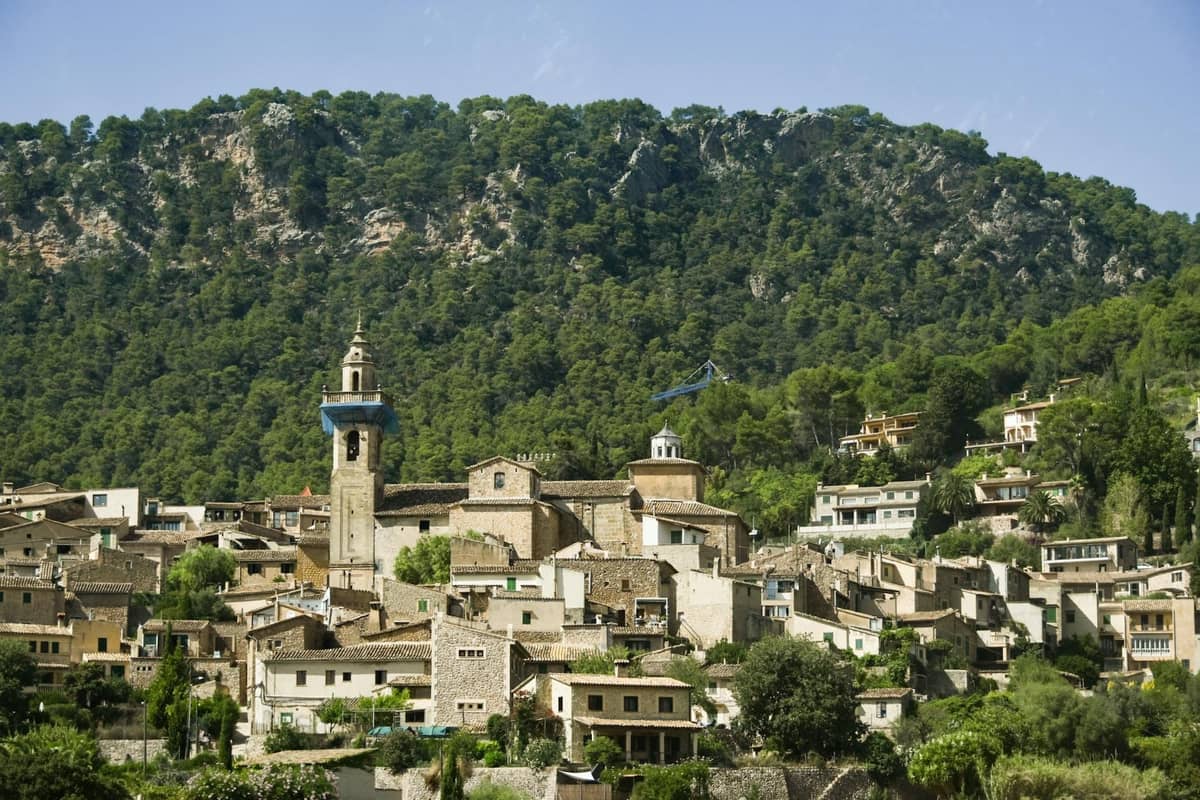
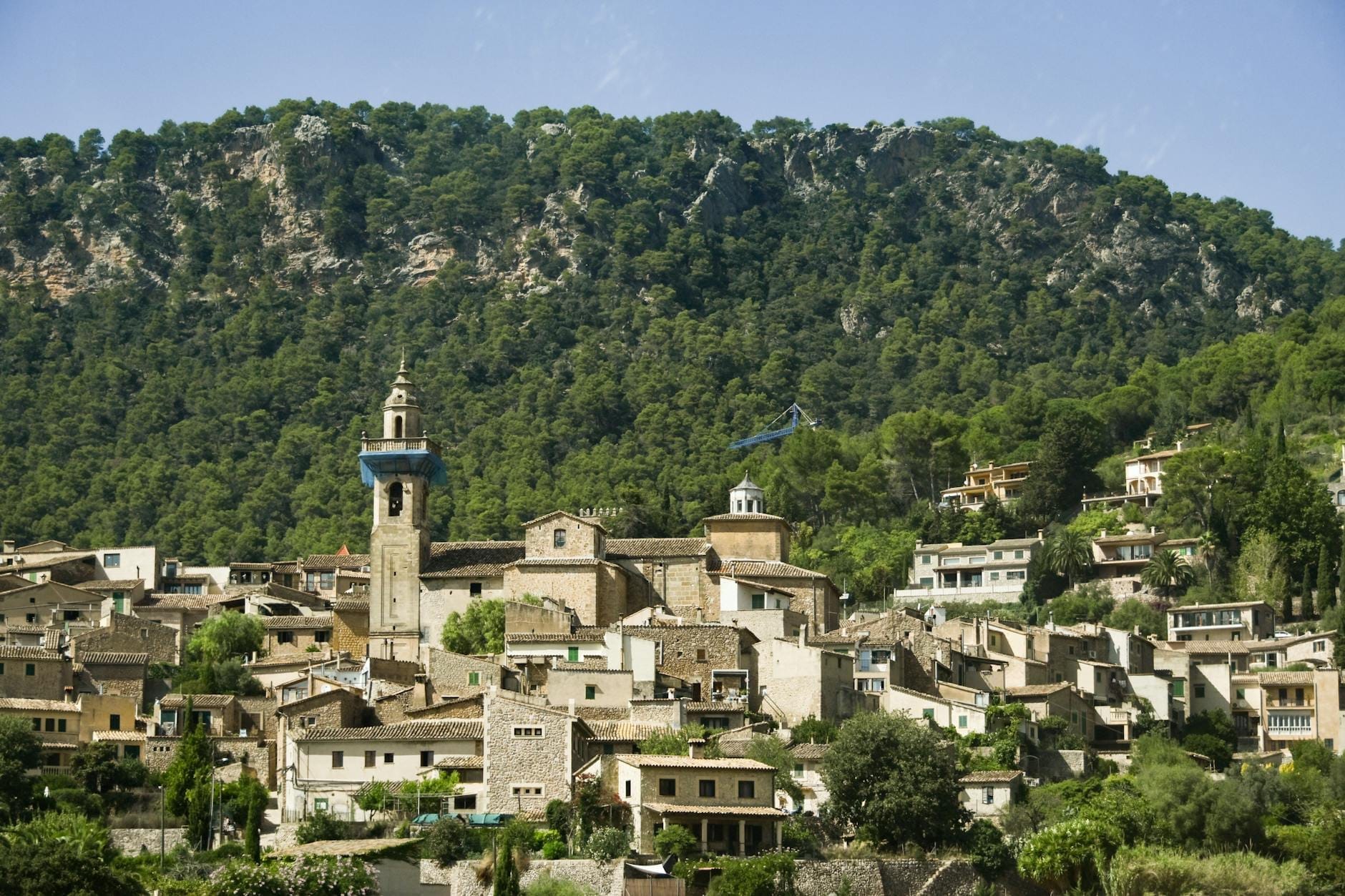
The villages of Valldemossa, Deià, and Fornalutx form the emotional heart of Mallorca's village landscape. All three sit within the Tramuntana range and reward visits at any time of year, though spring brings almond blossoms and soft light that make the stone architecture especially photogenic. The Mallorca photography guide has specific advice on the best hours and vantage points in each village.
1. Walk the Cobbled Lanes of Valldemossa, Mallorca's Showpiece Village
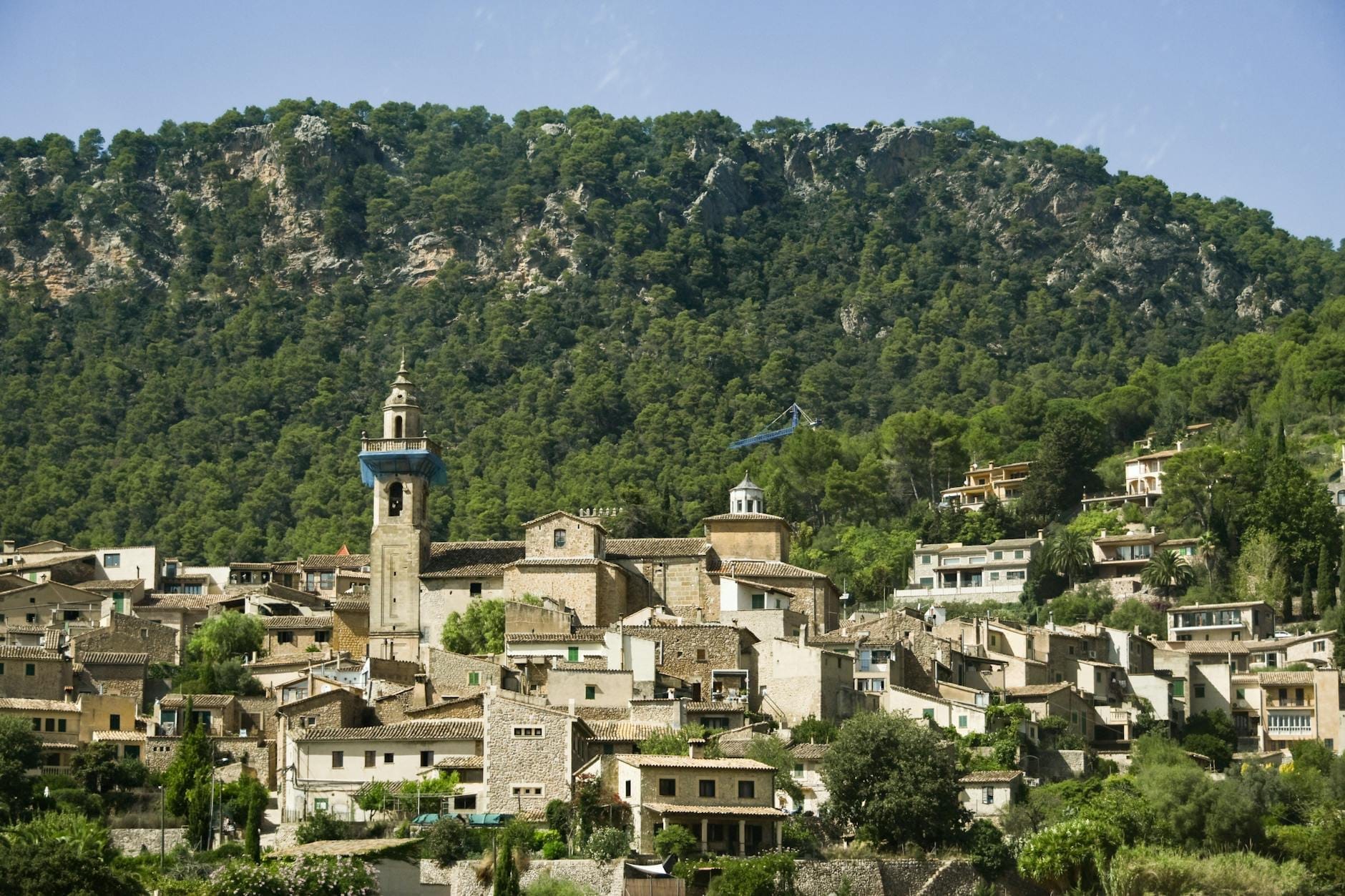
Perched at 400 metres in the Tramuntana, Valldemossa is famous for its Royal Charterhouse monastery where Chopin and George Sand wintered in 1838. Flower-draped balconies and honey stone lanes make it the island's most photogenic village.
Explore1. Walk the Cobbled Lanes of Valldemossa, Mallorca's Showpiece Village
Perched at 400 metres in the Tramuntana, Valldemossa is famous for its Royal Charterhouse monastery where Chopin and George Sand wintered in 1838. Flower-draped balconies and honey stone lanes make it the island's most photogenic village.
Explore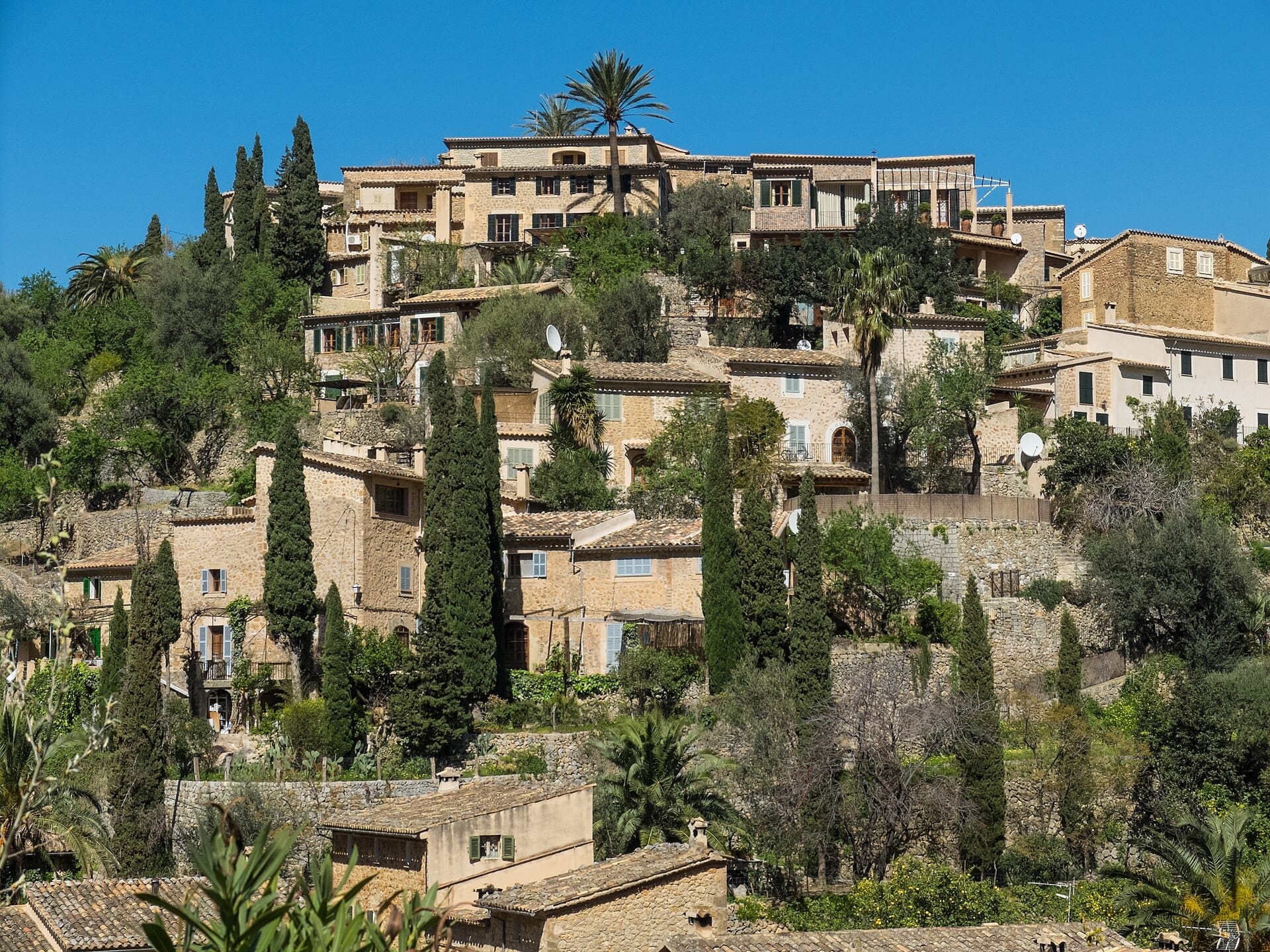
2. Discover the Artists' Retreat of Deià Above the Mediterranean
Deià's golden stone houses cling to a cliff above the sea, drawing painters, writers, and musicians for over a century. Robert Graves lived here most of his life. Today it's exclusive and atmospheric, best explored on foot in the early morning before tour groups arrive.
Explore2. Discover the Artists' Retreat of Deià Above the Mediterranean
Deià's golden stone houses cling to a cliff above the sea, drawing painters, writers, and musicians for over a century. Robert Graves lived here most of his life. Today it's exclusive and atmospheric, best explored on foot in the early morning before tour groups arrive.
Explore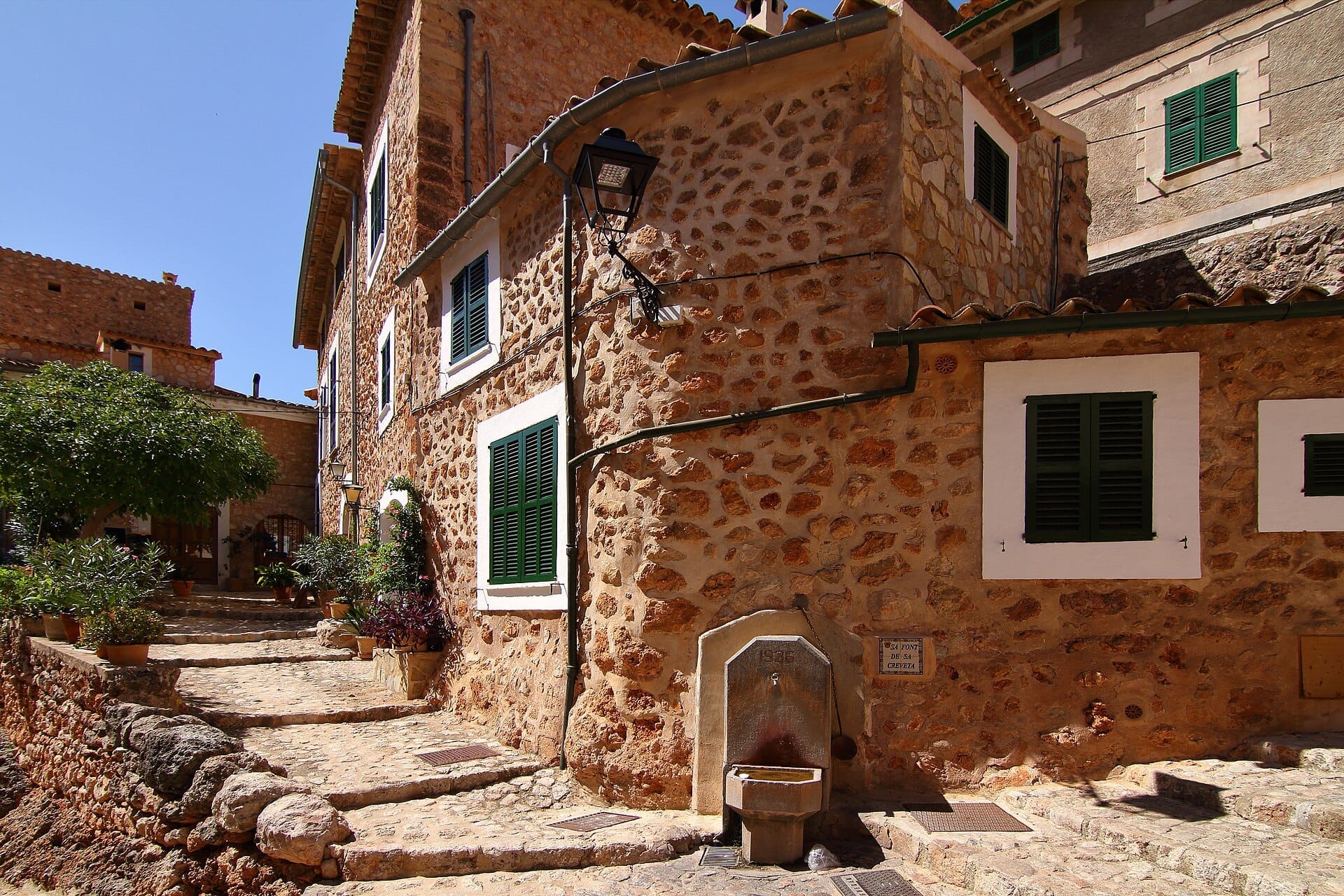
3. Visit Fornalutx, Often Named Spain's Most Beautiful Village
Just above Sóller, tiny Fornalutx has won awards for its architectural preservation. Honey-stone houses, terraced citrus groves, and mountain views greet you at every turn. The lanes are narrow enough to feel completely removed from resort Mallorca.
Explore3. Visit Fornalutx, Often Named Spain's Most Beautiful Village
Just above Sóller, tiny Fornalutx has won awards for its architectural preservation. Honey-stone houses, terraced citrus groves, and mountain views greet you at every turn. The lanes are narrow enough to feel completely removed from resort Mallorca.
ExploreTramuntana Towns with More to Explore
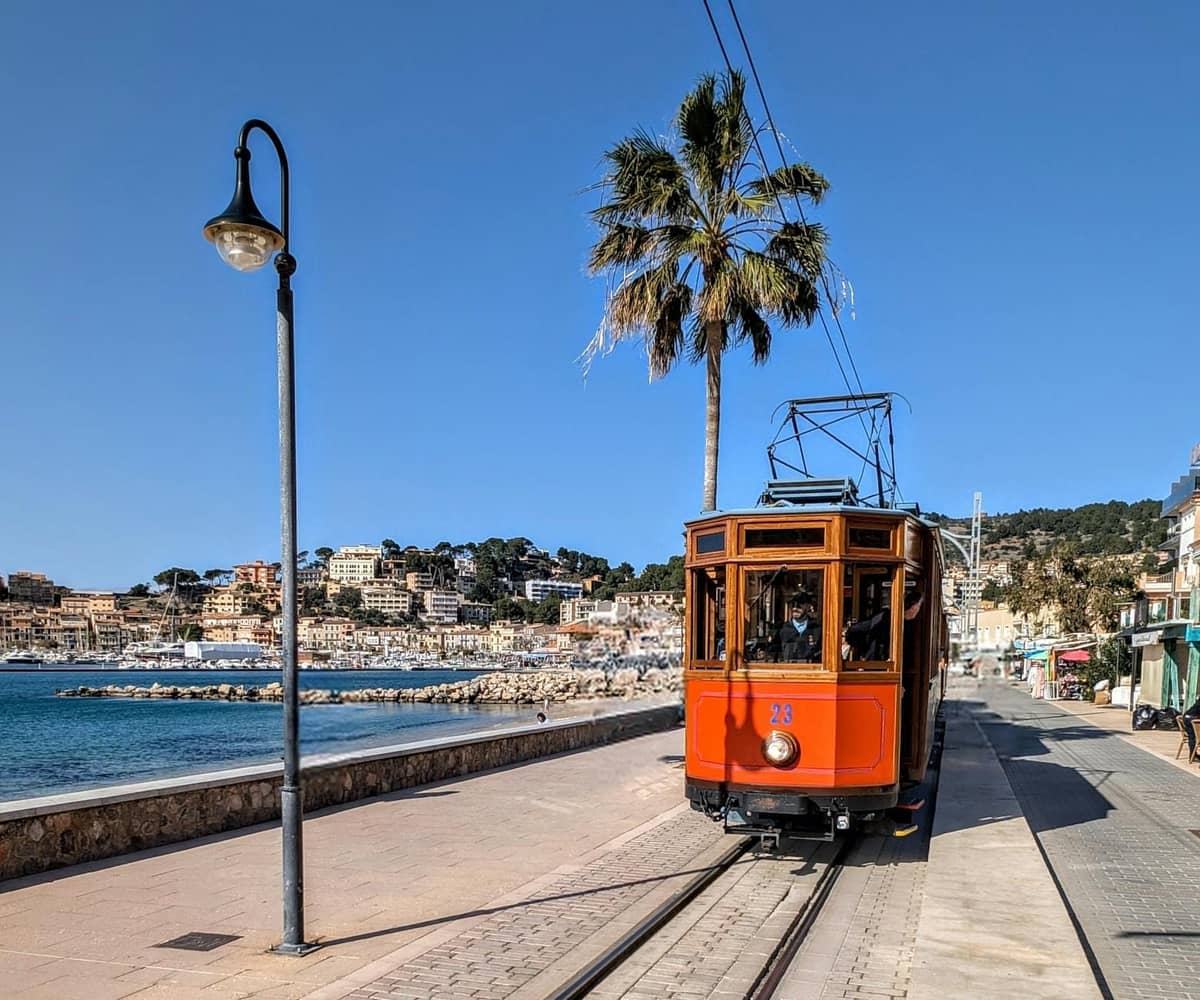
Beyond the famous three, the Tramuntana offers several larger towns that combine genuine village character with excellent day-trip logistics. Sóller in particular works well as a base, and the combination of the vintage train journey from Palma and the historic tram down to the port makes it one of the most complete experiences on the island. See the hiking in Mallorca guide for trails that connect these villages through the mountains.
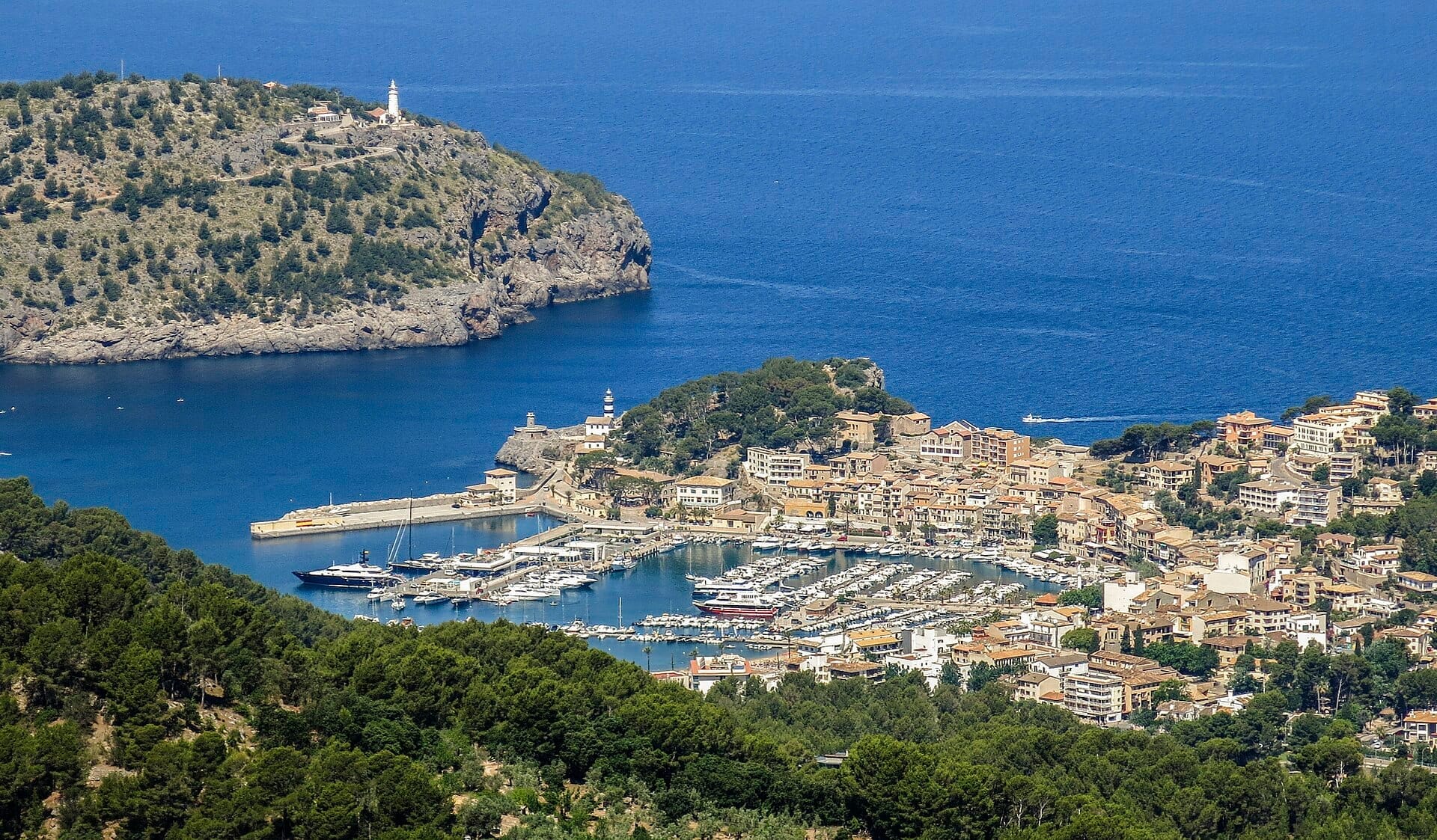
4. Take the Vintage Train to Sóller and Its Charming Harbour Village
Sóller's orange-scented central square and Art Nouveau facades make it one of Mallorca's most complete towns. The vintage tram to Port de Sóller runs through orchards to a horseshoe bay. Together they form an outstanding full-day excursion from Palma.
Explore4. Take the Vintage Train to Sóller and Its Charming Harbour Village
Sóller's orange-scented central square and Art Nouveau facades make it one of Mallorca's most complete towns. The vintage tram to Port de Sóller runs through orchards to a horseshoe bay. Together they form an outstanding full-day excursion from Palma.
Explore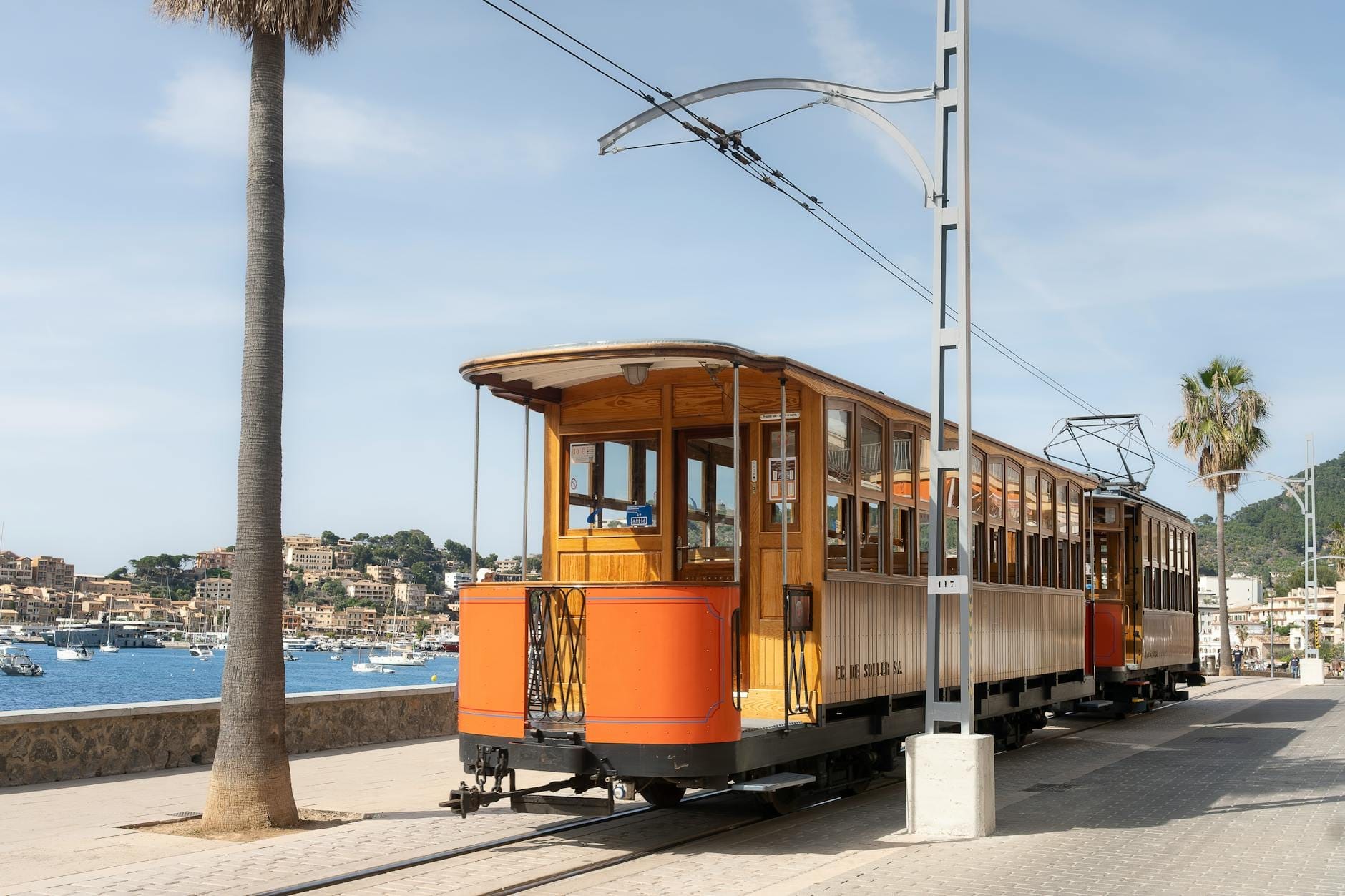
5. Ride the 1912 Wooden Train Through the Mountains to Sóller
The narrow-gauge railway from Palma to Sóller winds through orange groves and mountain tunnels in beautifully restored early 20th-century carriages. The 27-kilometre journey takes about an hour and is one of Mallorca's most atmospheric travel experiences.
Explore5. Ride the 1912 Wooden Train Through the Mountains to Sóller
The narrow-gauge railway from Palma to Sóller winds through orange groves and mountain tunnels in beautifully restored early 20th-century carriages. The 27-kilometre journey takes about an hour and is one of Mallorca's most atmospheric travel experiences.
Explore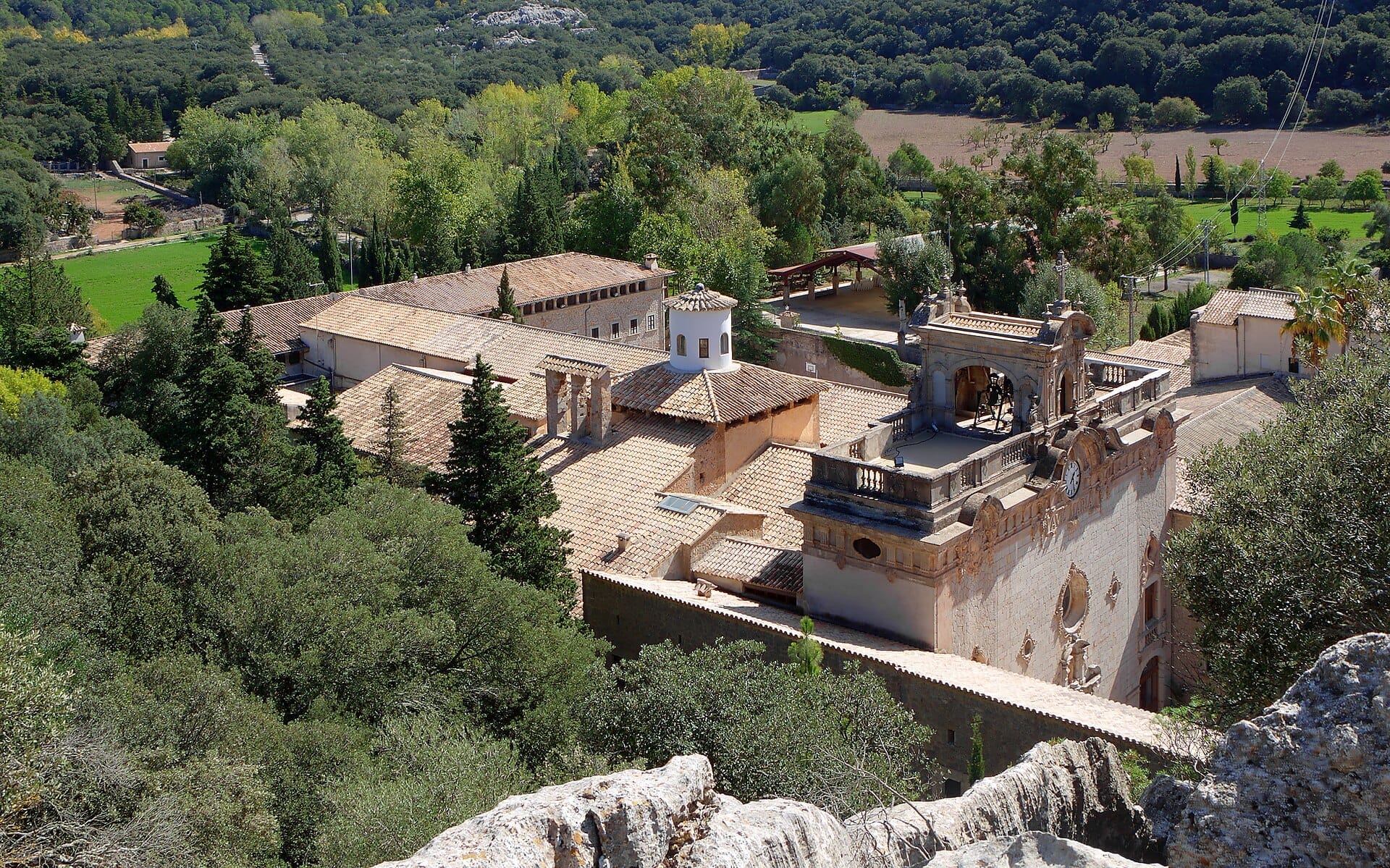
6. Climb to the Mountain Sanctuary of Lluc, Mallorca's Holiest Site
Deep in the Tramuntana, Lluc is Mallorca's most sacred pilgrimage site and home to the Black Madonna. The monastery complex sits in a forested valley and includes a museum, botanical garden, and hiking trails. The drive through the mountains alone justifies the visit.
Explore6. Climb to the Mountain Sanctuary of Lluc, Mallorca's Holiest Site
Deep in the Tramuntana, Lluc is Mallorca's most sacred pilgrimage site and home to the Black Madonna. The monastery complex sits in a forested valley and includes a museum, botanical garden, and hiking trails. The drive through the mountains alone justifies the visit.
Explore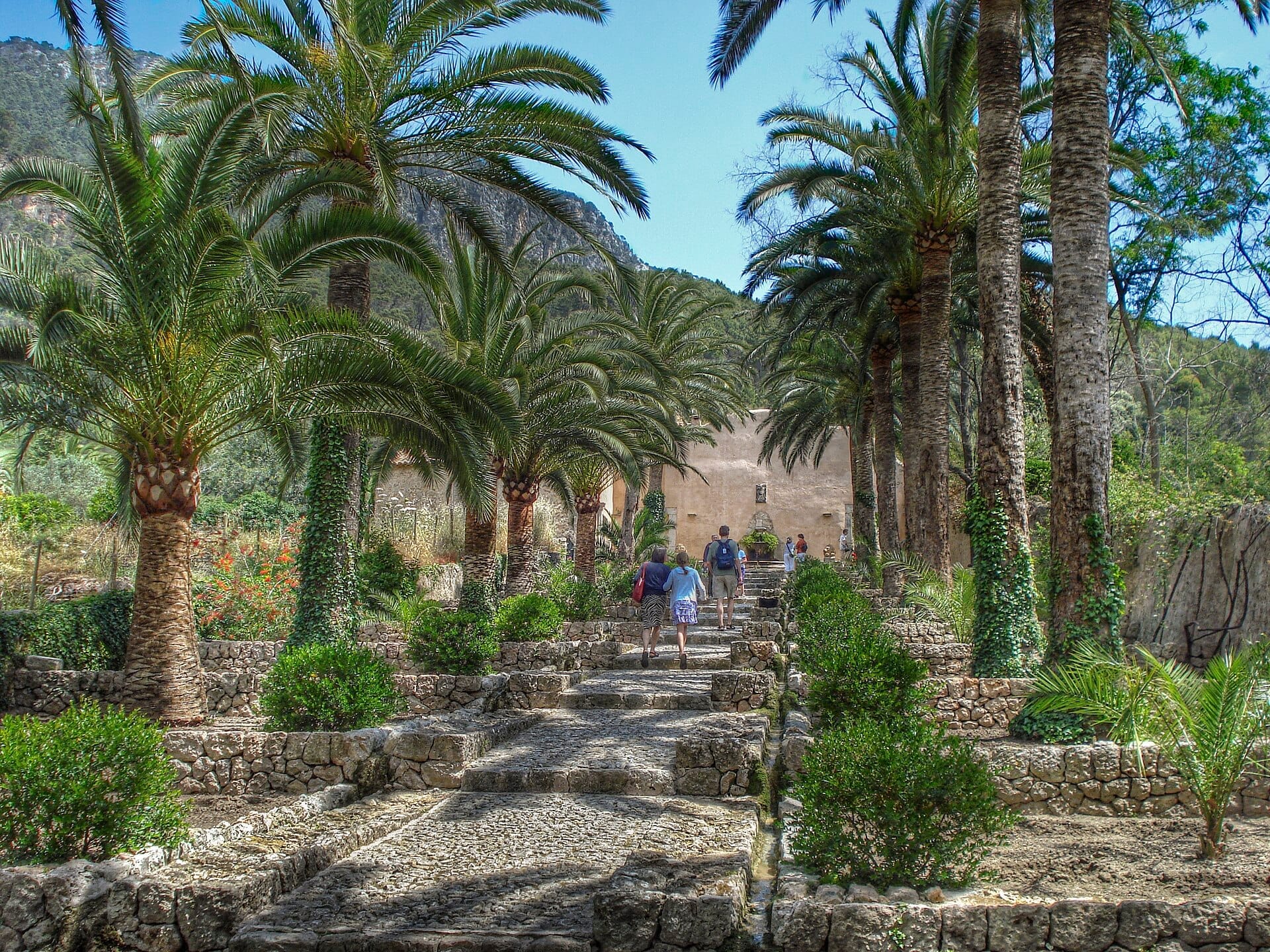
7. Stop at the Moorish Gardens of Alfabia on the Sóller Road
Set at the foot of the Tramuntana near Bunyola, Alfabia combines Islamic water features, shaded terraces, historic architecture, and lush gardens. It's a natural cultural stop between Palma and Sóller, taking around 45 minutes to explore at a relaxed pace.
Explore7. Stop at the Moorish Gardens of Alfabia on the Sóller Road
Set at the foot of the Tramuntana near Bunyola, Alfabia combines Islamic water features, shaded terraces, historic architecture, and lush gardens. It's a natural cultural stop between Palma and Sóller, taking around 45 minutes to explore at a relaxed pace.
Explore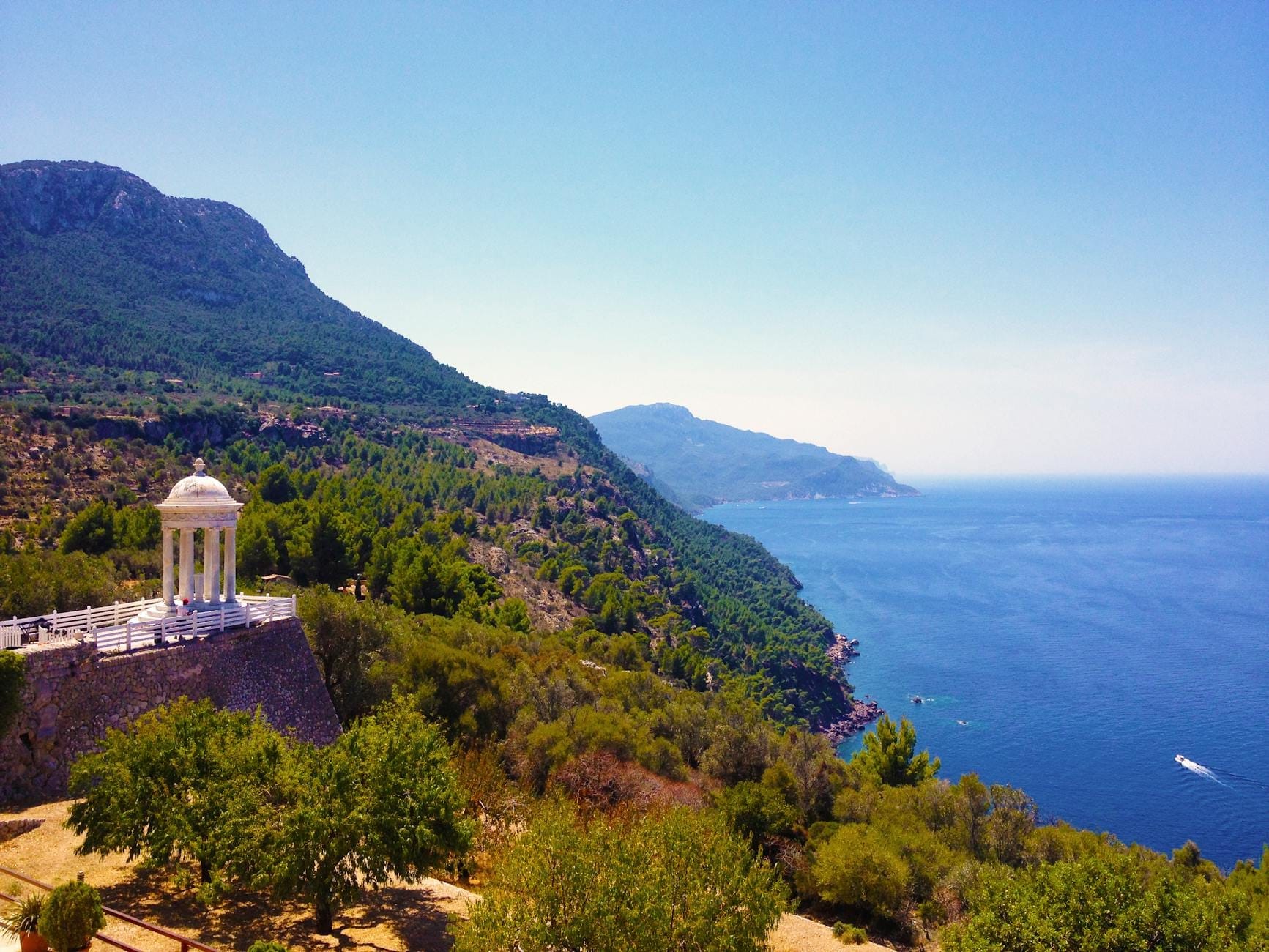
8. Watch the Sunset from Son Marroig Over the Sa Foradada Peninsula
The Archduke Ludwig Salvator's clifftop estate between Valldemossa and Deià offers Mallorca's most dramatic coastal panorama. The pierced rock peninsula of Sa Foradada juts into a deep blue sea far below. Arrive 30 minutes before sunset for the best light.
Explore8. Watch the Sunset from Son Marroig Over the Sa Foradada Peninsula
The Archduke Ludwig Salvator's clifftop estate between Valldemossa and Deià offers Mallorca's most dramatic coastal panorama. The pierced rock peninsula of Sa Foradada juts into a deep blue sea far below. Arrive 30 minutes before sunset for the best light.
ExploreHistoric Villages of the North
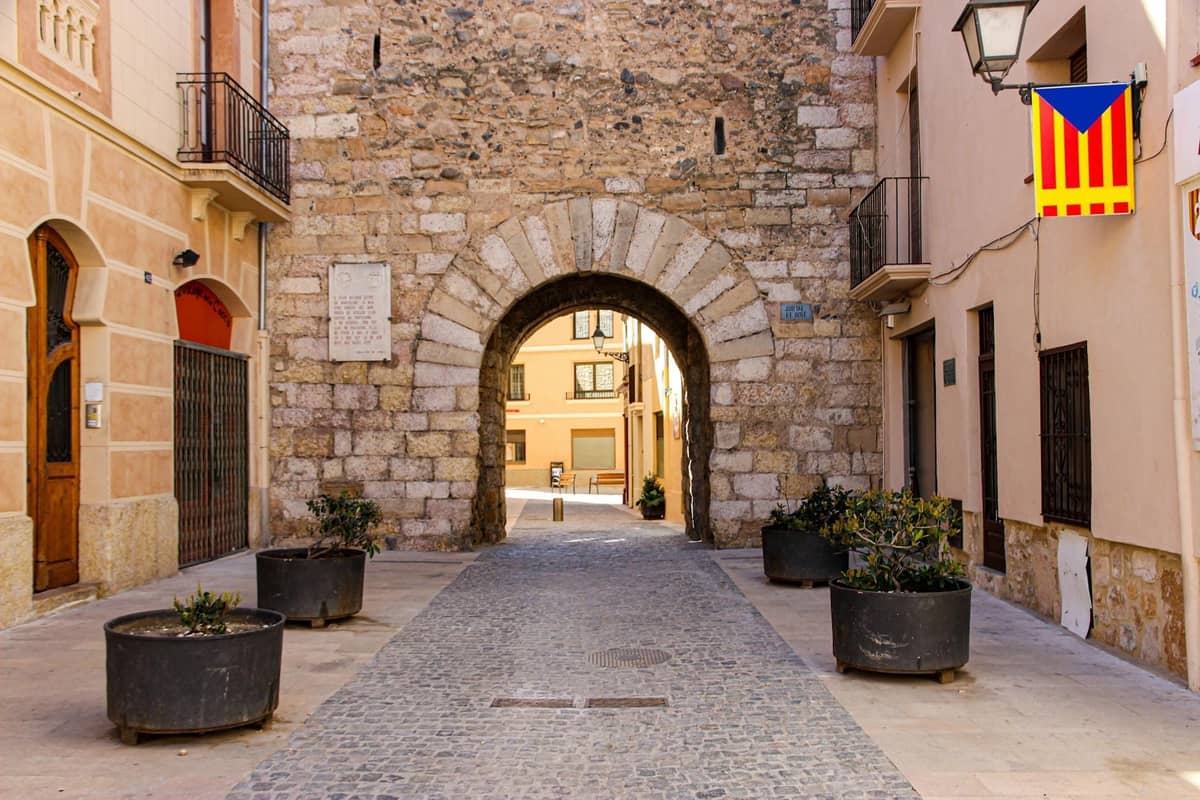
Northern Mallorca's village heritage is less celebrated than the Tramuntana but equally rewarding. Alcúdia and Pollença are the twin jewels of the north, each with a distinct character: Alcúdia is more ancient and compact, Pollença more artistic and lively. Both sit within easy reach of the Alcúdia region and make excellent bases for exploring Formentor and the northern coast.
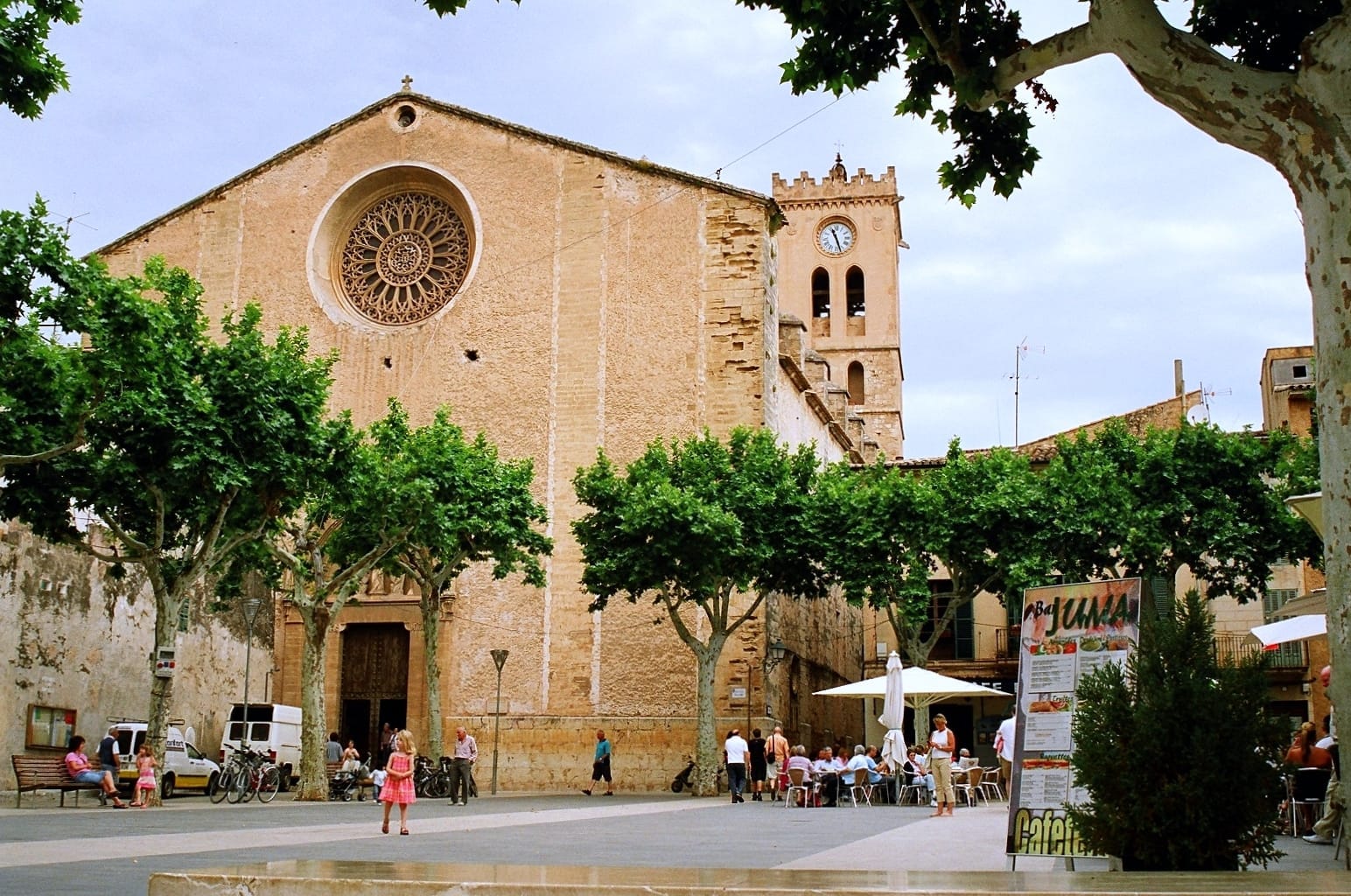
9. Climb the 365 Calvari Steps in Atmospheric Pollença
Pollença is one of northern Mallorca's most rewarding towns: stone streets, a lively Sunday market, a gallery scene, and the famous Calvari staircase of 365 steps leading to panoramic countryside views. The main square, with its plane trees and cafés, is one of the island's finest.
Explore9. Climb the 365 Calvari Steps in Atmospheric Pollença
Pollença is one of northern Mallorca's most rewarding towns: stone streets, a lively Sunday market, a gallery scene, and the famous Calvari staircase of 365 steps leading to panoramic countryside views. The main square, with its plane trees and cafés, is one of the island's finest.
Explore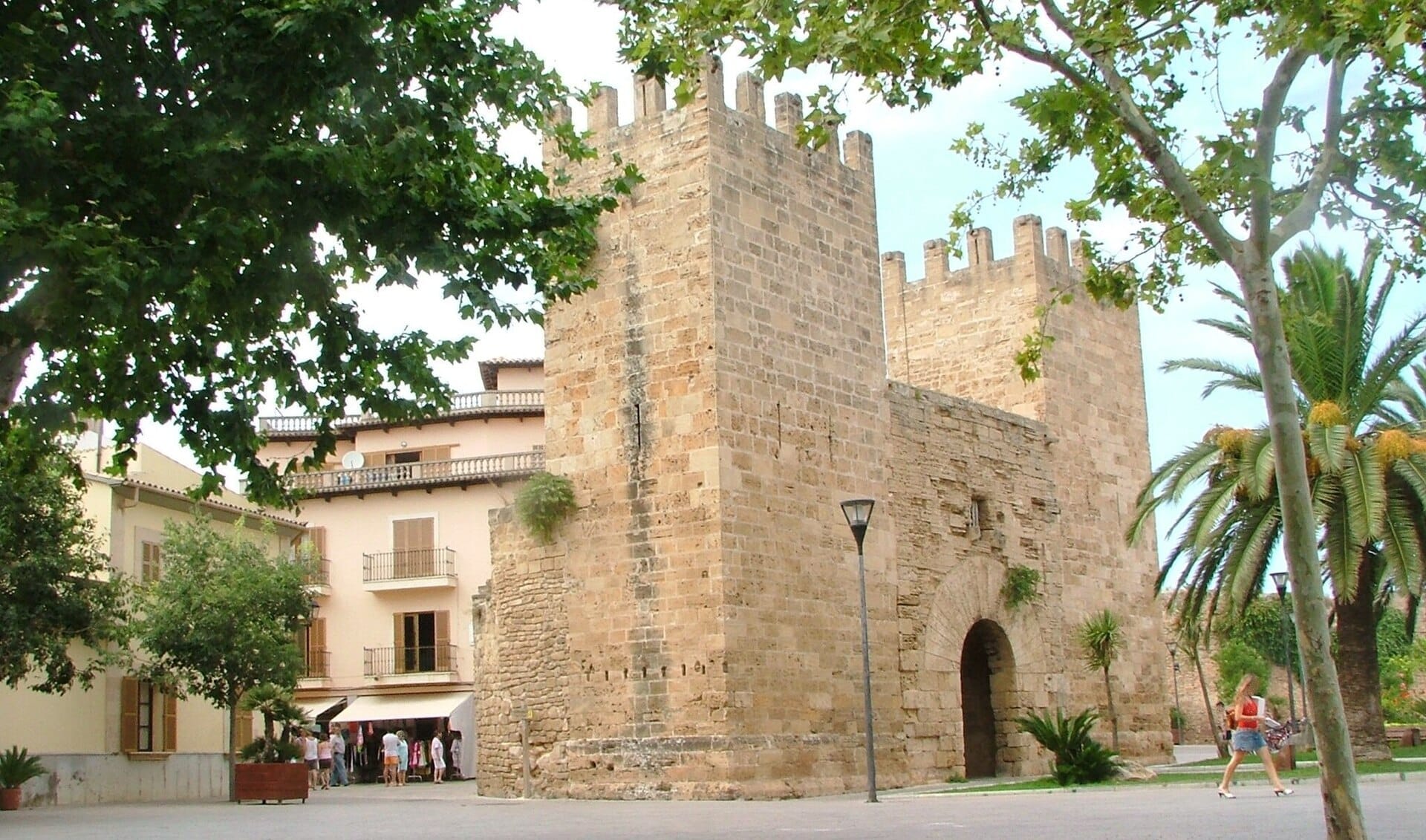
10. Walk Inside Alcúdia's Remarkably Intact Medieval Walls
Alcúdia's walled old town is among Mallorca's best-preserved historic centres, with Roman ruins, a Gothic church, and a Wednesday and Sunday market. The 14th-century walls are almost completely intact and can be walked in about 30 minutes for views over the rooftops.
Explore10. Walk Inside Alcúdia's Remarkably Intact Medieval Walls
Alcúdia's walled old town is among Mallorca's best-preserved historic centres, with Roman ruins, a Gothic church, and a Wednesday and Sunday market. The 14th-century walls are almost completely intact and can be walked in about 30 minutes for views over the rooftops.
ExploreMedieval Villages of the Northeast
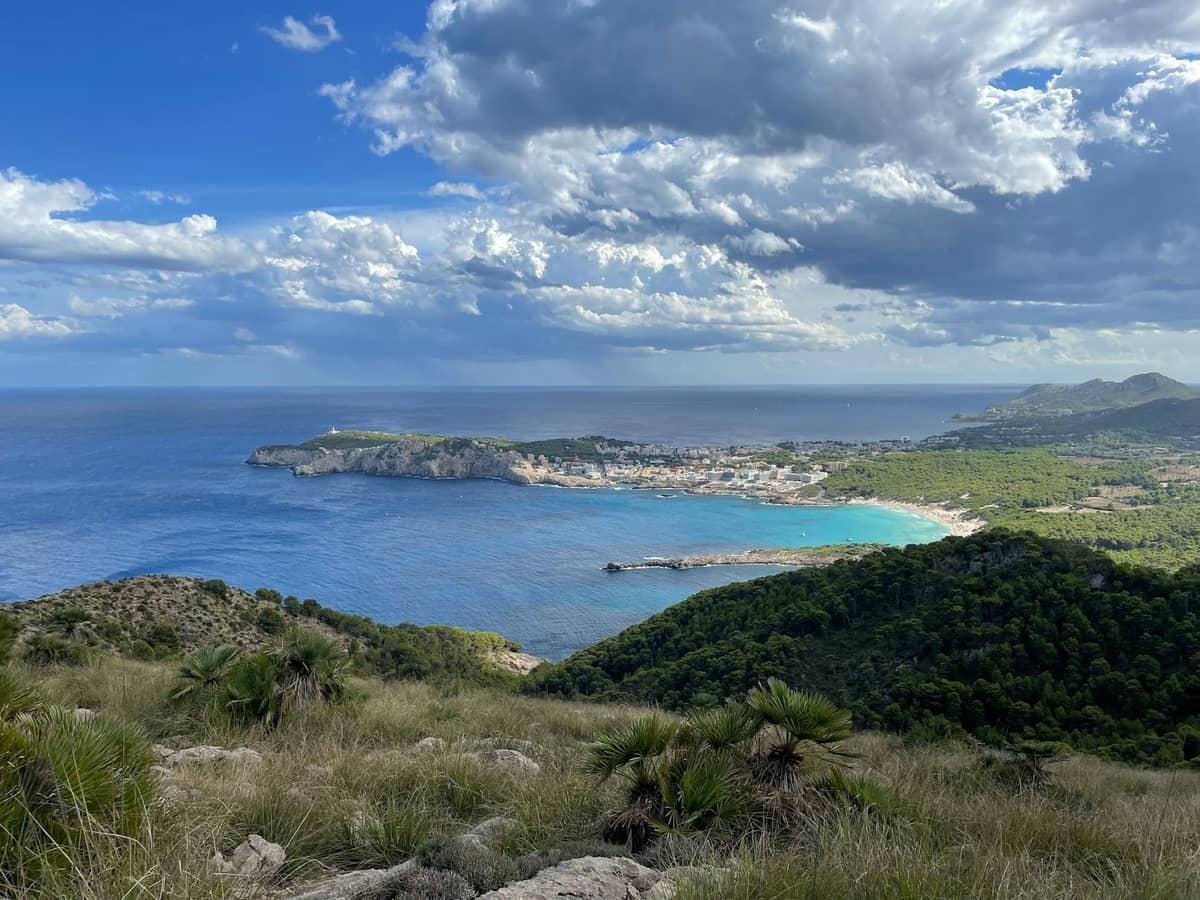
The northeast corner of Mallorca is less visited than the Tramuntana, which makes its historic towns feel more local and less curated. Capdepera is the standout, but the surrounding area around Artà also rewards exploration. For anyone combining village visits with coastal scenery, the Mallorca road trip guide covers a practical circuit of the northeast.
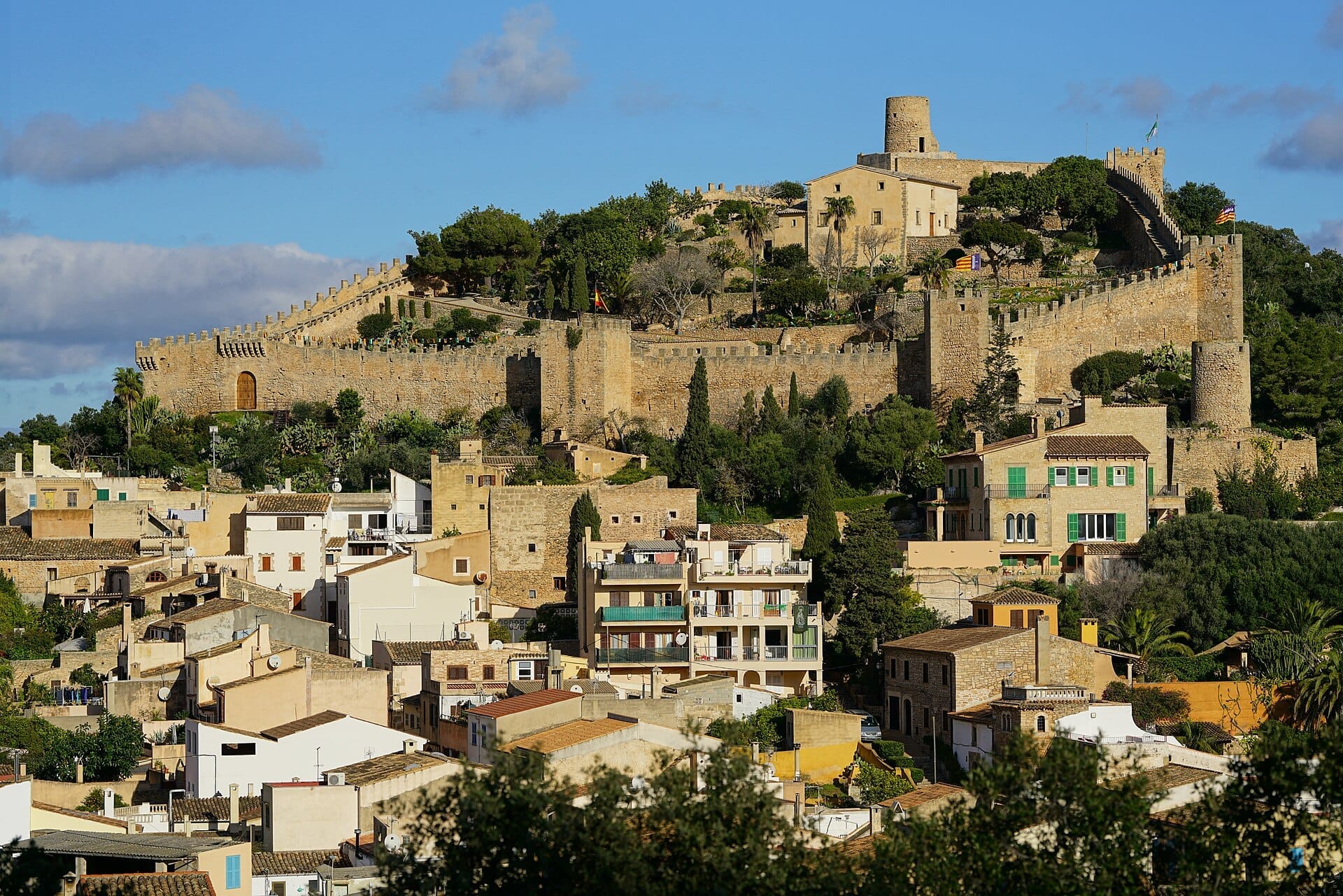
11. Explore Capdepera, the Northeast's Walled Hilltop Village
Capdepera's medieval castle is the best-preserved in Mallorca, crowning a hilltop with views stretching to Menorca on clear days. Inside the walls, a Gothic chapel and small village once sheltered the entire population. Allow an hour to explore properly and time your visit for morning light.
Explore11. Explore Capdepera, the Northeast's Walled Hilltop Village
Capdepera's medieval castle is the best-preserved in Mallorca, crowning a hilltop with views stretching to Menorca on clear days. Inside the walls, a Gothic chapel and small village once sheltered the entire population. Allow an hour to explore properly and time your visit for morning light.
Explore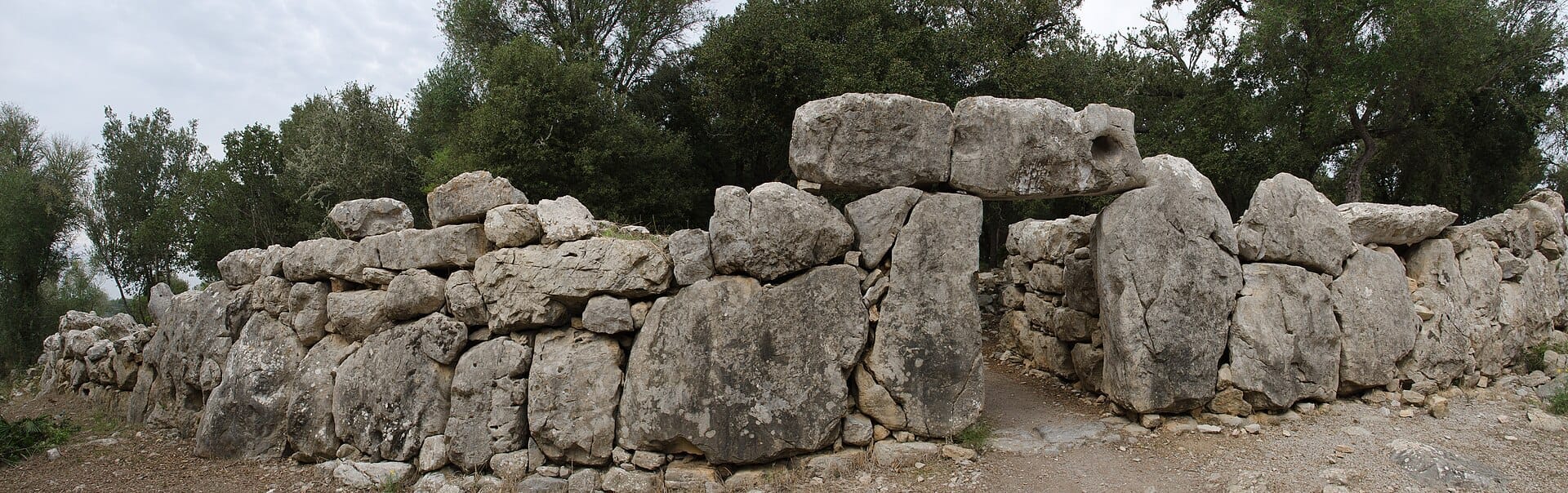
12. Step Back 3,000 Years at the Bronze Age Settlement Near Artà
Ses Païsses near Artà features massive Cyclopean stone walls and a monumental gateway unchanged for over three millennia. It's one of the Balearics' best-preserved prehistoric sites and makes an excellent short stop combined with a visit to Artà's own hilltop sanctuary.
Explore12. Step Back 3,000 Years at the Bronze Age Settlement Near Artà
Ses Païsses near Artà features massive Cyclopean stone walls and a monumental gateway unchanged for over three millennia. It's one of the Balearics' best-preserved prehistoric sites and makes an excellent short stop combined with a visit to Artà's own hilltop sanctuary.
ExploreInland Villages and Authentic Markets
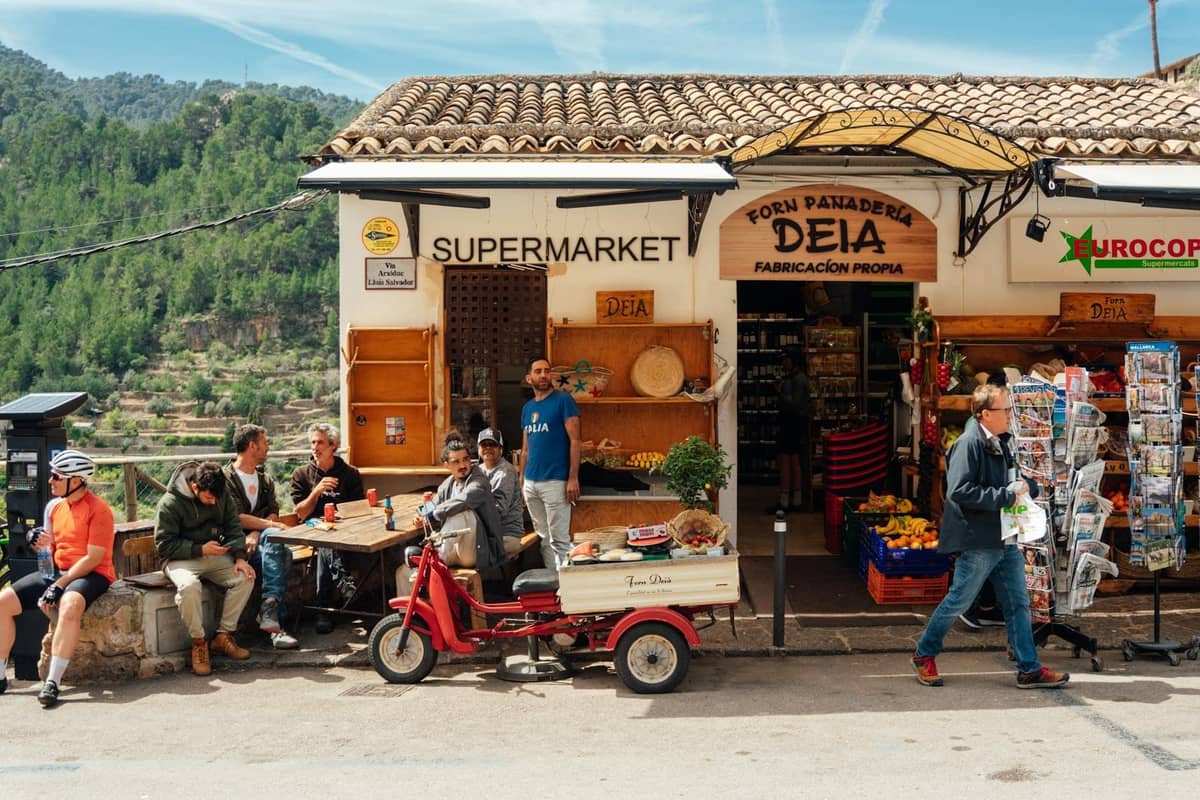
Mallorca's central plain, the Pla, is home to working agricultural villages that feel worlds away from the coast. These aren't polished tourist destinations: they're lived-in places where the weekly market is still a social institution and the pace of life is genuinely different. For a fuller picture of Mallorcan food culture encountered in these villages and markets, see the Mallorca food guide.
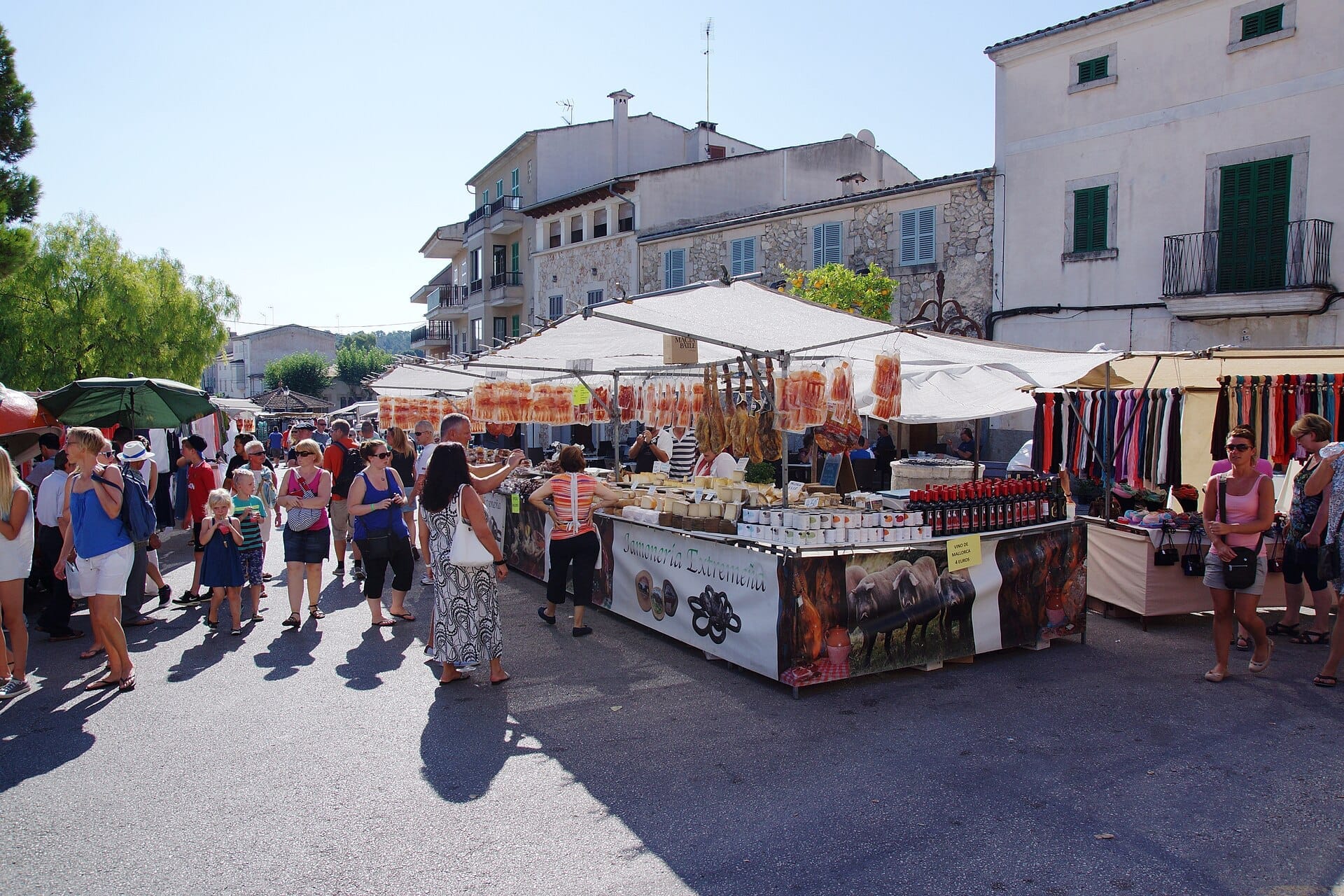
13. Shop at Sineu's Wednesday Market, the Island's Most Authentic
Sineu's weekly market has run since medieval times in the shadow of a 13th-century church at the geographic centre of the island. Livestock pens, fresh produce, ceramics, and traditional crafts make this a genuine local institution rather than a tourist event. Arrive before 10am for the full experience.
Explore13. Shop at Sineu's Wednesday Market, the Island's Most Authentic
Sineu's weekly market has run since medieval times in the shadow of a 13th-century church at the geographic centre of the island. Livestock pens, fresh produce, ceramics, and traditional crafts make this a genuine local institution rather than a tourist event. Arrive before 10am for the full experience.
ExploreSoutheast Coast Villages Worth the Drive
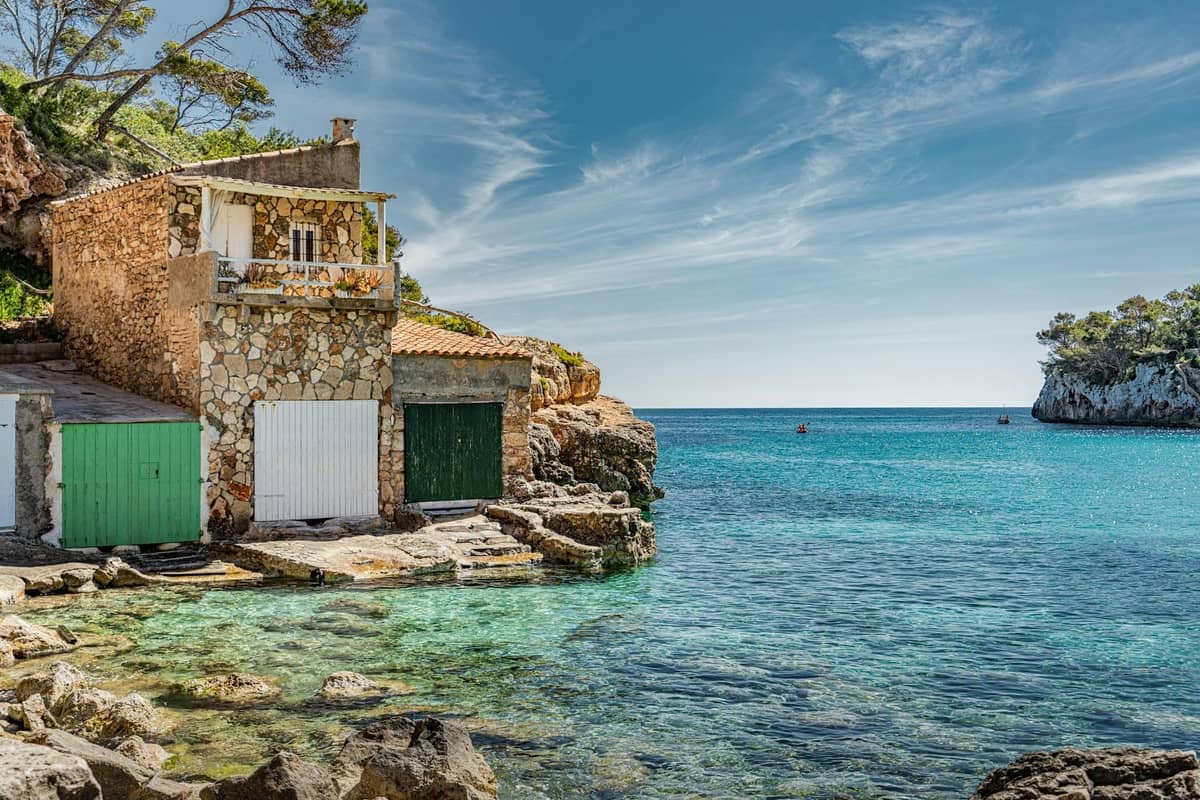
The southeast of Mallorca has a quieter, more weathered beauty than the north. The villages here are less visited and often combined with beach stops at coves like Caló des Moro or Cala Figuera itself. The southeast Mallorca area rewards those willing to drive narrow roads to find the most atmospheric corners.
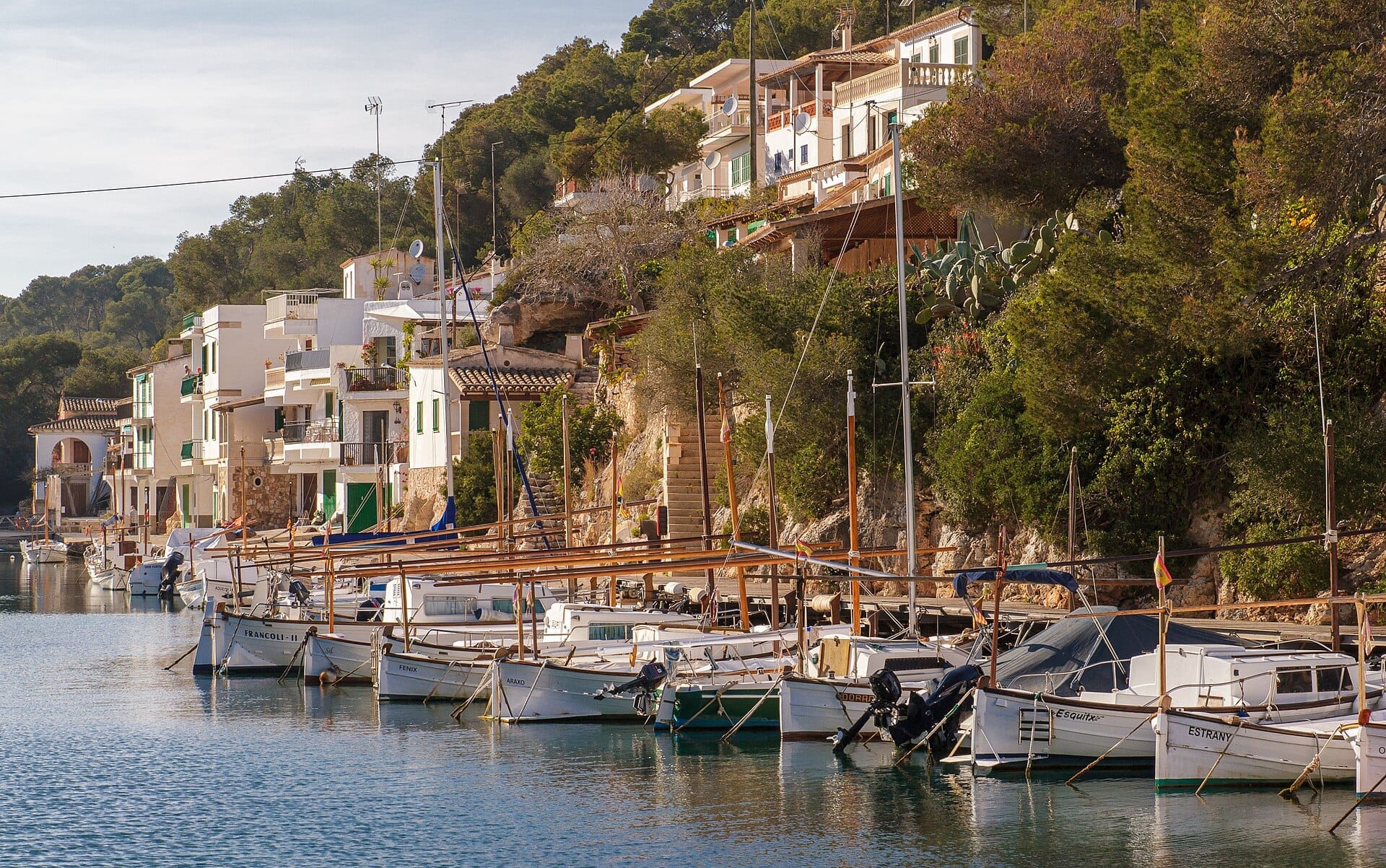
14. Photograph the Authentic Fishing Village of Cala Figuera
Cala Figuera has kept its character despite its fame: whitewashed boathouses line a narrow fjord-like inlet where local fishermen still moor their boats. Morning is the best time to visit, when the light hits the water and the catch is being landed. It's one of the southeast's most distinctive spots.
Explore14. Photograph the Authentic Fishing Village of Cala Figuera
Cala Figuera has kept its character despite its fame: whitewashed boathouses line a narrow fjord-like inlet where local fishermen still moor their boats. Morning is the best time to visit, when the light hits the water and the catch is being landed. It's one of the southeast's most distinctive spots.
Explore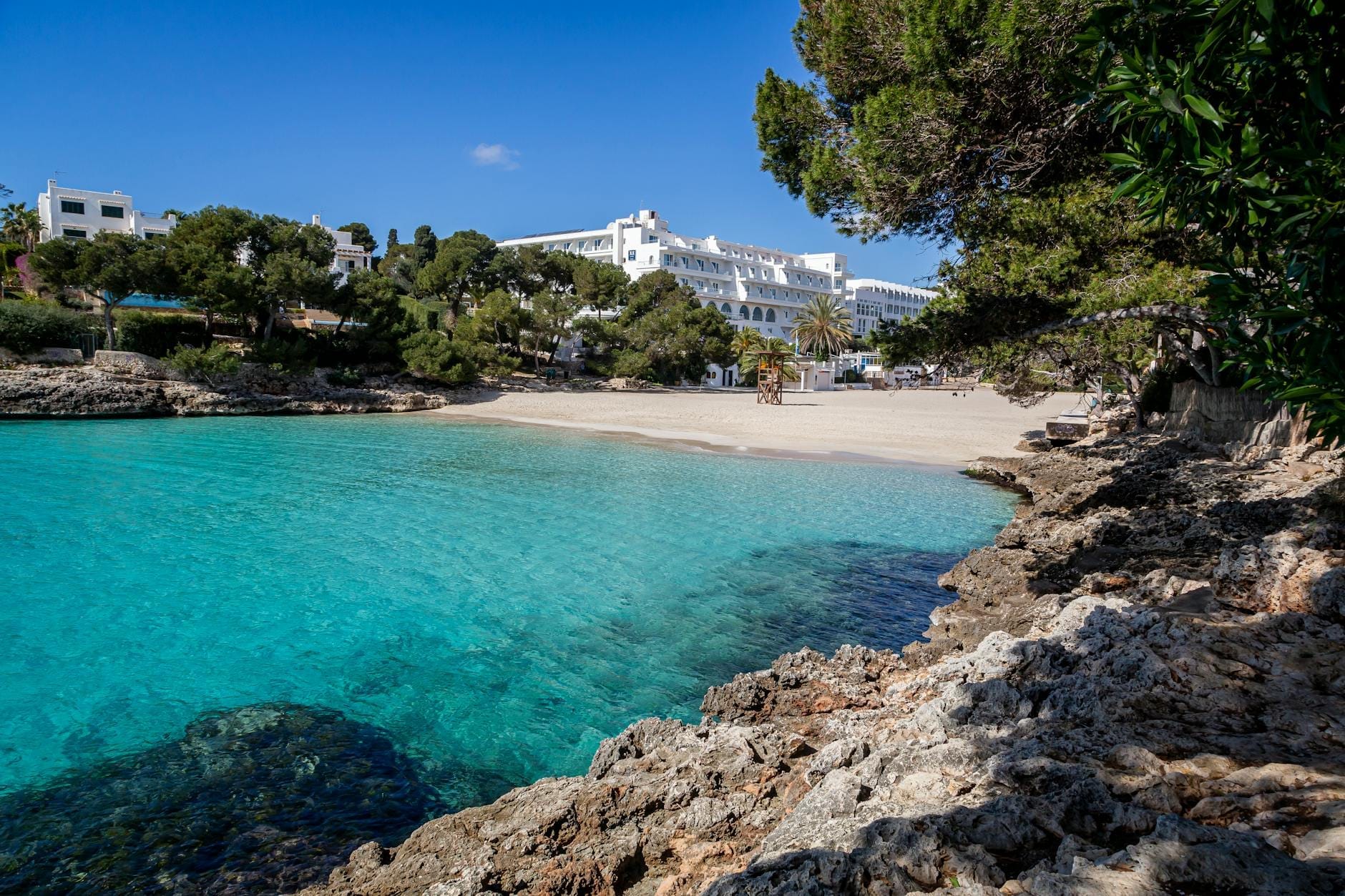
15. Explore the Whitewashed Coves and Marinas of Cala d'Or
Cala d'Or's Ibizan-style whitewashed architecture and series of intimate sandy bays give it a distinct character among Mallorca's resort villages. The yacht harbour and relaxed waterfront make it one of the southeast's most attractive bases for a slower-paced stay.
Explore15. Explore the Whitewashed Coves and Marinas of Cala d'Or
Cala d'Or's Ibizan-style whitewashed architecture and series of intimate sandy bays give it a distinct character among Mallorca's resort villages. The yacht harbour and relaxed waterfront make it one of the southeast's most attractive bases for a slower-paced stay.
Explore💡 Local tip
Most Tramuntana villages are best visited on weekday mornings to avoid coach tour crowds. Valldemossa and Deià in particular fill up quickly between 11am and 3pm in summer. Driving yourself gives you the flexibility to arrive early and stay late.
FAQ
What is the most beautiful village in Mallorca?
Valldemossa is the most iconic, known for its Royal Charterhouse and flower-filled lanes. But Fornalutx, just above Sóller, is the one most often named among Spain's prettiest villages by architectural preservation bodies. Deià is the most dramatically positioned, perched above the sea with sweeping Mediterranean views.
How do I get to Valldemossa and Deià without a car?
Regular buses connect Palma to Valldemossa year-round, with the journey taking about 35 minutes. Deià is served by the same bus route continuing along the Tramuntana coast toward Sóller. Services are less frequent outside summer, so check the TIB (Transport de les Illes Balears) website for current timetables before you go.
Which Mallorca village is best for a day trip from Palma?
Valldemossa is the easiest day trip, just 20 kilometres from Palma with regular bus connections. For a fuller day, combine the vintage train to Sóller with the tram down to Port de Sóller. Pollença requires a longer drive or bus journey but rewards the effort with its market (Sunday), steps, and café culture.
When is the best time to visit Mallorca's villages?
April to June is ideal: the light is soft, wildflowers are out, crowds are manageable, and the Tramuntana roads are clear. Late September and October are equally good. In July and August, the most famous villages like Valldemossa and Deià can feel overwhelmed with day-trippers between midday and mid-afternoon.
Is it worth renting a car to explore Mallorca's villages?
Yes, for the Tramuntana villages especially. Many of the best viewpoints, smaller hamlets, and scenic coastal roads are inaccessible or impractical by public transport. The roads are well-maintained but often narrow and winding, so take your time and pull over for coaches on the mountain routes.