Cala d'Or: Southeast Mallorca's Whitewashed Resort with Several Coves
Cala d'Or is a planned resort village on Mallorca's southeast coast, designed in the 1930s by an Ibizan architect and built around several sheltered sandy coves. With calm, clear water, low-rise whitewashed buildings, and a relaxed marina atmosphere, it draws families and couples looking for beach days without the noise of larger resorts.
Quick Facts
- Location
- Santanyí municipality, southeast Mallorca, ~60 km from Palma Airport
- Getting There
- Car rental recommended; bus connections from Palma and Santanyí town
- Time Needed
- Half day to two full days depending on how many coves you explore
- Cost
- Free public beaches; sunbed hire and watersports cost extra
- Best for
- Families, couples, architecture enthusiasts, snorkelers
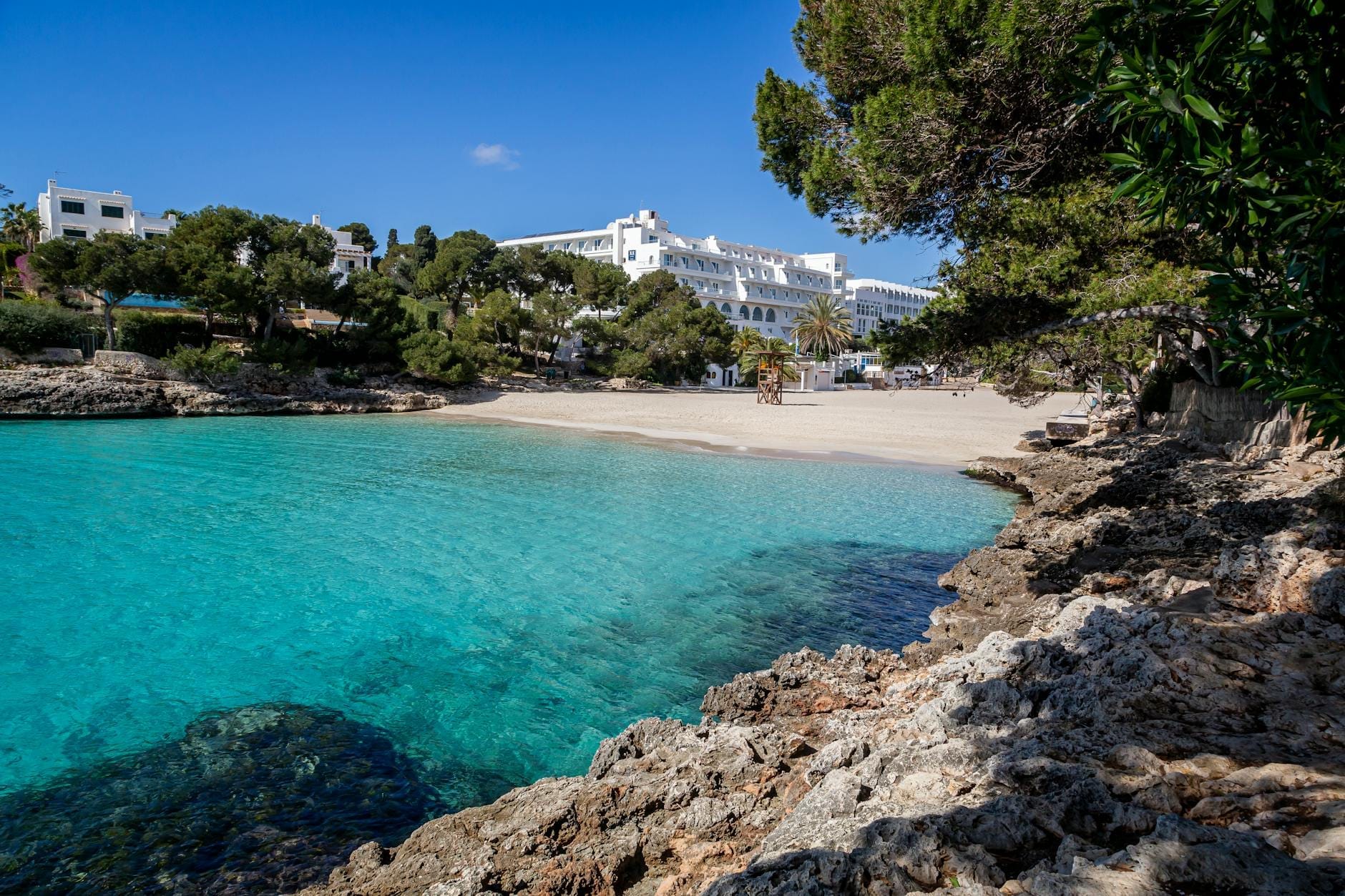
What Is Cala d'Or and Why Does It Look Like That?
Cala d'Or is not a natural fishing village that grew organically over centuries. It was conceived as a resort from the start, designed in 1932 and 1933 by Josep Costa Ferrer, an Ibizan artist and architect known locally as Picarol. He drew his inspiration from Cala d'Hort on Ibiza and set out to create a low-density, architecturally coherent settlement around a stretch of southeast Mallorca's coast that happened to contain eight closely clustered coves. The name itself came from locals who called it Cala d'Or, meaning Golden Cove in Catalan, reportedly because of the way late-afternoon sunlight turns the sea surface a warm amber.
The result is a resort that feels visually distinct from most of coastal Mallorca. There are no high-rise hotels, no concrete towers visible from the water. The buildings are white, low, and cubic, with flat roofs and arched doorways that genuinely recall Ibizan vernacular architecture rather than a pastiche of it. This design coherence was built into the original planning and has been maintained to a degree that makes Cala d'Or one of the more photogenic resort towns on the island. The hotel that anchors the original settlement is among the oldest still-functioning hotels on Mallorca, giving the place a sense of continuity that newer resorts lack.
ℹ️ Good to know
Cala d'Or sits within the municipality of Santanyí, one of southeast Mallorca's most scenically varied administrative areas. The nearby natural parks and wilder coves to the south are part of the same coastal zone, making this a useful base for exploring beyond the resort itself.
The Eight Coves: What Each One Offers
The resort unfolds across three low promontories, creating a string of named coves rather than a single long beach. This is both the attraction's main appeal and its practical complexity: no single beach serves the whole resort, and walking between them takes time. Each cove has a distinct character.
Cala Gran is the largest and most equipped, with fine sand, sunbed rental, and calm, relatively shallow water that suits families with young children. It's also the most crowded in July and August, when mornings after 10am see most of the prime spots taken. Cala d'Or proper (also called Caló de ses Dones) is narrower and bordered by pine trees, with a more intimate feel and access to a small marina. Cala Llonga and Cala Esmeralda are quieter, reached by short walks along pine-shaded paths. Cala Ferrera, Cala Serena, Cala Petita, and Cala Egos round out the cluster, each separated by rocky headlands and each offering slightly different water depths and seabed textures.
A mini-train connects the main coves during the summer season, which is worth knowing if you have young children or simply want to move between beaches without retracing your steps on foot. Walking the full circuit of coves on the coastal path, pausing at each one, takes the better part of a morning.
💡 Local tip
For the calmest and clearest water for snorkeling, the smaller coves like Cala Petita and Cala Esmeralda tend to have less foot traffic and better underwater visibility than Cala Gran. Arrive before 9am or after 5pm to have them largely to yourself.
Tickets & tours
Hand-picked options from our booking partner. Prices are indicative; availability and final rates are confirmed when you complete your booking.
Shuttle Boat from Cala Millor to Cala Ratjada
From 26 €Instant confirmationFree cancellationShuttle Boat Roundtrip from Cala Bona to Cala Ratjada
From 29 €Instant confirmationFree cancellationBoat Trip on a Glassbottom Catamaran from Font de Sa Cala
From 35 €Instant confirmationFree cancellationShuttle Boat Roundtrip from Font de Sa Cala to Cala Millor
From 29 €Instant confirmationFree cancellation
How Cala d'Or Changes Through the Day
Early mornings here belong to the local residents and the keener walkers. The marina area holds a few cafés that open before 8am, and the smell of coffee and warm pastries drifts across the waterfront when most of the sun loungers are still stacked. The water at this hour is glass-flat, and the whitewashed buildings glow rather than glare. Photographers and people staying in the resort itself tend to appreciate this window most.
By mid-morning in peak season, the main beaches fill steadily. The narrow access paths to smaller coves mean they reach capacity earlier than you'd expect given their size. Midday between June and September is genuinely hot, with temperatures regularly above 30°C and little shade on the sand itself. The pine trees at the edge of several coves provide some relief, but the midday hours are best spent eating at one of the restaurants above the beaches rather than lying directly on the sand.
Late afternoon brings the best light for the architecture and the coves. The crowds thin as families with young children return to their hotels, and the water holds the day's warmth well into evening. The marina comes alive after 7pm with people walking, watching the boats, and settling into the restaurants that line the waterfront. For most visitors, the balance tips in favor of visiting Cala d'Or in May, June, or September, when the water is warm enough to swim but the crowds are manageable.
Getting There and Moving Around
Cala d'Or sits approximately 60 kilometers from Palma Airport, which translates to roughly 55 minutes by car under normal traffic conditions. A rental car is the most practical option for reaching the resort and for exploring the surrounding coastline, including the natural park at Mondragó and the dramatic coves further south.
There are bus connections from Palma and from Santanyí town, but service is less frequent than you might want if you're planning to move between multiple beaches or visit nearby attractions on a tight schedule. For those committed to traveling without a car, it's worth reading up on getting around Mallorca by public transport before finalizing plans. Within Cala d'Or itself, most of the coves are walkable from a central base, and the seasonal mini-train handles the gaps.
Parking in peak summer months requires patience. The lots near Cala Gran fill by mid-morning on weekends, and street parking on the approach roads is limited. Arriving before 9am or after 6pm avoids the worst of it.
⚠️ What to skip
Some of the paths between coves involve uneven rock surfaces and steps without handrails. Visitors with limited mobility should check in advance which coves have level, paved access. Cala Gran is the most accessible of the group.
Cala d'Or in the Context of Southeast Mallorca
The resort doesn't exist in isolation. It sits within one of the most scenically varied stretches of Mallorca's coastline, which makes it a natural base for day trips in multiple directions. To the southwest, Mondragó Natural Park protects a pair of sandy coves within a pine and scrubland landscape, with marked walking trails and excellent snorkeling. The contrast between Mondragó's undeveloped shoreline and Cala d'Or's curated resort feel is striking and worth experiencing on the same trip.
South of Cala d'Or, the coastline becomes increasingly raw. Cala Llombards and Cala Figuera are both within easy driving distance and offer a quieter, more traditional character. Cala Figuera in particular retains the structure of a working fishing village more convincingly than most of Mallorca's southern coast.
For those interested in understanding the broader southeast region, the southeast Mallorca area combines coastal access with inland towns, prehistoric sites, and the island's pearl-making industry at Manacor.
Honest Assessment: Who This Resort Suits and Who It Doesn't
Cala d'Or works well for visitors who want calm, swimmable water in a resort that doesn't feel architecturally chaotic. The Ibizan-style buildings create a more coherent streetscape than most package-holiday destinations on the island, and the multiple coves give the resort enough variety to sustain two or three days without boredom setting in.
It is, however, a resort in the full sense of the word: organized, commercial, and very busy in high summer. Visitors hoping for the feel of authentic Mallorcan village life won't find it here. The restaurants cater to an international tourist clientele, and most menus are translated into at least four languages. The permanent population of around 4,100 residents is outnumbered many times over during July and August.
Travelers who prioritize finding Mallorca's quieter, less-developed side would be better served by the natural parks to the south or by basing themselves in the Santanyí municipality's smaller inland villages. Active travelers focused on hiking or cycling may find Cala d'Or convenient as a sleeping base but will want to head elsewhere each day for the terrain that interests them.
Insider Tips
- The walk between Cala Gran and Cala Esmeralda along the pine-shaded coastal path is one of the more pleasant short routes in the area. It takes about 20 minutes each way and offers several elevated viewpoints over the water that are significantly better than the beach-level perspective.
- Restaurant prices on the marina waterfront carry a premium for the location. The side streets one block back from the water have smaller, quieter places to eat where the food quality is often comparable at a noticeably lower cost.
- The mini-train that connects the coves operates seasonally and does not run a fixed timetable available online in advance. Confirm the current schedule at your accommodation or at the tourist information point in the resort on arrival.
- Visiting in late September or early October means the water temperature is still above 22°C from the summer's accumulated warmth, the beach crowds have dropped sharply, and afternoon light on the whitewashed buildings is excellent for photography.
- If you're renting a car, filling the tank before arriving in Cala d'Or is advisable. Fuel options are limited within the immediate resort area and significantly cheaper at stations closer to main roads.
Who Is Cala d'Or For?
- Families with young children looking for calm, safe swimming water across multiple beach options
- Couples who want a relaxed, photogenic coastal base without the scale of Palma or Alcúdia
- Architecture and design enthusiasts interested in 1930s planned resort design and Ibizan vernacular influences
- Snorkelers and casual swimmers who prefer sheltered coves over open or surf-exposed beaches
- Visitors using southeast Mallorca as a base to explore natural parks, fishing villages, and quieter coves within a short drive
Nearby Attractions
Other things to see while in Southeast Mallorca:
- Cabrera National Park
The Cabrera Archipelago Maritime-Terrestrial National Park is one of the most strictly protected natural areas in the western Mediterranean. Nineteen uninhabited islands, near-pristine seabed, and a 14th-century castle make it a world apart from mainstream Mallorca tourism. Access is limited and must be booked in advance.
- Cala Agulla
Cala Agulla is a 550-metre natural beach in northeast Mallorca, declared a protected natural area in 1991. Backed by dunes and pine forest, with shallow turquoise water and no major development, it's one of the cleanest and most unspoiled stretches of coastline on the island.
- Cala Figuera
Cala Figuera is a working fishing village on the southeastern coast of Mallorca, set inside a narrow, fjord-like inlet that splits into two quiet arms. With no sandy beach, no resort hotels, and a harbor still active with traditional wooden boats, it offers something genuinely rare on this island: calm, character, and a sense of place.
- Cala Llombards
Cala Llombards is a compact white-sand bay on Mallorca's southeast coast, framed by limestone cliffs and pine woodland. At roughly 55 metres wide, it fills quickly in summer, but its clear shallow water, cliff-side ladders for swimming, and relative quiet compared to more marketed beaches make it one of the more rewarding stops in the Santanyí area.