Cala Agulla: Mallorca's Protected Beach Where the Pine Forest Meets the Sea
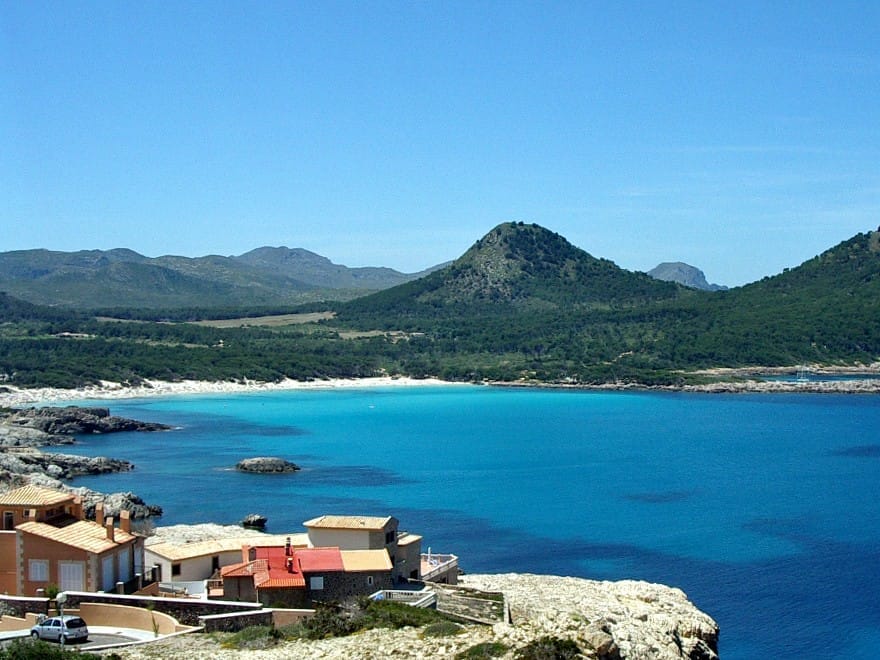
Cala Agulla is a 550-metre natural beach in northeast Mallorca, declared a protected natural area in 1991. Backed by dunes and pine forest, with shallow turquoise water and no major development, it's one of the cleanest and most unspoiled stretches of coastline on the island.
Quick Facts
- Location
- Northeast Mallorca, 1.8 km from Capdepera, ~85 km from Palma
- Getting There
- By car via Capdepera–Cala Ratjada road; seasonal pay parking on-site (open 9am–7pm in summer)
- Time Needed
- 2–4 hours for a beach visit; half-day if combining with Cala Moltó walk
- Cost
- Free beach access; seasonal parking fee applies
- Best for
- Families, nature lovers, swimmers, photographers
- Official website
- www.mallorca.es/en/-/cala-agulla
What Is Cala Agulla?
Cala Agulla is a protected natural beach on the northeast coast of Mallorca, about 1.8 kilometres from the town of Capdepera and roughly 87 kilometres from Palma. At 550 metres long and 50 to 60 metres wide, it is one of the more substantial natural beaches in this part of the island, yet it has avoided the concrete sprawl that defines many of Mallorca's more developed resorts.
In 1991, the Parliament of the Balearic Islands declared Cala Agulla, together with the neighbouring coves of Cala Moltó and Cala Mesquida, an Àrea Natural d'Especial Interès (Area of Special Natural Interest). That designation is the reason the beach looks the way it does today: no hotels on the shoreline, no beach clubs, no jet ski concessions crowding the shallows. What you get instead is fine white sand, a backdrop of pine forest and low dunes, and water that shifts from pale green in the shallows to deep blue further out.
💡 Local tip
Arrive before 10am in July and August to secure a good spot on the sand and avoid the peak parking queue. The car park opens at 9am during the summer season.
The Beach Itself: Sand, Water, and Setting
The sand at Cala Agulla is the fine, pale variety that looks almost white in bright midday light and takes on a warm gold tone in late afternoon. The bay curves gently, with rocky headlands at each end that give the beach a sense of enclosure without making it feel cramped. The bottom transitions from sandy to slightly stony as you move offshore, reaching around 5 metres depth in the central part of the bay. Visibility in the water is typically excellent.
The entry into the water is gradual, making the shallows genuinely comfortable for young children and less confident swimmers. Families tend to cluster toward the centre of the beach, while the rocky edges attract snorkellers looking for the small fish that gather around the stones. Northerly winds can pick up in the afternoon, which creates pleasant cooling conditions for sunbathers but does produce a chop that can make the water feel more active than it looks.
The pine forest that frames the back of the beach is not purely decorative. It provides real shade, and the trees are close enough to the sand that you can retreat from the sun without packing up entirely. The scent of pine in the heat of the day is one of those details that makes Cala Agulla feel different from a more commercial beach, where the dominant smells are sunscreen and food stalls.
Boaters should note that Cala Agulla is exposed to northerly winds, which can make anchoring unreliable. The nearest marina is the Club Nàutic de Cala Ratjada, approximately 2.9 nautical miles away. For context on exploring this part of the coastline by sea, the Mallorca boat trips guide covers your options in detail.
Tickets & tours
Hand-picked options from our booking partner. Prices are indicative; availability and final rates are confirmed when you complete your booking.
Shuttle Boat from Cala Millor to Cala Ratjada
From 26 €Instant confirmationFree cancellationShuttle Boat Roundtrip from Cala Bona to Cala Ratjada
From 29 €Instant confirmationFree cancellationBoat Trip on a Glassbottom Catamaran from Font de Sa Cala
From 35 €Instant confirmationFree cancellationShuttle Boat Roundtrip from Font de Sa Cala to Cala Millor
From 29 €Instant confirmationFree cancellation
How the Beach Changes Through the Day
Early morning at Cala Agulla, before 9am, is a different experience from the rest of the day. The light is softer, the sand is cool underfoot, and the only sounds are the wind through the pines and the low break of small waves. A handful of early walkers and local joggers pass through, but the beach is essentially empty. This is the window for unhurried swimming and the best photography conditions, when the low-angle light catches the colour gradients in the water.
From late morning onwards, particularly in July and August, the beach fills steadily. By noon on a clear summer day, the central section is well occupied, with towels laid close together and the water dotted with swimmers. Service facilities are present during peak season, but this remains a relatively low-infrastructure beach. The afternoon brings those northerly breezes, which thin out the crowds slightly by around 4pm as some visitors pack up. The final two hours before sunset see the light turn warm and raking, and the beach takes on a quieter, more relaxed character.
In September and October, the entire rhythm slows down. Water temperatures remain comfortable, the sand is easier to find, and the pine forest shows the first subtle shifts toward autumn. This is arguably the most pleasant time to visit, particularly for anyone who finds peak-season Mediterranean beaches more stressful than restful.
ℹ️ Good to know
Cala Agulla is a public natural beach and is accessible 24 hours a day. The seasonal pay car park operates from approximately 9am to 7pm in summer. Outside those hours, access on foot is straightforward but the road parking situation varies, so arriving early or late in the day remains the practical approach.
Protected Status and Natural Environment
The Àrea Natural d'Especial Interès designation that covers Cala Agulla is one of the Balearic Islands' primary conservation classifications, used to protect coastlines, wetlands, and natural landscapes from development pressure. The protection zone includes not just the beach itself but the surrounding dune systems and pine woodland, which form a connected habitat. The dunes here are relatively modest in scale but ecologically important, acting as a buffer between the marine environment and the forest. For broader context on Mallorca's natural landscapes and how they're protected, the southeast Mallorca area guide covers the region in more detail.
The forest behind the beach is predominantly Aleppo pine (Pinus halepensis), the species that defines much of Mallorca's coastal woodland. These trees grow directly to the edge of the dune system, and walking through them on the way to the beach, you move from shade to full sun in a few steps. The understory is sparse and scrubby, typical of Mediterranean coastal forest, with low shrubs and occasional wildflowers in spring.
Cala Agulla sits between two other protected coves: Cala Moltó to the south and Cala Mesquida to the north. A walking trail connects them along the coastal path, and the combination of all three makes for a genuinely rewarding half-day of coastal exploration if you have the energy for it.
Getting There and Getting Around
The most practical way to reach Cala Agulla is by car. From Palma, the drive takes roughly 75 to 90 minutes via the Ma-15 motorway heading east. Follow the road toward Capdepera and then take the deviation signed for Cala Agulla and Cala Ratjada. The road ends at a seasonal pay car park that opens at 9am in summer. During peak weeks in July and August, the car park fills by mid-morning, so plan accordingly.
From Cala Ratjada, which is the nearest resort town, Cala Agulla is accessible on foot or by bicycle in around 20 to 25 minutes. Cala Ratjada has bus connections from several points on the island during the summer season. If you are basing yourself in the northeast, getting around Mallorca by public transport is worth reading before you plan your days.
Alternatively, if you have a car and want to explore the broader northeast corner of the island, Capdepera Castle is less than 2 kilometres away and makes a logical pairing with a beach visit. The castle sits on a prominent hill above the town and offers excellent views over this stretch of coastline.
⚠️ What to skip
There is no shade infrastructure on the main beach itself. The pine trees at the back of the beach provide the only natural shade. If you are visiting with young children or are sensitive to direct sun, bring a parasol and plan to arrive before the midday heat builds.
Photography and Practical Considerations
Cala Agulla photographs well at almost any time of day, but the soft morning light before 9am and the warm late-afternoon light from around 5pm onward produce the most striking results. The water colour is most vivid when the sun is high and there is no wind chop, typically between 10am and 1pm. From the rocky promontory on the northern edge of the beach, you can get an elevated view of the entire bay, the sand, and the pine-covered headland behind, which gives a sense of the setting that you cannot get from the beach level.
For photographers working across the northeast, the Mallorca photography guide includes timing and location advice that applies well to this part of the island.
In terms of what to bring: the beach has basic facilities during peak season, but it is not heavily serviced. Bring water, sun protection, and snacks if you plan to stay for more than an hour or two. Snorkelling equipment is worth packing, as the rocky edges of the bay reward it. Footwear for entering and exiting the water is useful given the stones that appear as you go deeper. The beach is not particularly well suited to people who need close vehicle access or very smooth, flat terrain for mobility reasons.
Who This Beach Is For, and Who Might Look Elsewhere
Cala Agulla works well for families with children who want shallow, clean water in a natural setting without the noise and commercialisation of a resort beach. It suits nature-oriented travellers who want to swim somewhere that still feels like it belongs to the landscape. Photographers, walkers connecting the coastal path between the three neighbouring coves, and anyone who values space and quiet over sunbeds and DJ sets will find it delivers.
Travellers looking for a full-service beach day with lounger rentals, cocktail bars, and water sports concessions should look at more developed options. Those who want something even more secluded and require fewer facilities should consider other stretches of the best beaches in Mallorca, some of which are accessible only by boat or on foot and see very few visitors even in summer.
In peak July and August, Cala Agulla is genuinely popular and the car park situation can be frustrating. Anyone who finds crowded beaches stressful rather than sociable will have a better experience here in May, June, September, or October, when the water is still warm and the sand is less contested.
Insider Tips
- The rocky northern headland at the end of the beach is worth scrambling up, even briefly. The view over the full curve of Cala Agulla from above is far more dramatic than anything you see at sand level, and it takes less than five minutes to reach.
- The walk to Cala Moltó along the coastal path from the southern end of the beach takes around 15 minutes and involves some uneven terrain. Cala Moltó is much smaller and far less visited, making it a good option for a quieter swim later in the afternoon.
- If the car park is full when you arrive, driving back toward Capdepera and parking in town before walking or cycling to the beach adds only around 20 minutes each way and avoids the queue entirely.
- September is the practical sweet spot here: air temperatures are still above 25°C most days, sea temperatures remain warm from the summer, and the beach loses a significant portion of its peak-season crowds once the school holidays end.
- The pine forest trail that runs parallel to the access road is shaded and pleasant for an early morning walk before the beach fills. It connects loosely with paths toward Capdepera and gives a sense of the protected landscape that surrounds the cove.
Who Is Cala Agulla For?
- Families with young children seeking shallow, clean water in a natural setting
- Snorkellers and swimmers who prefer clear water and rocky edges over purely sandy bottoms
- Coastal walkers combining Cala Agulla with the path to Cala Moltó or Cala Mesquida
- Photographers wanting early-morning light on unspoiled white sand and turquoise water
- Travellers who want a protected, low-development beach without driving to the far southwest
Nearby Attractions
Other things to see while in Southeast Mallorca:
- Cabrera National Park
The Cabrera Archipelago Maritime-Terrestrial National Park is one of the most strictly protected natural areas in the western Mediterranean. Nineteen uninhabited islands, near-pristine seabed, and a 14th-century castle make it a world apart from mainstream Mallorca tourism. Access is limited and must be booked in advance.
- Cala d'Or
Cala d'Or is a planned resort village on Mallorca's southeast coast, designed in the 1930s by an Ibizan architect and built around several sheltered sandy coves. With calm, clear water, low-rise whitewashed buildings, and a relaxed marina atmosphere, it draws families and couples looking for beach days without the noise of larger resorts.
- Cala Figuera
Cala Figuera is a working fishing village on the southeastern coast of Mallorca, set inside a narrow, fjord-like inlet that splits into two quiet arms. With no sandy beach, no resort hotels, and a harbor still active with traditional wooden boats, it offers something genuinely rare on this island: calm, character, and a sense of place.
- Cala Llombards
Cala Llombards is a compact white-sand bay on Mallorca's southeast coast, framed by limestone cliffs and pine woodland. At roughly 55 metres wide, it fills quickly in summer, but its clear shallow water, cliff-side ladders for swimming, and relative quiet compared to more marketed beaches make it one of the more rewarding stops in the Santanyí area.