Cala Mesquida: Mallorca's Wild Dune Beach Worth the Drive
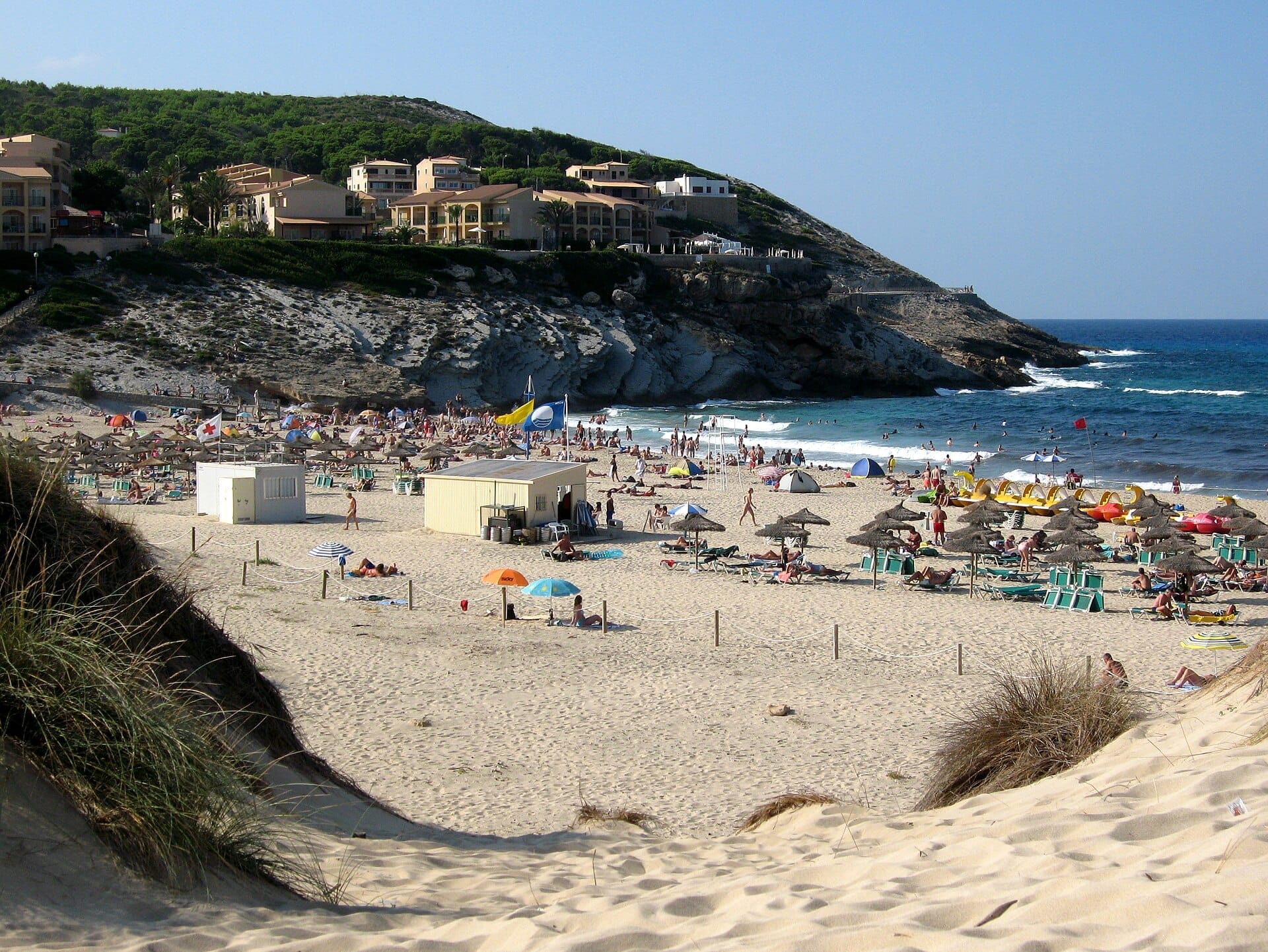
Cala Mesquida is a 350-metre arc of fine sand backed by legally protected dunes on Mallorca's northeast coast. Declared a Natural Area of Special Interest in 1991, it sits within the Llevant Peninsula Natural Park and hosts one of the Balearic Islands' most significant seabird colonies. Facilities are minimal by design, and the beach rewards visitors who come prepared.
Quick Facts
- Location
- Urbanización Cala Mesquida, 07580 Capdepera, Mallorca
- Getting There
- By car from Capdepera (5–7 km) or bus from Capdepera / Artà; free car park ~200 m from beach
- Time Needed
- 2–4 hours for a beach visit; allow extra for the dune walk
- Cost
- Free entry; sun lounger and parasol hire available on-site
- Best for
- Nature lovers, photographers, families seeking quieter alternatives to resort beaches
What Cala Mesquida Actually Is
Cala Mesquida is a beach on Mallorca's northeast coast that has deliberately avoided the fate of its neighbours. While much of the island's coastline was reshaped by tourism development in the 1970s and 80s, this cove and its surrounding dunes were protected by the Parlament de les Illes Balears in 1991, designated alongside Cala Moltó and Cala Agulla as an Àrea Natural d'Especial Interès (Natural Area of Special Interest). The beach sits within the broader Llevant Peninsula Natural Park, which means development is tightly restricted and the landscape looks largely as it would have a century ago.
The beach measures roughly 300 to 350 metres in length and between 70 and 130 metres in width depending on the tide. The sand is coarser and paler than the powder-fine beaches further south, and the sea floor drops away gradually, making entry comfortable for children and non-swimmers. The water colour shifts from pale turquoise at the shoreline to a deeper, inkier blue further out, particularly when the afternoon light catches it from the south.
ℹ️ Good to know
Cala Mesquida has no showers or public toilets on site. Bring everything you need, including fresh water. The beach bar can help with drinks and food, but don't rely on it for basic hygiene facilities.
The Dune System: The Real Reason to Come
Most people arrive at Cala Mesquida for the beach, but the dune system behind it is what makes the place ecologically significant. A wooden boardwalk channels visitors through the protected dune corridor from the car park to the sand. This isn't bureaucratic inconvenience. The dunes here support specialist plant communities that are easily destroyed by foot traffic, and the corridor keeps them intact. Walk the boardwalk slowly and you'll notice sea holly, marram grass, and shrubby vegetation growing at angles shaped by the prevailing northeast wind. The smell is dry and slightly saline, a mix of warm sand and coastal scrub.
Straying off the marked path is not permitted, and wardens do patrol during peak season. Beyond the ecological argument, the boardwalk approach is worth experiencing for its own sake. Arriving through the dunes rather than a concrete promenade means the beach reveals itself gradually, and that first view of the cove from the end of the walkway is more striking than anything a resort beach can offer.
Tickets & tours
Hand-picked options from our booking partner. Prices are indicative; availability and final rates are confirmed when you complete your booking.
Shuttle Boat from Cala Millor to Cala Ratjada
From 26 €Instant confirmationFree cancellationShuttle Boat Roundtrip from Cala Bona to Cala Ratjada
From 29 €Instant confirmationFree cancellationBoat Trip on a Glassbottom Catamaran from Font de Sa Cala
From 35 €Instant confirmationFree cancellationShuttle Boat Roundtrip from Font de Sa Cala to Cala Millor
From 29 €Instant confirmationFree cancellation
Wildlife: Seabirds and the Headlands
Cala Mesquida and the rocky headlands surrounding it support one of the largest colonies of gulls and Balearic cormorants in the entire Balearic archipelago. In the early morning, before families arrive with buckets and fold-out chairs, the headlands are genuinely active. Cormorants dry their wings on exposed rocks with that distinctive spread-armed posture. Gulls work the water close to the cliffs. If you're interested in seabird watching, arriving at or before 8:00 am gives you the best chance of observing the colony undisturbed.
The Llevant Peninsula Natural Park, of which this beach forms a part, extends inland and along the coast. Serious birdwatchers will find it worth consulting local naturalist groups before visiting, as the area can yield sightings beyond the obvious coastal species. For most visitors, though, the cormorants on the rocks are the memorable detail that distinguishes this beach from any other on the island.
If wildlife-focused coastal exploration appeals to you, the Mondragó Natural Park in the southeast offers a similar combination of protected lagoons, dunes, and seabird habitat in a single accessible site.
How the Beach Changes Through the Day
Cala Mesquida faces roughly northeast, which has practical consequences. Mornings are bright and the water is calm, sheltered from the afternoon sea breeze. By early afternoon, especially in July and August, a northeasterly wind frequently picks up and can make lounging on the exposed parts of the beach genuinely uncomfortable. Sunbeds cluster toward the southern end of the cove, where a natural headland provides partial shelter. If you're sensitive to wind or travelling with young children, this is the section to aim for.
Peak crowds arrive between 11:00 am and 3:00 pm in high summer. The car park fills early on weekends, sometimes by 10:00 am in August. Arriving before 9:30 am almost guarantees a space. Late afternoon, after around 4:30 pm, sees a second, quieter window as families with children head home. The light is also better for photography at this hour, with the sun dropping toward the southwest and casting warm tones across the sandstone headlands.
💡 Local tip
The nudist section is located at the northern end of the beach, near the base of the rocky headland. If you prefer to avoid it, stay toward the southern end near the bar. If you actively seek it, walk to the far left when facing the sea.
Getting There and Practical Logistics
The most straightforward approach is by car. From Capdepera, the beach is 3 to 7 kilometres depending on your exact route. The road is narrow in the final stretch and winding, but passable for standard vehicles. The free car park sits approximately 200 metres from the beach entrance. It is a flat, unpaved area that fills quickly in high season. Arriving between 9:00 and 9:30 am sidesteps the worst of the congestion. There is no paid overflow option if the car park is full; visitors often park along the roadside, which creates a bottleneck.
Public bus services connect Capdepera and Artà to the beach during the summer season. Schedules change annually, so check current timetables through the Mallorca public transport operator before relying on this option. The bus is a practical alternative for solo travellers or couples who don't want to deal with parking, and the route from Capdepera is short. Artà is roughly 12 to 15 kilometres away, making it a longer journey but still viable.
If you're planning to drive around the northeast of the island and combine Cala Mesquida with other stops, a rental car gives you the flexibility to arrive early and leave on your own schedule. The Mallorca road trip guide covers practical routes that include the northeast coast.
Facilities, Comfort, and Who Should Manage Expectations
The beach has a bar and restaurant where you can get drinks, light food, and basic snacks. Sun loungers and parasols are available for hire. There is a lifeguard post during the main season, and water sports equipment can be rented. Beyond that, facilities are sparse. No showers, no public toilets. If that combination puts you off, Cala Mesquida is not your beach, and that's a legitimate response. The nearby resort beaches around Cala Ratjada offer full facilities within a short drive.
Accessibility is limited by the nature of the site. The boardwalk through the dunes provides a stable surface, but the beach itself is coarse sand, which is harder to navigate with wheelchairs or prams than compacted sand beaches. The slope into the water is gentle, which is helpful, but the uneven surface from the car park to the beach requires reasonable mobility.
⚠️ What to skip
There are no showers or toilets at Cala Mesquida. Bring your own fresh water, sunscreen, and any supplies you'll need for the day. The beach bar is there, but facilities are minimal.
Photography and the Best Light
The beach photographs well in the morning and in the two hours before sunset. The northeast-facing aspect means the morning light falls directly onto the water without harsh overhead contrast, making it ideal for capturing the colour gradients in the sea. The headlands on either side of the cove, with their orange-tinted sandstone, gain depth and texture in the late afternoon. The dune corridor is worth photographing for texture and pattern, particularly in winter or early spring when the vegetation is greener and foot traffic hasn't compressed the sand at the boardwalk edges.
For a broader approach to photographing Mallorca's coastline, including the northeast, the Mallorca photography guide covers timing, locations, and practical advice on capturing the island's beaches and landscapes.
The Wider Area: Capdepera and Nearby Attractions
Capdepera, the nearest town, is worth a visit in itself. The medieval castle that crowns the hill above the town is one of the best-preserved examples of Mallorcan fortified architecture and offers broad views across the northeast coast, including toward Cala Mesquida on a clear day. It is a short drive or an uphill walk from the town centre.
Further north along the coast, the Cala Agulla beach is another protected cove that shares the same 1991 designation as Cala Mesquida. The two beaches are connected by a coastal path through the natural park and can be combined in a half-day walk if you have the right footwear. Cala Agulla tends to be busier and has more facilities, making it a useful comparison point for what the protected designation has preserved at both sites.
Insider Tips
- Arrive before 9:30 am on summer weekends to guarantee a car park space. The lot fills completely by mid-morning and there is no organised overflow parking nearby.
- The northern headland, accessible via a rough path at the far left of the beach, gives a elevated view back across the cove that is better than anything you'll get from the sand itself. The scramble is short but requires solid footwear.
- Wind picks up from the northeast most afternoons in summer. If you plan to stay all day, bring a windbreak or position yourself near the southern headland where the natural geography provides shelter.
- The dune boardwalk is narrow. In peak season, two-way foot traffic creates a slow shuffle. Go early or wait until after 4:00 pm when the crowds thin, and the walk becomes genuinely pleasant rather than just functional.
- Winter and early spring visits are underrated. The beach is almost entirely empty between November and March, the dune vegetation is at its greenest, and seabird activity on the headlands is at its highest. You can't swim comfortably, but the experience of the place is completely different and worth the trip if you're already in the northeast.
Who Is Cala Mesquida For?
- Nature-oriented travellers who want a beach with ecological context, not just a patch of sand
- Photographers looking for unspoiled dune landscapes and seabird-rich headlands
- Families who want calmer water and fewer crowds than the main resort beaches, and don't need full amenities
- Birdwatchers targeting Balearic cormorants and large gull colonies
- Visitors combining a beach day with a walk to Cala Agulla through the natural park
Nearby Attractions
Other things to see while in Southeast Mallorca:
- Cabrera National Park
The Cabrera Archipelago Maritime-Terrestrial National Park is one of the most strictly protected natural areas in the western Mediterranean. Nineteen uninhabited islands, near-pristine seabed, and a 14th-century castle make it a world apart from mainstream Mallorca tourism. Access is limited and must be booked in advance.
- Cala Agulla
Cala Agulla is a 550-metre natural beach in northeast Mallorca, declared a protected natural area in 1991. Backed by dunes and pine forest, with shallow turquoise water and no major development, it's one of the cleanest and most unspoiled stretches of coastline on the island.
- Cala d'Or
Cala d'Or is a planned resort village on Mallorca's southeast coast, designed in the 1930s by an Ibizan architect and built around several sheltered sandy coves. With calm, clear water, low-rise whitewashed buildings, and a relaxed marina atmosphere, it draws families and couples looking for beach days without the noise of larger resorts.
- Cala Figuera
Cala Figuera is a working fishing village on the southeastern coast of Mallorca, set inside a narrow, fjord-like inlet that splits into two quiet arms. With no sandy beach, no resort hotels, and a harbor still active with traditional wooden boats, it offers something genuinely rare on this island: calm, character, and a sense of place.