Capdepera Castle: The Medieval Fortress That Still Watches Over Eastern Mallorca
Castell de Capdepera is one of Mallorca's largest and best-preserved medieval fortresses, rising from a 160-metre hilltop above the town of Capdepera on the island's northeast coast. Built by order of King Jaume II in the 14th century, its Gothic limestone walls enclose a small chapel and offer sweeping views across the eastern seaboard all the way to Menorca on clear days. The climb is steep and the terrain uneven, but for anyone with a genuine interest in medieval architecture or Mallorcan history, it rewards every step.
Quick Facts
- Location
- Carrer Castell, 07580 Capdepera, northeast Mallorca
- Getting There
- No direct public transport; 10-15 min steep walk from Capdepera town centre. Limited parking at base.
- Time Needed
- 1.5 to 2.5 hours including the walk up and down
- Cost
- Small entrance fee (verify current price at official site)
- Best for
- History enthusiasts, photographers, walkers, families with older children
- Official website
- www.capdeperacastell.com
What Is Capdepera Castle?
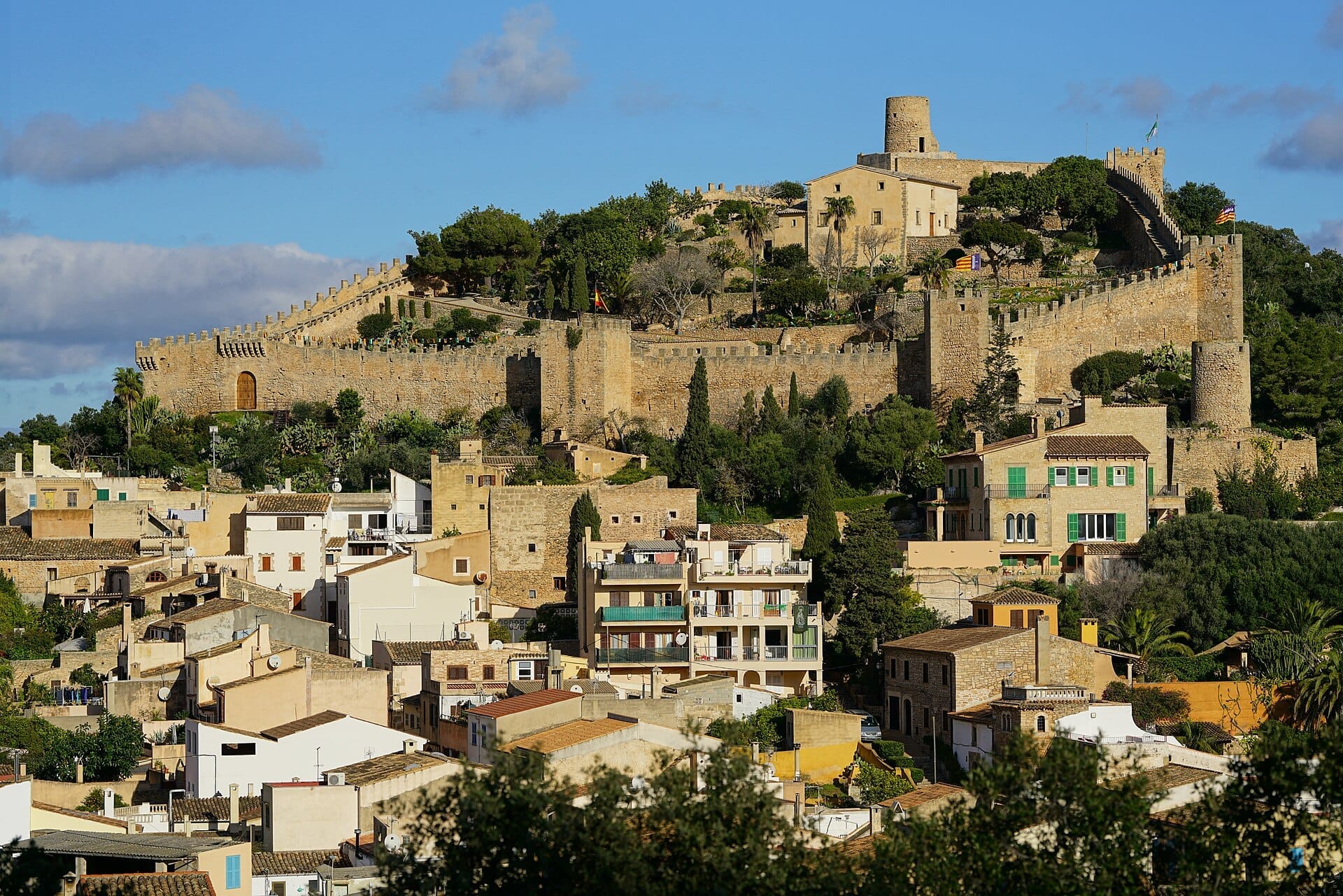
Castell de Capdepera sits at 159 metres above sea level on the Puig de Capdepera, a rocky limestone summit that dominates the skyline above the small town of Capdepera in Mallorca's northeast corner. From the ground, its crenellated walls look almost theatrical against the Mediterranean sky, but this is no reconstructed tourist backdrop. The castle is a genuine 14th-century military fortification, classified as an Asset of Cultural Interest in 1993, and it remains one of the most intact medieval structures on the island.
The fortress was commissioned by King Jaume II of Mallorca and completed in its Gothic form around 1386, though it was built on the foundations of an earlier Moorish watchtower known as the Torre de Miquel Nunis, dating from the 10th and 11th centuries. That layering of history, Roman influence, Moorish occupation, and Catalan Gothic construction, is visible in the stonework if you know where to look. Inside the walls you'll find the small Oratory of the Mare de Déu de l'Esperança, a chapel that has served the local community since medieval times.
💡 Local tip
Wear proper walking shoes. The path from town to the castle entrance is paved but steep, and the interior walkways and wall stairs involve uneven stone surfaces throughout. Sandals are a poor choice here.
The Walk Up and First Impressions
From the centre of Capdepera, the route to the castle is unmissable: just follow the walls uphill. The ascent takes between ten and fifteen minutes depending on your pace, and it winds through narrow lanes lined with old stone houses and terracotta pots before opening onto the castle entrance. On warm days, the whitewashed walls radiate heat and the scent of wild herbs, mostly rosemary and thyme, drifts up from the scrubland on the slopes below.
The entrance gate sits beneath an arched tower, and passing through it produces an immediate shift in atmosphere. The interior is less about museum displays and more about space and structure: a wide open courtyard enclosed by thick limestone walls, the small chapel to one side, and a sense of how a medieval hilltop garrison would have functioned as both defensive position and community shelter for the people of the surrounding plain.
Early morning visitors, before 11am, will find the courtyard quiet enough to hear birds and the occasional gust off the sea. By midday in summer, tour groups arrive and the narrow wall walkways can feel congested. If you want the walls mostly to yourself, arrive at opening time.
Tickets & tours
Hand-picked options from our booking partner. Prices are indicative; availability and final rates are confirmed when you complete your booking.
Dinosaurland and Caves of Hams combined ticket
From 25 €Instant confirmationFree cancellationShuttle Boat from Cala Millor to Cala Ratjada
From 26 €Instant confirmationFree cancellation3-hour Es Trenc Boat Tour in Mallorca
From 39 €Instant confirmationFree cancellationShuttle Boat Roundtrip from Cala Bona to Cala Ratjada
From 29 €Instant confirmationFree cancellation
The Views: Why the Walls Matter More Than the Interior
The courtyard itself, while historically interesting, is not the main event. The real reason to visit Capdepera Castle is the walk along the battlements. The wall circuit gives you a rotating panorama that covers almost every direction: the town of Capdepera directly below, the forested hills running south toward Artà, the broad eastern coastline stretching from Cala Rajada in the north to the beaches around Cala Agulla and beyond, and on clear days, the unmistakable outline of Menorca approximately 45 kilometres across the water to the north.
The positioning of the castle was deliberately strategic: this hilltop gave medieval sentinels a sightline across the entire eastern approach to the island. It was from here that lookouts would have watched for threats arriving by sea. That same strategic position makes it one of the best free-range viewpoints in the eastern part of Mallorca, comparable in scope to what you get from elevated positions near Pollença's hilltop calvary in the north, though the character here is quite different: more rugged, more exposed, and considerably less visited.
Light conditions shift significantly across the day. Morning light hits the eastern walls with warmth and brings out the honey tones in the limestone. Late afternoon, roughly an hour before sunset, turns the stone amber and produces long shadows across the courtyard that photographers tend to find particularly rewarding. Midday light is flat and harsh in summer; plan around it if photography matters to you.
Historical Context: A Castle Built for Fear of the Sea
The strategic logic behind Capdepera Castle becomes clearer when you understand the geopolitical situation of 14th-century Mallorca. The island's eastern coast, flat and relatively accessible, was chronically exposed to raids from North African pirates and other maritime threats. The hillfort at Capdepera, one of the highest natural points in this corner of the island, gave defenders both early warning and a defensible refuge for the local population.
This defensive character shaped the northeastern coast of Mallorca for centuries. The castle is best understood not in isolation but as part of a broader pattern of fortified settlements and watchtowers across this part of the island. If you're exploring the area further, the nearby Bronze Age settlement of Ses Païsses near Artà shows how this same landscape attracted and required defensive structures across entirely different eras.
The Gothic walls that stand today were completed in 1386, replacing and expanding earlier Moorish and Roman-era structures. The thickness of the walls, some sections nearly two metres deep, reflects the serious military engineering of the period. They were built to withstand not just raiders but potentially prolonged sieges. Walking the ramparts, you can feel the solidity of that construction underfoot and in the way the interior spaces are sheltered from wind even when the exposed battlements are fully exposed to gusts off the sea.
Practical Walkthrough: What to Expect Inside
The castle is open daily from 10am to 9pm, though hours may vary seasonally and can be affected by weather conditions. Always confirm current times on the official website before visiting, particularly outside summer. Entry involves a small admission fee that contributes to ongoing conservation work.
Inside the walls, the layout is relatively straightforward. The main courtyard offers space to orient yourself and read any interpretive panels on display. The Oratory of the Mare de Déu de l'Esperança is a small but atmospheric chapel, plain in its interior design, which has operated continuously since the medieval period. The wall circuit is accessed via stone stairways at several points; the walkways are narrow in places and require some agility. Allow at least an hour inside the walls to walk the full circuit without rushing.
⚠️ What to skip
Accessibility is seriously limited. The steep approach path, uneven stone surfaces, and narrow stairways to the battlements make Capdepera Castle unsuitable for wheelchair users and very difficult for anyone with significant mobility impairments. The views from the lower parts of the courtyard are partial at best.
There are no large café or restaurant facilities inside the castle. Bring water, particularly in summer when the exposed hilltop offers little shade and temperatures at midday can be punishing. The town below has several cafés and small restaurants for before or after your visit.
Getting There and Combining With the Surrounding Area
Capdepera sits in the northeast of Mallorca, roughly 70 kilometres from Palma. There is no direct public transport to the castle itself; the nearest you can get by bus is the town of Capdepera, from which the walk up is unavoidable. Renting a car is the most practical option for most visitors, and it makes sense to combine Capdepera with other highlights in the northeast. The beach at Cala Agulla is just a few kilometres away and is one of the better beaches on the eastern coast, while the small resort town of Cala Rajada is within easy reach and offers a working fishing port alongside its tourist infrastructure.
If you're planning a broader sweep of eastern Mallorca by car, the castle pairs well with stops further south. The fishing village of Cala Figuera and the natural park at Mondragó both sit on the southeast coast and offer a very different character from the rocky hilltop fortifications of the northeast. See our Mallorca road trip guide for suggested routes that connect these areas efficiently.
Photography Tips and Best Conditions
Capdepera Castle is one of the more photogenic medieval structures in Mallorca, though it rarely appears in the heavily circulated images of the island, which tend to favour Palma's cathedral or the mountain villages of the Tramuntana. That relative obscurity means you can often frame shots without crowds. For the approach from the town below, a wide lens captures the full sweep of walls against the sky. For the coastal panoramas from the battlements, a longer lens helps isolate Cala Rajada's marina or pick out the outline of Menorca. Refer to the Mallorca photography guide for broader advice on lighting and locations across the island.
The castle's exterior, particularly the northwestern face, catches the last hour of evening light in a way that makes the limestone walls glow. If the castle is open late enough on the evening you visit, arriving in the final 90 minutes before closing gives you the best light on the walls and a gradual emptying of other visitors.
Honest Assessment: Is It Worth Your Time?
For most visitors who make the effort, yes. Capdepera Castle is not the most spectacular medieval fortress in Spain, and its interior is light on exhibits compared to larger Spanish castles with museum installations. But it offers something those larger sites often cannot: genuine atmosphere, real historical fabric, and views that stretch to another island. The scale feels human rather than overwhelming, and the setting above a small, largely untouristed town gives it a context that many more famous castles lack.
Visitors primarily motivated by beaches and resort life will find it a detour that doesn't pay off. If you're spending a few days in the northeast purely for Cala Agulla or Cala Mesquida, you can skip the castle without regret. But anyone with even a passing interest in medieval history, Mallorcan architecture, or elevated views of the eastern coastline should put it on the list.
Insider Tips
- Arrive at opening time on weekdays to have the battlements almost entirely to yourself. Weekend mornings from July to August can be crowded by 10:30am.
- The view toward Menorca is clearest in the early morning before haze builds. Bring binoculars if the crossing visibility matters to you.
- The town of Capdepera below the castle is worth a short wander before or after your visit. It's quieter than nearby Cala Rajada and has a handful of good local cafés that cater to residents rather than tourists.
- Check the official website before visiting in winter or during stormy weather. The hilltop position means the site can be temporarily closed when conditions are severe.
- The outer walls of the castle, viewed from the base of the hill, make for a strong photograph in the late afternoon. You don't need to be inside the castle to get a compelling image of it.
Who Is Capdepera Castle For?
- History and architecture enthusiasts wanting genuine medieval fabric rather than reconstructed displays
- Photographers looking for panoramic coastal views and golden-hour limestone walls
- Families with older children and teenagers who can manage steep, uneven terrain
- Road trippers exploring northeast and southeast Mallorca who want to combine coast and culture
- Travellers who have already seen Palma's major sites and want something less visited
Nearby Attractions
Other things to see while in Southeast Mallorca:
- Cabrera National Park
The Cabrera Archipelago Maritime-Terrestrial National Park is one of the most strictly protected natural areas in the western Mediterranean. Nineteen uninhabited islands, near-pristine seabed, and a 14th-century castle make it a world apart from mainstream Mallorca tourism. Access is limited and must be booked in advance.
- Cala Agulla
Cala Agulla is a 550-metre natural beach in northeast Mallorca, declared a protected natural area in 1991. Backed by dunes and pine forest, with shallow turquoise water and no major development, it's one of the cleanest and most unspoiled stretches of coastline on the island.
- Cala d'Or
Cala d'Or is a planned resort village on Mallorca's southeast coast, designed in the 1930s by an Ibizan architect and built around several sheltered sandy coves. With calm, clear water, low-rise whitewashed buildings, and a relaxed marina atmosphere, it draws families and couples looking for beach days without the noise of larger resorts.
- Cala Figuera
Cala Figuera is a working fishing village on the southeastern coast of Mallorca, set inside a narrow, fjord-like inlet that splits into two quiet arms. With no sandy beach, no resort hotels, and a harbor still active with traditional wooden boats, it offers something genuinely rare on this island: calm, character, and a sense of place.