Southwest Mallorca stretches from the ritzy marina at Puerto Portals to the dramatic harbor of Port d'Andratx, taking in broad sandy bays, clifftop villas, and a coastline that shifts character every few kilometers. It is the island's most exclusive residential corridor and one of its most varied stretches for visitors.
Southwest Mallorca is where the island puts on its most polished face without entirely losing its coastline to the crowds. Luxury marinas sit a short drive from wide family beaches, and the foothills of the Serra de Tramuntana provide a dramatic green backdrop that keeps the light interesting at almost every hour.
Orientation
Southwest Mallorca occupies the coastal arc that curves west and southwest from Palma, running roughly from Bendinat and Puerto Portals in the east to Andratx and Port d'Andratx at the island's far southwestern tip. The main artery is the Ma-1 motorway, which shoots west from Palma before forking: one branch continues toward Andratx, the other drops south through Magaluf and Santa Ponsa. The entire zone sits at the foot of the Serra de Tramuntana's southern slopes, which means the landscape behind the coast is rarely flat.
The key settlements, moving roughly west from Palma, are Bendinat, Puerto Portals, Portals Nous, Magaluf, Palma Nova, Santa Ponsa, Paguera, Camp de Mar, and finally Port d'Andratx. Each has its own character, and the differences are sharp enough that choosing the wrong base can significantly change your experience of the region. Santa Ponsa sits about 25 km from Palma's city center and is reachable in 25-30 minutes by car on a clear day. Port d'Andratx adds another 15 km and roughly 15 minutes beyond that.
The southwest connects naturally to Palma de Mallorca to the east and to the Serra de Tramuntana immediately to the north, which is why many visitors use this zone as a base for both city day trips and mountain excursions without moving hotels.
Character & Atmosphere
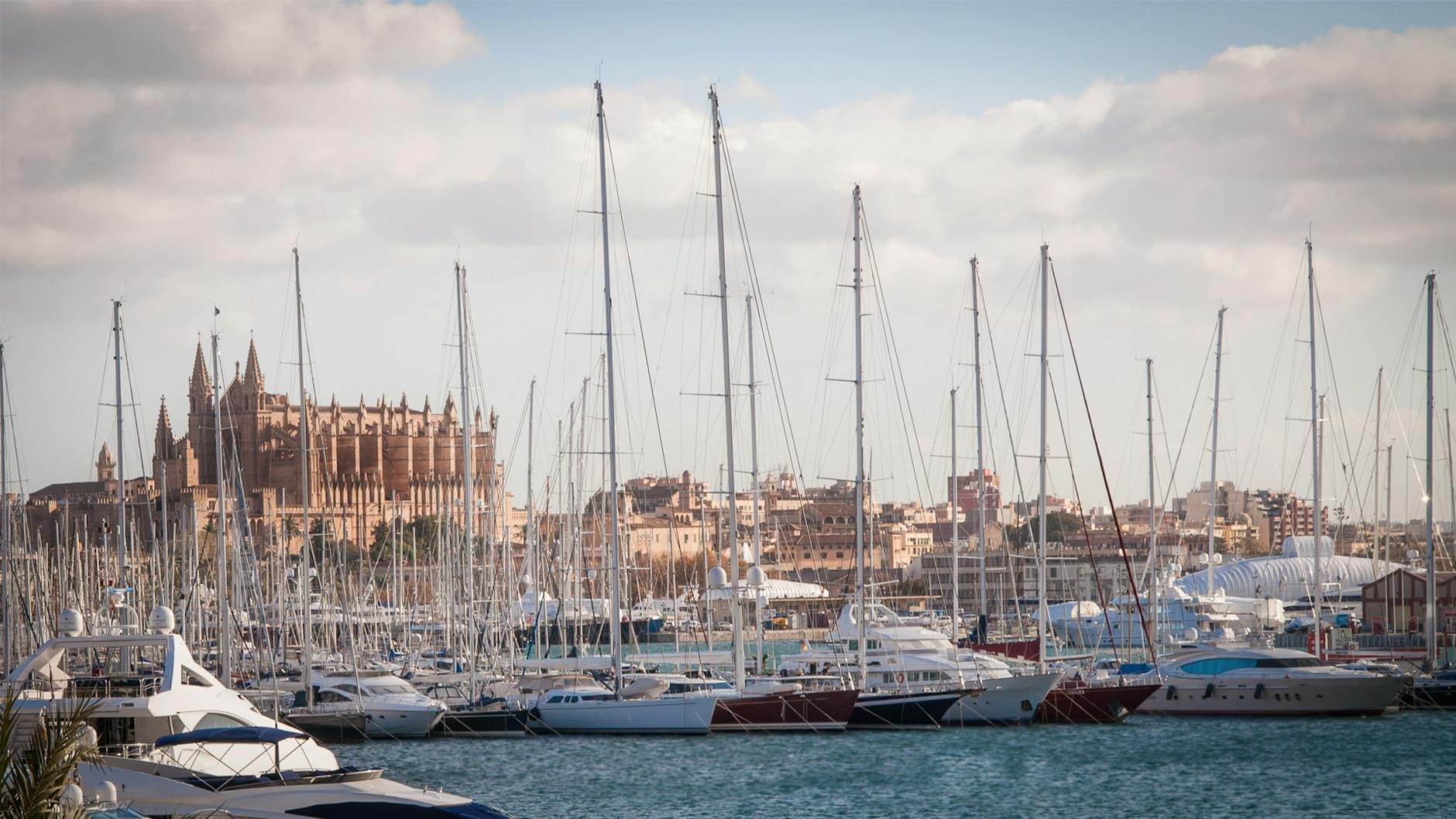
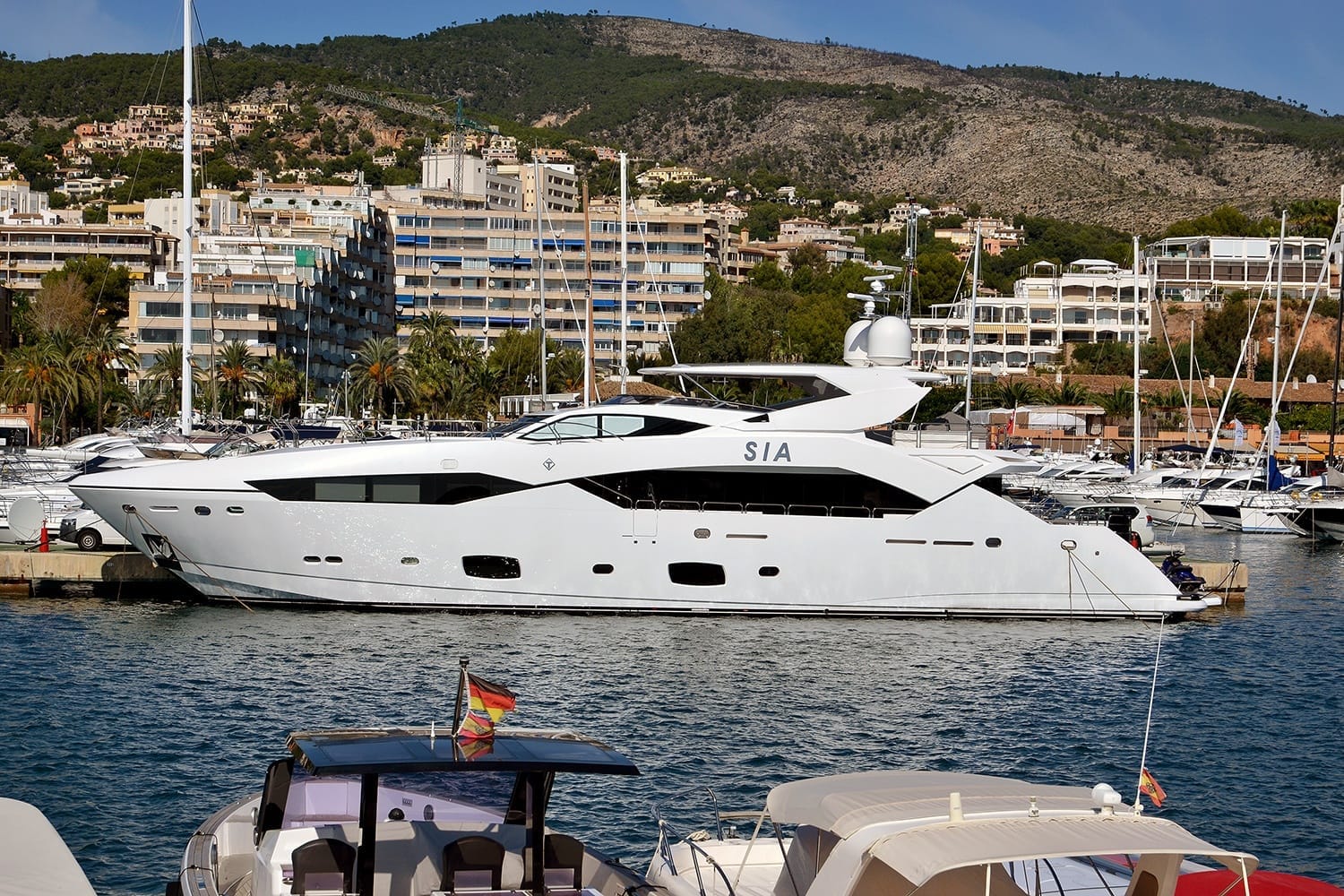
The southwest is not a single neighborhood but a chain of coastal communities with genuinely different personalities. Puerto Portals, with its superyacht marina, designer boutiques, and restaurants where the bill arrives without a flinch, operates at a register closer to Monaco than Mediterranean village. Walk ten minutes from the pontoons and you are in Portals Nous, where residential streets feel quiet even in July. The contrast is part of what makes this coast interesting to explore.
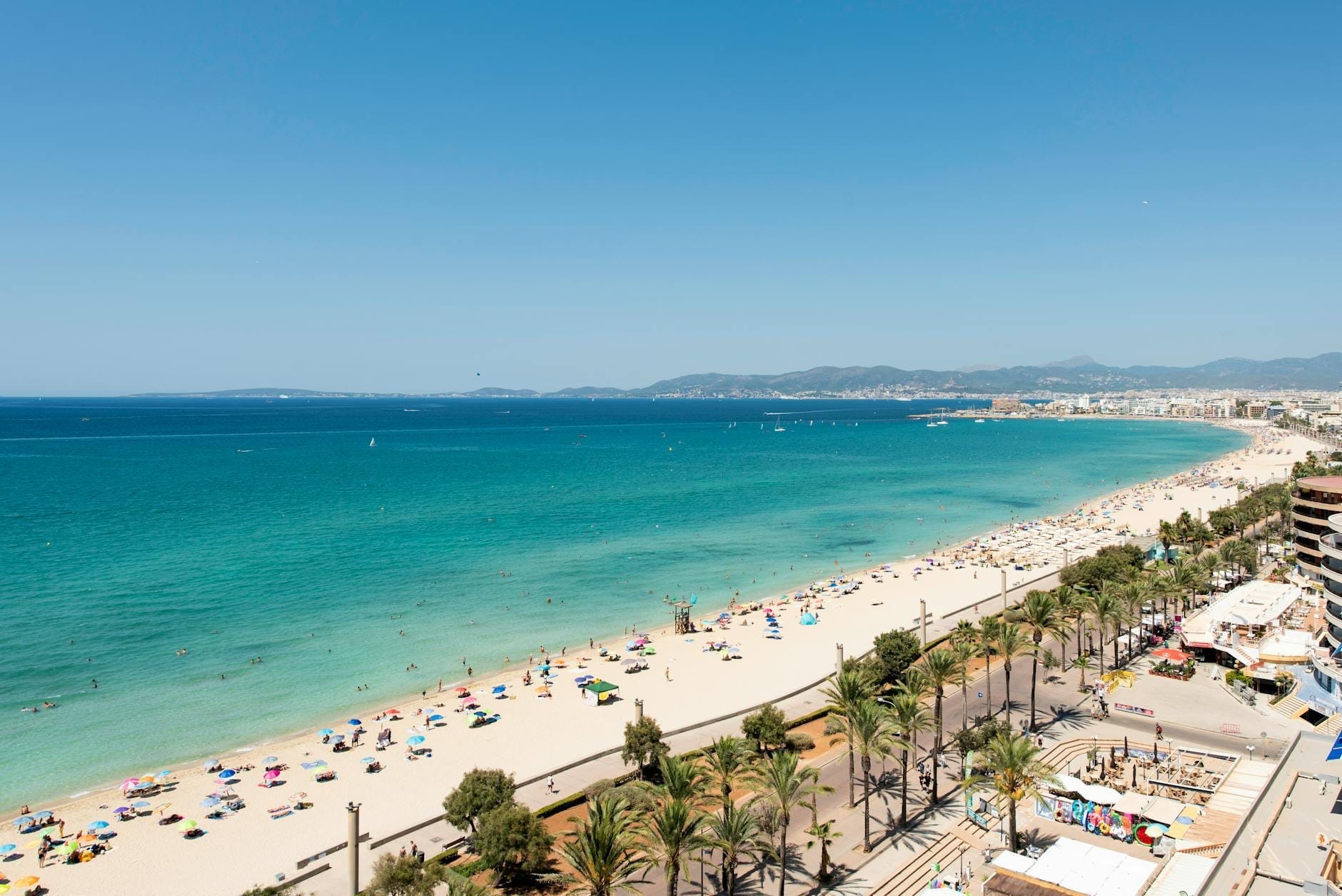
Magaluf has for decades carried a reputation as Mallorca's party capital, and that reputation is not entirely wrong. The strip along Carrer de Martins draws a young, predominantly British crowd from late afternoon into the early hours. Since the late 2010s, local authorities have pushed hard to rebalance the offer, restricting all-inclusive alcohol deals and investing in the beach itself, which is genuinely attractive: a long, fine-sand arc facing south with reliable afternoon sun. Visitors who stay clear of the main strip find a more manageable scene than the headlines suggest.
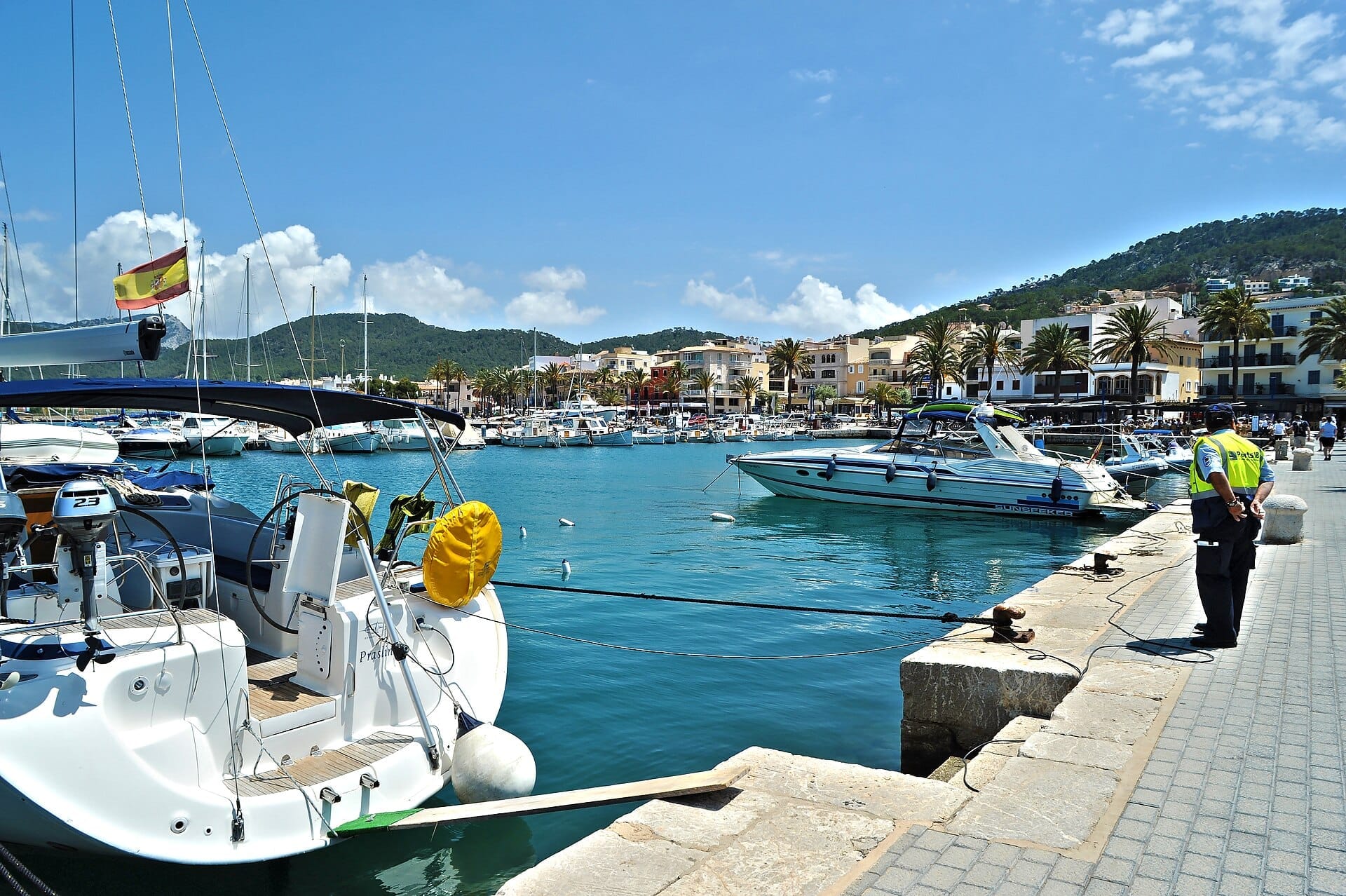
Santa Ponsa and Paguera have a different rhythm: calmer, more family-oriented, popular with German and Scandinavian visitors who return year after year. In the morning, the promenades fill with joggers and cyclists. The beach bars open slowly; by ten the sunloungers are claimed. By afternoon the light turns golden over the bay and the terraces start filling again for an early dinner. Port d'Andratx, at the far end of the arc, feels almost detached from the rest: a deep natural harbor lined with boat sheds and expensive restaurants, surrounded by some of the most sought-after residential property on the island.
ℹ️ Good to know
The southwest is one of the greenest parts of coastal Mallorca in terms of residential real estate. Building land is genuinely scarce here, which is why the foothills behind Santa Ponsa and Andratx are dotted with villas rather than resort blocks. This keeps large stretches of the hillside visually intact.
What to See & Do
The anchor attraction in the eastern part of the zone is Puerto Portals, the marina that effectively set the tone for upscale Mallorca tourism from the 1980s onward. Even if you are not in the market for a superyacht, the harbor is worth a wander: the boats are spectacular, the architecture is clean, and the restaurants along the quay are among the most reliably good on the island. Come at sunset when the boats catch the light.
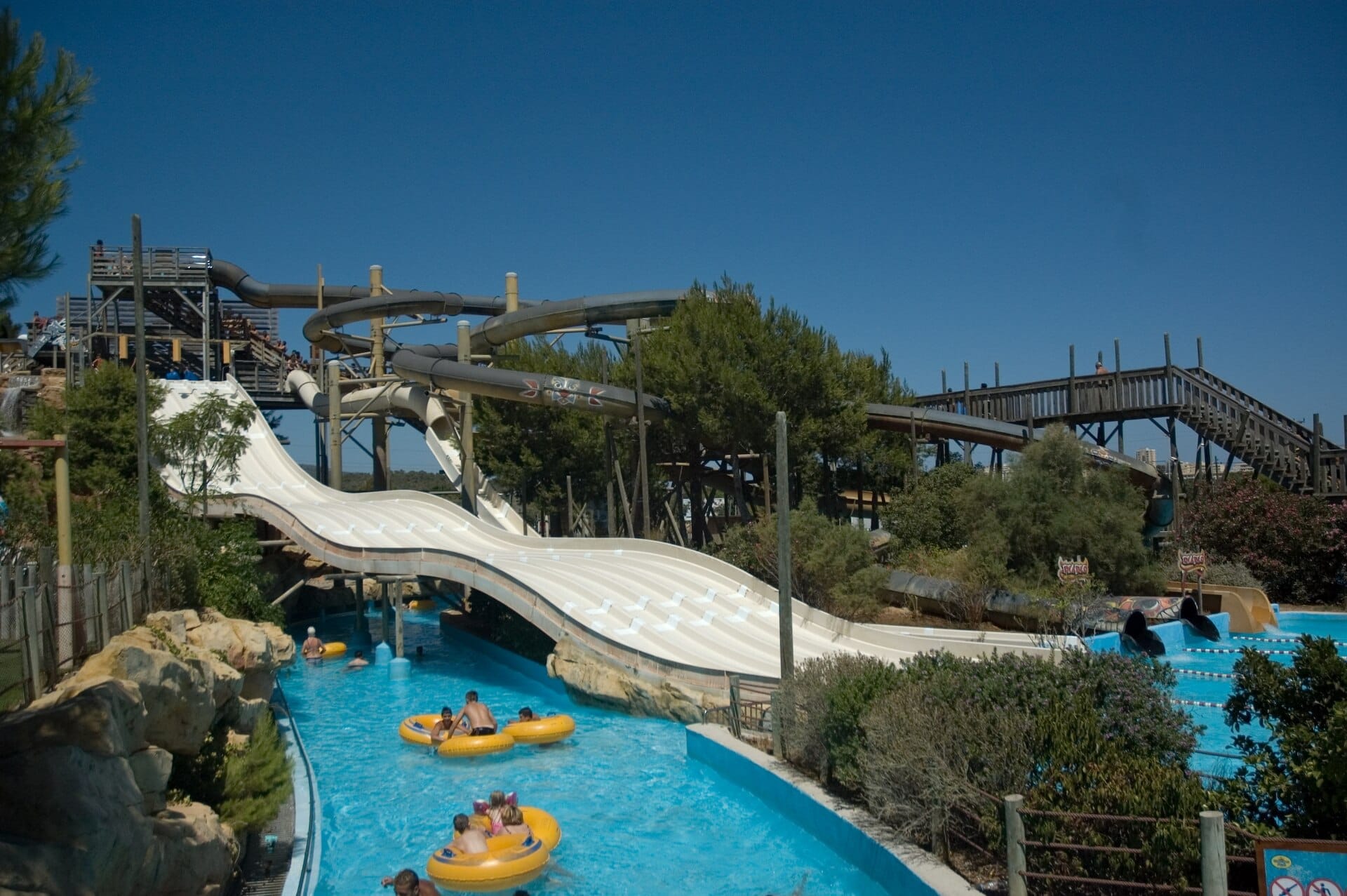
For families with children, the area around Magaluf holds Western Water Park, one of the largest water parks in Spain, with slides and wave pools that genuinely occupy a full day. The nearby Palma Aquarium, just east toward the capital, is another solid option for a day when the beach feels too crowded.
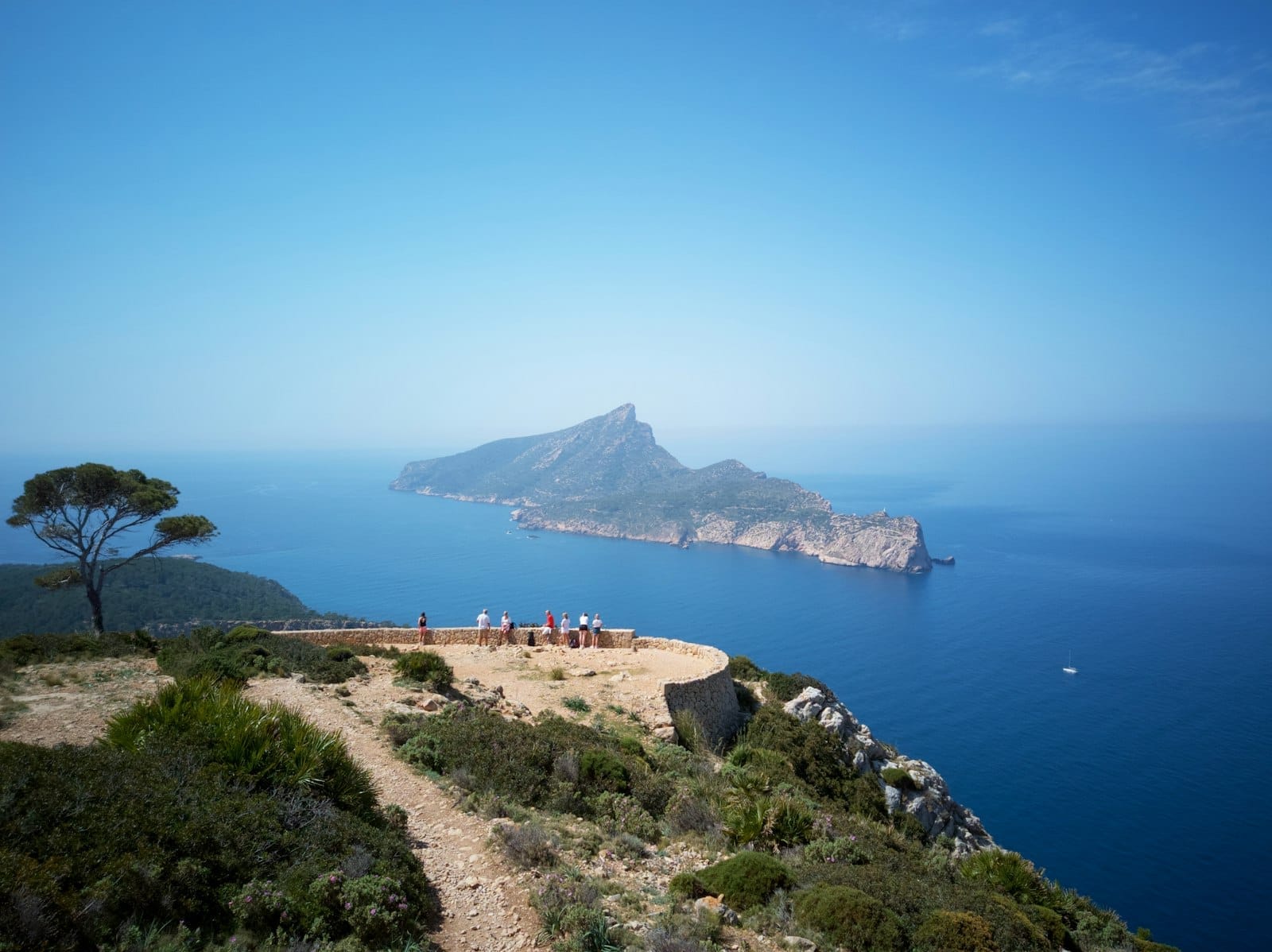
The coastal scenery between Santa Ponsa and Andratx is among the most dramatic in the southwest. The cliffs at Cap de sa Mola, above Port d'Andratx, provide sweeping views across the water toward Sa Dragonera, the uninhabited island nature reserve visible just offshore. Taking a boat trip out to the reserve is one of the most rewarding half-days you can spend in this part of Mallorca.
Cyclists know the southwest well: the roads climbing from Andratx toward the Tramuntana are among the classic routes on the island, and the flat coastal stretches between Santa Ponsa and Paguera suit leisure riders. The full picture of cycling in Mallorca extends from here up into the mountains, and many guided cycling groups base themselves in this zone for exactly that reason.
Puerto Portals marina: yacht watching, boutique shopping, and some of the island's best waterfront dining
Western Water Park near Magaluf: a full-day family attraction
Cap de sa Mola viewpoint above Port d'Andratx: cliff scenery and sea views toward Sa Dragonera
Boat trips from Port d'Andratx to Sa Dragonera nature reserve
Coastal cycling routes between Santa Ponsa and Paguera
Santa Ponsa bay: wide sandy beach with calm, south-facing water
💡 Local tip
If you are based in the southwest and want a full-day excursion without renting a car, the bus service to Palma is frequent enough that combining a morning in the capital with an afternoon on the beach is genuinely practical. The journey from Santa Ponsa to Palma takes roughly 30 minutes by bus.
Eating & Drinking
The food scene across the southwest is as varied as the towns themselves. Puerto Portals anchors the high end: waterfront restaurants here serve modern Mediterranean and international cuisine at prices that reflect the address. Reservations are advisable in summer, particularly at the more acclaimed tables. The quality is generally high, and the setting, with boats reflecting in the water a few meters from your table, is hard to argue with.
Santa Ponsa and Paguera offer a middle tier that most visitors find more accessible. German bakeries open early, beach chiringuitos serve grilled fish through the afternoon, and the main squares hold a mix of international restaurants alongside Mallorcan staples: pa amb oli (bread with olive oil and tomato), tumbet (a layered vegetable dish), and fresh local fish. The quality at the better restaurants in these towns compares favorably with much of what you find along the seafront strip in Palma.
Magaluf's eating scene is built primarily around its tourist strip, which means you will find every international fast-food format alongside all-day-breakfast cafes and beach bars. This is not the place to eat memorably, but it is the place to eat cheaply and late. Port d'Andratx operates at an entirely different register: the restaurants around the harbor cater to yacht owners and serious food travelers, with several well-regarded spots focusing on local seafood.
For context on the broader island food culture, including local wine and traditional dishes to look for, the Mallorca food guide covers the essentials. Local wine from the Binissalem designation, produced in the island's central plains, appears on menus across the southwest and is worth ordering with fish.
Getting There & Around
Palma de Mallorca Airport (PMI) is the entry point for virtually all international visitors, and the southwest is well-positioned for arrivals: the airport sits on the eastern edge of Palma, and the drive to Santa Ponsa takes roughly 25-30 minutes, compared to over an hour to the northeast coast. Taxis from the airport are metered; buses connect the airport to Palma city center, from which onward connections to the southwest depart. For full logistics on getting around Mallorca, including bus numbers and timetables, check the Serveis Ferroviaris de Mallorca (TIB) website before you travel, as schedules shift between high and low season.
The main bus routes connecting Palma to the southwest run along the Ma-1 corridor and serve Magaluf, Santa Ponsa, Paguera, and Andratx. Frequency drops sharply in October and November, so shoulder-season visitors relying on public transport will find a car far more practical. Between the towns themselves, walking is rarely an option given the distances: renting a car or scooter unlocks the coast considerably.
Renting a car is genuinely the best way to explore the southwest, particularly if you want to combine coastal beaches with inland villages or Tramuntana drives. The guide to renting a car in Mallorca covers what to expect on pricing and which agencies operate out of the airport. Parking is generally easier here than in central Palma, though Santa Ponsa beach and Puerto Portals fill up on summer weekends.
⚠️ What to skip
There is no rail connection into the southwest. The Serveis Ferroviaris de Mallorca (SFM) train network covers the Palma-Inca-Manacor corridor to the northeast; the southwest is bus and road only. Do not base your transport planning on the assumption that a train will get you here.
Where to Stay
The southwest covers a wide range of accommodation styles and price points, making it genuinely competitive with central Palma as a base for exploring the island. For a full comparison of the island's accommodation zones, the where to stay in Mallorca guide breaks down each area clearly.
Puerto Portals and the Portals Nous area suit travelers who want a quieter, more upscale experience within easy reach of Palma. Boutique hotels and serviced apartments here are expensive but well-maintained, and the 20-minute drive into the city is easy. Santa Ponsa and Paguera are better for families and longer stays: the apartment complexes are solid, the beaches are within walking distance, and the local infrastructure (supermarkets, pharmacies, restaurants) is well-developed for a resort zone.
Magaluf is a reasonable base if you are prioritizing budget and beach access over atmosphere. The accommodation ranges from large all-inclusive hotels to budget apartment blocks, and competition keeps prices low even in July and August. Port d'Andratx sits at the other extreme: a handful of small, expensive properties with harbor views, suited to travelers treating this trip as a special occasion rather than a package holiday.
Travelers drawn to the luxury segment of the southwest, from superyacht berths to high-end villa rentals and Michelin-adjacent restaurants, will find useful context in the luxury Mallorca guide.
Honest Drawbacks
The southwest is not the place to come if you want to experience traditional Mallorcan village life. The towns along the main coastal corridor are built primarily around tourism and residential expat communities, and the architecture in many areas reflects decades of rapid development. You will find more authentic island character in the inland villages of the Pla or the old quarters of Alcudia.
Magaluf's nighttime noise is real and localized. If you are staying within a few streets of the main strip, expect significant sound until the early hours in summer. The local authorities have taken steps to manage this, but anyone sensitive to noise should book accommodation clearly away from Carrer de Martins and surrounding streets. Read guest reviews carefully and pay attention to specific location comments.
Traffic on the Ma-1 between Palma and Santa Ponsa is heavy on summer Friday afternoons and Sunday evenings. If you are driving back to Palma for a flight or evening dinner, allow considerably more time than the map suggests. The coastal roads between Santa Ponsa and Andratx are scenic but narrow in places, and overtaking opportunities are limited.
⚠️ What to skip
Several beaches in the southwest are managed with paid sunlounger concessions that take up most of the available sand in high season. If you prefer free beach space, arrive early or look at the less-developed coves between Santa Ponsa and Paguera, which retain pockets of unmanaged shoreline.
Day Trips & Connections
The southwest works well as a corridor between Palma and the Tramuntana. Driving north from Andratx takes you almost immediately into mountain scenery, and the road toward Estellencs and Banyalbufar is among the most dramatic on the island. Villages like Deià and the charming port of Sóller and Port de Sóller are reachable in under an hour from Andratx, making them feasible afternoon trips.
Palma itself is close enough that a morning or evening in the city feels natural rather than like a separate excursion. The Palma Cathedral (La Seu) and the old town are the obvious focal points, but the waterfront and the market at Mercat de l'Olivar reward a slower exploration.
For travelers interested in the full scope of the island rather than one region, the one week in Mallorca itinerary shows how the southwest can fit into a broader circuit that includes the east coast, the mountains, and the capital.
TL;DR
Southwest Mallorca stretches from the yacht-filled marina at Puerto Portals to the deep natural harbor of Port d'Andratx, covering approximately 35 km of varied coastline.
Best suited for: families wanting well-serviced beach resorts, upscale travelers drawn to marina culture and high-end dining, cyclists looking to combine coastal routes with Tramuntana climbs, and anyone wanting easy airport access with day-trip range to both Palma and the mountains.
Magaluf retains a party-resort identity that makes it a poor fit for travelers seeking peace and quiet, particularly in July and August.
There is no rail connection to the southwest; a rental car is strongly recommended for anyone planning to move between towns or explore inland.
The zone is expensive by Mallorca standards in the Puerto Portals and Port d'Andratx areas, but Magaluf and Santa Ponsa offer some of the island's most competitive accommodation pricing in high season.
Mallorca has over 200 beaches, ranging from long sandy family bays to dramatic limestone coves that feel almost impossibly beautiful. This guide covers the best beaches across the island, with practical advice on access, crowds, and what makes each one worth the trip.
Mallorca works in every season, but the right time depends on what you want. This guide breaks down the weather, crowds, prices, and events by month so you can plan a trip that actually suits you.
Mallorca rewards those who look up, out, and across. From the Tramuntana's limestone ridges to the bay of Palma at dusk, these are the viewpoints that make the island unforgettable. This guide covers the best panoramas, how to reach them, and when to go.
Mallorca is one of Europe's premier road cycling destinations, drawing professionals and enthusiasts from across the continent every spring. This guide covers the island's best routes from brutal mountain climbs to flat coastal loops, plus practical tips on when to go, where to base yourself, and what to expect on the road.
Mallorca rewards budget travellers generously. From UNESCO mountain trails and wild coves to free museum days and medieval old towns, the island has more cost-free experiences than most visitors realise. This guide covers the best free things to do in Mallorca, organised by theme.
From the urban buses of Palma to the scenic train to Sóller and the open roads of the Serra de Tramuntana, Mallorca has more transport options than most visitors expect. This guide breaks down every mode of transport, with real prices, route details, and honest advice on what actually works.
Mallorca rewards those willing to look beyond the resort strips and postcard beaches. This guide uncovers the island's quieter side: Bronze Age settlements, uninhabited nature reserves, atmospheric mountain villages, and coves that still feel genuinely undiscovered.
The Serra de Tramuntana is one of Europe's finest hiking destinations, a UNESCO World Heritage limestone range stretching across Mallorca's northwest. This guide covers the best trails, villages, and natural landmarks for walkers of every level.
Mallorca is larger and more varied than most visitors expect. This guide breaks down exactly how many days you need depending on your pace, priorities, and which parts of the island you want to explore — from a long weekend in Palma to a full two-week circuit.
Mallorca gets dismissed as a cheap package-holiday island. That reputation is decades out of date. From UNESCO mountain landscapes to Gothic architecture, world-class cycling, and some of the Mediterranean's best beaches, the island has far more range than most visitors expect. This guide lays out exactly what Mallorca delivers, where it falls short, and who it suits best.
Mallorca's luxury scene stretches far beyond beach resorts. This guide breaks down the island's finest hotels, private villas, Michelin-starred dining, and exclusive experiences — with honest advice on where to stay, when to go, and what's genuinely worth the premium.
Every January and February, Mallorca's countryside transforms into a landscape of white and pale-pink blossom as around four million almond trees come into flower. This guide covers peak timing, the best villages and routes to visit, local festivals, and practical tips for making the most of the season.
With 554 kilometres of coastline and over 250 beaches and coves, Mallorca rewards exploration by sea like nowhere else in the Mediterranean. This guide covers every boat trip option on the island: shared tours, private charters, bareboat sailing, departure points by region, and exactly when to go.
Mallorcan food is rooted in peasant traditions, pork, olive oil, and seasonal produce. This guide covers the island's essential dishes, local specialties worth seeking out, and practical advice for eating well without falling into tourist-trap traps.
October is one of the most underrated months to visit Mallorca. Daytime temperatures hover around 22-24°C, the sea stays swimmable at 21-23°C, and the summer crowds have thinned dramatically. This guide covers the real weather picture, what closes, what opens, and the best things to do across the island in autumn.
Spring transforms Mallorca into one of the Mediterranean's most rewarding destinations. This guide covers the weather month by month, what to do, when crowds arrive, and how to make the most of the shoulder season before summer prices kick in.
July and August are Mallorca's peak season for a reason: warm sea temperatures, near-constant sunshine, and a full calendar of activities. But peak season also means peak crowds and peak prices. This guide breaks down exactly what summer looks like on the island so you can decide if it's right for you.
Mallorca's nightlife spans centuries-old cocktail palaces in Palma, Germany-flavoured beach parties in Arenal, and full-scale club nights in Magaluf. This guide cuts through the noise to tell you exactly where to go, when to arrive, and what to skip.
Mallorca has a reputation for luxury resorts and big-spending tourists, but the island is far more affordable than most people expect. This guide breaks down real daily costs, the best free activities, cheap transport options, and the smartest ways to stretch your euros across one of Europe's most spectacular islands.
Mallorca delivers extraordinary photography at every turn, from impossible turquoise coves and medieval hilltop villages to soaring Gothic architecture and dramatic sea cliffs. This guide covers the island's most photogenic locations, with practical advice on the best times to shoot and what to look for at each spot.
Mallorca rewards drivers more than almost any island in the Mediterranean. From the UNESCO-listed Serra de Tramuntana to the wild cape at Formentor, this guide covers the best scenic routes, practical driving advice, and the stops worth pulling over for.
From Palma's covered food halls to village weekly markets and artisan workshops, shopping in Mallorca goes well beyond tourist trinkets. This guide covers the best markets, the products worth buying, and the ones to leave on the shelf.
Mallorca produces some of Spain's most distinctive wines, built on native grape varieties you won't find anywhere else. This guide covers the island's two DO regions, the best wineries to visit, what to expect on a tasting tour, and how to plan your visit from Palma.
Mallorca has a well-earned reputation as one of the Mediterranean's top family destinations, but knowing which beaches, attractions, and activities actually work for children makes the difference between a great holiday and a stressful one. This guide cuts through the noise with specific recommendations, honest assessments, and practical logistics.
Mallorca's villages are its soul. Beyond the beaches and resorts, stone-built hilltop towns, flower-draped lanes, and centuries of history await. This guide covers the most beautiful villages in Mallorca, from the Tramuntana's famous trio to the northeast's medieval strongholds.
Seven days is enough time to experience the full range of Mallorca: Gothic cathedrals, UNESCO mountain roads, turquoise calas, medieval villages, and local wine. This day-by-day itinerary cuts through the noise and tells you exactly where to go, when to go, and what to skip.
Renting a car in Mallorca is the single best decision you can make for your trip. This guide covers everything: seasonal pricing, insurance traps, the best booking platforms, parking realities, and which companies consistently deliver. No fluff, just practical advice.
Mallorca is far more than beach resorts and package holidays. This guide covers the best things to do across the island — from free hikes in the UNESCO-listed Tramuntana mountains to boat trips along the rugged north coast — with real prices, seasonal advice, and honest opinions on what's worth your time.
Mallorca is a 3,640 km² island with wildly different characters depending on where you base yourself. This guide cuts through the noise and maps out the best areas to stay, who each one suits, and what to watch out for before you book.