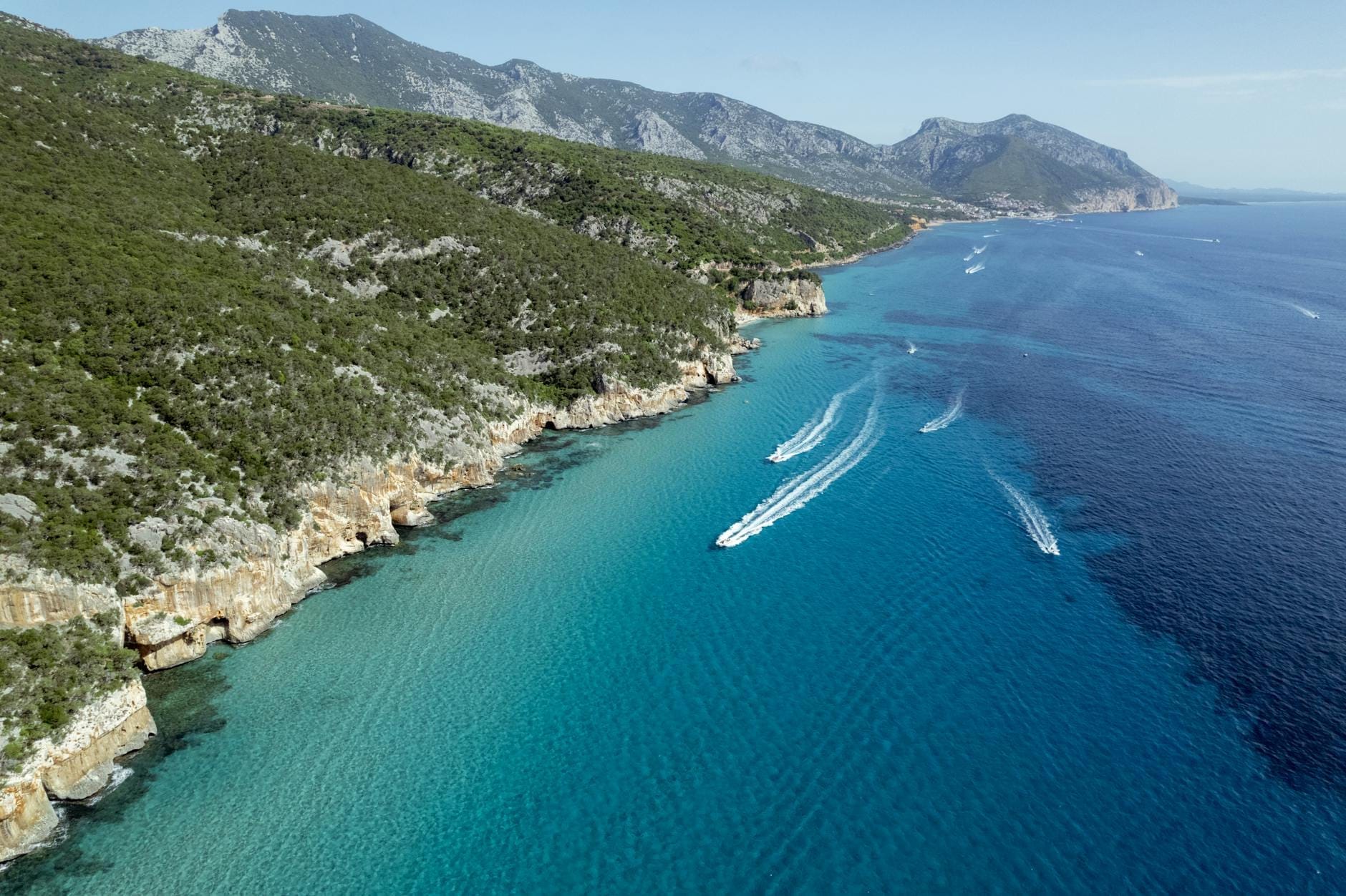
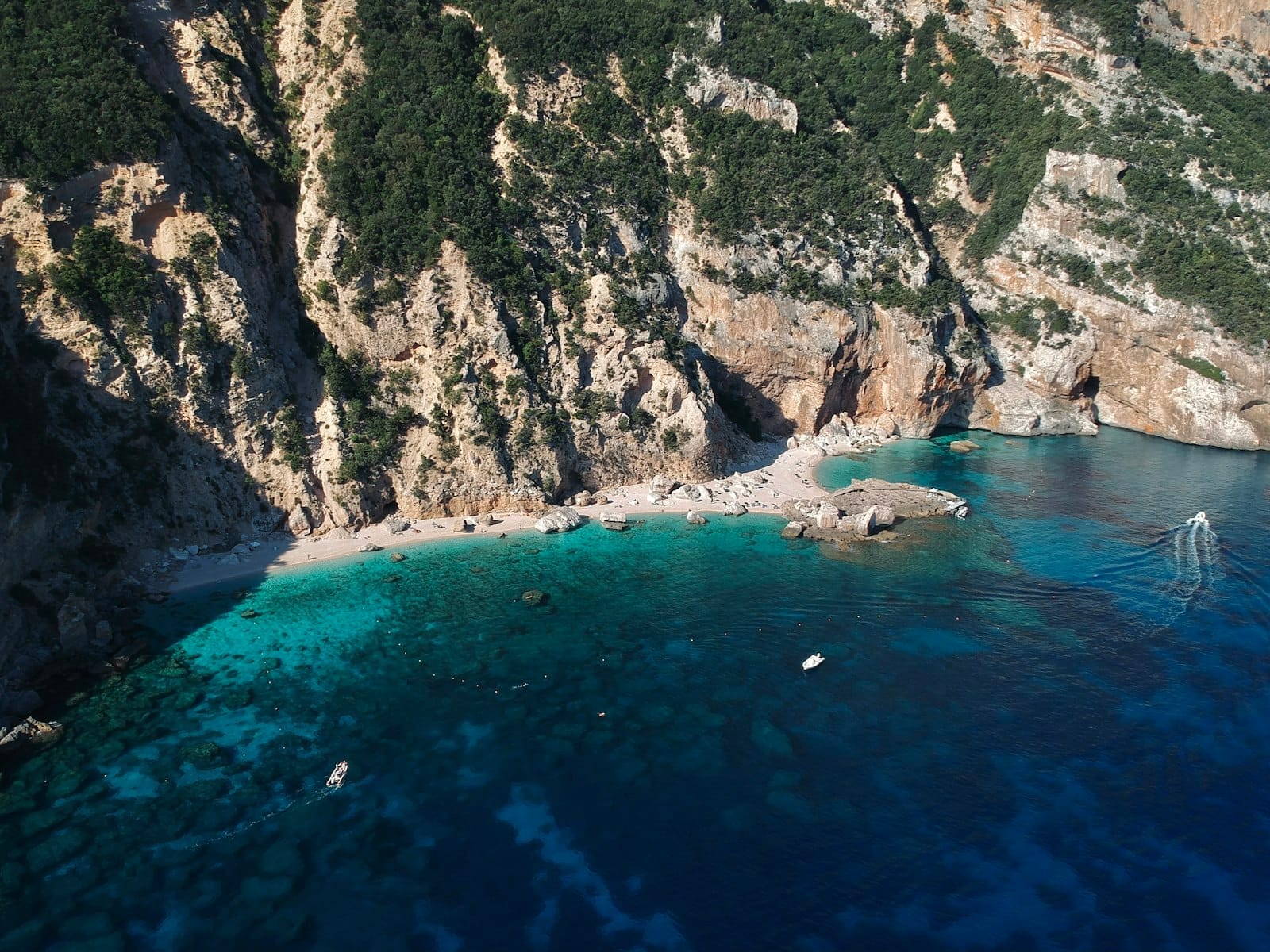
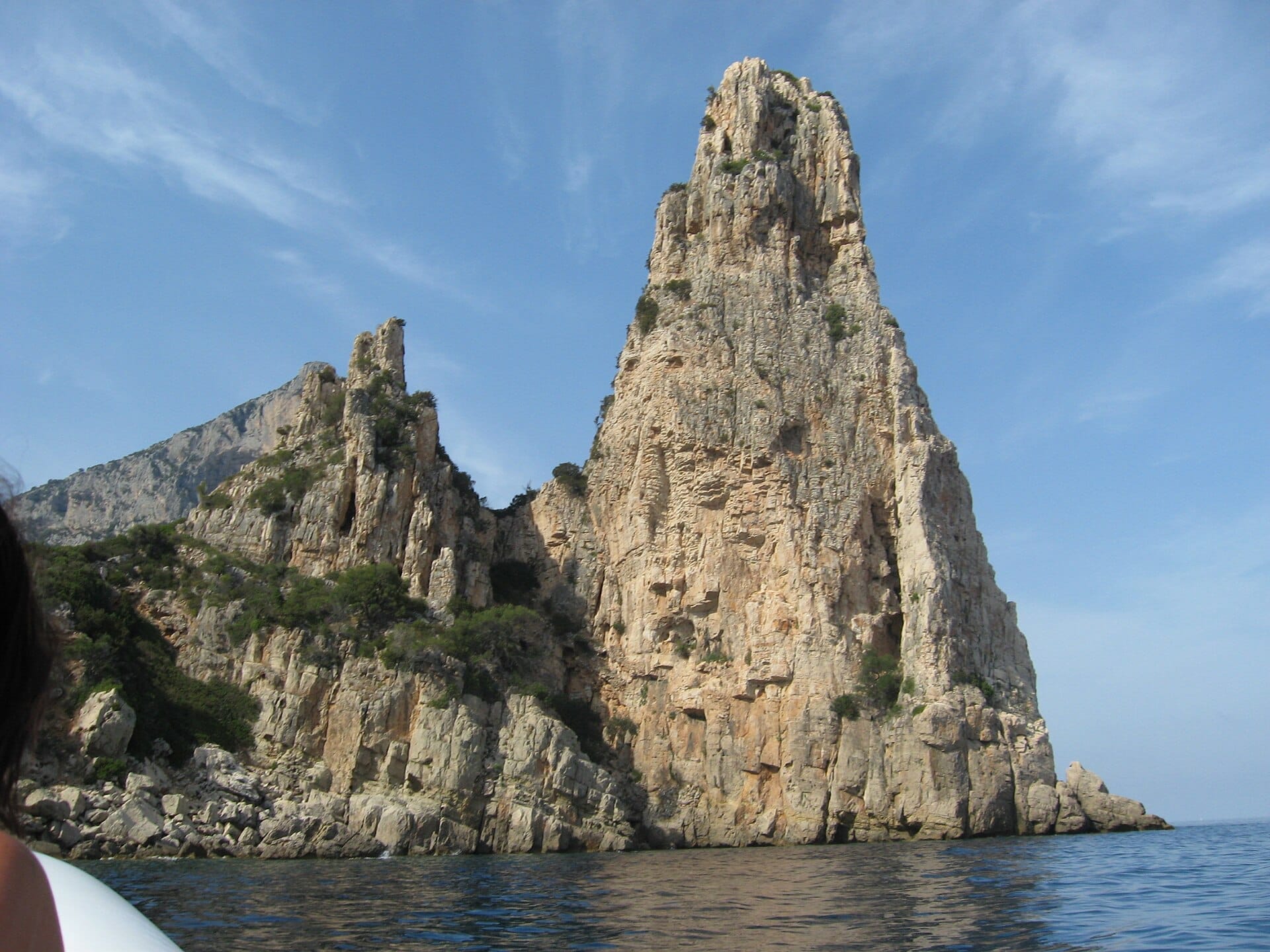
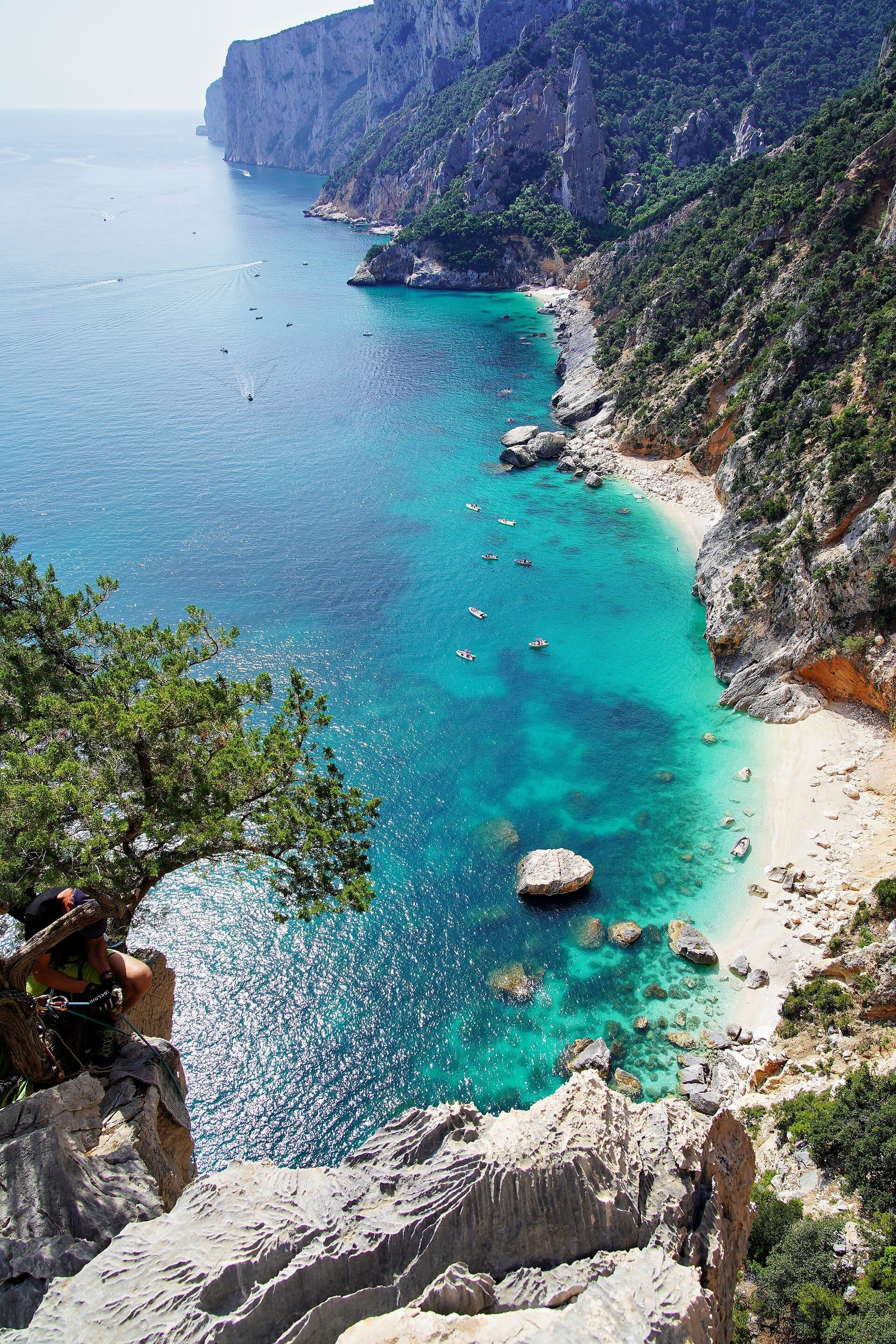
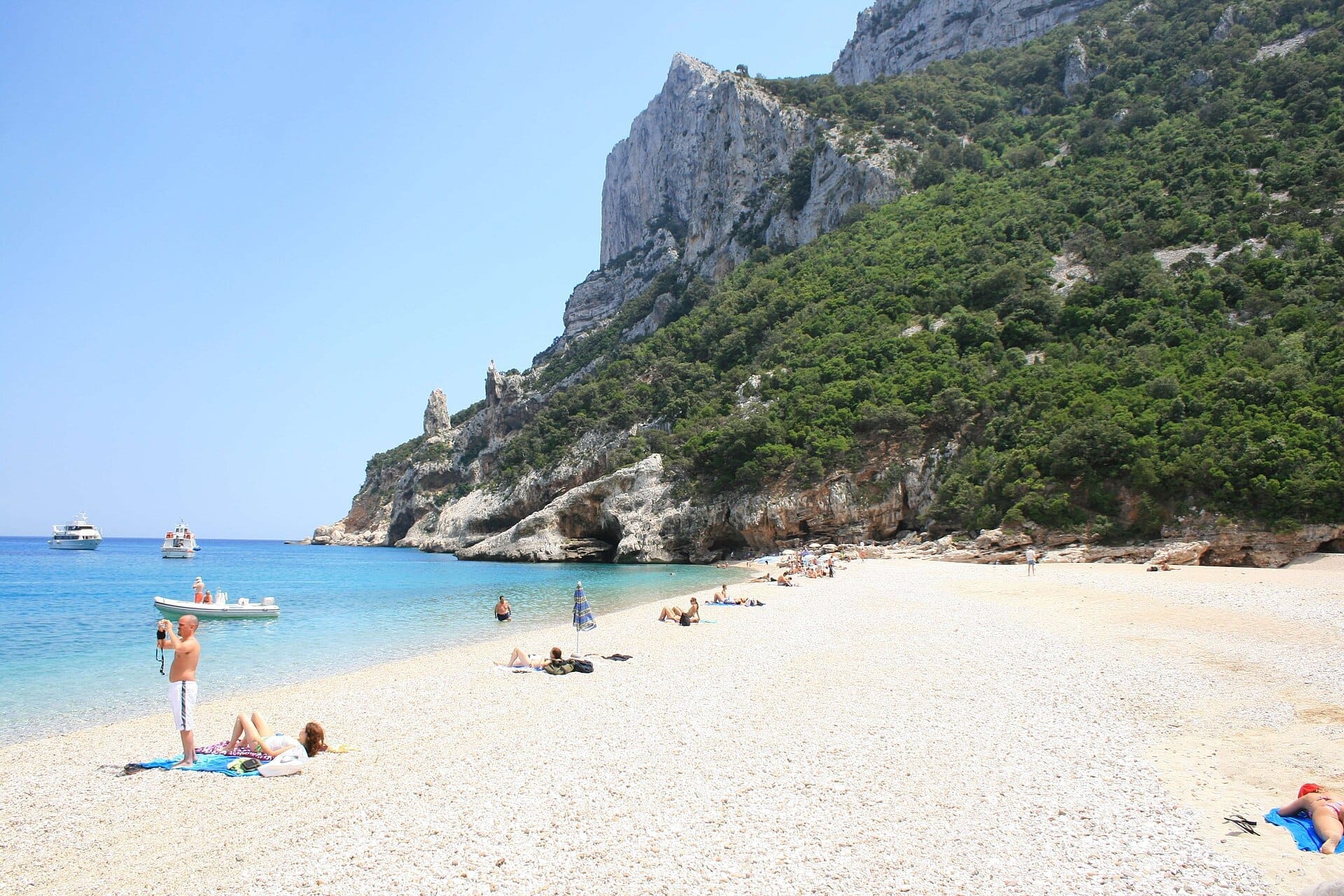
The Golfo di Orosei is Sardinia's most spectacular stretch of eastern coastline, where vertical limestone cliffs plunge into water so clear it reads turquoise from above. Running from Cala Gonone in the north to Santa Maria Navarrese in the south, the gulf is part of the Gennargentu National Park and contains beaches that rank among the most beautiful in the Mediterranean.
The Golfo di Orosei is not a neighborhood in any urban sense — it is a 30-kilometer arc of wild eastern Sardinian coastline where limestone cliffs drop straight into water the color of shallow tropical seas. Most of its famous coves are reachable only by boat or on foot, and that inaccessibility is exactly the point.
Orientation: Where the Gulf Sits and How to Read It
The Golfo di Orosei occupies the central-eastern shore of Sardinia, in the province of Nuoro. It runs roughly north to south, from the small port town of Cala Gonone in the north to Santa Maria Navarrese in the south, a coastal stretch of around 30 kilometers as the crow flies. The gulf takes its name from the town of Orosei, which sits roughly 2 kilometers inland from the sea in the Cedrino River valley.
The backbone of the region is the SS125 Orientale Sarda, the main road corridor running along Sardinia's eastern edge. From this artery, smaller roads and tracks branch toward the coast — but many go nowhere near the water. The cliffs in the central and southern sections of the gulf are so sheer and continuous that there is simply no land access to many of the beaches. This is not a coastline you drive along and dip in and out of; it requires planning, boats, or serious hiking.
Much of the area falls within the Parco Nazionale del Golfo di Orosei e del Gennargentu, which protects both parts of the coastal cliffs and the mountainous interior. The protected site covers about 730 square kilometers, with around 17 percent designated as marine area. The nearest major inland center is Dorgali, a town of some historical and archaeological significance that sits above Cala Gonone, and to the south, Baunei is the municipality that controls access to many of the southern coves including Cala Goloritzé.
For travelers orienting themselves on a larger map of Sardinia, the Golfo di Orosei sits within the broader Ogliastra and Barbagia coastal zone. It is roughly 170 kilometers northeast of Cagliari and around 150 kilometers southeast of Olbia. Neither city is close — this is deliberately remote territory, and that is precisely why it draws people.
Character and Atmosphere: What This Coast Actually Feels Like
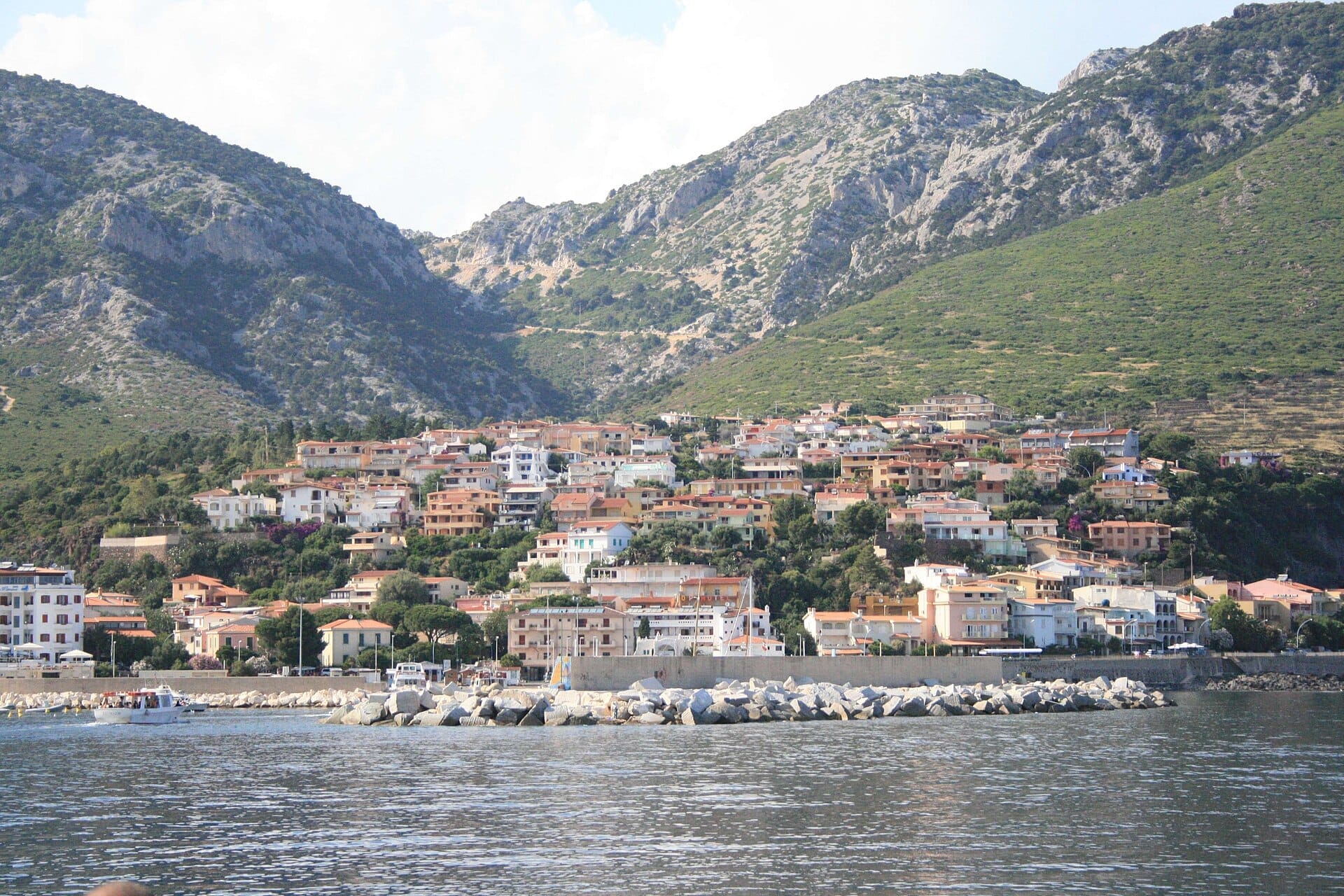
Arrive at Cala Gonone in the early morning in late May and the light is extraordinary — soft and low, the kind that turns pale limestone amber and makes the sea look like a backlit painting. The port is quiet at that hour, fishing boats already out, the ticket booths for the day's boat excursions just opening. By 9am the dock is organized chaos: lines of visitors queuing for ferries to the coves, crews loading coolers and snorkel gear, the smell of diesel and sunscreen mixing with salt air.
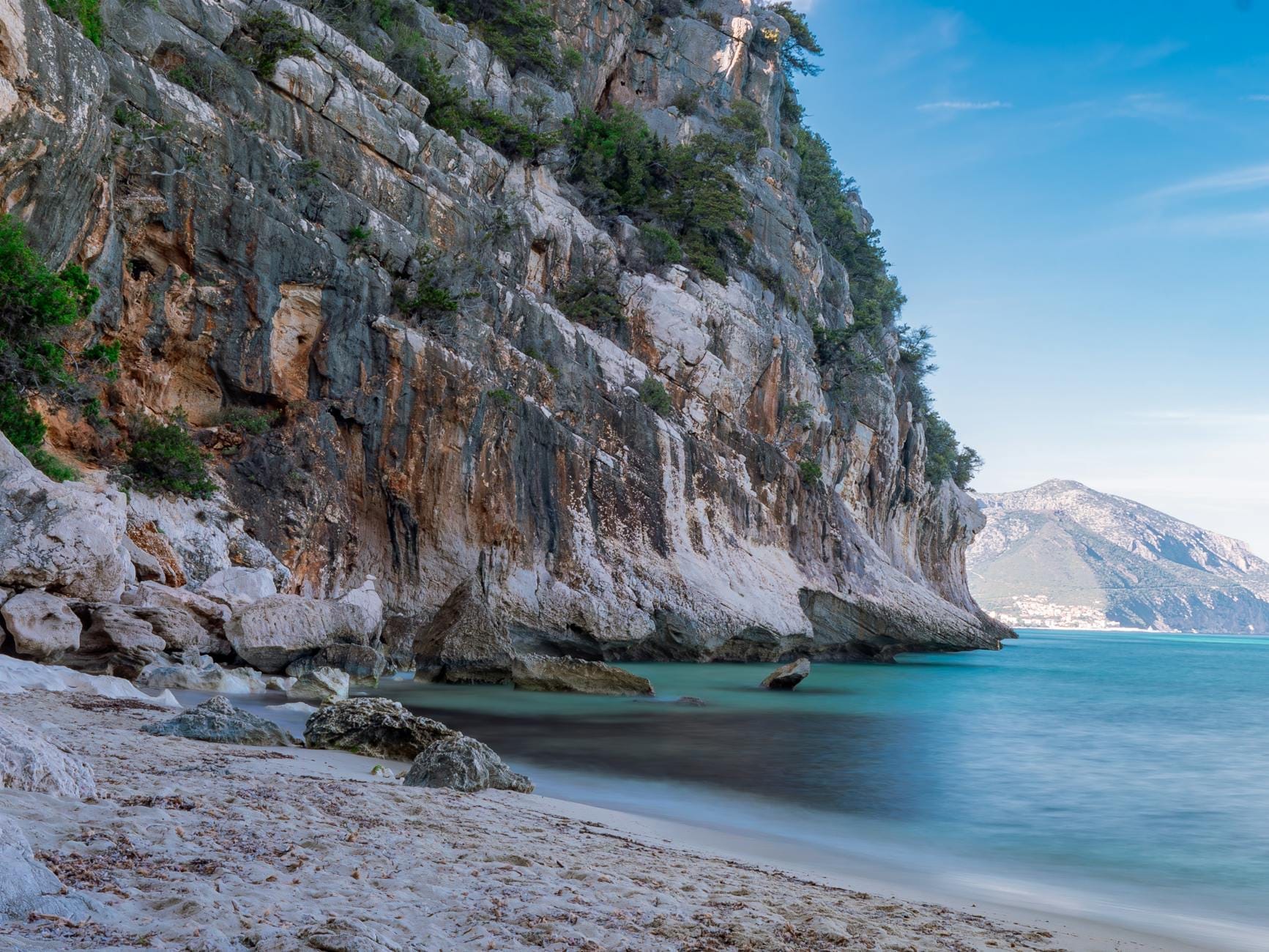
The beaches themselves have a particular quality that photographs don't fully capture: the water is cold in the morning, even in summer, fed by freshwater springs and the depth of the limestone caves behind the shore. The pebbles at Cala Mariolu are white and smooth, polished to near-translucence, crunching underfoot in a way that sounds almost like broken glass. The cliffs above are not decorative — they are enormous, overhanging walls of grey-white rock streaked with iron oxide, rising 200 to 400 meters and casting half the beach into shadow until midday.
In July and August, the most famous coves are crowded. Cala Luna, Cala Mariolu, and Cala Goloritzé each receive hundreds of visitors per day at peak season, arriving by boat from Cala Gonone, Arbatax, and Santa Maria Navarrese. The experience shifts from serene to social quickly once the morning ferries arrive. By early September the crowds thin, the water remains warm from the accumulated heat of summer, and the light turns golden earlier in the afternoon. September is arguably the best month to be here.
The towns that frame the gulf — Cala Gonone to the north, Orosei slightly inland, and Santa Maria Navarrese to the south — each have a different tempo. Cala Gonone is the most tourist-oriented, a small resort town where almost everything is geared toward boat trips, diving, and beach tourism. Orosei has a proper medieval center and a local life that continues regardless of the season. Santa Maria Navarrese is quieter and smaller, popular with Italian families and divers, and functions as the southern gateway to the Ogliastra coastline.
ℹ️ Good to know
The Golfo di Orosei is part of Sardinia's Blue Zone, a region associated with exceptional longevity among its inhabitants. The communities of the interior, particularly in the Barbagia mountains above the gulf, are among the most studied longevity populations in the world.
What to See and Do
The primary draw is the beaches and coves, and the best of them require commitment to reach. Cala Goloritzé is accessible on foot from the Baunei plateau via a trail that descends steeply through holm oak forest — around 90 minutes down, longer back up — or by boat from Cala Gonone or Santa Maria Navarrese. The beach itself is small, a half-moon of white pebbles backed by a natural stone arch and a pinnacle of rock rising from the water. It has been designated a natural monument and swimming is permitted, but motorboats are prohibited from landing on the beach and only regulated anchoring offshore is allowed.
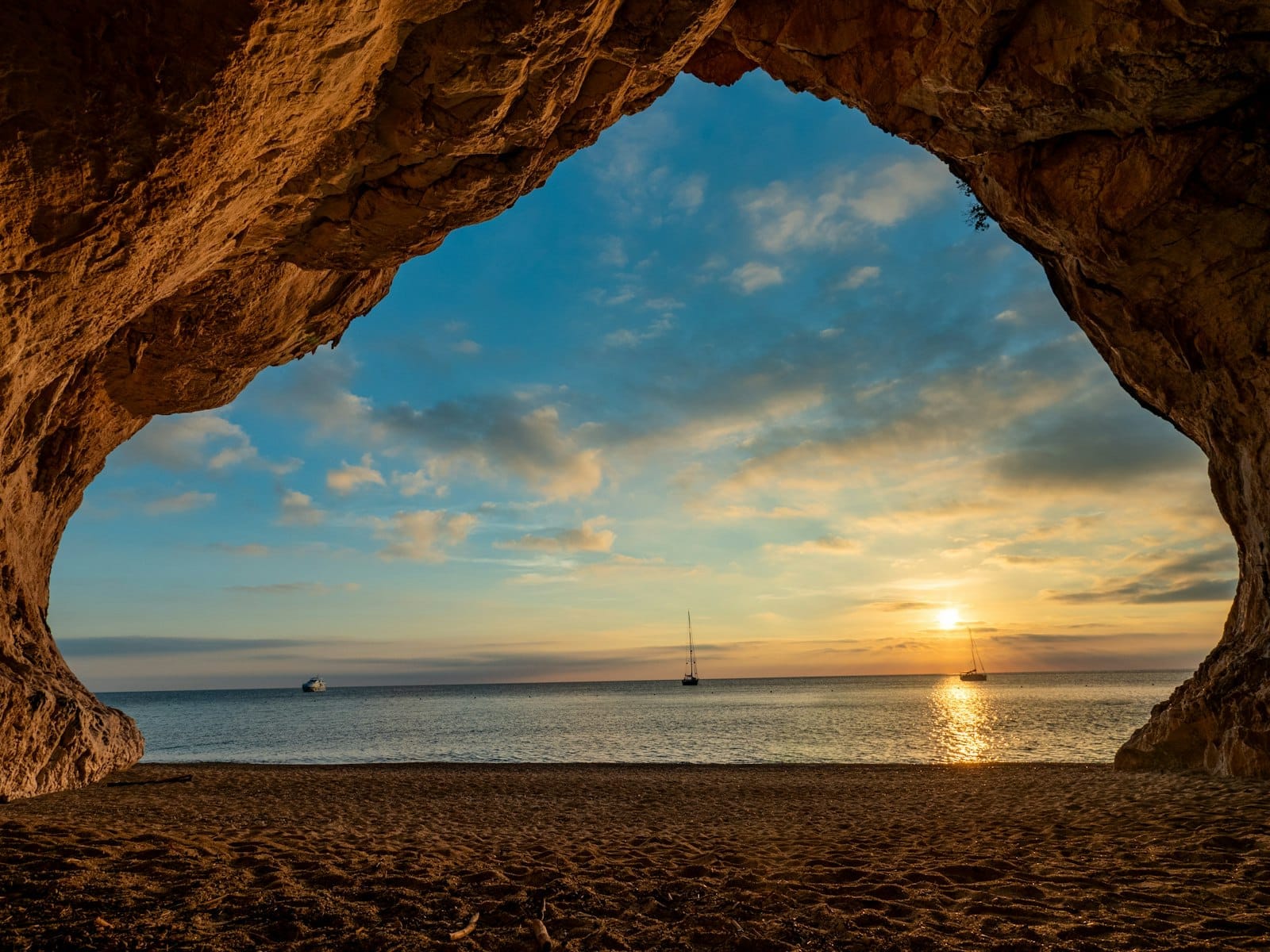
Cala LunaCala Luna is larger and more accessible — a wide sandy bay backed by tamarisk trees and a cave system above the waterline. It takes about 2.5 hours to reach on foot along the coast trail from Cala Gonone, or 30 minutes by boat. The cave at the back of the beach is worth exploring; the chamber extends well into the cliff and keeps a cool, damp air even in midsummer.
Cala MarioluCala Mariolu and the adjacent Cala Biriola are further south and boat-only in practical terms. The famous white pebble beach at Mariolu is split into two bays separated by a rocky promontory; the snorkeling off the point is excellent, with clear water down to 10 or 15 meters and occasional sightings of moray eel and grouper along the rock faces.
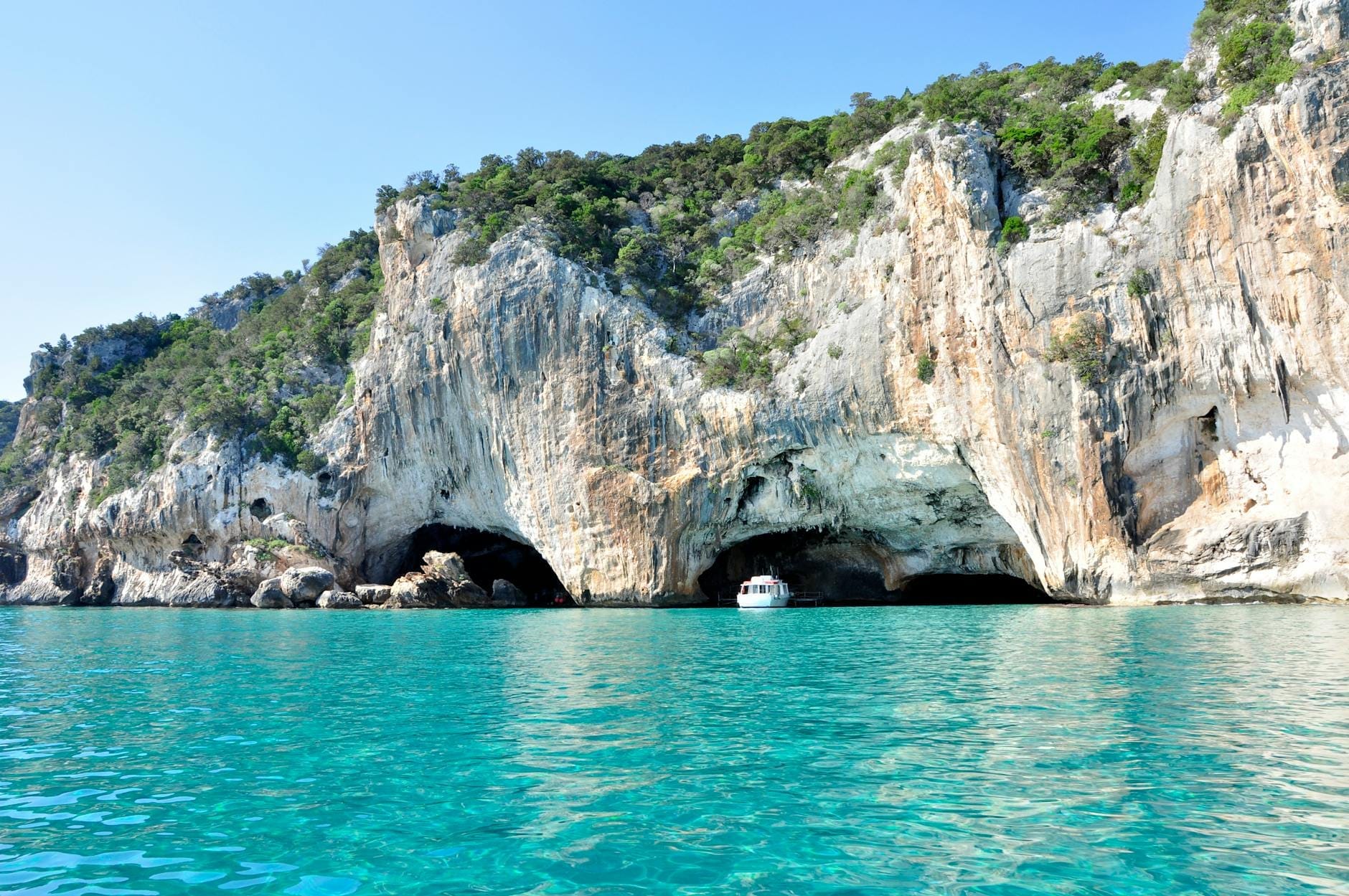
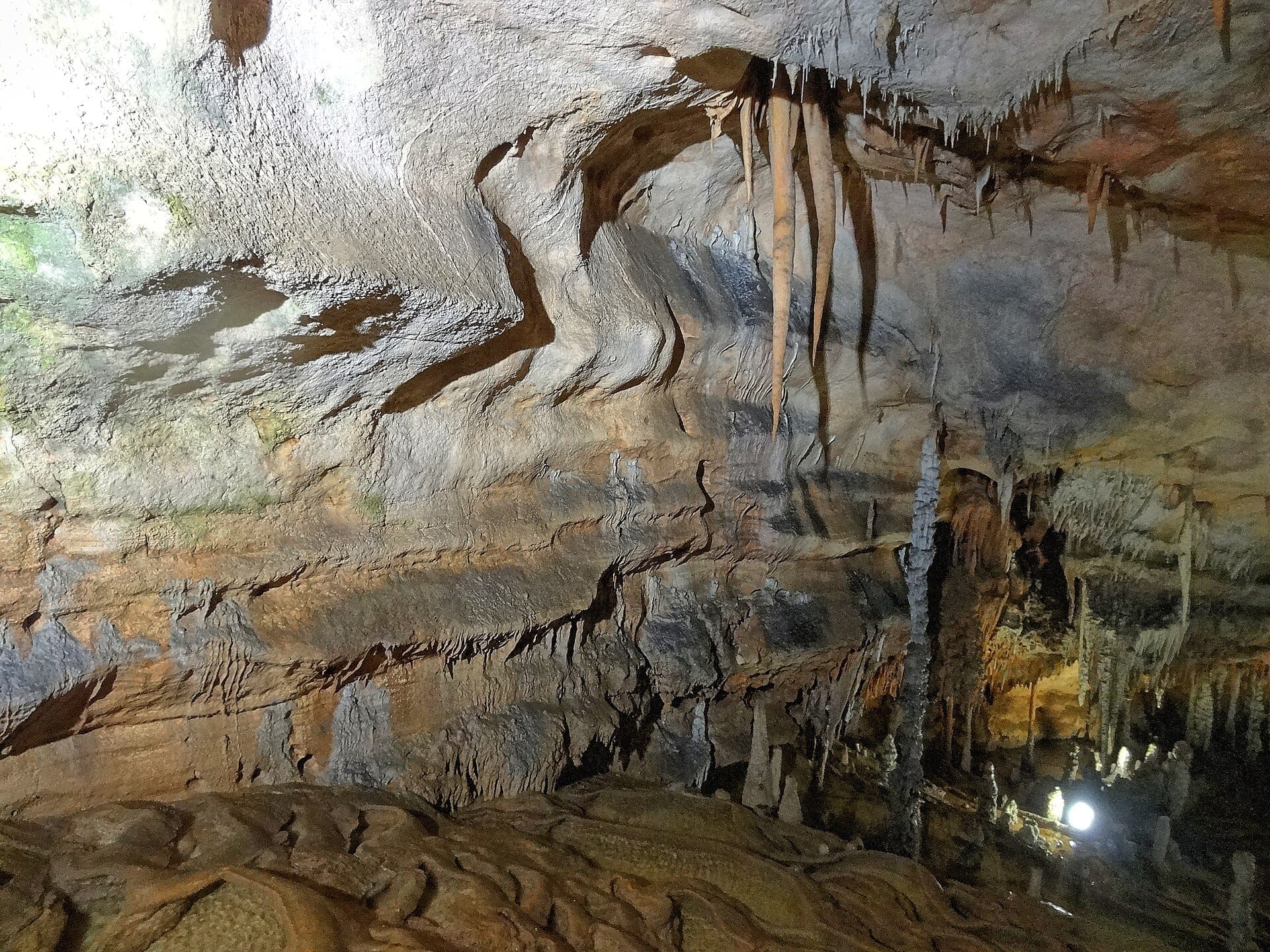
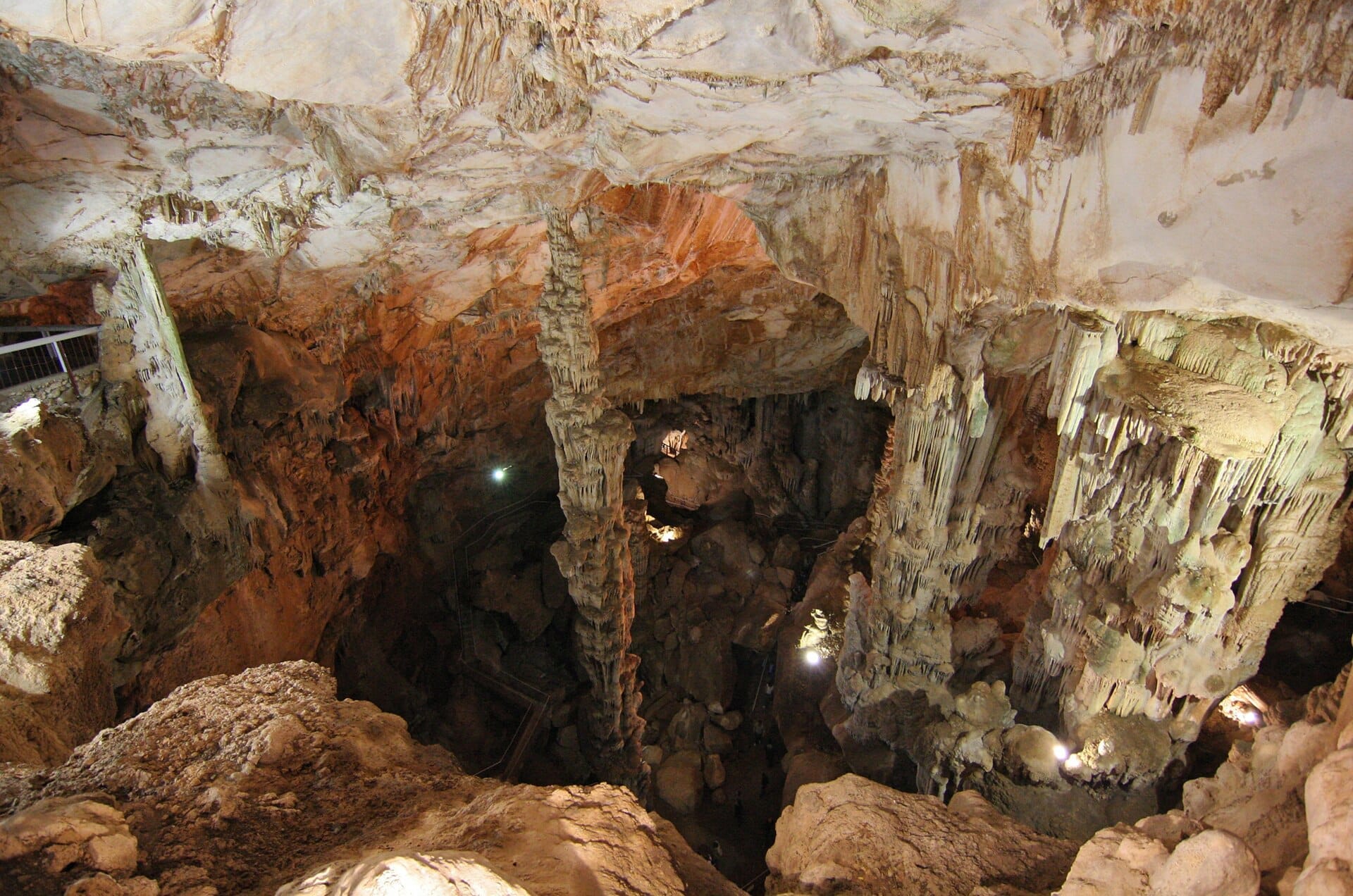
The Grotte del Bue Marino, accessible by boat from Cala Gonone, are sea caves carved into the limestone base of the cliffs and partly accessible on foot along a coastal path from Cala Gonone. The name refers to the Mediterranean monk seal (bue marino in local dialect) which once sheltered here; the seals are gone now, but the cave formations remain impressive, with stalactites, freshwater pools inside the chambers, and an eerie submarine light. Guided boat tours enter the caves regularly in season. For more underwater exploration, check the Sardinia snorkelling and diving guide for conditions across the gulf.
Inland, the Dorgali area holds real archaeological interest. The valley behind Cala Gonone contains the Valle di Lanaittu, a dramatic limestone gorge leading to the Tiscali nuragic village, built into a collapsed cave on the mountainside. It is one of the most unusual Bronze Age settlements in Sardinia, and the hike to reach it — around 2 to 3 hours round trip — passes through spectacular karst landscape. The Tiscali nuragic village is worth combining with a coastal day if you have two or three days in the area.
Cala Goloritzé: designated natural monument, best reached by trail from Baunei; standard tourist boats cannot land on the beach
Cala Luna: large sandy bay with cave, reachable on foot or by boat from Cala Gonone
Cala Mariolu: famous white-pebble beach, boat only, excellent snorkeling
Grotte del Bue Marino: sea caves above Cala Gonone, guided boat tours in season
Tiscali nuragic village: Bronze Age settlement inside a mountain cave, 2-3 hour hike
Valle di Lanaittu: limestone gorge for hiking and wild swimming
Selvaggio Blu: Sardinia's most demanding long-distance trekking route runs along these cliffs
⚠️ What to skip
Access to Cala Goloritzé is regulated: a daily visitor limit applies in peak season, managed by the Comune di Baunei, and hikers must pre-book and pay a small fee via the official app or website. If you plan to hike rather than view it from an offshore boat, confirm current access rules before you go.
Eating and Drinking
The food culture around the Golfo di Orosei reflects both the coast and the mountains directly behind it. Seafood is prominent in Cala Gonone and Santa Maria Navarrese — aragosta (spiny lobster), ricci di mare (sea urchin), and fresh-caught bream and bass prepared simply with olive oil and lemon. The interiors of the restaurants near the port in Cala Gonone can feel touristy in peak season, with menus in four languages and prices to match, but quality is generally honest.
In Orosei town, the restaurants cater more to a local clientele and are worth the short detour inland. The town has a proper main square and a handful of trattorias serving the kind of food that belongs to this part of Sardinia: culurgiones (pasta parcels filled with potato, pecorino, and mint, dressed in tomato sauce), roast suckling pig, and pane carasau flatbread that comes to the table with everything. Prices are noticeably lower than on the waterfront.
The local wine tradition is strong in this part of the island. The Cannonau grape, a high-tannin red that thrives in the rocky terrain of the Nuoro interior, is the wine of this region. It pairs well with grilled meats and aged pecorino. For a broader picture of what to drink across the island, the Sardinia wine guide gives context on the DOC zones and varieties.
Do not expect much from beach bars at the coves themselves. Cala Luna has a basic seasonal bar selling drinks and simple snacks — panini, fruit, water — at predictably inflated prices. Cala Mariolu has nothing. Bring your own food and water if you are spending a full day at any of the boat-access coves, particularly in the southern section of the gulf. A coolbag, water, and a packed lunch from a Cala Gonone bakery will serve you far better than relying on facilities that may not exist.
💡 Local tip
Orosei's weekly market is a good place to stock up on local produce, cheese, and cured meats before a beach day. The town also has proper supermarkets — stock up here rather than at the small, expensive shops near the Cala Gonone waterfront.
Getting There and Around
There are no airports within the gulf zone itself. The closest airports are Olbia Costa Smeralda (OLB) to the north, approximately 105–120 kilometers away depending on the point on the gulf, and Cagliari Elmas (CAG) to the south, around 170 kilometers away. Olbia is marginally closer and better connected to this coast, but either requires onward road travel. A rental car is essentially mandatory if you want to explore the gulf independently — this is one of the parts of Sardinia where not having your own transport significantly limits what you can do.
The SS125 Orientale Sarda is the main spine road running along the eastern coast. It connects Olbia in the north with Cagliari in the south, passing through or near Dorgali, Orosei, Baunei, and Arbatax. The road is scenic and narrow in places, with tight switchbacks especially on the climb over the Genna Silana pass above Baunei. Do not underestimate driving times — 50 kilometers on this road can take over an hour. For general logistics of moving around the island, the getting around Sardinia guide covers car hire, roads, and public transport in detail.
ARST regional buses connect Orosei, Dorgali, and Cala Gonone to Nuoro and other larger centers, but services are infrequent and not timed for beach tourism. There is no rail line on this section of the coast. Timetables change seasonally and should be verified via the ARST website before travel.
Once at the gulf, boat trips from Cala Gonone are the primary transport infrastructure for reaching the beaches. Multiple operators run daily services to Cala Luna, Cala Mariolu, Cala Goloritzé, and the sea caves. You can book a full-day tour that stops at several coves, or pay per destination on scheduled ferries. In July and August, boats fill up — book ahead or arrive at the dock before 8am. Santa Maria Navarrese runs equivalent services to the southern coves. For the major hiking routes including the Selvaggio Blu, local guides are strongly recommended.
If you are combining the gulf with a broader eastern Sardinia trip, the Sardinia road trip guide offers practical routing advice for combining the coast with the Barbagia interior and other eastern highlights.
Where to Stay
Cala Gonone is the main base for exploring the gulf and has the widest range of accommodation: hotels, B&Bs, self-catering apartments, and a campsite on the edge of town. Most visitors stay here for two to five nights and use the boat services to reach the various coves. The town is small enough that everything is walkable — port, restaurants, grocery shops, and the beach at Cala Gonone itself are all within 10 minutes on foot.
Orosei, about 25 kilometers north along the coast road from Cala Gonone, is a quieter base with a more authentic town character. Accommodation options include a mix of small hotels and holiday rentals. Staying here rather than Cala Gonone saves money and puts you in a more local environment, though you will need to drive or take a bus to the boat departure points.
Santa Maria Navarrese at the southern end of the gulf is smaller still, popular with Italian divers and families who prefer a lower-key atmosphere. It connects well to the Ogliastra coast further south. For anyone wanting a rural experience in the mountains above the coast, agriturismo options exist in the Dorgali and Baunei areas — the Sardinia agriturismo guide explains how this accommodation style works and what to expect.
High season runs from late June through August, and accommodation across Cala Gonone books out well in advance for those months. Prices in peak season are substantially higher than in May, June, or September. If you have flexibility, the shoulder months are strongly preferable for both cost and experience. In October and November most tourist accommodation closes, and the coast returns to the local rhythm of fishermen and dog walkers.
💡 Local tip
If you plan to tackle the Selvaggio Blu trekking route — one of the most demanding long-distance trails in Italy, running along the clifftops of the gulf — base yourself in Baunei or Cala Gonone and hire a local guide. This route is not suitable for solo hiking without significant experience, navigation skills, and proper kit.
Practical Considerations and Honest Drawbacks
The Golfo di Orosei is remote. That remoteness is its defining quality, and also its main inconvenience. Without a car, your options collapse to whatever the bus timetable offers and wherever the boat takes you. Medical facilities are limited in the immediate area — the nearest hospitals are in Nuoro or Lanusei. If you are hiking on cliff trails in summer heat, the risks of dehydration and injury are real; the terrain is technical and rescue is slow.
The gulf is a protected area under the EU Natura 2000 network, hosting dozens of protected species. Environmental regulations apply: restrictions on where boats can anchor, no-collection rules for shells and rocks, and waste regulations at the beaches. Fines are issued. Treat the place accordingly. For more on seasonal conditions and what to pack, the best time to visit Sardinia guide gives a clear breakdown of conditions by month.
The Golfo di Orosei is not for everyone. If you want easy beach access, good public transport, and a lively resort scene, there are better-suited parts of Sardinia. But if you are prepared to plan around the boat schedules, accept some physical effort for the walking-access beaches, and stay somewhere small and modest for a few nights, what you get in return is a coastline that does not look like anywhere else in Europe.
Families with young children can enjoy the gulf comfortably — Cala Luna and Cala Gonone's own beach are calm, clear, and safe for swimming. For more on bringing children to Sardinia, see the Sardinia with kids guide. For travelers interested in the broader eastern coast combining the gulf with Ogliastra's rock formations and the red rocks of Arbatax, the Rocce Rosse at Arbatax make a logical add-on heading south.
TL;DR
The Golfo di Orosei is Sardinia's most dramatic coastline: 30 kilometers of limestone cliffs, turquoise coves, and beaches accessible mainly by boat or on foot.
Best for: independent travelers, hikers, snorkelers, divers, and anyone who wants a beach experience that requires some effort to reach.
Not ideal for: visitors without a rental car, those seeking easy public transport, or anyone expecting resort-level services at the beaches.
Base yourself in Cala Gonone for the widest access to boat services, or Orosei for a quieter and cheaper alternative with more local character.
Visit in May, early June, or September for the best balance of warmth, swimmable water, and manageable crowds — July and August are spectacular but packed.
Fourteen days is the right amount of time to properly explore Sardinia's four coastlines, mountainous interior, and ancient ruins. This itinerary covers the full circuit by car, from Cagliari in the south to Alghero in the northwest, with practical advice on timing, logistics, and where to skip the tourist traps.
Sardinia has about 1,850 kilometres of coastline and some of the clearest water in the Mediterranean. This guide covers the best beaches across the island, from the famous to the hard-to-reach, with practical advice on access, crowds, and when to go.
Sardinia rewards visitors differently depending on when they arrive. This guide cuts through the vague advice to explain exactly what each season delivers, from peak-summer beach conditions to spring wildflower hikes and quiet winter city breaks, so you can match your trip to your priorities.
Cagliari sits at the southern tip of Sardinia, placing you within striking distance of some of the island's finest beaches, archaeological sites, and natural landscapes. These 20 day trips range from quick 30-minute drives to full-day adventures into the island's wild interior.
Sardinia covers 24,090 km² of mountains, coastline, and rural roads with no motorways. This guide breaks down every realistic transport option, from renting a car to catching the right ferry, so you can plan a trip that actually works.
Sardinia is far more than a beach destination. Its limestone canyons, granite peaks, and ancient shepherd paths offer some of the most dramatic hiking in the Mediterranean. This guide covers the best trails from day walks to multi-day epics.
Sardinia is Italy's second-largest island and one of the Mediterranean's most remarkable destinations — but it rewards those who plan well and punishes those who assume it's just another beach holiday. This guide cuts through the marketing to give you a clear-eyed picture of what Sardinia offers, who it suits best, and what to expect.
Sardinia delivers some of Europe's most coveted luxury travel experiences, from the yacht-lined marina at Porto Cervo to secluded villas with private pools above crystalline coves. This guide breaks down where to stay, when to go, and how to build a high-end Sardinian itinerary that goes beyond the obvious.
Olbia is where most visitors to northeast Sardinia first set foot, then immediately drive away toward Costa Smeralda. That's a mistake. This guide covers what the city actually offers, from its Nuragic roots and early Christian basilica to boat trips around Tavolara, the best nearby beaches, and everything you need to arrive, orient yourself, and explore the Gallura region properly.
Seven days in Sardinia is enough time to experience the island's best beaches, ancient sites, and coastal scenery — but only if you plan carefully. This day-by-day itinerary covers the most rewarding route, with practical logistics, timing advice, and the practical details most guides leave out.
Agriturismo is one of the most rewarding ways to experience Sardinia beyond the coast. This guide covers what a real agriturismo is, where to find the best ones, what food to expect, prices to budget for, and how to avoid countryside guesthouses masquerading as working farms.
Sardinia is home to the world's first identified Blue Zone, a cluster of inland villages in the Ogliastra region where living past 100 is far from unusual. This guide breaks down the research, the lifestyle factors, the villages worth visiting, and how to experience the culture behind the longevity — without the tourist traps.
Sardinia's most spectacular landscapes are only reachable by water. This guide covers the best boat trips across the island, from the pink-sand coves of La Maddalena to the towering limestone cliffs of the Gulf of Orosei, with tips on what to expect, when to go, and how to book.
Sardinia has some of the most spectacular camping terrain in the Mediterranean, from cliff-backed coves to pine-shaded coastal pitches. But the rules around wild camping are strict and widely misunderstood. This guide covers the legal framework, regional campsite highlights, realistic costs, and seasonal booking strategy.
Two islands, 11 km apart, yet remarkably different in culture, cost, and character. This guide breaks down the real differences between Sardinia and Corsica so you can choose the one that actually matches your trip.
Sardinia's festival calendar runs nearly year-round, from winter carnival traditions to autumn food fairs. This guide covers the major events by season, what to expect at each, and how to plan your trip around them without getting caught off-guard.
Sardinian food is not Italian food with a regional accent — it is a cuisine shaped by centuries of pastoral life, coastal abundance, and fierce cultural independence. This guide covers the dishes you need to try, the wines worth seeking out, and how to eat well without getting steered toward the tourist menu.
Sardinia rewards those who look beyond the famous beaches. This guide uncovers the island's lesser-known archaeological wonders, dramatic inland landscapes, and coastal stretches that see a fraction of the summer crowds, from Bronze Age cities to wild dune deserts.
Sardinia delivers some of the Mediterranean's most striking coastal scenery, and it rewards couples who look beyond the obvious. This guide covers the best romantic beaches, the right season to visit, where to base yourself, and the experiences that actually make a trip feel special rather than simply scenic.
May and June are arguably the best months to visit Sardinia. Temperatures sit in the low-to-mid 20s°C, rainfall is minimal, beaches are largely empty, and prices are a fraction of August rates. This guide covers everything you need to plan a trip during Sardinia's sweet spot.
September and October are arguably the smartest months to visit Sardinia. The sea is still warm, the beaches clear out, prices drop by up to 50% compared to August, and the island's food and culture festivals hit their stride. This guide covers everything: what the weather is really like, which beaches and attractions to prioritize, what closes early, and how to plan a trip that beats the summer crowds without missing out on anything.
July and August in Sardinia mean scorching heat, crystal-clear water, and the most crowded beaches in the Mediterranean. This guide breaks down exactly what to expect: temperatures, sea conditions, crowd patterns, transport logistics, and the honest trade-offs of visiting during peak season.
Sardinia's drink culture runs much deeper than Cannonau and Vermentino. From bitter chinotto and blood orange spremuta to coffee granita and herbal aperitivi, the island offers a full range of non-alcoholic options rooted in Italian tradition. This guide covers what to order, when to order it, and what to expect to pay.
Sardinia holds more than 7,000 surviving nuraghe, making it the richest Bronze Age landscape in the Mediterranean. This guide covers the essential Nuragic sites across the island, from towering fortress complexes and sacred wells to rock-cut tombs, colossal stone statues, and hidden village ruins inside mountain sinkholes.
Sardinia has a reputation as a playground for superyachts and celebrity holidays. That reputation is earned in places like Costa Smeralda — but it doesn't apply to the rest of the island. With the right timing, transport choices, and a few local habits, visiting Sardinia on a budget is entirely realistic. This guide breaks down exactly how.
Sardinia rewards self-drivers more than almost anywhere in the Mediterranean. This guide covers everything you need: which airport to fly into, how long routes actually take, when to go, what to rent, and the coastal and inland drives worth building your itinerary around.
Sardinia has some of the clearest water in the Mediterranean, protected by a network of marine reserves that have allowed groupers, barracuda, and Posidonia seagrass meadows to thrive. This guide covers the best snorkelling and diving destinations across the island, from the sheltered coves of the Golfo di Orosei to the offshore shoals of Capo Caccia and the archipelago waters of La Maddalena.
Sardinia has one of the most reliable Mediterranean climates in Europe, but the difference between a perfect trip and a sweaty, overpriced one often comes down to timing. This guide breaks down Sardinia's weather month by month, covers regional climate differences, and tells you exactly when to visit based on what you want to do.
Sardinia is one of Europe's premier destinations for windsurfing and kitesurfing, with reliable Mistral winds, warm water, and spots suited to everyone from first-timers to competition riders. This guide covers the island's top locations, from the world-famous flats of Porto Pollo to the wave-lashed beaches of the south.
Sardinia produces some of Italy's most distinctive wines, from the rich, age-worthy Cannonau of the Barbagia highlands to the mineral Vermentino di Gallura DOCG on the granite soils of the northeast. This guide covers every major grape, appellation, regional style, and where to taste them on the island.
Sardinia is one of the Mediterranean's top destinations for families, with shallow turquoise bays, a long swimming season, and a wealth of activities beyond the beach. This guide covers the best family-friendly beaches by region, when to go, how to get around, and what to do when the kids have had enough sun.
Sardinia rewards travelers who look beyond its famous beaches. This guide covers the island's top experiences — prehistoric ruins, sea caves, coastal hikes, boat trips, and cultural towns — with practical advice on timing, costs, and what to skip.
Sardinia is bigger than most visitors expect, and picking the right base makes or breaks a trip. This guide breaks down every major area, from the glamour of Porto Cervo to the cultural depth of Cagliari, with practical advice on prices, seasonal timing, and how many bases you actually need.