Cala Goloritzè: The Cove That Earns Its Reputation
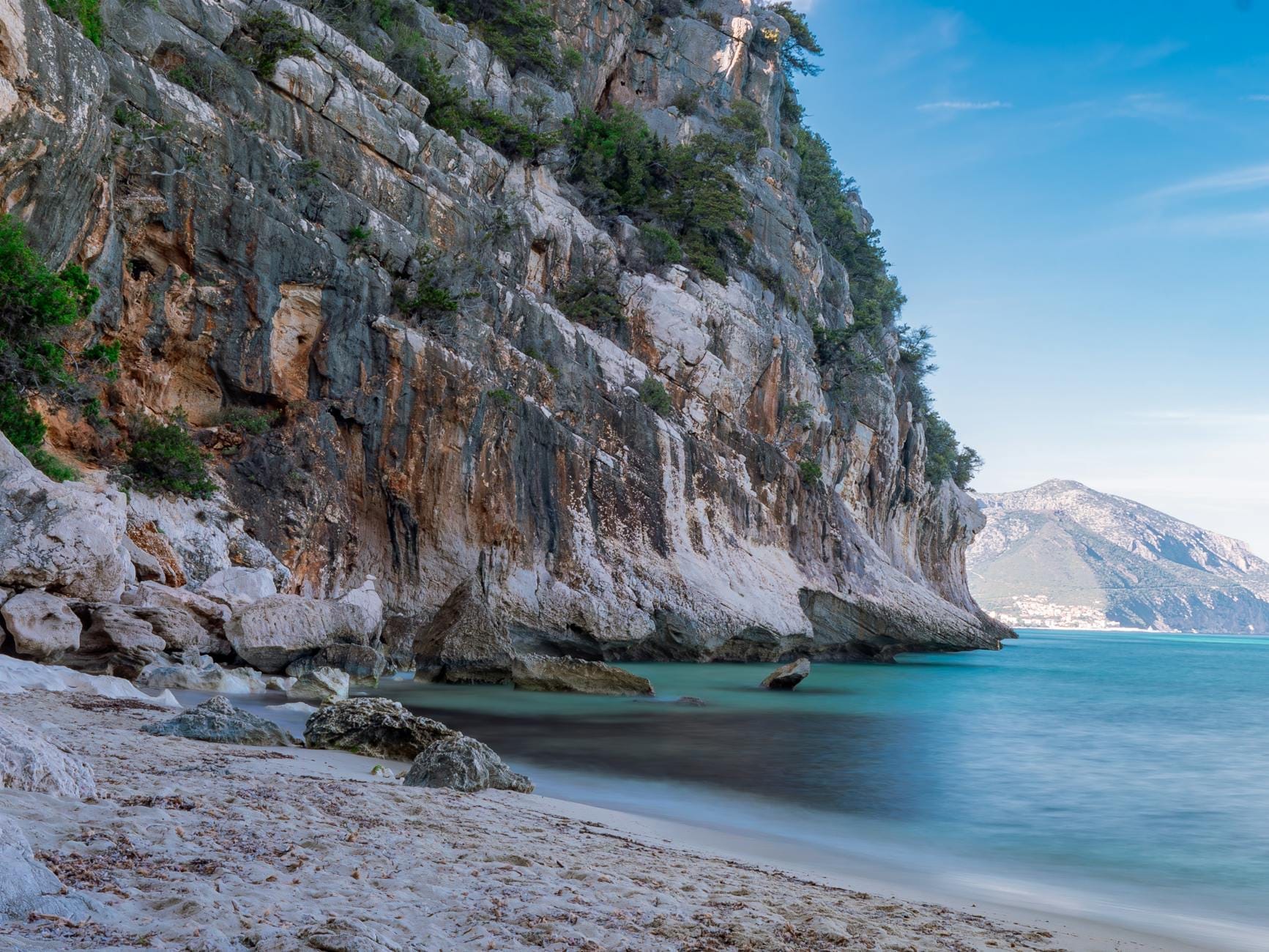
Cala Goloritzè is a protected natural monument on Sardinia's eastern coast, where a limestone pinnacle of about 143–148 metres towers over a pebble beach and crystalline water. Accessible only by a moderately strenuous hike or by sea, it rewards the effort with scenery that few coves in the Mediterranean can match.
Quick Facts
- Location
- Municipality of Baunei, Gulf of Orosei, eastern Sardinia
- Getting There
- Drive to Su Porteddu (9km north of Baunei), park, then hike the signed trail. No public transit to trailhead.
- Time Needed
- 4–5 hours total: ~1 hr downhill, 1.5–2 hrs back up, plus beach time
- Cost
- €7 per person (adults); children under 6 free. Book via Heart of Sardinia app/website or Baunei contacts; payment can be made online or at the trailhead.
- Best for
- Hikers, snorkellers, photographers, and anyone who wants a beach that cannot be reached by road
- Official website
- www.goloritze.com/en
What Makes Cala Goloritzè Different
Cala Goloritzè is not simply a pretty beach at the end of a walk. It is a geological event you arrive at on foot. The cove sits within the Golfo di Orosei on Sardinia's eastern coastline, carved from the limestone supracliffs that form one of the most intact coastal wilderness areas in the western Mediterranean. The beach itself, a narrow crescent of white-grey pebbles, did not exist before 1962 — it was created by a landslide that rearranged this section of cliff. What remained was a sheltered inlet, extraordinary water clarity, and a limestone pinnacle of about 143–148 metres rising directly from the cove.
The pinnacle, called the Aguglia (meaning 'needle' in Italian), is one of the most respected free-climbing routes in Europe. On any given day from spring through early autumn, you may see climbers inching up its near-vertical face while swimmers drift beneath them in water that shifts from pale turquoise in the shallows to a deep, almost electric blue further out.
The site was designated a Natural Monument of the Sardinian Region in 1993 and recognized as an Italian National Monument in 1995 — legal protections that explain the entrance fee, the trail access hours, and why there are no sunbeds, no beach bars, and no jet skis. If those restrictions frustrate you, the resort town of Cala Gonone nearby offers a more developed base with easier beach access.
ℹ️ Good to know
Trail access hours: descent permitted 07:30–15:00, with beach stay allowed until approximately 17:00. Arrivals after 15:00 will be turned away at the trailhead. These hours apply to the hiking route; verify current times via the Heart of Sardinia app before your visit, as they are subject to seasonal adjustment.
The Hike: What to Expect on the Trail
The trailhead sits near Bar Su Porteddu, roughly 9 kilometres north of the town of Baunei on a winding mountain road. Park here, pay your entrance fee, and follow the clearly signed path. The round trip covers approximately 3.6 to 4 kilometres depending on your exact route, with a total elevation change of around 470–500 metres.
Going down takes about one hour for a walker of average fitness. The path descends through Mediterranean scrubland — juniper, cistus, wild rosemary — releasing a sharp herbal scent when the morning sun hits the vegetation. Underfoot, the trail is rocky and uneven throughout, with loose stones on the steeper sections. Decent hiking shoes or trail runners are not optional; sandals are a genuine mistake here. The air is quiet except for cicadas and, occasionally, the distant clatter of goats moving through the scrub.
The return ascent is where most people feel the effort. Under the midday sun in July or August, the climb back takes 1.5 to 2 hours and can feel punishing if you have not brought enough water. Carry at least 2 litres per person. There is no water source on the trail or at the beach.
⚠️ What to skip
There are no facilities on the beach: no toilets, no food, no shade structures, and no rental equipment. Bring everything you need, including more water than you think is necessary, sunscreen, and something to eat. Whatever you carry in, carry out.
The trail is not suitable for wheelchairs or for travellers with significant mobility limitations. It is also not ideal for very young children who cannot manage a sustained rocky descent and a harder return climb in heat. Older children who are comfortable hiking will generally manage fine if the group sets a steady pace and starts early.
Tickets & tours
Hand-picked options from our booking partner. Prices are indicative; availability and final rates are confirmed when you complete your booking.
Gulf of Orosei mini cruise from Cala Gonone
From 53 €Instant confirmationFree cancellationSpeedboat Trip to Gulf of Orosei with Aperitif from Cala Gonone
From 119 €Instant confirmationFree cancellationCala Goloritze and Cala Luna dinghy tour from Orosei
From 149 €Instant confirmationFree cancellationSnorkeling in the Gulf of Orosei from Cala Gonone
From 95 €Instant confirmationFree cancellation
The Beach: Arriving at the Cove
The moment the path opens onto the beach, the scale of the Aguglia becomes apparent in a way that photographs do not communicate. The pinnacle leans slightly outward over the cove, and the surrounding limestone walls amplify both sound and light. In the early morning, the rock faces glow pale orange before the sun clears the ridgeline. By late morning, the water reaches a clarity where you can watch the pebble bottom shift colour with every ripple from three or four metres up.
The beach itself is composed of white and grey pebbles, not sand. Waterproof sandals or swim shoes make wading comfortable, especially when exiting the water over the larger stones at the shoreline. Snorkelling is rewarding directly from the beach: the underwater topography includes submerged rock formations, and the water supports good populations of sea bass, bream, and octopus in the crevices.
In July and August, the cove reaches its regulated limit of around 250 visitors by late morning. Arriving before 09:00 means you may have the water almost to yourself for the first hour. By 11:00, groups from both the trail and boat excursions have typically arrived. The atmosphere remains calm — the site attracts people who came specifically to be here, not passers-by — but the sense of solitude is reduced.
Arriving by Sea: The Boat Alternative
Excursion boats run to Cala Goloritzè from several ports on the Gulf of Orosei, including Cala Gonone, Santa Maria Navarrese, and Arbatax, typically from April through October. The boat ride itself is worthwhile: the cliff coastline of the Golfo di Orosei is continuous drama, with vertiginous walls, sea caves, and a string of coves that are only visible from the water.
There is a catch: boats are prohibited from mooring closer than 200 metres from shore, behind a protective buoy line. From that point, you swim or use an inflatable tender to reach the beach. The swim is manageable for confident swimmers in calm conditions, but the distance is real and the water can be cold in spring. If you are not a strong swimmer, check whether your boat operator provides a dinghy transfer.
Combining the boat journey with a different cove on the same day is a practical approach for many visitors. Cala Luna and Cala Mariolu are both accessible on the same excursion routes and offer their own distinct character.
Timing Your Visit: When the Experience Is Best
Late May, June, and September are the strongest windows for Cala Goloritzè. The trail is open, the water is warm enough to swim comfortably, the crowds are manageable, and the light on the limestone walls is at its clearest. Check the September in Sardinia guide if you are planning a shoulder-season trip — conditions at Cala Goloritzè in early September are often excellent, with sea temperatures typically around 24–25°C along this part of the Sardinian coast and noticeably fewer visitors than August.
July and August work, but they require an early start. Aim to be at the trailhead before 08:00 in peak summer. The descent in the cooler morning air is more comfortable, and you will claim space on the beach before the main wave of arrivals. The hike back in midday heat is still demanding regardless of when you start down.
Winter and early spring access depends on conditions. The trail is not formally closed in winter, but the road to Su Porteddu can be difficult in wet weather, and boat services do not operate. The site is at its most atmospheric in the off-season if you can get there, but it requires local knowledge and a willingness to manage uncertain conditions.
💡 Local tip
Photography tip: the Aguglia pinnacle catches direct light from the east in the morning and glows amber in the hour before sunset — though by late afternoon most hikers have left, so sunset light involves arriving by sea or camping, which requires special permission. Morning light shortly after arrival is the most practical window for the best shots of the needle from beach level.
Context: Protected Status and Conservation
The entrance fee and access restrictions at Cala Goloritzè are not bureaucratic inconvenience. The cove's natural monument status reflects a deliberate decision to limit human impact on an irreplaceable site. The 1993 and 1995 protections came after years of unregulated access that began eroding the trail, the vegetation, and the beach's ecological balance. The current system, managed by the municipality of Baunei, controls daily visitor numbers and funds trail maintenance.
This model of regulated access is increasingly common along the Golfo di Orosei. Other protected coves in the area use similar entry controls. If you want to understand the broader ecological and cultural significance of this coastline, the Sardinia heritage guide provides useful background on how the region balances conservation with access. For those interested in the broader eastern Sardinia landscape, the trails connecting the supracliffs are part of the Selvaggio Blu route, one of Europe's most demanding coastal treks.
The climbing community has a particularly close relationship with the site. The Aguglia's main route, Aguglia di Goloritzè, is graded at around 7b on the French climbing scale and draws technical climbers from across Europe. Seeing a rope team on the upper sections of the pinnacle while you float below in the cove is one of the stranger and more memorable juxtapositions Sardinia produces.
Insider Tips
- Book your entrance ticket via the Heart of Sardinia app before driving to the trailhead, especially on summer weekends. Daily capacity is capped, and showing up without a reservation risks being turned away after a long drive on mountain roads.
- The road to Su Porteddu from Baunei is narrow, winding, and uncomfortable in a large vehicle. If you are driving a campervan or minibus, check clearance and road conditions in advance. Standard cars manage fine.
- Swim shoes or water sandals improve the beach experience. The pebble entry into the water is large and uneven, and walking on it barefoot while carrying gear is awkward.
- If you are arriving by boat and want to swim ashore, leave your main bag on the boat and bring only what fits in a dry bag or small waterproof pouch. The 200-metre swim with a heavy pack is harder than it sounds in open water.
- The cove is west-facing enough that afternoon cloud shadow can reach the beach from the surrounding cliffs earlier than expected. If your priority is lying in direct sun, morning visits give you more reliable light on the pebble beach itself.
Who Is Cala Goloritzè For?
- Experienced day hikers comfortable on rocky, uneven terrain with significant elevation gain
- Snorkellers and swimmers seeking clear, cold water with underwater rock formations
- Photographers targeting dramatic limestone sea cliffs and the Aguglia pinnacle
- Travellers who want a coastline experience without beach infrastructure
- Rock climbing enthusiasts who want to observe or attempt one of Europe's most distinctive sea-cliff routes
Nearby Attractions
Other things to see while in Golfo di Orosei:
- Cala Gonone
Cala Gonone is a small seaside town tucked beneath limestone cliffs on Sardinia's eastern coast, serving as the main launch point for the Golfo di Orosei's famous sea caves, secluded coves, and dramatic hiking routes. Whether you arrive by boat, bus, or car, this is where the real adventure begins.
- Cala Luna
Cala Luna is an 800-metre crescent of pale pink-tinged sand framed by limestone cliffs that rise up to 300 metres above the waterline. Straddling the municipal boundary between Baunei and Dorgali in the Gulf of Orosei, it has no road access and only minimal seasonal beach infrastructure — which is precisely why it looks the way it does.
- Cala Mariolu
Tucked beneath the limestone cliffs of Costa di Baunei, Cala Mariolu is one of the eastern Sardinian coast's most extraordinary beaches. Famous for its white pebble shore, improbably clear water, and sheer rock walls rising hundreds of metres, it demands effort to reach but rewards accordingly. This guide covers every access route, the new reservation system recently introduced to manage visitor numbers, and what first-time visitors consistently get wrong.
- Grotte del Bue Marino
Carved into the limestone cliffs of the Gulf of Orosei, the Grotte del Bue Marino is a sea cave accessible only by boat, with a guided walk through roughly 1 km of stalactite chambers, underground lakes, and walls marked by Neolithic petroglyphs dating to around 4000 BC. It is one of the most distinctive geological and archaeological sites on Sardinia's eastern coast.