Cala Gonone: Gateway to Sardinia's Most Spectacular Coastline
Cala Gonone is a small seaside town tucked beneath limestone cliffs on Sardinia's eastern coast, serving as the main launch point for the Golfo di Orosei's famous sea caves, secluded coves, and dramatic hiking routes. Whether you arrive by boat, bus, or car, this is where the real adventure begins.
Quick Facts
- Location
- Frazione of Dorgali, Province of Nuoro, Golfo di Orosei, Eastern Sardinia. Approx. 9 km from Dorgali, 41 km from Nuoro, 108 km from Olbia.
- Getting There
- ARST bus line 520 from Nuoro or Dorgali. By car via the SP26 from Dorgali. Nearest airport: Olbia Costa Smeralda (OLB), about 1.5 hours by car.
- Time Needed
- 1 day minimum for the town and a boat trip; 3–5 days to fully explore the surrounding beaches and trails.
- Cost
- Free to enter the town. Boat trips to sea caves and beaches vary by operator and route. Aquarium: €12 adults, €8 children (4–12). Maritime museum: €3 adults, €1.50 children (6–13).
- Best for
- Boat trips, sea kayaking, hiking the Selvaggio Blu trail, snorkelling, and accessing beaches unreachable by road.
- Official website
- dorgaligonone.it/en
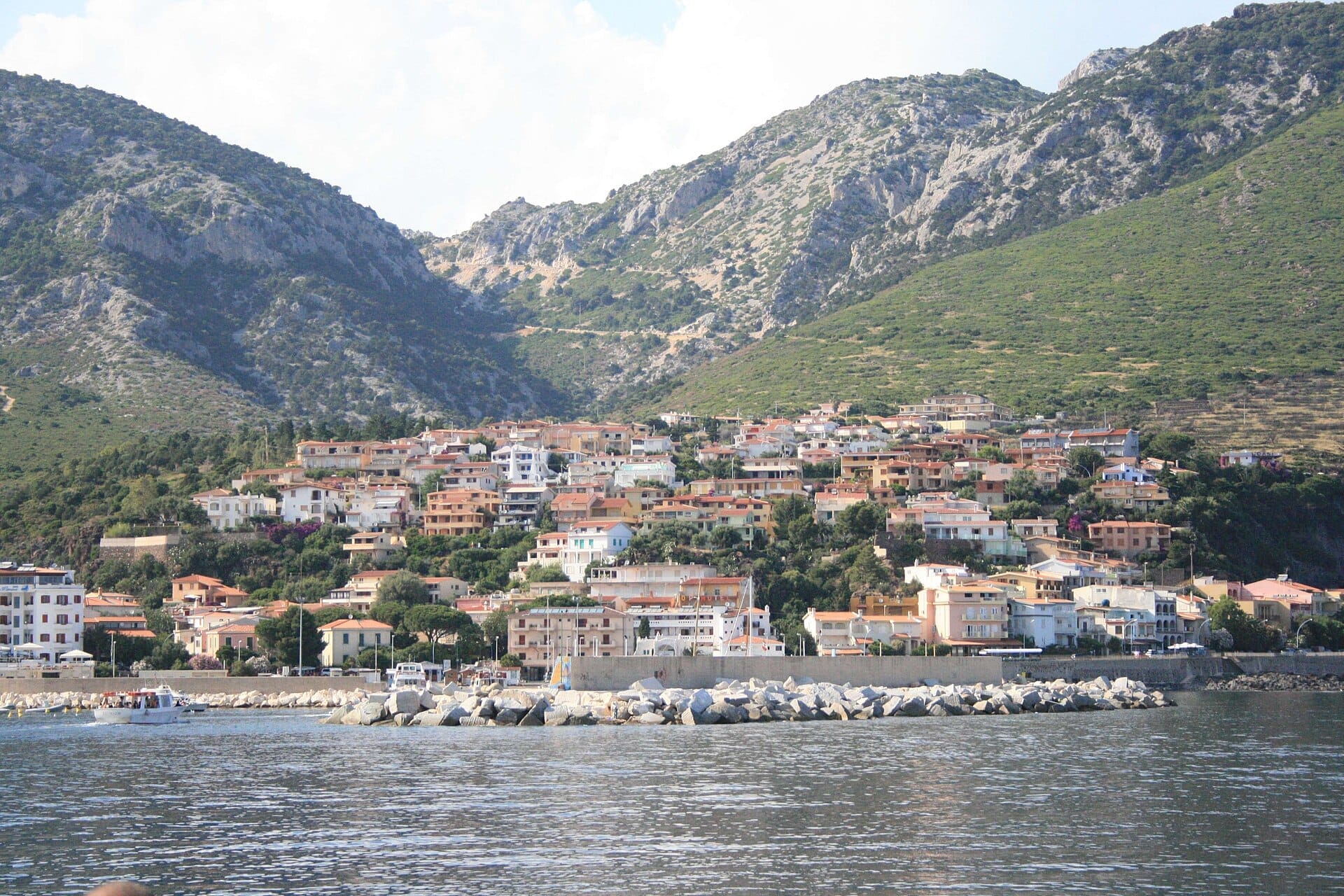
What Cala Gonone Actually Is
Cala Gonone is a small coastal town and frazione of Dorgali in the Province of Nuoro, developed as a seaside settlement in the late 19th century, though the surrounding landscape has been inhabited since at least the 5th millennium BC, with with archaeological evidence in the wider area dating back to prehistory. It sits at the foot of a dramatic karst escarpment where the Supramonte mountains drop sharply into the sea, giving the town a geography unlike almost anywhere else on the island.
The town itself is compact and functional rather than ornate. A small harbour, a strip of beach, a handful of restaurants and dive operators, and a seafront promenade lined with oleanders: that is roughly it. Its value is almost entirely contextual. Cala Gonone is the access point for one of the most intact stretches of Mediterranean coastline in Europe, a series of cliffs, sea caves, and beaches that can only be reached by boat or on foot. Without that context, the town would be unremarkable. With it, the town becomes essential.
ℹ️ Good to know
The town is open year-round, but most boat operators, cave tours, and rental services run only from April or May through October. If you are visiting outside summer, confirm availability in advance before making the trip.
The Harbour and Town: First Impressions by Time of Day
Early morning in Cala Gonone has a particular energy. By 8am the harbour is already active: dive boats loading tanks, excursion vessels fuelling up, and small groups of hikers shouldering packs and heading for the trailhead at the south end of town. The air carries the smell of diesel, sunscreen, and salt in roughly equal measure. The light at this hour is angled and golden, hitting the limestone cliffs above the harbour in a way that makes the rock glow amber.
By midday in July and August, the seafront becomes crowded, the town beach fills, and the narrow streets see a steady flow of visitors moving between the harbour and the ice cream shops. Temperatures regularly exceed 30°C in peak summer, and the shade of the harbour-side cafés becomes sought after. This is the least atmospheric window to explore the town on foot, though it is also when the sea conditions are most consistently calm for boat trips.
Late afternoon, roughly from 5pm onward, the crowd thins as day-trippers return to their cars or ferries, and the town shifts into a slower rhythm. The hour before sunset is worth spending on the promenade, when the cliffs to the south catch the last horizontal light and the water turns from turquoise to a deep cobalt. In September and October this window extends, temperatures drop to a manageable 24 to 27°C, and the town feels pleasant rather than merely endured.
Tickets & tours
Hand-picked options from our booking partner. Prices are indicative; availability and final rates are confirmed when you complete your booking.
Gulf of Orosei mini cruise from Cala Gonone
From 53 €Instant confirmationFree cancellationSpeedboat Trip to Gulf of Orosei with Aperitif from Cala Gonone
From 119 €Instant confirmationFree cancellationSnorkeling in the Gulf of Orosei from Cala Gonone
From 95 €Instant confirmationFree cancellationCatamaran cruise in the Gulf of Orosei from Cala Gonone
From 163 €Instant confirmationFree cancellation
The Sea Caves: Grotta del Bue Marino and What Lies Beyond
The most famous natural attraction accessible from Cala Gonone is the Grotta del Bue Marino, a sea cave system carved into the limestone cliffs a short boat ride south of the harbour. The cave takes its name from the Mediterranean monk seal, once abundant along this coast and now functionally extinct in the area. Inside, the cave system extends for several kilometres of galleries, with stalactites, stalagmites, and underground lakes in chambers of considerable scale. Boat tours from the harbour drop visitors at the cave entrance for guided tours of the accessible sections.
The geology of the Golfo di Orosei is shaped by the same karst limestone that creates the Supramonte plateau above. Water eroded these cliffs over millions of years, producing not just the Grotta del Bue Marino but also the deeper and more remote Grotta del Fico, another extraordinary cave system in the same stretch of coast. Grotta del Fico requires advance booking and is accessible only by organised tour, but its chambers are larger and its geological formations arguably more impressive.
💡 Local tip
Book cave tours at least a day ahead in July and August. Morning slots sell out first. Bring a light layer: the interior of the caves maintains a temperature around 14–16°C regardless of outside heat.
The Beaches: Reaching the Unreachable
The beaches that have made this coastline famous are, for the most part, not accessible by road. Cala Luna, Cala Mariolu, Cala Sisine, and Cala Goloritzé each require either a boat journey or a substantial hike, and in some cases both. This inaccessibility is precisely what has kept them in reasonable condition despite decades of tourism pressure.
Cala LunaCala Luna is the closest and most visited of the southern coves, reachable by boat from Cala Gonone in around 20 to 30 minutes or by a multi-hour hike from the town. Its broad crescent of pale pebble, flanked by caves and freshwater springs, is striking at first sight and more beautiful in the early morning before the boats arrive. Cala Mariolu is further south, smaller, and widely considered among the most photogenic beaches in Italy, with white pebbles and water that shifts from emerald to deep blue depending on depth and angle. Arriving early matters here: by 11am in summer the anchorage can be crowded with vessels.
Cala GoloritzéCala Goloritzé is the most dramatic of the accessible beaches, sitting beneath a limestone pinnacle called the Aguglia that rises roughly 143 metres from the sea. Access is by boat or by a hike down from the plateau above, a descent of around 40 minutes that requires reasonable fitness and appropriate footwear. This beach is protected as a natural monument, and visitor numbers are managed; verify current access rules before planning your visit.
⚠️ What to skip
Several beaches in the Golfo di Orosei implement daily visitor caps during peak season. Cala Goloritzé in particular has had regulated access in recent years. Check with local boat operators or the Dorgali municipal website for current restrictions before you travel.
On Foot: Trails, Gorges, and the Selvaggio Blu
Cala Gonone sits at the edge of one of Sardinia's most demanding hiking landscapes. The Supramonte plateau rises directly behind the town, and the trail network linking the coast to the interior passes through scenery of genuine severity: narrow limestone ridges, dense maquis, and near-vertical descents to the sea.
The Selvaggio Blu is the benchmark long-distance route along this coast, running roughly 45 kilometres from Santa Maria Navarrese to Cala Gonone over seven to eight days. It is considered one of the most technically difficult coastal treks in Europe, requiring route-finding skills, rope work in places, and experience in remote terrain. Cala Gonone serves as the northern terminus and the logical finishing point, though some parties walk it south to north. Do not attempt it without a guide if you lack prior experience in mountain terrain.
For day hikers, the trail to Cala Luna from Cala Gonone is manageable in four to five hours round trip, though the descent and return are steep in places. The Gola di Su Gorropu, one of the deepest gorges in Europe, is accessible as a day trip inland from Dorgali with its own trailhead and a short guided section into the gorge itself. The two experiences complement each other well for visitors spending multiple days in the area.
Getting There and Getting Around
The most practical way to reach Cala Gonone is by car. The descent from Dorgali on the SP26 takes around 15 minutes and involves a series of sharp switchbacks through the limestone hillside, giving a clear preview of the landscape waiting at the bottom. In July and August, parking in the town fills quickly; arriving before 9am or after 5pm avoids the worst of it.
ARST bus line 520 connects Nuoro and Dorgali with Cala Gonone, making it possible to reach the town without a car, though service frequency is limited and schedules should be checked directly with ARST before travelling. The nearest major airport is Olbia Costa Smeralda (OLB), approximately 108 kilometres to the north, around 1.5 hours by car. Cagliari Elmas Airport (CAG) is further but well-connected to the national road network.
Within the Golfo di Orosei, the boat is the practical unit of transport. All the main beaches south of the town are reachable by scheduled excursion boats departing from the harbour, or by hiring a small motorboat independently if you have nautical experience. For a broader orientation to driving this part of Sardinia, the Sardinia road trip guide covers the eastern coast routes in detail.
When to Visit and What the Seasons Actually Mean Here
June and September are the clearest windows for most visitors. The sea is warm enough for comfortable swimming, the boat services are fully operational, and the crowds are noticeably thinner than in July and August. Water temperatures along this coast are swimmable from May onward and remain comfortable through early October.
July and August deliver peak conditions in terms of weather: long dry days, sea temperatures above 24°C, and perfectly calm mornings ideal for boat trips. They also deliver peak crowds, peak prices, and the logistical friction that comes with both. Accommodation in Cala Gonone itself is limited; many visitors stay in Dorgali or further afield and drive down, which adds to the parking pressure.
October sees the first autumn rains arrive and some services begin to wind down, but the hiking is excellent in this season: cooler temperatures make the trails more comfortable, and the maquis carries the scent of wild herbs after the summer heat. For a full picture of how weather shapes the Sardinian travel calendar, the best time to visit Sardinia guide provides month-by-month guidance.
Photography and Practical Notes
The most photogenic moments at Cala Gonone are early morning at the harbour before the excursion boats leave, and the southward cliff views from the seafront promenade around an hour before sunset. On a boat trip, the light is best before 10am, when the cliff faces are lit rather than in shadow. A polarising filter makes a significant difference when photographing the water colour at the beaches.
For the cave interiors, a camera that performs in low light is necessary; flash photography is often restricted or ineffective in the larger chambers. Wide-angle lenses suit the cave architecture far better than telephoto.
Footwear matters more here than at most Sardinian destinations. If you are combining a boat trip with any beach hiking, closed-toe shoes with grip are more useful than sandals. The pebble beaches are beautiful but uncomfortable to cross barefoot when the sun has been on them for hours. Water shoes are worth carrying in your bag.
Insider Tips
- Take the first morning boat departure, usually around 9am, rather than the mid-morning ones. You will reach Cala Luna or Cala Mariolu before the second and third waves of boats arrive, and the difference in atmosphere is considerable.
- If you want to swim in the caves near the Grotta del Bue Marino, ask boat operators specifically about tours that include a swimming stop outside the cave entrance. Standard guided tours go inside to view the formations but do not include swimming time.
- Dorgali, 9 kilometres uphill, has significantly more accommodation options than Cala Gonone itself and tends to cost less. The drive down is short, and staying up in the village means you can descend early and beat the harbour crowd.
- Small motorboats can be hired independently from the harbour without a licence for craft under a certain engine size, depending on current Italian regulations. This lets you set your own itinerary along the coast rather than following a scheduled excursion route. Confirm current rules and availability with harbour operators on arrival.
- The town beach at Cala Gonone, the Spiaggia di Cala Gonone, is often overlooked in favour of the more dramatic southern coves, but it is the most practical option if you have children or limited mobility, with calm water and facilities close at hand.
Who Is Cala Gonone For?
- Travellers who want to combine sea and mountain in the same trip, using the boat as their transport for one half and trails for the other.
- Snorkellers and divers: the water clarity along this coast is exceptional, and several dive operators are based in the harbour.
- Hikers planning the Selvaggio Blu or looking for a multi-day base to explore the Supramonte trails.
- Families with older children who can manage pebble beaches and short hikes, and who will find the boat trips exciting.
- Photographers targeting coastal landscape work, particularly cave interiors, cliff formations, and the colour gradients of the shallow coves.
Nearby Attractions
Other things to see while in Golfo di Orosei:
- Cala Goloritzè
Cala Goloritzè is a protected natural monument on Sardinia's eastern coast, where a limestone pinnacle of about 143–148 metres towers over a pebble beach and crystalline water. Accessible only by a moderately strenuous hike or by sea, it rewards the effort with scenery that few coves in the Mediterranean can match.
- Cala Luna
Cala Luna is an 800-metre crescent of pale pink-tinged sand framed by limestone cliffs that rise up to 300 metres above the waterline. Straddling the municipal boundary between Baunei and Dorgali in the Gulf of Orosei, it has no road access and only minimal seasonal beach infrastructure — which is precisely why it looks the way it does.
- Cala Mariolu
Tucked beneath the limestone cliffs of Costa di Baunei, Cala Mariolu is one of the eastern Sardinian coast's most extraordinary beaches. Famous for its white pebble shore, improbably clear water, and sheer rock walls rising hundreds of metres, it demands effort to reach but rewards accordingly. This guide covers every access route, the new reservation system recently introduced to manage visitor numbers, and what first-time visitors consistently get wrong.
- Grotte del Bue Marino
Carved into the limestone cliffs of the Gulf of Orosei, the Grotte del Bue Marino is a sea cave accessible only by boat, with a guided walk through roughly 1 km of stalactite chambers, underground lakes, and walls marked by Neolithic petroglyphs dating to around 4000 BC. It is one of the most distinctive geological and archaeological sites on Sardinia's eastern coast.