Two Weeks in Sardinia: A Complete Road Trip Itinerary
Fourteen days is the right amount of time to properly explore Sardinia's four coastlines, mountainous interior, and ancient ruins. This itinerary covers the full circuit by car, from Cagliari in the south to Alghero in the northwest, with practical advice on timing, logistics, and where to skip the tourist traps.
Plan and book this trip
Tools from our partner Travelpayouts help you compare flights and hotels. If you book through them, we may earn a commission at no extra cost to you.
Flights
Hotels map
TL;DR
- A rental car is non-negotiable for a two-week Sardinia road trip. Public transport simply cannot reach most beaches, villages, or interior routes.
- The classic loop runs Cagliari → Oristano/Sinis → Alghero → Costa Smeralda → Golfo di Orosei → back to Cagliari, covering roughly 1,200 km. See the full Sardinia road trip logistics guide for driving tips.
- Late May to June and September to October offer the best combination of warm weather, open businesses, and manageable crowds. July and August are crowded and significantly more expensive.
- Two weeks lets you sample the south, west, north, and east coasts without rushing. Anything less than 10 days means cutting major regions. Check the best time to visit Sardinia before booking.
- Book accommodation and boat trips along the Golfo di Orosei well in advance, especially for July and August travel. These fill months ahead.
Before You Go: Logistics, Car Rental, and Getting There
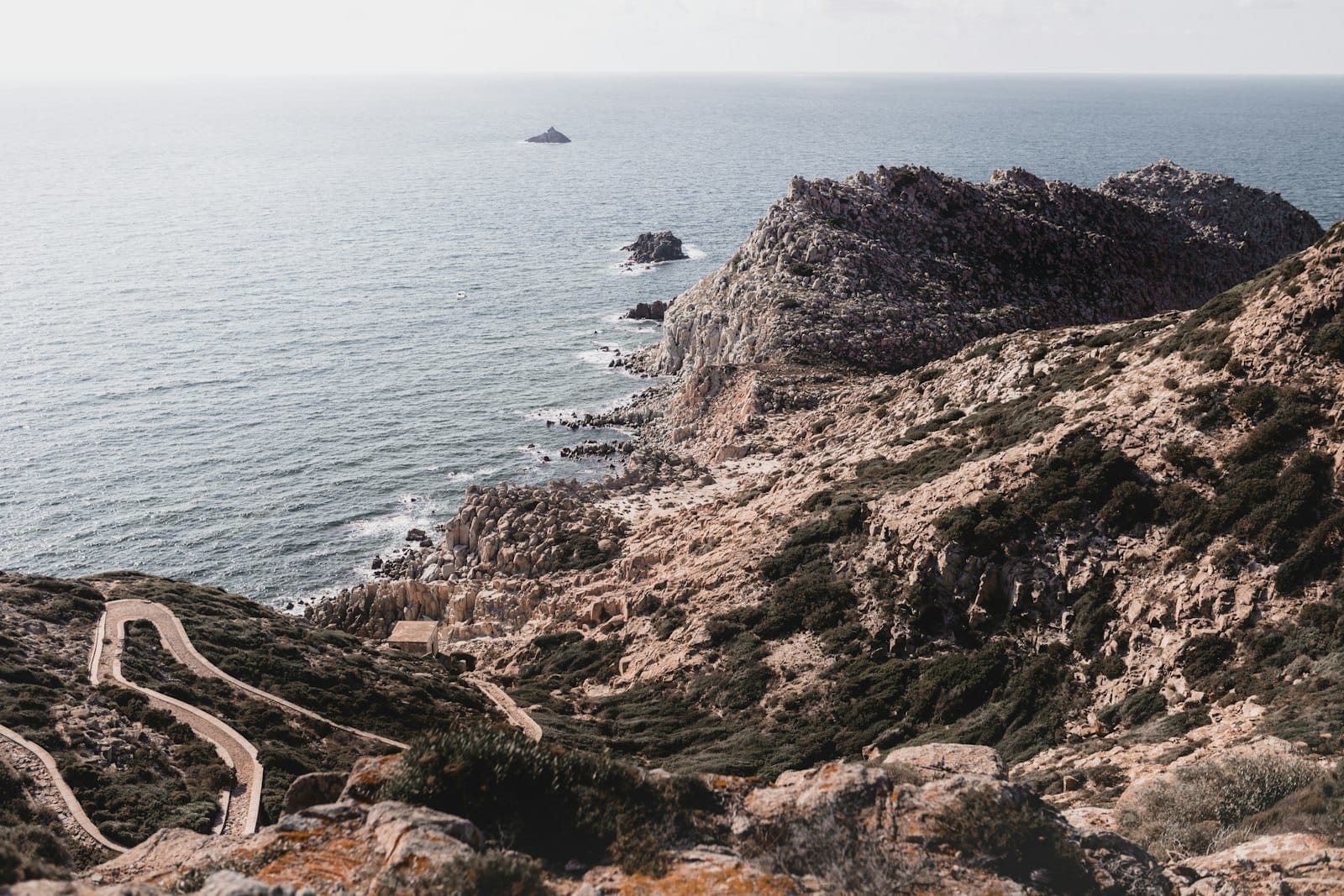
Sardinia (Sardegna in Italian) is the second-largest island in the Mediterranean, covering 24,090 km² with a coastline of around 1,850 km. It has three main airports: Cagliari-Elmas (CAG) in the south, Olbia Costa Smeralda (OLB) in the northeast, and Alghero-Fertilia (AHO) in the northwest. For a two-week loop starting and ending in the same place, flying into Cagliari is the most logical choice. If you prefer to do the route in reverse or want to start near Costa Smeralda, Olbia works equally well. Alghero is best used as an endpoint if you can find a cheap one-way flight deal.
Book your rental car before you arrive, not at the airport desk. Prices at walk-up counters are substantially higher, and automatic transmission vehicles, which many non-European drivers prefer, are scarce on the island. Book an automatic weeks in advance if that matters to you. Non-EU drivers should carry an International Driving Permit alongside their national license. Italian law requires this, and fines for non-compliance start at €408. Sardinia has no motorway network, making it the only Italian region without one. All roads are standard two-lane highways along the coast and four-lane arterials between major cities like Cagliari, Oristano, and Sassari.
⚠️ What to skip
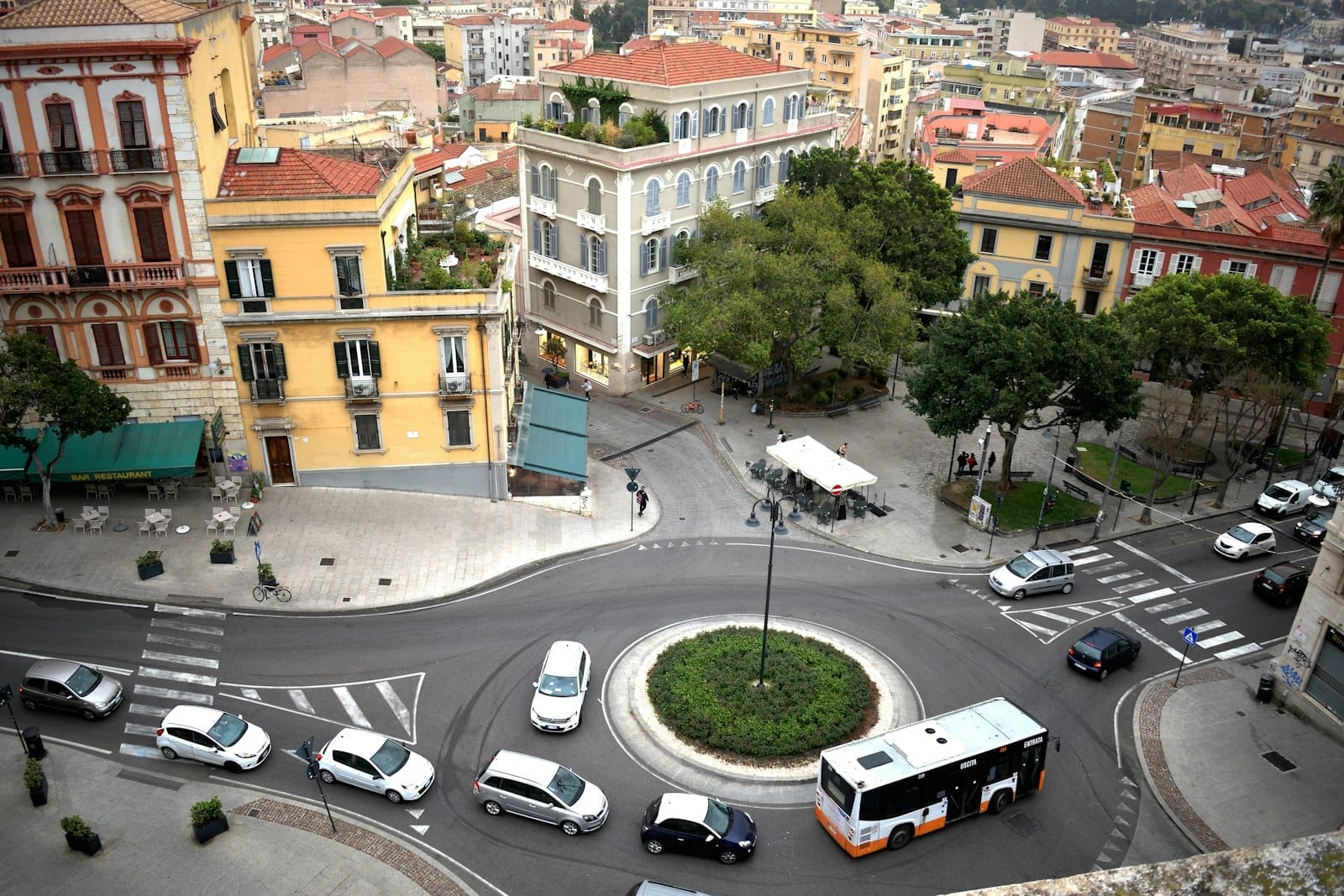
ZTL zones (Zona Traffico Limitato) exist in nearly every historic town center in Sardinia, including Alghero, Cagliari's Castello district, and Bosa. Cameras enforce these automatically, and fines are sent to the rental car company who then charge you weeks later. Before driving into any old town, check local ZTL maps and always park outside the restricted zone.
Sardinia is part of Italy and the Schengen Area. EU and EEA nationals need only a national ID. Citizens of the US, Canada, Australia, Japan, and most other Western nations can enter visa-free for up to 90 days in any 180-day period. Check current EU entry requirements before travel, as ETIAS implementation for visa-exempt non-EU nationals is an evolving regulation. The currency is the Euro (EUR). The island runs on Central European Time (CET, UTC+1) with daylight saving shifting to UTC+2 from late March to late October. For a full overview of what to expect season by season, the Sardinia weather guide covers monthly breakdowns in detail.
When to Do This Road Trip
In short, is late May to mid-June or the entire month of September. These shoulder windows give you sea temperatures warm enough to swim (the Mediterranean is comfortable from May through October along Sardinia's coast), roads that aren't clogged with rental cars, accommodation prices that are 30-50% lower than peak, and restaurants with actual availability. In July and August, the island is packed. Cagliari's Poetto beach fills by 9am. Cala Goloritzé requires a timed entry permit. Parking at La Pelosa near Stintino involves queuing before dawn. None of this makes the trip impossible, but it does add friction and cost to every single day.
October is underrated. Daytime temperatures in the south hover around 22-25°C, the sea is still 22-23°C, and many beach businesses stay open through mid-October. The Gennargentu mountains and Barbagia interior are especially beautiful in autumn light. The trade-off is that some smaller coastal operations, particularly along the Golfo di Orosei, begin winding down in late October. Winter travel (November to April) is possible and increasingly popular for hiking and cultural tourism, but expect many coastal hotels and restaurants to be shuttered, especially in resort areas.
- Late May to mid-June Best overall balance. Warm and dry, sea swimmable, crowds manageable, all businesses open.
- July to August Peak season. Hot (up to 38°C inland), crowded, expensive. Book everything months in advance or accept compromises.
- September Arguably the best month. Summer heat fades, sea still warm, crowds thin dramatically after the first week.
- October Good for hiking, cultural sites, and the interior. Some coastal infrastructure closes mid-month. Great light and no queues.
- November to April Mild in the south (14-16°C highs in winter), but coastal Sardinia largely closes down. Better for city breaks than road trips.
The Two-Week Itinerary: Day-by-Day Route
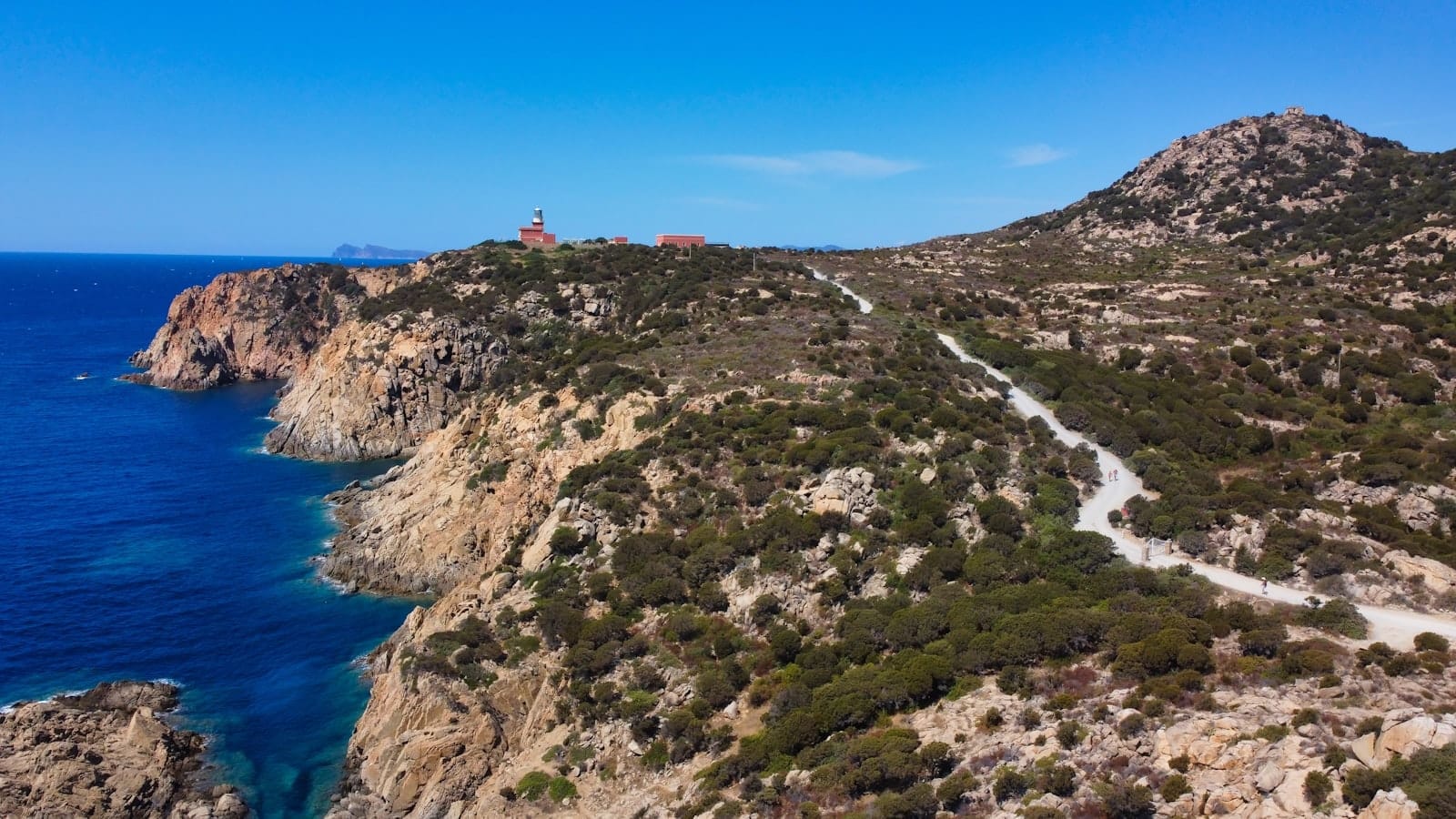
This route runs clockwise from Cagliari, covering the southwest coast, Oristano and the Sinis Peninsula, the northwest around Alghero and Sassari, the Costa Smeralda in the northeast, and then the dramatic eastern coast through Ogliastra and the Golfo di Orosei before returning south. Total driving distance is approximately 1,200 km over 14 days, averaging under 90 km per driving day. That is intentionally light: Sardinian roads reward slow travel, and rushing between beaches defeats the purpose. For a deep-dive into the southern capital before you leave, read the dedicated Cagliari travel guide.
- Days 1-2: Cagliari Arrive, collect your car, and spend two days in the capital. Explore the Castello district, the Museo Archeologico Nazionale (home to the Giants of Monte Prama), Poetto beach, and the Molentargius salt lagoon flamingos. Eat at Mercato di San Benedetto on day one.
- Days 3-4: Southwest Coast (Chia, Tuerredda, Masua) Drive west along the SP195 to the beaches of Chia and Tuerredda, then continue to the Sulcis mining coast at Masua, where the sea stack Pan di Zucchero rises from the water. Base yourself near Iglesias or Carbonia.
- Days 5-6: Oristano and the Sinis Peninsula Head north to Oristano. Spend an afternoon at the Tharros archaeological site on the Sinis Peninsula, then visit Is Arutas beach, whose quartz grain sand looks like crushed glass. Oristano is a working Sardinian city with good restaurants and no tourist crowds.
- Days 7-8: Alghero and the Northwest Continue north to Alghero, the most distinctive city on the island due to its Catalan heritage. Walk the sea walls, visit the Grotte di Nettuno by boat or by the 654-step staircase, and day-trip to Capo Caccia. The Parco Naturale di Porto Conte is worth a morning.
- Days 9-10: Costa Smeralda and Gallura Drive northeast to the Costa Smeralda. Porto Cervo is worth seeing once for sheer spectacle, but bases like Palau, Santa Teresa di Gallura, or Arzachena offer better value. Take a boat from Palau to the La Maddalena Archipelago for a full day, which is the undisputed highlight of northern Sardinia.
- Days 11-12: Golfo di Orosei Head south along the SS125, one of the most dramatic coastal roads in Italy. Base in Cala Gonone and take a boat to beaches like Cala Luna, Cala Mariolu, and Cala Goloritzé. These are only accessible by sea or long hike; the boat trip is not optional.
- Days 13-14: Ogliastra and Return to Cagliari Drive south through Ogliastra, stopping at the red-rock formations at Arbatax and the Tacchi d'Ogliastra limestone plateaus. Return to Cagliari via the SS125 for a final evening in the city.
💡 Local tip
The SS125 between the Golfo di Orosei and Arbatax is winding and slow. Budget at least 3 hours for 90 km. The scenery is exceptional but do not attempt it after dark.
The Highlights You Cannot Skip
Sardinia has over 7,000 Nuragic towers, the remnants of a Bronze Age civilization that built nowhere else on Earth. Su Nuraxi di Barumini, a UNESCO World Heritage Site near Cagliari, is the most complete example and a genuine must-see for anyone with an interest in ancient history. It can be combined with a stop at the mysterious Giara di Gesturi plateau, home to a population of wild ponies, on the drive between Cagliari and Oristano. The Sardinia Nuragic sites guide covers all the major sites with opening hours and access details.
The Golfo di Orosei coastline, accessible from Cala Gonone, contains what many consider the finest beaches in Europe. Cala Goloritzé is a nationally protected natural monument. Cala Mariolu's turquoise water and white pebble beach is routinely ranked among the Mediterranean's best. Access requires a boat from Cala Gonone (around 30-40 minutes each way depending on destination), and operators run scheduled services daily from April through October. Book the boat trip the evening before in high season, not on the morning you want to go.
In the northwest, the Grotte di Nettuno near Alghero is a sea cave accessible by boat from the port or on foot down the Escala del Cabirol staircase carved into the cliff. The cave tour lasts around 45 minutes and is impressive. In the northeast, a day trip to the La Maddalena Archipelago from Palau reveals some of the clearest water anywhere in the Mediterranean, with pink-tinged granite rock formations and sheltered bays that feel remote despite being a short ferry ride from the mainland road.
Practical Tips: Money, Food, and Getting Around
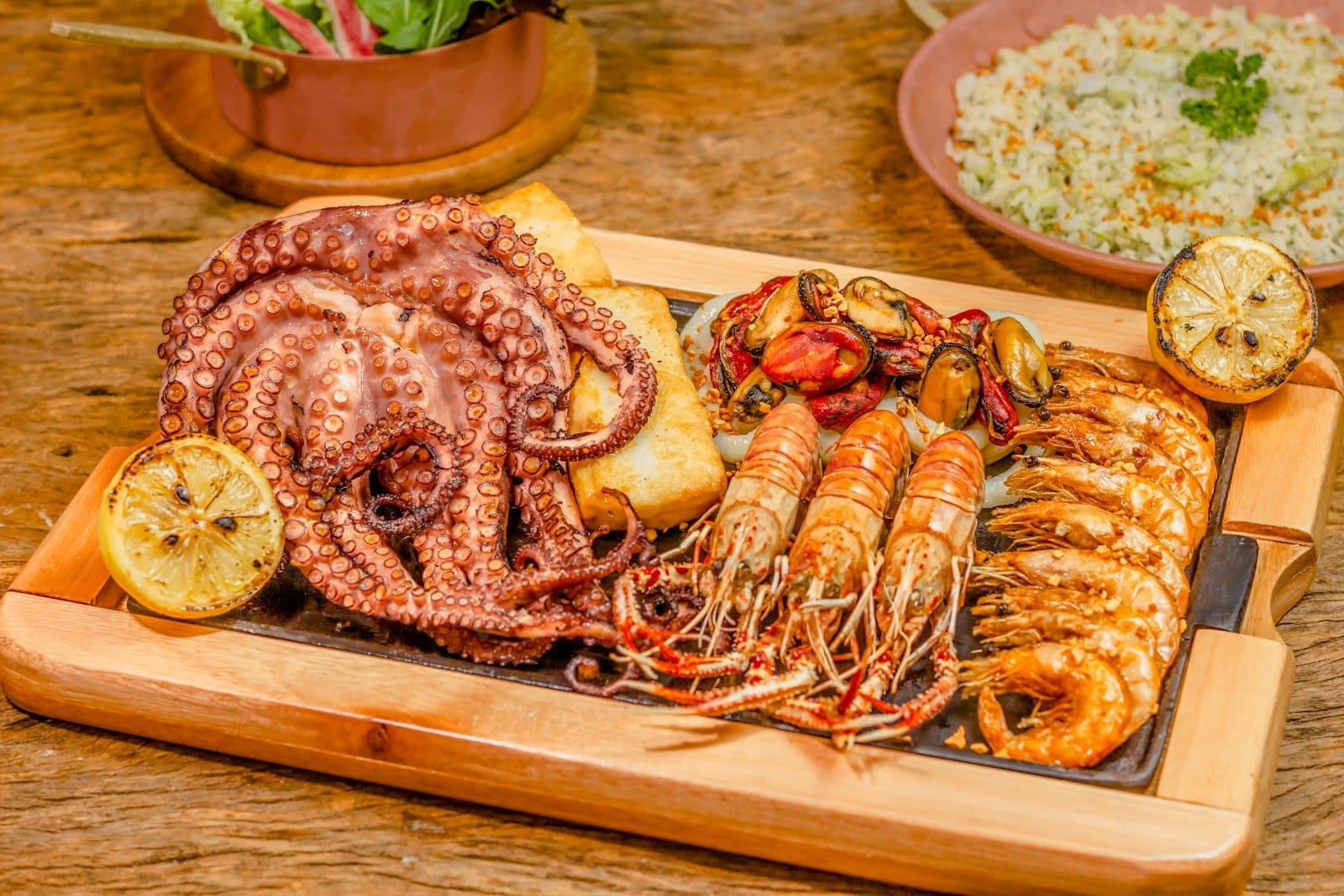
Eating well in Sardinia is straightforward if you follow a few rules. Avoid anywhere on a main tourist promenade with photographs on the menu. Look for places where the day's catch is written on a blackboard, where the menu is in Italian only, and where locals are actually eating. Sardinian cuisine is distinct from mainland Italian: pane carasau (paper-thin flatbread), culurgiones (hand-crimped pasta filled with potato and pecorino), roast suckling pig (porceddu), and bottarga (cured grey mullet roe) are regional staples. Cannonau wine, a robust Grenache-based red grown in Sardinia, pairs with almost everything. For deeper context, the Sardinia food guide covers regional dishes and where to find them by area.
Tipping in Sardinia follows Italian national norms: it is not expected or obligatory. Many restaurants include a coperto (cover charge, typically €1.50-3 per person) which covers bread and service. Leaving a small tip of a few euros for a good meal is appreciated but never assumed. For religious sites, which includes several spectacular Romanesque churches in Sardinia, shoulders and knees should be covered. Some coastal municipalities have local ordinances restricting swimwear in town centers, particularly Alghero. Tap water is generally potable across Sardinia, though you may see signs indicating otherwise at specific fountains in rural areas.
✨ Pro tip
Agriturismi (farmstay restaurants) across the Barbagia interior offer some of the best-value, most authentic meals in Sardinia. Fixed-price menus of 6-8 courses for €25-35 per person are common. Booking ahead is essential as many do not accept walk-ins. The Sardinia agriturismo guide has recommendations.
Emergency number across Italy and the EU is 112. Italy's country dialing code is +39. Electricity runs at 230V/50Hz using Type C, F, and L plugs. US and UK visitors will need adapters. Phone signal is generally good in coastal towns and cities but drops significantly in the mountainous interior, particularly in the Gennargentu range and parts of the Barbagia. Download offline maps before heading into the interior.
What People Get Wrong About a Sardinia Road Trip
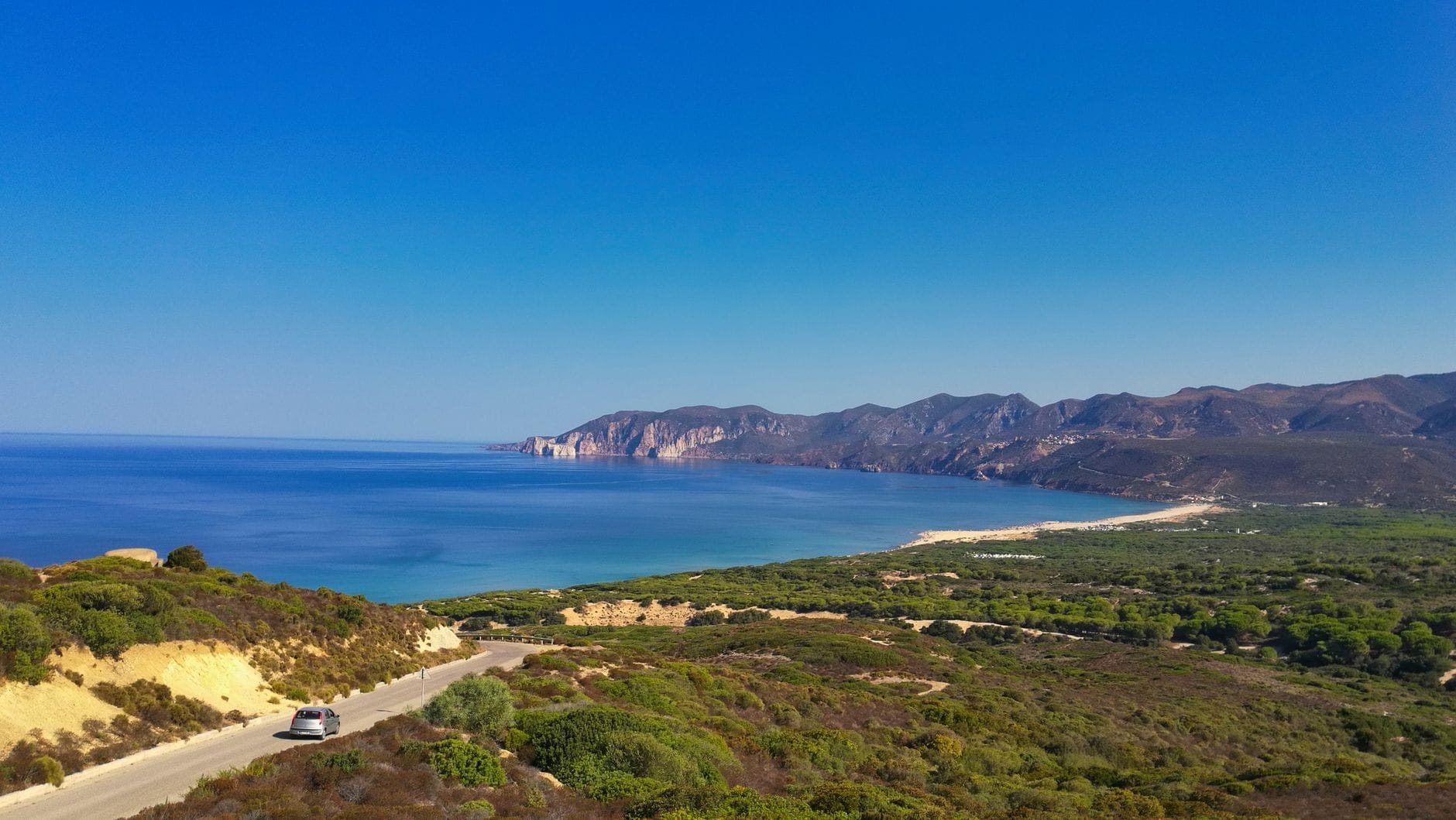
The most common mistake is underestimating the island's size. Sardinia spans roughly 270 km from north to south and 145 km at its widest east-west point. Driving from Cagliari to Olbia takes around 3 hours on a good day. The east coast road between Olbia and Cagliari, the SS125 and its connecting routes, can take 5-6 hours with no stops because of its winding, mountainous character. Travelers who plan to see the south, center, east, and north in a single week end up spending more time in the car than on the beach.
Another widespread misconception is that the Costa Smeralda represents typical Sardinia. It does not. Porto Cervo is a purpose-built luxury resort enclave developed by the Aga Khan in the 1960s, and it operates at price levels that have nothing to do with the rest of the island. A coffee that costs €1.20 in Cagliari will cost €4 in certain Costa Smeralda bars. The beaches at Capriccioli, Liscia Ruja, and Principe are beautiful, but so are dozens of beaches further south and east that have no designer boutiques attached. If budget matters, consider the Costa Smeralda a single-day excursion rather than a base. The Sardinia on a budget guide gives practical alternatives for each region.
ℹ️ Good to know
Sardinia is an autonomous region of Italy (Regione Autonoma della Sardegna) with a special statute, meaning it has greater legislative powers than standard Italian regions. In practice, this affects administrative matters rather than travel. The island has its own distinct cultural identity, with Sardinian (sardu) spoken alongside Italian, and Catalan still used in Alghero. You will see bilingual signage throughout the island.
FAQ
Do you need a car for two weeks in Sardinia?
Yes, without exception for a road trip itinerary. Public transport in Sardinia, operated primarily by Trenitalia on main routes and ARST for regional buses, connects major cities but cannot reach many beaches, archaeological sites, and mountain villages that define the island's appeal. For any itinerary that involves the coast or interior, a rental car is the only realistic option.
How much does a two-week Sardinia road trip cost?
Costs vary significantly by season and travel style. A mid-range budget in shoulder season (May-June or September) might involve €50-80 per night for a double room, €30-50 per day for food if mixing supermarkets and restaurants, and €30-60 per day for a compact rental car. Peak season (July-August) can double accommodation costs along the coast. Budget an additional €100-150 per person for boat trips, archaeological site entries, and incidentals over two weeks.
Is two weeks enough to see all of Sardinia?
Two weeks is enough to see the main highlights of all four coastal regions and the interior, but not every beach and site. You will need to make choices: the southwest mining coast or more time in the Golfo di Orosei, for example. A well-planned 14-day circuit leaves you with a thorough understanding of the island without feeling rushed. Anything under 10 days means missing at least one major region.
What is the best starting point for a Sardinia road trip?
Cagliari is the most practical starting point. It has the island's busiest airport with the most international connections, a city worth spending 2 nights in, and direct access to the southwest coast. Flying in and out of the same airport simplifies car rental. If you want to start in the north, Olbia works well and gives immediate access to Costa Smeralda, but the southern coast then becomes the end of your trip rather than the beginning.
When should you book accommodation and boat trips?
For July and August travel, book accommodation at least 2-3 months in advance for coastal areas, particularly the Golfo di Orosei and Costa Smeralda. Boat trips to Cala Goloritzé and the La Maddalena Archipelago can sell out days in advance in peak season; book online or the evening before at the latest. For shoulder season travel in May-June or September, 3-4 weeks ahead is usually sufficient, though earlier is always safer.