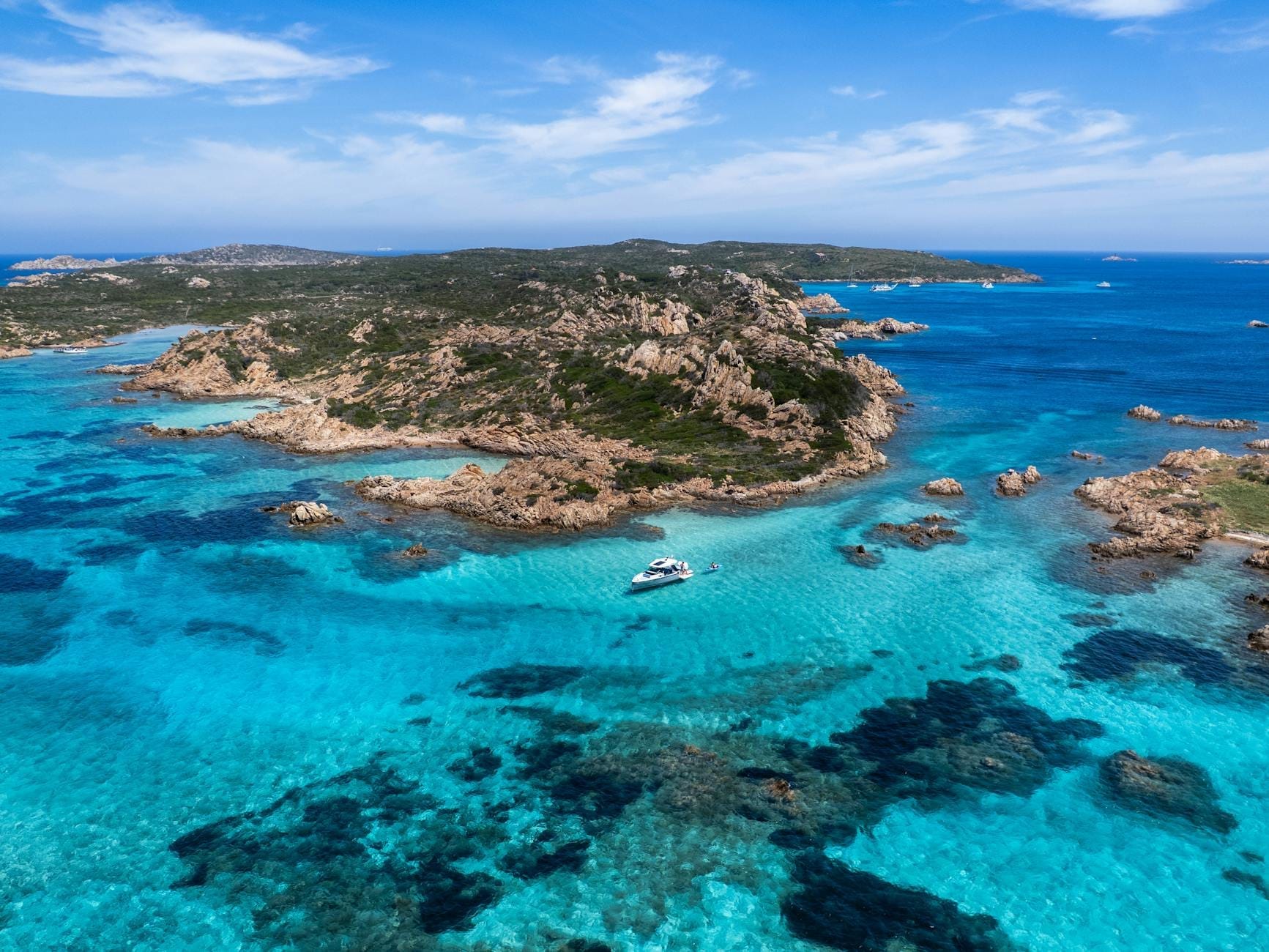
The La Maddalena Archipelago is a national park of more than 60 islands and islets in the Strait of Bonifacio, off the north-eastern tip of Sardinia. It combines some of the Mediterranean's clearest water with strictly protected marine ecosystems, accessible by ferry from the mainland town of Palau.
Scattered across the Strait of Bonifacio between Sardinia and Corsica, the La Maddalena Archipelago is one of Italy's most rigorously protected marine landscapes. Seven main islands, turquoise shallows, and granite-boulder coastlines make it a destination built around the sea rather than the shore.
Orientation
The La Maddalena Archipelago sits at the extreme north-eastern corner of Sardinia, in the Strait of Bonifacio, the narrow channel that separates the island from Corsica to the north. The archipelago is geographically classified as part of the Gallura region and shares its granite-and-scrubland character with the surrounding coastline. The cluster of islands lies roughly 2 km off the town of Palau on the Sardinian mainland, making Palau the practical gateway for all visitors arriving overland.
The seven main islands are La Maddalena, Caprera, Spargi, Santo Stefano, Santa Maria, Budelli, and Razzoli, plus roughly 55 smaller islets and rocks. Of these, only La Maddalena is permanently inhabited; Caprera and Santo Stefano do not have resident towns. La Maddalena is the largest and the only one with a proper town: the comune of La Maddalena, which administratively governs the entire archipelago. Caprera is connected to La Maddalena by a road bridge and is home to the Compendio Garibaldino, the villa and tomb of Giuseppe Garibaldi. The remaining islands are accessible only by sea.
The entire archipelago is protected as the Parco Nazionale dell'Arcipelago di La Maddalena, covering approximately 5,100 hectares of land and about 15,000 hectares of sea. It is one of Italy's most strictly regulated marine protected areas. Visitors arriving from the south will typically pass through the Gallura region or the Costa Smeralda before reaching Palau, a drive of roughly 25 to 30 km from Porto Cervo. The nearest major transport hub is Olbia, about 40 to 45 km to the south-east, which has the closest commercial airport.
Character and Atmosphere
The pace of life on La Maddalena is calibrated around the sea and the season. In the early morning, the town's small harbour fills with the sound of boat engines warming up and the smell of salt and diesel as day-trip operators prepare their vessels. The waterfront promenade, the Lungomare Mirabello, comes alive with coffee drinkers and fishermen before the heat sets in. The main piazza, Piazza Umberto I, is quiet at this hour, the cafe chairs still stacked.
By mid-morning in July and August, the ferry from Palau brings successive waves of day-trippers, and the town's single main shopping street, Via Garibaldi, fills quickly. The contrast between the compact, working-class character of the town and the spectacular natural environment surrounding it is striking. The streets are narrow and slightly worn, with apartment blocks alongside pastel-painted historic buildings. It is a real community, not a resort, and that distinction matters if you are trying to calibrate expectations.
The outer islands and anchorages operate on a completely different rhythm. On Spargi or Santa Maria, the only sounds in the afternoon are water against granite and the occasional creak of a boat at anchor. The light in these channels in late afternoon is extraordinary: the water shifts between jade, turquoise, and deep cobalt depending on depth, and the low sun picks out the orange and rose tones in the granite boulders. For anyone arriving by boat, these hours feel like the point of the whole journey.
After dark, La Maddalena town is pleasant and relatively quiet by Italian standards. Restaurants on and around Via Garibaldi and the waterfront fill up by 8pm, and there is modest nightlife in summer around the marina area. The atmosphere is more local than coastal-resort loud, which suits families and couples better than party-focused travellers.
ℹ️ Good to know
High season (late June to early September) brings heavy crowds to the ferry crossing and the most popular beaches. Shoulder season, particularly May, early June, and September, offers calmer conditions, lower prices, and sea temperatures that are still very comfortable for swimming.
What to See and Do
The defining activity in the archipelago is time on the water. Whether you charter a boat, join a guided day trip, or paddle a kayak, the beaches and coves of the outer islands are the main attraction. The snorkelling around the granite reefs is exceptional: visibility in the protected waters regularly exceeds 20 metres, and the seagrass meadows (Posidonia oceanica) support dense fish populations. Several operators in La Maddalena town offer guided snorkelling and diving excursions.
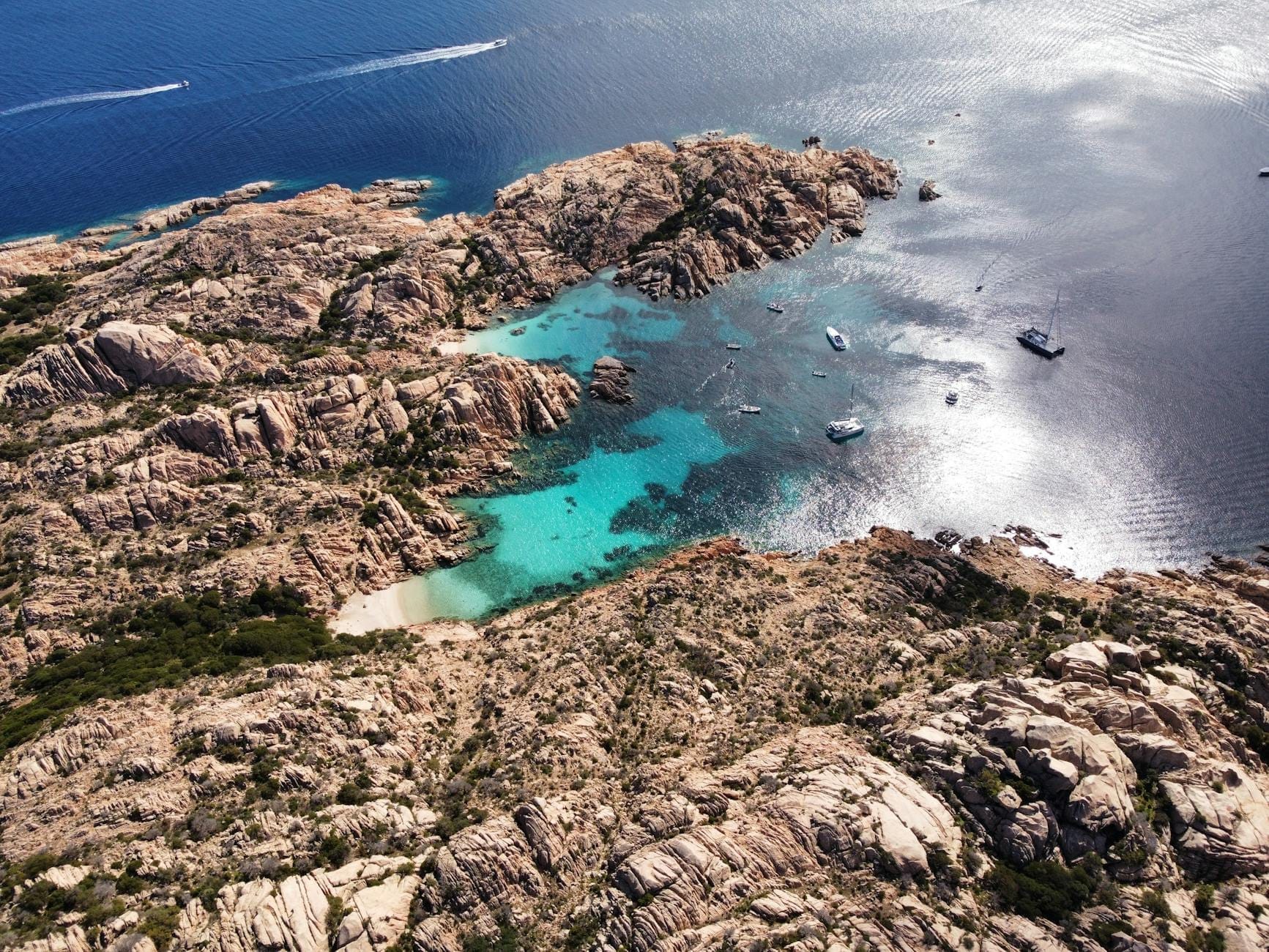
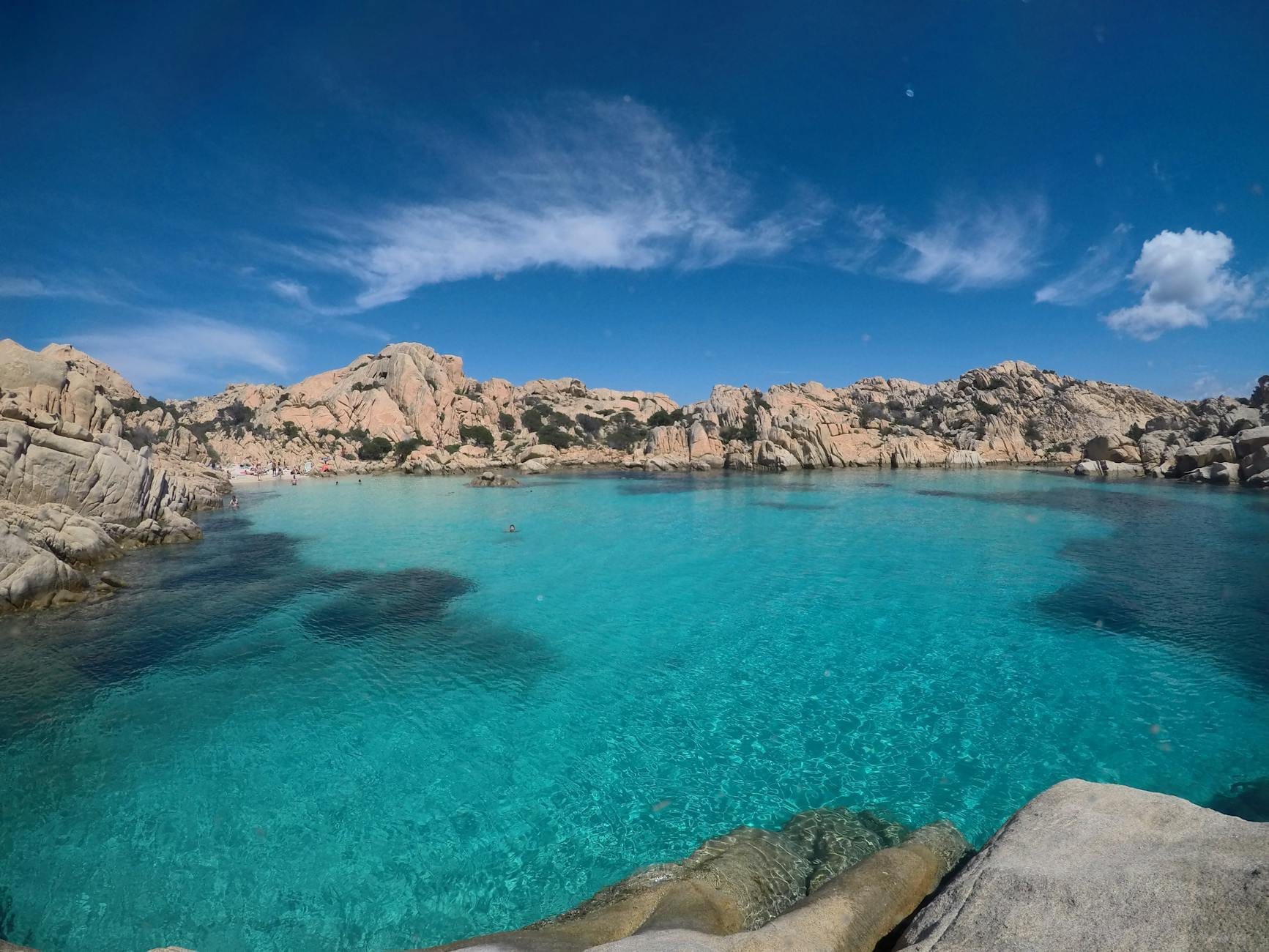
Caprera is worth a full half-day on its own. The island has walking trails through Mediterranean scrubland and pine forest, and the Compendio Garibaldino — the house, museum, and tomb of Giuseppe Garibaldi — provides genuine historical depth. Garibaldi spent his final years on Caprera after the campaigns that unified Italy, and the site is well-maintained. Caprera also has several of the archipelago's best beaches accessible by road, including Cala Coticcio, sometimes called the 'Tahiti of the Mediterranean' for its extraordinarily clear water. You can read more about Cala Coticcio on Caprera in the full attraction guide.
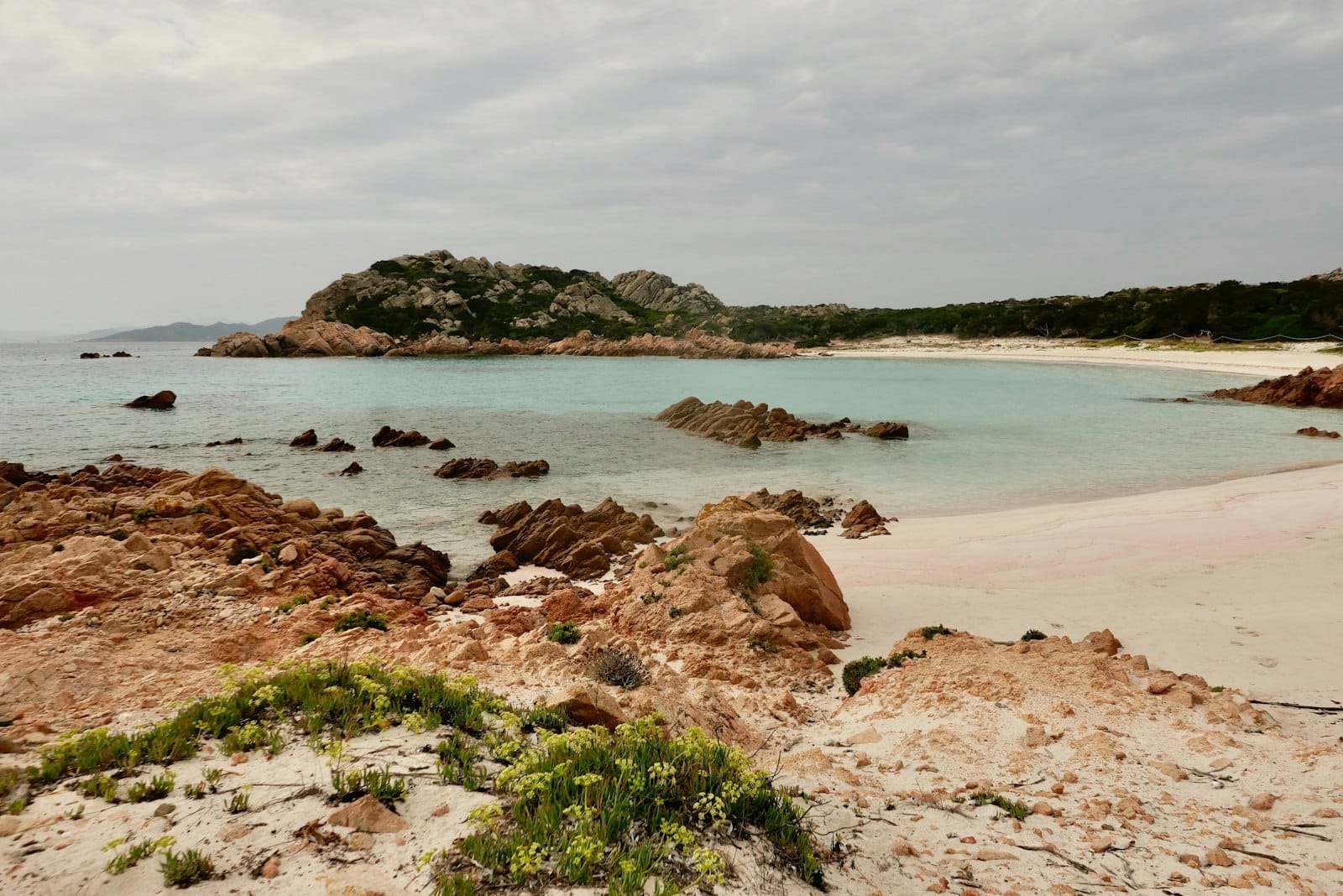
The famous Spiaggia Rosa (Pink Beach) on the island of Budelli is frequently mentioned in any conversation about the archipelago. It is worth knowing upfront that access to Budelli is strictly forbidden under the national park's integral protection zoning. The pink colour of the sand, caused by fragments of coral and shell, has been depleted by decades of visitors removing sand as souvenirs. You can view the beach from a boat at a distance, but landing is not permitted. This is not a technicality: fines for violations are substantial. For accessible beaches of comparable beauty, the full Spiaggia Rosa page explains the regulations clearly.
Boat day trips from La Maddalena town to Spargi, Santa Maria, Razzoli, and the outer coves
Snorkelling and diving excursions in the protected marine zone around the granite reefs
Compendio Garibaldino on Caprera: museum, period rooms, and Garibaldi's tomb
Cala Coticcio (Caprera): accessible via a hiking trail with restricted access and considered one of the archipelago's finest beaches
Cycling on Caprera: the island has low traffic and manageable terrain
Kayaking in the channels between the main islands
Walking the coastal paths on La Maddalena island for views back across the strait toward Corsica
For context on the wider region and how the archipelago fits into a longer itinerary, the Sardinia snorkelling and diving guide covers the best underwater sites across the island. The archipelago ranks consistently at the top of that list for water clarity and biodiversity.
⚠️ What to skip
All vessels navigating within the national park boundaries require an entry permit (nulla osta). These are obtained through the park authority's official channels before arrival. Speed limits are generally 7 knots within 300 metres of the coastline and up to 15 knots beyond in permitted zones, depending on specific park sub‑areas. Anchoring is restricted to designated areas only. If you are chartering a private boat, confirm that the operator has the correct permits before booking.
Eating and Drinking
The food scene on La Maddalena is centred on the town itself, specifically on and around Via Garibaldi and the waterfront. Restaurants here lean heavily on seafood, as you would expect from an island community. Fresh catch prepared simply, grilled or with pasta, is the standard, and the quality is generally good when you choose establishments that look like they are feeding locals as well as tourists.
Prices are higher than in Cagliari or Sassari and reflect the island's logistical costs and seasonal demand. A mid-range dinner with wine for two will typically cost between 50 and 80 euros. Budget options include the small bars and takeaway counters near the ferry terminal, where you can find decent panini and local pastries in the morning. The aperitivo hour, around 6 to 7pm, is well observed at the waterfront bars and is a good way to eat cheaply while watching the ferry traffic and the evening light on the strait.
Sardinian specialities you may encounter include bottarga (cured grey mullet roe, often grated over pasta), culurgiones (a type of stuffed pasta filled with potato and mint, more common in the Ogliastra region but found across the island), and the local flatbread pane carasau. Wines are predominantly from the Gallura DOC zone, where Vermentino di Gallura DOCG is the white of choice and pairs well with seafood. The Sardinia food guide has a thorough breakdown of regional dishes and what to order in different parts of the island.
There are no restaurants on the uninhabited outer islands. If you are spending a day on a chartered boat, provisions need to come with you. Most boat operators who run day trips include a lunch stop in a sheltered cove where they prepare simple food on board, typically grilled fish or pasta with bottarga.
Getting There and Around
The only way to reach La Maddalena island from the Sardinian mainland is by ferry from Palau. Ferry crossings take approximately 15 to 20 minutes, and the service runs frequently throughout the day, with increased frequency in summer. Multiple operators serve the Palau to La Maddalena route, and tickets are purchased at the ferry terminal. There is no advance reservation required for foot passengers, but in peak summer weeks, waiting times can extend significantly if you are travelling with a vehicle.
Reaching Palau by land: from Olbia (the nearest major airport, about 45 km south-east), the most practical option is a rental car. The drive takes roughly 45 minutes via the SS125. ARST regional buses also connect Olbia to Palau, though the timetable is less frequent and the journey takes longer. If you are arriving from the Costa Smeralda or Porto Cervo, Palau is about 25 to 30 km further north along the coast road. The guide to getting around Sardinia covers car hire, buses, and ferries across the whole island.
On La Maddalena island itself, the town centre is compact and walkable. The main sights within the town are within 10 to 15 minutes on foot from the ferry terminal. For Caprera, you cross the Passo della Moneta bridge by car, scooter, bicycle, or taxi. The bridge crossing takes only a few minutes by road. Caprera has limited public transport, so a hire car or scooter is the practical choice for reaching its beaches.
Moving between the outer islands requires a boat. Day-trip operators based in La Maddalena town run fixed-route excursions to the main beaches and coves. For more flexibility, you can charter a small boat with or without a skipper. There is no public boat service between the uninhabited islands. Water taxis serve some routes in summer, but schedules and availability are informal and should be confirmed locally on arrival.
💡 Local tip
If you plan to visit in July or August with a car, book the ferry crossing in advance or arrive at the Palau terminal early in the morning. Midday crossings with vehicles can involve long queues in peak season. Foot passengers have far less waiting time.
Where to Stay
Accommodation in the archipelago is concentrated almost entirely in La Maddalena town. The range runs from small guesthouses (B&Bs and affittacamere) in the centre to mid-range hotels and a handful of upscale options near the marina. There are no large resort complexes on the island, which keeps the atmosphere calmer than the Costa Smeralda further south, but also means availability is limited and prices rise sharply in August.
Staying in the town centre puts you closest to the ferry terminal, restaurants, and boat-trip operators, which is the practical choice for most visitors. If you prioritise beach access, some accommodation options sit further around the coast road, but you will need a vehicle or bicycle to move around comfortably. Caprera has very limited accommodation: a few agriturismo-style properties in rural settings. These suit travellers who want peace and direct access to Caprera's beaches, but they involve a certain amount of self-sufficiency for meals.
Staying in Palau on the mainland is a viable alternative, particularly for travellers who want more restaurant options, easier car access, and day trips to the archipelago without the cost premium of island accommodation. The ferry crossing is short enough that a daily back-and-forth is not burdensome. For broader accommodation context across northern Sardinia, the where to stay in Sardinia guide compares the main areas and property types.
ℹ️ Good to know
The island has no large all-inclusive hotels. Most accommodation is small-scale and family-run. In August, availability can be very tight: book at least two to three months in advance for any stay during the first three weeks of August.
Practical Tips and Honest Drawbacks
The national park regulations are real and enforced. Beyond the boat permits and speed limits mentioned above, visitors should be aware that removing sand, shells, or marine life from anywhere in the park is illegal and carries fines. This is mentioned not to intimidate but because many visitors are unaware that these rules apply across the whole archipelago, not just at Budelli.
August in La Maddalena town is crowded. The Lungomare and Via Garibaldi get very busy between 10am and 7pm, the beaches on the outer islands are crowded from boat traffic, and restaurant waits are long without a reservation. The water is still beautiful, but the solitude that defines the archipelago's appeal is largely absent in peak season. May, June, and September offer a significantly better experience for anyone whose travel dates are flexible.
The archipelago is not a destination for travellers seeking nightlife, cultural programming, or urban variety. There are no significant museums beyond the Compendio Garibaldino on Caprera, no major festivals specific to the islands, and the town's amenities are modest. If you want architectural history or inland Sardinian culture alongside your beach time, you are better placed to base yourself near Sassari or combine the archipelago with the broader Gallura region as part of a longer road trip.
For travellers planning a broader itinerary around northern Sardinia, the Sardinia road trip guide covers logical routes that combine the archipelago with the Costa Smeralda, Capo Testa, and the Gallura interior. The archipelago works best as a two- to three-day stop within a longer island circuit, or as a standalone destination for dedicated sailors and snorkellers.
TL;DR
The La Maddalena Archipelago is best suited to travellers whose main priority is sea, water clarity, and natural landscape. It is not a cultural destination in the conventional sense.
Access is by ferry from Palau (15-20 minutes). A car or scooter is useful for exploring Caprera; the outer islands require a boat.
All vessels in the national park need entry permits. Anchoring is restricted, speed limits apply, and access to certain zones including the Pink Beach on Budelli is strictly forbidden.
Peak season (July-August) brings significant crowds to the town and the most popular beaches. May, June, and September offer quieter conditions with still-warm water.
Accommodation is small-scale and limited; book well in advance for August. The town of Palau on the Sardinian mainland is a practical and cheaper base for day trips.
Fourteen days is the right amount of time to properly explore Sardinia's four coastlines, mountainous interior, and ancient ruins. This itinerary covers the full circuit by car, from Cagliari in the south to Alghero in the northwest, with practical advice on timing, logistics, and where to skip the tourist traps.
Sardinia has about 1,850 kilometres of coastline and some of the clearest water in the Mediterranean. This guide covers the best beaches across the island, from the famous to the hard-to-reach, with practical advice on access, crowds, and when to go.
Sardinia rewards visitors differently depending on when they arrive. This guide cuts through the vague advice to explain exactly what each season delivers, from peak-summer beach conditions to spring wildflower hikes and quiet winter city breaks, so you can match your trip to your priorities.
Cagliari sits at the southern tip of Sardinia, placing you within striking distance of some of the island's finest beaches, archaeological sites, and natural landscapes. These 20 day trips range from quick 30-minute drives to full-day adventures into the island's wild interior.
Sardinia covers 24,090 km² of mountains, coastline, and rural roads with no motorways. This guide breaks down every realistic transport option, from renting a car to catching the right ferry, so you can plan a trip that actually works.
Sardinia is far more than a beach destination. Its limestone canyons, granite peaks, and ancient shepherd paths offer some of the most dramatic hiking in the Mediterranean. This guide covers the best trails from day walks to multi-day epics.
Sardinia is Italy's second-largest island and one of the Mediterranean's most remarkable destinations — but it rewards those who plan well and punishes those who assume it's just another beach holiday. This guide cuts through the marketing to give you a clear-eyed picture of what Sardinia offers, who it suits best, and what to expect.
Sardinia delivers some of Europe's most coveted luxury travel experiences, from the yacht-lined marina at Porto Cervo to secluded villas with private pools above crystalline coves. This guide breaks down where to stay, when to go, and how to build a high-end Sardinian itinerary that goes beyond the obvious.
Olbia is where most visitors to northeast Sardinia first set foot, then immediately drive away toward Costa Smeralda. That's a mistake. This guide covers what the city actually offers, from its Nuragic roots and early Christian basilica to boat trips around Tavolara, the best nearby beaches, and everything you need to arrive, orient yourself, and explore the Gallura region properly.
Seven days in Sardinia is enough time to experience the island's best beaches, ancient sites, and coastal scenery — but only if you plan carefully. This day-by-day itinerary covers the most rewarding route, with practical logistics, timing advice, and the practical details most guides leave out.
Agriturismo is one of the most rewarding ways to experience Sardinia beyond the coast. This guide covers what a real agriturismo is, where to find the best ones, what food to expect, prices to budget for, and how to avoid countryside guesthouses masquerading as working farms.
Sardinia is home to the world's first identified Blue Zone, a cluster of inland villages in the Ogliastra region where living past 100 is far from unusual. This guide breaks down the research, the lifestyle factors, the villages worth visiting, and how to experience the culture behind the longevity — without the tourist traps.
Sardinia's most spectacular landscapes are only reachable by water. This guide covers the best boat trips across the island, from the pink-sand coves of La Maddalena to the towering limestone cliffs of the Gulf of Orosei, with tips on what to expect, when to go, and how to book.
Sardinia has some of the most spectacular camping terrain in the Mediterranean, from cliff-backed coves to pine-shaded coastal pitches. But the rules around wild camping are strict and widely misunderstood. This guide covers the legal framework, regional campsite highlights, realistic costs, and seasonal booking strategy.
Two islands, 11 km apart, yet remarkably different in culture, cost, and character. This guide breaks down the real differences between Sardinia and Corsica so you can choose the one that actually matches your trip.
Sardinia's festival calendar runs nearly year-round, from winter carnival traditions to autumn food fairs. This guide covers the major events by season, what to expect at each, and how to plan your trip around them without getting caught off-guard.
Sardinian food is not Italian food with a regional accent — it is a cuisine shaped by centuries of pastoral life, coastal abundance, and fierce cultural independence. This guide covers the dishes you need to try, the wines worth seeking out, and how to eat well without getting steered toward the tourist menu.
Sardinia rewards those who look beyond the famous beaches. This guide uncovers the island's lesser-known archaeological wonders, dramatic inland landscapes, and coastal stretches that see a fraction of the summer crowds, from Bronze Age cities to wild dune deserts.
Sardinia delivers some of the Mediterranean's most striking coastal scenery, and it rewards couples who look beyond the obvious. This guide covers the best romantic beaches, the right season to visit, where to base yourself, and the experiences that actually make a trip feel special rather than simply scenic.
May and June are arguably the best months to visit Sardinia. Temperatures sit in the low-to-mid 20s°C, rainfall is minimal, beaches are largely empty, and prices are a fraction of August rates. This guide covers everything you need to plan a trip during Sardinia's sweet spot.
September and October are arguably the smartest months to visit Sardinia. The sea is still warm, the beaches clear out, prices drop by up to 50% compared to August, and the island's food and culture festivals hit their stride. This guide covers everything: what the weather is really like, which beaches and attractions to prioritize, what closes early, and how to plan a trip that beats the summer crowds without missing out on anything.
July and August in Sardinia mean scorching heat, crystal-clear water, and the most crowded beaches in the Mediterranean. This guide breaks down exactly what to expect: temperatures, sea conditions, crowd patterns, transport logistics, and the honest trade-offs of visiting during peak season.
Sardinia's drink culture runs much deeper than Cannonau and Vermentino. From bitter chinotto and blood orange spremuta to coffee granita and herbal aperitivi, the island offers a full range of non-alcoholic options rooted in Italian tradition. This guide covers what to order, when to order it, and what to expect to pay.
Sardinia holds more than 7,000 surviving nuraghe, making it the richest Bronze Age landscape in the Mediterranean. This guide covers the essential Nuragic sites across the island, from towering fortress complexes and sacred wells to rock-cut tombs, colossal stone statues, and hidden village ruins inside mountain sinkholes.
Sardinia has a reputation as a playground for superyachts and celebrity holidays. That reputation is earned in places like Costa Smeralda — but it doesn't apply to the rest of the island. With the right timing, transport choices, and a few local habits, visiting Sardinia on a budget is entirely realistic. This guide breaks down exactly how.
Sardinia rewards self-drivers more than almost anywhere in the Mediterranean. This guide covers everything you need: which airport to fly into, how long routes actually take, when to go, what to rent, and the coastal and inland drives worth building your itinerary around.
Sardinia has some of the clearest water in the Mediterranean, protected by a network of marine reserves that have allowed groupers, barracuda, and Posidonia seagrass meadows to thrive. This guide covers the best snorkelling and diving destinations across the island, from the sheltered coves of the Golfo di Orosei to the offshore shoals of Capo Caccia and the archipelago waters of La Maddalena.
Sardinia has one of the most reliable Mediterranean climates in Europe, but the difference between a perfect trip and a sweaty, overpriced one often comes down to timing. This guide breaks down Sardinia's weather month by month, covers regional climate differences, and tells you exactly when to visit based on what you want to do.
Sardinia is one of Europe's premier destinations for windsurfing and kitesurfing, with reliable Mistral winds, warm water, and spots suited to everyone from first-timers to competition riders. This guide covers the island's top locations, from the world-famous flats of Porto Pollo to the wave-lashed beaches of the south.
Sardinia produces some of Italy's most distinctive wines, from the rich, age-worthy Cannonau of the Barbagia highlands to the mineral Vermentino di Gallura DOCG on the granite soils of the northeast. This guide covers every major grape, appellation, regional style, and where to taste them on the island.
Sardinia is one of the Mediterranean's top destinations for families, with shallow turquoise bays, a long swimming season, and a wealth of activities beyond the beach. This guide covers the best family-friendly beaches by region, when to go, how to get around, and what to do when the kids have had enough sun.
Sardinia rewards travelers who look beyond its famous beaches. This guide covers the island's top experiences — prehistoric ruins, sea caves, coastal hikes, boat trips, and cultural towns — with practical advice on timing, costs, and what to skip.
Sardinia is bigger than most visitors expect, and picking the right base makes or breaks a trip. This guide breaks down every major area, from the glamour of Porto Cervo to the cultural depth of Cagliari, with practical advice on prices, seasonal timing, and how many bases you actually need.